
In the US, "Spanish rice" and "Mexican rice" usually name the same tomato red rice, sometimes seasoned with cumin.
- Mexico calls that side dish arroz rojo or arroz a la mexicana.
- The rice dishes that really come from Spain, such as paella and arroz con azafrán, use saffron and short-grain rice like bomba.
- Those Spanish dishes usually have no cumin.
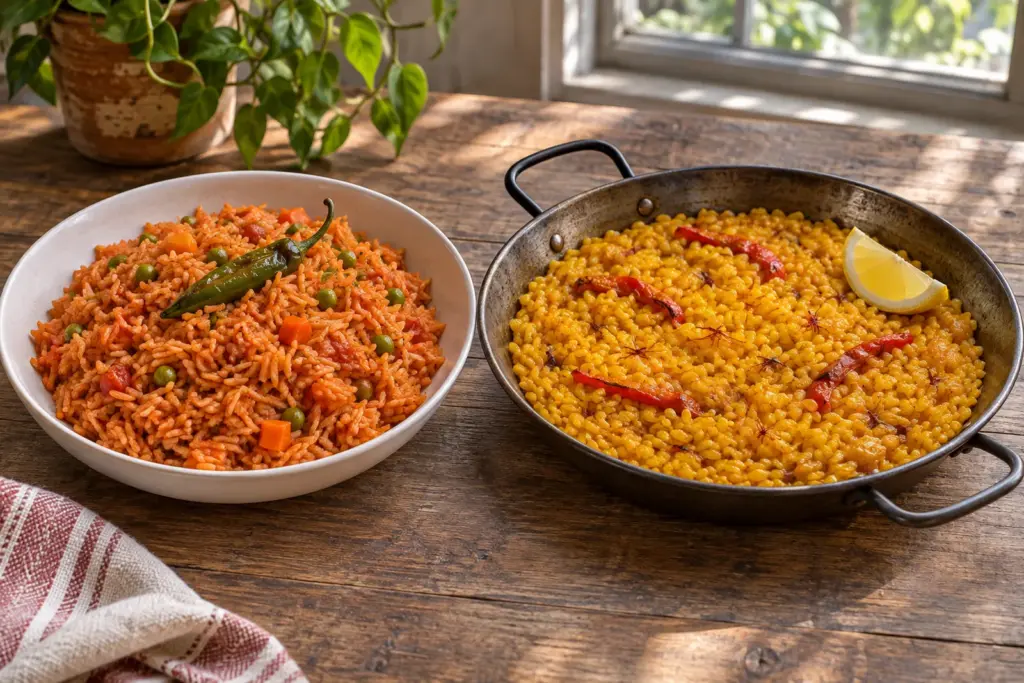
Among the food pairs we compare, few have names as tangled as these two, because the US label points to a Mexican dish while the name points to Spain.
The label came from Tex-Mex cooking, so when you see a recipe titled "Spanish rice" on an American blog, it is almost always arroz rojo.
When a recipe means the rice of Spain instead, you are looking at a saffron dish like paella, with a different grain, pan and method.
1. What Is the Difference Between Spanish Rice and Mexican Rice?
Three traits show you which dish you are really looking at: Mexican arroz rojo, which US cooks call Spanish rice, or a rice dish of Spain, with paella as the best-known example.
| Trait | Mexican arroz rojo (US "Spanish rice") | Rice from Spain (paella) |
|---|---|---|
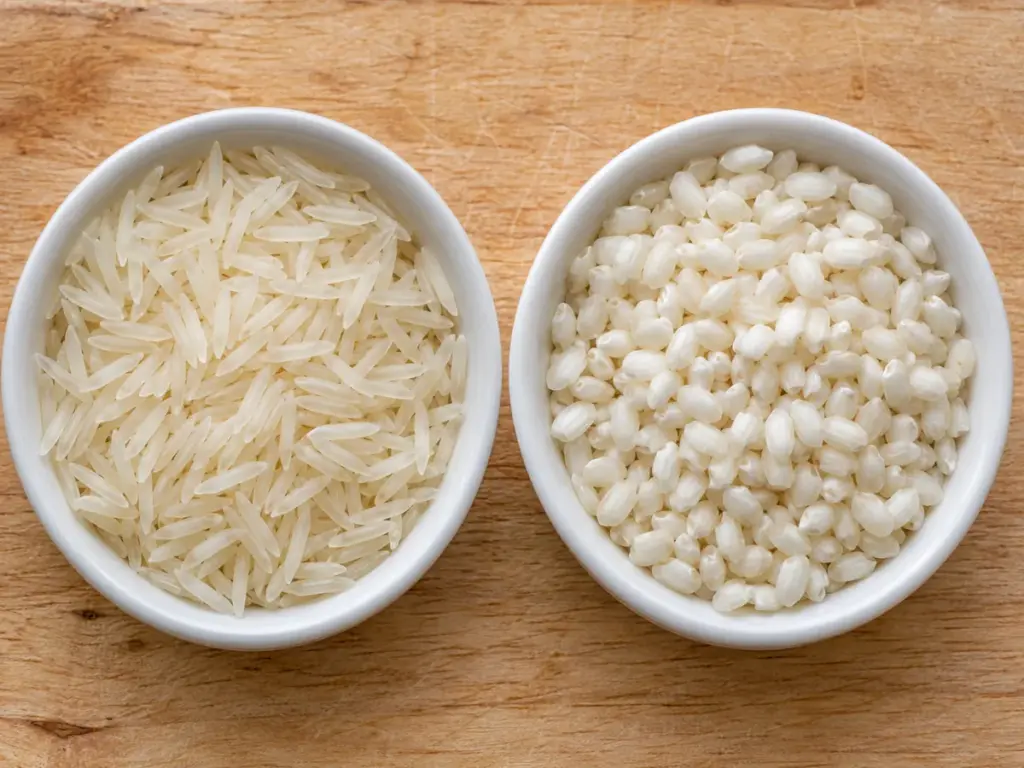
| Rice | Medium or long-grain white rice | Short-grain rice, usually bomba (senia is also used around Valencia) |
| What colors it | Blended tomato, onion and garlic, so it turns orange-red | Saffron, so it turns golden yellow |
| Role at the table | Side dish for beans, chicken or tacos | The main course, cooked with meat, seafood or vegetables |
Paella valenciana contains tomato too, which means tomato alone will not settle the question. You tell the two apart by the rice, the pan and the saffron versus cumin and chile seasoning.
- Raw rice fried in oil or lard until the grains turn milky white
- Saucepan with a tight lid, 15 to 20 minutes
- Olive oil first, then the meat or seafood, then the rice and liquid
- Wide, shallow paella pan, rice not stirred after the first mix
The seasoning tells you which dish is in the pot:
- Mexican arroz rojo gets whole serrano or jalapeño chiles, parsley or cilantro, and sometimes cumin.
- Paella gets saffron, and sometimes paprika or rosemary, and you will find no cumin in Wikipedia's ingredient list for paella valenciana or in SBS Food's recipe.
2. Why Do Americans Call Mexican Red Rice "Spanish Rice"?
In Mexico the dish is most often called arroz rojo, and you will also see arroz a la mexicana, arroz mexicano and sopa de arroz. "Spanish rice" is a Tex-Mex term that neither Mexicans nor Spaniards use, because the dish is not part of Spanish cuisine.
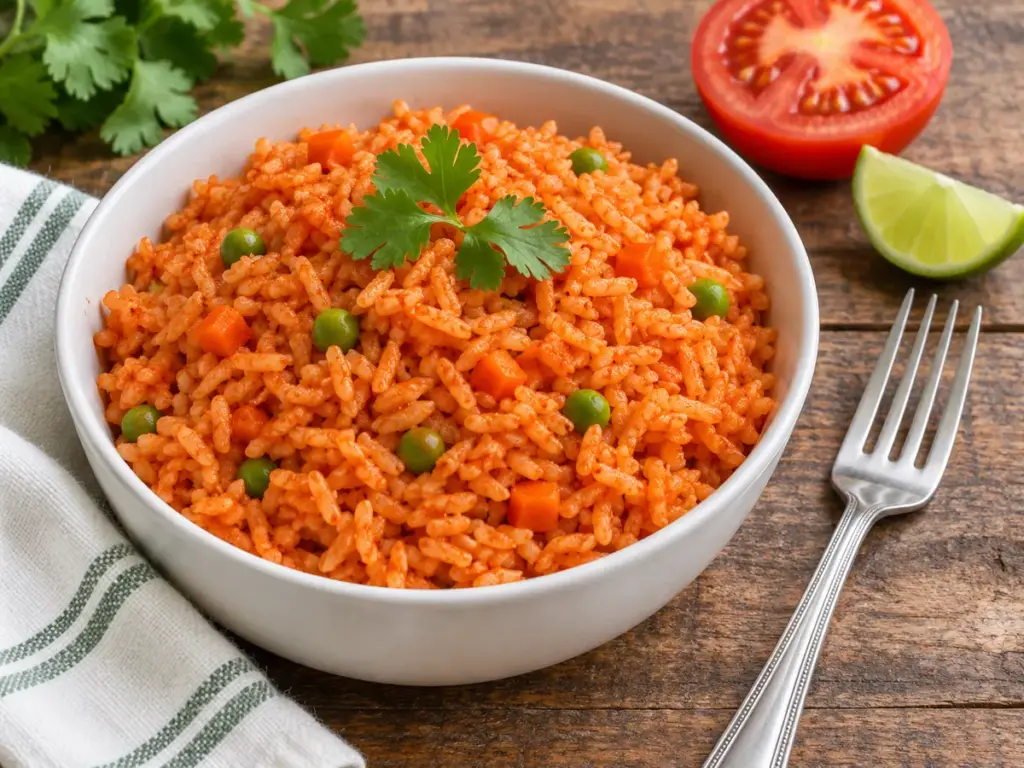
One theory is that the name simply stuck because Mexicans speak Spanish. Wikipedia also notes that the dish can be seen as a simplified paella valenciana with tomato in place of saffron, which is why the rice comes out red instead of yellow.
3. Where Did Each Dish Come From?
Rice reached both kitchens through Spain, which helps explain why you see the two dishes mixed up, and the dates span about a thousand years:
- 10th century. Arabs in Al-Andalus start growing rice in Spain, and it becomes a staple by the 15th century.
- 16th century. Spanish colonists bring rice to Mexico.
- Mid-1800s. Paella valenciana takes its modern form in the Valencia region.
- Late 1800s to 1920s. Tomato rice spreads in the US, and by the 1920s Mexican rice is part of the American diet.
The name was loose from the start: a 1902 American cookbook printed a "Spanish" rice that looked like a chicken paella, and when tomato rice first caught on in the US, it was not yet called Spanish rice.
4. What Goes Into Mexican Red Rice?
Mexican cooks serve arroz rojo hot as a side dish all year, and it is especially popular in central and northern Mexico and the southwestern US. Most recipes you find use the same short list:
- You start with white rice, either medium-grain or long-grain.
- Ripe tomatoes or a 14.5 to 15 ounce can, white onion and garlic get blended into the red base.
- Chicken broth, vegetable broth or plain water works as the liquid.
- Whole serrano or jalapeño chiles and parsley give the flavor.
Rick Bayless prefers medium-grain rice and uses about 3 serranos or 2 jalapeños, and because serranos and jalapeños differ in heat, the pepper you pick decides how much you need.
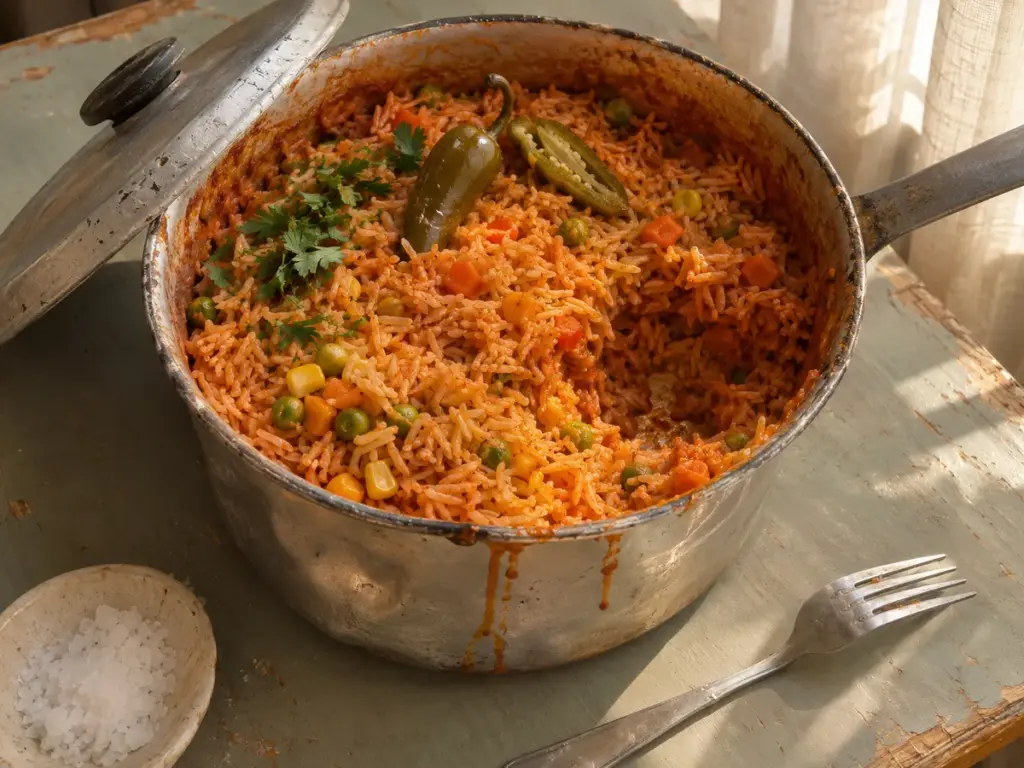
Vegetables are optional, and if you want them, Pati Jinich adds ¾ cup diced carrots, ½ cup peas and ½ cup corn, fresh or frozen, to 2 cups of rice.
Bayless cooks 2 chopped carrots with the rice and stirs in 1 cup or more of blanched or thawed peas at the end.
USDA lists plain cooked long-grain white rice at 130 calories and 0.28 g of fat per 100 g (FoodData Central, FDC 168878), and that is only rice and water.
Arroz rojo adds oil, tomato and broth, so a serving carries more fat and sodium, by an amount that depends on the recipe and the broth you use.
5. How Is Each One Cooked?
Almost every Mexican recipe for arroz rojo follows one method, and Rick Bayless and Pati Jinich both have you fry the raw rice first for 3 to 6 minutes, until the grains turn from see-through to milky white.
Then you add the blended tomato mixture and cook it down before any broth goes in.
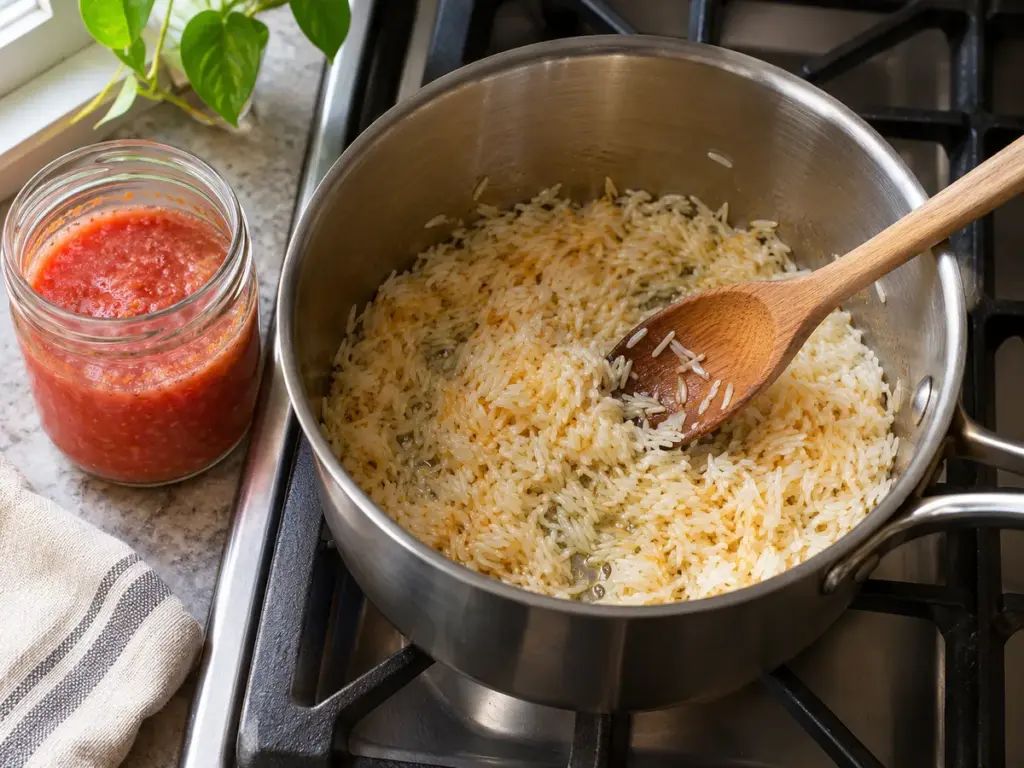
- Blend the base. Puree about 1 pound of ripe tomatoes (or one 14.5 to 15 ounce can) with about ⅓ cup of chopped white onion and 2 garlic cloves.
- Fry the rice. Stir the dry rice in 1½ to 3 tablespoons of oil over medium heat until it turns milky white, about 3 to 6 minutes.
- Cook the puree into the rice. Pour in the tomato mixture and stir for 2 to 3 minutes, until it darkens and is mostly absorbed.
- Add broth and cover. Bring it to a boil, add chiles and parsley, cover and cook on the lowest heat for 15 to 20 minutes.
- Rest and fluff. Leave the lid on for at least 5 minutes, then fork the rice loose.
Published Mexican recipes call for roughly 1¾ to 2 cups of total liquid for each cup of rice, counting the tomato puree along with the broth.
Bayless pairs 1½ cups of medium-grain rice with 1¾ cups of broth plus the puree, and Jinich pairs 2 cups of rice with 3 cups of broth plus the puree.
Bayless says you can also finish the rice in a rice cooker on the cook setting with a 20-minute timer, then hold it on keep warm for up to 1½ hours.
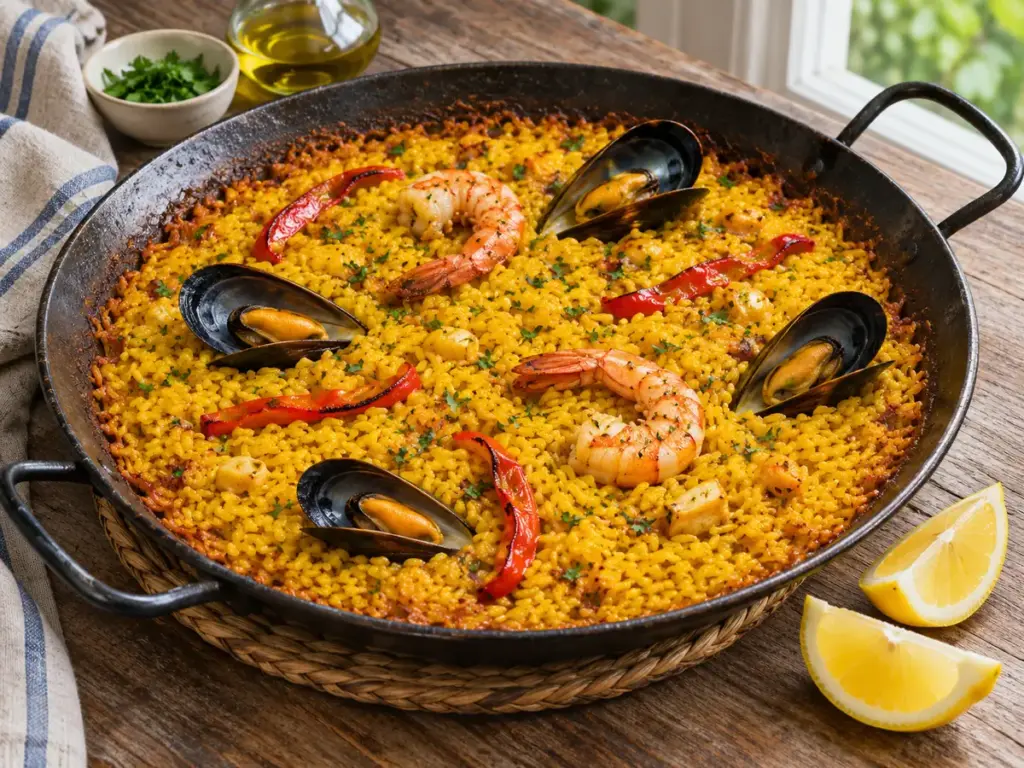
Paella runs in a different order: you cook the meat or seafood in olive oil in a wide, shallow pan, add short-grain rice and stock or water, and let it simmer until a thin layer of rice toasts on the bottom.
Wikipedia calls that scorched layer socarrat, its Valencian name, and the SBS Food recipe builds it on purpose at the end.
One Valencian recipe from SBS Food has you cook the rice over medium heat for about 15 to 20 minutes, until the pan starts to dry. Then you turn the heat to high for a few minutes to crisp the bottom and rest the pan for 5 minutes under a damp cloth.
SBS Food adds that the crust depends on timing and on the stock-to-rice ratio, so you are safest with the ratio given in the recipe you follow.
6. What Counts as Paella, and What Else Is Spanish Rice?
Paella is a Valencian word for frying pan, and the dish takes its name from the pan.
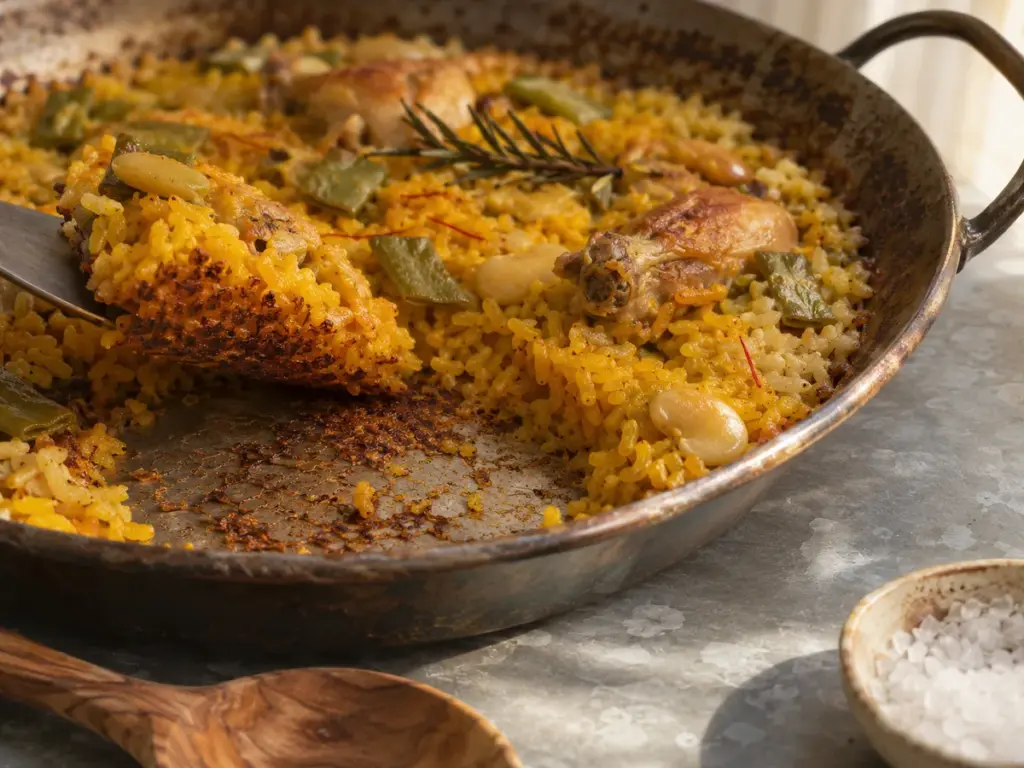
Wikipedia lists three versions you are likely to meet:
- Paella valenciana is made with rabbit, chicken, duck and snails, together with green and lima beans.
- Seafood paella swaps the meat for seafood and leaves out beans and green vegetables.
- Mixed paella combines meat, seafood and vegetables, and sometimes beans.
Valencia has other rice dishes with a similar preparation, such as arròs negre (black rice) and arròs a banda, but none of them is the tomato side dish that Americans call Spanish rice.
7. Which One Turns Out Fluffy and Which One Turns Out Sticky?
Bayless and Jinich both fry the raw grains in oil before any liquid goes in, and we'd credit that step for the separate, tender grains of a well-made arroz rojo.
If the grains are still firm and the liquid is gone, Jinich adds 2 tablespoons of water, covers the pot and cooks 2 more minutes.
Short-grain rice behaves differently from the long-grain rice in arroz rojo, and two short-grain rices show you how much the grain matters:
- Bomba soaks up a lot of broth and keeps a firm bite.
- Its grains stay distinct in the middle, with a crisp caramelized layer underneath.
- Arborio is the rice Italian cooks use for risotto.
- It turns creamy instead of staying separate.
When you pick a short-grain rice for a pan, bomba versus arborio is the choice between distinct grains and a creamy bowl.
8. What Do They Taste Like, and Does Mexican Rice Have Cumin?
Arroz rojo tastes of cooked tomato, onion and garlic, with a little heat if you cook it with a serrano or jalapeño.
Cumin is optional, and Bayless's red tomato rice and Jinich's arroz rojo both leave it out.
Many US recipes include it anyway, and cumin adds an earthy flavor. Wikipedia also lists oregano, cayenne and chili powder as options for the tomato sauce.
Rice from Spain tastes of saffron, with the oil and meat or seafood underneath, and Wikipedia's saffron entry describes its taste as hay-like and sweet, turning bitter in large amounts.
Wikipedia notes that cooks color paella with turmeric and paprika when saffron is too costly. If you reach for saffron substitutes, the rice will take on color but the flavor will not match.
9. How Can You Change Each One?
Arroz rojo bends easily to what you have in the pantry, so you can change the rice, the heat and the vegetables:
- Brown rice works if you adjust the cooking time, Jinich says, since it needs longer than white rice.
- For a meat-free pot, you can use vegetable broth or plain water, both of which the Jinich and Bayless recipes allow.
- For more heat, Jinich drops a whole pickled jalapeño into the pot, and you can also use a little more serrano.
- Cilantro works as the fresh herb in place of the parsley.
- Wikipedia lists lard as an alternative to oil for toasting the rice.
- If you want a more fragrant pot, Jinich suggests trying jasmine as the rice.
Paella changes with the meat, seafood or vegetables in the pan, which is how the three versions came about, while the saffron and the short-grain rice stay fixed.
10. Can You Swap One for the Other?
The two do not swap well, because each name is tied to a rice and a method:
- If you cook arroz rojo in a paella pan, you get tomato rice with no crust.
- Paella made with long-grain rice turns into a loose pilaf that cannot form a socarrat.
When bomba is out of stock, you come closest with stand-ins for bomba, such as other short-grain Spanish rices.
A few other rice dishes often get mixed up with these two:
- Yellow rice is colored with turmeric or saffron, and since the grain stays the same, yellow rice and white rice differ only in that seasoning.
- Arroz con pollo is a one-pot meal with the chicken cooked in the rice, so you serve it with sides for chicken and rice instead of the usual taco-night plate.
Cilantro lime rice is plain white rice finished with lime juice and chopped cilantro, so you get no tomato base and no red color.
11. What Should You Serve With Each?
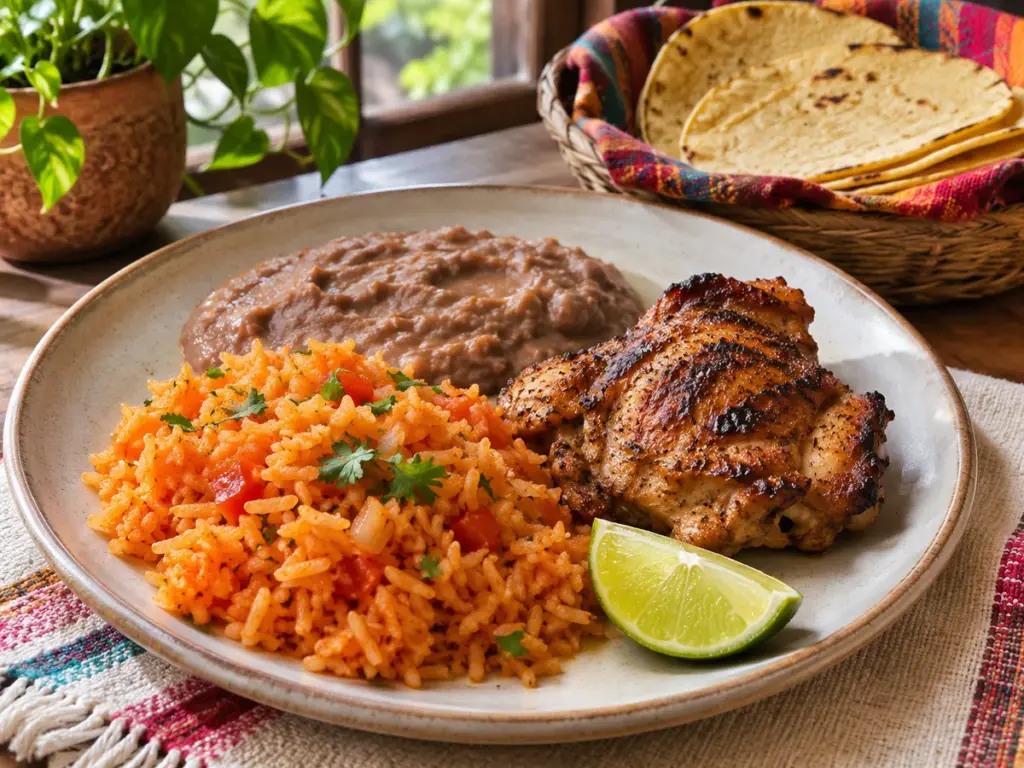
- Refried or black beans soak up the tomato flavor
- Grilled chicken, carne asada or fish tacos
- Enchiladas and burritos
- A lime wedge and fresh cilantro
- A green salad with a sharp vinaigrette
- Crusty bread and aioli
- Grilled vegetables or a simple tomato salad
- A glass of dry white wine or sangria
In Mexico, arroz rojo almost always sits beside other dishes: mole, refried beans, rotisserie chicken, carne asada, picadillo, tacos, fried fish and chiles rellenos. For drinks, we'd pour a cold beer or a lime margarita with that plate.
Red rice usually shares the plate with bold flavors, so we'd keep its partners simple: beans, grilled meat and something fresh and crunchy, the pattern most plates built around Spanish rice follow.
Paella is the main course, so a salad and bread are enough beside it, and there are more paella side dishes if you want a fuller table.
12. Which One Should You Make?
- For taco night or enchiladas, you want arroz rojo, which takes about 25 to 35 minutes of cooking and resting in one pot.
- For a weeknight side for chicken or beans, arroz rojo works because long-grain rice from any supermarket does the job.
- If the rice is the main course of your dinner, you make paella and plan on saffron, bomba rice and a wide pan.
- When you cook for a crowd on a budget, arroz rojo costs less, since saffron and bomba cost noticeably more than tomatoes and long-grain rice.
- If you have no paella pan, a wide skillet can hold a small batch of paella, while arroz rojo needs only the lidded saucepan most kitchens already own.
13. How Do You Store Leftover Rice?
FSIS says you should put leftovers in shallow containers and refrigerate them within 2 hours of cooking, or within 1 hour when the room is above 90°F, so the rice cools quickly.
Cooked leftovers without meat, such as rice, keep 3 to 4 days in the fridge per USDA FoodKeeper, and FSIS advises reheating them to 165°F, with the temperature checked in more than one spot.
In the freezer, cooked rice keeps 1 to 2 months, per FoodKeeper.
Sources
- Mexican rice, Wikipedia
- Paella, Wikipedia
- Paella Valenciana, SBS Food
- Red Tomato Rice, Rick Bayless
- Red Rice (Arroz Rojo), Pati Jinich
- Saffron, Wikipedia
- Rice, white, long-grain, regular, enriched, cooked, USDA FoodData Central, FDC 168878
- Leftovers and Food Safety, USDA FSIS
- USDA FoodKeeper

Food writer at GustoMeadow. Writes ingredient substitutes, food comparisons, taste guides and storage guides for home cooks.
Storage and food-safety numbers follow USDA, FDA and university extension guidance.



