
Beets. We all know them, love them (or maybe not).
But what's the scoop between Harvard and Pickled beets?
In our kitchen adventures, we stumbled upon these two characters. Harvard Beets, soaked in a tangy, sweet sauce.
Then there's Pickled Beets, crunchy, with that vinegar bite.
Which one do we invite to dinner?
Our taste tests revealed some secrets. Harvard comes off as the sweetie; Pickled, the rebel.
Now, we're sharing our findings, no holds barred.
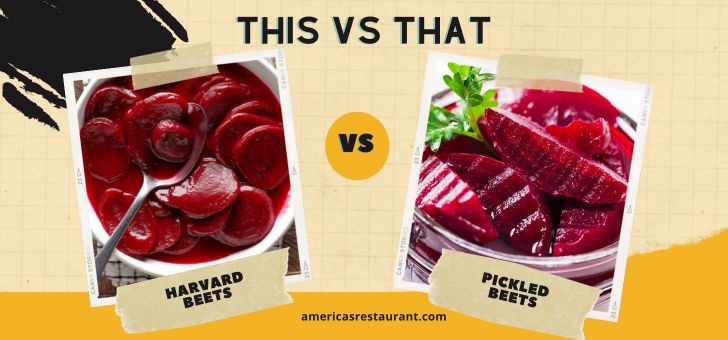
What are Harvard Beets?

Harvard Beets are a type of cooked beet dish that originated in the United States.
The beets are sliced or cubed and cooked with vinegar, sugar, cornstarch, and butter until they become tender yet still firm.
The resulting dish has a shiny, sweet-tangy glaze and is often served as a side dish or topping for salads.
Harvard Beets aren't actually linked to Harvard University but were named after the university because of their bright crimson-red color which is similar to the university's colors.
The sweet-tangy glaze of Harvard beets can work with bright citrus notes; lemon dessert pairings lists options that highlight sharp acidity.
What are Pickled Beets?

Pickled beets are a type of preserved beet that has been marinated in vinegar and spices - learn more in this pickled beets taste guide.
These pickles are commonly used as a condiment or salad ingredient.
The pickling process provides a tangy and sweet flavor to the beets, while also preserving their bright color.
Pickled beets have a long shelf life and can be enjoyed all year round.
They are rich in vitamins and minerals, making them a healthy addition to any meal.
In addition to their pickle-like taste, pickled beets have many health benefits.
They are high in fiber which aids digestion and helps regulate cholesterol levels.
Also, they contain essential nutrients like folate, potassium, iron, magnesium and vitamin C.
Pickled beets make a great snack choice for anyone looking to boost their nutritional intake.
Differences Between Harvard Beets and Pickled Beets

The difference between Harvard beets and pickled beets lies in the ingredients used in the pickling process - for how beet varieties compare, see golden vs red beet comparison.
While both are preserved through a vinegar-based solution, Harvard beets contain sugar and cornstarch, giving them a sweeter taste and thicker texture.
Pickled beets, on the other hand, typically have more spices and herbs added for flavor.
Note that Harvard beets originated from the United States while pickled beets have been enjoyed worldwide for centuries.
Ingredients Used
The first step in understanding the difference between Harvard Beets and Pickled Beets is to consider the distinct ingredients used in each recipe.
While both dishes feature beets as the primary ingredient, they differ in their complementary flavors and seasonings.
Harvard Beets often use vinegar, sugar, and cornstarch as a base for their signature sweet-and-sour taste.
Also, they may include butter, dry mustard, salt, and pepper for added flavor depth.
Pickled beets, on the other hand, typically rely on more acidic ingredients such as white vinegar or apple cider vinegar for their tangy taste.
Other common additions to pickled beets include cloves, allspice berries, cinnamon sticks, and bay leaves.
Harvard Beets are cooked until tender before being immersed in the sweet-and-sour sauce.
In contrast, pickled beets are usually boiled with their skin intact before being peeled and sliced into rounds or wedges.
Understanding how ingredients and cooking techniques differentiate between Harvard Beets and Pickled Beets is essential to achieving these distinctive flavors at home.
Whether you prefer sweet-and-sour or tangy tastes in your beet recipes is entirely up to personal preference.
Preparation Method
Beets are a versatile vegetable that can be used in various dishes.
The methods of preparing beets differ depending on the variety.
Here's a guide to preparing different varieties of beets:
- Scrub and clean the beets thoroughly.
- Cut off the stems and ends of the beets.
- For Harvard Beets, boil or steam the beets until tender, peel them, and then slice or dice into bite-sized pieces.
- For Pickled Beets, cook the sliced or diced beets in a mixture of vinegar, sugar, spices and water until tender and infused with flavor.
- Serve immediately or store in an airtight container for later use.
Note that different varieties of beets have distinct flavors and nutritional content which may impact their preparation method.
When preparing different varieties of beets, it is recommended to experiment with various techniques to maximize their flavor potential without sacrificing nutritional value.
flavor and Taste Differences
Harvard beets and pickled beets differ significantly in their taste profiles.
Harvard beets are sweeter due to the addition of sugar, and they have a tangy taste because of the vinegar used - see an extract vs flavor explanation to clarify how those taste components register.
Pickled beets, on the other hand, have a more complex flavor due to the blend of spices and herbs used during pickling.
They are often less sweet and may have a slightly sour or earthy taste.
Apart from their tastes, the texture of both kinds of beets is also different.
Harvard beets tend to be softer, while pickled beets retain much of their natural firmness.
This texture difference makes them suitable for different purposes; Harvard beets work as accompaniments or side dishes while pickled ones can work as snacks or toppings for salads.
In summary, The variance between Harvard and Pickled Beets goes beyond flavors but extends to textures as well.
While Harvard beet's dominant feature is its sweet yet tangy taste that compliments the dish it accompanies, Pickled beet derives its character from its complexity on account of various spices used during pickling.
Serving and Culinary Uses
Both Harvard beets and pickled beets make delicious side dishes.
Harvard beets are typically served in the Eastern part of the United States, while pickled beets are more common in European cuisine.
Harvard beets are often boiled with vinegar, sugar, and butter until they are tender.
They are then served hot as a side dish or cold as a topping on a salad.
On the other hand, pickled beets are made by preserving cooked beets in vinegar and spices, which gives them a tangy flavor.
Pickled beets can also be used to garnish sandwiches or served alongside other pickled vegetables for added flavor.
It is worth mentioning that despite their similarities in appearance, Harvard and pickled beets have distinct differences when it comes to taste and texture.
While Harvard beets have a sweet and sour taste due to the addition of sugar and vinegar during cooking, pickled beets have a more acidic and tangy taste due to the method of preservation.
Also, while Harvard beets are soft and tender after boiling, pickled beets have a crisp bite due to being preserved in vinegar.
In essence, both Harvard and pickled beet dishes offer unique flavors that can add bright color and wholesome nutrition to your plate.
Whether you're looking for a classic American-style side dish or an international twist on roasted veggies, using these two beet varieties will help improve your meals.
Similarities Between Harvard Beets and Pickled Beets

The commonalities between Harvard beets and pickled beets are evident in their foundation, preparation and taste.
Both are made using beetroot, vinegar, sugar, and spices - for how beets compare to other root vegetables, see beets vs turnips comparison guide.
The primary difference is the use of cornstarch in the Harvard beet recipe to give it a smooth consistency.
In contrast, pickled beets have a more tangy and sour flavor due to the prevalence of vinegar in the process.
Also, both Harvard beet and pickled beet dishes are best served with foods that have a complimentary sweet or salty taste.
How to Make Harvard Beets and Pickled Beets?
For those looking to make delicious pickled or Harvard beets, here's what you need to know.
Making these dishes involves specific steps and ingredients.
Pickled beets are typically made by boiling beets, then peeling and slicing them before adding a vinegar solution.
In contrast, Harvard beets are first cooked with sugar and cornstarch before adding a mixture of spices and vinegar.
To make pickled beats:
- Boil the beets until they are tender.
- Peel and slice the beets into desired shapes.
- Mix water, sugar, salt, and vinegar in a saucepan and bring it to a boil.
- Add the sliced beets to the mixture and store in sterilized jars.
To make Harvard beats:
- Cook the beetroot with sugar, salt, cornstarch, vinegar and spices such as cinnamon.
- The mixture should thicken before removing from heat.
- Serve hot or cold as the dish can refrigerate well for weeks.
Lastly, note that Harvard Beats consist of cooked beet pieces in sweet-sour sauce which has less acidity but more sweetness than pickled beats.
In comparison, Pickled Beets have strong acidic taste created by adding vinegar or acidic solutions to boiled beet slices just like any traditional pickle recipe.
If beets are unavailable or unwanted, beet substitutes for recipes offers five workable alternatives that maintain texture and flavor balance.
Serving Suggestions for Harvard and Pickled Beets
Comparing Harvard Beets and Pickled Beets, it is clear that they have distinct differences in their preparation, taste, and texture.
While both dishes feature beets as a primary ingredient, Harvard Beets are cooked with sugar and vinegar to create a sweet and tangy flavor, while pickled beets are soaked in a brine solution that results in a sourer taste.
Despite these differences, both Harvard Beets and pickled beets make pleasant additions to salads or as side dishes.
When choosing between the two, personal preference will play a significant role in determining which one is best for you.
Understanding the unique characteristics of each type of beet can help you make an informed decision when preparing your next meal.
Frequently Asked Questions
The pickling process provides a tangy and sweet flavor to the beets, while also preserving their bright color. They share some similarities but each has qualities that make it better suited for certain recipes.
Sometimes. Harvard Beets works where Pickled Beets is called for in certain dishes, but not all.
Check whether the recipe relies on a specific quality before substituting.
Cold preparations like salads and dressings often favor the option with a sharper, more defined flavor. Heat can mellow both, so the distinction matters more in uncooked dishes.
Do professional cooks prefer one over the other?
Professional preference depends heavily on the dish and cuisine style.
Each has its context where it outperforms the other, so most experienced cooks keep both on hand.
Beet flavors range from sweet to earthy; beets earthiness taste guide covers what to expect. pickled plums taste guide explains another tangy preserve that can inspire similar pairings.