
In Mexico, a botana is any small food served with a drink, so it is a whole spread, while nachos are one dish.
- On a botana table you might find peanuts, chicharrones or guacamole with chips.
- Nachos put tortilla chips under melted cheese and jalapeños on one tray.
- On a Texas Tex-Mex menu, "botanas" may bring you a sampler plate or loaded chips that look a lot like nachos.
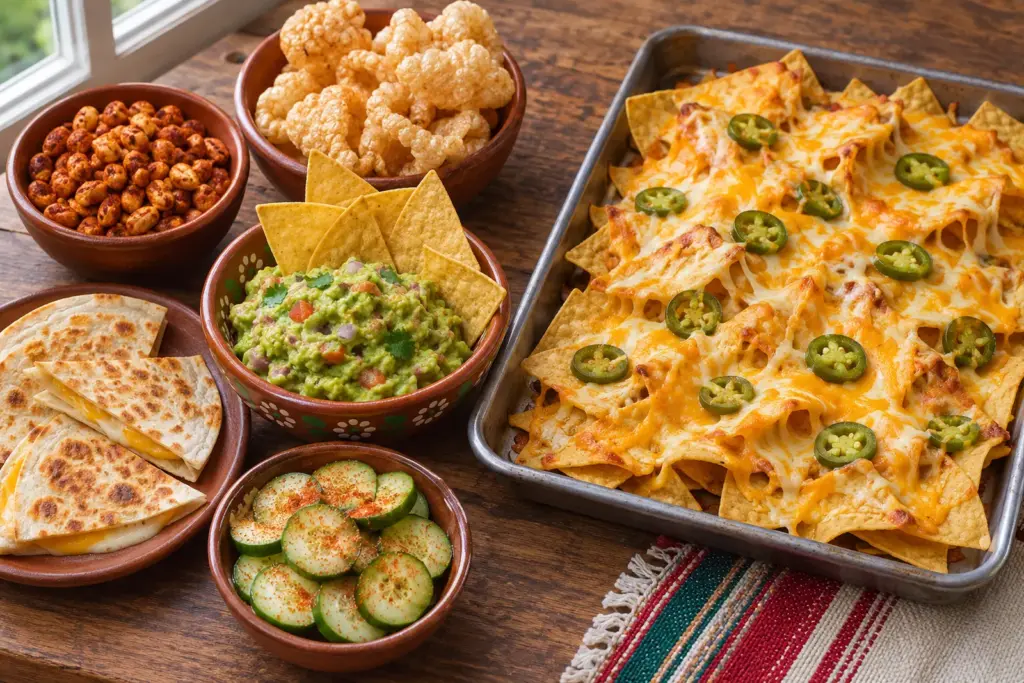
That makes this one of the odder comparisons of everyday foods, because one side is a dish and the other is a style of snacking. Which one suits you depends on whether you are feeding a crowd that grazes for hours or a few people who want something hot and cheesy right now.
1. What Is the Difference Between Botana and Nachos?
Botana names a whole group of foods, and nachos name one recipe, so the table and cards set a category of small plates beside a single tray of chips under melted cheese.
| Trait | Botana | Nachos |
|---|---|---|
| What it is | Any small food eaten with a drink; in Texas, also a sampler or a loaded-chip platter | One dish: tortilla chips, melted cheese and toppings |
| Where it comes from | A Spanish word that first meant a wineskin patch or cask plug | Piedras Negras, Mexico, in the 1940s, by Ignacio Anaya |
- Foods: chile peanuts, chicharrones, guacamole with totopos
- Served: several small bowls and plates, hot and cold
- Texture: crunchy, creamy and chewy
- Foods: chips, cheese, jalapeños, beans, beef or chicken
- Served: one tray, hot from the oven
- Texture: crunchy at first, softer as the cheese cools
- How long it stays good to eat: peanuts, chicharrones and chips hold up while you graze, but guacamole, queso and ceviche do not, and nachos are best in the first few minutes.
- Best for: a long gathering with drinks calls for a botana, and a quick shared snack or casual dinner calls for nachos.
Those last two points decide most party plans, because crunchy botana items hold up while guests eat slowly, and a tray of nachos goes soft once the cheese cools.
2. What Does Botana Mean in Mexico?
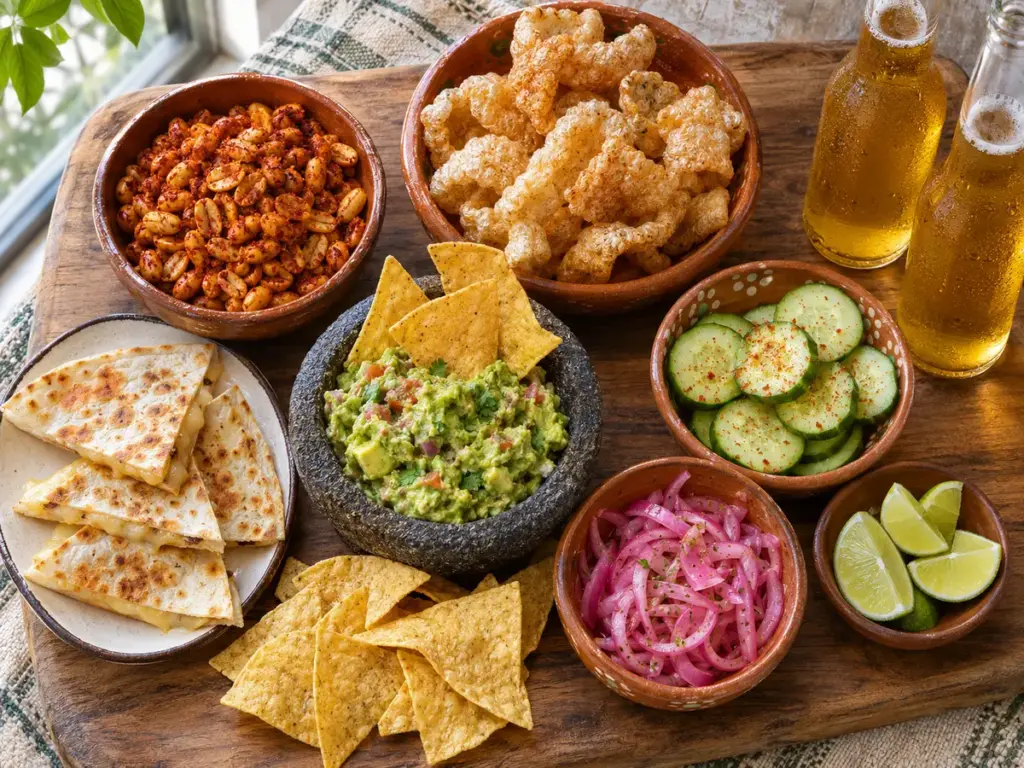
In Mexico, a botana is any small portion of food that goes with a drink. The cultural site Cultura Colectiva lists chile peanuts, potato chips, guacamole with totopos, wings, quesadillas and a piece of cheese as botanas, and it says a cooked dish such as taquitos or chalupas counts too.
Chicharrones, which are fried pork skin, are another snack you can put on a botana table.
The word started as something else, since the Royal Spanish Academy (RAE) records botana as the patch over a hole in a wineskin and as the wooden plug that closed a wine cask.
One explanation holds that in Mexico the cask lid became the surface where snacks sat, and the snack took the lid's name. None of our sources puts a date on that change, so we'd read the "centuries old" claims you see online as unproven.
The Spanish dictionary also has the verb botanear, which it marks as Mexican and defines as "to eat botanas". If someone invites you to botanear, you are heading to a round of snacks and drinks instead of a single plate.
What Does Botana Mean in English?
The closest English words are snack and appetizer, and each one misses something. Cultura Colectiva notes that snack is used in Mexico but does not cover everything, because a botana can be a prepared dish such as tacos, chalupas or fresh quesadillas.
You will also see botanero on menus and signs, and it has three uses:
- Adjective: queso botanero and mesa botanera are the examples Cultura Colectiva gives.
- Noun for a person: it can mean someone who prepares or sells botanas, per the same site.
- Noun for a place: it can mean the bar where you sit with drinks while the botanas arrive, as Yucatán Today uses it.
You do not have to stick to salty botanas, either. Mexico News Daily describes dried fruit as part of a botana vendor's display and says botana makers use sweet-and-spicy mixes such as tamarind candy with chili powder and tangy, chili-based chamoy.
3. How Do Cantinas Serve Botanas?
In a traditional Mexican cantina, the botana comes with each round of drinks, so you do not order it as a separate dish. Cultura Colectiva quotes a drinker saying the bar brings a botana with every beer.
Many Mexico City cantinas count the botana in courses called tiempos, and Chilango lists these examples:
- Salón París serves four courses of botana across three drinks.
- La Mascota gives free botana with three drinks.
- Saloon Los Cuates offers about 100 free dishes with four drinks.
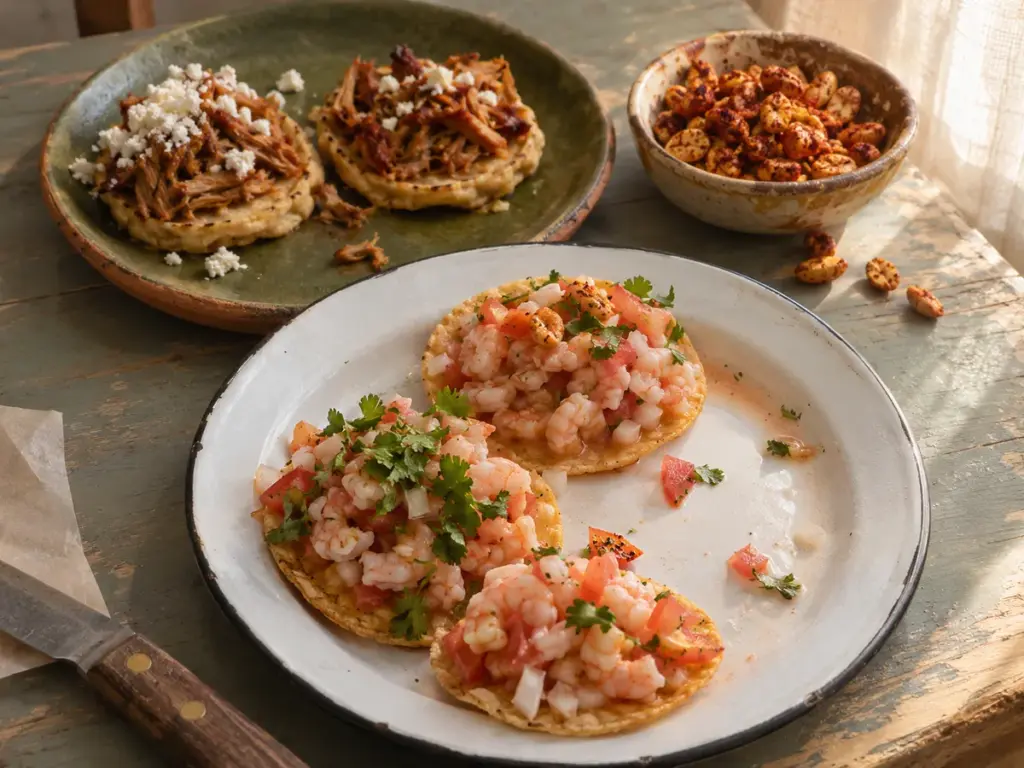
If you stay for the later courses, the food gets heavier. Chilango names sopes de cochinita, shrimp ceviche, carnitas and pozole among the dishes, so you can end up with a full meal instead of a bowl of peanuts.
4. How Do Botanas Change by Region?
If you sit down at a botanero in Yucatán, you will see a different table from one in Mexico City. Yucatán Today's guide to the region's botaneros lists dishes such as these:
- Codzitos are fried tortilla tacos with tomato sauce and crumbled cheese, often with no filling.
- Sikil p'aak comes as a pumpkin seed dip with tortilla chips.
- Xe'ek' mixes jicama and citrus in a salad.
- Kibis give the table a local take on Lebanese kibbeh.
Sikil p'aak with chips comes closest to a nacho plate, yet it is a dip with nothing melted or baked.
Seafood shows up on cantina tables too, and you will find that Mexican ceviche is a different style from the Peruvian kind.
5. What Is Salsa Botanera (Botana Sauce)?
Salsa botanera is a spicy, sour and slightly sweet chile sauce made for snacks. Food & Pleasure says it was created in 1989 by Mega Alimentos, a company from Santa Catarina, Nuevo León.
The sauce goes on more than salty snacks:
- Chicharrones and popcorn
- Fruit and shrimp
- Seafood cocktails and micheladas
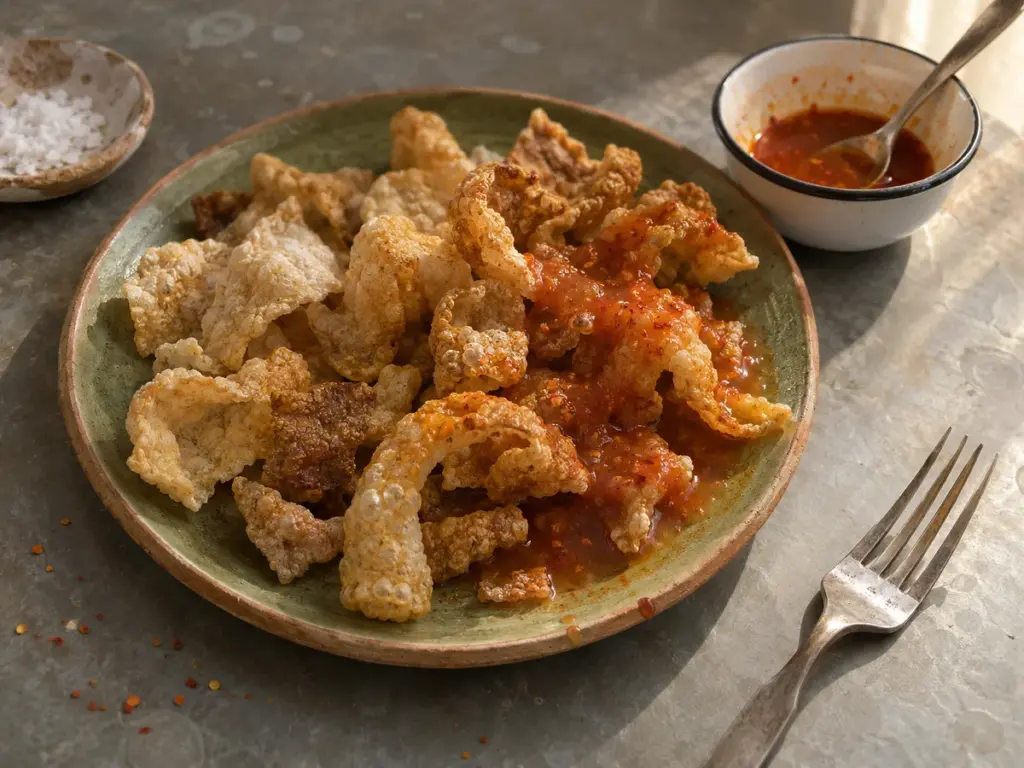
If you want to make it, the same site gives a homemade version built on chile de árbol and chile piquín powders, white vinegar, water, paprika, sugar and salt, and it says the two-day rest in the fridge matters most.
6. What Is a Botanas Platter in Texas?
Texas restaurants use the word two ways, so you need to know which one a menu means. Food writer Robb Walsh explains in The Tex-Mex Cookbook that in Mexico and most of Texas, botanas means appetizers and a botanas platter is a sampler.
In Lower Rio Grande Valley restaurants, he writes, a botanas platter is "something altogether different and exceedingly popular": a huge pile of tostadas and nachos topped with fajita meat and guacamole, meant to feed several people.
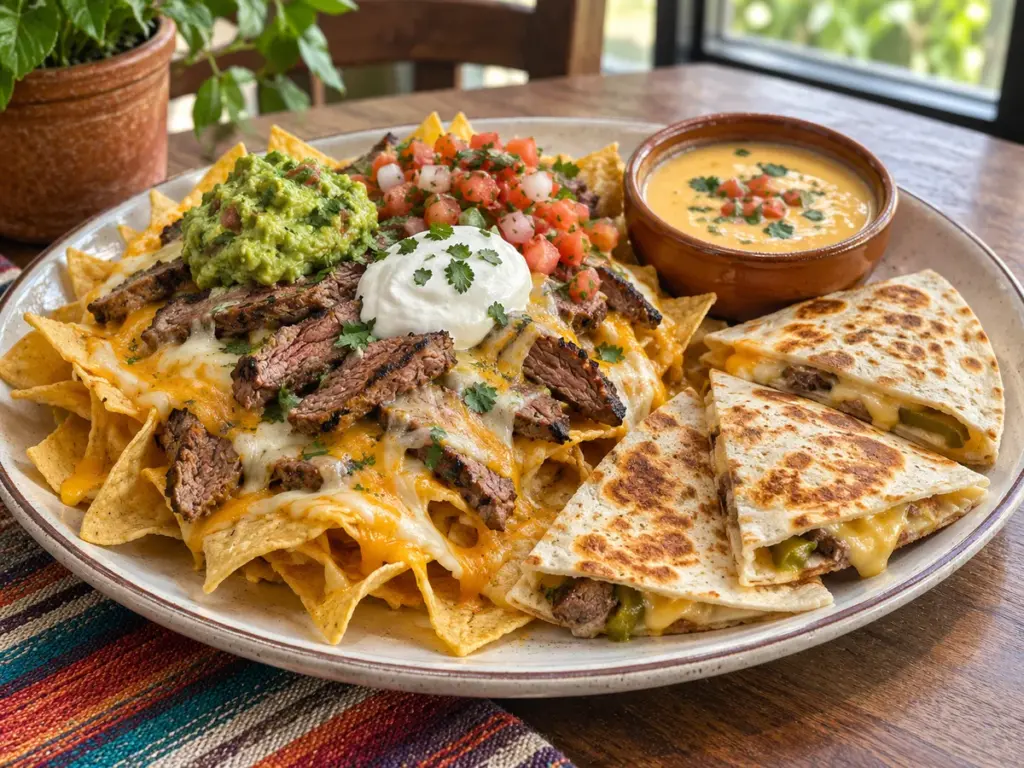
That second meaning is where the two words meet. A 1987 Dallas Morning News listing described a botanas platter as an appetizer assortment with nachos, flautas, quesadillas and tacos, so you will often find nachos inside a botanas platter or as the platter itself.
7. Where Did Nachos Come From?
The best-known nacho story is TIME's account: in 1943, about a dozen wives of US soldiers stationed at Fort Duncan, Texas, found the restaurants closed.
Ignacio Anaya, a maître d' at the Victory Club in Piedras Negras, took pity on them and made a snack from what the kitchen had. He sliced and fried tortilla chips, covered them with shredded cheddar and sliced jalapeños, and heated them briefly in the oven.
Anaya called the dish Nachos Especiales, after his own nickname, Nacho. TIME gives 1943, though some accounts give a different year or restaurant.
Either way, the dish was first made on the Mexican border for Americans crossing over, so nachos began as a border snack, while the botana grew out of Mexican drinking culture.
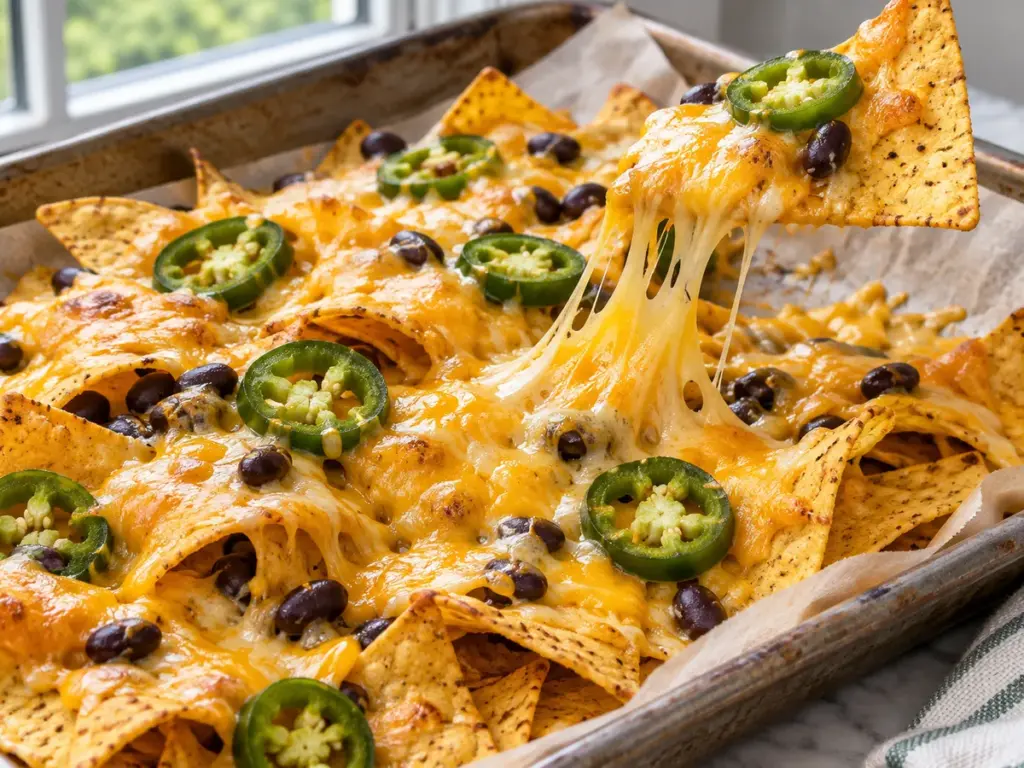
Three decades after Anaya’s tray, Frank Liberto brought stadium nachos to Arlington Stadium for the 1976 Texas Rangers season, using a shelf-stable cheese sauce that could be served quickly, according to Ballpark Digest.
Those nachos reached about $800,000 in annual sales, and a cheese dispenser behind the counter became their trademark. When you order them at a ballpark, you get chips under dispensed sauce, which is a different dish from chips baked under shredded cheddar.
8. What Do Botana and Nachos Have in Common?
You can see why people mix the two up once you look at where they overlap:
- Corn chips: guacamole con totopos is on Cultura Colectiva's botana list, and chips are the base of nachos.
- Shared plates: both go in the middle of the table for everyone to pick from.
- Dips and toppings: guacamole, salsa and cheese suit both.
The same topping appears on both tables in a different form:
| Topping | On nachos | On a botana table |
|---|---|---|
| Cheese | Shredded and melted over the chips | A piece of queso, or quesadilla wedges |
| Guacamole | Spooned on after baking | In a bowl with totopos |
| Hot sauce | Dashed on at the table | Botanera sauce on chicharrones or fruit |
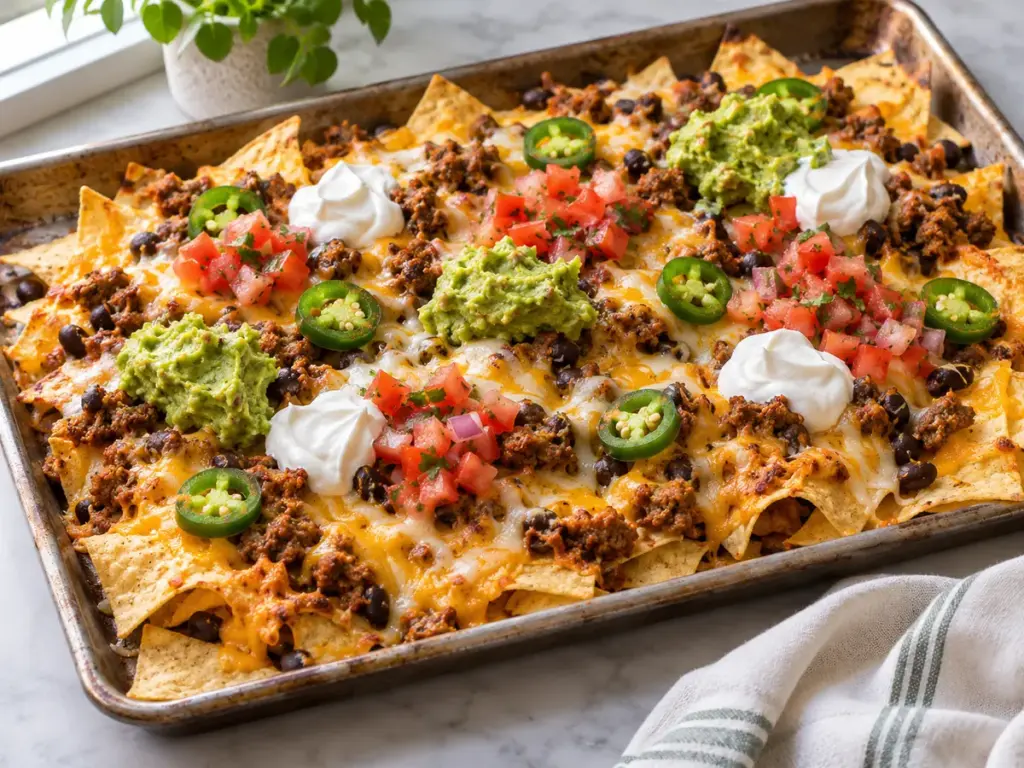
Chopped onion, tomato and cilantro suit both foods. If you want nachos to be dinner, you can layer black beans or ground beef under the cheese.
9. How Do They Eat and Taste Differently?
When you bite into nachos, you get salty melted cheese, the crunch of the chip and heat from the jalapeño. Soon the pleasure fades, since once the cheese cools it sets and the moisture in beans, salsa or sour cream softens the chips underneath.
From a botana spread you get contrast from bite to bite, because crunchy peanuts, cool guacamole and a lime-sharp pickle each change how the next bite tastes.
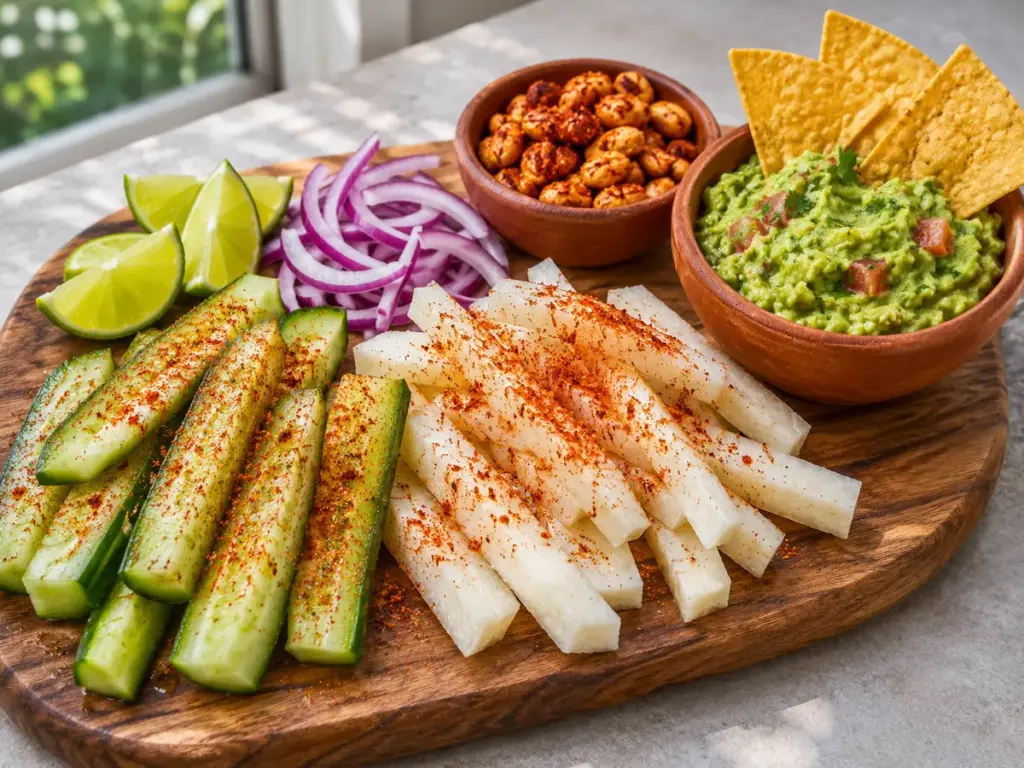
- Crunchy: chile peanuts or chicharrones
- Creamy: guacamole with totopos
- Sharp: cucumber or red onion with lime
- Hot: quesadilla wedges
- Two layers of chips each get their own cheese.
- The cheese melts in the oven first, and cold toppings go on last.
- The tray goes straight to the table while the cheese is soft.
Four jobs fill a botana table, and you can give each one its own item. Crunchy items need no prep and last all evening, the creamy one cools the chile, the sharp one cuts the fat in everything else, and the hot one gives the table something fresh from the stove.
On the nachos side, the two layers mean you do not reach bare chips at the bottom, and the cold toppings stay cool because they go on last.
If nachos are your dinner, cold sides do the same job as the pickle on a botana spread, and you will find sides that balance nachos ranging from guacamole to tortilla soup. Chips simmered in salsa until soft are chilaquiles, a close cousin of nachos, often eaten at breakfast.
10. Can You Use Botana and Nachos Instead of Each Other?
You can put nachos on a botana table, because they are one of the hot items a spread can include, but the reverse swap works less well.
If your guests expect melted cheese on chips, a bowl of peanuts and pickles will disappoint them, and if you serve only nachos, they have nothing cold or sharp to eat between bites.
On a Texas menu, the two can be the same order. If the botanas platter you order is loaded chips, it replaces nachos directly, and if it is a sampler, it already contains them.
11. Which Should You Serve or Order?
Your choice comes down to how long people will be eating and how much you want to cook:
- Six or more guests who will stay for hours: a botana spread fits best, since most of the crunchy items can sit out while people drink and talk. Guacamole, quesadillas and ceviche go out in small batches, kept cold or hot, so nobody is stuck waiting for the one hot tray.
- Three or four people and a game on TV: nachos fit, since you need only one tray and one oven and the hot part takes minutes.
- A dinner with no other food planned calls for nachos with beans and beef, which we'd pick over a snack spread because one loaded tray fills people faster, and you can add a cold side.
- A Texas restaurant with a group: you can order the botanas platter after asking what is on it, since it can cover both the sampler and the nachos in one order.
Sources
- Cultura Colectiva: What a botana is, with RAE and ASALE definitions and origin theories
- Barry Popik: Botana platter research, quoting Robb Walsh, The Tex-Mex Cookbook (Broadway Books, 2004) and Texas newspapers
- Chilango: Mexico City cantinas that still include botana by courses
- Yucatán Today: A guide to Yucatecan botanas
- Mexico News Daily: Botanas unpackaged
- Food & Pleasure: Salsa botanera, origin and homemade version (Spanish)
- TIME: The history of the nacho
- Ballpark Digest: In memoriam Frank Liberto
- USDA FSIS: Keep food out of the danger zone

Food writer at GustoMeadow. Writes ingredient substitutes, food comparisons, taste guides and storage guides for home cooks.
Storage and food-safety numbers follow USDA, FDA and university extension guidance.



