
Buckwheat is a seed, gluten-free by nature, while oats need a gluten-free label for celiac disease.
- Rolled oats cook in about 5 minutes, buckwheat groats in about 20.
- A cooked cup has about the same fiber: 4.5 g buckwheat, 4.0 g oats (USDA).
- Measure by weight: a dry cup of groats weighs about twice a cup of rolled oats.
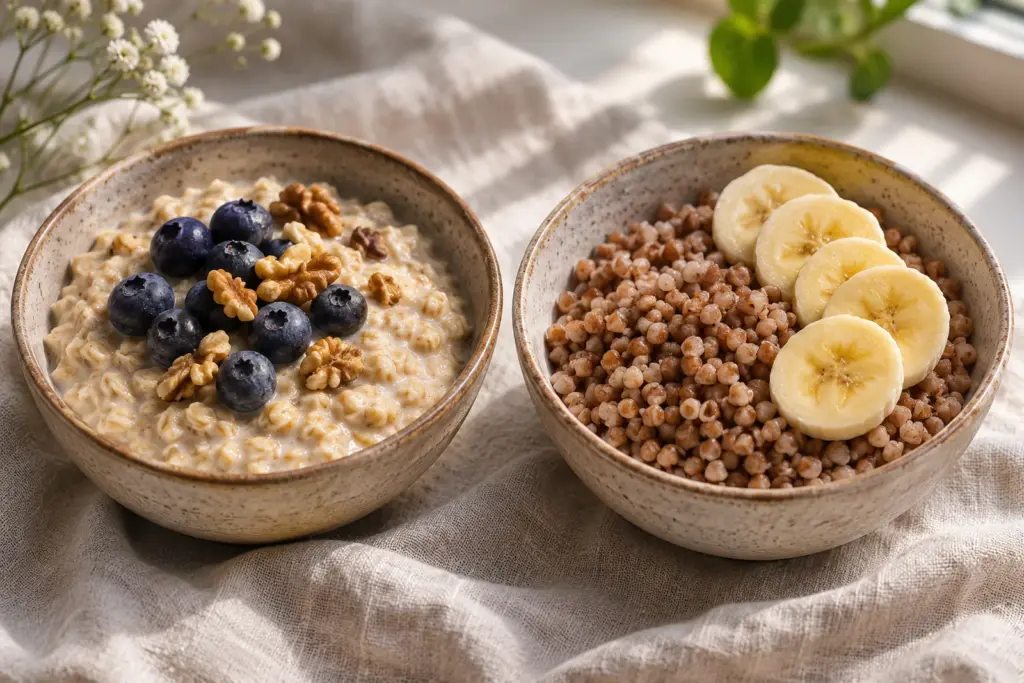
Oats carry beta-glucan, the fiber behind an FDA heart-health claim, and buckwheat has more magnesium.
You will find both in the breakfast aisle, and the gap between them is wider than in most comparisons of pantry grains. Oats are the seeds of a cereal grass. Buckwheat is the triangular seed of a leafy plant in the knotweed family, a relative of rhubarb, so it is not wheat, not a grass and not a true cereal.
1. What Is the Difference Between Buckwheat and Oats?
The plant decides most of it. Oats are a cereal, so they cook soft and creamy, and buckwheat is a pseudocereal, a starchy seed that you cook and eat like a grain. This table compares the traits that change what you make:
- It is the hulled seed of a broadleaf plant (Polygonaceae).
- It has no gluten in the seed, but cross-contact is possible.
- They are the hulled seed of a cereal grass (Avena sativa).
- They have no gluten when pure, but are often contaminated with wheat.
- Buckwheat comes as raw groats, kasha (toasted groats) and flour. Cook 1 cup dry in 2 cups liquid for 20 minutes, which gives about 4 cups cooked.
- Oats come as steel-cut, rolled, quick and flour. Cook 1 cup steel-cut in 4 cups liquid for 30 minutes, or rolled in about 2 cups for about 5 minutes.
| Trait | Buckwheat | Oats |
|---|---|---|
| Texture cooked | Soft but toothsome, and mushy if overcooked | Rolled is creamy, steel-cut stays chewy |
| Flavor | Earthy and nutty, deeper when toasted | Mild, slightly sweet and nutty |
| Per cooked cup (USDA) | 155 calories, 5.7 g protein, 4.5 g fiber | 166 calories, 5.9 g protein, 4.0 g fiber |
| Best in | Skillet sides, hearty porridge, pancakes, soba | Quick oatmeal, overnight oats, cookies, crumbles |
Gluten and cooking time pull the two furthest apart, and fiber is close to a tie.
2. Is Buckwheat or Oats Gluten-Free?
Buckwheat is gluten-free by nature. The Celiac Disease Foundation lists buckwheat groats, also called kasha, among naturally gluten-free foods, and the plant is unrelated to wheat. The one risk is cross-contact, because grains can pick up gluten during harvesting and processing.
Oats are gluten-free by nature too, but they are often contaminated with wheat. The foundation says oats are often harvested and processed with the same equipment used for wheat, so an ordinary canister can carry wheat, barley or rye. If you have celiac disease, you need oats specifically labeled gluten-free, and that includes granola and granola bars.
A second issue applies to a small share of people with celiac disease. They react to avenin, a protein in oats that resembles gluten, and the foundation tells them to avoid all oats, even labeled ones. For you, that makes buckwheat the safer choice if symptoms continue on gluten-free oats. The foundation adds that people who tolerate pure oats generally manage up to ½ cup of dry rolled oats a day.
- Rolled, steel-cut and quick oats
- Oat flour
- Granola and granola bars
- Buckwheat groats and kasha
- Buckwheat flour
- Soba made from 100% buckwheat
Two look-alikes can fool you. Soba noodles made with only a share of buckwheat flour contain wheat, while 100% buckwheat soba does not. Buckwheat also gets lumped with bulgur on grain shelves, but bulgur is cracked wheat and carries gluten.
3. How Do Buckwheat and Oats Taste and Feel?
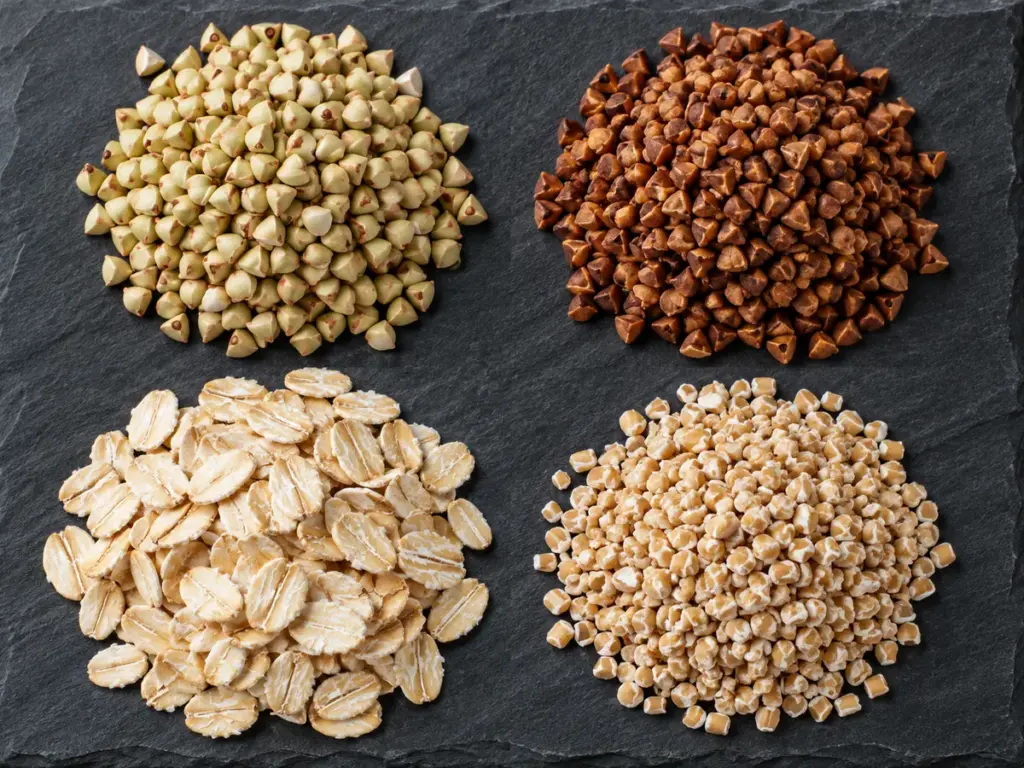
Rolled oats are steamed and pressed flat, which is why they soften fast into a creamy bowl with a mild, faintly sweet, nutty flavor. Steel-cut oats are the groats cut into two or three pieces with steel blades, so they stay chewy and need a longer cook. Packages also call rolled flakes old-fashioned oats or porridge oats.
Buckwheat groats are the hulled seeds, sold raw or toasted. Toasted groats are the ones labeled kasha, and the difference between kasha and raw groats shows up in color and flavor. You will see kasha as dark brown and nuttier, while raw groats look pale and taste more earthy, with a slightly bitter edge.
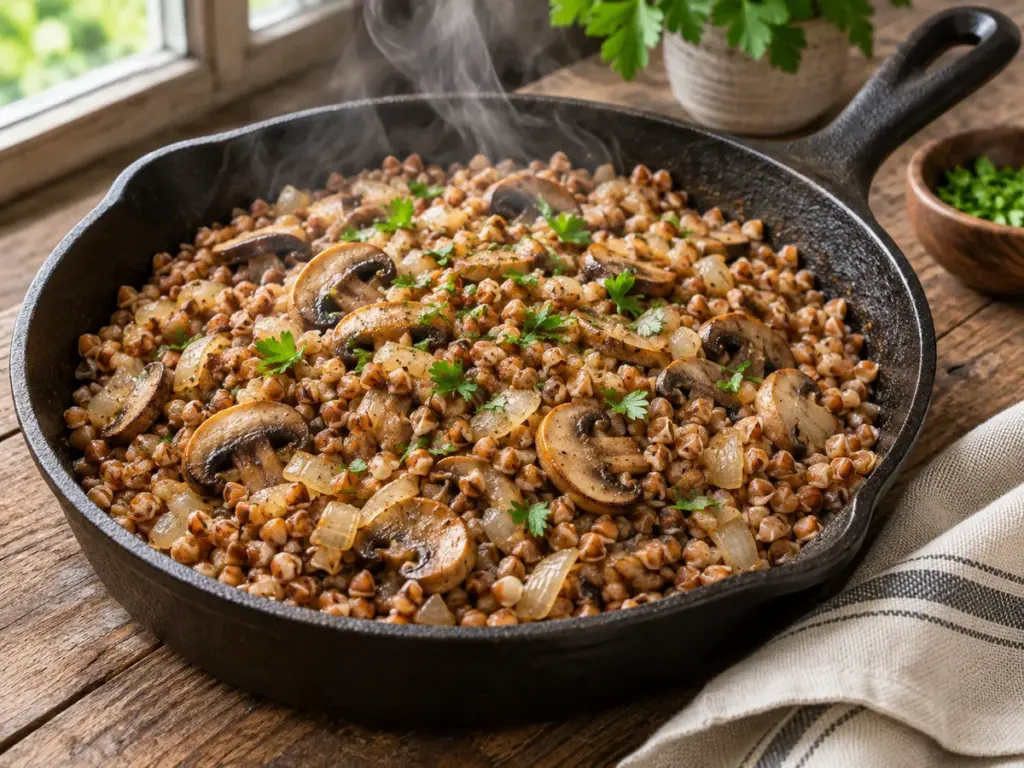
Buckwheat also softens quickly, so you should start tasting a few minutes before the 20-minute mark and drain any liquid left in the pan. That firm, separate texture is why you can use it in savory skillets with mushrooms and onions, a job that rolled oats do poorly because the flakes break down.
4. How Do You Cook Buckwheat and Oats?
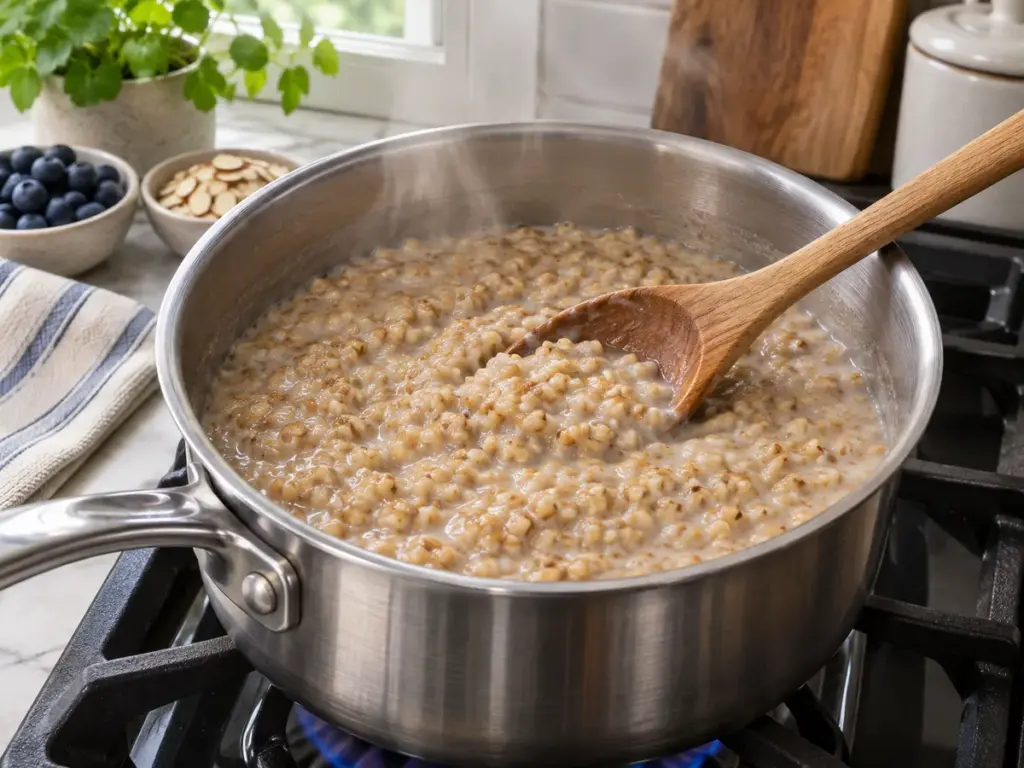
The Whole Grains Council chart gives buckwheat 2 cups of liquid per 1 cup of dry groats and steel-cut oats twice that. Food Network puts rolled oats at about twice their volume in water. You can use this table as a starting point:
| Grain | Dry | Liquid | Time | Cooked yield |
|---|---|---|---|---|
| Buckwheat groats | 1 cup | 2 cups | 20 minutes | About 4 cups |
| Steel-cut oats | 1 cup | 4 cups | 30 minutes | About 3 cups |
| Rolled oats | 1 cup | About 2 cups | About 5 minutes | Not listed |
Package directions beat this chart, because the brand and the cut change the numbers you need. Food Network says steel-cut oats can take up to 40 minutes on the stovetop and need frequent stirring, while rolled oats need only occasional stirring.
- Measure. Use 1 cup of buckwheat groats and 2 cups of water or milk.
- Boil. Bring the liquid to a boil, then stir in the groats.
- Cover and simmer low. Give the pot about 20 minutes.
- Check and fluff. Taste a few minutes early, drain extra liquid and fluff with a fork.
5. Which Has More Fiber and Protein?
You get almost identical fiber and similar protein from either grain, and the gap shows up in minerals. These numbers come from USDA FoodData Central: FDC 170686 (buckwheat groats, roasted, cooked), FDC 173905 (oats, regular and quick, cooked with water, no salt), FDC 170685 (buckwheat groats, roasted, dry) and FDC 173904 (oats, regular and quick, dry). Cooked values are scaled from 100 g to the USDA cup weight.
| Nutrient | Buckwheat | Oats |
|---|---|---|
| Cooked cup weight | 168 g | 234 g |
| Calories, cooked cup | 155 | 166 |
| Protein, cooked cup | 5.7 g | 5.9 g |
| Fiber, cooked cup | 4.5 g | 4.0 g |
| Magnesium, cooked cup | 86 mg | 63 mg |
| Iron, cooked cup | 1.3 mg | 2.1 mg |
| Protein, dry, per 100 g | 11.7 g | 13.2 g |
| Fiber, dry, per 100 g | 10.3 g | 10.1 g |
Fiber is a tie and protein is close. Per cooked cup buckwheat has 0.5 g more fiber, and per 100 g of dry grain the two sit at 10.3 g against 10.1 g, so neither grain wins on fiber. Oats have about 1.5 g more protein per 100 g of dry grain.
Cooked-cup numbers shift with how much water your pot holds, so you should trust the dry rows for a fair check. Oats have about 1.5 times the iron and buckwheat has about a third more magnesium, so the minerals differ more than the fiber does.
What sets oats apart is the kind of fiber. Beta-glucan is a soluble fiber, and raw oats are about 4% beta-glucan by weight. The FDA authorizes a heart-health claim for whole oats in 21 CFR 101.81, and the rule names whole oats and whole barley, not buckwheat:
6. Can You Swap Buckwheat for Oats?
Yes, in hot porridge, with two changes. USDA lists a dry cup of buckwheat groats at 164 g and a dry cup of rolled or quick oats at 81 g, so a cup of groats weighs about double a cup of oats.
Because 1 cup of dry buckwheat makes about 4 cups cooked (Whole Grains Council), a 1-cup bowl of cooked porridge starts from ¼ cup of dry groats, and you give it 20 minutes where rolled oats get 5. That ratio is arithmetic from the council's yield, so adjust to taste.
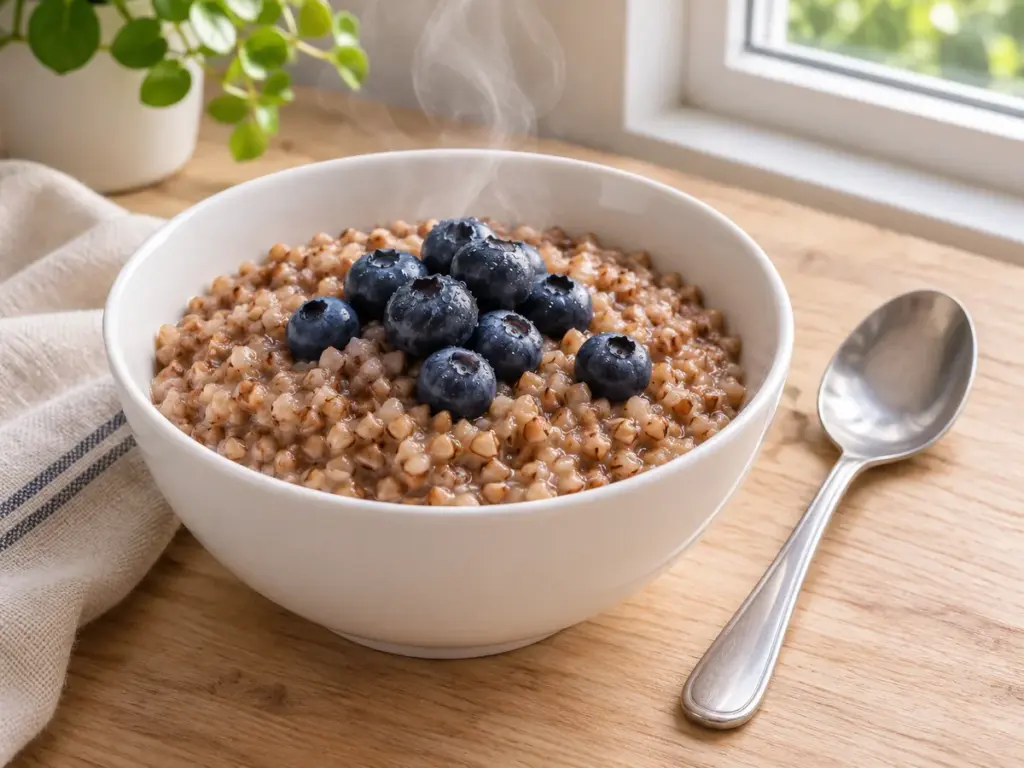
- Hot breakfast porridge
- Gluten-free granola and snack bars
- A bowl that needs a labeled gluten-free base
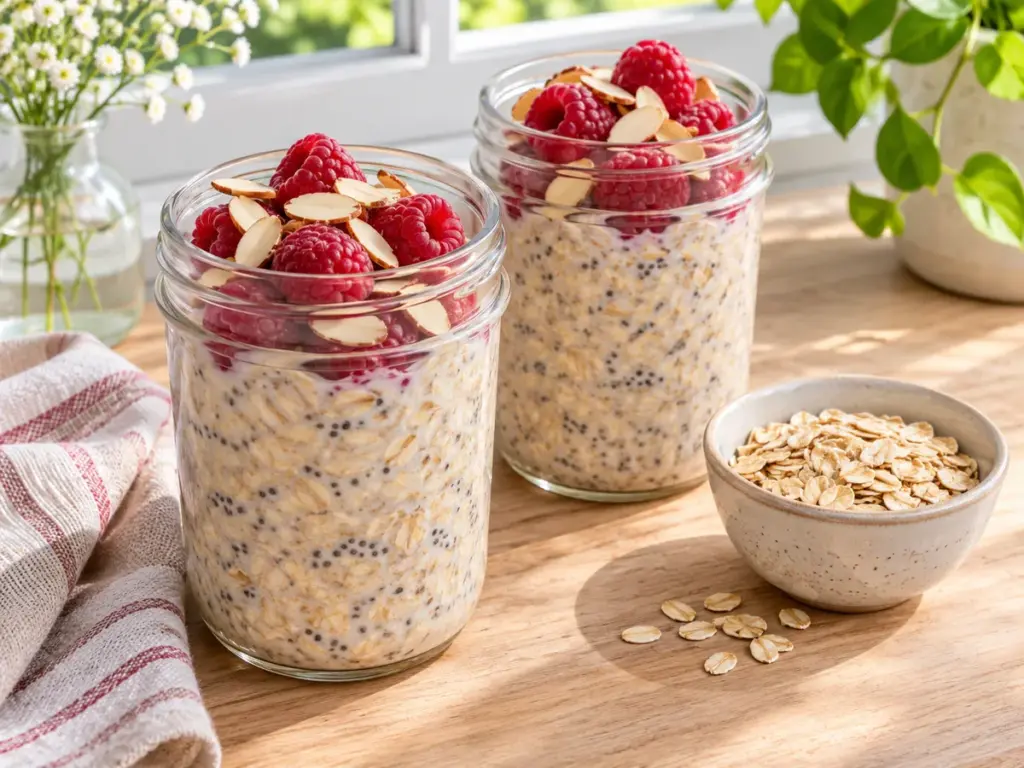
- Overnight oats, where flakes soften without a stove
- Oatmeal cookies and crumbles
- Any dish that needs a 5-minute cook
If you try the swap the other way, you will find that rolled oats cannot stand in for groats in a pilaf or a skillet side, because the flakes break down where groats stay separate. When you run out of rolled oats, you can reach for one of the old fashioned oats stand-ins instead.
7. Which Should You Buy or Use?
Pick the grain that fits the job you are cooking for:
- You avoid gluten: buy buckwheat or kasha in a sealed package labeled gluten-free. Choose oats only if they carry the same label, and skip oats if you react to avenin.
- A weekday breakfast in 5 minutes: rolled oats. You can build a bowl from a list of oatmeal bowl ideas.
- A chewy bowl you can stir for 30 minutes: steel-cut oats.
- A savory side or a rice stand-in: kasha or raw groats, simmered for 20 minutes.
- You want more magnesium: buckwheat, at 86 mg per cooked cup. For more iron choose oats, at 2.1 mg.
Sources
- Celiac Disease Foundation, Gluten-Free Foods (buckwheat groats, oats, avenin, cross-contact, bulk bins)
- USDA FoodData Central: FDC 170686, FDC 170685, FDC 173905, FDC 173904
- Whole Grains Council, Cooking Whole Grains (buckwheat and steel-cut oats)
- Food Network, What Are Steel Cut Oats? (steel-cut and rolled oats, time and water)
- 21 CFR 101.81, soluble fiber from whole oats and heart disease
- Wikipedia, Buckwheat and Oat (botany, avenin, beta-glucan share)

Food writer at GustoMeadow. Writes ingredient substitutes, food comparisons, taste guides and storage guides for home cooks.
Storage and food-safety numbers follow USDA, FDA and university extension guidance.



