
For Kashmiri chili powder, you can mix 3 parts paprika with 1 part cayenne and use the blend in the same amount, then taste it, since it runs hotter.
- Sweet paprika alone gives red color with little heat.
- Straight cayenne is far hotter, so you start with one third of the amount.
- One dried Kashmiri pod equals about ½ teaspoon of powder.
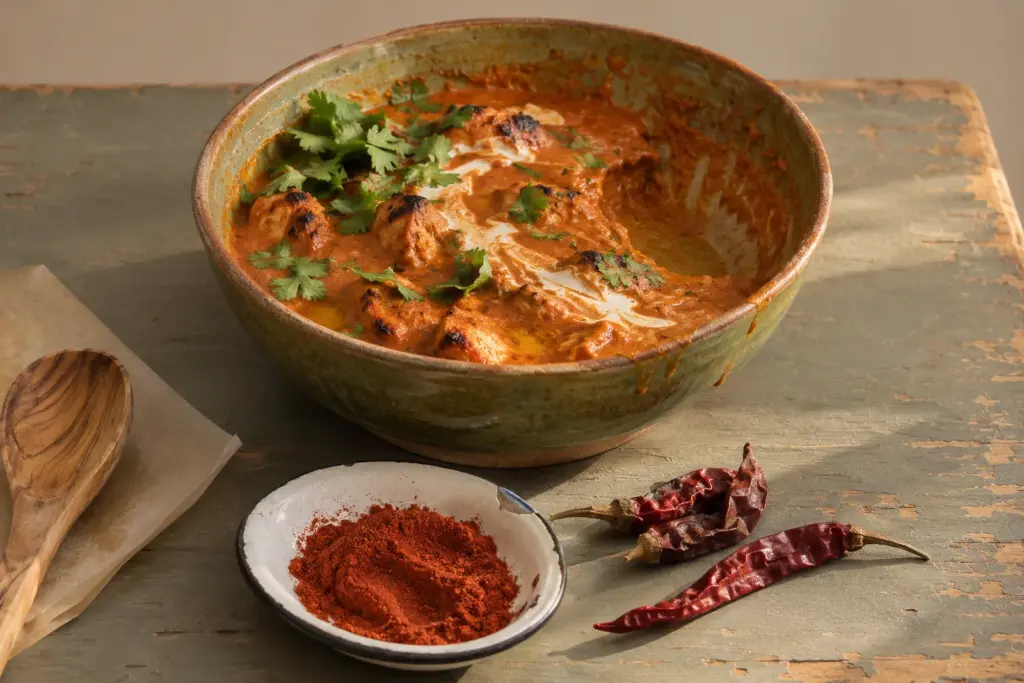
Kashmiri chili is a dried red chile from India that you use for its color more than its heat, and Piping Pot Curry puts it at 1,000 to 2,000 Scoville heat units (SHU). Like other pantry substitutes, the right swap depends on what the chili does in your dish, so each of the six here tells you how much red and how much heat it brings.
What Does Kashmiri Chili Do in a Dish?
Piping Pot Curry describes the flavor as earthy and tangy, and it rates cayenne at 30,000 to 50,000 SHU. By those figures, cayenne is roughly 15 to 50 times hotter than Kashmiri chili (our math).
In a rogan josh recipe on Swasthi's Indian Healthy Recipes, the Kashmiri chili adds red color and volume without making the dish too hot. Swasthi adds that the chilies supply the red in this dish and the tomatoes do not.
What Are the 6 Best Substitutes for Kashmiri Chili?
Amounts in the table are per 1 teaspoon of Kashmiri chili powder, and sources disagree on a few of them, so each entry explains its range. If you need the red, paprika, deggi mirch, Byadgi or mild gochugaru are your picks, since ancho and guajillo give up some color for flavor.
| Substitute | Start with | Heat |
|---|---|---|
| Paprika and cayenne | 1 teaspoon blend | Higher |
| Deggi mirch | ½ to 1 tsp | Slightly higher |
| Byadgi powder | ¼ to 1 tsp | Higher |
| Ancho powder | ½ to 1 tsp | Similar |
| Ground guajillo | ½ tsp | Higher |
| Mild gochugaru | ½ tsp | Similar |
1. Paprika and Cayenne Blend
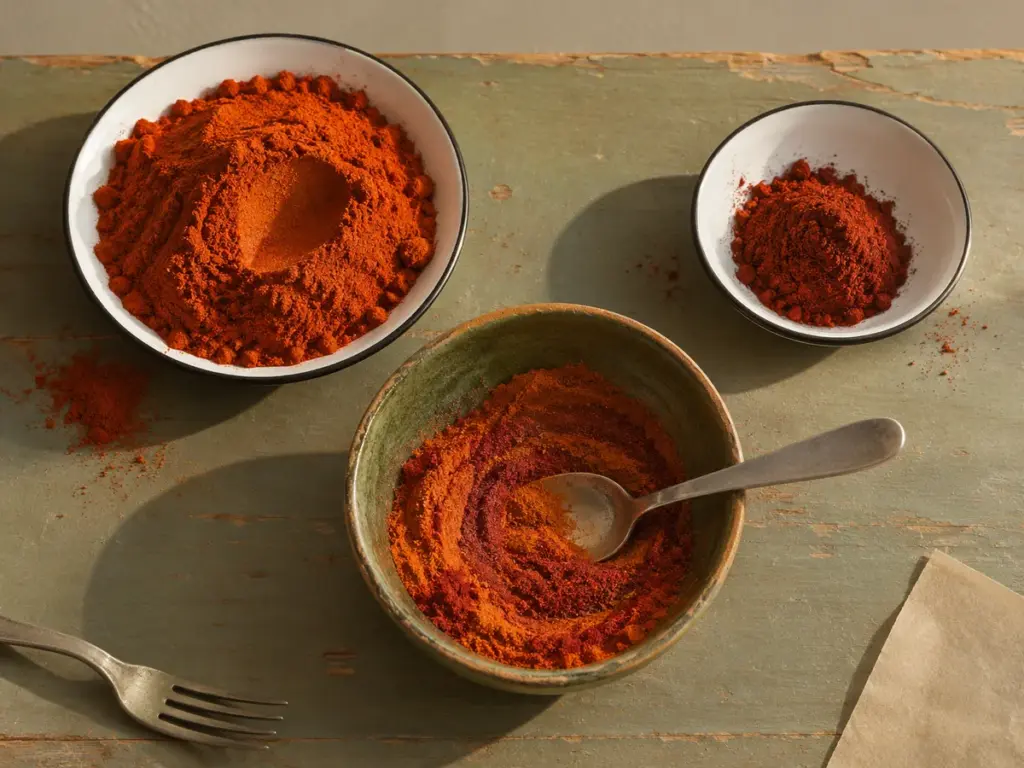
Paprika brings the red and cayenne brings the heat. Feed Me Better mixes 3 parts paprika with 1 part cayenne, such as ¾ teaspoon and ¼ teaspoon, and you use the blend in place of the same amount of Kashmiri powder.
For color, Piping Pot Curry says smoky paprika gives a deeper red than sweet. You can then set the heat in three ways.
- For a mild dish, sweet paprika with a pinch of cayenne is enough.
- Feed Me Better's 3 parts paprika to 1 part cayenne sits in the middle.
- Swasthi's butter chicken recipe gives equal parts as a hotter stand-in.
With cayenne at 30,000 to 50,000 SHU, a 3:1 blend works out to roughly 7,500 to 12,500 SHU (our math, ignoring paprika's small heat), so you add the cayenne in pinches and taste as you go.
2. Deggi Mirch
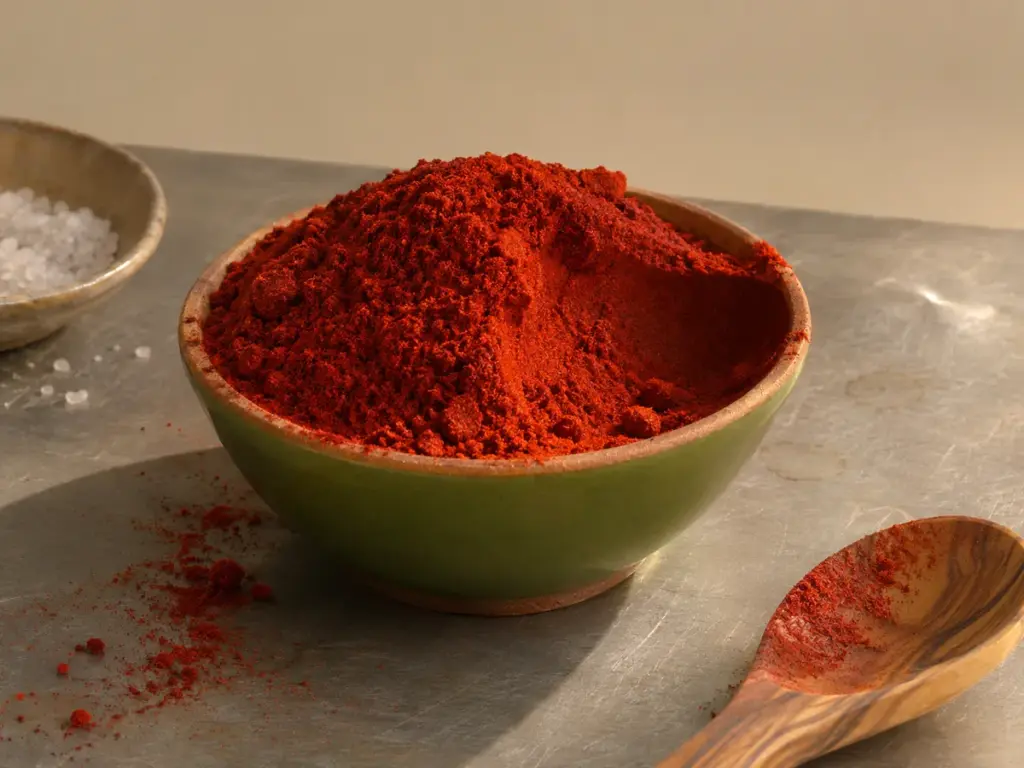
If an Indian grocery is nearby, we'd look for deggi mirch first, and Piping Pot Curry calls it slightly spicier than Kashmiri and milder than standard chili powder, with a similar deep red.
Some jars carry both names, such as Rani's Kashmiri Chilli Powder (Deggi Mirch), so the front label tells you whether you already own one.
Indian Veggie Delight swaps it 1:1, while Piping Pot Curry uses half. If you start with half and taste the dish, you can work up to the full amount when it needs more color.
3. Byadgi Chili, Powder or Whole
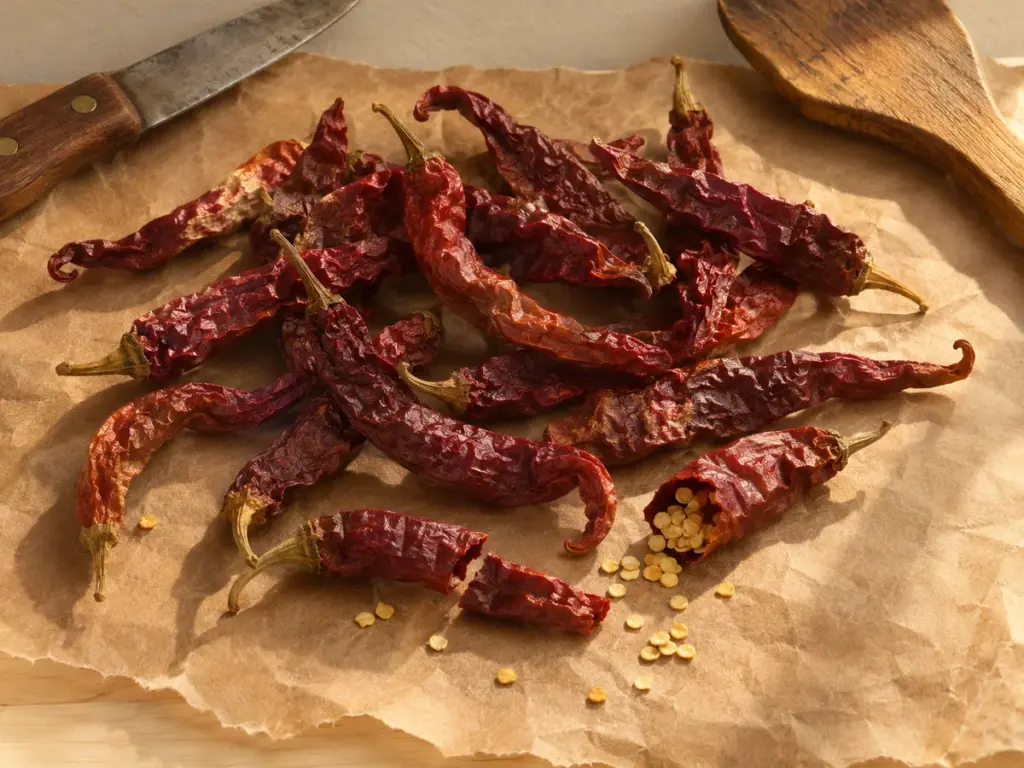
Byadgi chili is named for the town of Byadgi in Karnataka, and Wikipedia lists sambar and bisi bele bath among its uses. Swasthi's butter chicken recipe also lists Byadgi powder as a stand-in for Kashmiri.
Wikipedia's Kashmiri red chilli article says Byadagi chillies are often used as a substitute when demand for Kashmiri is high. The pods look so much like Kashmiri that Pepperscale warns a mix-up can make a dish much hotter, so you'd use fewer Byadgi pods than the recipe lists.
The heat of Byadgi powder is hard to pin down, with Wikipedia listing 5,000 to 15,000 SHU and Pepperscale listing 50,000 to 100,000. Indian Veggie Delight suggests ¼ to 1 teaspoon for each teaspoon of Kashmiri, and with heat figures that far apart, we'd start at the low end and taste before adding more.
4. Ancho Chili Powder
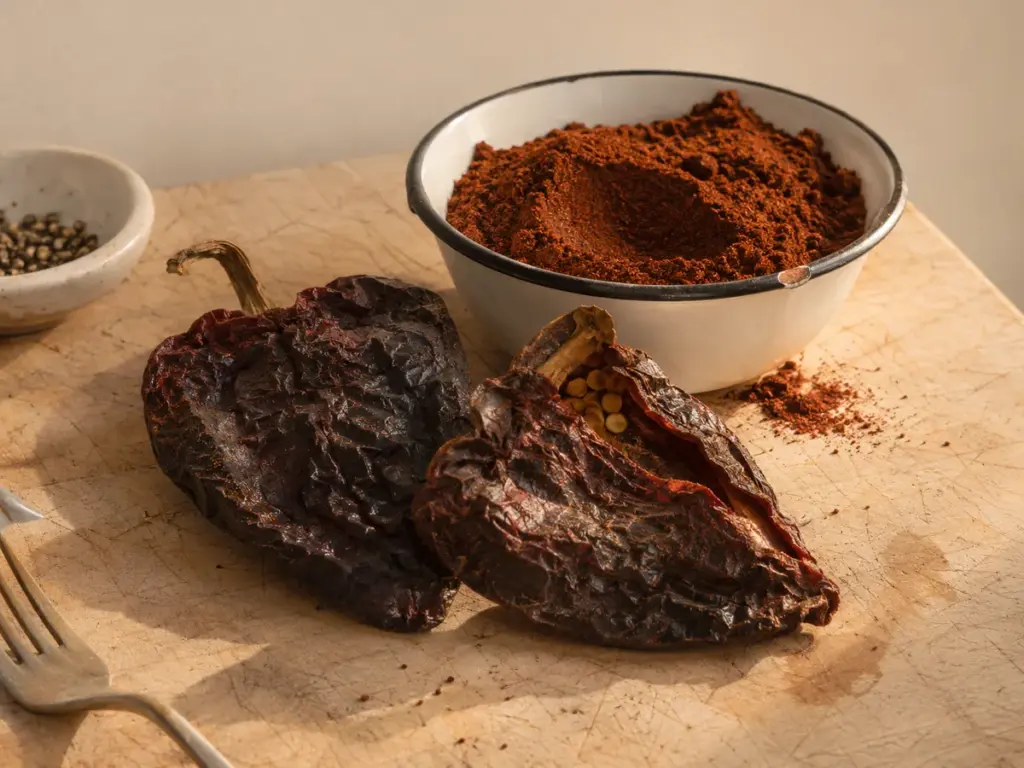
Ground dried ancho chile is mild, at 1,000 to 1,500 SHU according to Feed Me Better, so its heat stays close to Kashmiri. Feed Me Better swaps it 1:1 and Piping Pot Curry uses half, and you're safer if you start with half and add more.
Piping Pot Curry describes ancho as smoky, fruity and a little sweet where Kashmiri is earthy and tangy, so the flavor changes more than the heat does.
On color, Piping Pot calls ancho deep red while Feed Me Better says it lacks the bright red, and the likely result is a darker dish than Kashmiri gives you.
5. Ground Guajillo Chile
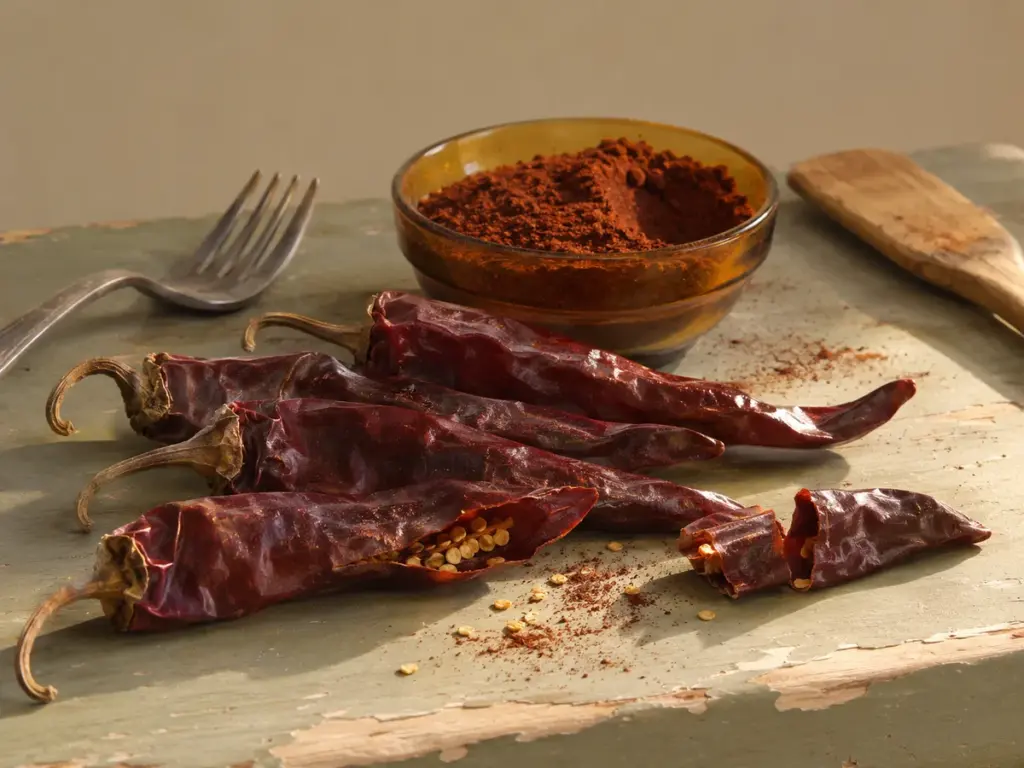
Guajillo is a Mexican chile that runs hotter than Kashmiri, with Feed Me Better listing 2,500 to 5,000 SHU and Wikipedia's Scoville table listing 2,500 to 10,000.
Feed Me Better suggests a 1:2 swap, so you'd start with half the amount of guajillo powder and adjust to taste, grinding whole pods first if that is what you have.
Feed Me Better notes that guajillo lacks the vibrant red, so we'd add a little paprika alongside it to bring some color back. The same source places guajillo in Mexican cooking, and you will taste that change in an Indian dish.
6. Mild Gochugaru
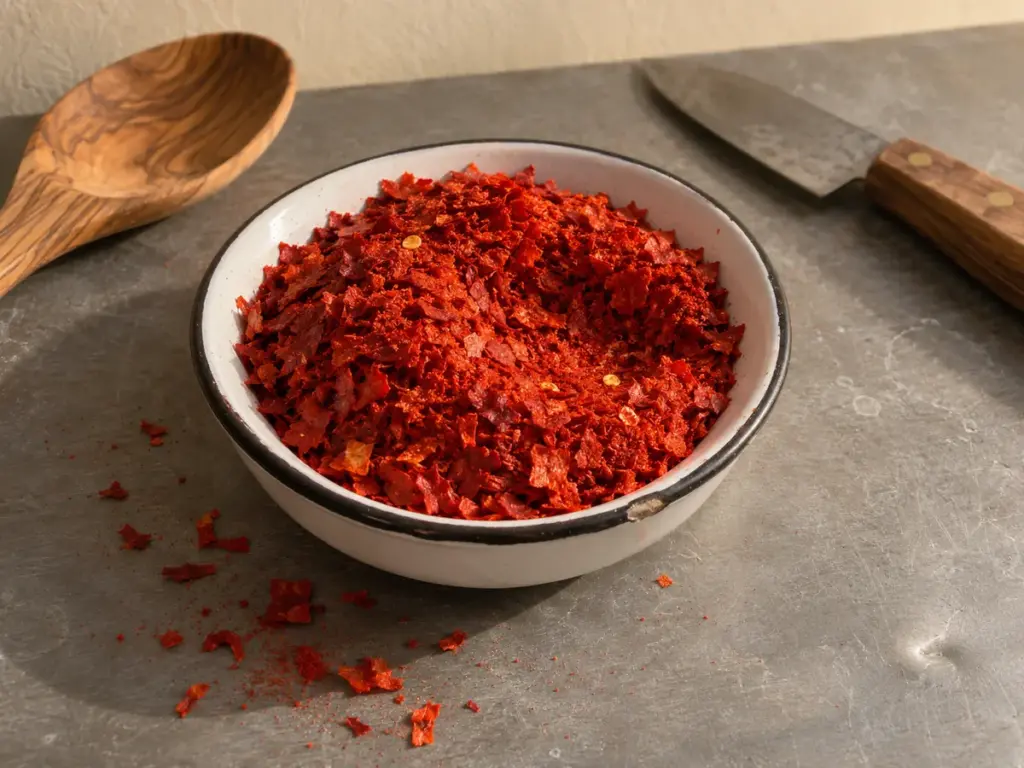
Gochugaru, the Korean chili flake, is vibrant red with a spicy, sweet and slightly smoky flavor according to Wikipedia. Piping Pot Curry recommends the mild kind for its bright red, at half the amount.
The heat varies a lot by jar, from 1,500 to 10,000 SHU on Feed Me Better's figures, and that source advises buying mild, which keeps you near the 1,500 end.
Flakes are coarser than powder, so you can grind them for a smooth marinade or gravy. Aleppo pepper is another flake, but Jamil Ghar says it does not color a dish the same way.
Which Substitute Fits Butter Chicken, Tandoori Chicken and Rogan Josh?
For butter chicken, paprika swaps in directly, because Swasthi's recipe already lists it beside Kashmiri powder. You'd use ½ to ¾ teaspoon of either in the marinade and 1 to 2 teaspoons in the tomato and butter sauce, adjusted to your taste and the color you want.
For tandoori chicken, Swasthi calls Byadgi or Kashmiri powder the secret to a bright red without much heat, at 1 to 2 teaspoons in the marinade, or paprika adjusted to taste, and her recipe gives three ways to set the heat.
- A smoked hot chili powder at 1 teaspoon gives low heat.
- The same powder at 2 teaspoons gives high heat.
- For paprika, 1 to 1½ parts cayenne to 3 parts paprika gives the same color.
For rogan josh, Swasthi's recipe asks for the most, at 1 to 1½ tablespoons of Kashmiri powder.
At that amount the chili supplies the dish's red, so we'd use paprika or deggi mirch here and save ancho and guajillo for dishes where a darker color is fine.
How Do You Replace Whole Dried Kashmiri Chilies?
Powder replaces pods at a fixed rate, and a recipe that calls for chili paste uses a different one.
Without Kashmiri pods, Byadgi pods come closest in shape and color. You can also grind guajillo or ancho pods to powder and use them as in entries 4 and 5.
Which Substitutes Should You Skip?
Each of these swaps adds much more heat than Kashmiri or takes away the red you're after.
- Cayenne alone is the last resort from the short answer, since Piping Pot Curry warns that a direct swap makes a dish far too spicy.
- Red Thai chilies reach 50,000 to 100,000 SHU on Wikipedia's figures.
- Chile de árbol is bright red but rated 15,000 to 30,000 SHU by Wikipedia.
- Chipotle powder tastes smoky, which Piping Pot Curry calls quite different from Kashmiri's fruity, earthy notes, and Feed Me Better rates it at 2,500 to 8,000 SHU.
- Red pepper flakes add heat but lack the deep red color and the flavor, according to Piping Pot Curry.
If you reach for regular chili powder, the name covers two different products. US chili powder is usually a blend with cumin, onion and garlic powder according to Wikipedia, which changes the flavor of an Indian dish.
Indian red chili powder is plain ground chile at 40,000 to 60,000 SHU by Feed Me Better's figures, so you'd use only about ¼ teaspoon of it for each teaspoon of Kashmiri, the amount that source gives.
Sources
- Piping Pot Curry: Kashmiri Chili Powder Substitute
- Feed Me Better: Kashmiri Chili Powder Substitute
- Indian Veggie Delight: Kashmiri Chili Powder Substitute
- Swasthi's Indian Healthy Recipes: Rogan Josh, Butter Chicken and Tandoori Chicken
- Pepperscale: Byadgi Chili
- Jamil Ghar: Kashmiri Chili Powder Substitute
- Target: Rani Kashmiri Chilli Powder (Deggi Mirch, Low Heat)
- Wikipedia: Kashmiri red chilli, Byadagi chilli, Scoville scale, Thai pepper, Chile de árbol, Gochugaru and Chili powder

Food writer at GustoMeadow. Writes ingredient substitutes, food comparisons, taste guides and storage guides for home cooks.
Storage and food-safety numbers follow USDA, FDA and university extension guidance.



