
Ceylon (Cinnamomum verum) is the mild, floral, low-coumarin "true" cinnamon, and Saigon (Cinnamomum loureiroi) is a hot, sweet cassia cinnamon with far more coumarin.
- Pick Saigon for cinnamon rolls, snickerdoodles and anything where cinnamon has to stand up to butter and sugar.
- Pick Ceylon for custards, rice pudding, drinks, and any cinnamon you eat by the spoonful every day.
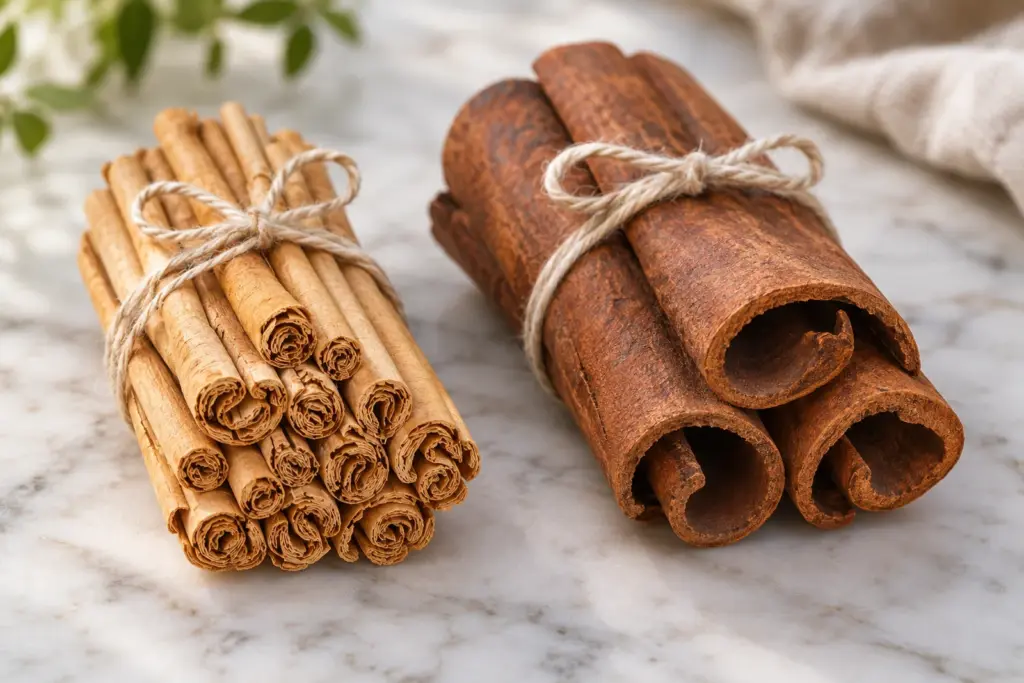
Unlike most everyday food comparisons, where either option works, this pair changes what ends up in your body as well as on your plate. Saigon belongs to the cassia cinnamon family that fills most American spice racks, while Ceylon comes from a different tree, so you have to buy it on purpose.
1. What Is the Difference Between Ceylon and Saigon Cinnamon?
The two come from different species, grow in different countries, and differ most in coumarin, flavor strength and how the bark is built. This table puts the traits side by side:
| Trait | Ceylon | Saigon |
|---|---|---|
| Species | Cinnamomum verum | Cinnamomum loureiroi |
| Group | "True" cinnamon | Cassia |
| Main growing region | Sri Lanka | Vietnam |
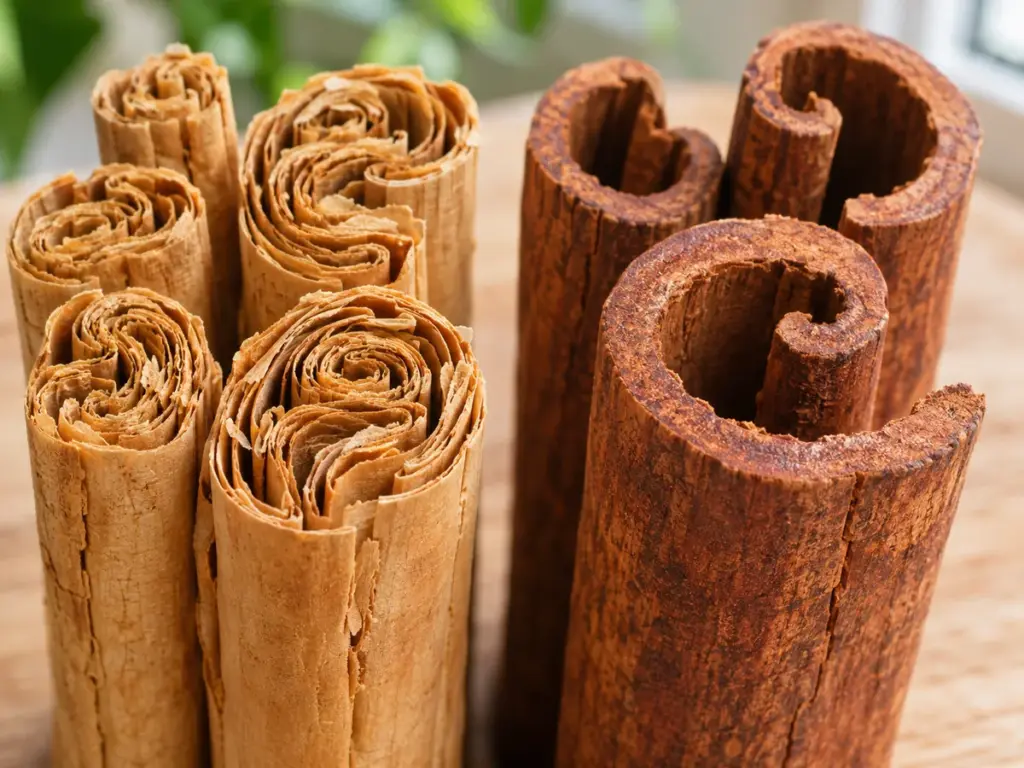
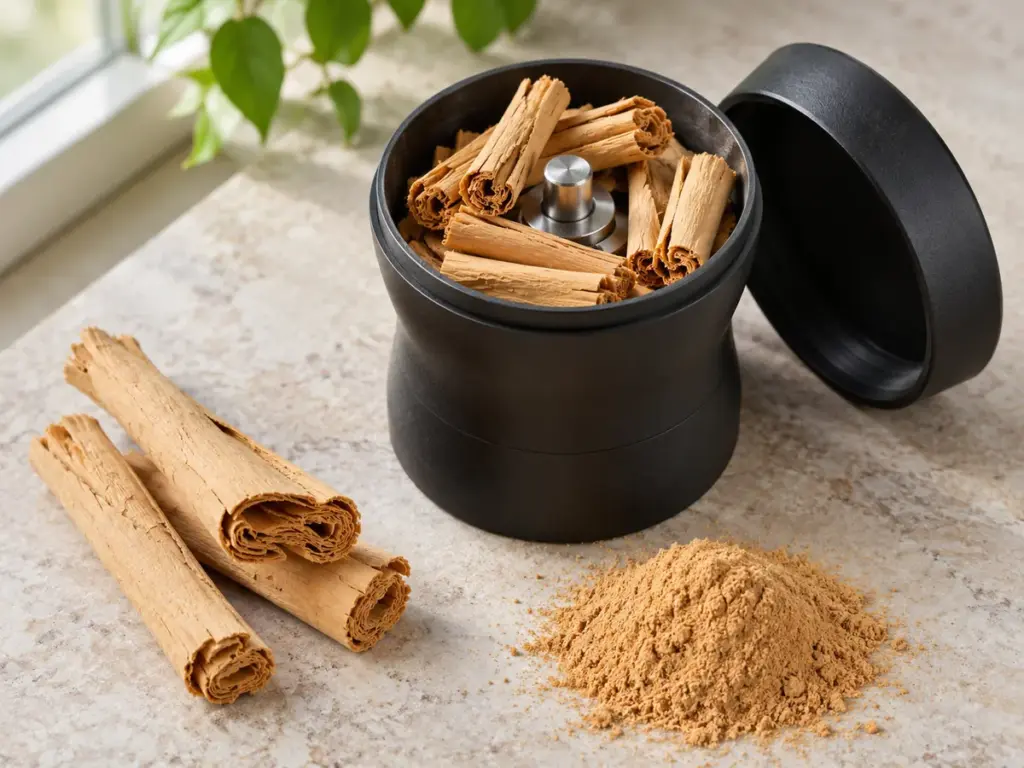
| Whole stick | Thin, pale tan, many papery layers rolled together | Thick, dark reddish-brown, one hard curled layer |
| Flavor | Mild, sweet, floral and citrusy | Hot, sweet and punchy |
- It is best in custards, rice pudding, drinks and fruit.
- You find it in specialty shops and online, usually labeled "Ceylon".
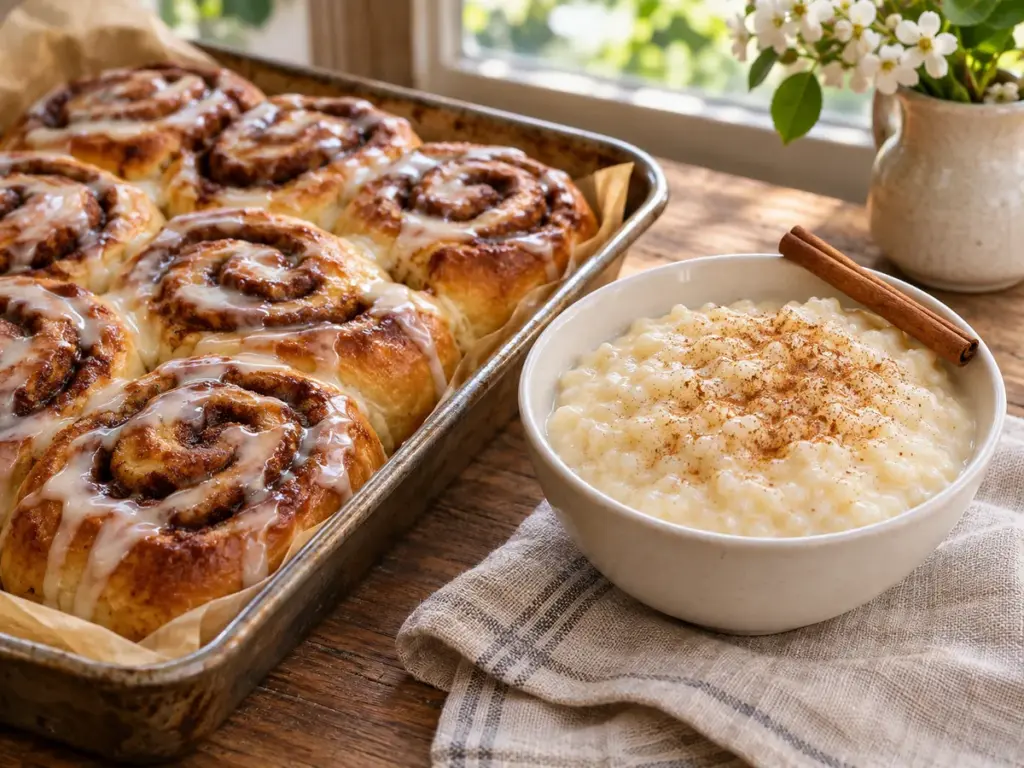
- It is best in cinnamon rolls, cookies and spice cakes.
- Many grocery stores sell it under its own name.
The coumarin row is the one that can change what you buy. The ranges come from a 2013 analysis of authenticated bark published in the Journal of Agricultural and Food Chemistry, and the coumarin section below turns them into teaspoons you can count.
2. How Do Ceylon and Saigon Taste Different?
Both get most of their flavor from cinnamaldehyde, the compound behind cinnamon's sweet, warm taste, so the two differ in how strong they taste and which extra notes they carry. Ceylon tastes gentle and layered, with floral and citrus notes and, as many people describe it, a hint of clove in the background. Saigon tastes sweet first and then hot, with a spicy burn at the back of your tongue that Ceylon lacks.
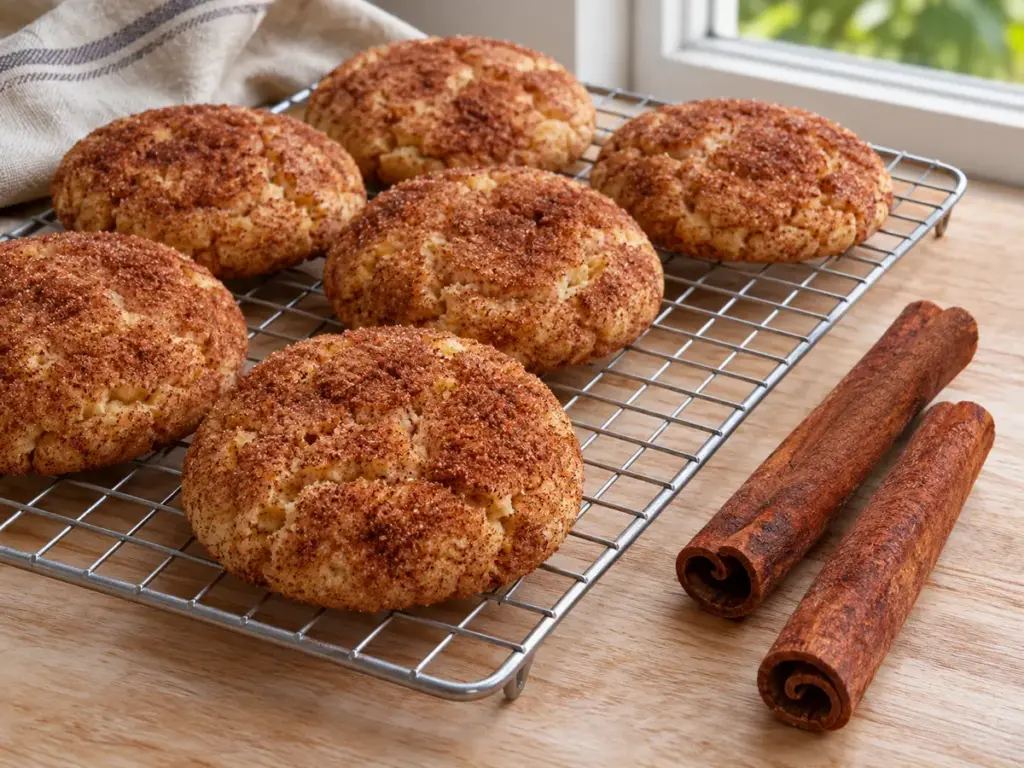
You will notice that gap in a recipe in three ways:
In buttery dough, Saigon still tastes like cinnamon after baking, while the spoonful of Ceylon you would normally add can fade behind the butter and sugar.
- In milk, cream and eggs, Ceylon blends in so you still taste the vanilla and dairy first, where Saigon can taste sharp.
- On top of a dish, if you dust on Ceylon it reads as perfume, and if you dust on Saigon it reads as heat.
3. How Can You Tell Ceylon From Saigon in the Store?
You can tell whole sticks apart easily, but you can hardly judge ground cinnamon by eye. In the United States a jar labeled only "cinnamon" is usually cassia, because NIH's complementary health center notes that cassia is the more common type sold in North America and that products often do not name the species.
- Read the label. "Ceylon," "true cinnamon" or Cinnamomum verum means low coumarin. "Saigon," "Vietnamese," "cassia" or plain "cinnamon" means high coumarin.
- Look at the cut end of a stick. Many thin, tightly rolled layers mean Ceylon. One thick, hard curl means cassia, including Saigon.
- Try to snap it. Ceylon quills are brittle and crumble in your fingers. Cassia sticks are hard to break by hand.
- Smell the jar. Ceylon smells soft and floral, Saigon smells hot and sweet like a cinnamon candy.
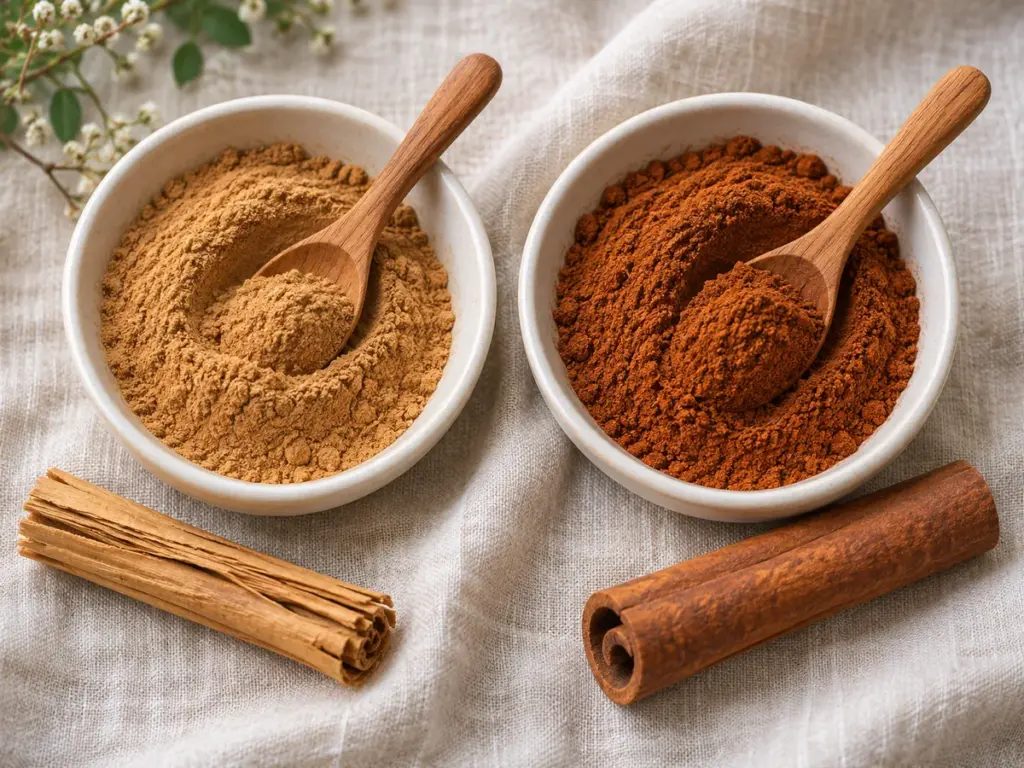
Ground cinnamon is the harder case. Ground Ceylon is a lighter tan and ground Saigon is a deeper reddish-brown, but you only see that when you hold them side by side.
If the label gives no species, treat the jar as cassia. Ceylon's brittle quills also grind easily in a spice mill, which is why many cooks buy sticks and grind them as needed.
Which Has More Coumarin, and Does It Matter?
Saigon has far more. In the 2013 analysis, authenticated Ceylon bark held 0.005 to 0.090 mg of coumarin per gram and Saigon bark held 1.06 to 6.97 mg per gram, so a gram of Saigon carries anywhere from about a dozen times to over a thousand times as much, depending on the samples compared.
Germany's Federal Institute for Risk Assessment (BfR) puts the average for retail cassia at about 3 mg per gram, with the highest sample at 10 mg per gram.
Health agencies compare the coumarin you eat with a tolerable daily intake of 0.1 mg of coumarin per kilogram of body weight, the figure BfR uses and EFSA set in 2004. For a 60 kg adult that is 6 mg a day, and for a 15 kg child it is 1.5 mg. A teaspoon of ground cinnamon weighs about 2.6 g (USDA FoodData Central), so you can turn the ranges into a daily total:
| 1 teaspoon (about 2.6 g) | Coumarin | Against a 60 kg adult's 6 mg limit |
|---|---|---|
| Ceylon | 0.01 to 0.23 mg | Under 4% of the limit |
| Saigon | 2.8 to 18 mg | About half to three times the limit |
We calculated these from the published ranges, so a real jar can land anywhere inside them. BfR says exceeding the limit for a short time does not create a health risk, and the concern is eating a high amount every day over a long period. The NCCIH adds that prolonged use of cassia could be an issue for sensitive people, such as those with liver disease.
Whichever type you buy, the health claims are weaker than the labels suggest. The NCCIH says studies on cinnamon and blood sugar are hard to interpret because many do not state which species they tested, and that it is unclear whether cinnamon helps with diabetes or weight loss.
4. Which Is Better for Baking and Cooking?
Match the cinnamon to how much else is competing with it in the dish. Saigon holds its own when your dish has a lot of fat and sugar, and Ceylon shines where the other flavors are quiet.
- Rice pudding, flan and custard, and crème brûlée, where eggs and milk are the base
- Horchata and Mexican hot chocolate
- Poached pears and baked apples
- Daily oatmeal, coffee and smoothies
- Cinnamon rolls and sticky buns
- Snickerdoodles, spice cookies and gingerbread
- Apple pie and coffee cake with crumb topping
- Braises, chili and curry
5. Can You Use Saigon Instead of Ceylon, or the Reverse?
Yes, in almost any recipe, because they share the same basic flavor and only differ in strength. If you swap Saigon for Ceylon, plan on about one and a half times as much Ceylon and taste the batter or filling before you bake. If you swap Ceylon for Saigon, start with about two-thirds of the amount called for.
These are starting points from the flavor difference, not tested conversions, so adjust to your own jar, since freshness and grind change the strength as much as the species does.
If you put Saigon in a delicate dish like custard, the character changes more than it does in rolls, and the food can taste hot instead of soft. If you have neither, allspice or nutmeg can stand in for ground cinnamon in many baked recipes, though the flavor will change.
6. Which Should You Buy?
Most cooks fall into one of three kitchen situations:
- You bake a lot of cinnamon rolls, cookies and pies: buy Saigon. Its heat survives the oven, and you use less of it.
- You eat cinnamon daily, or cook for young children: buy Ceylon, because a daily spoonful of Saigon can exceed the coumarin limit on its own.
You only want one jar: buy Saigon if baking with butter and sugar is most of your cinnamon use, and Ceylon if you mostly flavor custards, drinks, fruit and oatmeal.
Ceylon usually costs noticeably more per ounce and is easier to find online than on a supermarket shelf, so you can stretch the cost by buying whole quills and grinding them as needed. Check that the label names the species, and skip jars that say only "cinnamon" if low coumarin is the reason you are paying more.
The USDA FoodKeeper gives ground cinnamon 3 to 4 years in the pantry, though ground cinnamon keeps its punch for less time than that, so replace a jar that no longer smells strong when you open it.
Sources
Wang YH, Avula B, Nanayakkara NP, Zhao J, Khan IA. Cassia cinnamon as a source of coumarin in cinnamon-flavored food and food supplements in the United States. Journal of Agricultural and Food Chemistry, 2013.
- German Federal Institute for Risk Assessment (BfR), FAQ on coumarin in cinnamon and other foods.
- BfR press release, Cassia cinnamon with high coumarin contents to be consumed in moderation, 2012.
- National Center for Complementary and Integrative Health, Cinnamon.
- USDA FoodData Central, Spices, cinnamon, ground (household measure).
- USDA FoodKeeper, cinnamon, ground (pantry storage).

Food writer at GustoMeadow. Writes ingredient substitutes, food comparisons, taste guides and storage guides for home cooks.
Storage and food-safety numbers follow USDA, FDA and university extension guidance.



