
In a US grocery store, white grapes and green grapes are the same fruit.
- "White" is the trade and wine word for light-skinned grapes, and "green" is the word shoppers use, so one bag of Thompson Seedless can carry either name.
- The differences that change what you eat are between varieties, and between fresh grapes and white grape juice.
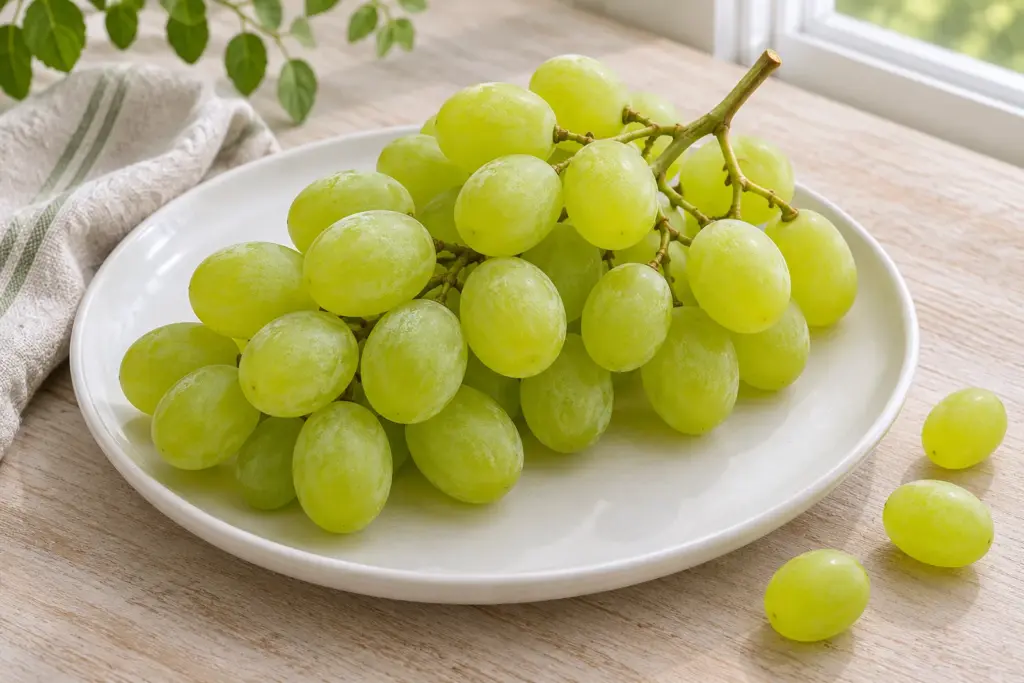
If you came here expecting two different fruits, the answer is simpler than the names suggest. Your real choice is between varieties, and the rest of this food comparison sorts them out. USDA does not split grape nutrition by color either, so no "white grapes have fewer calories" claim holds up.
1. What Is the Difference Between White Grapes and Green Grapes?
At the produce counter, nothing separates them. Growers and shippers call light-skinned grapes white grapes because they are the kind used for white wine, while most shoppers call the same fruit green grapes because of the color they see. The skin runs from pale yellow-green to gold, and a bag with either label is often seedless Thompson Seedless-type fruit.
The word "white" follows the wine, not the skin. Pinot Gris is a white-wine grape whose skins look grayish or pinkish, so a grape can count as white without looking green at all. Pinot Gris has a close relative in Pinot Blanc, another white-wine grape.
| Name you see | What it means | What you do with it |
|---|---|---|
| "Green grapes" (produce aisle) | Light-skinned table grapes, mostly seedless | Eat fresh, slice into salads, freeze |
| "White grapes" (recipe or produce sign) | The same fruit under its trade name | Use any green seedless grape |
- Grapes grown for white wine, such as Chardonnay and Riesling.
- Mostly sold to wineries, not for snacking.
- Juice from light-skinned grapes, often a blend that includes Niagara.
- Drink it or cook with it; it has almost no fiber.
Only the last two rows are different products, so when a recipe says white grapes, you can reach for green seedless grapes and cook as written.
2. How Do Green Grape Varieties Taste Different?
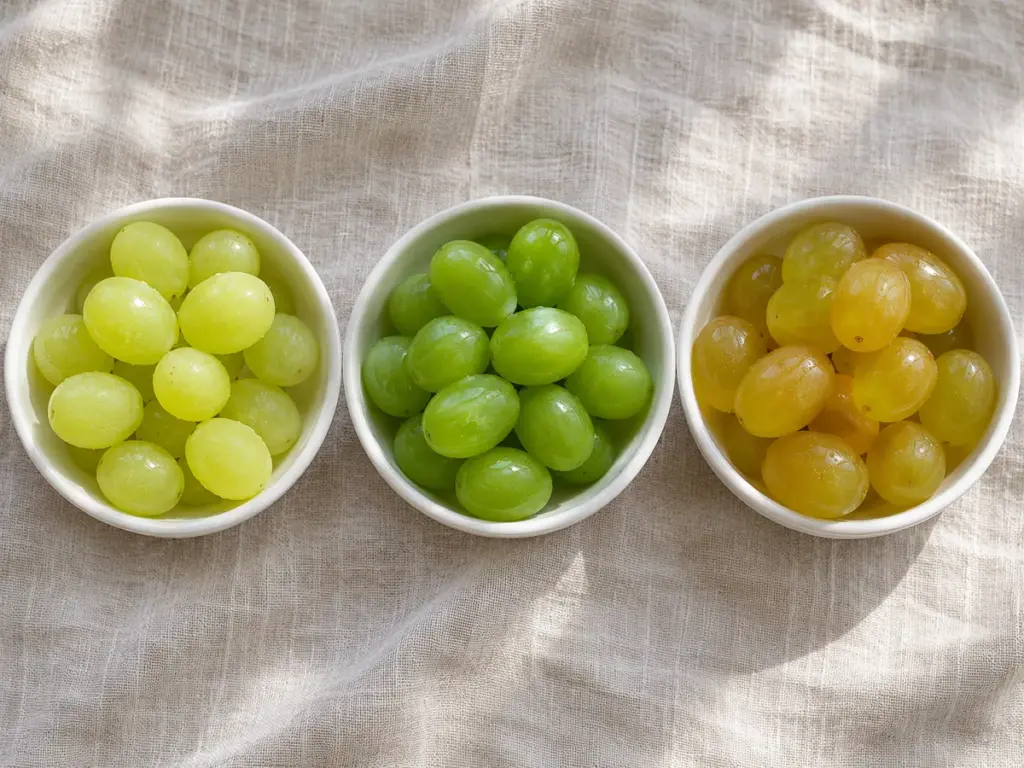
Color does not split the category, so the variety does. These are the four you are most likely to meet.
| Variety | Seeds | Texture and flavor | Best use |
|---|---|---|---|
| Thompson Seedless | None | Thin skin and a mild sweetness | Everyday snacking and salads; a common raisin grape |
| Autumn Crisp | None | Large, firm and crisp, with a light muscat note | Snacking and cheese boards |
- Cotton Candy has no seeds and a very sweet flavor close to spun sugar. It is best for snacking, and we'd keep it out of savory dishes.
- Niagara has seeds, slip skin and a strong, perfumed grape flavor. It is best for juice and jelly.
Within one variety, ripeness tells you more than the color name. We'd pick yellow-green grapes with a slight amber blush over hard, bright-green ones, because the riper berries are usually sweeter. Look for plump berries that sit firmly on green, bendable stems.
The dusty film on the skin is bloom, a natural coating, so it does not mean the grapes are dirty or old. You rinse it off like any other grape just before you eat them.
3. Is White Grape Juice the Same as Eating Green Grapes?
No. White grape juice comes from light-skinned grapes, but it is pressed, filtered and often made from concentrate. Welch's says its white grape juice uses a blend that includes Niagara grapes, and the bottled version lists vitamin C, citric acid and a preservative called potassium metabisulfite that keeps the color from browning.
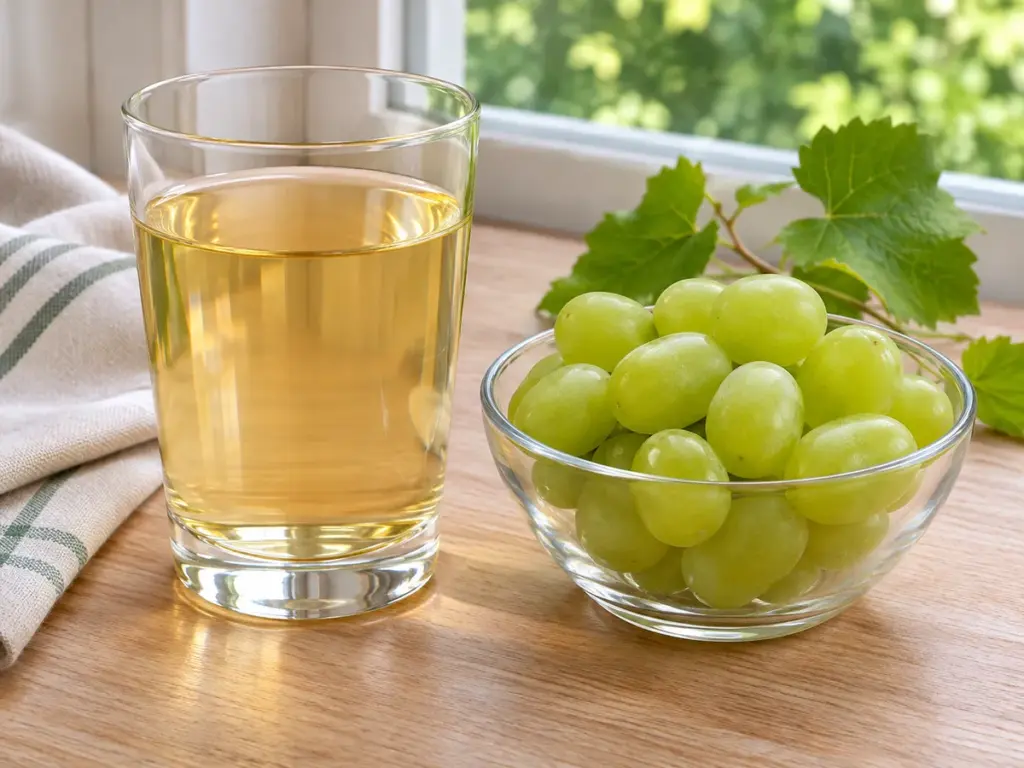
The bigger gap for you is fiber. MyPlate says fruit juice has little or no fiber and that at least half of your fruit should come from whole fruit, so a glass of juice does not replace a bowl of grapes.
Only 100% juice counts as fruit there, which means you should read the front label for "100% juice" and skip anything called a juice drink or cocktail. In the kitchen, 100% white grape juice also stands in for white wine in cooking when you want an alcohol-free option.
4. Is There a Nutrition Difference Between White and Green Grapes?
Not by color. USDA publishes one entry for raw red or green European-type grapes such as Thompson Seedless (FoodData Central 174683), so one set of numbers covers every shade in your bag.
| Per 100 g, raw | Amount |
|---|---|
| Calories | 69 kcal |
| Carbohydrate | 18.1 g |
| Sugars | 15.5 g |
| Fiber | 0.9 g |
| Protein | 0.7 g |
| Vitamin C | 3.2 mg |
| Vitamin K | 14.6 mcg |
| Potassium | 191 mg |
Most of those calories come from sugar, and a 150 g serving, roughly a cup, works out to about 104 calories and 23 g of sugar (our arithmetic from the 100 g values). Grapes are sweet fruit with under 1 g of fiber per 100 g, so a handful is an easy snack but not a filling one.
5. Can You Use White Grapes Instead of Green Grapes?
You can for fresh grapes, and the exceptions are few.
- The recipe says white grapes (salad, cheese board, roasting): use green seedless grapes one for one, because they are the same fruit.
- The recipe says seedless and you have seeded grapes such as Niagara: halve each berry and pick out the seeds before you add them.
- The recipe means wine grapes: you will rarely find these in a store, and green table grapes are the practical stand-in for jelly or sauce.
- The recipe needs something chewy and concentrated: you would move to raisins instead of fresh grapes, and the sugar and moisture change a lot when you do.
6. Which Green Grapes Should You Buy?
Pick by what you plan to do with them.
- Snacking and lunch boxes: Autumn Crisp gives you the most crunch, Cotton Candy suits a sweet tooth, and Thompson Seedless is the mild everyday choice.
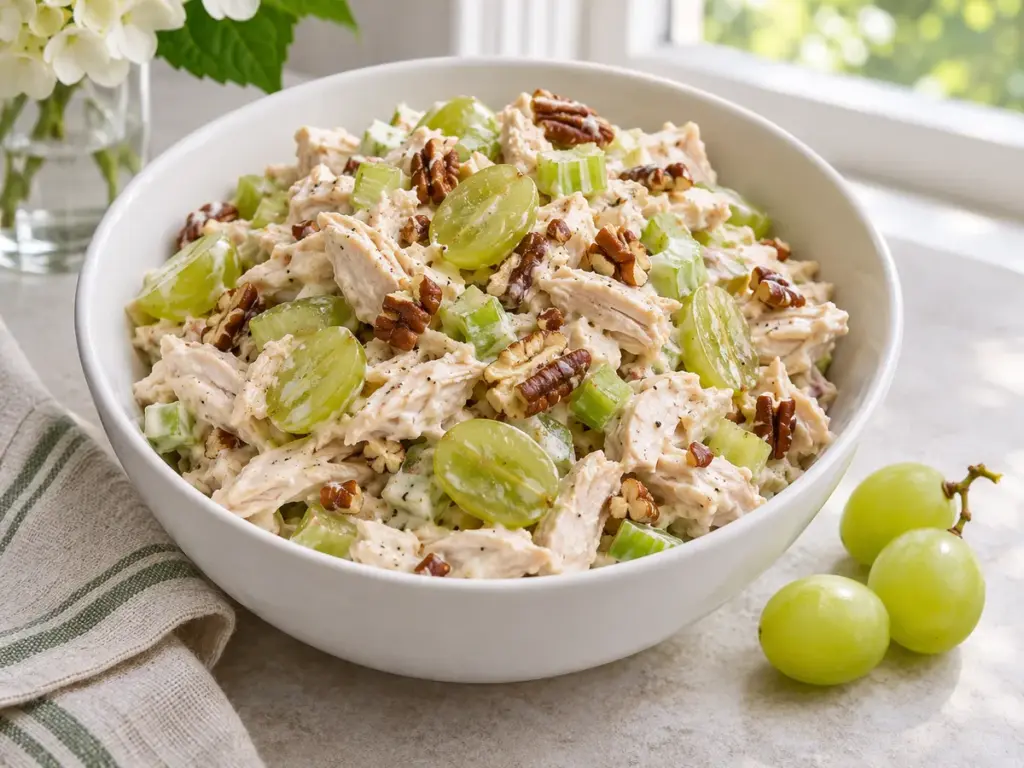
- Chicken salad and grain bowls: choose firm seedless berries and halve them, because soft, overripe ones turn mushy once they sit in dressing. Halved grapes, celery and almonds make a chicken salad with grapes that needs no heavy mayo base.
- Cheese boards: a crisp grape such as Autumn Crisp balances rich cheese, and you can serve it still on the stem next to the other items on a charcuterie board.
- Fruit salad: toss halved green grapes with toasted almonds, rosemary and honey for a grape and almond fruit salad.
- A drink: buy 100% white grape juice, and do not count on it for fiber.
Sources
- USDA FoodData Central, grapes, red or green (European type, such as Thompson seedless), raw (FDC 174683)
- USDA FoodKeeper, grapes
- USDA MyPlate, Fruits
- Welch's, health and nutrition FAQs (white grape juice)
- VinePair, how gris grapes are categorized by color
- Nationwide Children's Hospital, summary of the American Academy of Pediatrics 2010 choking policy statement

Food writer at GustoMeadow. Writes ingredient substitutes, food comparisons, taste guides and storage guides for home cooks.
Storage and food-safety numbers follow USDA, FDA and university extension guidance.



