
In the UK, porridge oats are rolled oats and oatmeal is oats ground into a meal.
- Porridge oats are flat flakes that cook creamy in minutes.
- UK oatmeal comes pinhead, coarse, medium or fine, for porridge, oatcakes and coatings.
- In the US, "oatmeal" is the cooked breakfast or the rolled oats behind it, so you can usually use the same rolled oats.
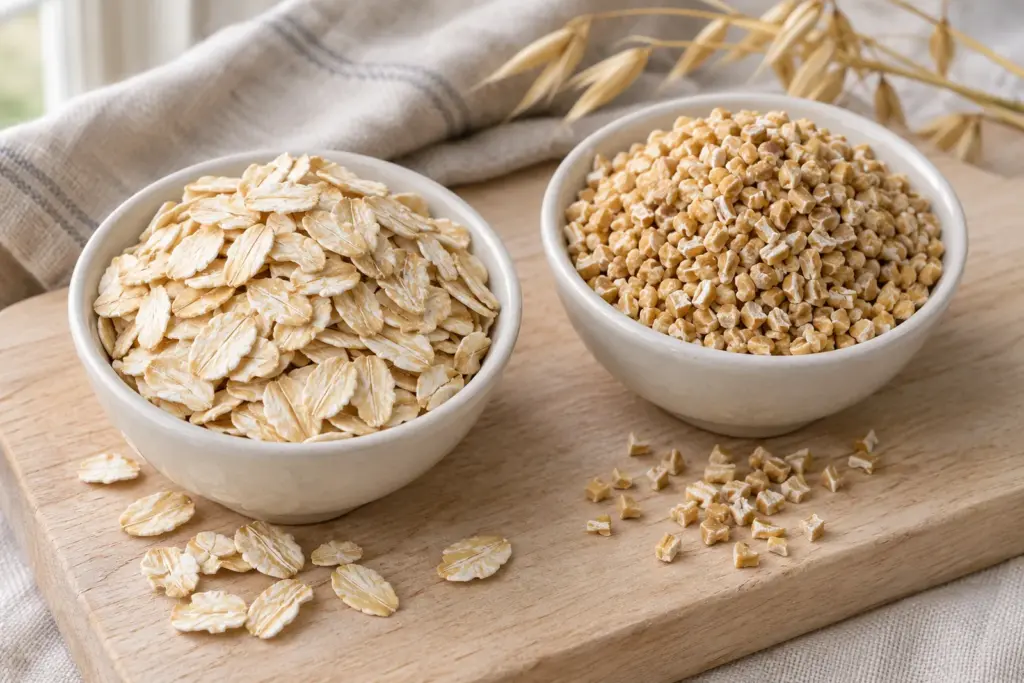
Few everyday food comparisons depend on geography as much as this one, because British and American kitchens use the two words for different things. What changes your bowl or your cookies is how the oat was cut and processed, so that is what you should look for on the package.
1. What Is the Difference Between Porridge Oats and Oatmeal?
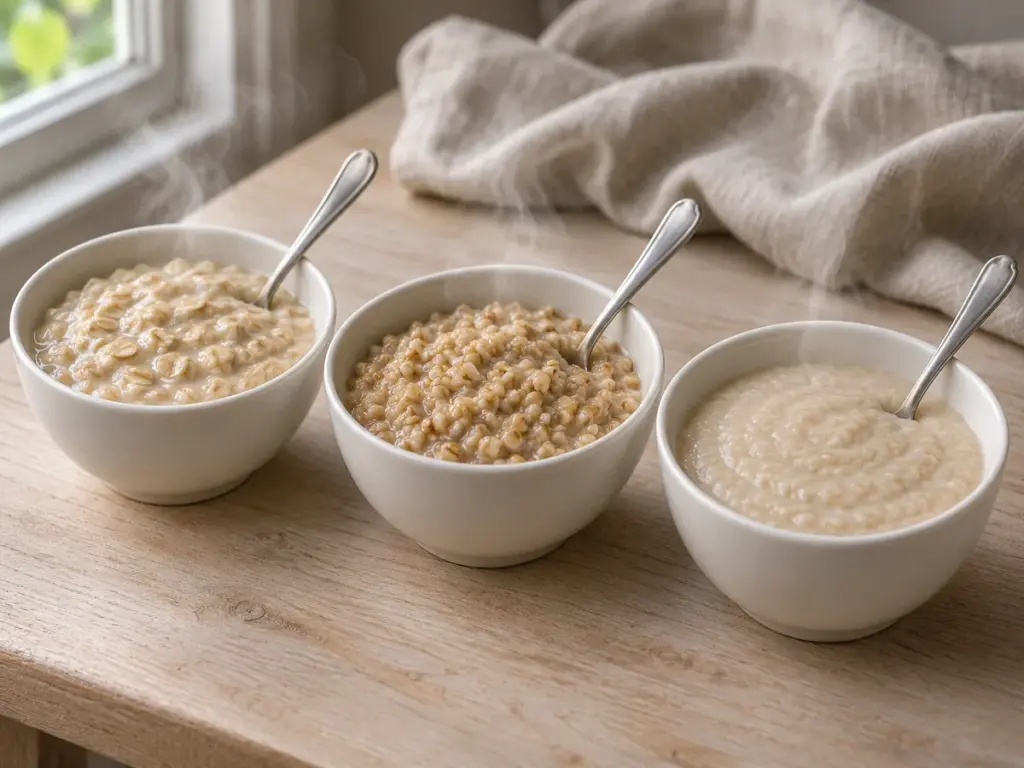
Porridge oats are rolled oats: hulled oat groats that were steamed and pressed flat into flakes. British and Scottish oatmeal takes the other route, with groats cut or milled into pieces and sorted into pinhead, coarse, medium and fine grades. Americans call pinhead oatmeal steel-cut oats, and you may also see it sold as Irish oatmeal.
- Porridge oats are rolled oats: steamed, flattened groats.
- Oatmeal in the UK and Scotland is groats cut or milled into pinhead, coarse, medium or fine grades.
- Oatmeal in the US is the cooked breakfast, or the rolled oats it is made from.
Porridge oats look like flat flakes, from large "jumbo" to small. UK and Scottish oatmeal is small cut pieces or a gritty meal, close to coarse flour at the fine end. US oatmeal is usually flakes.
| Porridge oats | Oatmeal (UK and Scotland) | Oatmeal (US) | |
|---|---|---|---|
| Cooked texture | Soft and creamy with a little chew | Smooth and thick (fine) to grainy and chewy (pinhead) | Depends on the oat cut used |
| Typical uses | Porridge, flapjacks, overnight oats, muesli | Porridge, oatcakes, coatings, stuffing, crumble toppings | Breakfast bowls, cookies, bars, granola |
The words overlap, which is where the mix-up starts: a bowl you cook from porridge oats is oatmeal in the American sense, and Scottish porridge cooked from oatmeal is porridge in every sense. The FDA's labeling rule backs the American usage by defining rolled oats, also known as oatmeal, as 100 percent dehulled oat groats.
2. How Does the Texture Change?
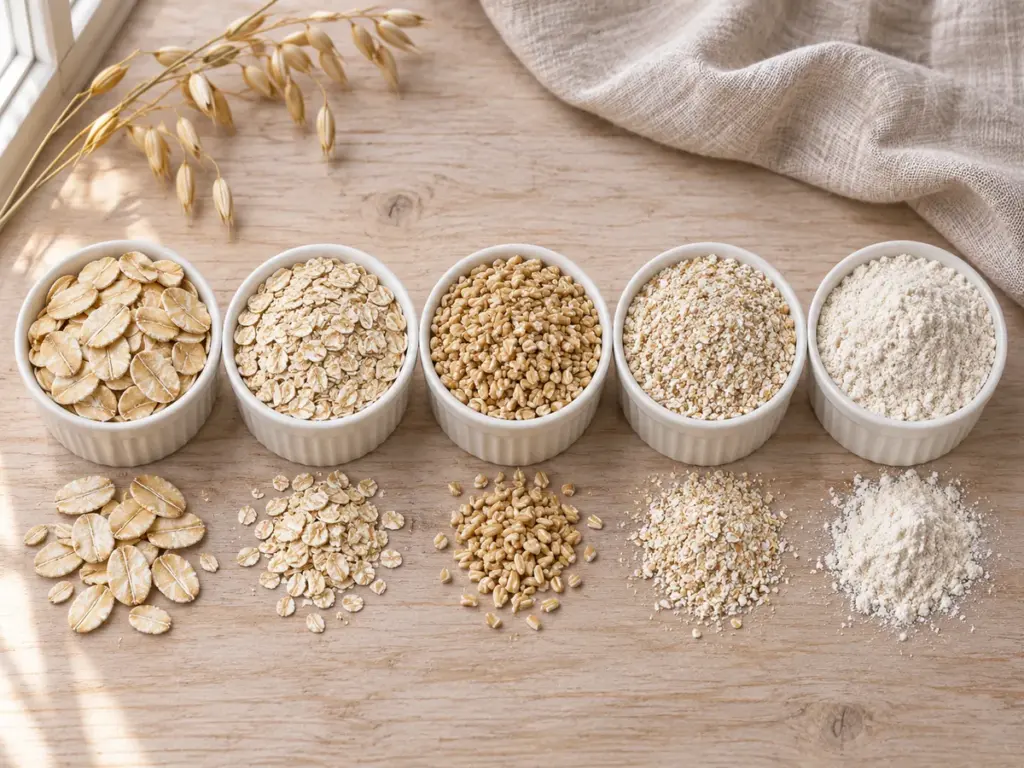
How your bowl feels comes down to particle size. Flakes soften but stay in distinct pieces, while ground oatmeal melts into the liquid and thickens it, so you get a creamy bowl with a little bite from porridge oats and a smooth, dense one from fine oatmeal.
Oatmeal is sold in grades, and each one gives you a different bowl or bake:
Pinhead is the groat cut into two or three pieces with the bran still on, so it stays chewy and takes the longest to cook. It is also the grade you want for haggis, stuffing and coatings.
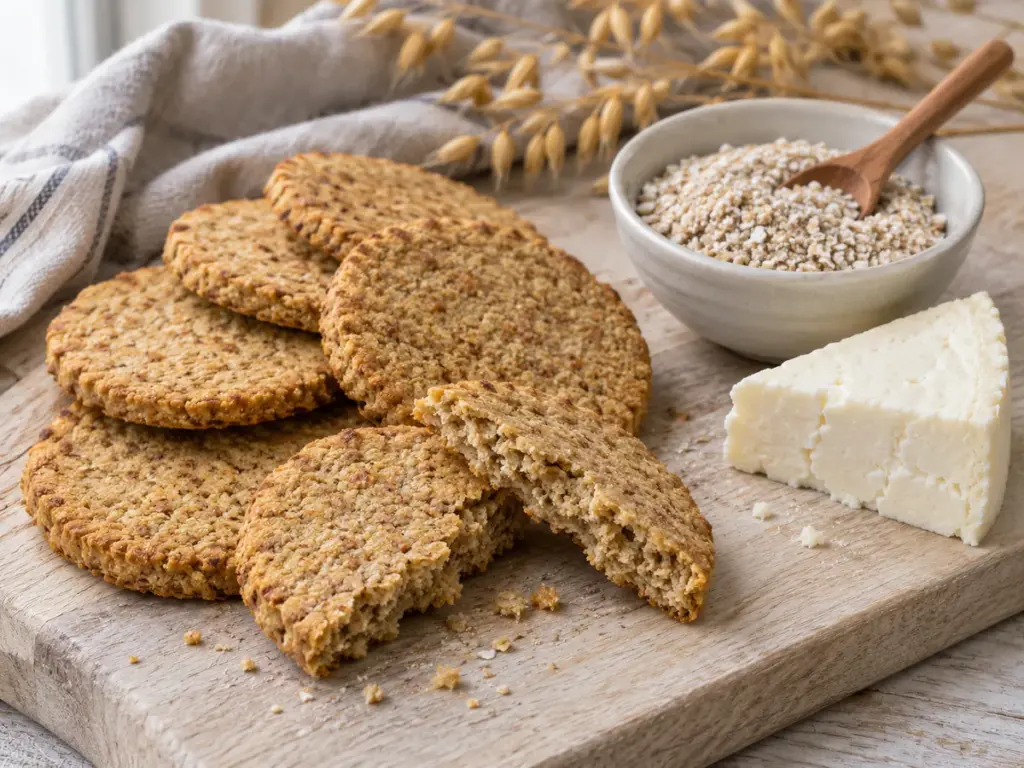
- Medium is milled finer and cooks into a thicker, more rustic porridge. It is also the grade British recipes ask you to use in oatcakes.
- Fine works as a thickener for soups and stews and, mixed with wheat flour, goes into biscuits, breads and cakes.
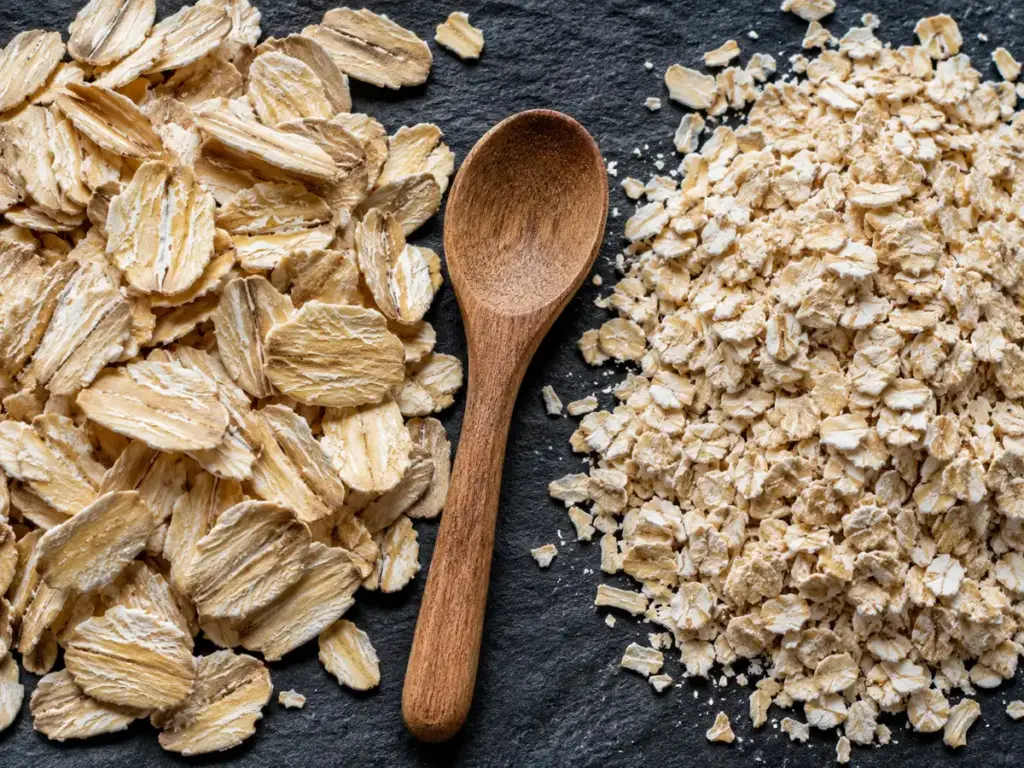
British shelves also sort rolled oats by size. If you buy jumbo oats, which are rolled from the whole groat, the flakes keep clear edges in porridge and flapjacks, while smaller porridge oat flakes get you to a bowl fastest.
3. How Long Do They Take to Cook?
Cook time follows how much the oat was processed. Flakes are steamed before they are pressed, so they take up liquid in minutes, while dense cut groats need you to simmer them long and slow. Here are Quaker's stovetop directions for one serving:
| Oat | Dry oats | Liquid | Stovetop time |
|---|---|---|---|
| Quick 1-minute rolled oats | ½ cup | 1 cup | About 1 minute |
| Old-fashioned rolled oats | ½ cup | 1 cup | About 5 minutes |
| Quick steel-cut oats | ⅓ cup | 1 cup water | About 5 minutes |
| Traditional steel-cut (pinhead) oats | ¼ cup | 1 ½ cups | 25 to 30 minutes, on low |
Brands differ, so trust the package over this table when they disagree. Oregon State Extension, for example, has you simmer 1 cup of steel-cut oats in 3 cups of water for 20 to 25 minutes. Ground oatmeal grades also vary, so follow the bag for those.
To make a plain bowl of rolled oats, follow these steps:
- Boil the liquid. Bring 1 cup of water or milk and a dash of salt to a boil in a small pot.
- Add the oats. Stir in ½ cup of rolled oats and lower the heat to medium.
- Simmer. Cook about 5 minutes, stirring now and then, until the flakes have absorbed the liquid and look creamy.
- Top it. Add fruit, nuts, cinnamon or a drizzle of honey once the bowl is off the heat.
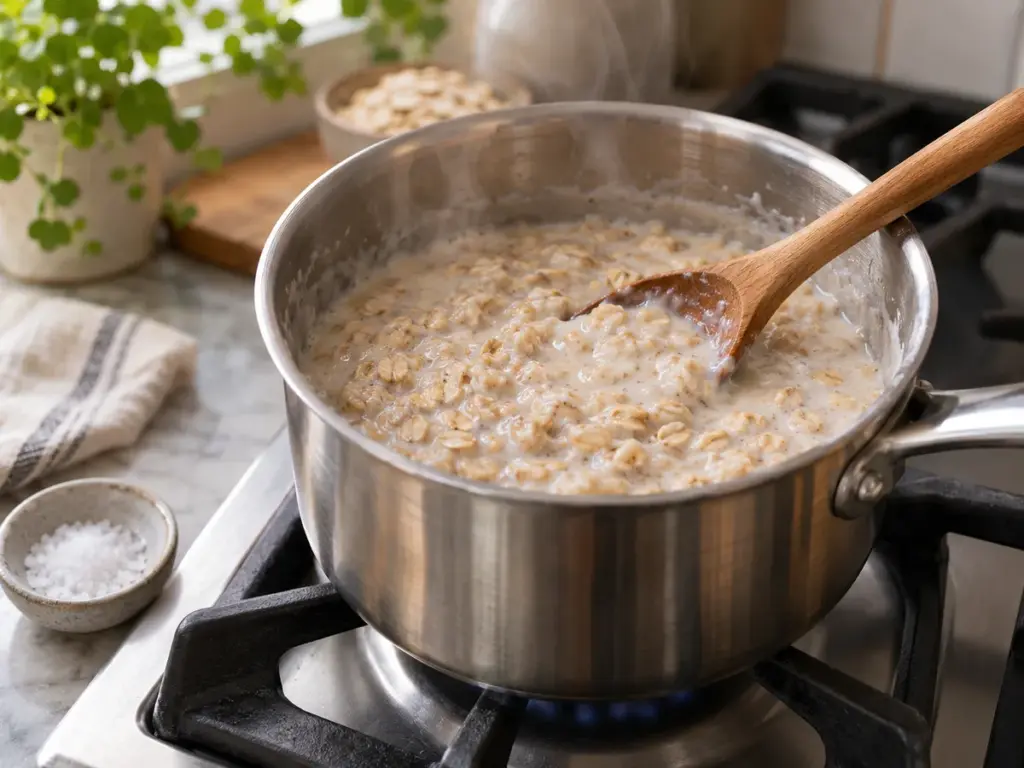
Rolled oats also hold their shape when you soak them cold in the fridge, which is why overnight oats are built on them.
4. Is One Healthier Than the Other?
Both start as whole-grain oat groats, so plain rolled oats and plain medium oatmeal give you close to the same fiber and minerals. What changes with processing is how fast your body gets the carbohydrate.
A 2015 review in the British Journal of Nutrition pooled 72 glycemic-index measurements and found steel-cut and large-flake oats at about 53 to 56, a low to medium blood-sugar response, against about 71 for quick-cooking oats and 75 for instant oatmeal. Your body digests smaller particles and more gelatinized starch faster, which is why the finest oats raise your blood sugar the most.
Oats also carry beta-glucan, a soluble fiber that sits mostly in the bran layer, so oat bran is sold on its own too. The FDA authorizes a heart-health label claim for 3 g or more of beta-glucan a day from whole oats, and its rule lists rolled oats among the qualifying forms. Flavored instant packets often add sugar and salt, so check the added-sugar line on the label before you assume a packet matches a plain bowl.
If oats are off the table for you altogether, you can make a similar hot cereal with buckwheat in place of oats.
5. Can You Use One Instead of the Other?
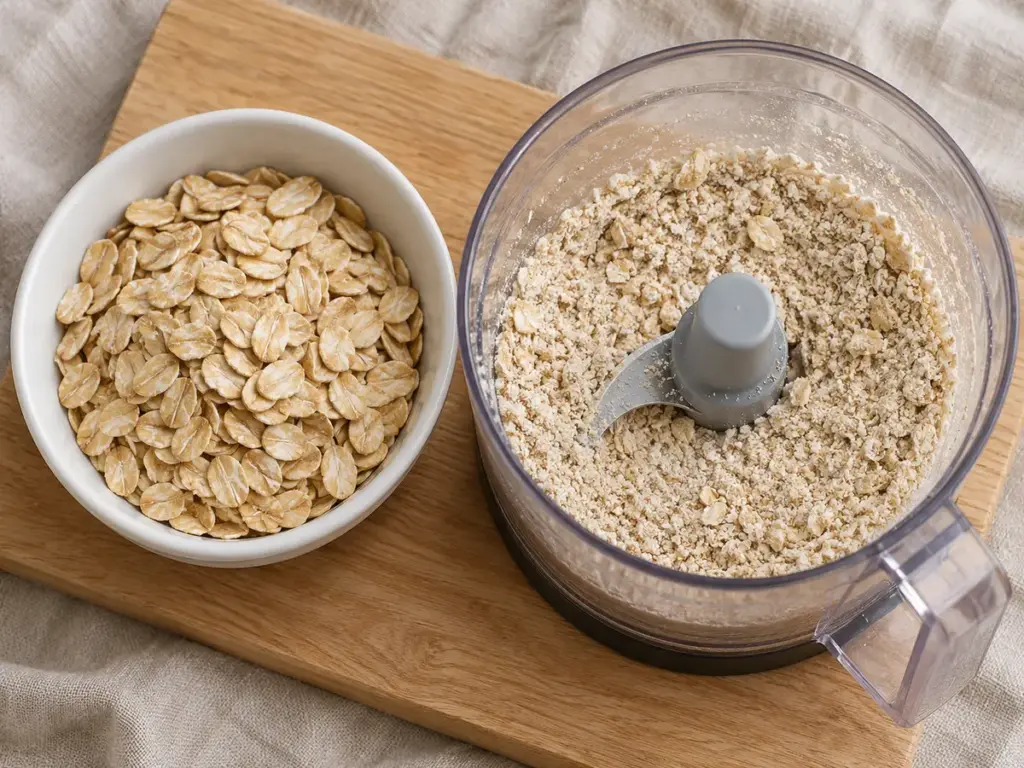
Usually yes in one direction and only with care in the other, because you can grind flakes into a meal at home but you cannot press a meal back into flakes. The two cards below split the swap by what your recipe asks for:
- Pulse the flakes in a blender until they look like coarse meal, then measure.
- This suits oatcakes, coatings and crumble toppings, but not exactly.
- Pinhead oatmeal cooks 25 to 30 minutes, too slow for 5-minute porridge or flapjacks.
- Fine or medium oatmeal makes bakes that want flakes tighter and less chewy.
For porridge, cook rolled oats whole and expect a chewier, looser bowl than oatmeal gives. Medium oatmeal also works for porridge, but it makes a thicker bowl, so follow the liquid ratio on the bag.
On the American side, a cookie or bar recipe that calls for "oatmeal" means old-fashioned rolled oats. Quick oats work in most baking because they are the same oat cut smaller, but they bake up softer and less chewy. If you have neither, other old-fashioned oat stand-ins can fill in.
6. Which Should You Buy or Use?
For most kitchens, one canister of rolled oats covers both words, so you only need a second, more specific oat when one of these jobs applies:
| You want | Buy | Why it wins | Label words |
|---|---|---|---|
| A creamy everyday bowl in about 5 minutes | Rolled oats | Flakes soak up liquid fast and keep a little chew | "Old-fashioned", "rolled oats", "porridge oats" |
| The fastest bowl | Quick oats or small porridge oat flakes | Smaller pieces cook in about 1 minute, with a higher glycemic index (about 71 in the review above) | "Quick", "1-minute" |
For a chewy, nutty bowl when you have 25 to 30 minutes to simmer, buy pinhead or steel-cut oats. The cut groat holds its shape and gives a lower blood-sugar response than quick oats. Look for "Steel-cut", "pinhead" or "Irish oatmeal" on the label.
- Use it for oatcakes, coatings, stuffing or crumble toppings.
- It is the traditional grade for these jobs, and a gritty meal rather than flakes.
- Look for "Scottish oatmeal" or "medium oatmeal".
- Use them for cookies, flapjacks, granola or overnight oats.
- The flakes keep their shape through baking or soaking.
- Look for "Old-fashioned" or "jumbo".
Rolled oats are easy to find in both countries. Ground oatmeal is often a specialty item in US supermarkets, so look in the natural-foods aisle or order online, and compare the price per ounce on the shelf tag because bag sizes differ a lot. If you only need it for one batch of oatcakes, pulsing rolled oats at home costs nothing extra.
If you top rolled oats with banana, blueberries, cinnamon and chopped nuts, you have the usual starting point for cozy porridge recipes.
Sources
- Quaker, How to Prepare Quaker Oats: stovetop and microwave amounts and times for old-fashioned, quick, instant and steel-cut oats.
- Oregon State University Extension, Stovetop Steel Cut Oats: 1 cup oats to 3 cups water, 20 to 25 minutes.
- 21 CFR 101.81: FDA oat beta-glucan claim (3 g per day) and the definition of rolled oats, also known as oatmeal.
- FDA, Gluten-Free Food Labeling Final Rule Q&A: oats labeled gluten-free must contain less than 20 ppm gluten.
- Tosh SM, Chu Y. Systematic review of the effect of processing of whole-grain oat cereals on glycaemic response. British Journal of Nutrition, 2015.
- Wikipedia, Oatmeal: oatmeal grades, pinhead and Irish oatmeal, and the US and Scottish senses of the word.
- Real Foods, Get Your Oats and Shipton Mill, The Wonder of Oats: UK oat grades and their uses.

Food writer at GustoMeadow. Writes ingredient substitutes, food comparisons, taste guides and storage guides for home cooks.
Storage and food-safety numbers follow USDA, FDA and university extension guidance.



