
Summary of key points
The main difference between a wrap and a burrito is the type of filling used. Wraps are typically filled with cold ingredients like deli meats, veggies, and sauces, while burritos are filled with hot ingredients like rice, beans, meat, and cheese.
Another key difference is in the type of tortilla used. Wraps use thinner and softer tortillas like flour or spinach wraps, while burritos use larger and thicker tortillas like flour or corn tortillas.
In terms of flavor, both wraps and burritos can be customized to suit your preferences. Whether you prefer a refreshing wrap or a filling burrito, there are endless possibilities for filling combinations.
In the hungry corners of our kitchens, a debate simmers. Wrap or burrito?
The wrap has a world tour, globetrotting with fillings from falafel to chicken Caesar. Burritos, on the other hand, hug their Mexican roots with rice, beans, and more.
We've all been at that crossroad. Lunchtime, staring into the fridge, pondering.
My last standoff with a tortilla nearly ended in tears. It was the day I learned the importance of wrap tightness.
Burritos laugh in the face of cutlery. Ever tried knifing through a wrap?
Tricky business.
Here's the lowdown: wraps play it cool, laid-back. Burritos?
They're the hearty hug you didn't know you needed.
We're touring this culinary conundrum. Join the ride.
What is a Wrap?

Wraps are a creative twist on traditional sandwiches.
They have a soft, thin tortilla surrounded by meat, veggies, cheese and sauces.
Plus, you can make them unique by trying different combinations.
Spicy tofu and avocado? Yum.
Wraps are also great for dietary needs.
Vegans or vegetarians can easily enjoy them.
And, if you want a lighter meal, use wraps for less bread and more nutritious ingredients.
On top of all that, wraps are easy to take with you.
Perfect for busy days or packed lunches. No messiness here.
Enjoy a tasty, healthy meal that fits in your bag.
What is a Burrito?

The burrito-a Mexican masterpiece-is a delicious bundle of joy wrapped in a tortilla.
It's stuffed with tasty treats, such as meat, beans, rice, cheese, and salsa.
It's rolled up into a cylindrical shape to hold all the scrumptious ingredients together.
This Mexican dish has become popular worldwide.
It's full of flavors and textures, so you can create endless varieties.
Classic options, like carne asada or grilled chicken, and vegetarian alternatives, like sautéed veggies or tofu, make it suitable for every palate.
The burrito is different from other wrapped food.
It uses one tortilla to fully enclose the fillings, from top to bottom.
This means each bite has an amazing flavor without any mess.
How you eat a burrito is a matter of opinion.
Some people enjoy it as is, while others add toppings or sauces.
Whatever your preference, one thing is for sure: eating a burrito is an unforgettable experience.
Differences Between Wraps and Burritos

Wraps and burritos may appear alike, but they differ in a few key ways.
Origin and Cultural Influences
Wraps and burritos have diverse and interesting origins and cultural influences.
These handheld treats go way back to ancient civilizations.
Wraps, with a thin, flexible layer of bread or tortilla, have been part of Mediterranean, Middle Eastern and North Indian cuisines for centuries.
This was not only practical but also a way to preserve ingredients and bring out flavors.
Burritos come from Mexican cuisine. They originated in the northern parts of Mexico.
Initially enjoyed by workers needing a quick lunch, the burrito has spread across the globe, adapting to local tastes.
Wraps have been part of traditional feasts and rituals, symbolizing unity.
Burritos reflect Mexican identity through their use of salsas, beans, rice and meats.
Every bite tells a story of Mexican culinary traditions.
Ingredients and Fillings
Wraps and burritos differ in ingredients and fillings.
What you choose plays a big part in the flavor, texture, and overall taste.
For wraps, you'll find fresh veg like lettuce, tomatoes, cucumbers, and bell peppers.
Plus, proteins like chicken or turkey. Burritos are more hearty with rice, beans, and meat.
Savory options like beef or pork. Sauces also improve the flavors - light dressings for wraps, and smoky salsa or chili sauces for burritos.
So, next time you crave a handheld delight - consider which you want - invigorating wrap or wholesome burrito?
Wrapping Style and Technique
Wrap or burrito? Distinct differences exist when it comes to wrapping.
Each has a unique style and technique.
Wrapping a wrap means placing ingredients, like meats, veggies, and sauces, onto a flatbread or tortilla.
Carefully fold the sides over the filling. This allows you to easily handle and eat it on the go.
A burrito is larger and requires a different technique.
Instead of folding, roll it into a cylindrical shape.
This creates a tight bundle that encases all the flavors.
With a larger tortilla, you can fit in more fillings and toppings.
Wraps and burritos have different styles when it comes to wrapping.
So, enjoy your favorite flavors in different ways.
Size and Portion
Wraps and burritos vary when it comes to size and portion.
Wraps are thinner and smaller, a lighter option for those who prefer a delicate bite.
Burritos, however, are bigger and heftier, a heartier meal.
Wraps come with fresh veg like lettuce, cucumbers and tomatoes, plus spreads or dressings for flavor.
So they're healthier too.
Burritos are known for their protein-filled fillings - beef or chicken, rice, beans, cheese, and guacamole or sour cream.
This creates a savory sensation in your mouth.
Wraps and burritos offer different eating experiences.
Wraps are thinner and come with fresh vegetables.
Burritos are more substantial and include protein-packed fillings.
Consider your appetite and texture preference before deciding.
Similarities Between Wraps and Burritos
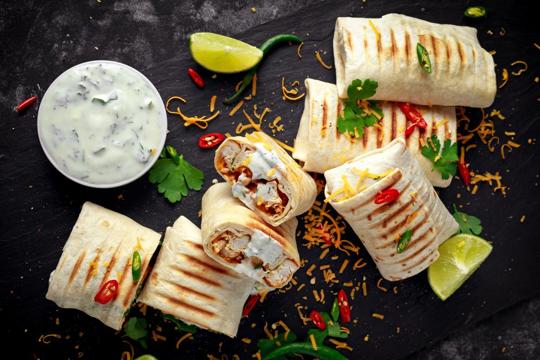
Wraps and burritos are often mistaken for each other.
Both include a tortilla to wrap the food.
Plus, you can customize the fillings like meats, veggies, cheese and sauces.
Warmer or colder, it's up to you. However, there are differences.
Wraps use thinner tortillas and lighter fillings like deli meats and salad greens.
Burritos use bigger tortillas and heartier fillings such as rice, beans and seasoned meats.
Wraps usually feature Mediterranean or Middle Eastern flavors like falafel, hummus and tzatziki sauce.
Burritos come from Mexican cuisine with flavors like salsa, guacamole, cilantro and carne asada.
So when you're craving a delicious portable meal, consider the different attributes of wraps and burritos.
Regional Variations of Wraps and Burritos
Wraps and burritos vary greatly in taste across regions.
Mexican burritos boast spicy flavors while Mediterranean wraps are fresh and light.
In Mexico, burritos are filled with grilled meat, beans, rice, and salsa.
Mediterranean wraps include hummus, cucumber, tomatoes, and feta cheese.
India offers kathi rolls - meaty fillings in paratha bread.
Vietnam has spring roll wrappers, full of veggies and protein.
Regional variations show the creativity and variety of wraps and burritos globally.
Best Pairings for Wraps and Burritos
Wraps and burritos can be enhanced with perfect pairings.
From classic to unique, there are endless possibilities.
Whether veggie or meat-filled, finding the right accompaniment is key.
Fresh ingredients often star in wraps.
Veggie wraps pair well with tzatziki sauce for a zesty combination.
Pickled jalapenos or sriracha mayo can add a spicy kick.
Burritos offer a heartier option.
Chicken or beef burritos go great with Spanish rice and black beans.
Fusion flavors are an adventurous option.
Try a teriyaki salmon wrap with Asian slaw.
Or, fill a burrito with BBQ pulled pork and coleslaw. Think about texture too.
Crispy lettuce or crunchy tortilla strips provide contrast to the soft fillings.
Creating a more interesting eating experience.
Wraps vs Burritos: Which to Serve When
After reading this comparison between wraps and burritos, it's clear that each holding device has its own benefits - so you can choose the one that best fits the job.
Wraps are ideal for stuffing with light fillings including delicate greens, tuna salad, or slices of deli meat.
Whereas burritos are better suited for heavier mixtures like beef stew, spicy chili, or enchiladas.
Although it may seem at first glance that they're the same, with a few subtle distinctions in ingredients and presentation, a discerning cook should understand there is a world of difference between wraps and burritos.
Eating them may be awkward but knowing how to create these handy meals will make mealtime much easier.
Frequently Asked Questions
The main difference between a wrap and a burrito is the type of filling used. They share some similarities but each has qualities that make it better suited for certain recipes.
In many recipes, yes. Wrap and Burrito fill similar roles, though each brings its own character.
Try a small test batch before committing to a full swap.
Availability varies by region. One is usually a standard grocery store item while the other may require a specialty or international market depending on where you live.
Can a beginner tell the difference by taste?
In a side-by-side tasting, yes.
The difference becomes less obvious when mixed into a recipe with other ingredients.
Most people notice the distinction more clearly on its own.