
Are you looking to bring an authentic Latin flavor to your meals?
If so, achiote paste or powder could be the perfect ingredient for you.
But before you begin whipping up delicious dishes with achiote, it's important to know the difference between these two variations.
Both are derived from the same seed of annatto trees and share similar nutty-spicy flavors but that's not all they have in common - compare extract vs flavor differences to understand how concentration and form affect taste.
Read on if you're ready to become an expert on all things related to achiote paste vs powder.
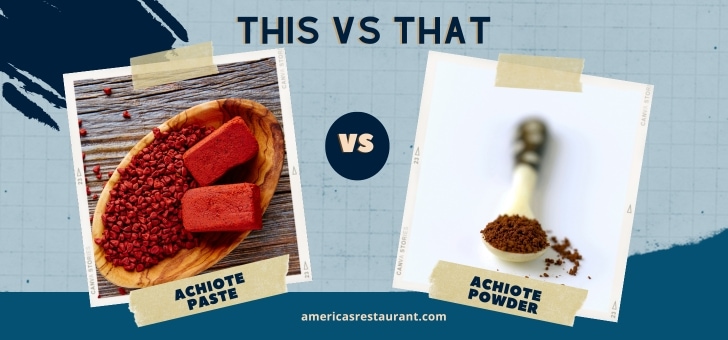
What is Achiote?

Achiote is a spice commonly used in Latin American and Caribbean cuisines.
It comes from the seeds of the annatto tree, which is native to these regions.
The spice has a bright reddish-orange color and a slightly sweet and peppery flavor.
Achiote has been used for centuries in traditional dishes like cochinita pibil, a slow-roasted pork dish from Mexico's Yucatan Peninsula.
In addition to its culinary uses, it has also been used for medicinal purposes in some cultures.
When using achiote in cooking, it is typically either used as a paste or ground into a powder.
Each form of the spice has its own unique characteristics and can be used differently depending on the dish being prepared.
Now let's talk about the difference between achiote paste and powder in more detail.
Achiote's bright color and mild sweetness can pair with sweet or tart elements; for ideas about pairing tart flavors in desserts, see what goes well with lemon in desserts.
Usage Differences: Achiote Paste vs Powder
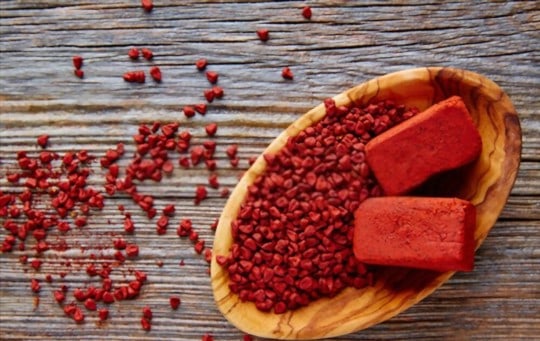
There are some key differences between achiote paste and powder.
To start with, achiote paste is made by grinding annatto seeds along with other spices and often oil or vinegar to create a thick and smooth paste.
On the other hand, achiote powder is simply dried and ground annatto seeds which result in fine powder texture.
Achiote paste is traditionally used for marinating meat, fish or poultry before grilling - see achiote vs ancho comparison for how similar chiles and seeds differ in flavor.
It is also an essential ingredient in many Latin American dishes such as cochinita pibil (marinated pork) and chicken tinga (shredded chicken in tomato sauce).
Achiote paste can also be used as base for sauces and marinades.
Achiote powder on the other hand is primarily used in dry rubs or seasoning blends.
It can also be rehydrated with liquid to make it into a marinade.
Overall, both achiote paste and powder are used to add flavor and color to dishes but they differ in texture, preparation method as well as usage.
Ingredients Used
Achiote is a popular seasoning found in many Latin American cuisines.
It is derived from the seeds of the annatto plant, which are packed with carotenoids that give dishes a bright golden-yellow hue.
There are two common forms of achiote used in cooking: paste and powder.
Both forms contain the same basic ingredients, with some variations.
From this table, we can see that both forms of achiote contain annatto seeds and salt but differ in terms of additional ingredients.
Achiote paste typically includes garlic, vinegar or citrus juice, and other spices such as oregano and cumin.
On the other hand, achiote powder is usually formulated with just annatto seeds and salt.
There can be some variations in brands and recipes when it comes to the exact ingredients used in both forms of ahiote.
Some manufacturers may add additional spices or seasonings to either form based on their unique recipe or customer preferences.
Overall, understanding the differences between the ingredients used in achiote paste vs powder can help you choose which one will work best for your next great dish.
Texture and Consistency
The texture and consistency of the product can vary depending on whether you are using paste or powder.
Achiote paste is often thicker and more concentrated than achiote powder.
This is because achiote paste is made from combining freshly ground annatto seeds with other ingredients such as garlic, vinegar, and spices, which are then formed into a thick paste.
On the other hand, achiote powder is created by grinding dried annatto seeds into a fine powder without any additional ingredients.
As shown in the table above, achiote paste has a thicker consistency compared to achiote powder.
This is because of its soft and malleable form that easily spreads over meat during marination.
In contrast, achiote powder has a dry and loose texture that can be sprinkled over food as seasoning rather than as marinade since it does not have enough moisture content.
Also, while both products are made from annatto seeds, they differ in their uses.
Achiote paste is commonly used for making marinades for dishes like grilled meats while achiote powder can be used as seasoning with its ability to easily dissolve in liquids or added challenges melting when exposed to heat.
flavor
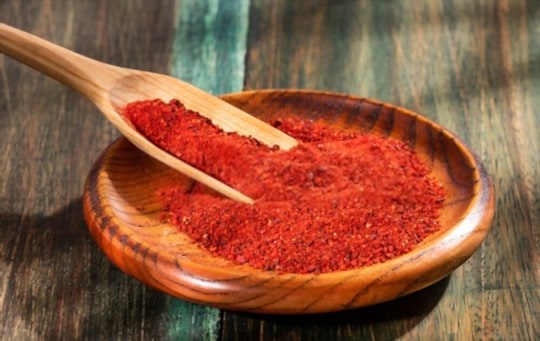
Achiote paste and powder both have their distinct tastes.
Achiote paste has a more complex flavor with notes of earthiness, sweetness, bitterness, and even smokiness.
On the other hand, achiote powder has a milder flavor that shows the earthy and slightly sweet notes while downplaying the bitterness and smokiness.
Achiote paste's stronger and more complex flavors make it perfect for marinades or rubs where you want its strong taste to shine.
Meanwhile, achiote powder works best when you don't want it to overpower other ingredients in the dish.
Aside from these differences, both types of achiote can impart a beautiful reddish-orange hue to dishes.
This coloring is essential in traditional Latin-American cuisines such as Mexican and Puerto Rican since it makes food visually enticing and speaks about their cultural history.
In summary, when choosing between achiote paste and powder based on flavor preference alone, consider what other ingredients are being used in your recipe as well as how much prominence you want your dish's color and taste to have.
Usage in Recipes
Achiote paste and powder are commonly used ingredients in many Latin American and Caribbean cuisines.
They are used to add color, flavor, and aroma to a vast array of dishes such as stews, soups, sauces, marinades, and rubs.
Both versions have similar uses in recipes but they also have their unique characteristics.
Both paste and powder can be used interchangeably on most occasions - for ideas on bold plant-based uses, see vegan sandwich flavor ideas that handle strong seasonings well.
However, the distinct flavors of each form may be better suited for certain dishes.
For example, a dish that requires a more subtle hint of flavor might benefit from using achiote paste while another dish that calls for an earthier taste would benefit from using powdered achiote.
When using either form in recipes, it's essential to fully mix it well into the other ingredients until the spice blends evenly throughout the recipe.
A common practice is integrating either form with other spices like garlic, cumin, chili pepper, paprika and many more to bring out its unique flavor traits.
It can be challenging to achieve the perfect balance of flavors sometimes, but with a bit of experimentation and creativity, anyone can create great-tasting dishes with achiote paste or powder.
Where to Buy Achiote Paste and Powder?

If you're wondering where to buy achiote paste and powder, the is that they are readily available in most grocery stores, both online and offline.
You can either purchase them from local supermarkets, specialty food stores, or order them from online e-commerce websites like Amazon, Walmart, and others.
Apart from these options, you can also check out your local farmer's market, Mexican markets, or international stores for an authentic taste of this spice.
When choosing where to buy achiote paste and powder, it's essential to ensure that the product is of high quality and fresh.
Always check the expiration date before purchasing to avoid any health hazards.
In summary, achiote paste and powder are commonly found in various supermarkets and online platforms like Amazon or Walmart.
However, one must ensure that the source is reliable before making any purchase.
For another comparison of paste and whole-vegetable options, see Amish paste vs Roma tomato differences to understand when specialty varieties are worth seeking out.
How to Store Achiote Paste and Powder?
To store achiote paste and powder, you need to know about their respective shelf life and storage requirements - similar storage notes appear in sesame paste vs tahini storage guide.
Following the proper storage guidelines is important to preserve the freshness and flavor of these ingredients.
Achiote paste lasts for up to 6-12 months if refrigerated properly in an airtight container.
It should always be stored away from any moisture or water droplets that can cause mold growth.
Also, make sure to cover it with plastic wrap before putting on the lid tightly.
Meanwhile, achiote powder has a longer shelf life of around 1-2 years but needs to be kept in an airtight container away from heat sources or sunlight exposure that can affect its color, aroma, and taste.
The ideal temperature range for storing this aromatic spice is around 59°F -68°F (15°C -20°C).
Achiote Paste vs Powder: Which is Better for Cooking?

It ultimately depends on personal preference and the specific dish being prepared.
Both options have their unique qualities that can improve the flavor of dishes, but there are some differences between them worth considering - see tomato powder vs paste comparison for a similar look at how form changes use in cooking.
When cooking with achiote paste, its thick texture allows it to be used as a marinade or rub for meats to create a layer of flavorful seasoning.
On the other hand, achiote powder is more versatile and can easily be added to sauces, soups, stews, and rice dishes without altering their texture.
One factor to consider in the decision-making process is convenience.
Achiote powder can be easier to find in stores compared to achiote paste which may require searching in specialty markets.
However, homemade versions of both options are readily available online using simple ingredients such as annatto seeds and spices.
Flavor Profiles of Achiote Paste and Powder
As you can see, each form of achiote has its own strengths.
Achiote paste packs a flavorful punch that makes it perfect for marinades or for rubbing on meat before grilling, while achiote powder is more versatile as it can be used in dry spice blends or seasoning mixes.
Achiote paste or achiote powder will always be an essential and flavorful ingredient that will improve your dishes.
Frequently Asked Questions
But before you begin whipping up delicious dishes with achiote, it's important to know the difference between these two variations. They share some similarities but each has qualities that make it better suited for certain recipes.
Sometimes. Achiote Paste works where Powder is called for in certain dishes, but not all.
Check whether the recipe relies on a specific quality before substituting.
Cold preparations like salads and dressings often favor the option with a sharper, more defined flavor. Heat can mellow both, so the distinction matters more in uncooked dishes.
Do professional cooks prefer one over the other?
Professional preference depends heavily on the dish and cuisine style.
Each has its context where it outperforms the other, so most experienced cooks keep both on hand.
Anchovy-based spreads pair differently with dishes depending on form. anchovy paste vs fillets comparison explains those differences. Similarly, curry in paste or powder form changes handling and intensity - see curry paste vs curry powder differences for practical contrasts.