
For knafeh and baked pastries, use low-moisture mozzarella mixed with ricotta; for eating akawi fresh, soaked feta comes closest.
- Use the same weight as akawi, and soak feta or halloumi first to pull out the brine.
- Mozzarella and ricotta are barely salty, so skip the soak and taste for salt.
- Nabulsi is the other brined knafeh cheese, if a Middle Eastern grocery carries it.
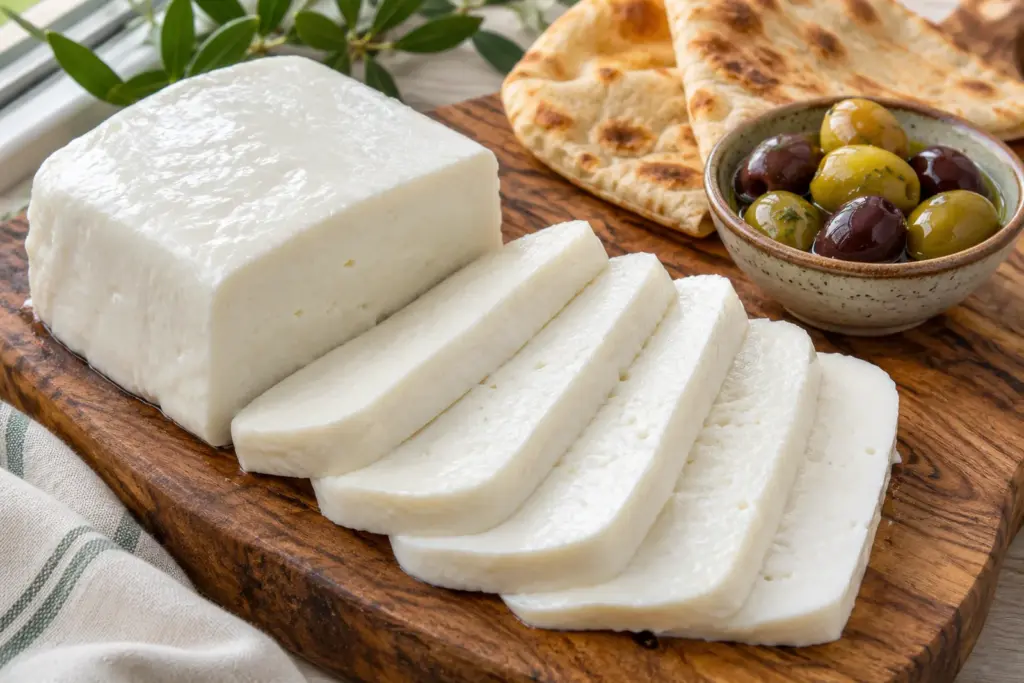
Akawi (also spelled akkawi or ackawi) is a semi-hard white cheese cured in brine, and Wikipedia compares its texture to mozzarella, feta or mizithra. Most US supermarkets don't stock it, but good cheese stand-ins come from a regular dairy case or a Middle Eastern grocery.
What Does Akawi Cheese Do in a Recipe?
Akawi takes its name from the port city of Acre. Makers most often use pasteurized cow's milk and cure the cheese for about two days in salted whey brine. The result is a smooth cheese with a mild salty taste that people slice as a table cheese with flatbread or fruit.
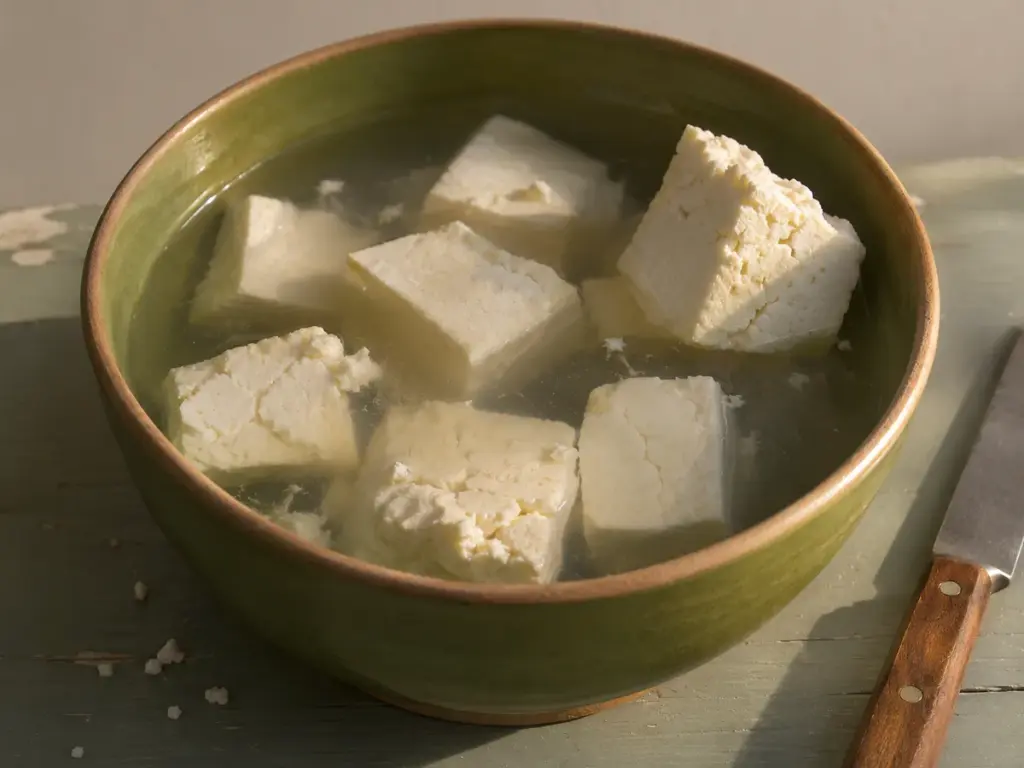
In knafeh the cheese has a different job. Cooks soak the salt out, shred it and bake it as the filling under crisp pastry, so a recipe that says "shredded akawi" means this filling. Your swap has to cover whichever job your recipe gives the cheese, either salt and mild flavor on a plate or a soft filling inside a pastry.
What Are the 5 Best Substitutes for Akawi Cheese?
Each swap is 1:1 by weight once you have soaked it, or skipped the soak, as its entry says. Mozzarella blends and Nabulsi stretch when heated; the other three hold their shape.
1. Low-Moisture Mozzarella and Ricotta
You shred low-moisture block mozzarella and fold in drained, mild ricotta, then use the blend at the same total weight as the akawi. About half and half is a starting point, not a published ratio. The mozzarella supplies the stretch and the ricotta adds creaminess, and Hadia's Lebanese Cuisine recommends this mix for knafeh.
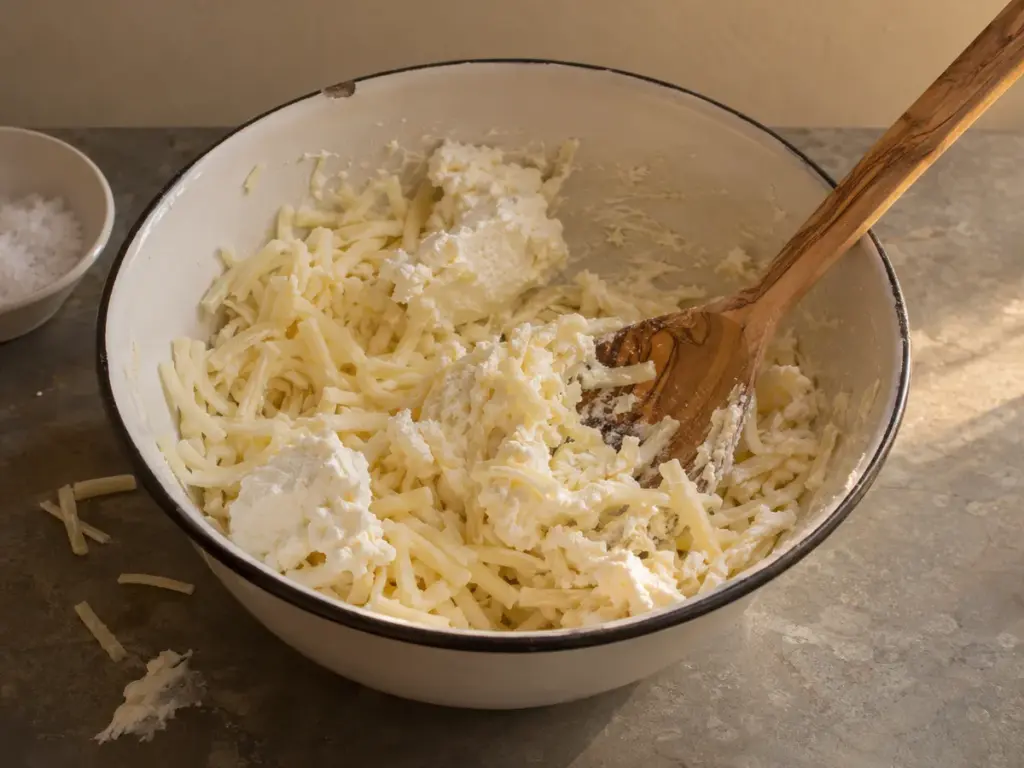
Extra water makes the bottom pastry layer soggy, so drain the ricotta well and pat fresh mozzarella dry if it is all you can find. Use ricotta only in the blend, never as the whole filling.
Neither cheese is brined, so you skip the soak. USDA sodium per 100 grams:
- Whole-milk ricotta: about 110 mg.
- Whole-milk low-moisture mozzarella: about 710 mg.
- Feta: 1,139 mg, which is why it needs the soak.
Taste the filling and add a pinch of salt if it reads flat next to the syrup.
2. Nabulsi Cheese
Nabulsi comes from Nablus and is a brined, semi-hard cheese made mainly from sheep's milk. It turns soft and elastic when heated, which is why cooks use it in knafeh and why most desalt it first. Look for it at Middle Eastern grocers and use the same weight as the akawi.
Sellers add extra salt to help it keep, and makers traditionally add mastic and mahlab to the boiling brine for flavor. Soak it in fresh water in the fridge for several hours or overnight before you shred it, then taste a crumb.
3. Soaked Feta
Feta is the swap for akawi you eat as it comes: sliced beside olives and flatbread, tossed into salads or crumbled over eggs. Wikipedia notes that cooks in Los Angeles made a stand-in this way when akkawi was hard to get, by soaking feta in several changes of water to wash out the salt. Taste a crumb after each change and stop when it is pleasantly salty.
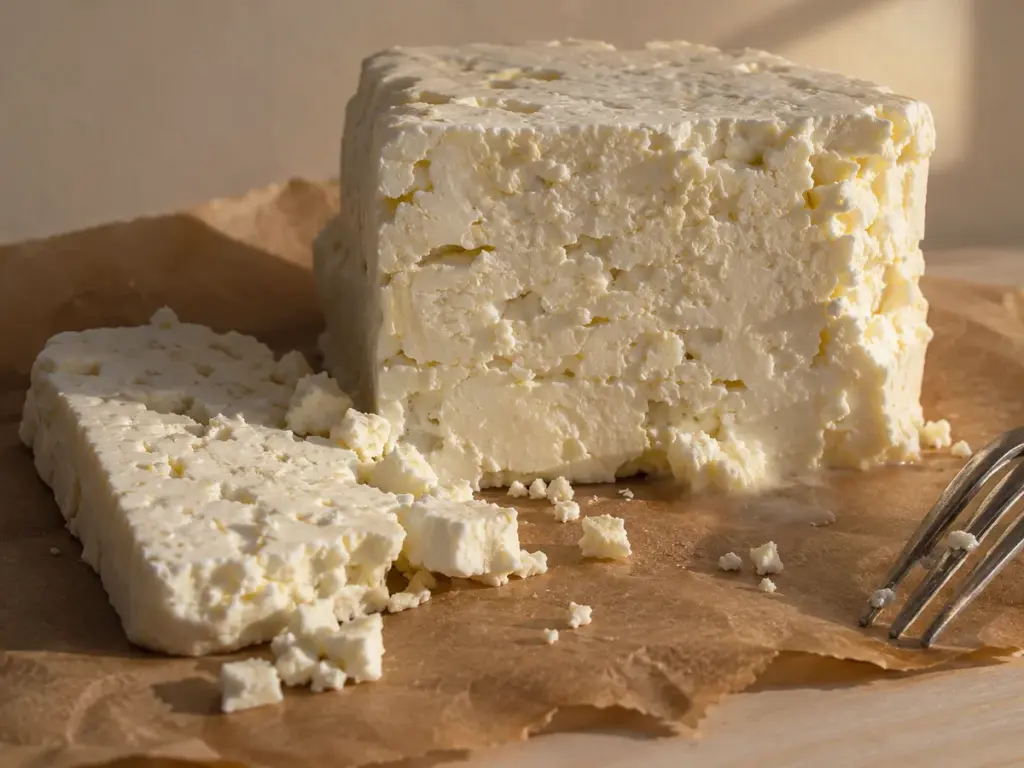
Expect feta's tangy flavor and a crumblier bite than akawi, with no stretch when it is heated. That makes it a good fit for salads and the top of a mezze plate, and a poor fit for a knafeh filling that needs pull.
4. Halloumi
Halloumi has a high melting point, so it browns in a hot pan or on a grill without melting. Use it by the same weight when akawi is cooked as slices. Mature halloumi is stored in brine, so it is saltier than fresh halloumi: taste before adding salt. Fried slices go well with cucumber, tomatoes and warm flatbread, the kind of sides that suit halloumi on a mezze plate.
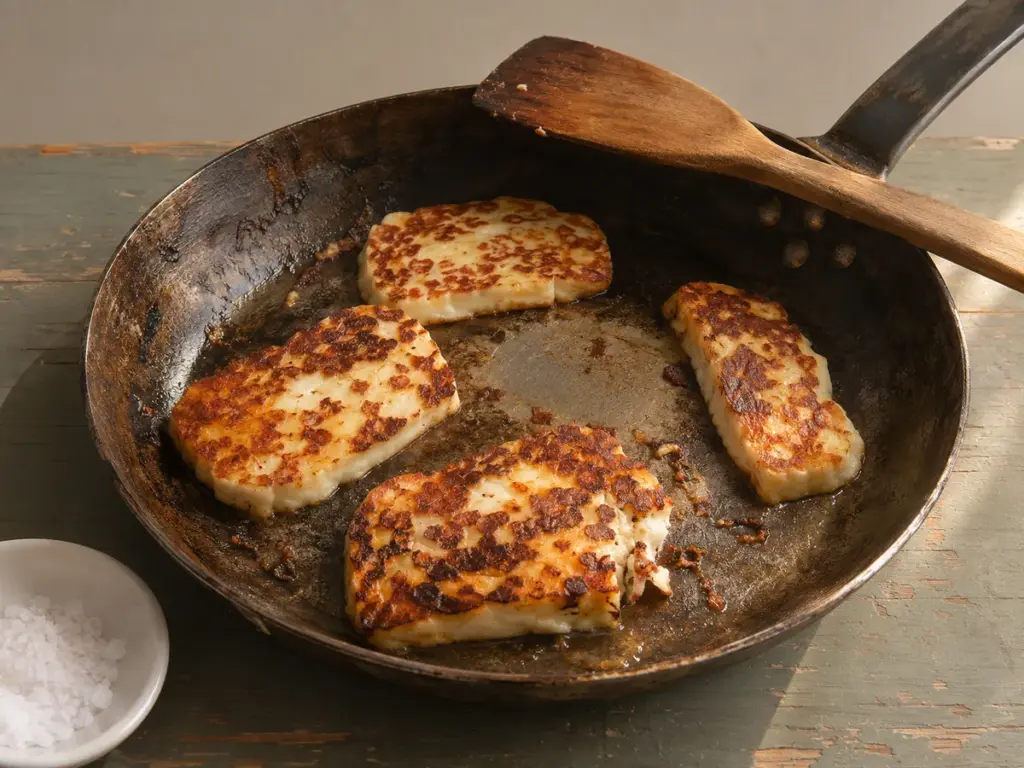
In knafeh halloumi carries brine salt into a sweet dessert unless you soak it first.
5. Queso Blanco or Paneer
Both are fresh cheeses, so there is no brine to soak out. Wisconsin Cheese describes queso blanco as slightly salty, fresh and crumbly, and says it browns when heated but does not melt. Paneer is an Indian cheese made by mixing hot milk with an acid such as vinegar, and it does not melt either. Use either at the same weight as akawi for pan-fried cubes or salads.
Salt depends on the brand: paneer's sodium varies with how much salt the maker adds, so check the label and season both cheeses in small pinches.
Which Substitute Should You Use for Knafeh or Eating Fresh?
- First pick: low-moisture mozzarella plus ricotta, with no soak.
- Brined option: Nabulsi, soaked several hours or overnight.
- Skip: halloumi, paneer and queso blanco, because none of them melt into a filling.
- Crumbles and salads: soaked feta.
- Grilling and pan-frying: halloumi, with no extra salt.
- Mild cubes: queso blanco or paneer, with salt added to taste.
How Do You Soak the Salt Out of Akawi?
Brined cheese goes into a sweet dish only after a soak. The steps below follow the America's Test Kitchen knafeh recipe for akkawi; Nabulsi and feta are saltier or more crumbly, so taste them as you go.
- Cut it small. Slice the cheese into rough 2-inch cubes so the water reaches the center.
- Cover with hot tap water. Pour in enough to sit 1 inch above the cheese.
- Soak 1½ hours. Change the water once halfway through. Hadia's Lebanese Cuisine soaks its akkawi for about 8 hours, changing the water every hour, and squeezes out as much water as possible before baking.
- Taste a crumb. It should taste pleasantly salty, not sharp.
- Drain and dry. Drain the cheese, pat it dry with paper towels, then shred it on the large holes of a box grater.
Sources
- Akkawi cheese (Wikipedia): origin, cow's milk, two-day brine cure, texture compared to mozzarella, feta and mizithra, soaked feta stand-in.
- Nabulsi cheese (Wikipedia): milk, mastic and mahlab, added salt, soaking, soft and elastic when heated, use in knafeh.
- Halloumi (Wikipedia): high melting point, frying and grilling, mature halloumi stored in brine.
- Knafeh, America's Test Kitchen: akkawi soak method, unsalted curds and added salt.
- Knafeh Nabulsieh, Hadia's Lebanese Cuisine: mozzarella and ricotta mix, 8-hour soak, moisture warning.
- Queso Blanco, Wisconsin Cheese: slightly salty, fresh and crumbly, browns but does not melt.
- Paneer cheese nutrition, Nutrition Advance: made with hot milk and an acid, does not melt, sodium varies by brand.
- USDA FoodData Central: FDC 173420 feta, FDC 170846 mozzarella, whole milk, low moisture, FDC 170851 ricotta, whole milk.

Food writer at GustoMeadow. Writes ingredient substitutes, food comparisons, taste guides and storage guides for home cooks.
Storage and food-safety numbers follow USDA, FDA and university extension guidance.



