
A bread maker mixes, kneads, proofs and bakes one loaf in its pan, while an oven gives you the shape and crust you choose.
- Pick the bread maker for a plain sandwich loaf with almost no hands-on work.
- Pick the oven for crusty loaves, free-form shapes or several loaves.
- A toaster oven only bakes, so you mix, knead and proof first.
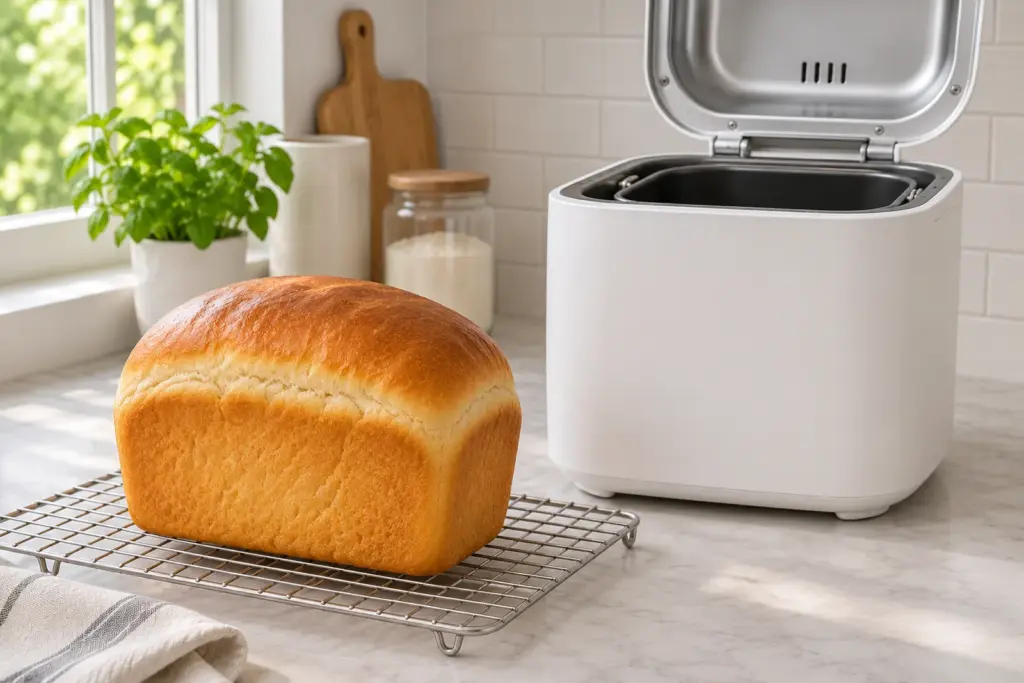
You can run the machine's dough cycle and bake the shaped dough in your oven. A toaster oven holds about one loaf.
A bread maker makes the whole loaf from flour, and an oven only does the last step, which is why this pair appears among the kitchen and food comparisons even though the two are not direct rivals. Your real choice is how much of the process you hand to a machine and how much control over shape and crust you want back.
1. What Is the Difference Between a Bread Maker and an Oven?
King Arthur Baking describes a bread machine as a temperature-controlled mixing and baking chamber that mixes, kneads, proofs and bakes a loaf in one enclosed space. An oven only supplies heat, so you mix, knead, shape and proof the dough yourself before it goes in.
| Trait | Bread maker | Oven |
|---|---|---|
| What it does | Mixes, kneads, proofs and bakes | Bakes only |
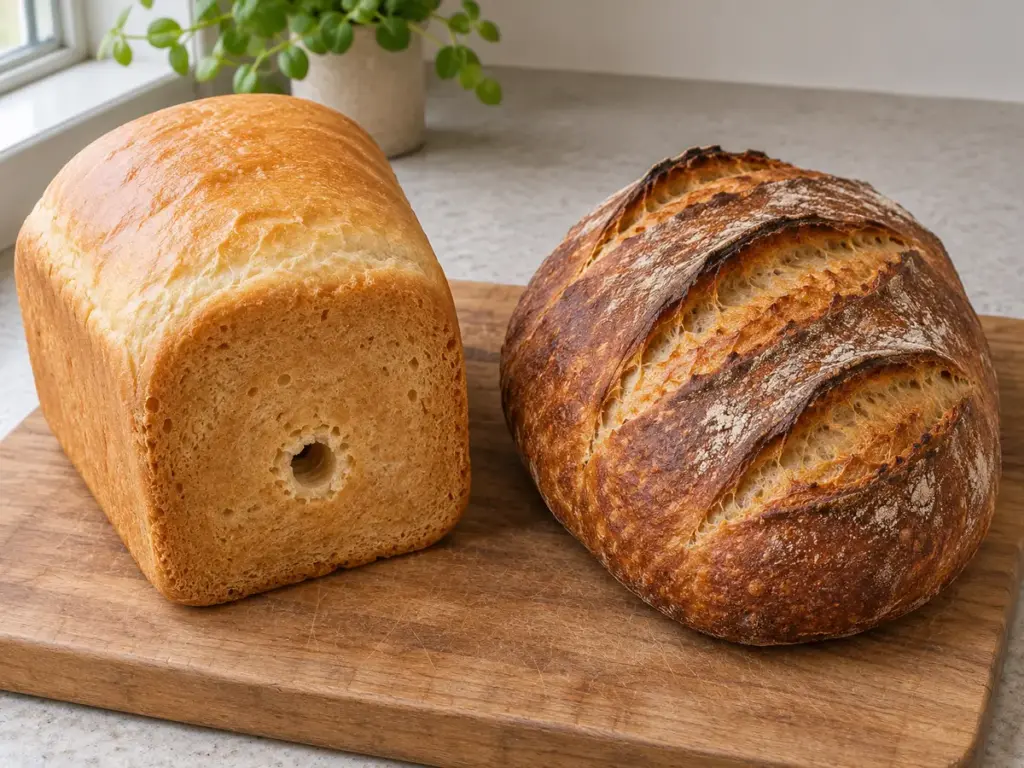
| Loaf shape | Set by the machine's pan, often tall and boxy, with a paddle hole in the bottom | Whatever you shape: pan loaf, round, braid, flatbread |
- It bakes at about 325 to 350°F, so baking runs longer.
- It makes one loaf, from 3 to 4 cups flour in a 1.5-pound machine.
- It bakes at any temperature you set.
- It holds as many pans as fit on your racks.
- With a bread maker, you load ingredients and choose a cycle, which suits everyday sandwich bread.
- With an oven, you knead, shape, proof, preheat and monitor, which suits crusty, shaped or large-batch bread.
The machine row is the one to read twice: the pan decides the loaf. King Arthur lists the machine's baking range as 325°F to 350°F and says baking takes longer there because of the low temperature and the large loaf. The capacity figures come from King Arthur's conversion guide.
2. Which One Makes a Better Loaf?
Shape and Paddle Holes
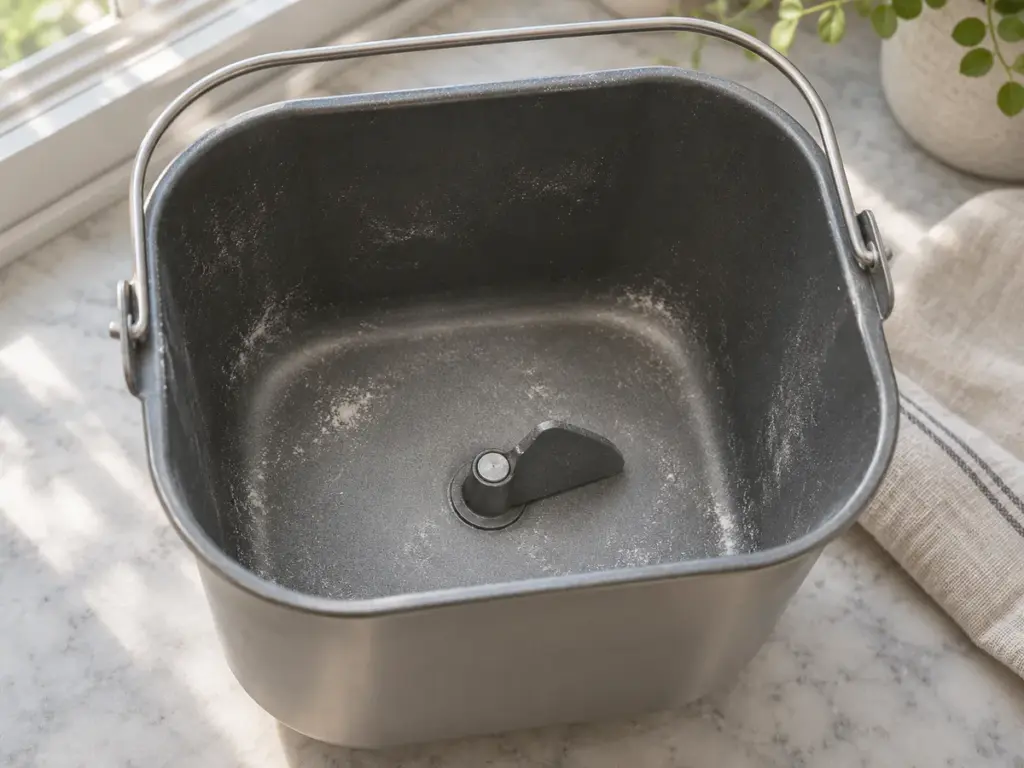
The kneading paddle sits in the bottom of the pan, so most machine loaves come out with a hole in the base. King Arthur says that you can take the paddles out just before the final rise to prevent big rips, though small holes still remain. Some machines also bake awkwardly tall, square loaves, while others bake a more traditional shape.
Crust and Texture
A machine bakes at a relatively low temperature, so the crust stays softer than a hot-oven crust. If your machine has a French bread setting, King Arthur suggests trying it. For a crispier crust, use less oil or butter, or water instead of milk.
The finished loaf also needs a few minutes. If you cool it on the counter, moisture condenses on the crust and wrinkles it, so King Arthur lets the bread cool inside the turned-off machine with the lid cracked open.
Batch Size and Special Shapes
- 1.5-pound machine: 3 to 4 cups of flour.
- 2-pound machine: 4 to 5.5 cups of flour.
- Less flour than the pan expects: you get a slightly shorter loaf.
- Babka, focaccia and other special shapes: King Arthur says to shape them by hand, so the oven wins.
A machine makes one loaf per cycle. If you are baking for a crowd, an oven with two racks can hold several pans at the same time, while a machine needs another full cycle for each loaf.
3. Which Is Easier and Faster?
The machine wins on effort. You load the ingredients, press start, and King Arthur describes a risen, baked loaf about 4 hours later. A delay timer lets the machine start later, so the bread can be ready by morning, but King Arthur warns you to avoid fresh milk, eggs and cheese when the dough will wait at room temperature, because of bacteria risk.
Unless you are in a tremendous hurry, King Arthur says to ignore the rapid-bake cycle. The machine can also bake batter loaves, so a banana bread made in the machine needs no kneading at all.
With an oven, you handle every step. You knead by hand or with a stand mixer, shape the dough, let it rise, and then bake. King Arthur's sandwich loaf bakes in a 9 by 5 inch pan at 350°F for 35 to 40 minutes once the dough is shaped.
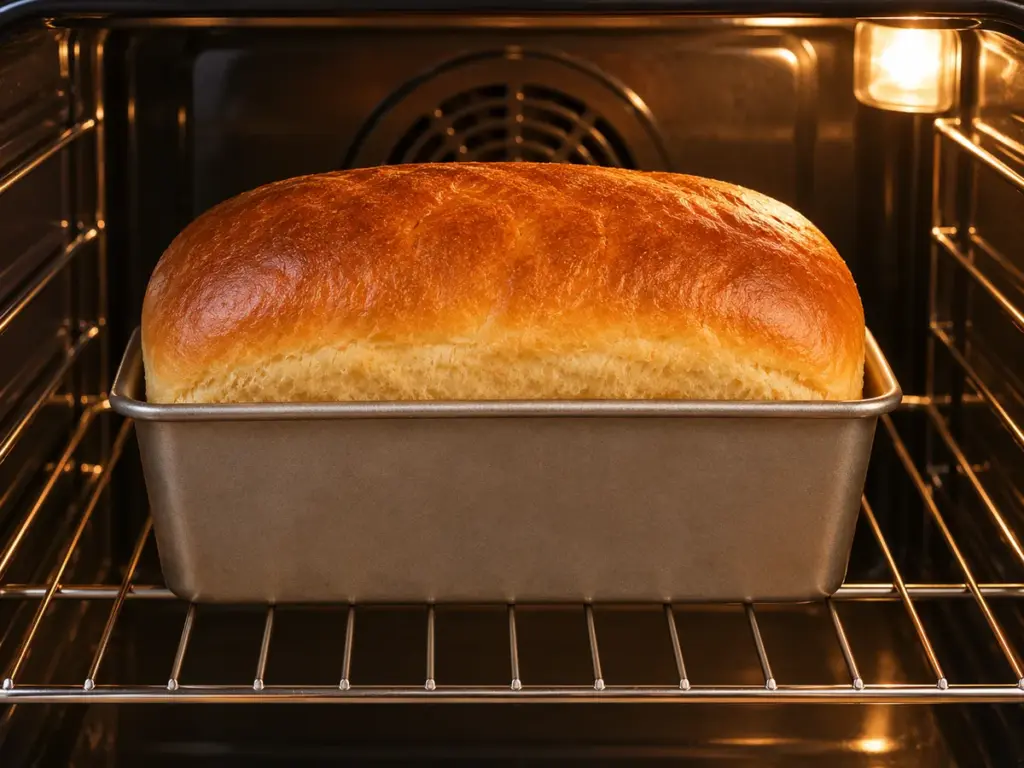
You also decide when the bread is done. King Arthur says 190°F at the center gives a fully baked, soft and moist loaf, 205°F to 210°F for rye, and 205°F for gluten-free yeast bread. Crusty french bread and other baguettes get judged by crust color instead, because their interiors reach about 212°F whether or not they are done.
4. Can You Use a Bread Maker and an Oven Together?
Yes, and it is a common compromise. King Arthur calls the dough cycle the busy bread baker's best friend, because the machine does the thorough knead and the first rise while the oven does the baking.
- Start the dough cycle. The machine kneads and runs the first rise, which takes about an hour and a half.
- Take the dough out once it has fully risen. You skip the machine's bake cycle completely.
- Shape it and let it rise again. Wait until it has doubled in size, as King Arthur directs.
- Bake it in your oven. A sandwich loaf takes 35 to 40 minutes at 350°F in a 9 by 5 inch pan.
- Check the center. A reading of 190°F means a lean loaf is done.
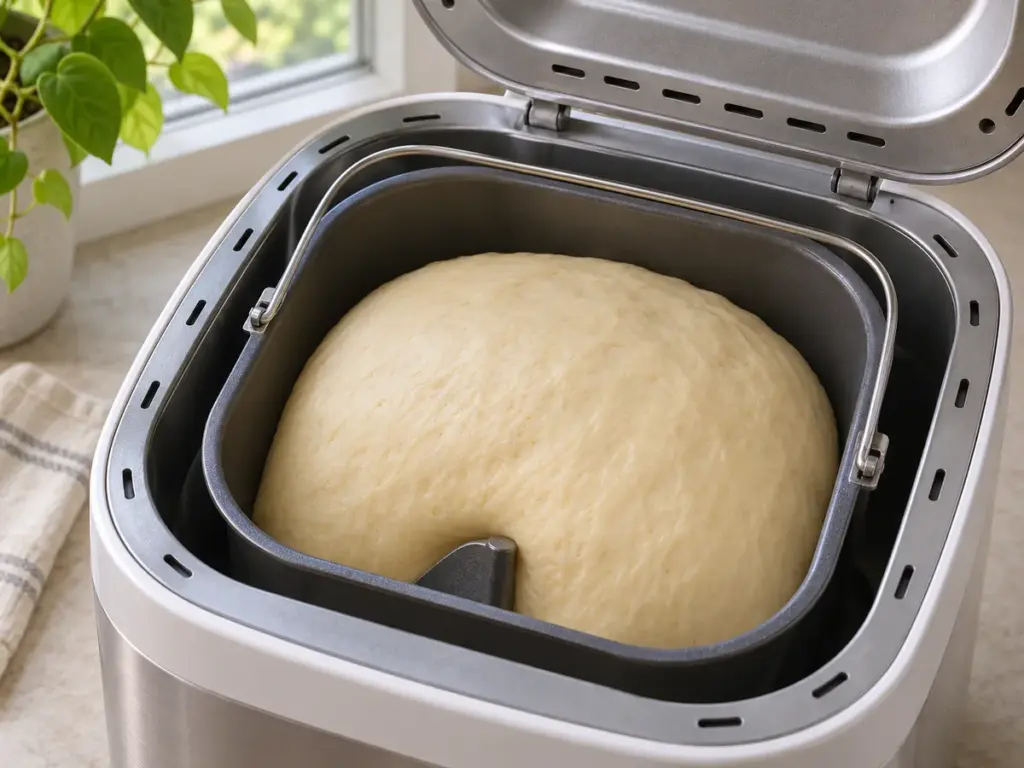
This route gives you an oven-shaped loaf with no paddle hole and a normal crust, and you still skip the hand kneading. It also suits recipes that need a wet dough or an unusual shape, and if you like to skip kneading entirely, no-knead dough is another hands-off way to the oven.
5. What About a Toaster Oven vs a Bread Maker?
A toaster oven is an oven in miniature, so it has the same limit: it bakes, and you do everything before that. A bread maker mixes, kneads and proofs for you, and the toaster oven only wins when you want to shape the loaf yourself and bake just one small one.
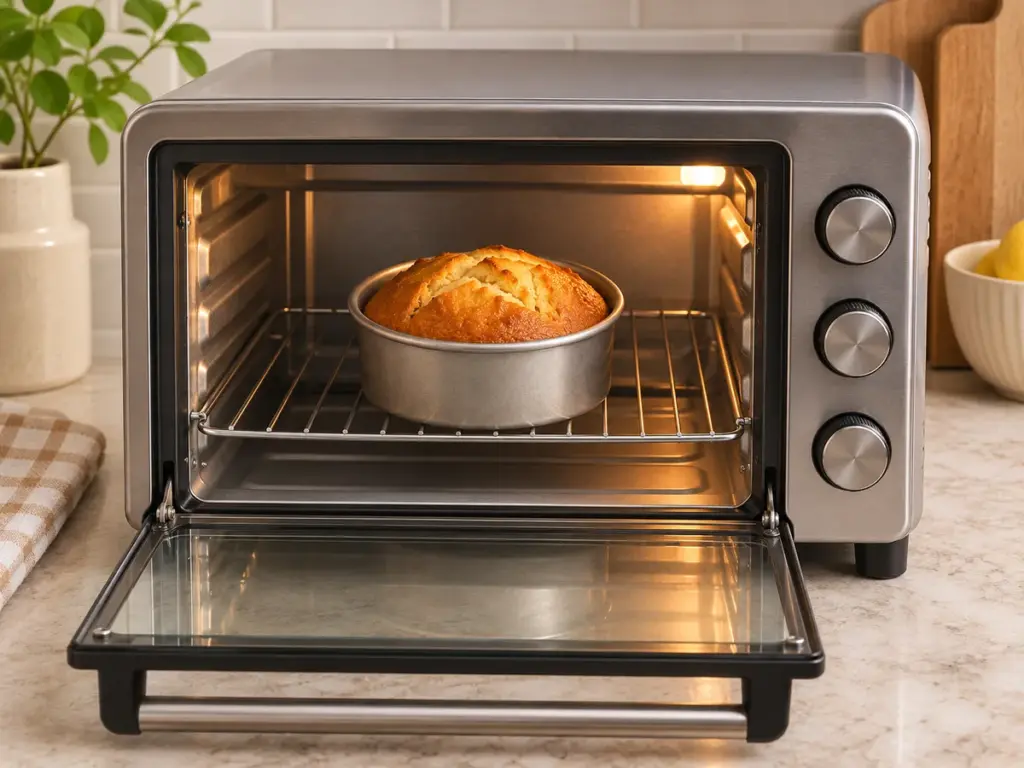
Size is the main limit. America's Test Kitchen says its toaster oven is the right size for exactly one loaf, and its banana bread uses an 8.5 by 4.5 inch loaf pan at 350°F. Food Network Kitchen bakes a small yeast loaf in a 6 by 3 inch round pan at 400°F for about 25 minutes, turning the pan halfway, until the center reads 200°F.
If a standard loaf pan will not fit your toaster oven, loaf pan alternatives such as a small round pan work, and the countertop oven and toaster oven differ in how much room you get for them. Dough from the machine's dough cycle works here too, as long as you shape it to fit.
6. Which Should You Choose?
- You want fresh sandwich bread with little hands-on work
- You are new to bread and want a set program
- You want bread ready by morning, using a delay timer
- You want a crusty loaf or a free-form shape
- You bake babka, focaccia or several loaves at once
- You want a loaf without a paddle hole
If you own both, you can use the baking cycle for plain sandwich loaves and the dough cycle for shaped bread. If you own only an oven, you give up the convenience and nothing else, so a machine pays off mainly if you will bake sandwich bread often.
Sources
- King Arthur Baking, Bread Machine Baking (machine chamber, dough cycle, 325 to 350°F)
- King Arthur Baking, How to Convert Recipes to a Bread Machine (flour capacity, dough cycle, shaping)
- King Arthur Baking, Bread Machine Guide (cycles, delay timer, crust)
- King Arthur Baking, Successful Loaves from Your Bread Machine (paddles, shape, cooling)
- King Arthur Baking, Using a Thermometer with Yeast Bread (doneness temperatures)
- King Arthur Baking, Walter Sands' Favorite Bread Machine Bread (oven bake, 350°F)
- America's Test Kitchen, Toaster Oven Banana Bread
- Food Network Kitchen, Toaster Oven Bread

Food writer at GustoMeadow. Writes ingredient substitutes, food comparisons, taste guides and storage guides for home cooks.
Storage and food-safety numbers follow USDA, FDA and university extension guidance.



