
The closest swap is plain, undyed cotton or linen string, and silicone bands work when you want no knots.
- Nylon, polyester, dyed or waxed string can melt or leave dye on meat, so none of them belongs in the oven.
- Skewers, toothpicks and bacon hold a roast shut with no string.
- Dental floss can cut through meat and singe on a grill, so America's Test Kitchen advises against it.
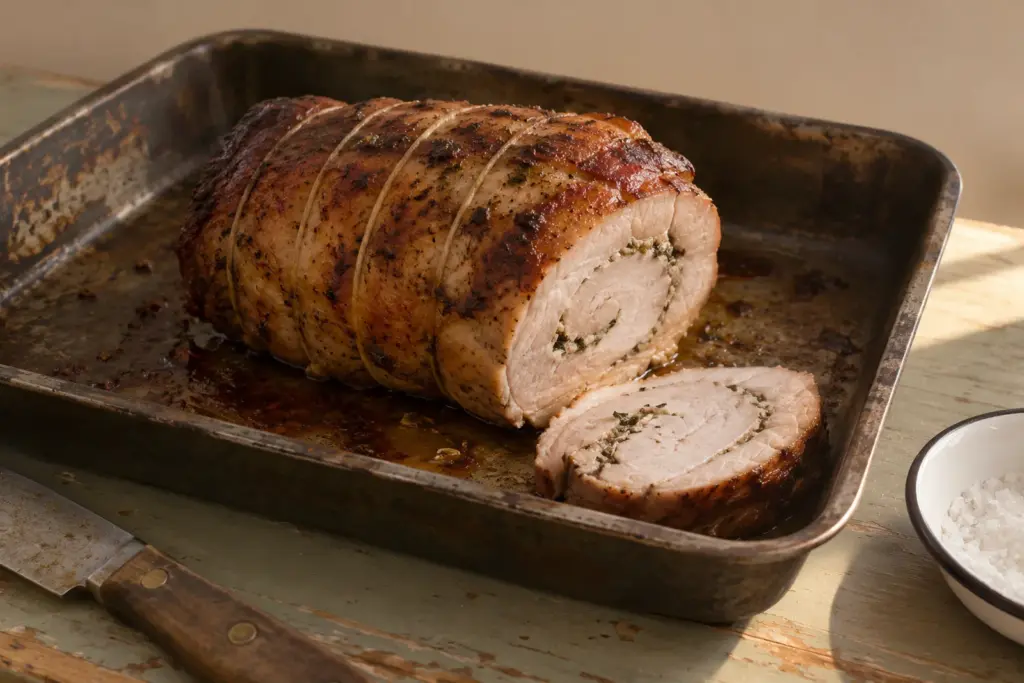
You need string, bands or pins that survive the oven without melting, burning through or leaving anything in the food. If you are missing other pantry items, the substitutes section has more fixes.
Do You Need Twine to Roast Meat?
You can roast without twine, since Blue Apron says trussing a chicken "isn't strictly mandatory", but the string does three jobs that any swap has to cover:
- Even cooking. Food Network says tying a roast helps it keep its shape and cook more uniformly.
- Protected wings and legs. Blue Apron says untied wings and legs are exposed to more air and cook faster than the rest of the bird, so the wing tips can burn.
- A neat bird on the table. The legs stay against the body, so the bird looks tidy when you carve it.
If your roast is an irregular cut such as a roulade, a boneless leg of lamb or a slow-roasted pork shoulder, Food Network says it should always be tied in order to cook properly.
You can skip the string on evenly shaped cuts like a pork loin roast or prime rib, though the same guide says those can be tied as well.
Which Kinds of String Are Safe in the Oven?
The material decides what is safe, and Tasting Table calls cotton the best twine for trussing birds while adding that hemp and linen work well too.
Synthetic twine may melt in the oven, Tasting Table warns, which is why the string touching your roast should be a natural fiber.
If you tie knots often, linen is the easiest, since America's Test Kitchen found it holds a tight overhand knot on its own, while cotton was nearly as good and cheaper.
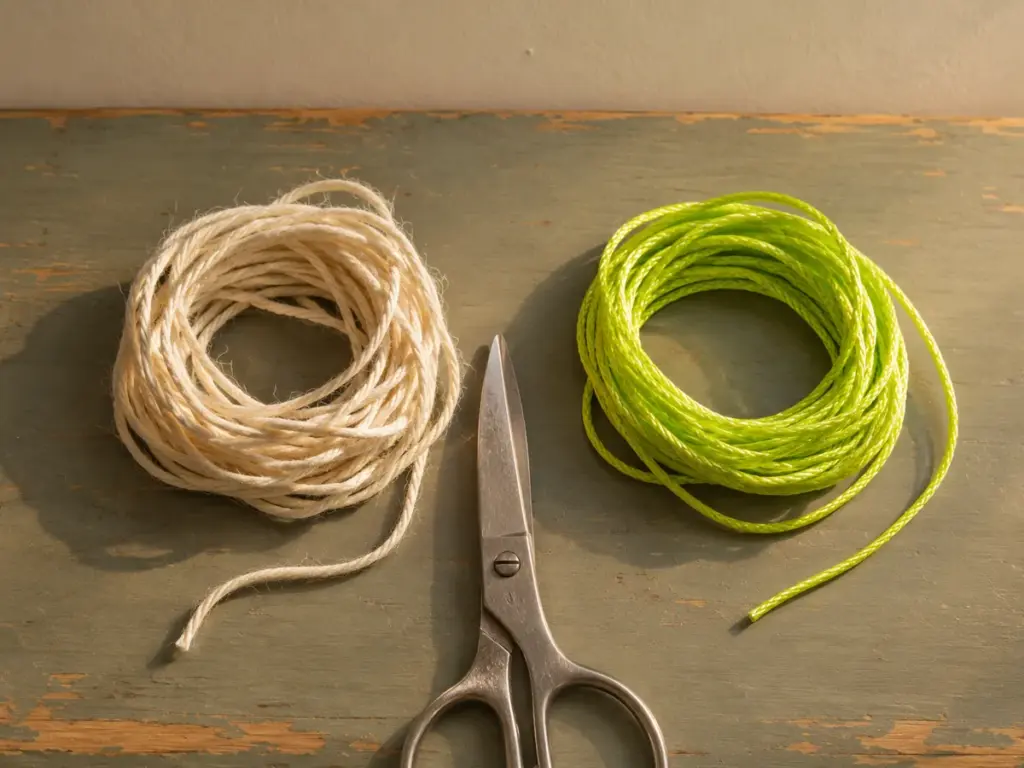
- Undyed 100% cotton string
- Linen twine
- Hemp twine
- Nylon or polyester string
- Dyed string or yarn
- Waxed or coated string
- Hardware-store or craft cord
- Dental floss with no heat rating
Each string in the right-hand column fails for its own reason. Nylon and polyester can melt and leave plastic on the meat.
Waxed or coated string brings an unknown finish into a hot oven, and Survival Freedom warns that wax on floss can melt under heat.
Dye brings a separate problem, since Tasting Table warns that dyes may not be food-safe.
America's Test Kitchen saw yellow colorant from hardware-store twine leach onto a pork roast it had tied. Cotton yarn is a natural fiber, yet once it is dyed it can stain the roast you serve in the same way.
What Are the Best Substitutes for Butcher's Twine?
The table runs from the closest match to real twine down to foil, which has the most limits because it can only wrap.
| Swap | Best for | Limit |
|---|---|---|
| Cotton or linen string | Any roast or bird | Must be undyed |
| Silicone bands | Whole birds | Check heat rating |
| Toothpicks, skewers | Stuffed cuts | Remove before serving |
| Bacon | Lean roasts | Adds salt and fat |
| Skin slits or a pan | Chicken, small roasts | No string needed |
| Foil wrap | Small roasts | Traps steam |
1. Plain Undyed Cotton or Linen String
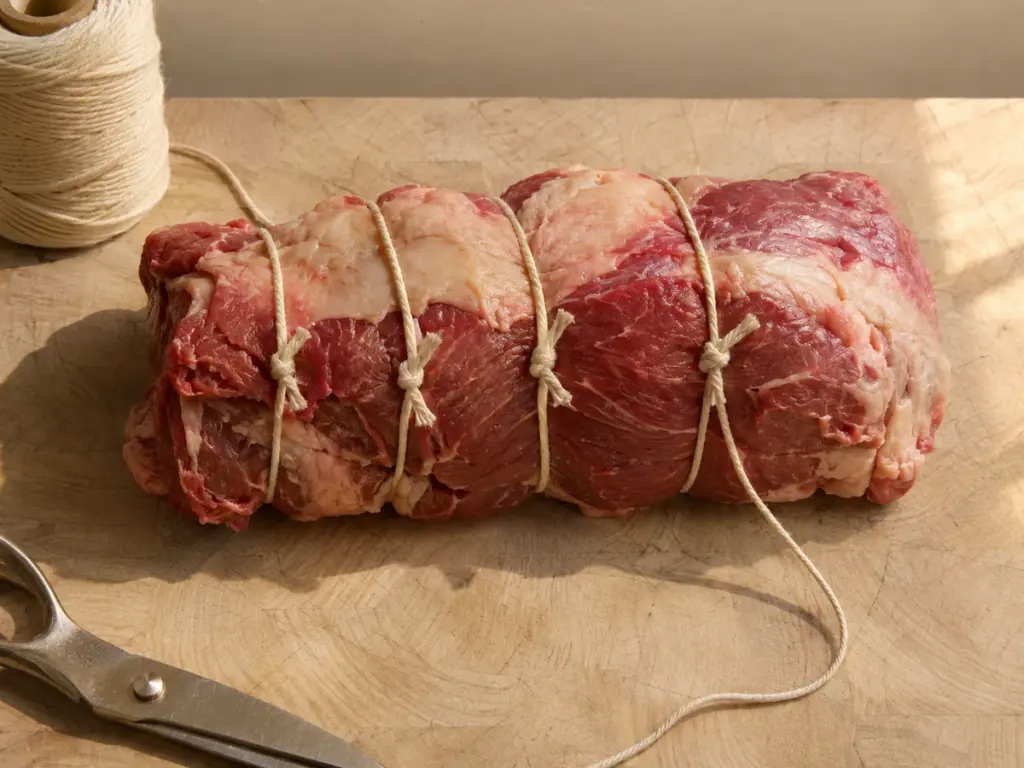
Plain cotton or linen string ties exactly like butcher's twine, so you cut the same length your recipe asks for.
The label you are looking for reads 100% cotton or linen, with no dye, wax or coating listed.
Linen holds its knot best, but cotton worked nearly as well in America's Test Kitchen's test, so undyed cotton is the first choice for any cut you tie.
2. Silicone Cooking Bands
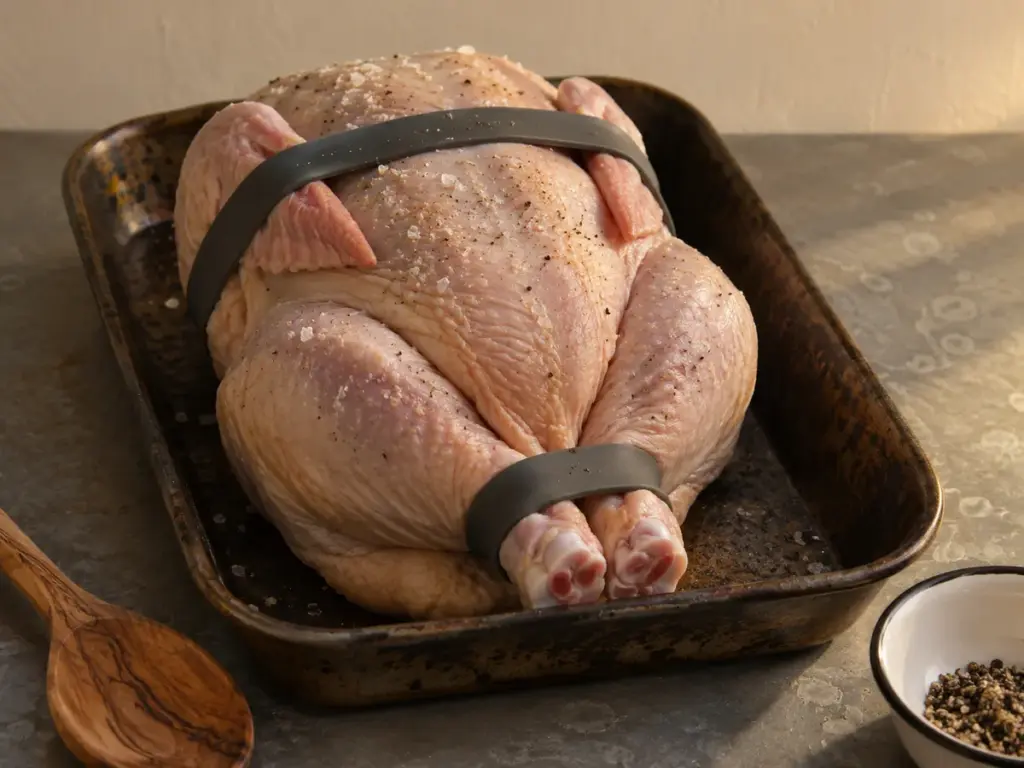
Each band is a closed loop, so there is no knot to tie. You slip one around the legs and run the other across the body.
A review at Cool Tools says the Architec bands are rated safe up to 600°F, stretch around a 5-pound chicken and keep the wings tight.
On your own package, the printed heat rating is the number you check against your oven temperature, since ratings differ by brand.
For a whole turkey, we'd tie cotton or linen string instead, since that review covered a 5-pound chicken.
Food Network spaces its string loops about an inch apart along a roast, and two bands cannot do that, so we'd keep bands for birds and use string on a long, log-shaped roast.
3. Toothpicks or Skewers
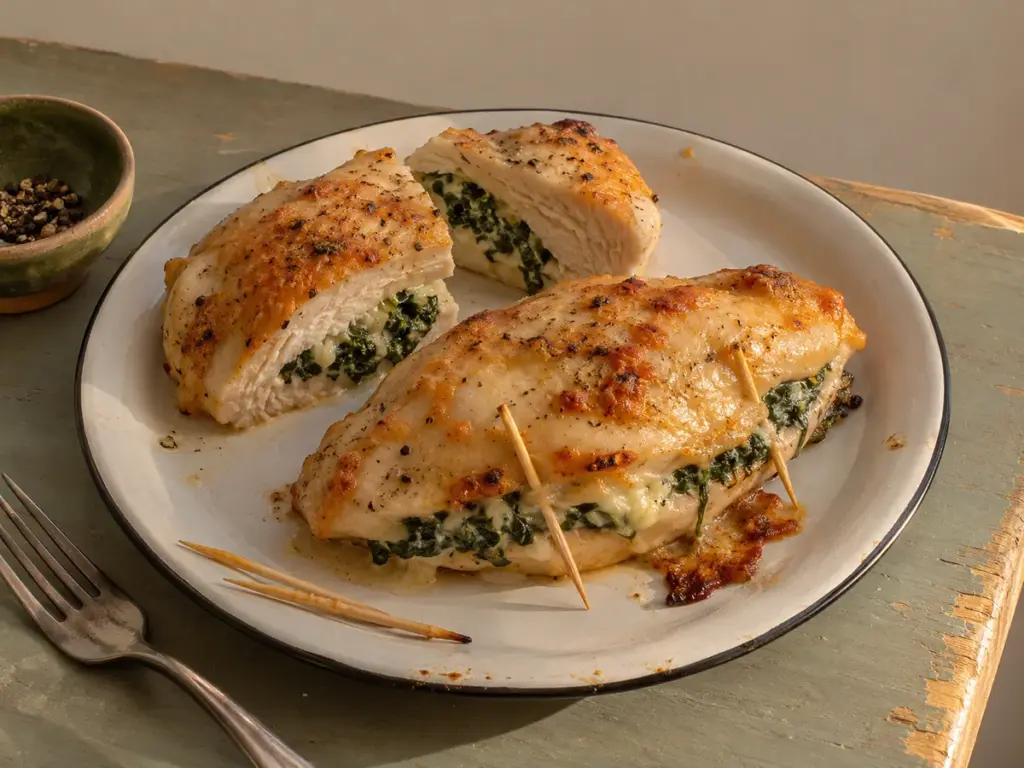
If you have stuffed a chicken breast or a pork loin, pins close the seam or pocket that holds the filling.
Tasting Table suggests toothpicks for small cuts and skewers for large ones, and every pick comes out before you carve and serve.
Wooden toothpicks and skewers can burn in a hot oven, so Survival Freedom has you soak them in water first.
Metal skewers resist heat with no soaking, though the same source warns you not to touch them bare-handed when they come out.
Pins hold an opening shut but cannot squeeze a round roast the way a loop of string does.
4. Bacon Wrap
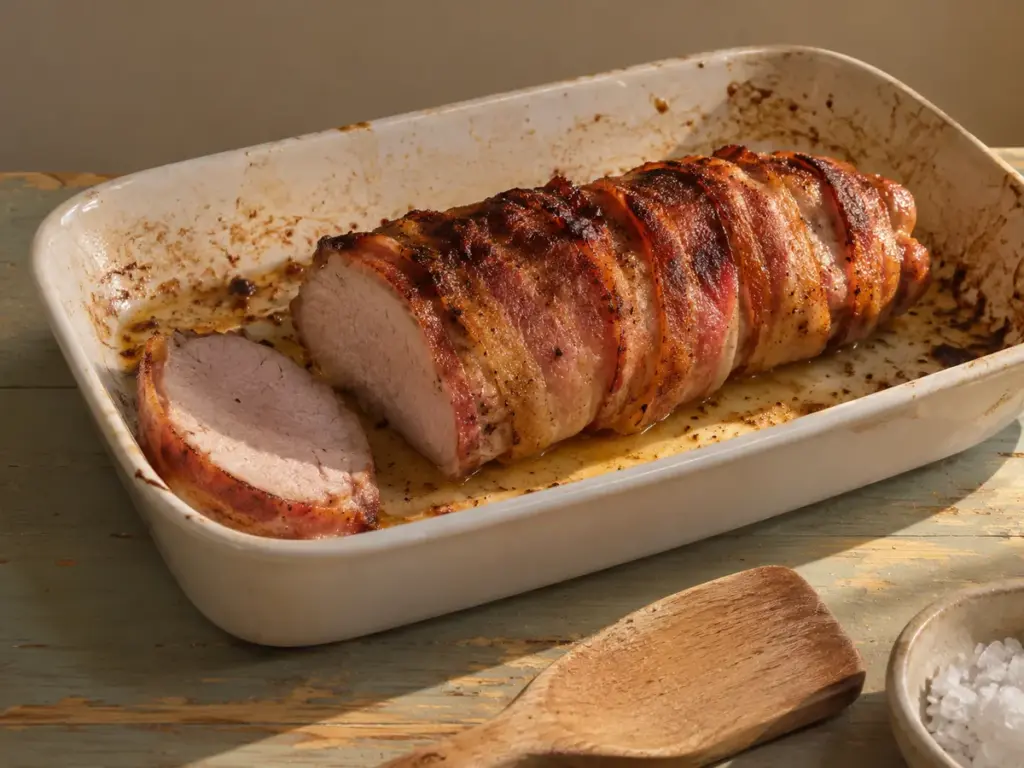
Bacon contracts as it cooks, so it can hold a cut together without any string, as Tasting Table notes.
Tasting Table advises raw bacon for roasts that cook a long time and par-cooked strips for smaller cuts.
You lay the slices across the roast, slightly overlapping, and tuck the ends underneath so the meat's weight holds them.
The bacon stays on and gets served, so it suits a lean pork tenderloin or another cut that gains from the extra fat. It also brings its own salt, which is why we'd season the meat under it lightly.
5. Skin Slits or a Pan
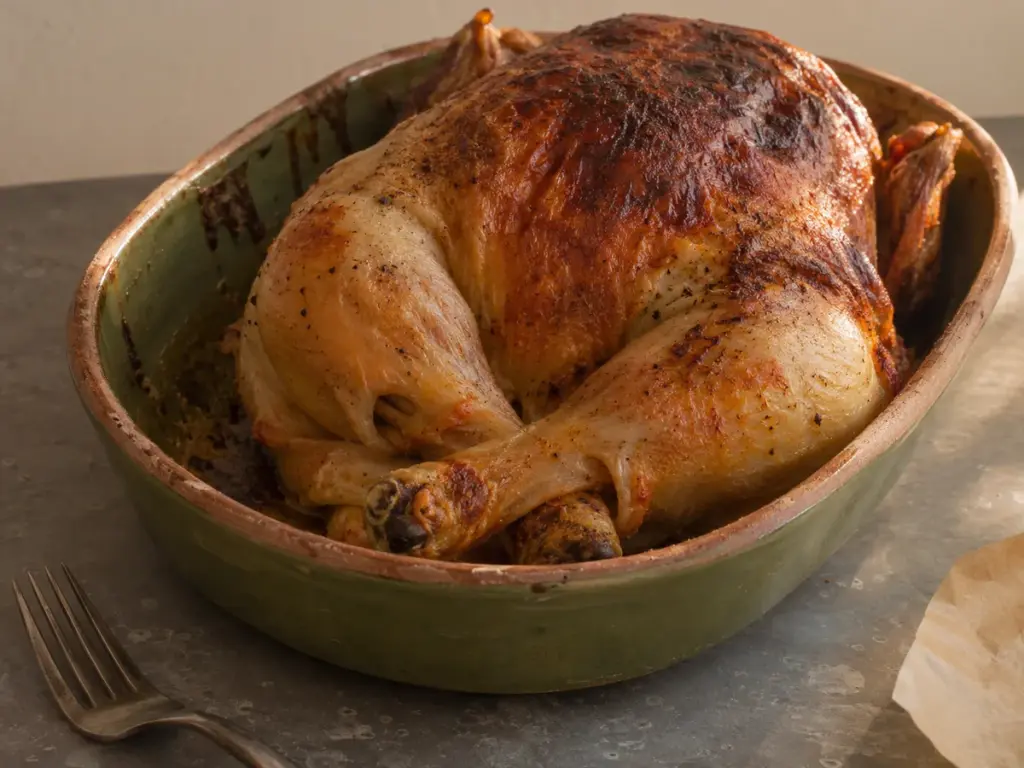
A chicken can truss itself without string, and Tasting Table's method is to cut slits in the excess skin around the cavity, cross the legs and tuck them into the slits.
The slits need to sit in the center, because an off-center slit can let a leg tear through the skin as it shrinks in the oven.
Once you tuck the wing tips behind the body, they stay out of the hottest air and do not burn before the breast is done.
If your roast has no skin to slit, Tasting Table suggests a perforated meatloaf pan to hold a small boneless roast in shape, and the holes in its base let the fat drain away.
6. Aluminum Foil Wrap
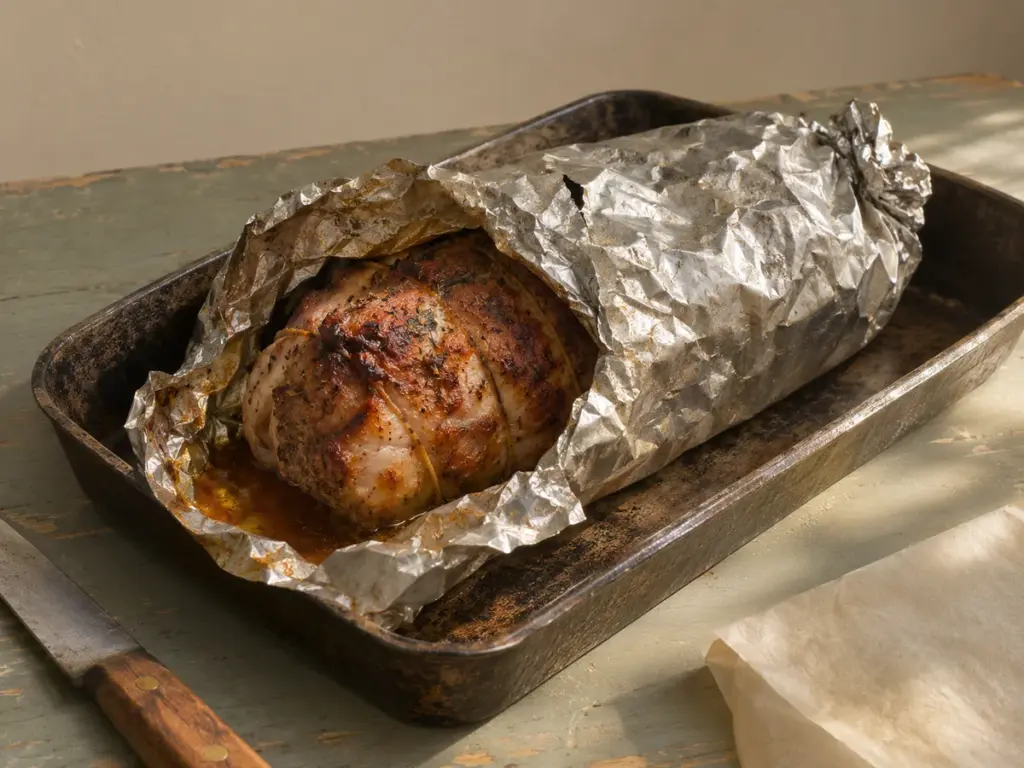
Foil holds a small rolled roast in a compact bundle without any knots.
Survival Freedom's roundup of twine swaps warns that foil, while heat resistant, is not very strong and can tear quickly. Firm crimps at both ends and a quick look for holes keep your bundle closed.
Foil also traps steam, which can leave the meat overcooked and soggy, so the same source has you take it off right after cooking.
If you have run out of foil too, these aluminum foil substitutes cover the wrapping jobs.
Is Dental Floss a Safe Swap for Butcher's Twine?
America's Test Kitchen advises against dental floss as a twine swap, because it often cuts through the meat, is all but invisible after cooking and singes and breaks on a grill.
Tasting Table is more relaxed and says floss can do in a pinch. If you go that way, Survival Freedom says to pick unwaxed, unflavored floss, because the wax can melt under heat.
Floss may be made from nylon, PTFE (Teflon), polyethylene or silk, a 2023 study of dental flosses notes. Three of those four are plastics that fall under the synthetic melt warning, so we'd reach for cotton string long before floss.
How Do You Tie a Roast with String?
Any food-safe string above works with the loop technique in Food Network's guide to tying a roast.
- Dry the roast with paper towels so the string does not slip.
- Tie a tight double knot at the far end.
- Press a thumb on the string one inch below the knot, wrap it around the roast and pull the loop snug.
- Repeat at even spaces until the whole roast is tied.
- Finish with a double knot and trim the excess string.
- Cut every tie off with scissors before you carve and serve.
Food Network wants your ties snug but not tight. Loose ties let the roast pull away from the string as it shrinks, and overly tight ones push the juices out.
For a chicken, you cross the drumsticks, secure them with a double knot and tuck the wing tips under so they do not burn.
Sources
- Food Network, How to Tie a Roast: purpose of tying, double knots, one-inch loop method, snug ties, cutting the string off before serving.
- Food Network, How to Truss a Chicken: crossing the drumsticks, double knot or bow, tucking wing tips.
- Tasting Table, Tips You Need When Trussing Meats: cotton, hemp and linen, synthetic twine melting, burn test, white thread, bacon, toothpicks and skewers, perforated pan.
- Tasting Table, How to Truss a Chicken Without String: skin-slit method.
- Blue Apron, How to Truss a Chicken: reasons to truss, what happens without it.
- America's Test Kitchen, It's About Twine: linen and cotton, dye leaching from hardware-store twine, dental floss drawbacks.
- Survival Freedom, The 9 Best Substitutes for Butcher's Cooking Twine: wax on floss can melt, soaking wooden picks, foil strength and steam.
- Cool Tools, Architec Stretch Cooking Bands: 600°F rating, 5-pound chicken.
- Biomaterial Investigations in Dentistry (2023), Comparison of dental flosses: floss materials.

Food writer at GustoMeadow. Writes ingredient substitutes, food comparisons, taste guides and storage guides for home cooks.
Storage and food-safety numbers follow USDA, FDA and university extension guidance.



