
Cacao and cocoa are the same bean sold under two names. Carob is a different, sweeter plant.
- Brands often label raw products cacao and roasted powder cocoa, but the words vary.
- Natural cocoa is acidic and pairs with baking soda, Dutch-process with baking powder.
- Carob has no caffeine or theobromine, and about 3 g of sugar per tablespoon against under 0.1 g in cocoa.
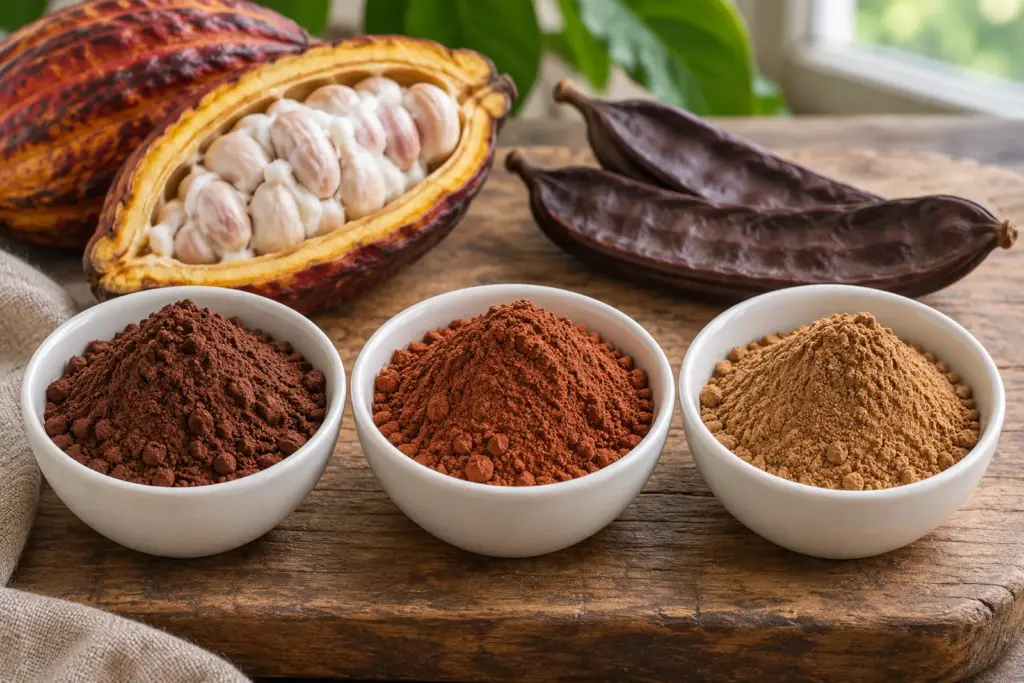
Cacao powder, cocoa powder and carob powder all pour out as a brown dust, so people grab the wrong bag all the time. The wrong pick changes how your batter rises, how sweet it tastes and whether it has caffeine, so this ingredient comparison is worth settling before you bake.
1. What Is the Difference Between Cacao, Cocoa, and Carob?
The three come from two plants. Cacao and cocoa both start as seeds of the cacao tree, while carob is the pod of a Mediterranean tree in the legume family, the same family as peas and beans.
| Trait | Cacao | Cocoa | Carob |
|---|---|---|---|
| Plant | Cacao tree (Theobroma cacao), seeds | Same tree, same seeds | Carob tree (Ceratonia siliqua), dried pods |
| How it is made | Fermented and dried beans, often left unroasted | Usually roasted beans, ground and pressed into powder | Pods dried and ground, often toasted |
The two trees also grow in different parts of the world:
- The cacao tree began in South America east of the Andes. It now grows in a hot, humid belt within 10 degrees of the Equator, and its pods grow straight out of the trunk and branches.
- The carob tree is native to the Mediterranean basin and southwestern Asia. Its pods hang as dark brown, flattened strips 4 to 12 inches long.
| Trait | Cacao | Cocoa | Carob |
|---|---|---|---|
| Flavor | Bitter and strongly chocolate | Chocolate, fruitier when natural and darker when Dutch-process | Sweet, with a taste of its own |
| Caffeine and theobromine | Both present | Both present | None |
| Best use | Smoothies, no-bake bites, nibs on yogurt | Baking and hot drinks | Caffeine-free baking |
Only carob comes from a different plant, so for most recipes your real choices are raw cacao versus roasted cocoa, and natural cocoa versus Dutch-process cocoa. Carob matters when you want a caffeine-free swap or a sweeter, softer flavor.
2. Is Cacao the Same as Cocoa?
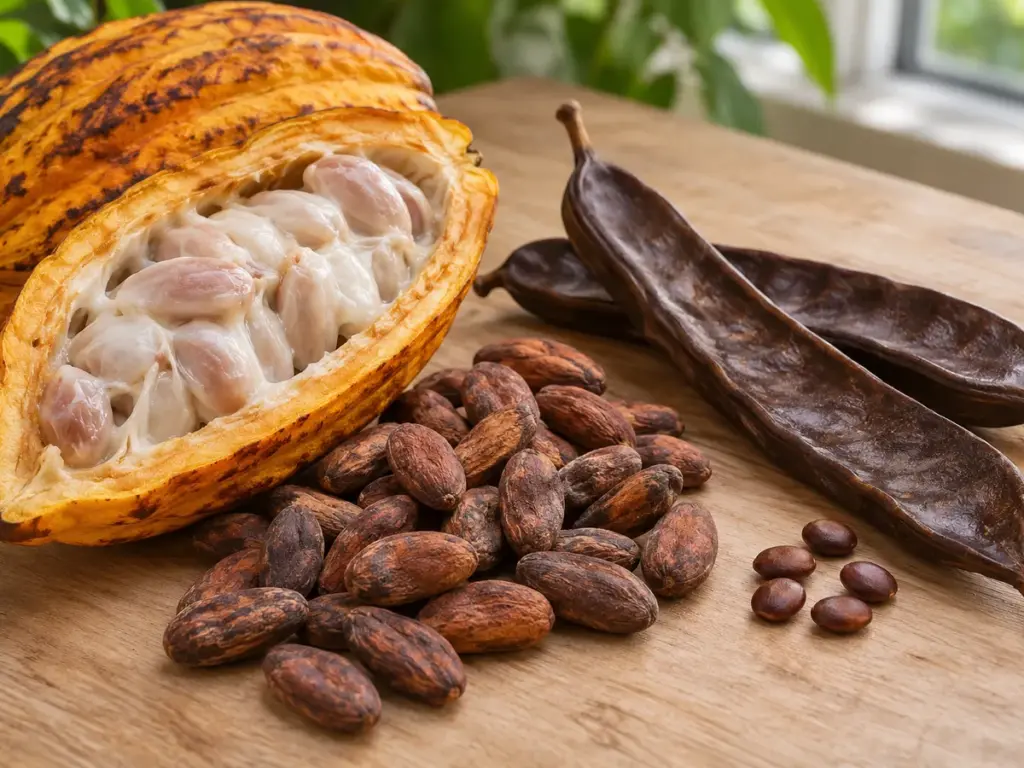
Both words describe the same fermented, dried beans, so the difference is mostly how far the processing went. Healthline reports that people use the two words inconsistently. Some call the beans and their ground contents "cacao" and the powder left after the fat is pressed out "cocoa," and makers of raw or lightly processed products often pick "cacao" for the label.
Every batch starts alike. Criollo beans ferment for about 2 to 3 days and Forastero beans for about 5, and drying then cuts the moisture from about 60% to about 7.5%, according to the International Cocoa Organization.
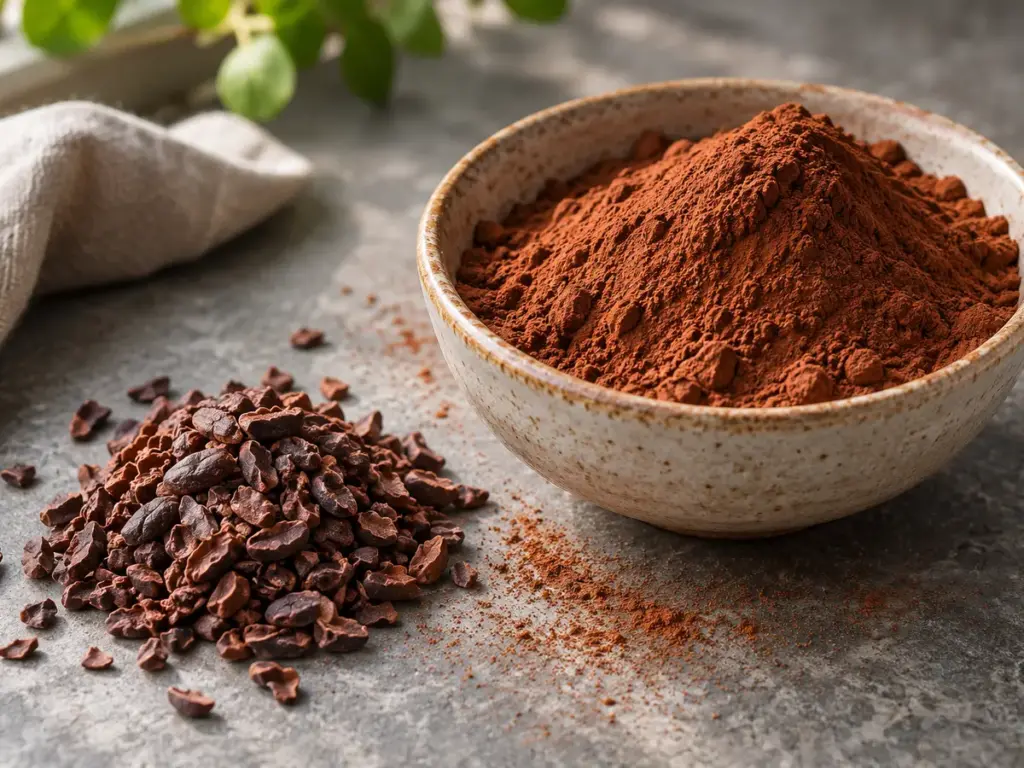
After that, the beans are roasted unless the maker wants a raw product, crushed into nibs and ground into a liquor that is roughly half fat. A press squeezes most of that fat out and leaves cocoa powder, and some brands sell the pressed-out fat as cacao butter while others call it cocoa butter.
Chocolate is a third product. The FDA defines sweet chocolate as chocolate liquor ground with sweeteners, with at least 15% liquor by weight, so the chocolate bar you buy carries sugar that plain cacao and cocoa powder do not.
Three label clues tell you what you are holding:
- "Raw" or "unroasted" means the maker skipped roasting. These products cost more, and unsweetened cacao tastes bitter, so expect a strong raw cacao flavor before you add any sweetener.
- "Processed with alkali" or "Dutch-process" marks alkalized cocoa, a separate choice that changes how your batter rises.
- Cacao nibs are crushed pieces of the bean that stay crunchy, so nibs and powder belong in different recipes.
3. How Do Natural and Dutch-Process Cocoa Differ?
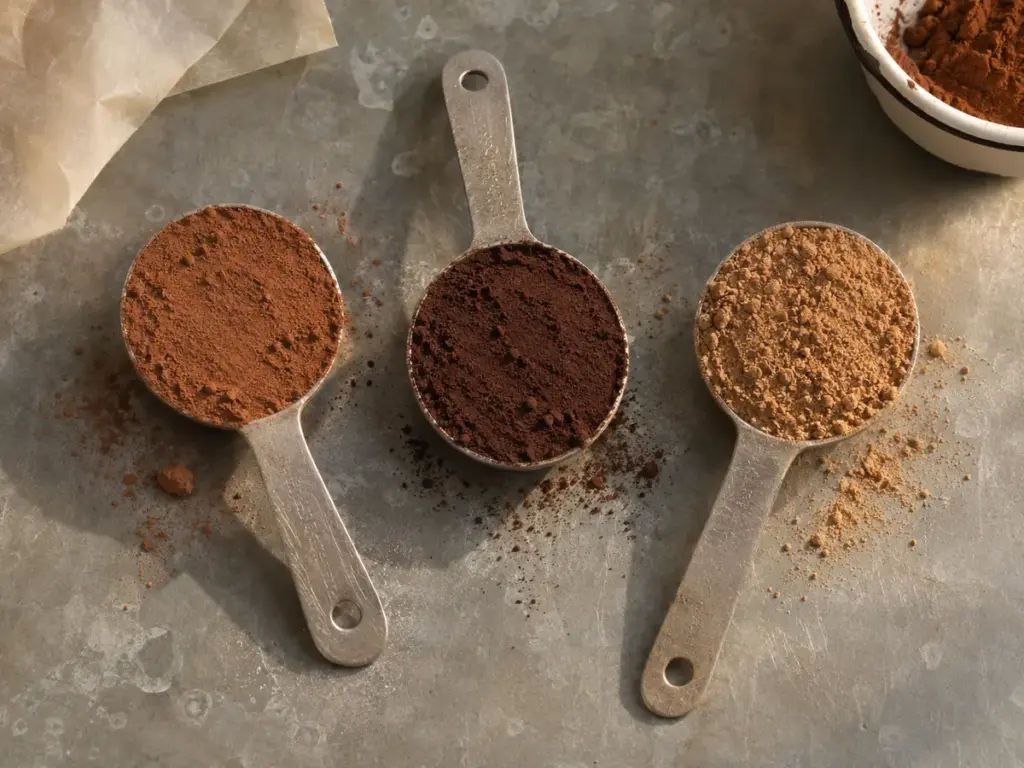
For baking, this choice matters more than cacao versus cocoa. Natural cocoa keeps the acidity of the bean, and Dutch-process cocoa is natural cocoa treated with an alkalizing agent such as potassium carbonate to reduce that acid. King Arthur Baking says the treatment darkens the color and gives a stronger, more bittersweet chocolate taste with fewer fruity notes.
- Lighter, reddish brown with a mild, old-fashioned chocolate taste
- Acidic, so it reacts with baking soda
- Label says only "cocoa" or "natural"
- Darker, with a more bittersweet taste
- Acid reduced, so it works with baking powder
- Label says "Dutch-process" or "processed with alkali"
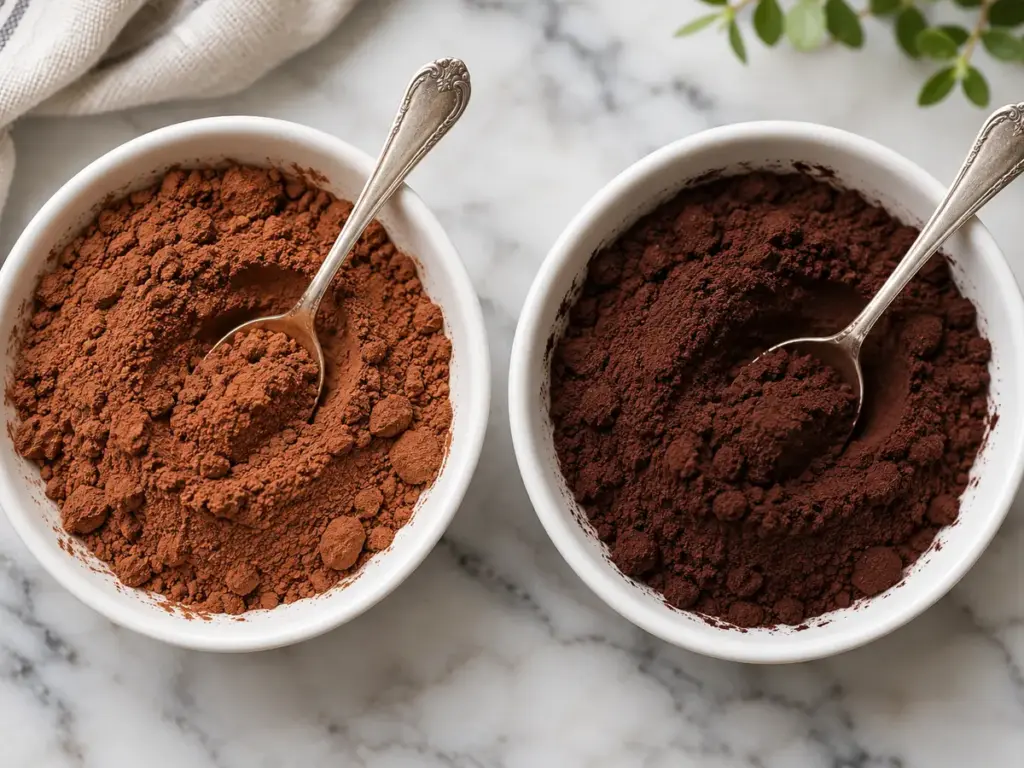
The acid shows up on a pH meter. A survey of commercial powders measured pH 5.3 to 5.8 for natural cocoa, and alkalized powders ran from 6.5 up past 7.6 depending on how heavily they were treated.
A recipe built on baking soda usually calls for natural cocoa, whose acidity does that job, because soda is a base that needs acid to make bubbles. A recipe leavened mostly with baking powder, which carries its own acid, usually calls for Dutch-process cocoa. When a soda recipe also has an acid such as yogurt or vinegar, either cocoa works.
You will see a mix-up in the pan. King Arthur warns that Dutch-process cocoa in a soda-only recipe can leave less rise and a slightly soapy taste from soda that has nothing to react with. Natural cocoa in a baking-powder recipe usually gives a lighter color and a slight tang.
4. What Is Carob, and Does It Taste Like Chocolate?
Carob has no relation to the cacao tree. Its pods grow on an evergreen carob tree native to the Mediterranean, and the dried pods are ground into a powder that is sold raw or toasted.
Healthline says carob powder looks a lot like cocoa powder, yet it is sweet with a taste of its own. Bob's Red Mill sells its carob powder in toasted form.
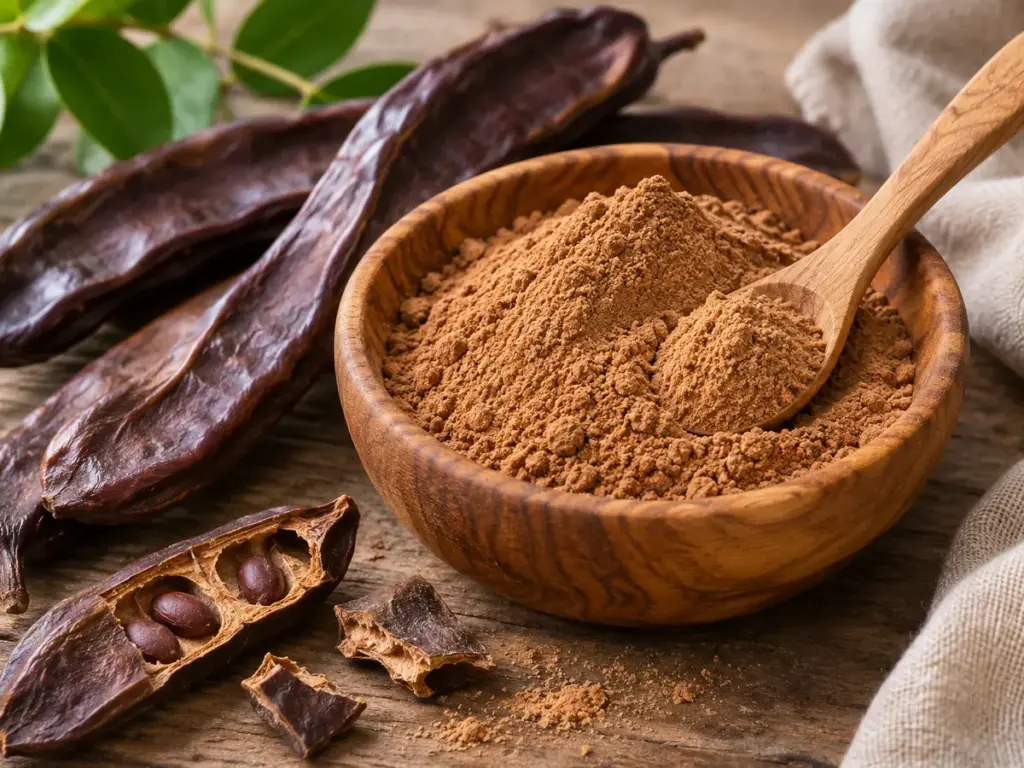
The ripe pod is tough and fibrous, 4 to 12 inches long, and sweet when chewed if you avoid the hard seeds. Those seeds make up 10 to 20% of the pod. Sugar makes up about half of carob flour (2.9 g of a 6 g tablespoon in USDA data), which explains why the powder tastes sweet before you add anything.
Searchers often ask how a carob pod differs from cacao nibs:
- Crushed pieces of the fermented cacao bean
- Crunchy and unsweetened, so some people find them too bitter
- A tough, leathery pod from a legume tree
- Sweet pulp around hard seeds, and no caffeine
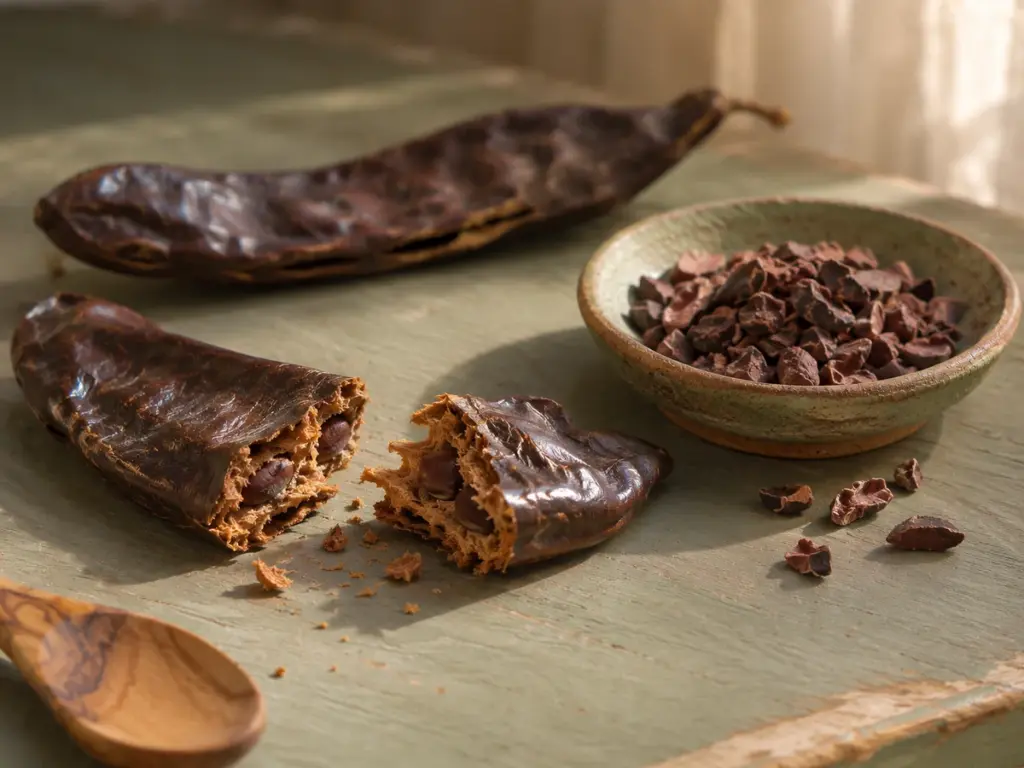
USDA lists 0 mg of caffeine and 0 mg of theobromine for carob flour, while unsweetened cocoa holds about 12 mg of caffeine and 111 mg of theobromine per tablespoon. That makes carob the pick for anyone avoiding stimulants.
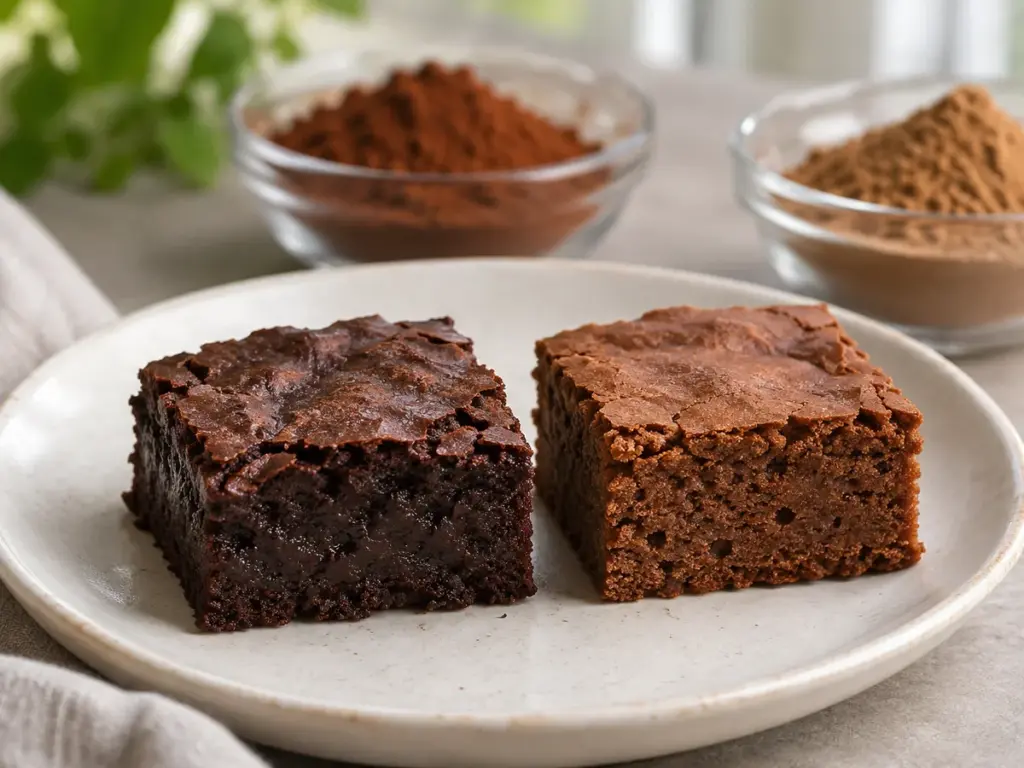
Carob also brings its own sugar and almost no fat. One tablespoon of carob flour has about 2.9 g of sugars where cocoa has 0.09 g, and USDA lists 0.65 g of fat per 100 g of carob against 13.7 g in cocoa. A brownie made only with carob therefore tastes sweeter and comes out less rich than one made with cocoa.
5. Is Carob the Same as Chocolate?
No. Because the FDA's definition requires chocolate liquor, which comes from cacao beans, a product made only from carob is not chocolate, however closely its color and shape match.
Carob drops are a separate product from the powder. Bob's Red Mill makes them from its carob powder blended with molasses for sweetness, so read the ingredient list on any carob chips or bars to see what else went in.
6. How Do They Compare on Nutrition?
These USDA numbers are for one tablespoon of each powder. USDA has no record named raw cacao powder, so natural cocoa is the closest match for it.
| Per tablespoon | Natural cocoa (5.4 g) | Dutch-process cocoa (5.4 g) | Carob flour (6 g) |
|---|---|---|---|
| Calories | 12 | 12 | 13 |
| Fat | 0.7 g | 0.7 g | 0.04 g |
| Fiber | 2.0 g | 1.6 g | 2.4 g |
| Sugars | 0.09 g | 0.10 g | 2.9 g |
| Calcium | 7 mg | 6 mg | 21 mg |
| Magnesium | 27 mg | 26 mg | 3 mg |
| Caffeine | 12 mg | 4 mg | 0 mg |
| Theobromine | 111 mg | 142 mg | 0 mg |
Carob has about the same fiber as cocoa (2.4 g against 2.0 g per tablespoon). It gives you roughly three times the calcium of cocoa but only about an eighth of the magnesium.
Dutch-process cocoa has about a third of the caffeine of natural cocoa in these USDA records, though its theobromine is higher.
Cocoa also leads on the other minerals people credit to chocolate. If you compare a tablespoon of natural cocoa with carob flour, USDA data work out to:
- Iron: about 0.75 mg in cocoa and 0.18 mg in carob.
- Potassium: about 82 mg in cocoa and 50 mg in carob.
- Protein: about 1.1 g in cocoa and 0.3 g in carob.
For caffeine, the FDA cites 400 mg a day as an amount not generally linked with negative effects in most adults. A 12-ounce cup of regular brewed coffee holds 113 to 247 mg, so the 12 mg in a tablespoon of natural cocoa adds little to your day, and carob adds none.
Antioxidants are the other claim you will see. Healthline names flavanols as cocoa's key beneficial compounds and says less processed, less heated products tend to keep more of them, but baking destroys some anyway. If you want to keep them, put raw cacao in smoothies and nibs on yogurt rather than in the oven.
Dutch processing costs flavanols. A 2008 survey of commercial powders found 34.6 mg per gram in natural cocoas, 13.8 in lightly alkalized, 7.8 in medium and 3.9 in heavily alkalized powders.
The main health trial, COSMOS, gave 21,442 older US adults a cocoa extract with 500 mg of flavanols a day or a placebo. Over a median 3.6 years it did not significantly reduce total cardiovascular events, though cardiovascular deaths were 27% lower, and the authors called for more research. It tested a supplement, not the brownies or chocolate bars you bake and eat.
7. Can You Swap Cacao, Cocoa, and Carob?
Cacao powder and cocoa powder are both unsweetened, so the sugar in your recipe stays the same when you trade them. Check the label for "Dutch-process" or "processed with alkali," because that label wording tells you whether the powder will react with baking soda.
| Recipe calls for | You have | Do this | What changes |
|---|---|---|---|
| Natural cocoa | Dutch-process cocoa | Use the same amount and swap the baking soda for twice as much baking powder | Darker color, possibly less rise |
| Dutch-process cocoa | Natural cocoa | Use the same amount. Above 3 tablespoons, swap the baking powder for half as much baking soda | Lighter color, slight tang |
These two rows come from King Arthur's swap rules, which add no change when the recipe already has the right leavener. Natural cocoa can stand in for Dutch-process cocoa this way, and the leavening is the only thing you may have to adjust.
| Recipe calls for | You have | Do this | What changes |
|---|---|---|---|
| Cocoa powder | Carob powder | Use an equal amount | Sweeter, no caffeine, less fat, a taste of its own |
| 1 ounce baking chocolate | Carob powder | 3 tablespoons carob plus 1 tablespoon water or vegetable oil | Sweeter and less rich |
The carob rows come from Bob's Red Mill, which says carob powder replaces cocoa in equal amounts and gives the 3 tablespoons plus 1 tablespoon mix for a 1 ounce square of baking chocolate. Because carob carries its own sugar, trim the added sugar a little and adjust on your next batch. When your cocoa tin is empty, carob is one of the few cocoa powder stand-ins that also removes the caffeine.
8. Which One Should You Buy?
Match the powder to what you are making:
- Brownies and cakes leavened with baking soda: buy natural cocoa, because its acid is what makes the soda work.
- Dark, smooth cakes and cookies leavened with baking powder: buy Dutch-process cocoa for the deeper color and more bittersweet taste.
- Smoothies, oatmeal and no-bake bites: buy raw cacao powder, since nothing here heats the flavanols away, and accept the higher price.
- A mug of hot cocoa: plain cocoa powder has almost no sugar, while USDA lists boxed cocoa mix at about 66 g of sugars per 100 g, so plain cocoa needs sweetener and a hot chocolate mix does not.
- Anything caffeine-free: buy toasted carob powder. Healthline suggests stirring it into smoothies, yogurt, ice cream, pancake batter or pudding.
- A hot drink or tea without caffeine: carob powder dissolves in hot or cold milk, and Healthline suggests a hot carob drink in place of hot chocolate. Taste it first, since it is already sweet.
For savory sauces, a mole poblano uses cocoa or chocolate for a dark color and a bitter taste, so unsweetened cocoa or cacao suits it and sweet carob would not.
Sources
- USDA FoodData Central, SR Legacy: cocoa, dry powder, unsweetened (FDC 169593), processed with alkali (FDC 169594), carob flour (FDC 173755), cocoa mix, powder (FDC 174122)
- USDA FoodKeeper, cocoa and cocoa mixes
- King Arthur Baking, Dutch-process vs. natural cocoa and Types of cocoa, explained
- Healthline, Cacao vs Cocoa: What's the Difference? and Carob Powder: Nutrition Facts and Health Benefits
- Bob's Red Mill, Carob Facts
- International Cocoa Organization, Growing cocoa and Harvesting and post-harvest
- Morton, Carob, in Fruits of Warm Climates, and Carob, in Progress in New Crops
- FDA, 21 CFR 163.123, Sweet chocolate and Spilling the Beans: How Much Caffeine Is Too Much?
- Miller et al., Impact of alkalization on the antioxidant and flavanol content of commercial cocoa powders, Journal of Agricultural and Food Chemistry, 2008
- Sesso et al., Effect of cocoa flavanol supplementation for the prevention of cardiovascular disease events (COSMOS), American Journal of Clinical Nutrition, 2022
- VCA Animal Hospitals, Is chocolate toxic to dogs?
Frequently Asked Questions
Can Dogs Eat Carob or Cocoa?
Cocoa is dangerous for dogs. VCA says chocolate contains theobromine and caffeine, dogs process both differently than people, and the darker and more bitter the chocolate, the more dangerous it is. Cocoa beans carry the most theobromine, followed by unsweetened cocoa powder and then baking chocolate.
USDA lists 0 mg of theobromine for carob flour, and VCA notes that many gourmet dog treats use carob in place of chocolate. VCA also warns that carob looks like chocolate and the two are often confused, so check the ingredient list, and call a veterinarian if your dog ate cocoa.
Is Carob Powder the Same as Carob Flour?
Yes. Healthline says carob powder is also called carob flour, and USDA lists the plain powder under that name. USDA's nutrition numbers cover the plain powder, not sweetened carob chips.

Food writer at GustoMeadow. Writes ingredient substitutes, food comparisons, taste guides and storage guides for home cooks.
Storage and food-safety numbers follow USDA, FDA and university extension guidance.



