
The closest swap for cavatappi is rotini or fusilli at the same weight, and cellentani is simply cavatappi under another name.
- For mac and cheese, elbows or penne rigate hold sauce in their hollow centers.
- For pasta salad, rotini or gemelli keeps dressing in its curls.
- Use the cook time on the new box, because each shape differs.
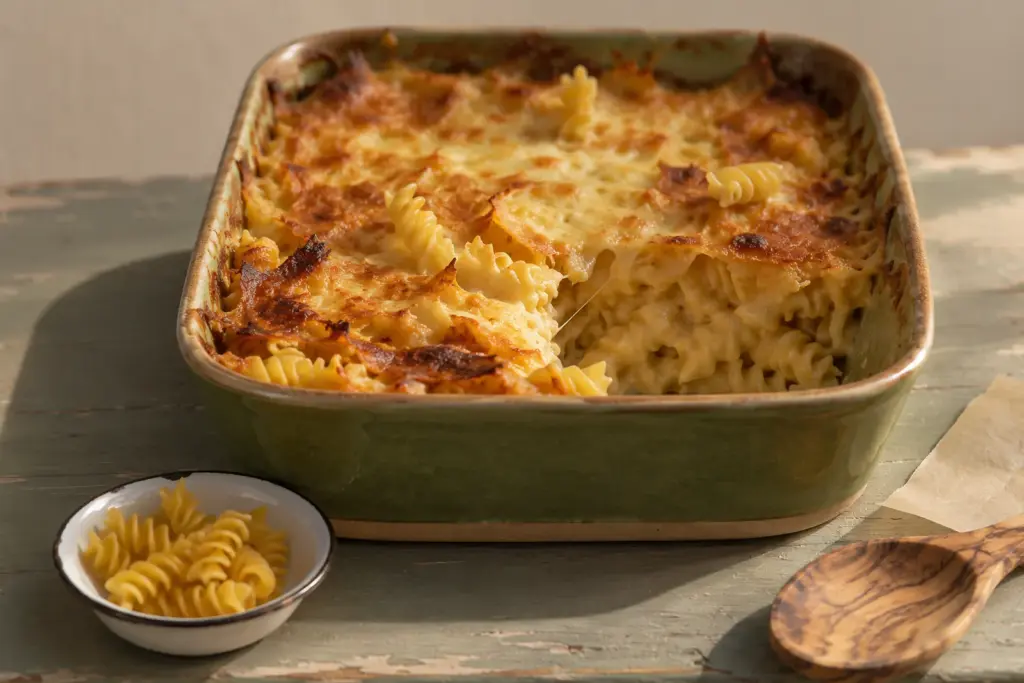
Cavatappi goes into baked mac and cheese, pasta salad and casseroles, so the best pasta substitutes are the shapes you can trust to grab sauce the way a corkscrew does. Seven are ranked below, with the sauce each one suits and the time it needs in the pot.
What Does Cavatappi Do in a Recipe?
Cavatappi is a ridged tube twisted into a helix, usually with one to three turns, and the name means corkscrew in Italian. Stores also sell the same pasta as cellentani, amori, spirali or tortiglione, so a box with one of those names is the exact shape and you need no swap.
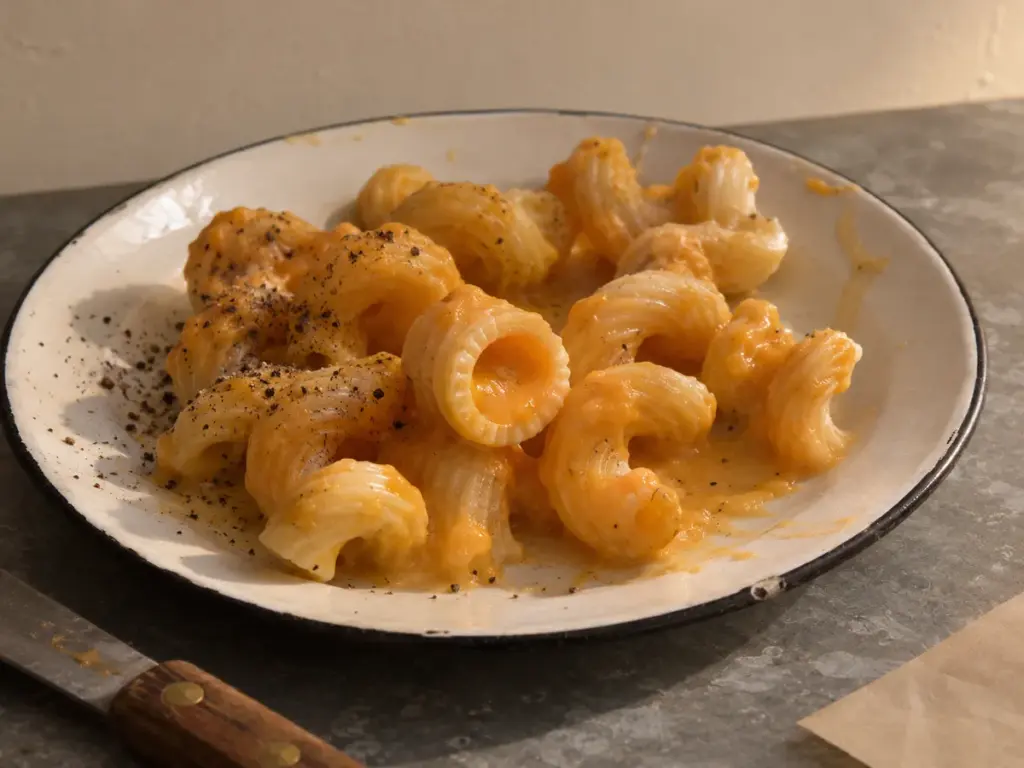
Cavatappi shows up most in stovetop and baked mac and cheese, pasta salad and casseroles, and three features do the work there:
- The hollow center carries sauce inside each piece as well as on the outside.
- The ridges give thin sauces and dressings a surface to cling to.
- The curl leaves gaps between pieces, so sauce settles between them.
A good swap keeps at least one of these, and you can see which one below. Rotini and fusilli keep the curl but are solid, while elbows, penne rigate and rigatoni keep the hollow center and lose the curl.
7 BEST Substitutes for Cavatappi Pasta
| Swap | Best for | What changes |
|---|---|---|
| Rotini | Salad, mac and cheese | Solid, tighter curl |
| Fusilli | Cream sauces | Looser spiral |
| Penne rigate | Baked dishes | Straight ridged tube |
| Gemelli | Pasta salad | Twisted pair, compact |
| Elbows | Stovetop mac | Smooth, smaller |
| Radiatori | Thick sauces | Ruffled fins, short |
| Rigatoni | Big bakes | Wider tube, longer cook |
The curled shapes carry dressing best in cold salads, while the hollow tubes do better under a thick cheese or meat sauce.
1. Rotini
Rotini is the nearest match in the pasta aisle. Ronzoni describes it as a cousin of fusilli with a slightly more compact, tighter spiral, and its box lists 10 to 12 minutes, the same range as Ronzoni's own cavatappi.
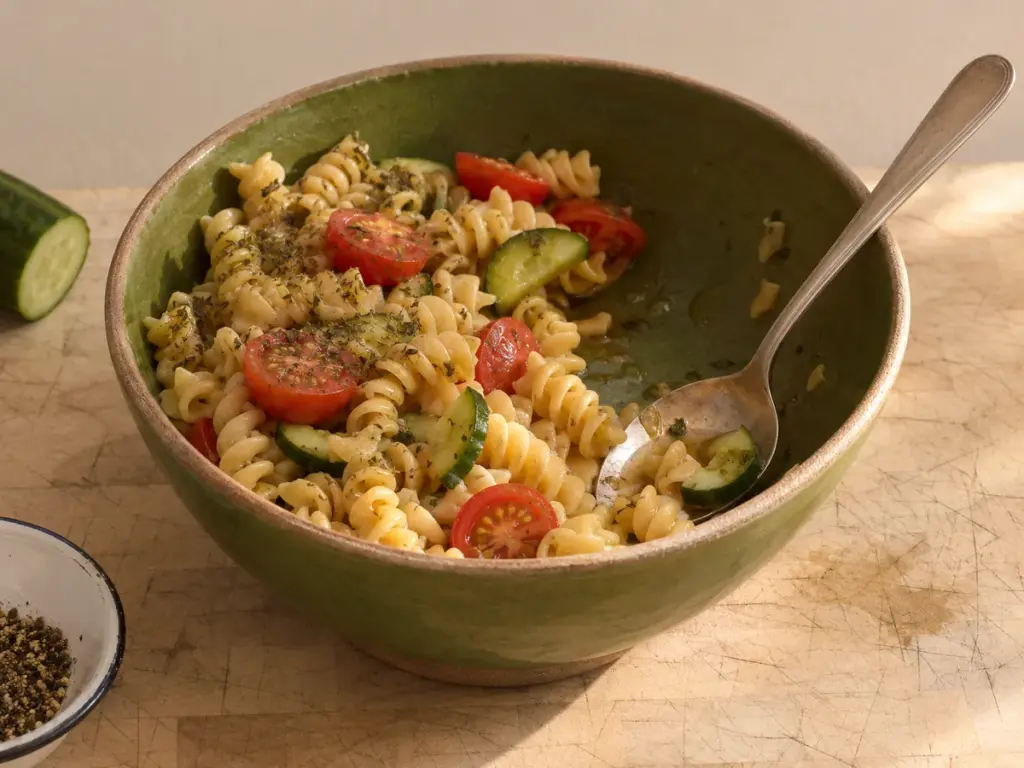
Plain rotini is a solid spiral, so cheese sauce clings to the outside of the curls instead of filling them. You still get a good result in baked mac and cheese and in salads, and the difference between fusilli and rotini is small enough that either one fits a recipe written for cavatappi.
- You can use the same weight of rotini as the cavatappi in the recipe.
- Each piece holds less sauce inside, so stir a thin dressing again before you serve it.
2. Fusilli
Fusilli is the same corkscrew idea with a looser, more open spiral. The common boxed fusilli is solid, and the hollow version is called fusilli bucati, which gives you the cavatappi center back when your store carries it.
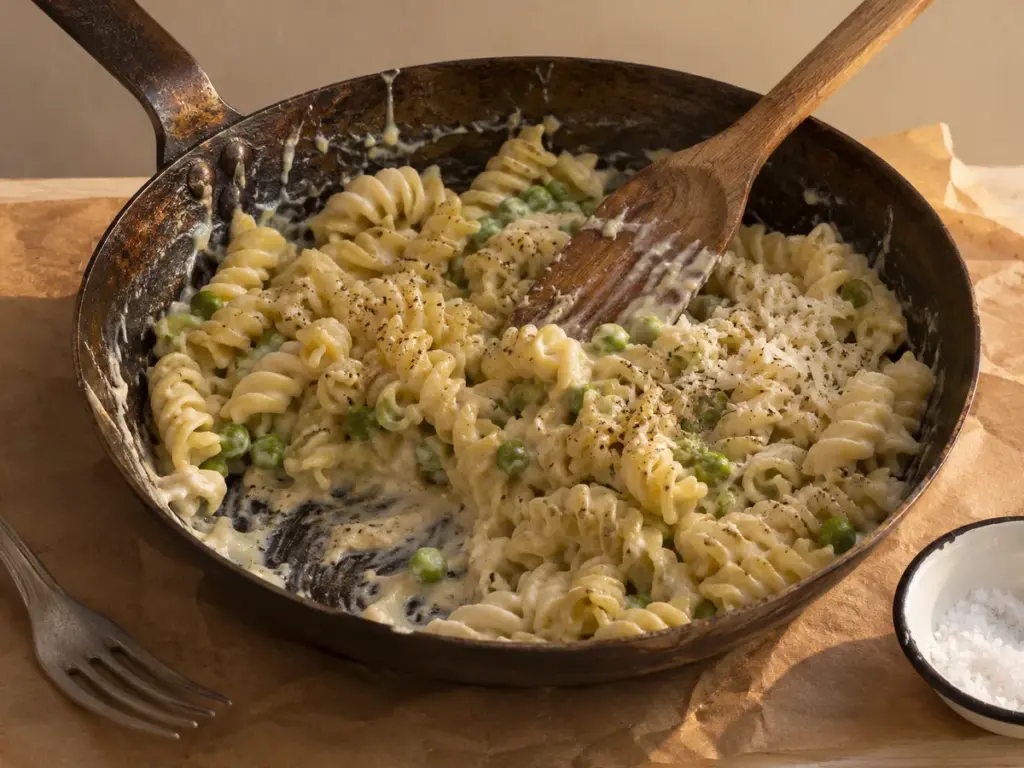
The open turns catch peas, crumbled sausage and small vegetables, so fusilli suits cream sauces and skillet dinners well.
- Swap it pound for pound for cavatappi.
- Use the time on the fusilli box instead of the cavatappi time.
3. Penne Rigate
Penne rigate is a short ridged tube with angled ends. Ronzoni says its ridges let thinner sauces coat each bite and its hollow center holds vegetable-filled sauces. It also suits baked dishes, as a cook's suggestion.
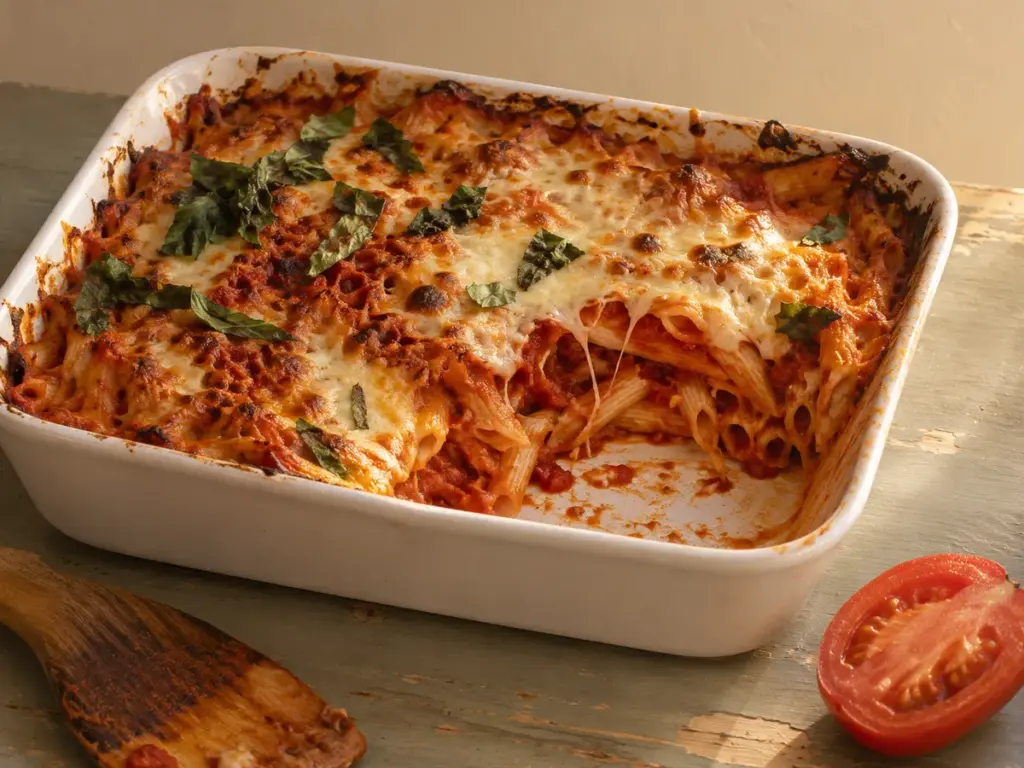
Penne has no curl, so it holds less dressing than cavatappi in a cold salad. Buy the ridged box marked rigate, because smooth penne loses the surface that holds the sauce, and set a shorter timer: Ronzoni's 7 to 9 minutes compares with 10 to 12 on its cavatappi.
- For a baked dish, a cook's suggestion is to drain it while the center is still firm, since it keeps cooking in the oven.
4. Gemelli
Wikipedia describes gemelli as twisted-paired spiral tubes, and the name means twins. The tight twist leaves grooves where oil and dressing collect, so gemelli suits pasta salad and light tomato sauces best.
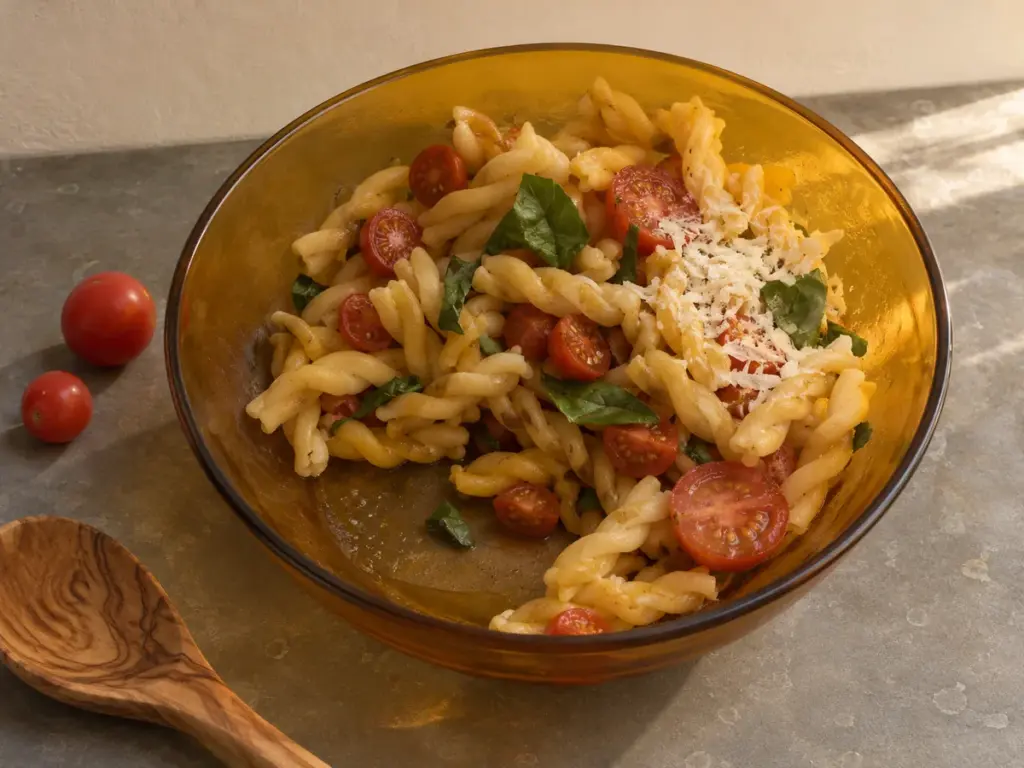
You may find gemelli in fewer stores than rotini, so rotini is the easier fallback when you cannot find it. The pieces are compact, so a recipe built around long curls looks different on your plate.
- Use the cook time on the gemelli box, not the cavatappi time.
5. Elbow Macaroni
Elbows are the stovetop mac and cheese choice. Ronzoni says their hollow, tubular shape fills with thicker, gooier sauces and their thick edges keep a firm bite at al dente.
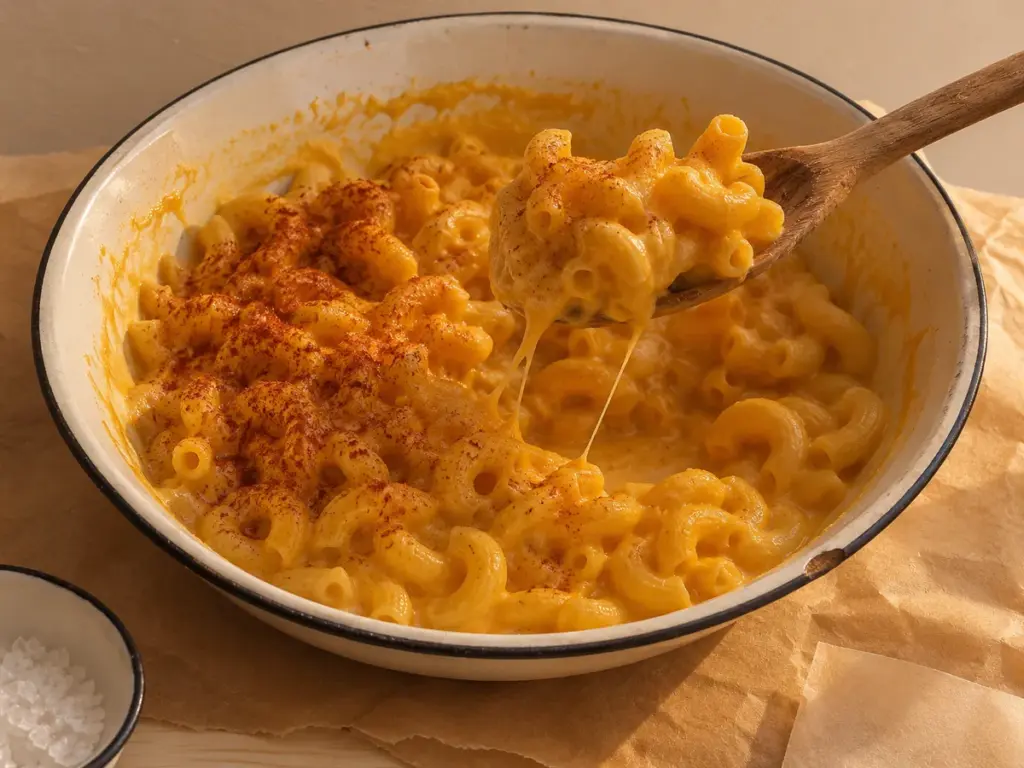
They are smaller and smooth, so each piece holds less sauce than cavatappi and a vinaigrette slides off more easily. Ronzoni lists 8 to 10 minutes. If you run out of butter for the roux, you can use one of these butter swaps for mac and cheese.
- Elbows are best for creamy sauces and stovetop mac.
- You will want rotini or gemelli instead in a vinaigrette salad.
6. Radiatori
Wikipedia calls radiatori small, squat pieces that look like radiators: shorter and thicker than fusilli, with ruffled fins whose design creates hollows that trap sauce. They work well with thicker sauces.
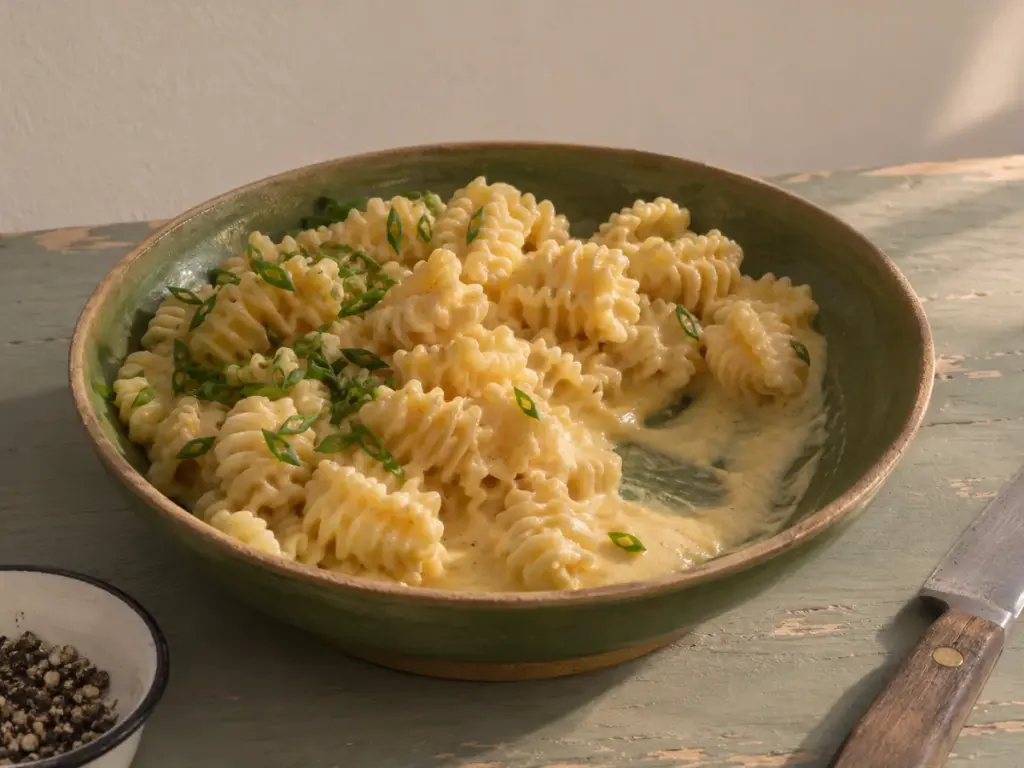
That makes radiatori a strong swap for thick cheese sauces and chunky add-ins, although you may find radiatori in fewer stores than rotini.
- Follow the radiatori box for the cook time.
7. Rigatoni
Rigatoni are large ridged tunnels, about 1½ inches long on Ronzoni's box. The ridges hold onto sauce, and the hollow fills with meaty bits.
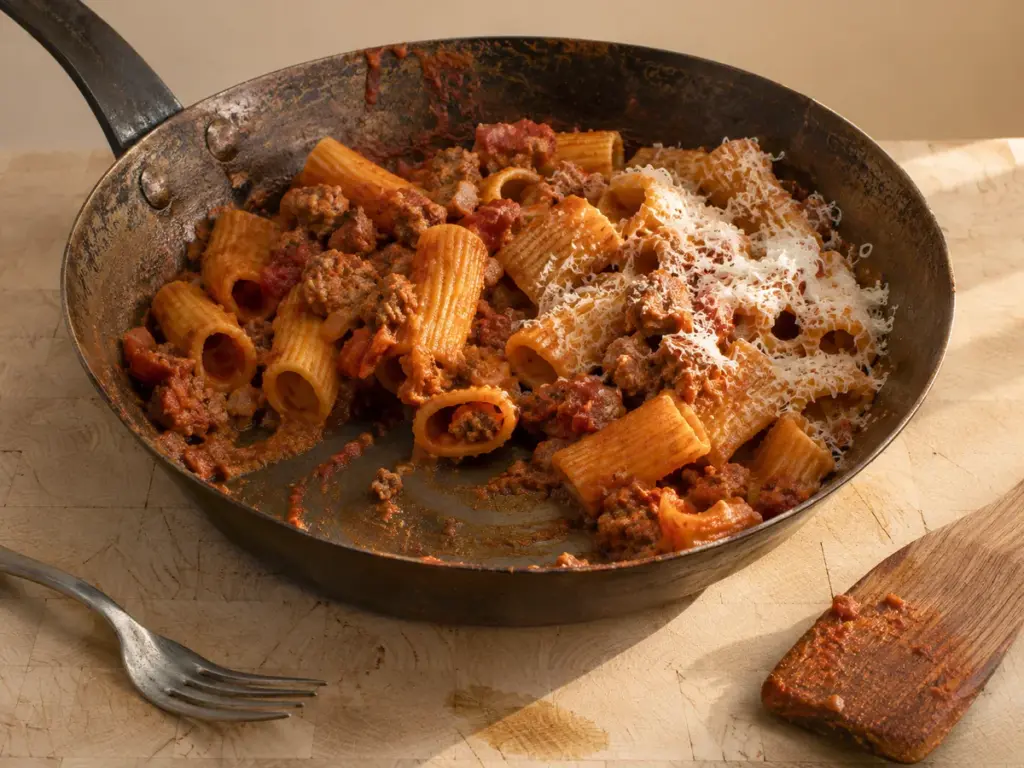
Rigatoni suits sausage or thick tomato-sauce bakes and other oven-baked pasta dishes, but the large tubes are bulky in a cold salad. They need the longest pot time of the group: Ronzoni lists 13 to 15 minutes, against 10 to 12 for its cavatappi.
How Do You Adjust the Amount and Cooking Time?
Swap by weight, because a cup of dry elbows and a cup of dry rigatoni hold different amounts of pasta. Then cook for the time on the box of the shape you bought, since the cavatappi time does not carry over, and other brands print different numbers than the Ronzoni ranges above.
When a cheese sauce turns tight on a smaller shape, a splash of starchy pasta water loosens it, and stand-ins for pasta water help if yours already went down the drain.
Is There a Gluten-Free Swap for Cavatappi?
Every swap above is wheat pasta, and the Celiac Disease Foundation says traditional wheat pastas are not gluten-free. If you avoid gluten, buy a rotini, fusilli, penne or elbow box labeled gluten-free and follow its own cook time, because gluten-free pasta behaves differently from wheat pasta.
Which Shapes Fall Short of Cavatappi?
Farfalle is a bow-tie with a pinched center and no hollow or curl, so it holds less sauce inside than cavatappi. It suits pasta salad best.
Cavatelli is a different pasta, small shells made from semolina or another flour dough, so it is not a corkscrew swap at all. If your recipe asks for cavatelli by name, reach for small shells, not a spiral.
Sources
- Wikipedia: Cavatappi (ridged helix tube, one to three turns, corkscrew meaning)
- Wikipedia: Fusilli (solid common form, hollow fusilli bucati, rotini as the US name)
- Wikipedia: Gemelli, Radiatori, Cavatelli and Farfalle (shape descriptions)
- Ronzoni product pages for Cavatappi, Rotini, Penne Rigate, Elbows and Rigatoni (cook time ranges, shape and sauce descriptions, other names)
- Celiac Disease Foundation: Gluten-free foods (wheat pasta is not gluten-free)

Food writer at GustoMeadow. Writes ingredient substitutes, food comparisons, taste guides and storage guides for home cooks.
Storage and food-safety numbers follow USDA, FDA and university extension guidance.



