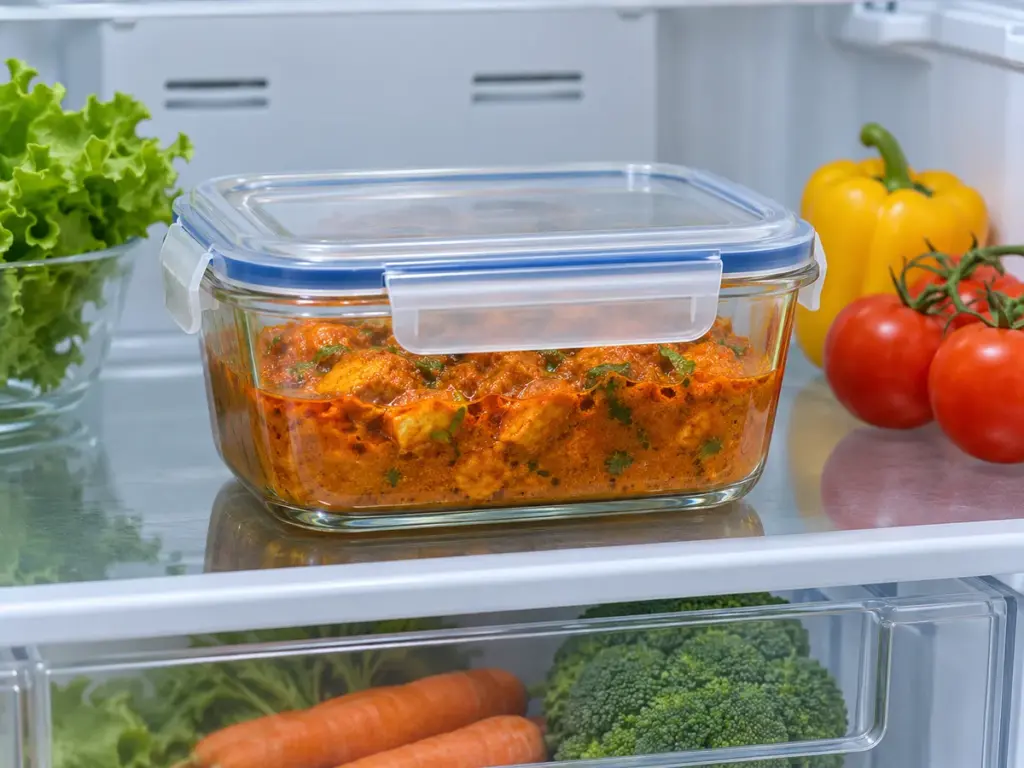
Cooked curry keeps 3 to 4 days in the fridge, and about 2 to 3 months in the freezer.
- Chill it within 2 hours, or within 1 hour when the room is above 90°F.
- Reheat to 165°F in the middle.
- Store rice separately and eat it within a day.
- Curry powder and unopened paste keep about two years; their dates are about flavor.

Curry is cooked in big pots, so most of it becomes leftovers, and the USDA FoodKeeper gives soups, stews and other cooked leftovers 3 to 4 days in the fridge. That is a short window next to the pantry and fridge staples you buy sealed, because cooked meat, vegetables and sauce give bacteria plenty of moisture and food.
Three things decide whether a container of curry is still good: how long the pot sat out after dinner, whether rice went into the same container, and how hot you reheat it. The answers below follow that order, then cover the curry paste and powder in your cupboard.
1. How Long Does Curry Last?
Cooked curry lasts 3 to 4 days in the fridge at 40°F or below, whether it is made with chicken, lamb, vegetables or beans. FoodKeeper gives the same fridge window for soups and stews and for leftovers with or without meat, and only the freezer times change.
| Curry | On the counter | Fridge (40°F or below) | Freezer (0°F) |
|---|---|---|---|
| With chicken, meat, fish or egg | 2 hours | 3 to 4 days | 2 to 3 months |
| Vegetable, bean or tofu curry | 2 hours | 3 to 4 days | 1 to 2 months |
| Any curry left out too long | Over 2 hours (over 1 hour above 90°F) | Throw it out | Throw it out |
The freezer times are quality guides and not safety limits. The USDA says food kept at 0°F stays safe indefinitely, so a curry past those months is safe to eat, though only its quality suffers as the sauce goes flat and vegetables turn mushy.
2. Do Coconut Milk, Tofu and Vegetable Curries Last Longer?
No, every kind of curry gets the same 3 to 4 days, and a creamy or plant-based pot does not stretch it. Some pages say a tofu curry keeps a week, but FoodKeeper's one-week figure is for the plain tofu block, and once you cook it into a curry it follows the cooked-leftover clock.
- Coconut milk curries such as Thai green, red and massaman keep 3 to 4 days, and FoodKeeper gives opened canned coconut milk only 4 days in the fridge, so the curry should not outlast the can.
- Chickpea, lentil and tofu curries, including vegan curries with coconut milk, also keep 3 to 4 days, with a freezer window of 1 to 2 months.
- Chicken, lamb and fish curries, such as Indian chicken curries, keep 3 to 4 days and freeze for 2 to 3 months at their best.
3. How Should You Store Leftover Curry?
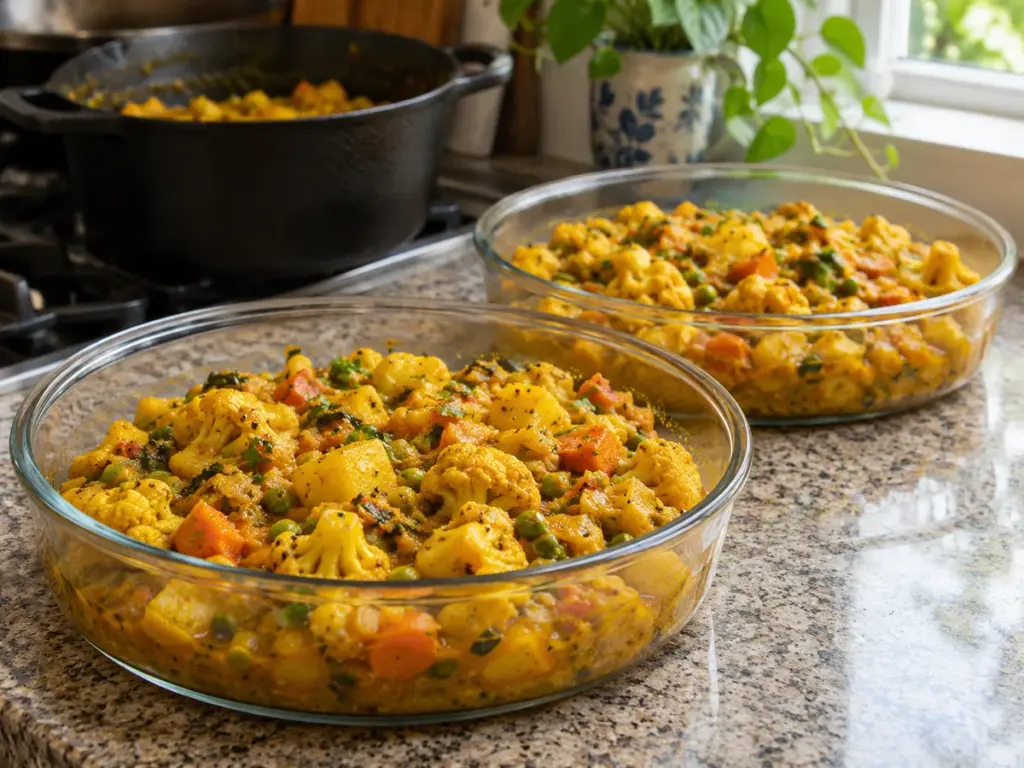
Speed counts for more than the container. A deep pot of hot curry cools slowly in the middle, and the middle stays in the 40°F to 140°F danger zone for hours while the edges chill. The FDA's fix is to divide large amounts into shallow containers, which cool much faster.
- Start the clock when the pot comes off the heat, and serve dinner quickly so the curry is not still sitting out at the 2-hour mark.
- Spread it into shallow containers instead of one deep tub, so the center of each portion cools quickly.
- Cover and chill the containers once the steam stops, on a shelf where the fridge holds 40°F or below.
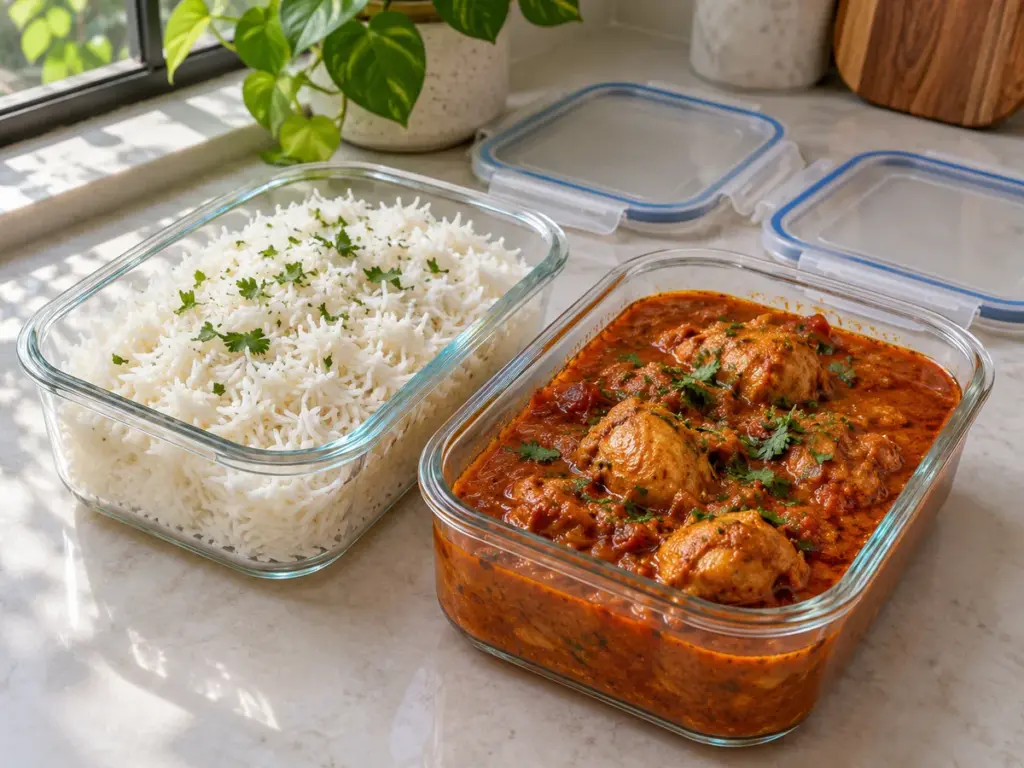
- Keep the rice apart in its own container, because it follows a stricter rule than the curry does.
- Write the cook date on the lid with masking tape, so you know when day 4 arrives.
4. Is Leftover Rice From Curry Night Safe?
Rice is the part of the plate with the shorter clock. Raw rice can carry Bacillus cereus spores that survive cooking, and if cooked rice sits warm, they grow and make a toxin. The CDC reports that this toxin can survive brief heating, such as stir frying, so reheating does not rescue rice that sat out too long.
- Chill rice within 1 hour, ideally in small portions, according to Food Standards Scotland.
- Eat it within 24 hours, because the agency says cold cooked rice is safe only if it was cooled quickly and kept in the fridge that long.
- Reheat it once, and until it is steaming hot all the way through.
FoodKeeper lists plain cooked rice at 4 to 6 days in the fridge, so US and UK guidance differ. We'd follow the shorter window for rice from curry night, because the illness starts within 1 to 6 hours of eating and brings nausea and cramps. Fresh rice cooked the day you reheat the curry avoids the question, and you can serve the leftovers with warm naan, roti or a cool cucumber raita among the sides that suit curry.
5. How Can You Tell If Curry Has Gone Bad?
Look and smell before you taste, and throw the curry out if you find any of these:
- Mold on the surface or around the rim, in white, green or black fuzzy spots.
- A sour or yeasty smell that replaces the warm spice aroma, often like milk that has turned.
- A slimy coating on the meat, vegetables or sauce when you stir it.
- Bubbles or fizzing in a sauce that was still, or a lid that bulges.
That is why the date on the lid is a better test than your nose. The signs above catch spoilage bacteria, which spoil the look and smell of food, and they miss the ones that cause illness, so the 3 to 4 day limit and the 2-hour limit are the checks that protect you.
6. Can You Freeze Curry?
Yes, and freezing is the best way to keep curry past day 4. Freeze it within the fridge window, ideally the day you cook it, in containers that hold one or two meals each. At 0°F the curry stays safe, and the FoodKeeper figures of 2 to 3 months with meat and 1 to 2 months without are about quality.
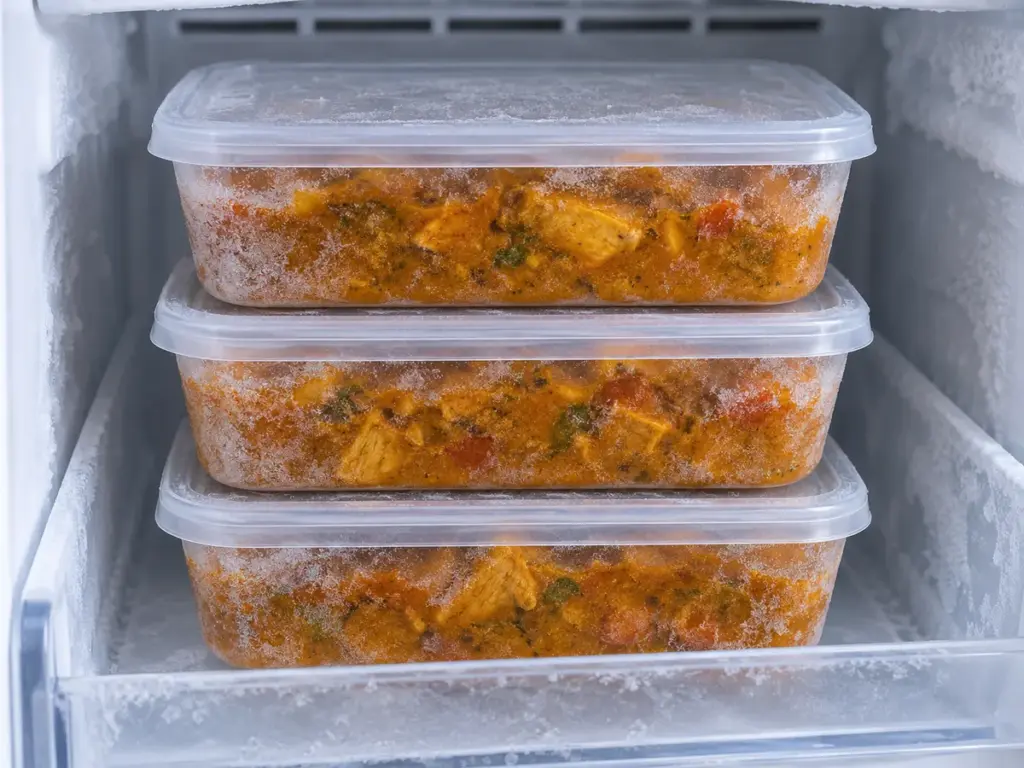
- Meat and chicken curries in a tomato or onion base
- Chickpea, lentil and bean curries
- Curries made without cream or yogurt
- Potatoes can turn soft and grainy
- Coconut milk or cream sauces can separate, so stir while reheating
- Yogurt is better added after the curry is hot
Thaw a container in the fridge overnight, then reheat it as below. If you are short on time, a frozen block can go straight into a covered pan over low heat, and it needs the same 165°F at the end.
7. How Do You Reheat Curry Safely?
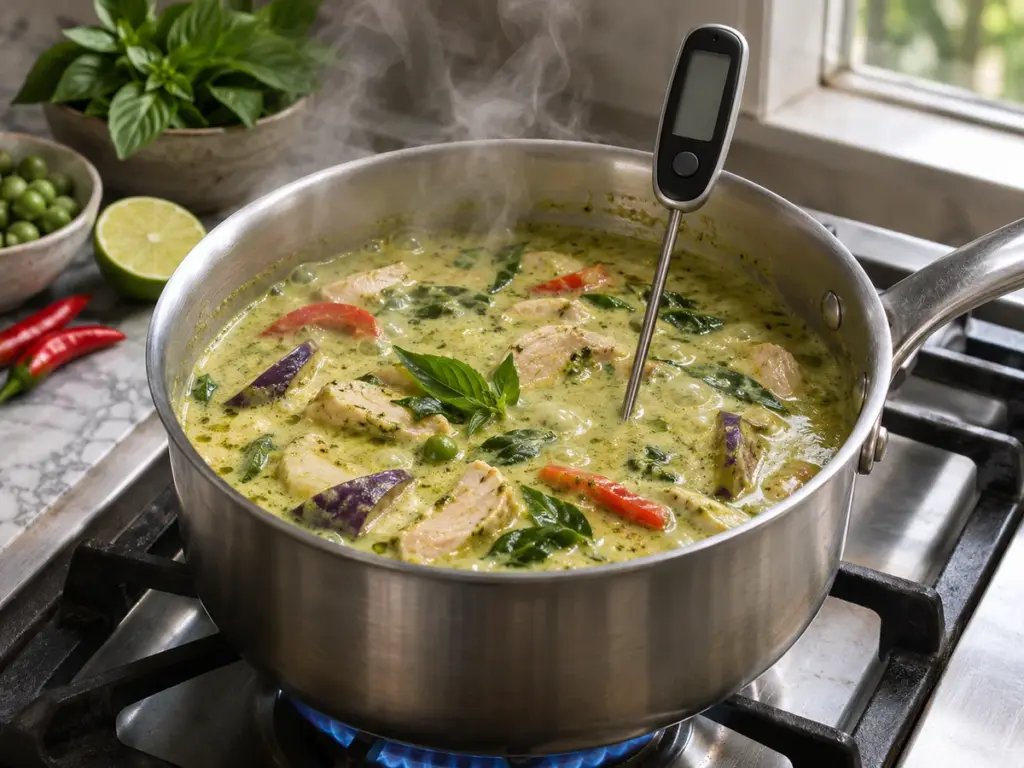
FSIS says leftovers are safe once the middle reaches 165°F on a food thermometer. Sauces, soups and gravies should also come to a boil, according to the FDA, which suits a curry sauce well.
- Pour it into a pot and loosen thick curry with a splash of water or broth.
- Heat on medium, stirring often, until the sauce boils and steam rises from the center.
- Check the middle with a probe thermometer for 165°F, since the edge heats first.
- Microwave in a covered bowl if you prefer, stirring halfway and checking more than one spot.
8. What About Curry Paste and Curry Powder?
Those jars run on a different clock, because powder is a dry spice blend and unopened paste is shelf-stable. Their dates in FoodKeeper are about flavor, and the 3 to 4 day rule above is for the cooked pot you make from them.
| Product | Unopened | After opening |
|---|---|---|
| Curry powder (ground spices) | 2 to 3 years in the pantry | 2 to 3 years, with the aroma fading first |
| Thai red curry paste | 2 years in the pantry | 5 days in the fridge in FoodKeeper, so check your jar's label |
| Curry cooked from either | Not applicable | 3 to 4 days in the fridge |
Paste is a wet blend of chilies and aromatics, which is why it needs the fridge once opened, while powder is dry, and curry paste differs from curry powder in how much a recipe uses of each. A powder that no longer smells of anything still cooks safely, though the curry will taste flat.
Sources
- USDA FoodKeeper: leftovers, soups and stews, ground spices, Thai red curry paste, canned coconut milk, tofu and cooked rice entries.
- USDA FSIS, Leftovers and Food Safety: 3 to 4 days, 165°F reheating (the page returns 403 to fetch tools, so we confirmed the wording through search results).
- USDA FSIS, Freezing and Food Safety: frozen food at 0°F stays safe, storage times are about quality.
- USDA FSIS, Mail Order Food Safety: harmful bacteria may not change taste, smell or appearance.
- FDA, Refrigerator Thermometers: Cold Facts About Food Safety: 40°F fridge, 0°F freezer, 2-hour and 1-hour limits, boiling sauces.
- FDA, Tips to Chill Food: shallow containers for faster cooling.
- Food Standards Scotland, Rice: 1 hour cooling, 24 hours in the fridge, reheat once until steaming hot.
- CDC MMWR, Bacillus cereus Food Poisoning Associated with Fried Rice: spores survive cooking, heat-stable toxin, 1 to 6 hour onset.

Food writer at GustoMeadow. Writes ingredient substitutes, food comparisons, taste guides and storage guides for home cooks.
Storage and food-safety numbers follow USDA, FDA and university extension guidance.