Serve rolls with sauce, broth or a spread for the soft crumb to soak up.
- Meatballs in sauce are the easiest match: vegetarian in marinara or turkey in curry sauce.
- Chicken stew, cabbage roll soup and roast turkey with gravy give the roll something to scoop.
- Homemade hummus turns a roll into a dipper for a light meal.
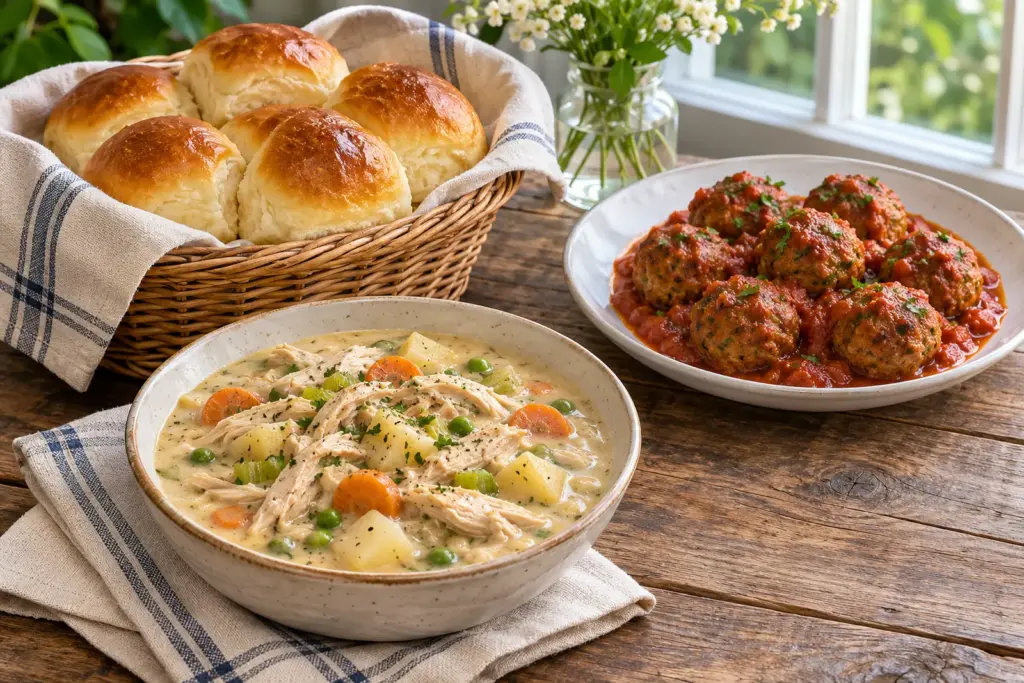
A dinner roll has a mild flavor and a soft inside, so it tastes best next to a dish with something to absorb. Most side dish guides start from a main dish, but here the roll is the side, and every main dish below is saucy, brothy or spreadable. Pick one by the job you want the roll to do: mop up sauce, scoop a stew or carry a spread.
What Goes Well with Dinner Rolls?
Dinner rolls are neutral, so the dish carries the flavor and the roll carries the dish to your mouth. Moist food beats dry food, because a roll next to a dry dish just adds more dry bread to the plate. This table shows the job each dish below gives the roll:
| Job for the roll | Dishes that fit |
|---|---|
| Mop up sauce | Vegetarian meatballs, turkey meatballs in curry |
| Scoop a stew | Creamy chicken stew, coconut chicken |
| Soak up broth | Cabbage roll soup |
| Catch gravy | Roast turkey |
| Make a sandwich | Baked turkey meatballs |
| Carry a spread | Homemade hummus |
8 Best Dishes to Serve with Dinner Rolls
1. Vegetarian Meatballs in Marinara
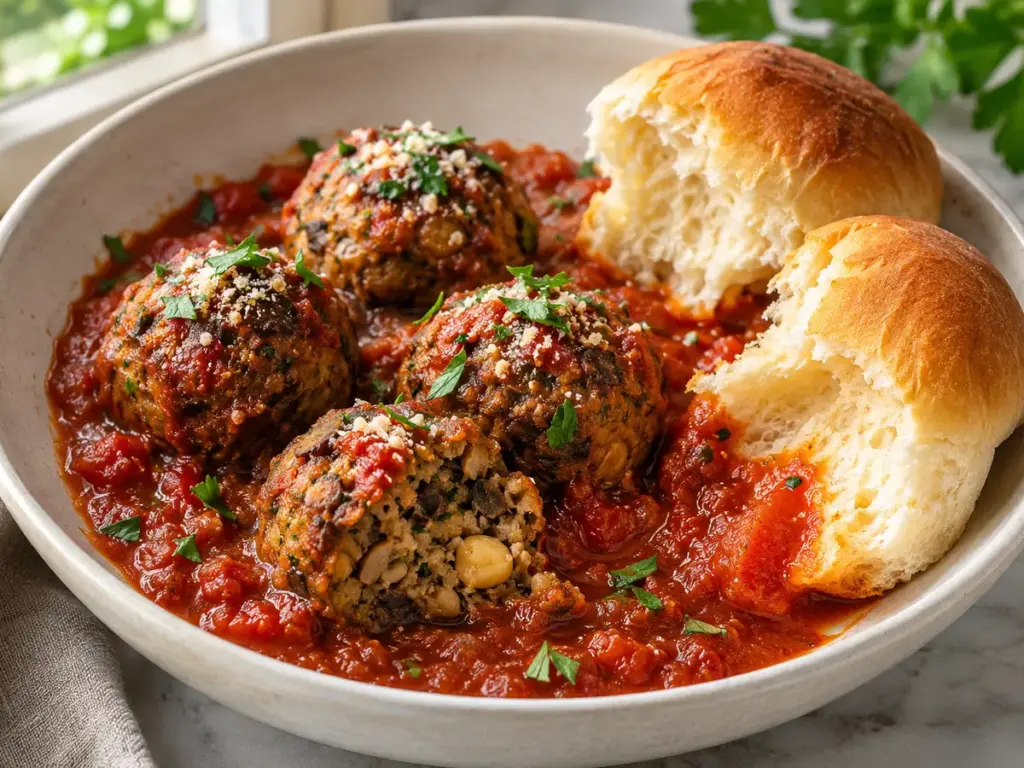
These meatballs are usually built from mushrooms, chickpeas and sun-dried tomatoes, and they sit in a rich marinara sauce. A roll tears into pieces that mop the plate clean, and with no meat on the plate it adds the bulk that makes the meal filling. You can buy the meatballs or make them yourself.
Any saucy meatball dinner follows this rule. A roll is one of several starches that go with meatballs, and unlike rice or pasta it can also turn the meatballs into a sandwich.
2. Creamy Chicken Stew
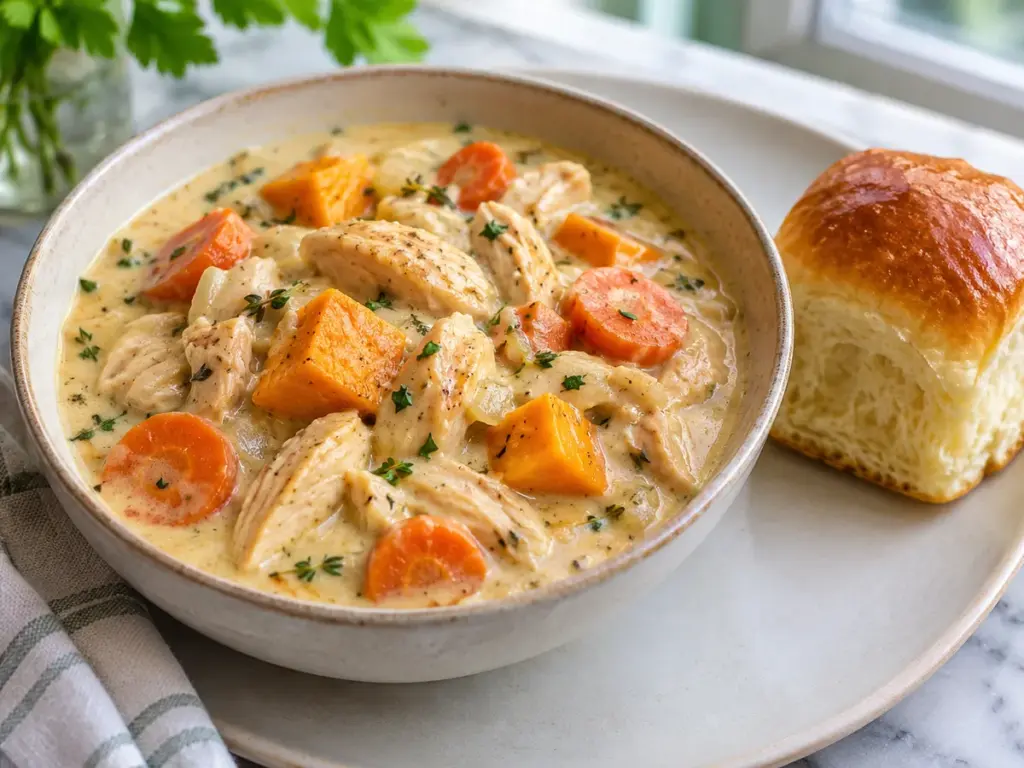
A quick version needs only chicken pieces, sweet potatoes and carrots, and you can add other vegetables or spices to taste. Cook the sauce down until it is thick enough to feel like cream, because a thin sauce runs straight off the roll and a thick one clings to the crumb.
A stew has less liquid than a soup, so the roll works as a scoop here. Stew, soup and chowder differ mostly in how thick that liquid is, and a thick liquid fills a roll best.
3. Creamy Coconut Chicken
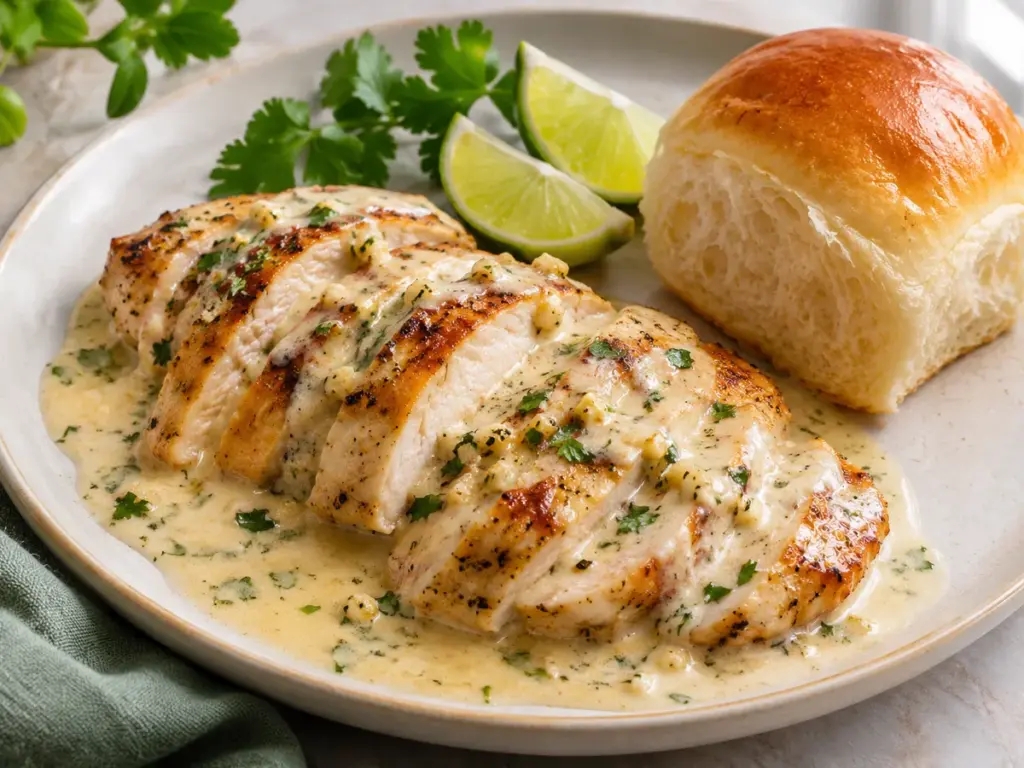
You cook chicken breast in a skillet and then stir it into a creamy garlic lime sauce. A chicken breast has no starch of its own, so the roll supplies it, and the sauce gives the bread something to carry. If you make the sauce yourself, you can set the garlic and lime to your own taste.
Creamy chicken dishes in general want a starch and a crisp vegetable on the plate, and the sides for creamy mushroom chicken follow the same pattern.
4. Turkey Meatballs in Curry Sauce
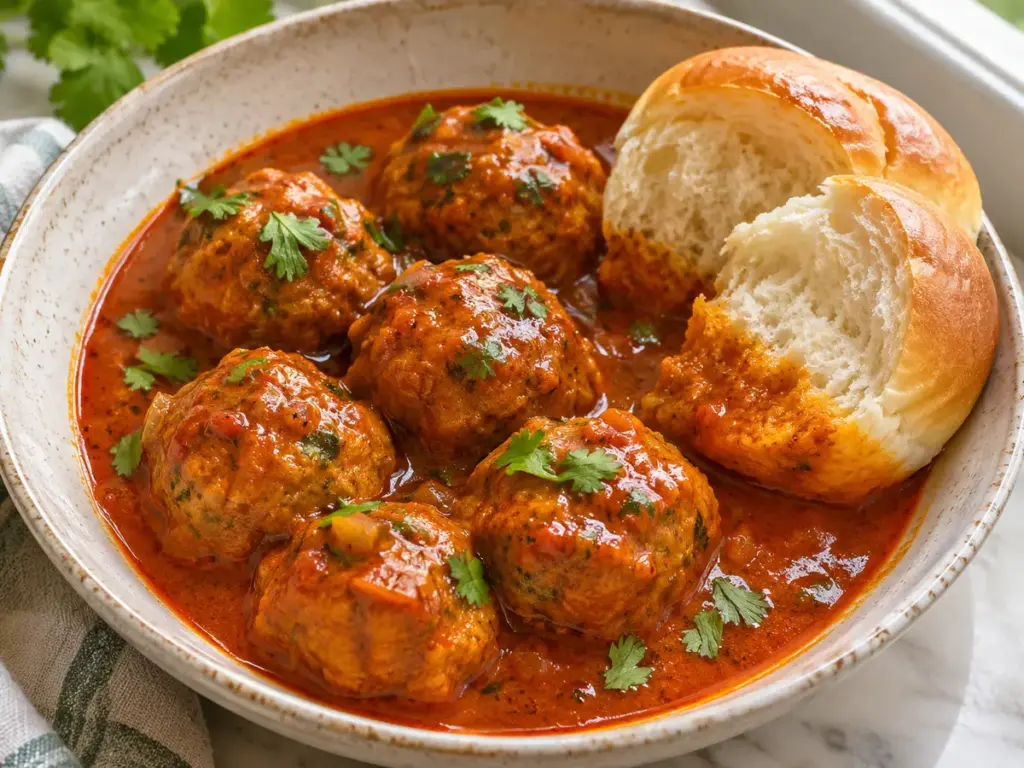
Plain bread can taste dry on its own, but a roll dipped in red curry sauce turns soft and juicy, and the bread also mellows the heat. Use lean ground turkey and let the sauce supply the moisture that lean meat lacks. Cook the meatballs until they reach 165°F in the center, the safe minimum for ground poultry.
If the recipe leaves you unsure whether to buy red or yellow paste, check how red and yellow curry differ before you shop. These meatballs work as snacks or appetizers too, but a dinner portion with a roll is the best use.
5. Italian Baked Turkey Meatballs
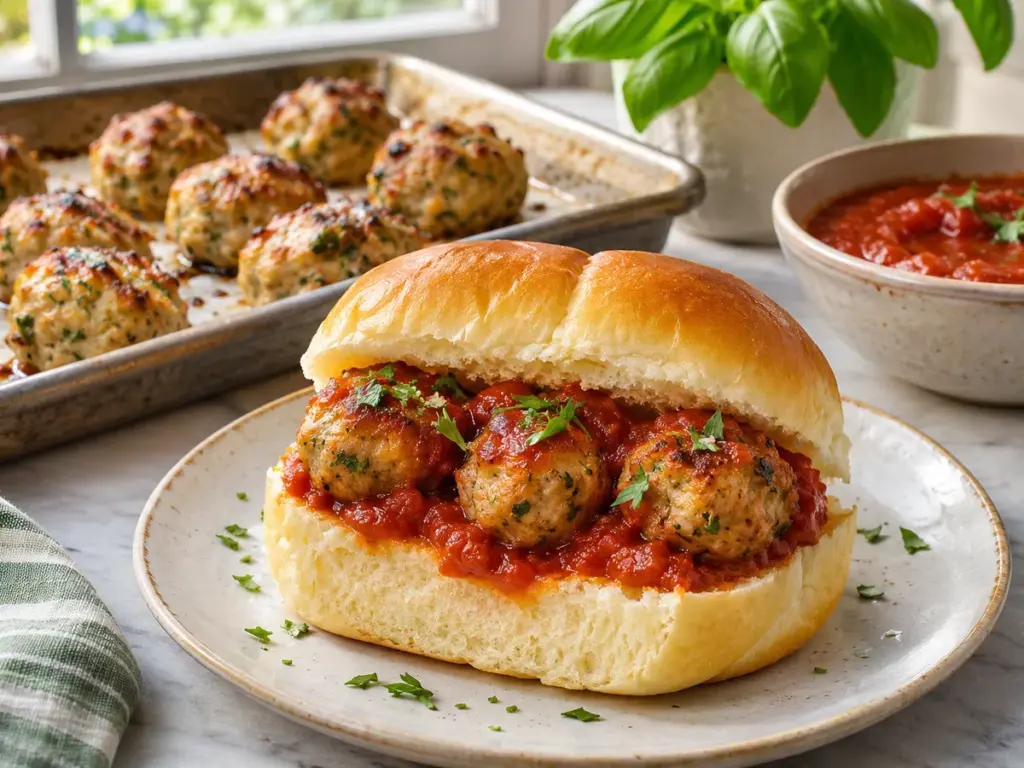
Meatballs are small and easy to eat, so a dozen still leaves room for dessert. For a sandwich, split a dinner roll and tuck a few meatballs inside with a spoonful of sauce.
The Italian flavor comes mostly from the sauce, which you can make yourself, and you can mix fresh herbs and spices into the meat. You bake these instead of frying them. Served on a plate instead of in a roll, they go with the sides for turkey meatballs.
6. Homemade Creamy Hummus
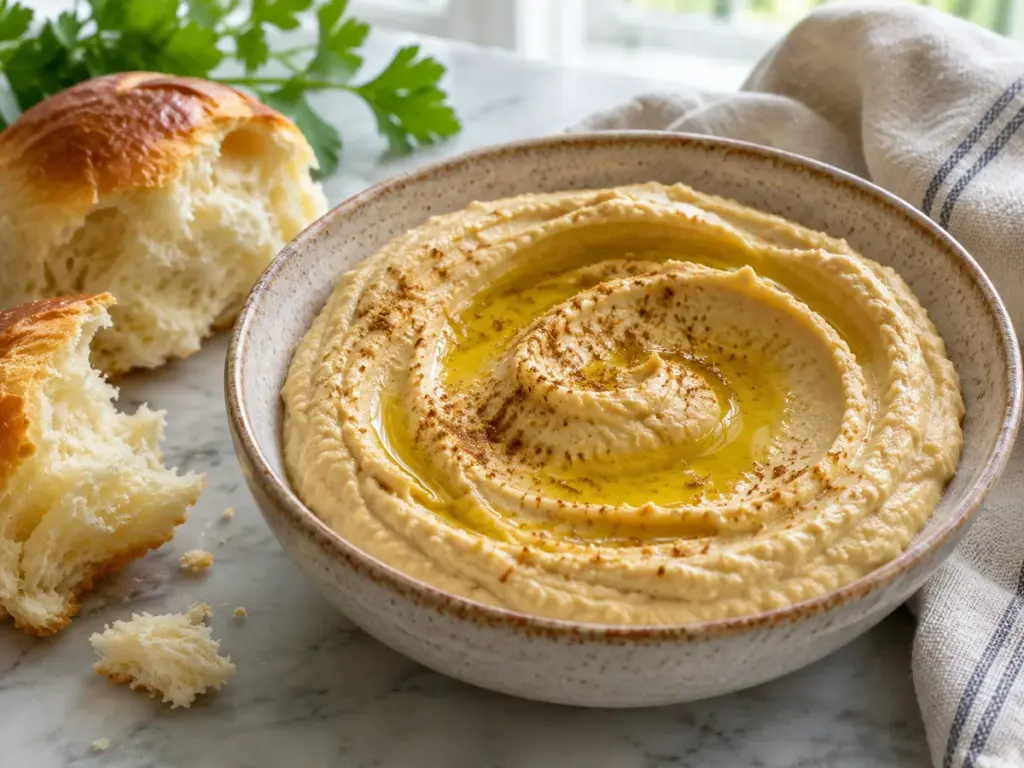
Hummus is a spread, so it fits when you do not want a hot dish. It is chickpeas blended with lemon juice, garlic, tahini, olive oil and ground cumin, and it comes together quickly in a food processor. Torn pieces of roll dip like pita, which makes it better for appetizers or a light meal than for a full dinner.
Rolls are one dipper among many. For a board with more than bread, add crunch and color with the things to serve with hummus dip.
7. Cabbage Roll Soup
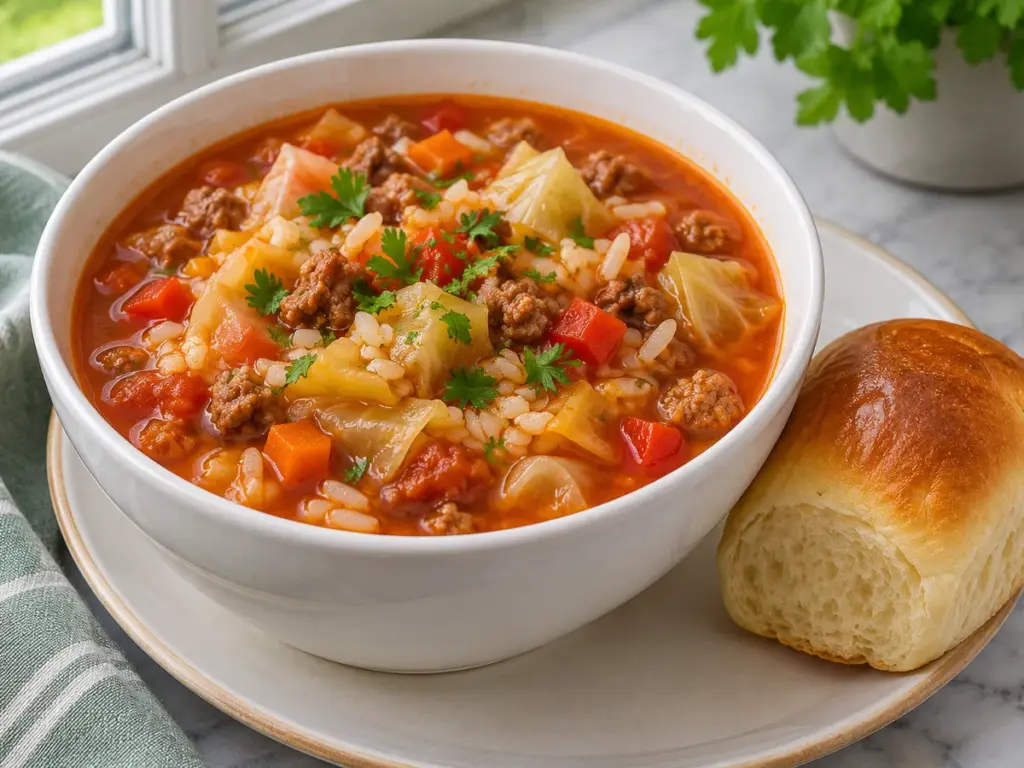
Soup is where a dinner roll earns a place on the table, because the bread soaks up the broth and turns a bowl into a full meal. The soup is a lighter take on stuffed cabbage, and the usual add-ins are rice, red bell peppers, carrots, crushed tomatoes and bay leaves.
The broth is the part the roll cares about, so you can vary the add-ins freely. The side dishes for cabbage rolls also give ideas for the soup.
8. Roast Turkey with Gravy
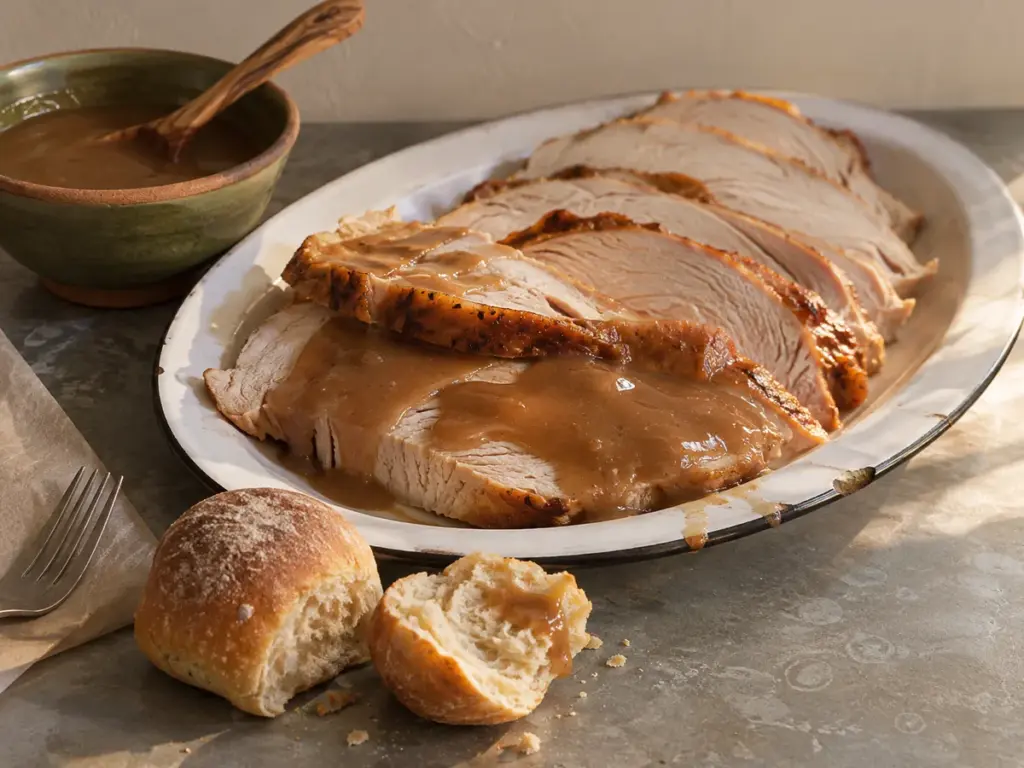
A roast dinner gives the roll one job: catch the gravy and pan juices that would otherwise stay on the plate. Put the rolls in the oven while the roast rests before carving, and they reach the table warm, at the same time as the meat.
The next day, the same rolls hold sliced turkey and a spoonful of gravy for a small sandwich, once the gravy has been boiled again (see the reheating rule below). A turkey dinner also needs a vegetable, and the sides for roasted turkey breast cover that.
How Do You Store and Reheat These Dishes?
Most of these dishes make good leftovers, with limits that come from USDA's FoodKeeper data:
- Soups and stews (chicken stew, cabbage roll soup) keep 3 to 4 days in the fridge or 2 to 3 months in the freezer.
- Traditional hummus without preservatives keeps 7 days in the fridge, and the FoodKeeper does not recommend freezing it.
- Meatballs, chicken and sliced turkey in sauce or gravy go in the fridge within 2 hours of cooking, and you reheat them before the rolls come out.
Sources
- foodsafety.gov, Safe Minimum Internal Temperature Chart (ground poultry and leftovers, 165°F)
- USDA FoodKeeper (soups and stews 3 to 4 days in the fridge and 2 to 3 months frozen; traditional hummus 7 days, not recommended for freezing)
- USDA FSIS, Leftovers and Food Safety (reheat leftovers to 165°F, sauces, soups and gravies to a rolling boil, refrigerate within 2 hours)

Food writer at GustoMeadow. Writes ingredient substitutes, food comparisons, taste guides and storage guides for home cooks.
Storage and food-safety numbers follow USDA, FDA and university extension guidance.