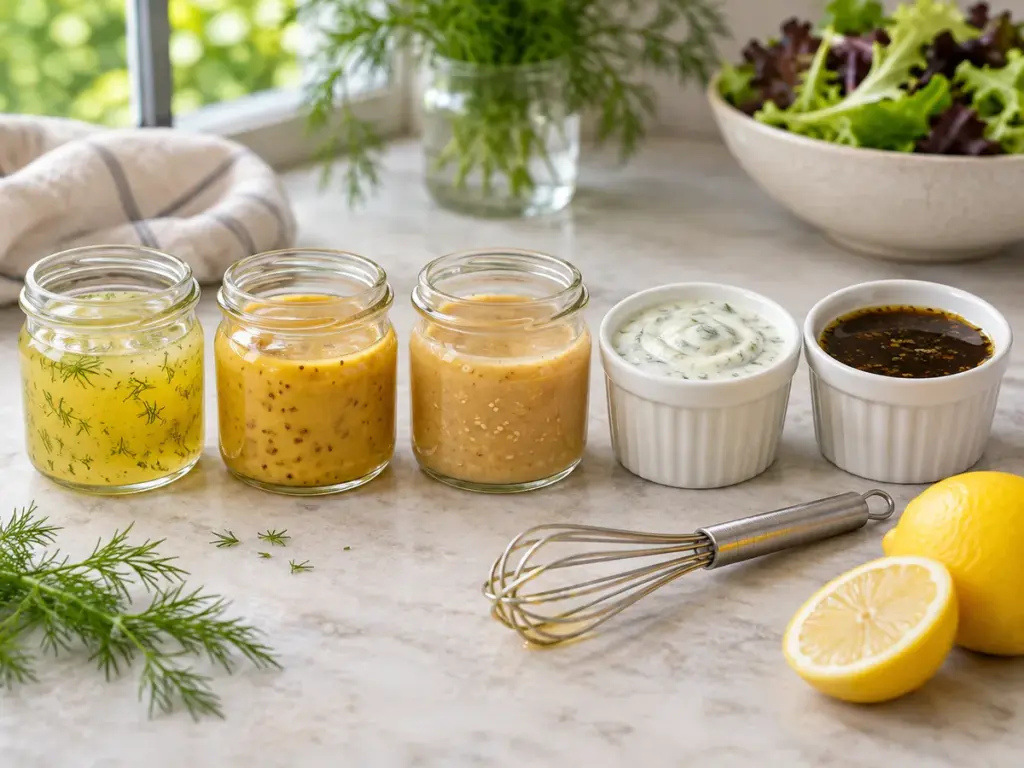
Short answer: A lemon-dill vinaigrette (3 parts olive oil to 1 part lemon juice) fits most salmon salads. Use yogurt-dill when the salmon comes from a can, and honey mustard, miso-ginger or balsamic when you flake baked salmon over greens. Skip the salty dressings on smoked salmon. A dressing made with fresh garlic, herbs or ginger keeps 2 to 4 days in the fridge, and the ones made with dried seasoning keep up to 2 weeks.
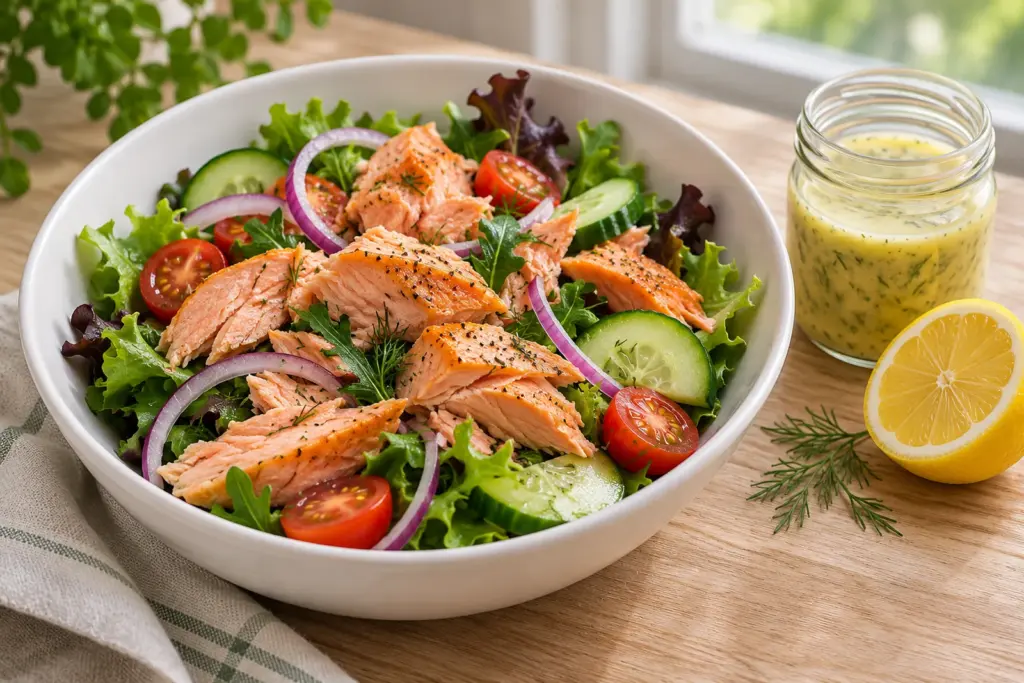
A salmon salad can be a full lunch or one of the lighter side dishes next to soup and bread, and the dressing decides how it tastes. Salmon is a fatty fish, so it needs acid to cut the richness and a little sweetness or salt to round it out. Each of the five dressings below follows that rule, so you can match one to the salmon salad you are making.
1. What Makes a Good Dressing for Salmon Salad?
Your dressing has three jobs. It needs enough acid (lemon, vinegar or yogurt) to keep the fish from tasting heavy, a little sweetness or salt so the fish tastes like more than itself, and a light enough texture that your greens do not go limp. Each recipe below makes enough for a bowl of about 6 to 8 cups of greens, which feeds 2 to 4 people.
| Dressing | Built on | Best on | Makes | Fridge life |
|---|---|---|---|---|
| Lemon-dill vinaigrette | Olive oil, lemon, fresh dill | Baked salmon on greens, smoked salmon | About ½ cup | 2 to 4 days |
| Honey mustard | Dijon, honey, white wine vinegar, olive oil | Baked salmon with apple, pecans or cabbage | About ½ cup | Up to 2 weeks |
| Miso-ginger | White miso, rice vinegar, fresh ginger, sesame oil | Baked salmon on shredded cabbage, cucumber or rice | About ½ cup | 2 to 4 days |
| Yogurt-dill | Greek yogurt, lemon, dill, chives | Canned salmon, smoked salmon with cucumber | About ¾ cup | 2 to 4 days |
| Balsamic vinaigrette | Olive oil, balsamic, Dijon, honey | Baked salmon with spinach, berries or beets | About ½ cup | 2 to 3 weeks |
Dressings with fresh garlic, herbs or ginger spoil fastest, so you should make those the day you serve them. You can prepare the two without fresh ingredients on Sunday for the week.
2. Which Dressing Goes With Which Salmon Salad?
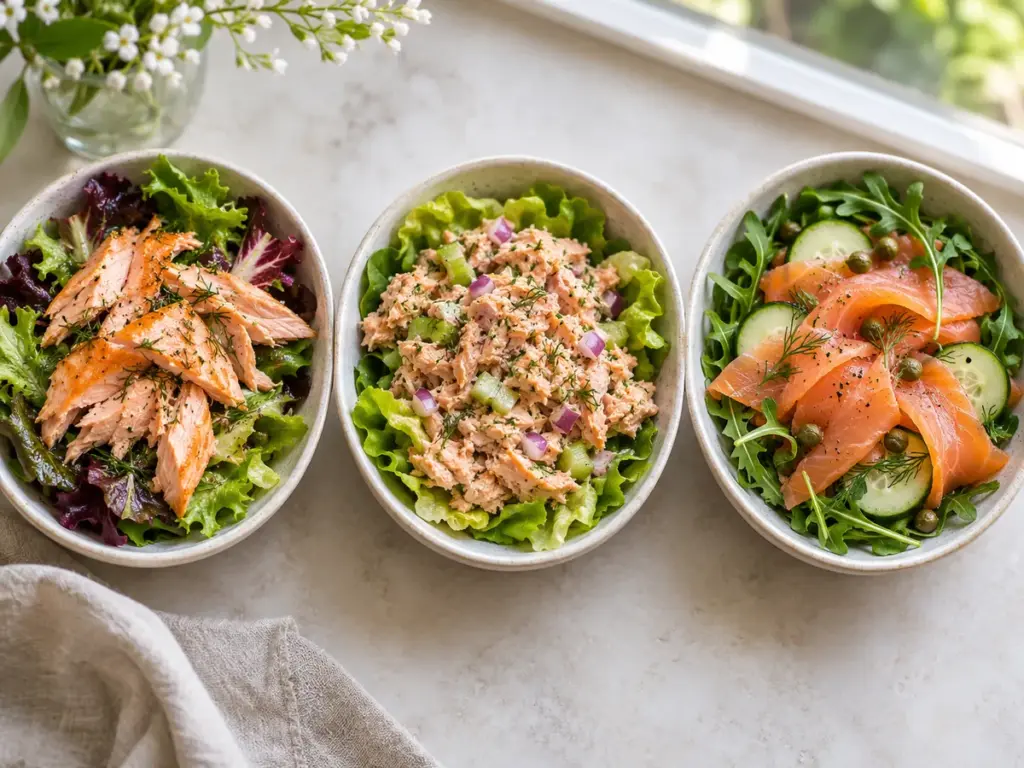
"Salmon salad" means three different bowls, and each one wants a different dressing:
- Flaked baked salmon on greens takes any of the vinaigrettes. The fish is mild and moist, so lemon-dill, honey mustard, miso-ginger and balsamic all work, depending on what else is in the bowl.
- Canned salmon salad is closer to tuna salad, a mashed, creamy mixture that you scoop onto lettuce or bread. It wants yogurt-dill, which replaces the mayonnaise, and a build like the one for dressings that suit tuna salad carries over.
- Smoked salmon salad already has plenty of salt, so use the lemon-dill or yogurt-dill and add no extra salt. Soy, miso and balsamic would pile more salt or sweetness onto the fish and cover the smoke.
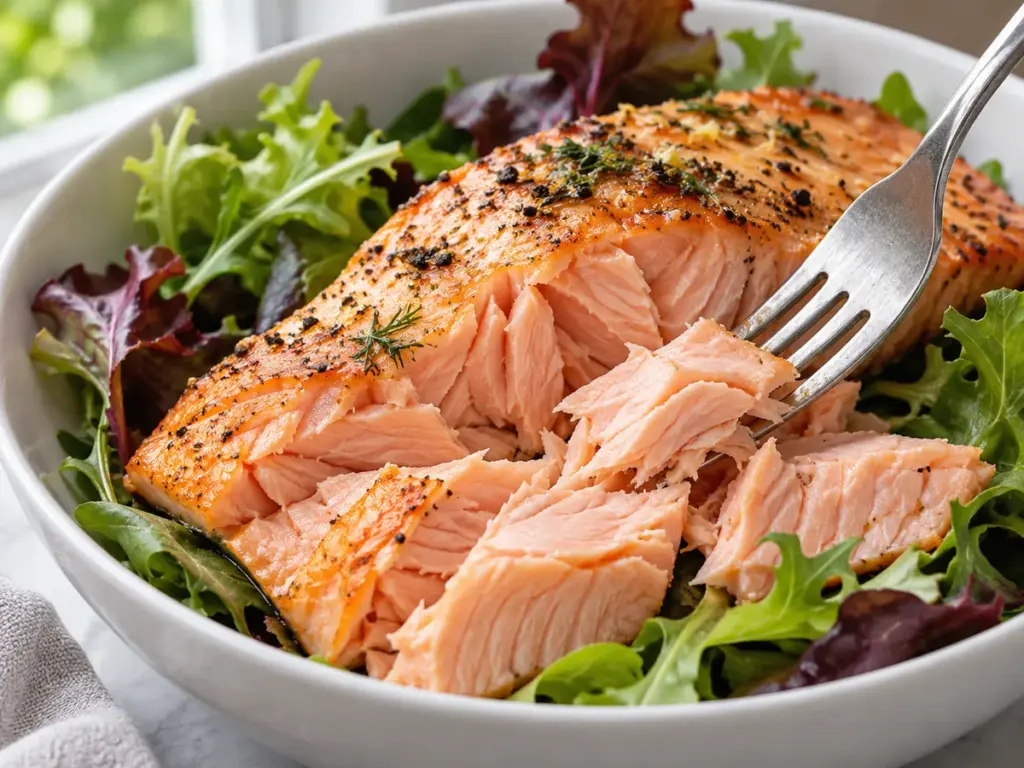
If you bake the salmon yourself, cook it until a thermometer in the thickest part reads 145°F, the FDA's safe minimum for fish, at which point the flesh looks opaque and flakes easily with a fork. Let the fillet cool for a few minutes before you flake it, because hot fish wilts the leaves it lands on.
Canned salmon often comes with soft skin and small bones. They are edible, because the canning heat softens them until they mash into the meat, and you can drain the can and stir everything together with a fork. Buy a "skinless, boneless" can if you prefer a smoother salad.
3. Five Dressings for Salmon Salad, With Ratios
1. Lemon-Dill Vinaigrette for Baked or Smoked Salmon
This is the all-rounder. The ratio is 3 parts olive oil to 1 part lemon juice, which is a classic vinaigrette base, and the dill tastes grassy and a little sweet next to rich fish. Put everything in a jar and shake for 20 seconds, or whisk it in a bowl:
- 6 tablespoons extra-virgin olive oil and 2 tablespoons lemon juice (about 1 lemon).
- 1 teaspoon Dijon mustard and 1 teaspoon honey, which hold the oil and lemon together.
- 1 tablespoon chopped fresh dill, or 1 teaspoon dried.
- ⅛ teaspoon garlic powder, ¼ teaspoon salt and a few grinds of pepper.
Taste it on a lettuce leaf, because a spoonful on its own always tastes sharper than it will on the salad. For smoked salmon, cut the salt to a pinch. Fresh dill goes in last so it stays green.
2. Honey Mustard for Baked Salmon With Apple or Pecans
Honey mustard suits salads with something crunchy and a little sweet, such as sliced apple, toasted pecans or shredded cabbage. The mustard stands up to the fish and the honey softens the vinegar. Whisk the mustard, honey and vinegar first, then stream in the oil:
- 2 tablespoons Dijon mustard, 1 tablespoon honey and 1 tablespoon white wine vinegar (or lemon juice).
- 3 tablespoons olive oil, whisked in slowly until it turns thick and creamy.
- A pinch each of salt and garlic powder.
This one is thicker than a normal vinaigrette, so you can thin it with a teaspoon of water if it will not drizzle. It has no fresh ingredients, which makes it the longest-keeping recipe here.
3. Miso-Ginger Dressing for Salmon on Cabbage or Rice
White miso adds salt and a savory, slightly sweet depth, so you need no soy sauce and no extra salt. If your store has no white miso, you can use one of the stand-ins for white miso and add salt to taste. Whisk the miso with the vinegar and water first so it dissolves, then add the rest:
- 1 tablespoon white miso, 2 tablespoons rice vinegar and 1 tablespoon water.
- 1 tablespoon honey and 1 teaspoon finely grated fresh ginger.
- 2 tablespoons neutral oil and 1 teaspoon toasted sesame oil, which is strong, so measure it carefully.
You get the best result with baked salmon over shredded cabbage, cucumber, edamame or cold rice. The dressing goes on thin and glossy, and the ginger gives it a clean heat that cuts the fish.
4. Creamy Yogurt-Dill Dressing for Canned Salmon
Plain Greek yogurt gives the creaminess of mayonnaise with a tangy edge, and lemon and dill keep it fresh. Stir these together and thin with water until it falls off a spoon in a slow ribbon:
- ½ cup plain whole-milk Greek yogurt and 2 tablespoons lemon juice.
- 1 tablespoon olive oil, 1 tablespoon chopped fresh dill and 1 tablespoon chopped chives.
- ¼ teaspoon garlic powder and ¼ teaspoon salt.
- 1 to 2 tablespoons water to pour.
For canned salmon salad, stir about 3 tablespoons into one drained 6-ounce can with a little chopped celery and red onion, and leave the dressing thick. For a drizzle over smoked salmon and cucumber slices, thin it with the full 2 tablespoons of water. If you want a tzatziki-style version, stir in ¼ cup of grated cucumber squeezed dry in a towel.
5. Balsamic Vinaigrette for Baked Salmon With Spinach or Berries
Balsamic is dark and sweet, so it works best on a salad that already has sweetness or earthiness, such as baby spinach with strawberries, or roasted beets. Use the 3-to-1 base again and whisk in the oil last:
- 2 tablespoons balsamic vinegar, 1 teaspoon Dijon mustard and 1 teaspoon honey.
- 6 tablespoons olive oil, poured in a thin stream while you whisk.
- A pinch of salt and some black pepper.
Everyday supermarket balsamic is the right bottle here, because balsamic vinegar and balsamic vinaigrette are different products, and you make the dressing from the vinegar. Skip this dressing on smoked salmon, where its sweetness competes with the smoke.
4. How Do You Build the Salad Around the Dressing?
Because salmon is rich, you want crisp, watery toppings. Cucumber, radish, red onion and sliced fennel add crunch and bite, and vegetables that suit salmon such as asparagus or green beans work when they are cooked and chilled first. Pour on about 2 tablespoons of dressing per 2 cups of greens, toss right before serving, and put extra on the table.
If you serve the salmon warm, a pan sauce can replace the dressing, and sauces for warm salmon make a good second choice. If the bowl has no fish, a lighter oil-and-vinegar mix suits it better, and dressings for a plain green salad will do that job.
5. How Long Do Salmon Salad Dressings Keep?
It depends on what is in the jar. USDA FoodKeeper gives 2 to 3 weeks in the fridge for homemade vinaigrette and 2 weeks for homemade salad dressing. Fresh garlic, herbs and ginger in oil are the exception, so you should treat those dressings differently from the others.
| What you made | Where to keep it | How long |
|---|---|---|
| Lemon-dill, miso-ginger (fresh herbs or ginger) | Fridge, covered | 2 to 4 days |
| Yogurt-dill (fresh herbs, dairy) | Fridge, covered | 2 to 4 days |
| Honey mustard, balsamic (dried seasoning only) | Fridge, covered | 2 weeks (honey mustard), 2 to 3 weeks (balsamic) |
| Finished canned salmon salad, dressing mixed in | Fridge, covered | 3 to 4 days (FoodKeeper, seafood salads) |
Olive oil turns cloudy and thick in a cold fridge, which is normal. Take the jar out 15 minutes before you need it and shake it until it loosens. If you want to prepare ahead, keep the greens, the salmon and the dressing in separate containers and combine them at the table.
Sources
- FDA, Safe Food Handling: safe minimum internal temperature for fish, 145°F or flesh opaque and separating easily with a fork.
- USDA FoodKeeper: homemade vinaigrette and salad dressing, and seafood salads such as salmon salad.
- Penn State Extension, How to Safely Make Infused Oils: botulism risk and 2 to 4 days in the fridge.
- Oregon State Extension, Preserving Garlic: garlic in oil, up to 4 days refrigerated.
- Clover Leaf, Skin and Bones in Canned Salmon: the liquid, skin and bones are edible and softened by canning.