
Summary of key points
The main difference between dried cilantro and fresh cilantro is that one is dehydrated while the other is still in its natural state. Dried cilantro has a more concentrated flavor, but it can also become less flavorful over time.
On the other hand, fresh cilantro has a milder taste but can add a bright and refreshing element to dishes.
Aside from taste, dried cilantro is often used as a spice or seasoning, while fresh cilantro can be used as an herb and added in larger quantities to dishes. Also, some people may have a preference for one over the other based on personal taste or cultural influences.
Dried cilantro and fresh cilantro sit on opposite ends of the flavor spectrum. One's like a seasoned traveler, the other, a homebody.
Spoiler: it's complicated.
In our trials, we've laughed in the face of culinary disasters. And through it all, we've learned a thing or two.
Fresh cilantro brings a lively, citrusy zing to dishes; think of it as the life of the party. Dried cilantro, on the other hand, is more subdued, a whisper of its former self yet holding its own in the depth of flavor.
Each has its place, and knowing when to use which can improve your cooking from meh to wow. It's a game of context, and we're here to play.
What is Dried Cilantro?
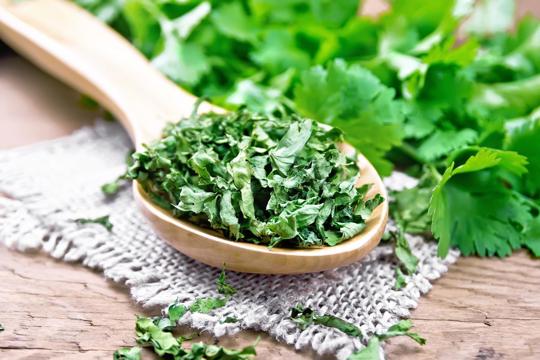
Dried cilantro, or coriander, is the result of natural drying of fresh cilantro leaves.
Harvested, cleaned and air-dried to keep its flavors and aromas.
Dried cilantro is dull and crumbly, without moisture.
The flavor of cilantro intensifies when dried.
A pinch of this dried herb can give a big burst of flavor.
However, its flavor is different from fresh cilantro - it has a stronger earthy and citrusy taste.
Fresh cilantro has a brighter and grassier flavor.
Dried cilantro can be a great alternative when fresh cilantro is unavailable.
It is used in Mexican, Indian, Thai and Middle Eastern cuisines.
It adds a unique essence to dishes like salsas, curries, soups and stews.
Note that while dried cilantro can enhance flavors in cooked dishes, it may not provide the same freshness as fresh cilantro when added as a garnish or topping just before serving.
So, decide on your preference and what your recipe needs.
Try both forms of this flavorful herb.
What is Fresh Cilantro?

Fresh cilantro, also known as coriander leaves, is a bright and aromatic herb.
It has a bright green color and carries distinct citrusy undertones.
This herb is often found in Mediterranean, Mexican, and Indian recipes, adding freshness and depth to dishes.
Fresh cilantro has multiple health benefits.
It contains vitamins A, C, and K, as well as minerals like potassium and manganese.
It is believed to have antioxidant properties and may help with digestion and detoxification processes.
It's surprising that fresh cilantro divides people's palate.
Some find it refreshing while others perceive it as soapy or unpleasant.
This uniqueness makes cilantro an intriguing ingredient that sparks debate among food enthusiasts.
Differences Between Dried Cilantro and Fresh Cilantro

1 - Flavor and Aroma
Flavor and aroma are key when it comes to telling the difference between dried and fresh cilantro.
Fresh cilantro has a bright, intense taste that can't be matched by the dried stuff.
Plus, the leaves release a stimulating scent that improves dishes.
Fresh cilantro offers a citrusy, slightly peppery taste with a sweet edge.
Its zesty notes make dishes like salsa, guacamole, and curries even more flavourful.
On the other hand, dried cilantro is milder and lacks the same potency.
The smell of fresh cilantro is something special.
When chopped or crushed, the leaves emit a captivating aroma.
This adds a tempting element to soups, stews, and salads.
The dried variety doesn't quite match up.
In short, fresh cilantro gives a lively burst of citrusy taste and invigorating scent that boosts dishs.
Dried cilantro provides a more muted option for those who don't like overly strong flavors.
Ultimately, the decision between these two forms comes down to personal preference and the dish you're preparing.
2 - Culinary Uses
Cilantro, in either its dried or fresh form, adds a unique flavor and aroma to meals.
Used in Mexican, Indian, and Thai cuisine, the dried form is great for soups, stews, and marinades.
It can be used in both hot and cold dishes.
Remember, dried cilantro is more concentrated than fresh, so use it sparingly.
To rehydrate it, soak in warm water for a few minutes.
Fresh cilantro has a milder taste and texture.
It is used as a garnish, added at the end of cooking to keep its freshness and color.
It's often found in salsas, guacamoles, salads, tacos, and curries.
Fresh cilantro stems also have flavor.
Chop them finely and incorporate into dishes for extra cilantro goodness.
Dried and fresh cilantro offer distinct qualities for different culinary applications.
Dried cilantro has a more intense flavor for cooked dishes, while fresh cilantro adds a refreshing touch when used as a garnish.
3 - Shelf Life and Storage
Dried cilantro has a longer shelf life than fresh.
It should be stored in an airtight container in a cool, dark place.
Heat and moisture can damage its potency.
Fresh cilantro should have stems trimmed and be kept in a glass of water with a plastic bag over it in the fridge.
It should be used within a week.
Dried cilantro can be convenient, but it may not have the same flavor as fresh.
Therefore, recipes may need more dried cilantro to get the same flavor.
Similarities Between Dried Cilantro and Fresh Cilantro

Dried cilantro and fresh cilantro have similarities.
They share the same botanical origin - coriandrum sativum plant.
But, there are differences in flavor and aroma.
Fresh cilantro has a bright, pungent taste with a citrusy note.
Dried cilantro has an herbaceous essence, but more concentrated.
So, it has a bold flavor when used sparingly in recipes.
Both types are believed to have health benefits.
They contain vitamins, minerals, and antioxidants.
But, they differ in texture.
Fresh cilantro has tender leaves.
Dried cilantro is crumbly.
This affects the mouthfeel and visual appeal of meals.
How to Rehydrate Dried Cilantro
- Rehydrating dried cilantro is easy. First, put your desired amount in a bowl. Remember, dried cilantro can be more powerful, so use it carefully.
- Put enough warm water in the bowl to cover the cilantro. Let it sit for 10 minutes.
- Then, drain the bowl and squeeze out any extra moisture. This helps remove any unpleasantness that may have formed during drying.
- Pat the rehydrated cilantro dry with a paper towel. Now it is ready to be used in recipes like soups, salads and salsas.
- Be aware that rehydrated cilantro may not have the same bright and crisp texture as fresh cilantro. However, it still has its special flavor and scent.
- So, to sum up: rehydrating dried cilantro is quick and easy. Just soak it in warm water, drain and squeeze out extra moisture, and pat it dry. Finally, you can add it to various dishes for extra taste.
When to Use Dried Cilantro and When to Use Fresh Cilantro
Dried and fresh cilantro each have their place in cooking.
Dried is good for slow-cooked meals, like soups and stews, and for spice blends and marinades.
Fresh cilantro, though, works well for recipes needing bright flavor - salsas, salads, and garnishes.
It adds a light flavor to dishes.
Plus, fresh cilantro leaves make great garnishes.
What's best depends on the recipe and one's preference.
Recipes may call for either dried or fresh cilantro due to their distinct characters.
For instance, with Thai curry paste, fresh cilantro roots are better than dried leaves.
Roots give unique flavor and aroma that can't be replicated.
Fresh cilantro should be stored properly to keep it fresh longer.
Trim the stems of a bunch and put in a jar with water, like you would flowers.
Or, loosely wrap in damp paper towel before refrigerating.
Flavor and Usage: Dried vs Fresh Cilantro
Despite having distinct differences in taste, appearance, and texture, dried cilantro and fresh cilantro are both an essential herb used to add flavor to many dishes including tacos, burritos, enchiladas and other Mexican foods.
Both is cilantro a great way to improve your meals with its unique flavor palate, but it's also a great source of dietary fiber and vitamins as well.
With this information at hand we can now understand which form of cilantro is best suited for different occasions.
However if your recipe calls for a savory accent that will last the test of time; reach out for those fragrant little plumes of dried cilantro.
You'll be sure to not regret it.
Frequently Asked Questions
On the other hand, fresh cilantro has a milder taste but can add a bright and refreshing element to dishes. They share some similarities but each has qualities that make it better suited for certain recipes.
They can stand in for each other in a pinch. Dried Cilantro and Fresh Cilantro overlap in some uses, but the flavor or texture will shift.
Adjust quantities to taste.
Shelf life differs based on processing and packaging. One often keeps longer unopened, while the other may need refrigeration or faster use after opening.
Which one is more forgiving in recipes?
One tends to perform more consistently across a range of cooking methods, making it the safer choice when experimenting.
The other delivers stronger results in specific applications.