Green beans pop up in everything from summer salads to Thanksgiving casseroles.
Most of us munch them cooked, but what about raw?
Yep, grabbing a handful straight from the fridge seems convenient, but hold on.
There's stuff to consider before you do. Not all beans are buddies when raw.
Some can be a bit tough on the stomach.
Plus, how they're grown and handled matters too, since you're skipping the germ-killing heat of cooking.
So, we're here to dig into the nitty-gritty of raw green beans - are they snack-worthy or should we leave well enough alone?
Eating Crab Apples: What You Should Know
Green beans are a summer garden favorite, a staple so ubiquitous that their raw form often goes unconsidered.
These green gems, whether grown tall in a vegetable garden or neatly lined up in a grocery store's produce section, are the harvest of the common maritime bean plant.
Typically, green beans are prepared in several ways. They're steamed, roasted, stir-fried, or festooned in sauces.
Milder recommendations suggest green bean crisp yet tender pods are excellent for a raw snack, like mini carrot sticks. But can you eat them raw without worry?
Crab apples can be tart or sweet - crab apples quick guide to enjoy explains how to eat them safely.
Nutritional Value of Green Beans
When considering adding any food to our diet, nutrition is key. And for green beans, the nutritional value is definitely something to take note of.
- Low in calories: Green beans are a great low-calorie option for those looking to manage their weight or maintain a healthy diet. With only 31 calories per cup, they make a satisfying and nutritious addition to any meal.
- High in fiber: A cup of green beans contains approximately 3.4 grams of fiber, which is about 14% of the recommended daily intake. This high fiber content can aid in digestion and keep you feeling full for longer.
- Rich in vitamins and minerals: Green beans are packed with essential vitamins and minerals, including vitamins A, C, K, and B6, as well as folate, iron, magnesium, and potassium. These nutrients play various roles in maintaining our overall health, from supporting immune function to promoting healthy bones.
- Good source of antioxidants: Green beans contain high levels of various antioxidants, including carotenoids and flavonoids. These compounds can help protect against cell damage and may even have anti-inflammatory effects.
- Lower risk of chronic diseases: Due to their impressive nutrient profile, consuming green beans regularly may help lower the risk of chronic diseases such as heart disease, diabetes, and certain types of cancer.
So next time you're looking for a nutritious addition to your plate, consider adding some green beans!
Their low-calorie content and high nutritional value make them a great choice for maintaining a healthy and balanced diet.
Plus, their delicious and versatile nature makes it easy to incorporate them into any meal.
Whether steamed, sautéed, or roasted, green beans are sure to add a pop of nutrition and flavor to your plate.
To help preserve fresh produce and extend crispness, see the green onions shelf-life guide for storage tips that apply to many vegetables.
Can You Eat Raw Green Beans?
Now, the big question! The answer is, you can eat raw green beans, but it's not recommended.
This is because green beans contain a protein called lectin, which is a natural defense against insects and fungi.
When eaten raw, this lectin can cause digestive discomfort and other potential health issues.
Eating a single raw green bean is usually fine. You'd need to consume a lot to experience digestive issues from lectin.
Cooking green beans breaks down the lectin and makes them safe to eat. Plus, cooking green beans also increases their nutrient availability, making them even healthier for you.
So while it may be tempting to snack on raw green beans, it's best to cook them first.
Try steaming, sautéing, or roasting your green beans for a delicious and nutritious addition to any meal.
And if you're feeling adventurous, try incorporating cooked green beans into salads or as a crunchy topping for sandwiches.
Don't be discouraged if you're not a fan of cooked green beans, there are still plenty of other delicious ways to incorporate them into your meals.
If curious about other raw vegetables, zucchini raw benefits and risks compares whether zucchini is safe to eat uncooked.
Potential Risks
Raw green beans, a nutritious vegetable, contain a compound known as lectin.
This compound, present in many plants, may be difficult to digest and could lead to gastric discomfort, especially for individuals with sensitive stomachs.
To mitigate any potential issues, it is recommended to consume green beans in moderation and ensure thorough chewing to aid in digestion.
Precautions and Safe Consumption Practices
It's best to enjoy them fresh and when they're at their peak.
Rinse them thoroughly to remove any dirt. If unsure about any crossed with tough ends, opt not to eat them raw.
Eating a balanced diet, which includes a variety of fruits, vegetables, grains, and proteins, can help ensure that the potential risks from any individual food, like green beans, are minimized.
What are the Best Ways to Cook Green Beans?
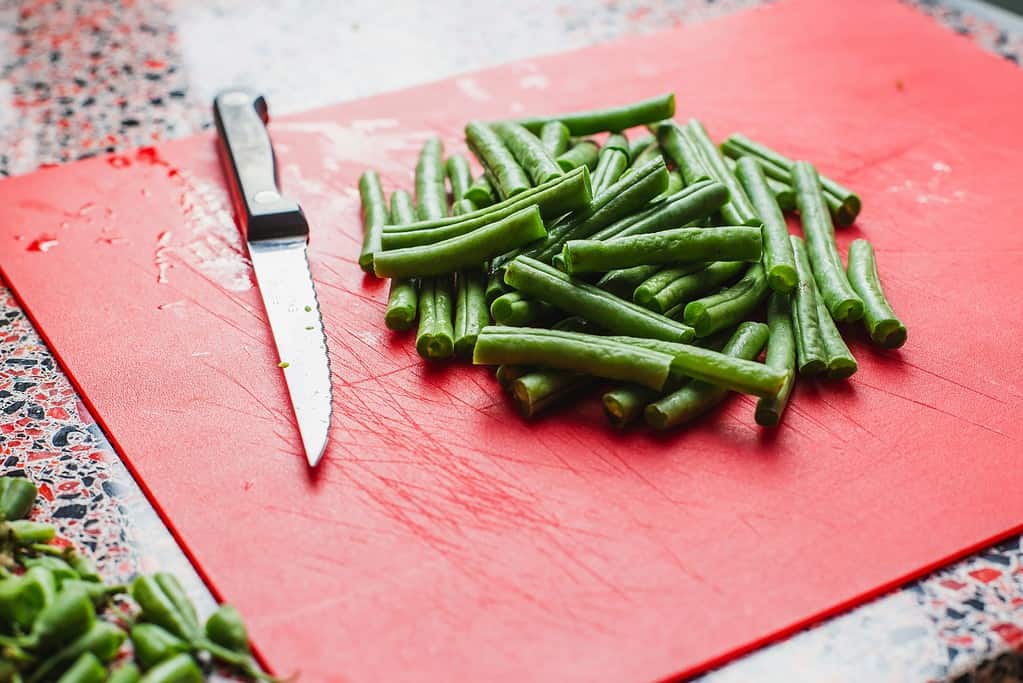
Cooking green beans does more than just change their texture; it can also bring out deep, unctuous flavors.
For the green bean connoisseur, you could:
- Steam: gentle and fast, this method preserves nutrients
- Blanch: a quick boil then plunge into ice water for dishes like an elegant Niçoise salad
- Sauté: a hot pan and a little oil give green beans a smokiness and intense flavor
- Roast: throw them in the oven with some olive oil for crunchy goodness
- Grill: adds a charred, smoky flavor to your green beans
You can also opt for a combination of these methods, such as steaming and then finishing with a quick sauté to add some depth of flavor.
There are so many possibilities when it comes to cooking green beans!
With the right techniques and seasonings, you can turn this humble vegetable into something truly amazing.
Looking for more inspiration? Here are some additional ideas:
For ideas on pairing bright citrus flavors after a savory vegetable course, consult lemon dessert pairing ideas to inspire sweet finishes.
- Stir-fry: combine green beans with other veggies, a protein, and some soy sauce for a flavorful meal
- Pickling: add tangy acidity to your green beans by pickling them in vinegar and spices
- Mashing: mix cooked green beans with potatoes for a unique twist on mashed potatoes
- Soup: puree steamed or roasted green beans with broth and other veggies for a filling soup
- Stuffed: stuff blanched green beans with your favorite filling, like cheese or meat, and bake for a tasty appetizer.
Burger King Lunch Menu Start Times
The question "Can you eat raw green beans?" has been thoroughly explored.
The verdict is clear: not only can you, but you should consider it!
Raw green beans offer a satisfying crunch and a fresh, bright flavor that's nearly medicinal in its nutrient payload.
Remember to respect the lectin content and your digestive system, and always enjoy green beans in a way that best suits your palate and health.
Whether they're freshly snapped from the vine, set in a raw summer salad, or lightly steamed beside a juicy roast, green beans have a versatile spirit that's always worth celebrating.
Here's to exploring the uncooked side of this verdant vegetable and incorporating it into your cooking experiences.
Frequently Asked Questions
Many Can You Eat Raw Green Beans? Things to Know recipes work well for meal prep because they hold up in the refrigerator for several days.
Choose options that reheat without losing texture or flavor.
Things to Know recipes be made ahead of time?
Many work well made ahead.
Prepare the components in advance and store them separately.
Combine just before serving to maintain the best texture and freshness.
Most pathogens are killed at internal temperatures of 165°F (74°C) for poultry and 145°F (63°C) for whole cuts of meat. Ground meat should reach 160°F (71°C).
Use a thermometer for accuracy.
Reheating to the correct internal temperature kills most bacteria, but some toxins produced by bacteria are heat-stable and cannot be destroyed by cooking. Proper storage before reheating is essential.
If lunchtime plans involve fast-food chains, check Burger King lunch start times to know when lunch-only items become available.
bay leaves mystery unveiled guide explains whether bay leaves should be eaten. guacamole pairing ideas for snacks suggests great foods to serve with guacamole.