
Non-smoked hot paprika matches Espelette's heat and Aleppo pepper matches its fruity flavor, at ¾ to 1 teaspoon per teaspoon.
- Gochugaru works 1 teaspoon for 1 teaspoon, a little sweeter and smokier.
- With only sweet paprika, add 1/16 teaspoon cayenne per teaspoon.
- Espelette tops out near 4,000 Scoville units, so use just ¼ teaspoon crushed red pepper.
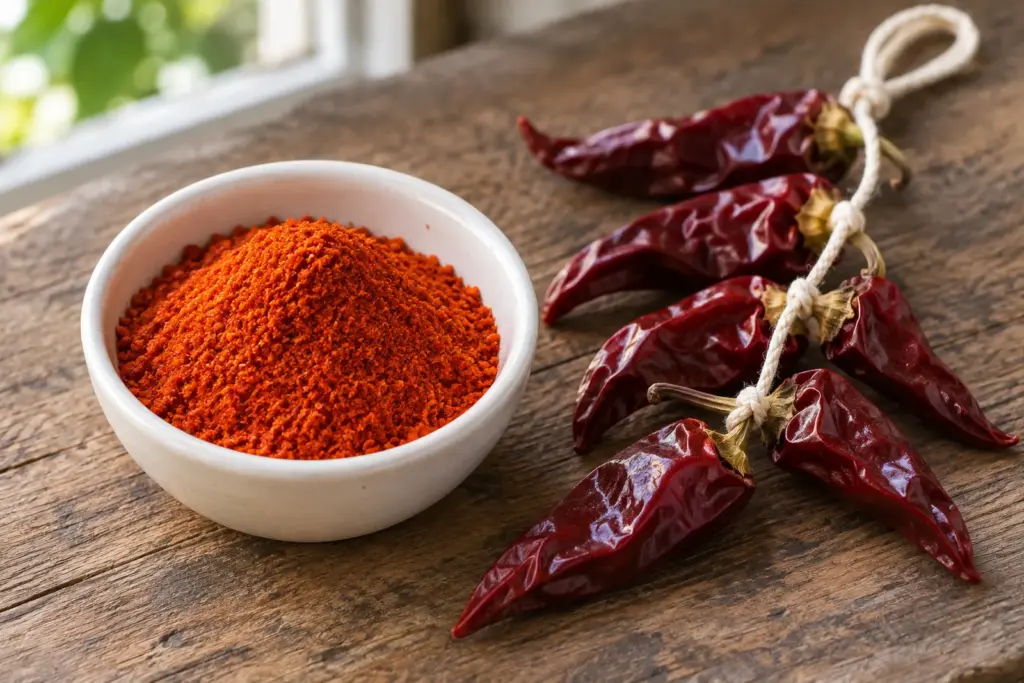
Espelette pepper is a mild, fruity chile powder from the French Basque Country, and most spice substitutes for it miss on heat first. Cayenne runs 30,000 to 50,000 Scoville units, at least 7 times the top of Espelette's range, and grocery crushed red pepper runs 15,000 to 30,000. The ratio matters as much as the flavor, so every swap below comes with an amount per teaspoon and its heat.
What Is Espelette Pepper and What Does It Do in a Dish?
Piment d'Espelette grows in 10 communes around the village of Espelette, and the name is protected. France classified it as an AOC in 2000, and the European Union confirmed protected designation of origin (AOP in French) in 2002. A jar marked Piment d'Espelette AOP comes from that zone, while Espelette peppers sold outside the appellation, including some grown in California, carry no such guarantee.
The powder is gentle, at about 500 to 4,000 Scoville heat units (SHU) according to PepperScale, which also compares it to a mild paprika. That top end sits in the lower half of a jalapeño's 2,500 to 10,000 range. The growers' syndicate describes an intense aroma with fruity, grilled or hay notes and a strong but not burning spiciness, so you taste fruit and warmth before any burn.
In your dish it does three jobs, and a good swap covers as many of them as it can:
- Mild, steady heat that lets eggs, fish, cream and butter stay delicate.
- Fruity sweetness with a little smoke, which most pantry chiles lack.
- A fine, even grind that melts into sauces instead of leaving flakes.
5 Best Substitutes for Espelette Pepper
Every amount is per 1 teaspoon of Espelette powder. The further a swap sits above 4,000 SHU, the less of it you use.
| Substitute | Amount | Heat (SHU) |
|---|---|---|
| Aleppo pepper | ¾ to 1 tsp | 2,500 to 25,000 |
| Gochugaru | 1 tsp | 4,000 to 8,000 |
| Hot paprika | 1 tsp | 500 to 4,000 or more |
| Smoked paprika | ¾ tsp | Varies by type |
| Crushed red pepper | ¼ tsp | 15,000 to 30,000 |
Aleppo pepper, gochugaru and hot paprika sit close to Espelette's heat and swap nearly one to one. Crushed red pepper and cayenne run so much hotter that you measure them in pinches.
1. Aleppo Pepper
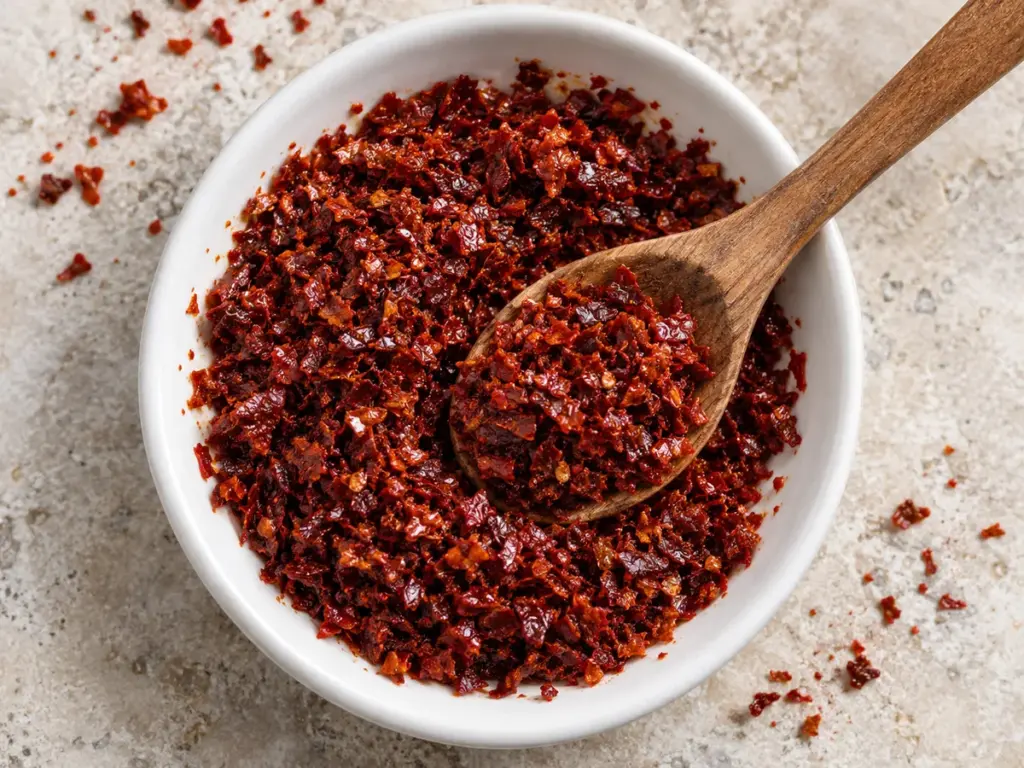
Aleppo pepper gives you the nearest flavor. PepperScale describes tomato-like brightness, a touch of raisin tartness and a hint of salt from drying, which sits close to Espelette's fruity side. The catch is heat, because PepperScale calls Aleppo at least twice as hot as Espelette. Start with ¾ teaspoon per teaspoon, taste, and add the rest only if the dish needs it.
The flakes are coarser and oilier than the powder, so hold back your last pinch of salt until you taste. You can use them as they are on eggs, fish or a finishing sprinkle, and a few pulses in a spice grinder make them fine enough for mayo or a smooth sauce. Marash pepper is a close cousin that Spices Inc. lists at 4,000 to 8,000 SHU, with an earthier, cumin-like flavor, and you can start with the same amount.
2. Gochugaru
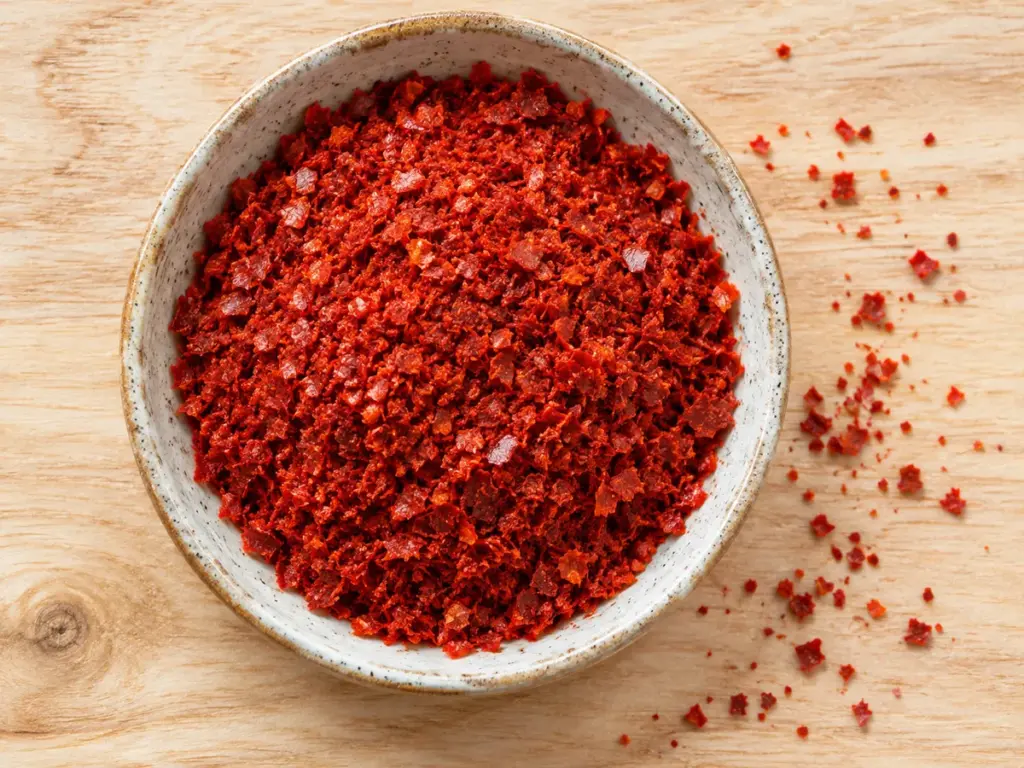
Gochugaru, the Korean chile flake, is worth a trip to a Korean grocery or an online order if you cook with chile often. PepperScale lists it at 4,000 to 8,000 SHU with a sweet, slightly smoky flavor, which gives you Espelette's sweetness and light smoke. Use 1 teaspoon for 1 teaspoon, and taste before you add more, because its top range is twice Espelette's.
Wikipedia notes the texture runs from fine powder to flakes and the heat from mild to very hot by brand, so read the label. You can stir fine gochugaru into sauces and eggs the way you would Espelette powder, while coarse gochugaru sits on top like a flake.
3. Hot Paprika, or Sweet Paprika Plus Cayenne
If your cupboard has non-smoked hot paprika, PepperScale calls it the best match, because its heat is in line with Espelette's and it lacks the heavy smoke of smoked paprika. Start with 1 teaspoon per teaspoon, since heat differs from brand to brand.
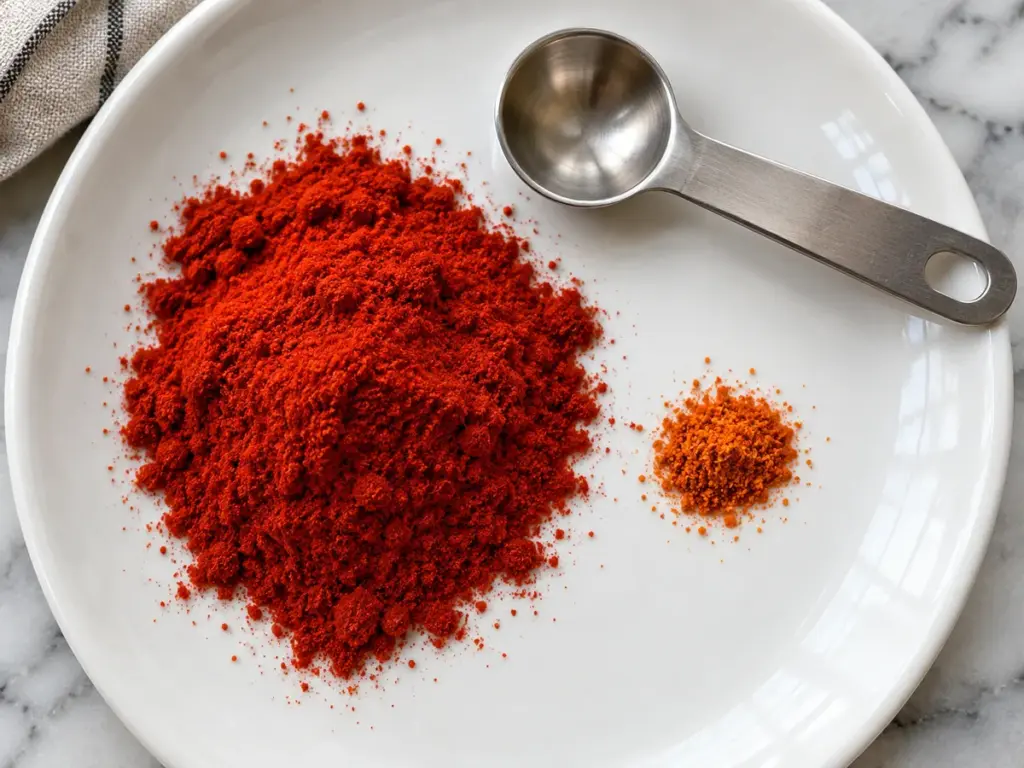
With only sweet paprika in the cupboard, mix 1 teaspoon of it with 1/16 teaspoon of cayenne for each teaspoon of Espelette. PepperScale says sweet paprika has little or no capsaicin, so the cayenne supplies all the warmth. Calculated from cayenne's 30,000 to 50,000 SHU, with a teaspoon of each spice counted as the same weight, the mix lands near 2,000 to 3,000 SHU.
Either version suits cooked sauces such as piperade, where Wikipedia calls Espelette a key ingredient, but neither gives you its fruit on a finished plate.
4. Smoked Paprika
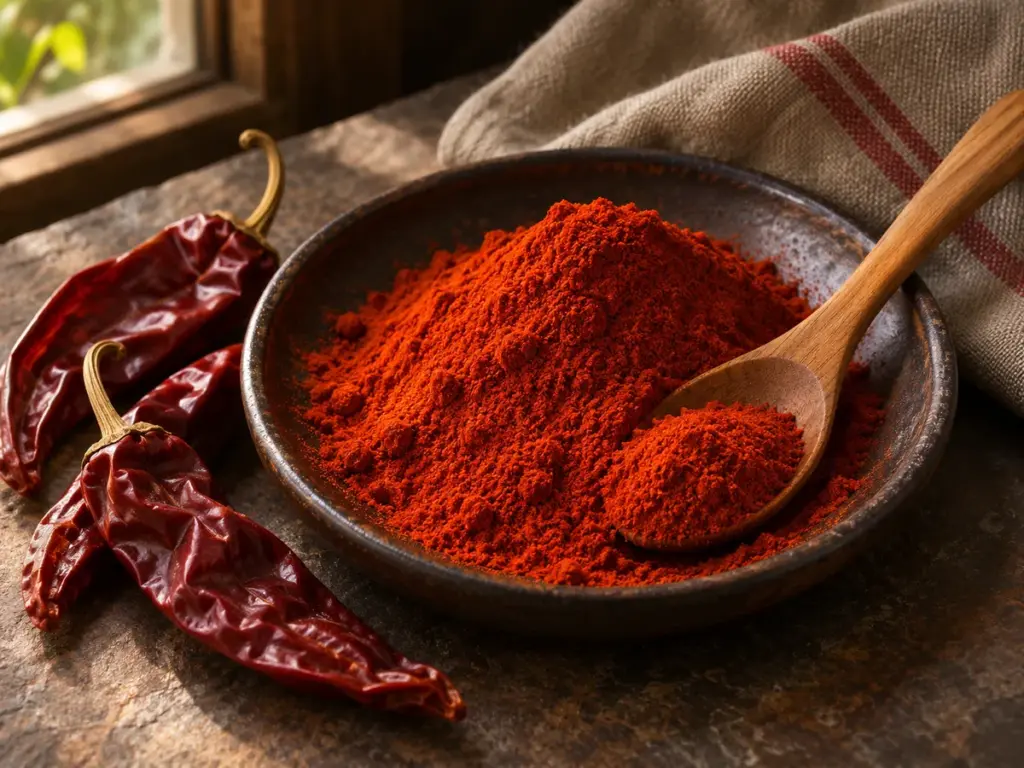
Espelette has a grilled edge in its aroma, but PepperScale warns that smoked paprika is much smokier than that. It suits the stews, braised chicken and roasted vegetables you cook, where wood-fire smoke belongs anyway. Use ¾ teaspoon per teaspoon, and add a tiny pinch of cayenne if the dish needs warmth.
Check the label for sweet or hot, because PepperScale notes that smoked hot paprika can be as hot as cayenne. It fails in anything delicate: you taste smoke over the egg, white fish or cream sauce where Espelette would only add a glow.
5. Crushed Red Pepper Flakes
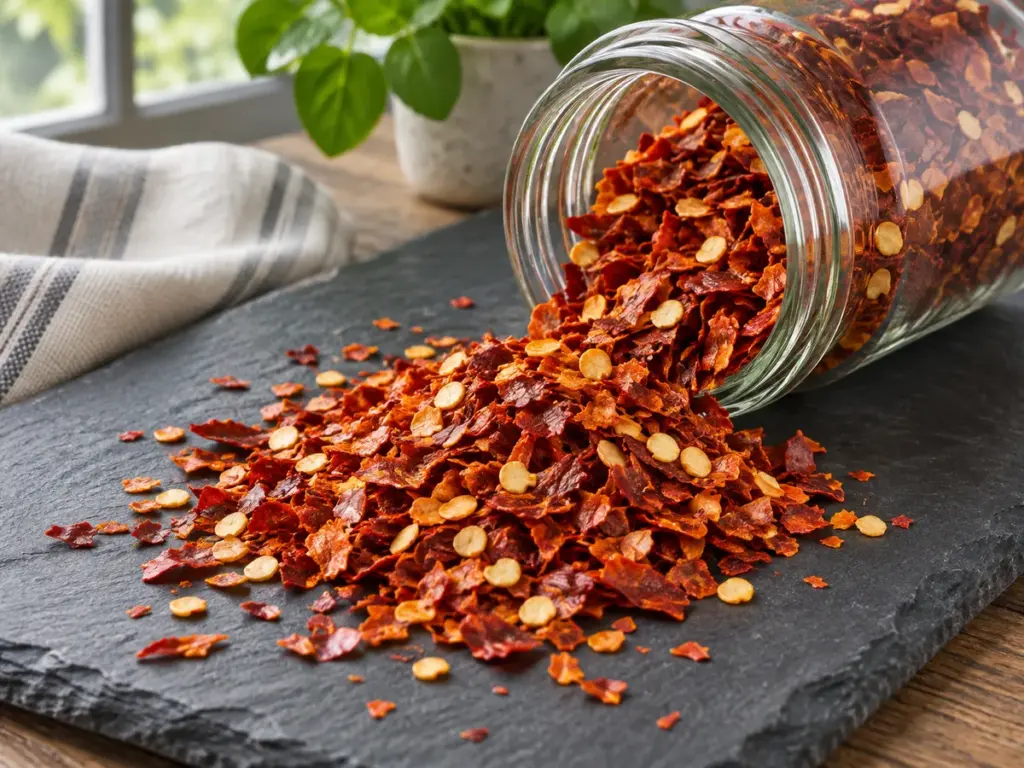
Crushed red pepper is the easiest jar to find and the hottest swap here. PepperScale puts store blends at about 15,000 to 30,000 SHU, roughly 4 to 7 times Espelette's top end, and they include seeds. Use ¼ teaspoon per teaspoon, and grind it finer, because flakes sit on top of a dish instead of mixing in.
The flakes are neutral, so you get heat with very little fruit or sweetness. When your dish also needs Espelette's red color, bring up the volume with sweet paprika instead of more flakes, because every extra pinch of flakes adds heat.
Which Swaps Should You Skip?
Three common pantry spices cause trouble when you grab them, and each fails in its own way:
- Plain cayenne pepper has heat and little flavor. Across its 30,000 to 50,000 range, ⅛ teaspoon carries roughly 3,750 to 6,250 units, as much as or more than 1 teaspoon of Espelette at 4,000 (calculated, counting teaspoons as equal weights), so keep it to 1/16 teaspoon at most.
- Chipotle powder is ground smoked jalapeño, and Wikipedia lists jalapeño at 2,500 to 10,000 SHU, close to Espelette's range. The smoke covers the fruit, so start with ½ teaspoon per teaspoon, and only in barbecue-style or chili-style dishes that already smell smoky.
- Chili powder is a blend of ground chiles with cumin, onion and garlic powder, so it adds spices Espelette never carries and your dish will taste like chili.
Sources
- Wikipedia, Espelette pepper (appellation dates, 10 communes, 4,000 SHU maximum, piperade, California)
- Syndicat du Piment d'Espelette, identity sheet (aroma and heat description)
- PepperScale, Espelette pepper (500 to 4,000 SHU, comparison to mild paprika)
- PepperScale, Espelette substitutes (hot paprika, smoked paprika, Aleppo, red pepper flakes)
- PepperScale, Aleppo pepper and gochugaru (flavor, heat, salt)
- PepperScale, cayenne pepper (30,000 to 50,000 SHU)
- PepperScale, crushed red pepper (15,000 to 30,000 SHU, seeds)
- PepperScale, paprika (sweet and hot paprika, wood-fire smoking) and chipotle powder (smoked hot paprika)
- Spices Inc., Aleppo, Maras and Urfa peppers (heat and flavor)
- Wikipedia, Scoville scale (Aleppo, jalapeño, laboratory variation)
- Wikipedia, Gochugaru (texture, seedless, heat by brand)
- Wikipedia, Chili powder (blend ingredients)

Food writer at GustoMeadow. Writes ingredient substitutes, food comparisons, taste guides and storage guides for home cooks.
Storage and food-safety numbers follow USDA, FDA and university extension guidance.



