
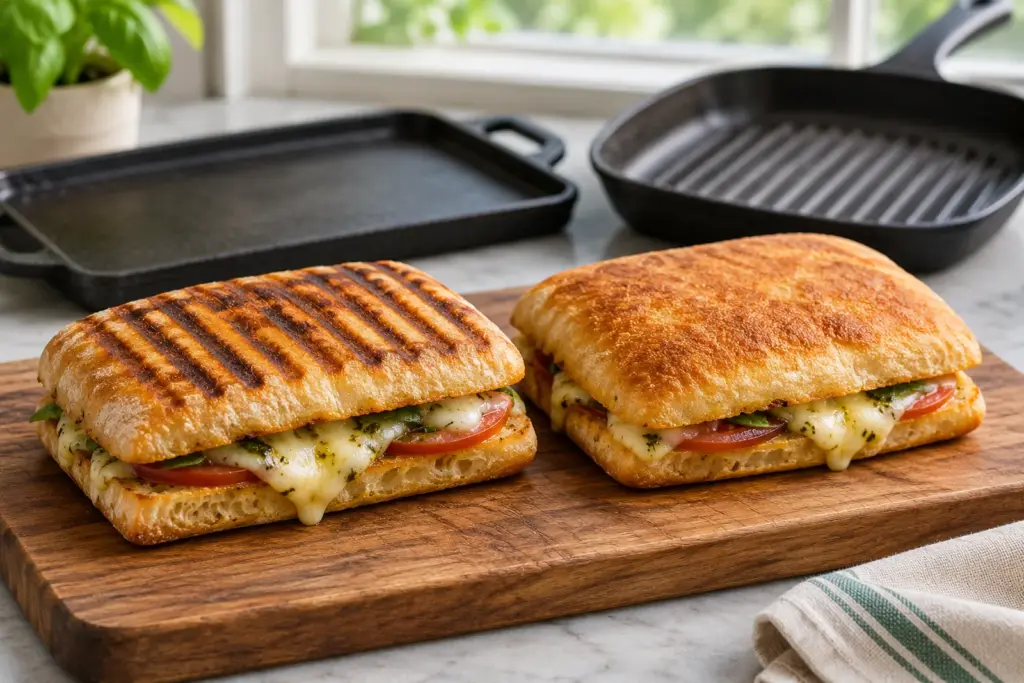
A flat griddle browns the whole panini crust evenly, while a ridged pan or press leaves dark lines and less color.
- Choose a griddle for edge-to-edge color.
- Choose ridges for grill marks, and a press with a floating hinge for a tall sandwich.
- Add weight on top, as in other food and cookware comparisons.
1. What Does Griddle vs Grill Panini Mean?
A panini is the sandwich, not the cookware, so "grill panini" means a panini cooked on a ridged surface: a grill pan on your stove or an electric panini press. The other side of the matchup is a griddle, a flat plate that comes as a stovetop slab or a plug-in model.
| Setup | Surface | What touches the bread | How you press |
|---|---|---|---|
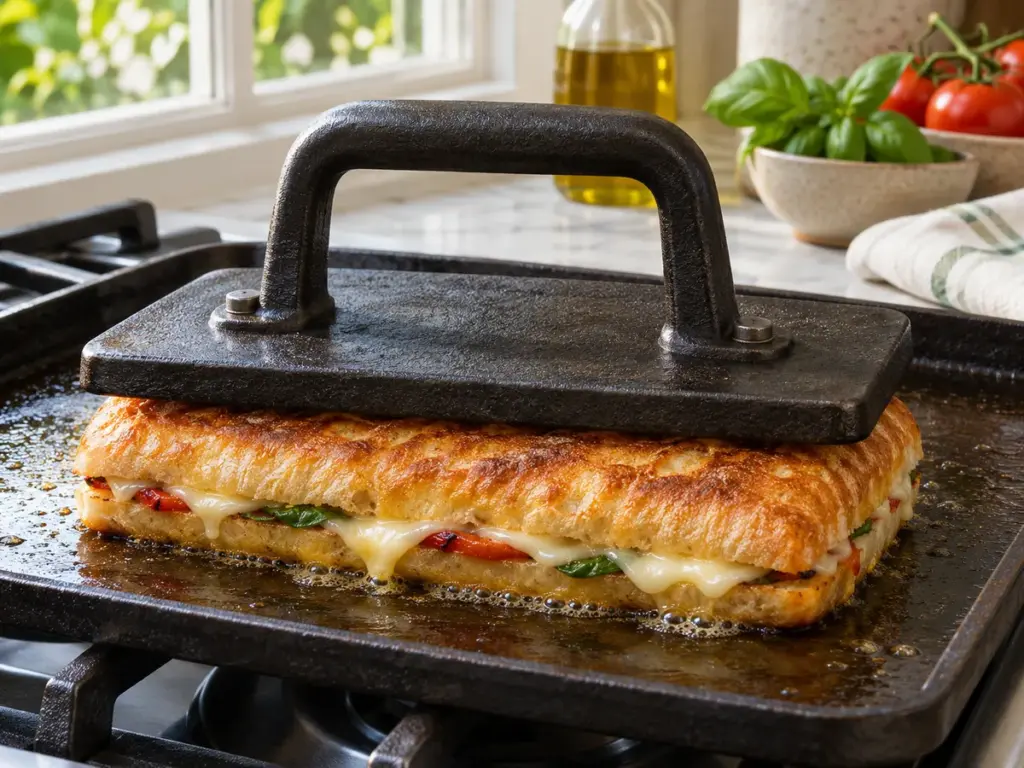
| Griddle | Flat plate, cast iron, steel or nonstick | The whole crust | Grill press or heavy skillet |
| Grill pan | Raised ridges with channels between | Only the tops of the ridges | Grill press, or the bottom of a Dutch oven or heavy skillet |
| Panini press | Two ridged plates on a hinge | Ridge tops, top and bottom at once | The lid itself |
The ridged setups work like this, in the words of America's Test Kitchen: the hot ridges sear grill marks onto the food while radiant heat cooks the rest. A flat plate has no gaps, so the bread browns across its full face.
2. How Does a Griddle Cook a Panini?
A flat plate puts every part of the slice on hot metal, so the crust turns one even color instead of stripes. America's Test Kitchen's testers saw this on the Dash Express Griddle, which made golden, crispy, melty panini but no grill marks.
The plate needs a head start. Lodge recommends 3 to 5 minutes on medium-low for cast iron on a stovetop, and a rectangular griddle that spans two burners needs both burners at the same setting so the plate heats evenly.
- Preheat gradually. Bring a cast iron griddle up over 3 to 5 minutes on medium-low, or set a plug-in model to the sandwich setting in its manual.
- Coat the outside of the bread. Butter works, and Lodge says mayonnaise is a tangy alternative that helps the bread brown.
- Add the sandwich and press it. Set a grill press or a small, heavy skillet on top so the bread flattens against the plate.
- Flip when the underside is golden. Press again until the cheese melts and the second side matches the first.
If you cook on a plug-in model, a thermostat keeps the plate steady and leaves your burners free, a trade you can weigh in the electric griddle and stove top matchup. Each brand prints its own sandwich setting, so use your manual's number rather than a temperature from a chart online.
3. How Does a Grill Pan Cook a Panini?
A grill pan's ridges lift the bread off the pan floor, so only the ridge tops brown the crust and fat runs into the channels. America's Test Kitchen found the best pans had tall ridges that made distinct grill marks, and tall ridges also kept the food above any drippings.
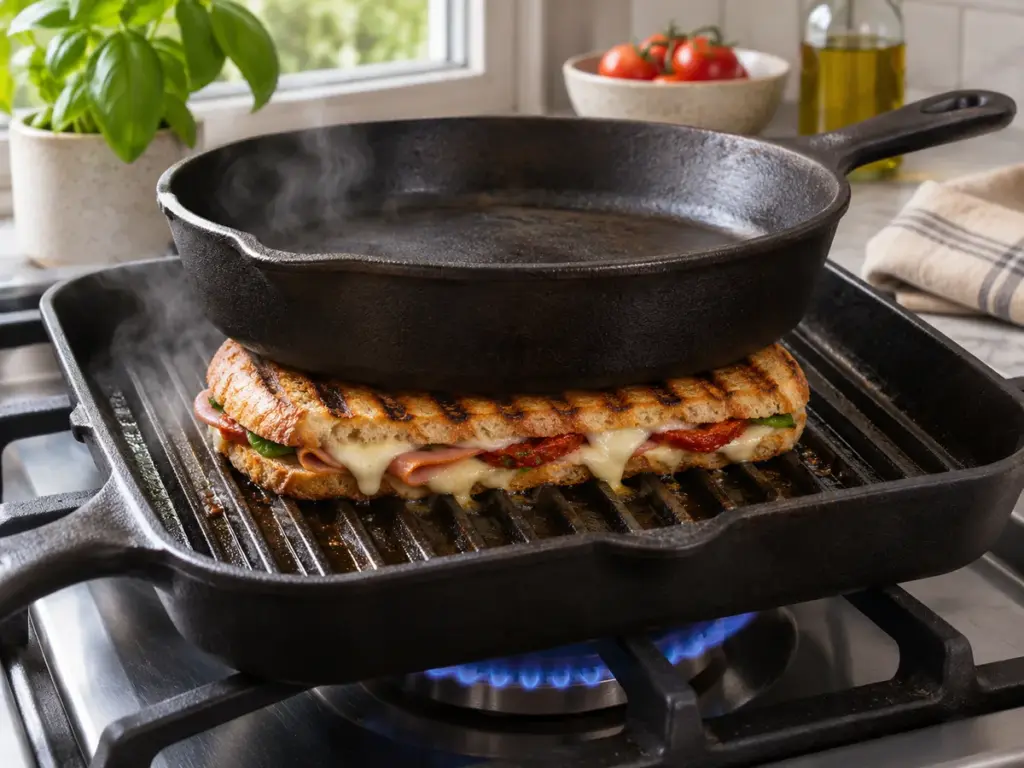
You do not need a smoking-hot pan. The same testers said to preheat on medium, not high, for several minutes, which took about four full minutes, and that the pan does not have to be ripping hot to leave good marks. They also advise oiling the food rather than the pan, because exposed fat is where the smoke comes from, so butter goes on the bread.
For weight, use a grill press, or the bottom of a Dutch oven or a heavy skillet if you do not own one. A ridged pan also differs from a plain skillet the same way it differs from a griddle: you get marks and drainage, and less of the bread browns.
4. What Does an Electric Panini Press Add?
A press heats both sides at once, so you never flip, and the lid supplies the weight. America's Test Kitchen found the best ridges were 0.125 to 0.25 inch tall, and its favorites spaced them 0.5 inch apart, which also made cleaning easier.
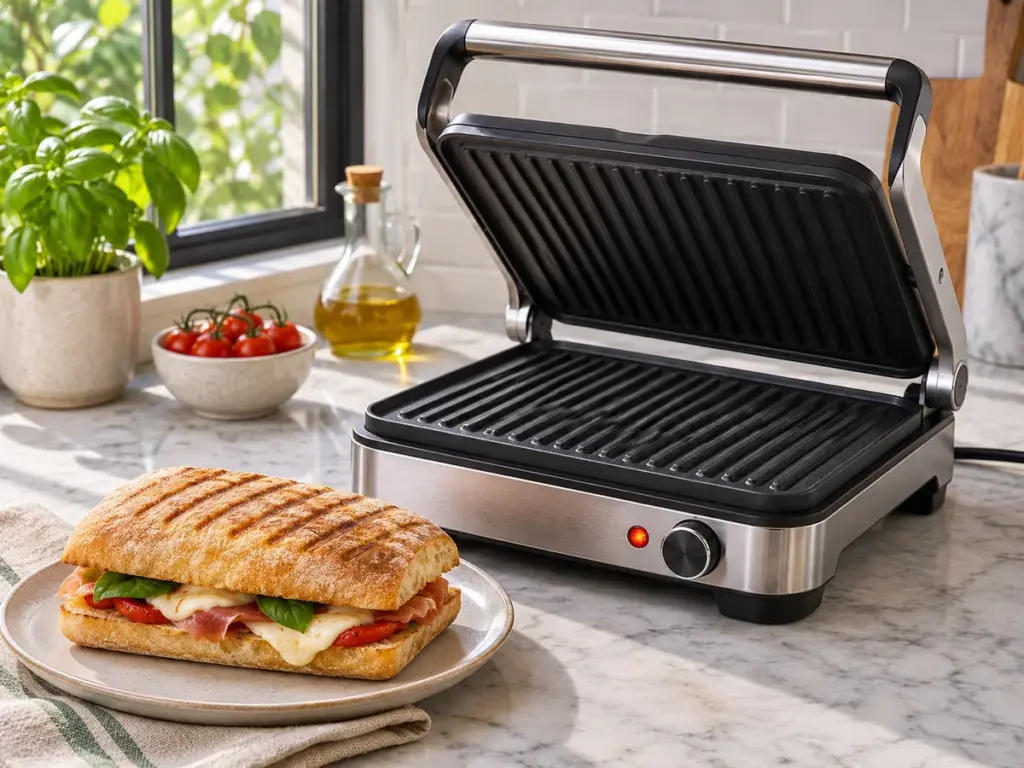
Look at the hinge before the ridges. A floating top plate rises and falls to fit taller, bulkier food, and the testers called stiff hinges "a menace." Steady heat counts too, because machines that stayed hot browned better than models that cycled on and off, and the Cuisinart Griddler they tested let its heat cycle off and finished food slower.
Two similar machines can mislead you. A sloped contact grill such as the George Foreman grill tilts the plate so fat drains toward a tray, which suits burgers more than a thick sandwich. A sandwich maker with smooth plates pinches the bread edges shut and is built for sliced bread.
5. Which Gives the Better Crust, Marks and Cleanup?
| Trait | Griddle | Grill pan | Panini press |
|---|---|---|---|
| Browning | Even over the whole crust | Dark lines, lighter bread between | Dark lines on both sides at once |
| Grill marks | None | Yes, sharper with tall ridges | Yes |
| Fat | Stays on the plate | Runs into the channels | Collects in the grooves |
- For pressing, use a press or skillet on a griddle or grill pan. A panini press uses its lid, with a floating hinge for tall stacks.
- For cleanup, a griddle is a quick wipe of a smooth plate. A grill pan holds residue between ridges, and a panini press is easier when the plates are removable.
The dark lines come from bread browning where it touches metal, so both setups get their flavor from toasted bread and melted cheese rather than from smoke. A griddle gives you more of that browned surface, and ridges give you the look of a grill.
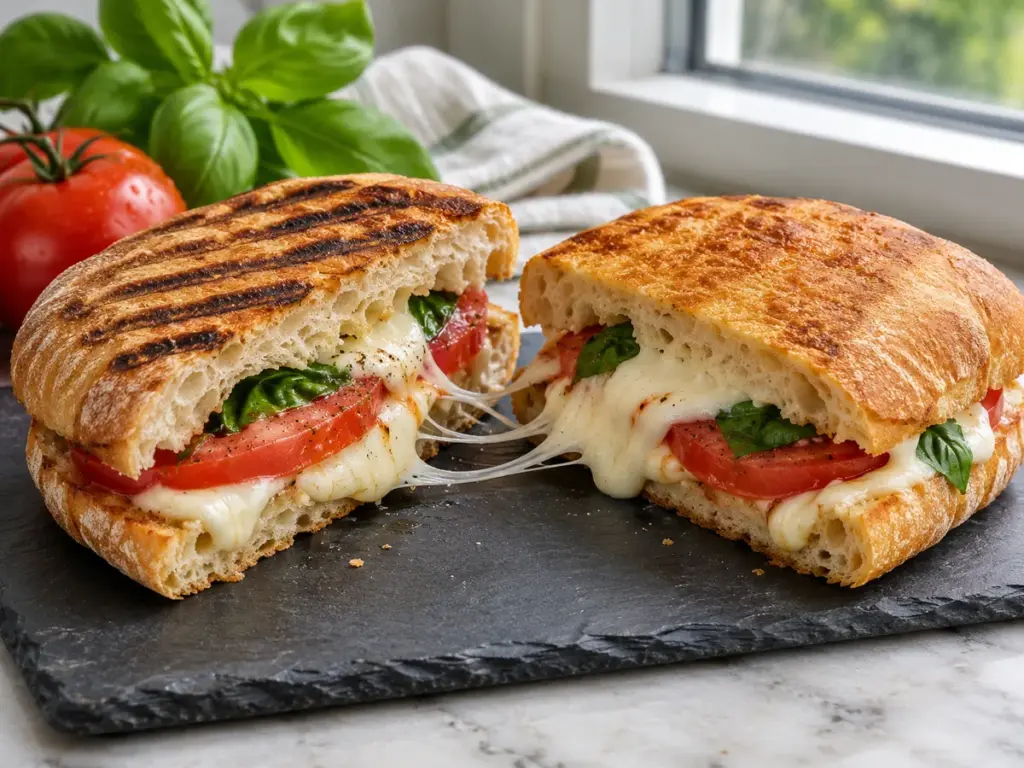
For cleanup, a smooth plate wins, and uncoated cast iron needs the same care in either shape. Lodge says to wash by hand, dry, and rub in a little oil after each use, because a dishwasher removes the seasoning and can cause rust.
6. How Hot Can a Nonstick Panini Pan Get?
Every press America's Test Kitchen tested had a nonstick coating, PTFE-based or ceramic, with no performance difference between the two. Nearly all models stayed below 450°F, one reached 473°F, and the same review notes that PTFE coatings give off fumes only above 500°F.
Poison Control also says high heat belongs in other cookware, such as cast iron. Uncoated cast iron has no coating to overheat and grows more nonstick as seasoning builds, so if you like a hot pan, cast iron or a nonstick pan is the choice to make first.
7. Can You Use a Griddle Instead of a Grill Pan?
Yes. On a griddle you lose the grill marks and gain even browning, and the press and fillings stay the same. Lodge sells a reversible cast iron plate with one grooved side and one flat side, so one piece of cookware covers both looks.
On a grill pan you will cook one sandwich at a time, because it holds fewer than a wide griddle. A name can mislead you at the store, because many patio units sold as a flat top are griddles under another name.
8. Which Should You Use for Your Panini?
- You want the whole crust golden
- You cook several sandwiches or wide ones, since a rectangular plate spans two burners
- You want the plate that is easiest to wipe clean
- You want visible grill marks on the bread
- You are stacking a tall sandwich and own a press with a floating hinge
- You prefer fat to drain away from the bread
If you own only one piece, pick a reversible cast iron plate, since it gives you both surfaces. The bread matters as much as the pan, because a panini differs from a regular sandwich mostly in its sturdy bread and the pressing. Serve it with sides that suit a panini such as soup or a simple salad.
Sources
- America's Test Kitchen, The Best Panini Presses
- America's Test Kitchen, Grill Pans review
- Lodge, Griddles 101
- Lodge, How to Use Cast Iron Over Any Heat Source
- Lodge, The Lodge Sandwich Encyclopedia
- Poison Control, Protect Yourself from Teflon Flu

Food writer at GustoMeadow. Writes ingredient substitutes, food comparisons, taste guides and storage guides for home cooks.
Storage and food-safety numbers follow USDA, FDA and university extension guidance.



