
A homemade blend of thyme, savory, marjoram and rosemary is the closest match for herbes de Provence.
- Italian seasoning swaps in 1:1, and a small pinch of dried lavender gets it closer.
- Fines herbes are fresh, so you add them near the end of cooking.
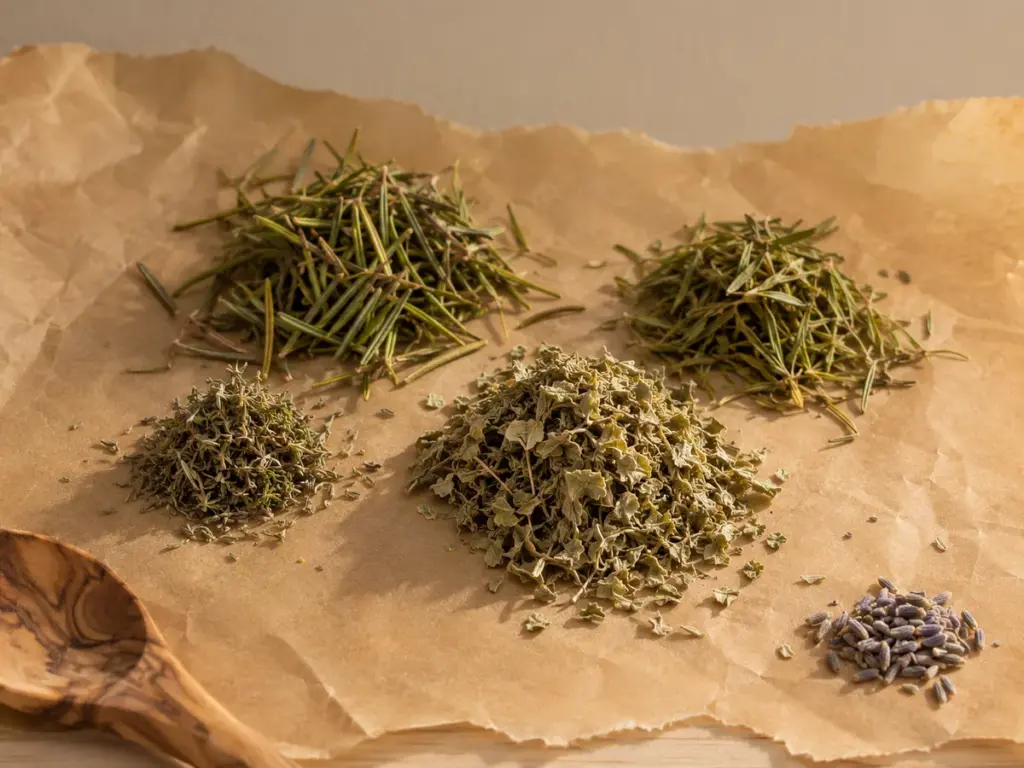
Herbes de Provence is a dried French herb blend with no legal recipe, so a swap mainly has to cover its four core herbs: thyme, rosemary, savory and oregano. As with most herb and spice substitutes, the right pick depends on what is already in your spice drawer.
What Does Herbes de Provence Do in a Dish?
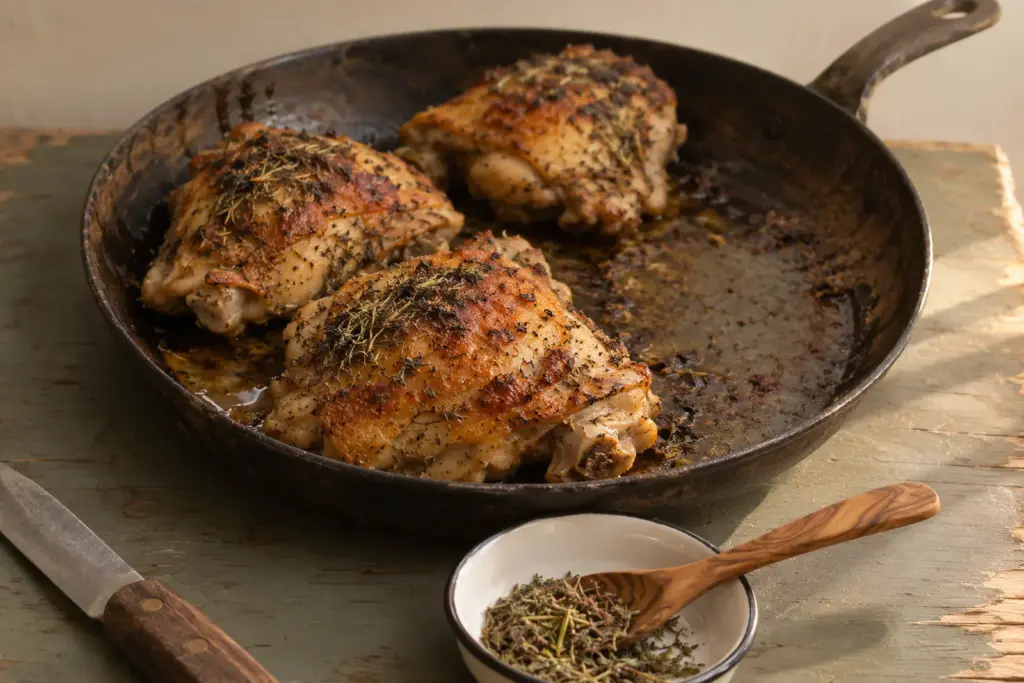
Wikipedia names grilled fish and meat and vegetable stews as the blend's main uses, along with salads and goat cheese, and The Takeout adds ratatouille and vinaigrettes. The Takeout also says the blend usually goes in at the beginning of cooking, so the swap you choose has to hold up in the pan from the start.
The closest thing to a standard is the French quality mark Label Rouge, awarded in 2003, which defines the blend as four herbs and no lavender, shown below next to the common North American version.
- Thyme 19%
- Rosemary, savory, oregano 27% each
- No lavender
- Savory, marjoram, rosemary, thyme, oregano
- Lavender in most, with fennel, basil or bay in some
Lavender entered the blend mainly to please tourists, according to The Takeout, and its flavor is potent enough that some people find it soapy. If the swap you pick has no lavender, it still fits the French definition, but a swap without savory loses 27% of the blend, so savory is the herb to replace first.
The 6 Best Substitutes for Herbes de Provence
| Swap | Amount | Best for |
|---|---|---|
| Homemade blend | 1:1 | Anywhere the blend goes |
| Italian seasoning (+ pinch of lavender) | 1:1 | Grilled fish, marinated meat, roasted vegetables |
| Thyme + rosemary | Equal parts | When you have only these two |
| Herbes de la Garrigue | Start at 1:1 | Rubs for lamb, chicken, pork |
| Fines herbes | 1 tablespoon fresh per tsp | Eggs, chicken, fish, salads |
| Bouquet garni | One tied bundle | Long-cooked stews |
1. Homemade Herbes de Provence
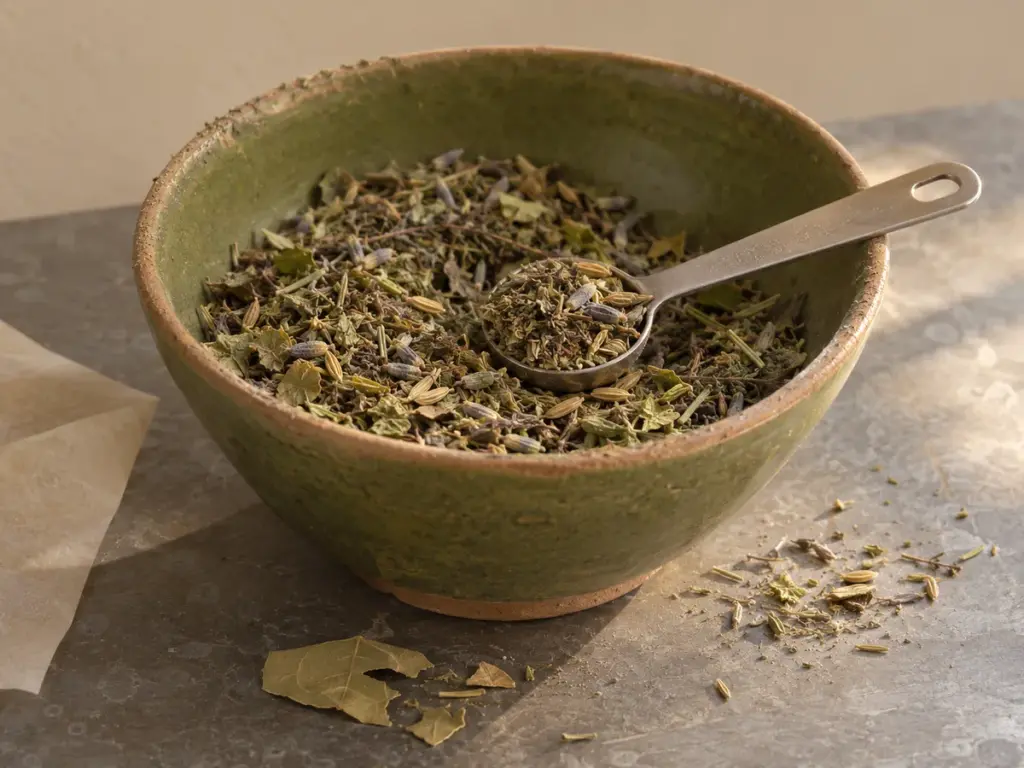
A blend you mix yourself gives the closest match, because you choose every herb. The proportions below come from The Spice House, and the mix replaces the store-bought blend 1:1.
- 2 teaspoons dried thyme
- 2 teaspoons dried savory
- 1 teaspoon dried marjoram
- 1 teaspoon dried lavender
- ½ teaspoon dried rosemary
- ½ teaspoon fennel seeds
- 1 crushed bay leaf
If you have no lavender, you can leave it out or add a tiny pinch of lemon zest for brightness. When the floral note is the part you dislike, you can raise the thyme or marjoram instead.
A missing herb in the recipe has its own fix: dried thyme, marjoram or oregano can stand in for savory, each at its own ratio. For marjoram, an equal amount of oregano takes its place.
2. Italian Seasoning + Lavender
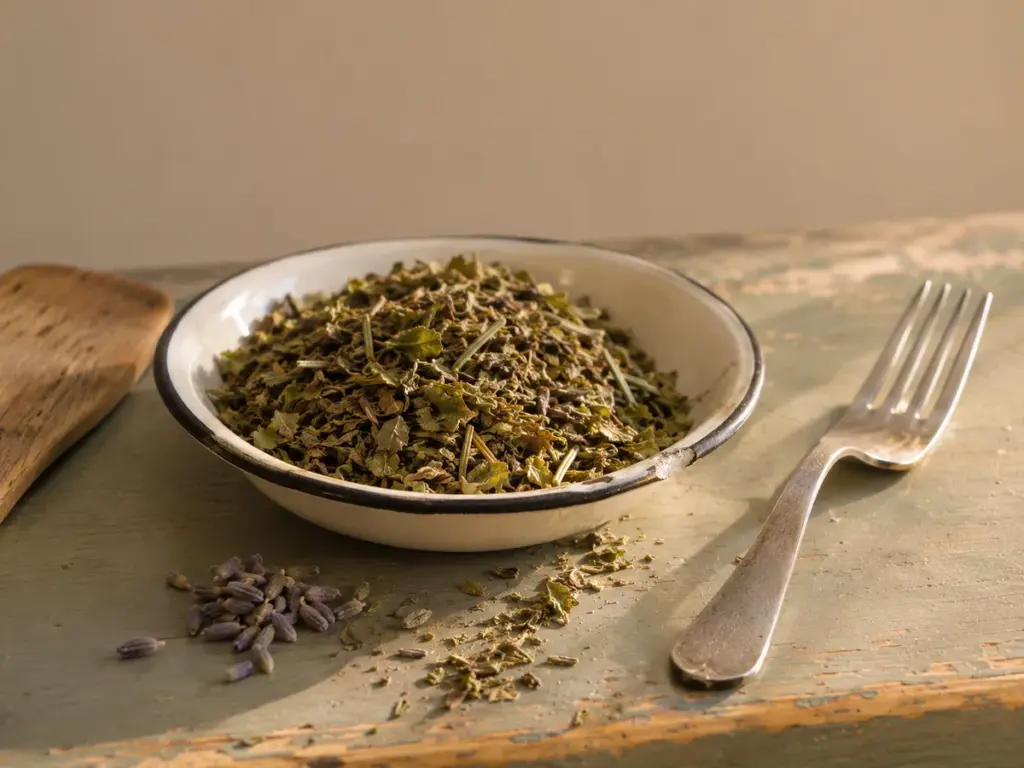
Italian seasoning is built on basil, oregano, thyme and rosemary, so it shares three herbs with the French blend and lacks savory and lavender. The Takeout calls the two a 1-to-1 swap in a pinch, which covers grilled fish, marinated meat and roast vegetables, and the label tells you whether your jar also carries garlic powder, red pepper flakes or black pepper.
To close the gap, you can add about ⅛ teaspoon of dried lavender per teaspoon of seasoning. The figure is calculated from The Spice House blend, which holds 1 teaspoon of lavender in roughly 7 teaspoons of herbs, so the lavender doesn't take over.
Basil takes the place of savory and marjoram, and that is where the two blends differ.
3. Thyme and Rosemary
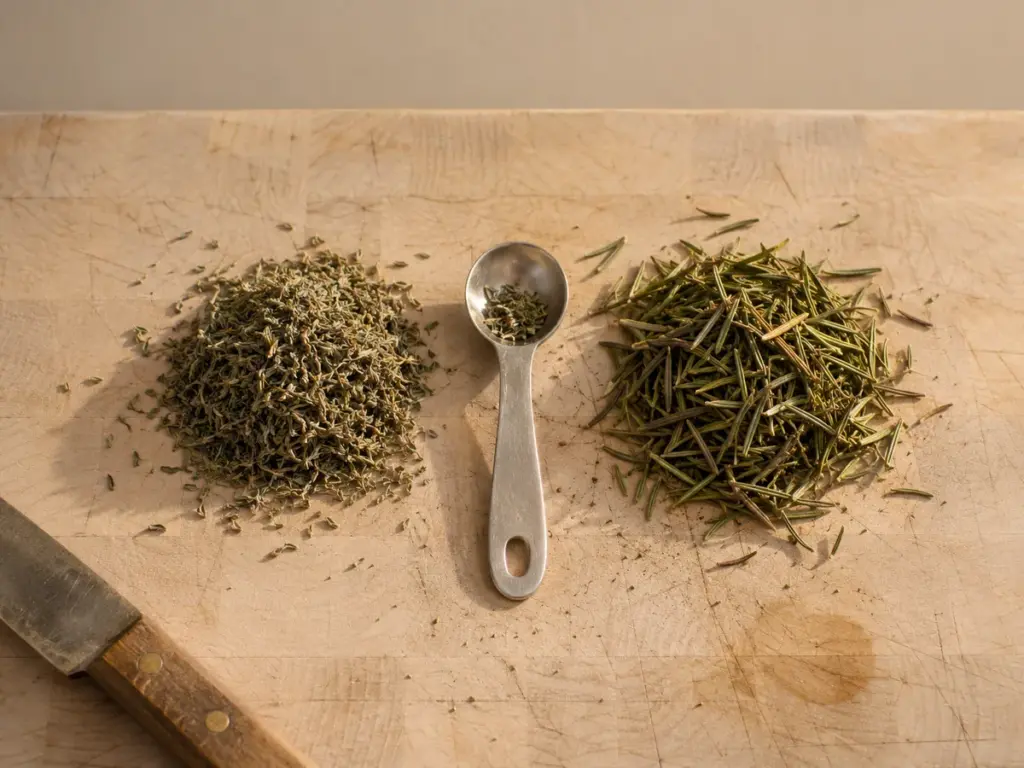
Equal parts of dried thyme and dried rosemary give you two of the blend's main herbs with nothing to buy. Rosemary is bolder than thyme, so a mix tilted toward thyme gives you a gentler result.
Together the two cover only 46% of the French definition (19% thyme plus 27% rosemary), so the pair leaves out savory and oregano, which are over half of it.
A pinch of dried oregano fills in another of the four herbs. If thyme is all you have, it covers just 19% of the blend, which is why a pinch at a time and a taste in between work better than a full spoonful.
4. Herbes de la Garrigue
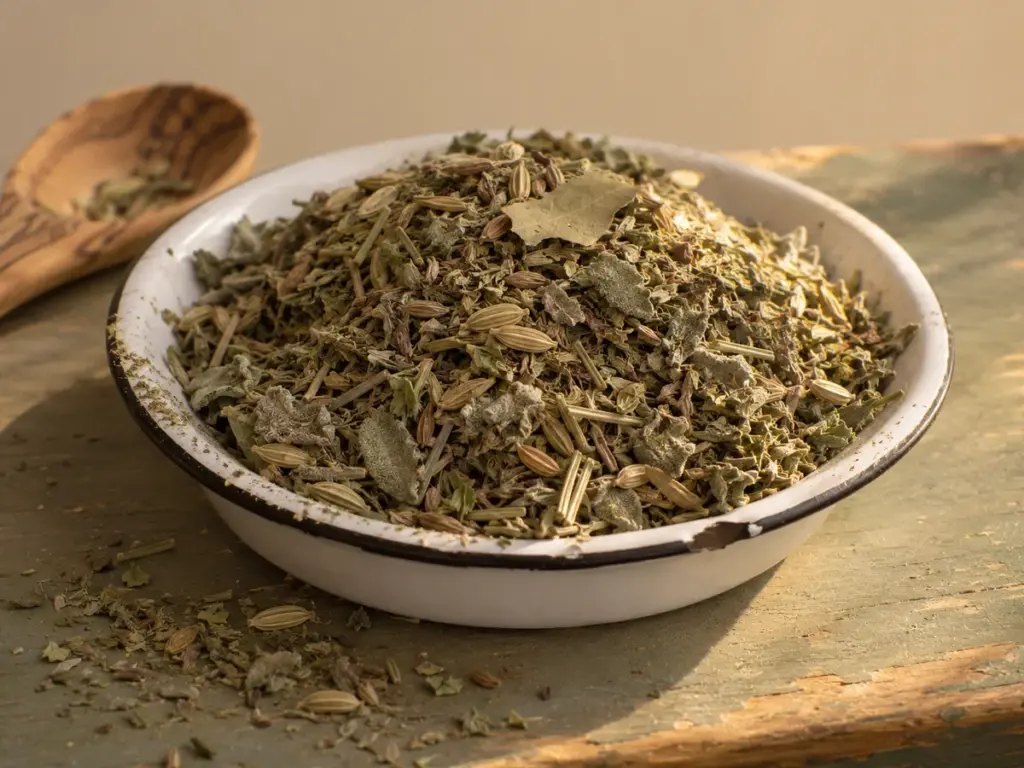
The Season and Thyme blog ranks this blend as the closest of its stand-ins, since it shares savory, marjoram and rosemary with herbes de Provence. World Spice builds its version on thyme, savory, basil and marjoram and adds fennel seed and peppermint, while Season and Thyme names sage as the addition, so the exact list changes with the maker.
The extra fennel, mint or sage makes it more robust than herbes de Provence, so a 1:1 start with a taste before you add more is the safe amount. The label also tells you whether a given jar includes lavender, which matters if you want it or want to avoid it.
5. Fines Herbes
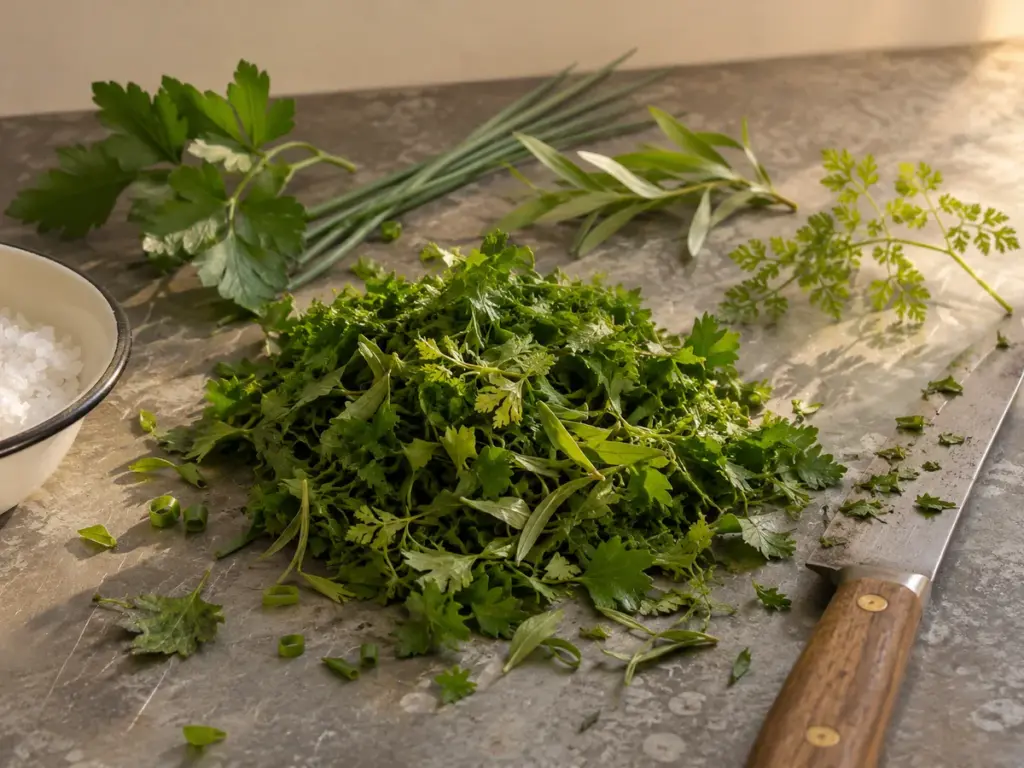
Fines herbes are a fresh mix of parsley, chives, tarragon and chervil, which makes them a different kind of swap from the dried blend. They suit delicate dishes with short cooking, such as eggs, chicken and fish, and you can eat them raw in salads.
Because they are fresh, you add them near the end of cooking, and The Spice House's general rule of 1 teaspoon dried to about 1 tablespoon fresh chopped herbs makes 1 tablespoon of chopped fines herbes per teaspoon of the blend a starting point.
Wikipedia notes that chervil is very hard to find fresh unless you grow it and is nearly useless dried, which is why Pierre Franey used basil in an American version. If your store has none, chervil stand-ins fill that gap.
6. Bouquet Garni
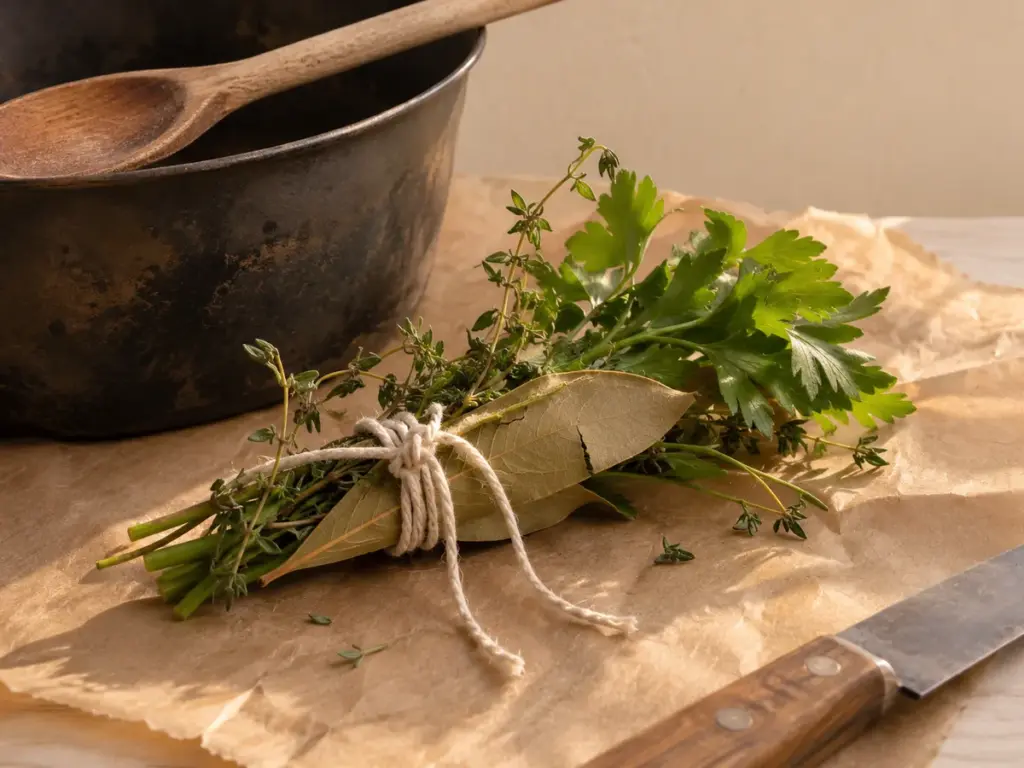
A bouquet garni, as the Season and Thyme blog describes it, is a bundle that often includes thyme, parsley and bay leaves, either premade or tied at home. Its sturdy herbs release their flavor over long cooking, so it is the swap for stews, soups and braises where you'd add herbes de Provence at the start.
Kitchen string lets you lift the bundle out of the pot in one piece, but it carries none of the blend's rosemary, savory or lavender, so a pinch of dried rosemary covers that part when you want it.
Which Swaps Should You Skip?
We'd keep Italian sausage seasoning for sausage, because fennel leads that blend and only some herbes de Provence recipes include fennel at all.
Poultry seasoning leans on sage, and sage is not one of the four herbs in the Label Rouge definition. It fits poultry dishes, and the poultry seasoning comparison sets the two side by side.
Sources
- Wikipedia: Herbes de Provence
- Taste France: Herbs of Provence Label Rouge
- The Spice House: Herbes de Provence substitute
- The Takeout: What Is Herbs De Provence, Really?
- Season and Thyme: Herbes de Provence substitutes
- World Spice: Herbes de la Garrigue
- Wikipedia: Fines herbes
Frequently Asked Questions
How Much Herbes de Provence Do You Use in a Recipe?
The Spice House suggests that you start with 1 to 2 teaspoons of the dried blend per pound of meat, or per 4 servings of vegetables, and taste from there.
How Long Does Homemade Herbes de Provence Last?
The Spice House says a homemade mix is best within 6 months and usable for about 12, though its flavor fades over that time. Taste France advises you to store it in a well-closed container, protected from light and humidity.

Food writer at GustoMeadow. Writes ingredient substitutes, food comparisons, taste guides and storage guides for home cooks.
Storage and food-safety numbers follow USDA, FDA and university extension guidance.



