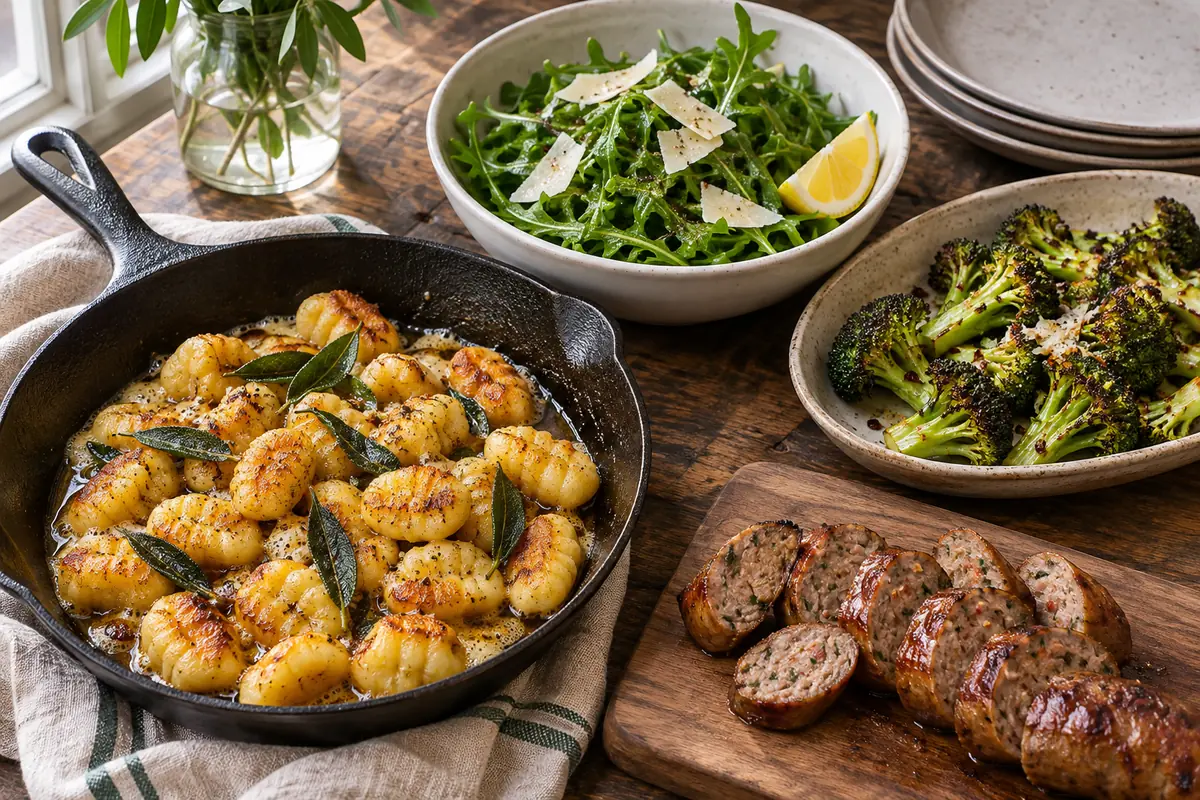
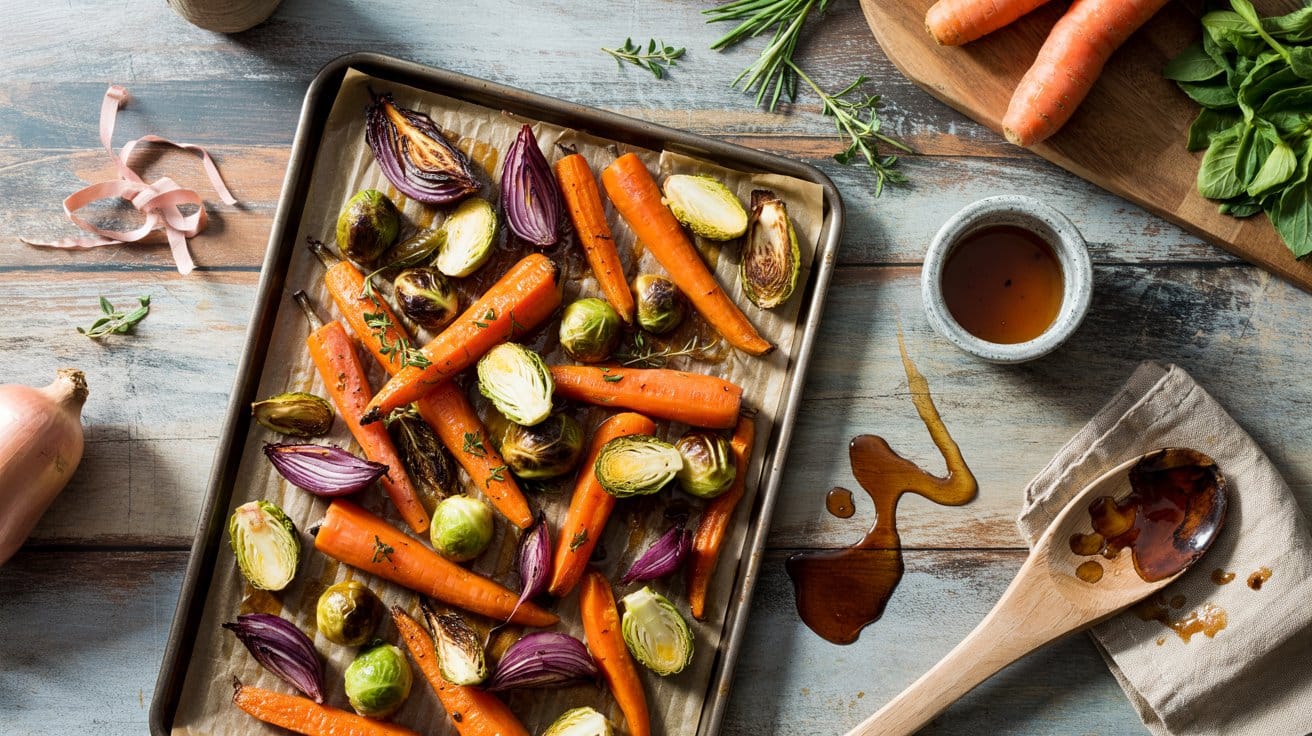
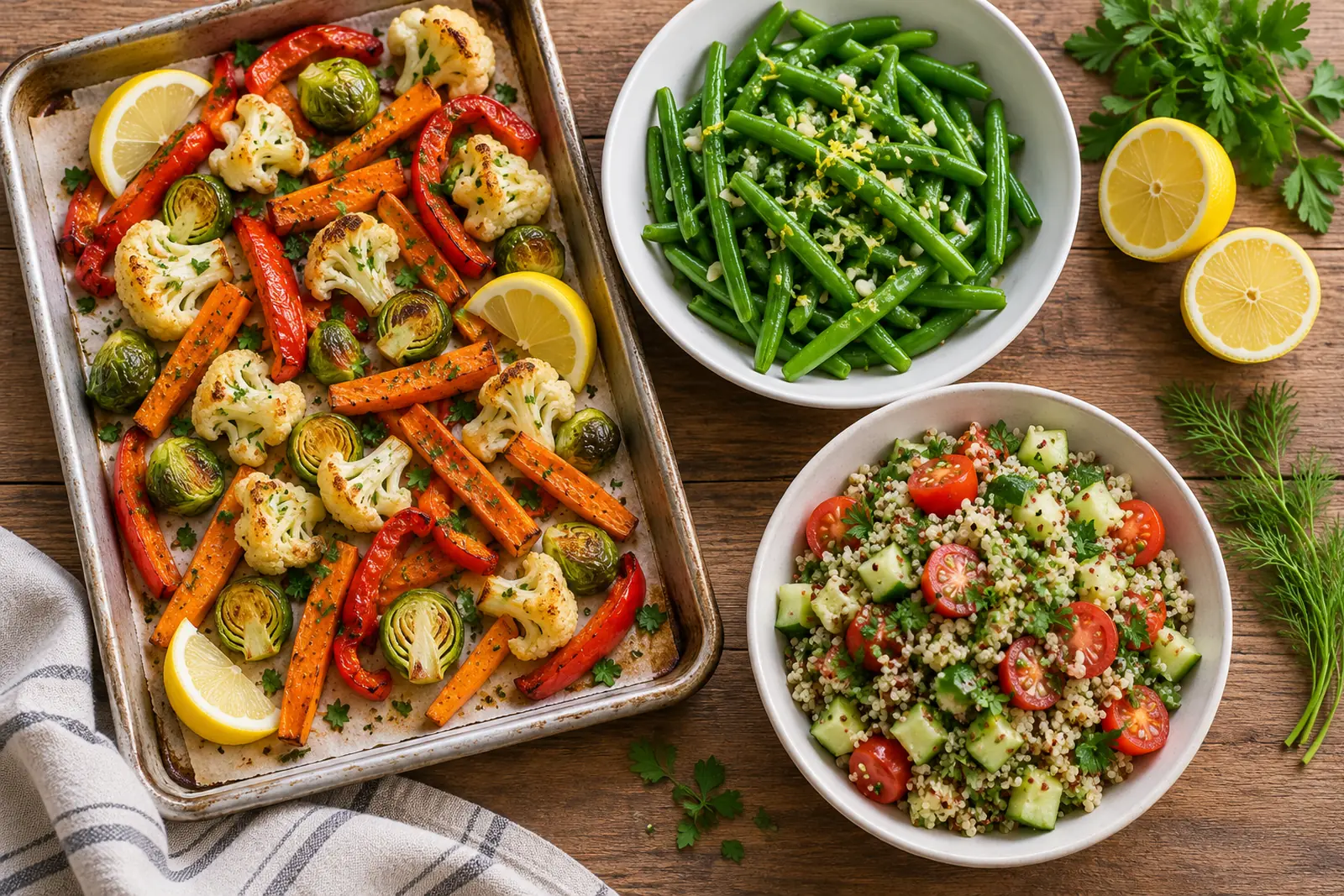
Kung pao chicken goes best with steamed jasmine rice, a cold smashed cucumber salad and garlic stir-fried bok choy.
- Kung pao brings dried chile heat, a sweet, sour and salty sauce and peanuts.
- The best cool, plain side dishes calm the heat or soak up the sauce.
- None of these sides is deep-fried, so none adds extra grease.
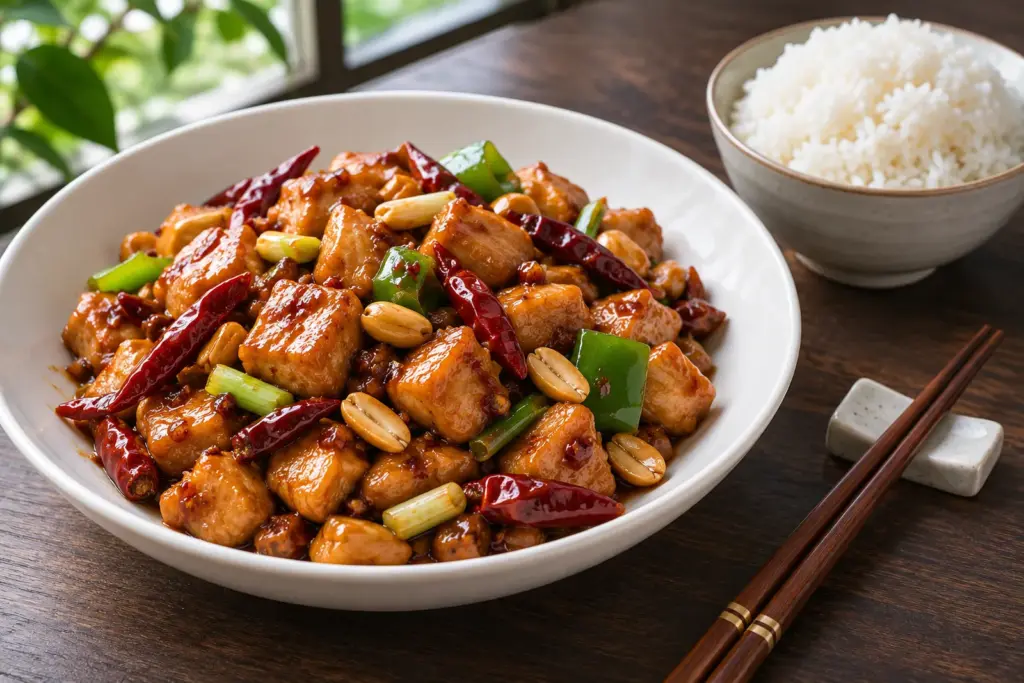
Sichuan province is the home of kung pao chicken, which is also spelled gong bao. In the Sichuan version, cooks stir-fry diced chicken with dried chiles and peanuts and flash-fry the chiles and a few Sichuan peppercorns in the oil for fragrance.
Western versions often add sugar, orange juice and extra vegetables such as onion, bell pepper or carrots. The eight sides below work for both versions, and a table further down shows which sides to pick when you cook a sweet or very hot batch.
What Goes Well With Kung Pao Chicken?
Every good side answers one thing the chicken does. If you match each trait in the first column to a job in the second, you can swap in any other side without guessing.
| What the Chicken Does | What Your Side Should Do | Sides That Do It |
|---|---|---|
| Dried chile heat | Cool the mouth or dilute each bite | Rice, cucumber salad, egg drop soup |
| Sweet, sour and salty sauce | Soak it up, or add a tart or bitter note | Rice, Shanghai noodles, gai lan |
| Peanuts and a glossy coating | Stay light, with no extra crunch or grease | Bok choy, broccoli, zucchini salad |
We'd keep the sides plain rather than busy, because the chicken already carries the flavor and a plain side gives your mouth somewhere to rest between bites.
8 Best Side Dishes for Kung Pao Chicken
1. Steamed Jasmine Rice
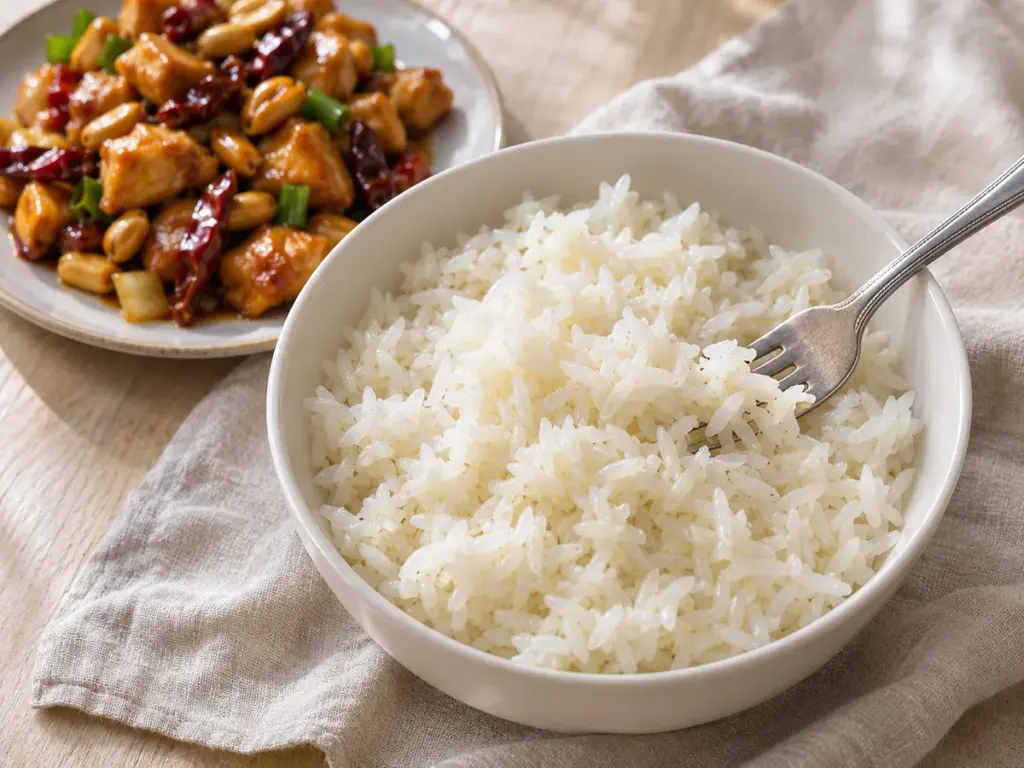
If you serve only one side, steamed rice is the one to pick, because each spoonful spreads the chile heat and the sauce over more plain grains, so a bite that would burn on its own tastes balanced.
- Measure. Success Rice uses 1 ½ cups of water per cup of jasmine rice, or 1 ¼ cups for drier grains.
- Cook. Boil uncovered, then cover and cook on low for 12 minutes, the timing Success Rice gives.
- Rest. Leave it covered for 10 minutes off the heat, then fluff it.
Fried rice looks tempting, but it carries more oil and soy sauce than plain steamed rice, and this plate already has both.
Leftover rice has to cool quickly, because cooked rice can carry Bacillus cereus spores that grow into a toxin when the rice stays warm, and reheating does not destroy that toxin.
2. Shanghai Noodles
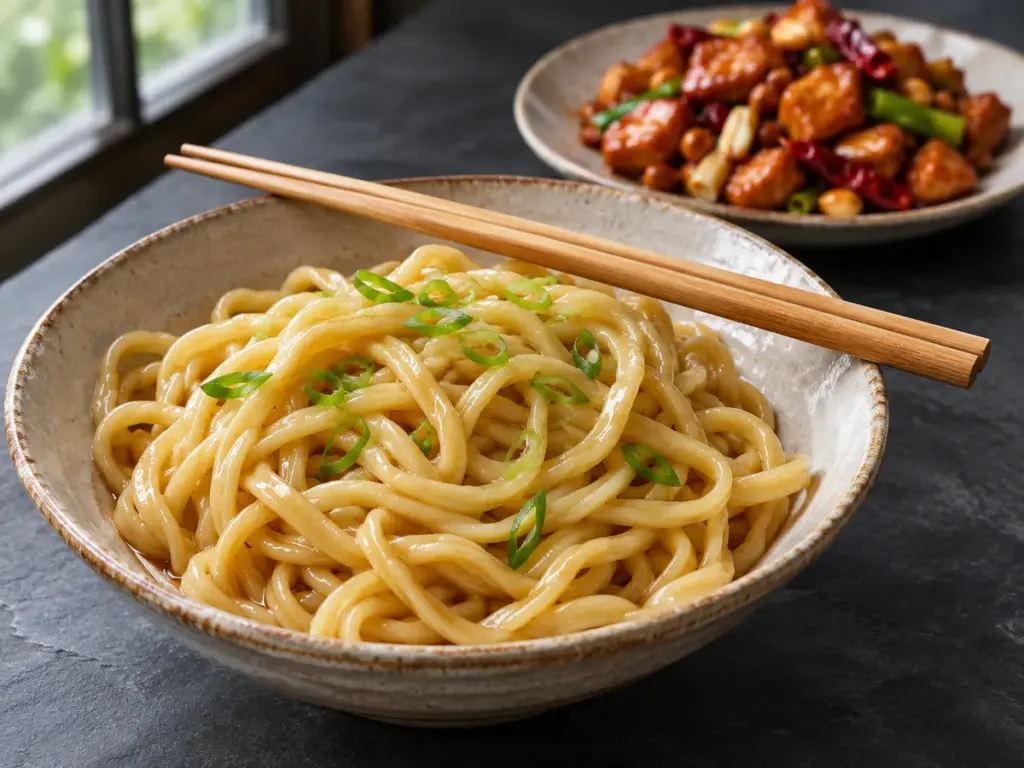
Shanghai-style noodles are sold in most Chinese food markets, Wikipedia notes, and if you cannot find them, Japanese udon can stand in.
For this plate, the noodles need only a boil, a good drain and 1 teaspoon of sesame oil with sliced scallion.
Kung pao sauce is already salty from soy, so we'd leave the usual soy-based stir-fry sauce off the noodles and keep the whole plate from tasting heavy.
3. Smashed Cucumber Salad
After rice, we'd pick a cold cucumber salad, since it eases the chile heat and its vinegar cuts the sweetness of a takeout-style sauce.
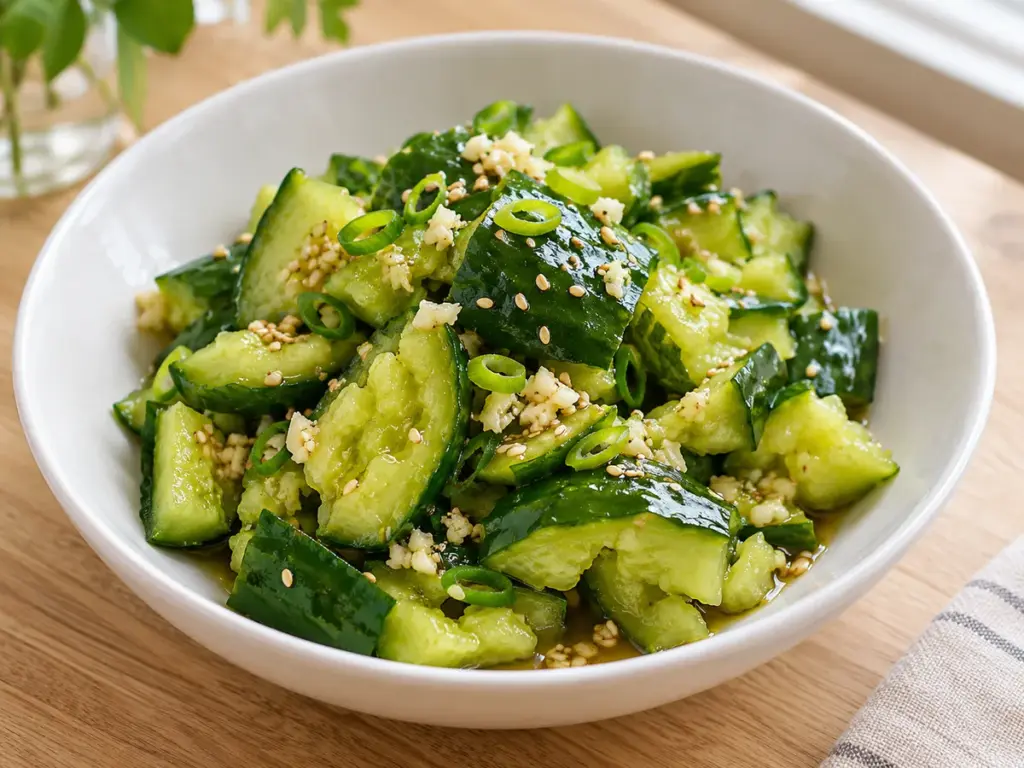
- Smash. Press 2 Persian cucumbers or 1 small English cucumber flat with a knife until they crack, so the dressing clings, then cut them into chunks.
- Salt and drain. Toss with ½ teaspoon of salt, wait about 10 minutes for the water to come out, and pour it off.
- Dress. Stir in 1 tablespoon of rice vinegar, 1 teaspoon each of soy sauce and sesame oil, and 1 minced garlic clove.
- Chill. Chill it until the chicken is ready, and leave out chile oil.
No Recipes serves them right after dressing, so we'd dress yours just before you eat.
If you run out of rice vinegar, white wine vinegar or cider vinegar works at the same amount.
4. Egg Drop Soup
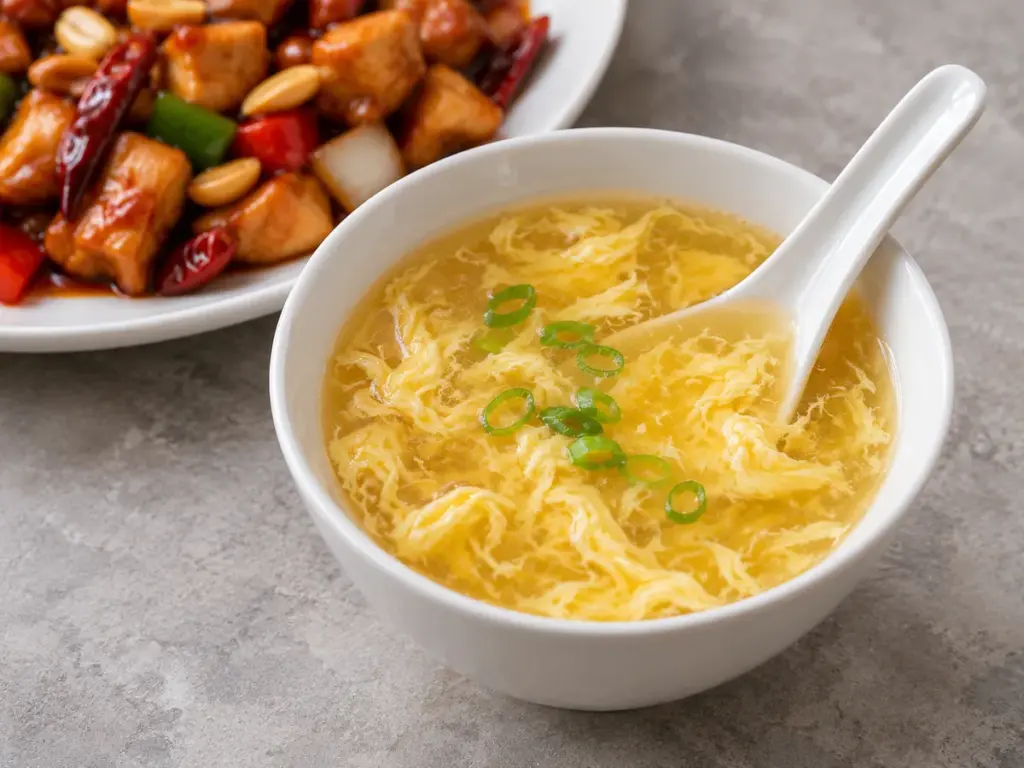
Egg drop soup is a mild chicken broth with thin ribbons of egg, so it gives your mouth a warm, gentle break when the chiles build up. At a Chinese meal, hot soup is often one of the shared dishes, which means you can sip it between bites of chicken instead of before dinner.
When you pour the beaten egg in a thin stream into barely simmering broth and stir once, it sets in ribbons instead of clumps.
We'd choose it over hot and sour soup, which brings its own pepper and vinegar heat.
5. Garlic Stir-Fried Bok Choy
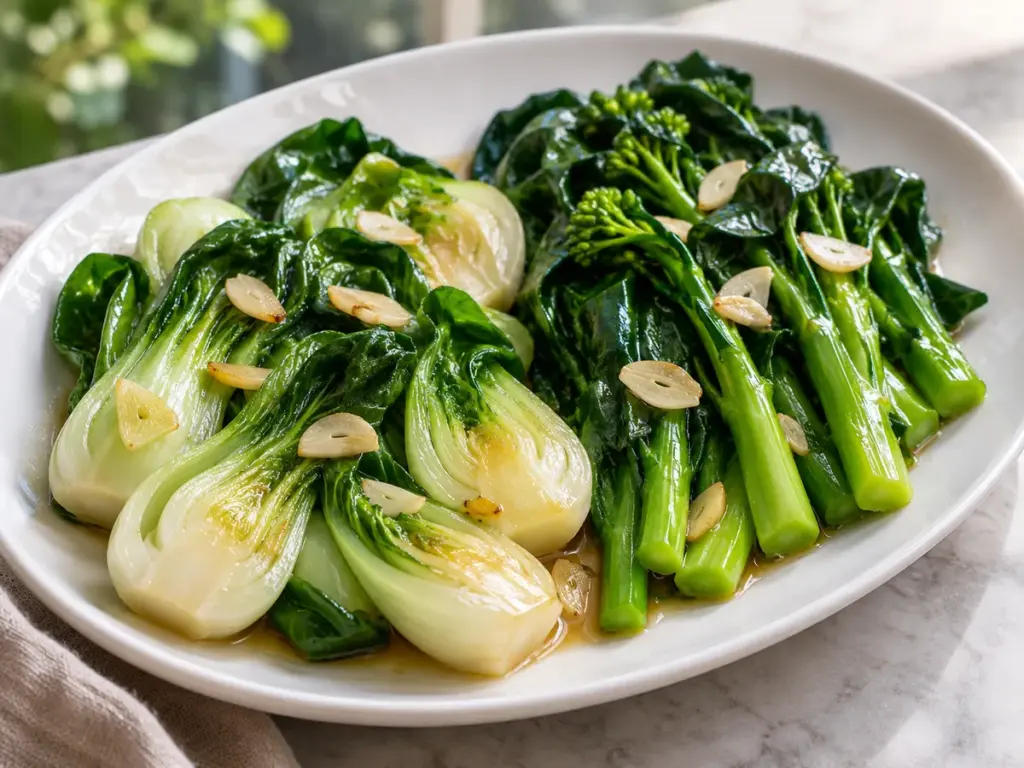
Bok choy tastes somewhere between spinach and water chestnuts, slightly sweet and mildly peppery in Wikipedia's description, so it stays quiet next to the hot chicken.
The stems take longer than the leaves, so Sunset's stir-fried Asian greens cook the white stems 2 to 3 minutes until tender-crisp, then add the leaves for 1 to 2 minutes until they barely wilt.
Baby bok choy is less crisp and overcooks easily, so it does better halved lengthwise and cooked cut-side down until it browns.
Two cloves of sliced garlic are enough, because many kung pao recipes already use garlic and you don't want the side to compete.
If your store has no bok choy, napa cabbage or choy sum stand in at the same amount.
6. Gai Lan (Chinese Broccoli) With Oyster Sauce
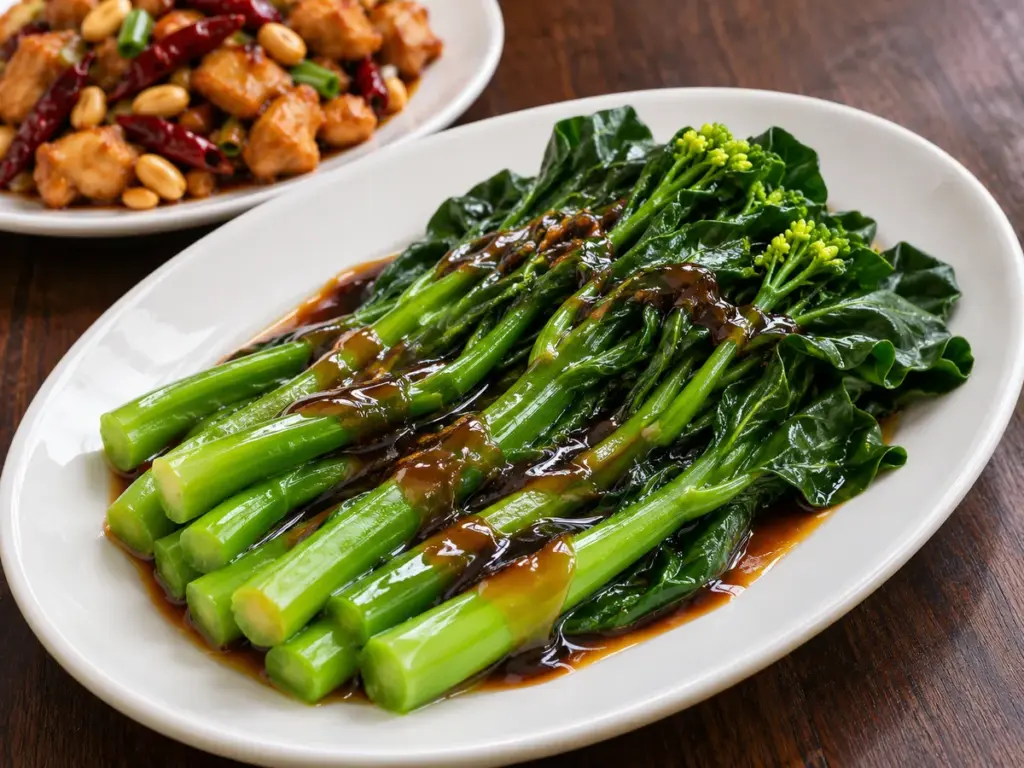
Gai lan tastes like broccoli that is noticeably stronger and slightly more bitter, and it also goes by the names Chinese broccoli and Chinese kale.
That bitter edge suits a sweet kung pao sauce, and you can cook gai lan two ways:
- It takes well to a quick stir-fry with garlic and ginger.
- For a lighter pick next to a rich main, you can boil or steam it briefly until the stalks bend but still snap, then drain it well so a drizzle of oyster sauce clings.
If your store does not carry it, broccolini or yu choy are the closest stand-ins for gai lan.
7. Garlic Stir-Fried Broccoli
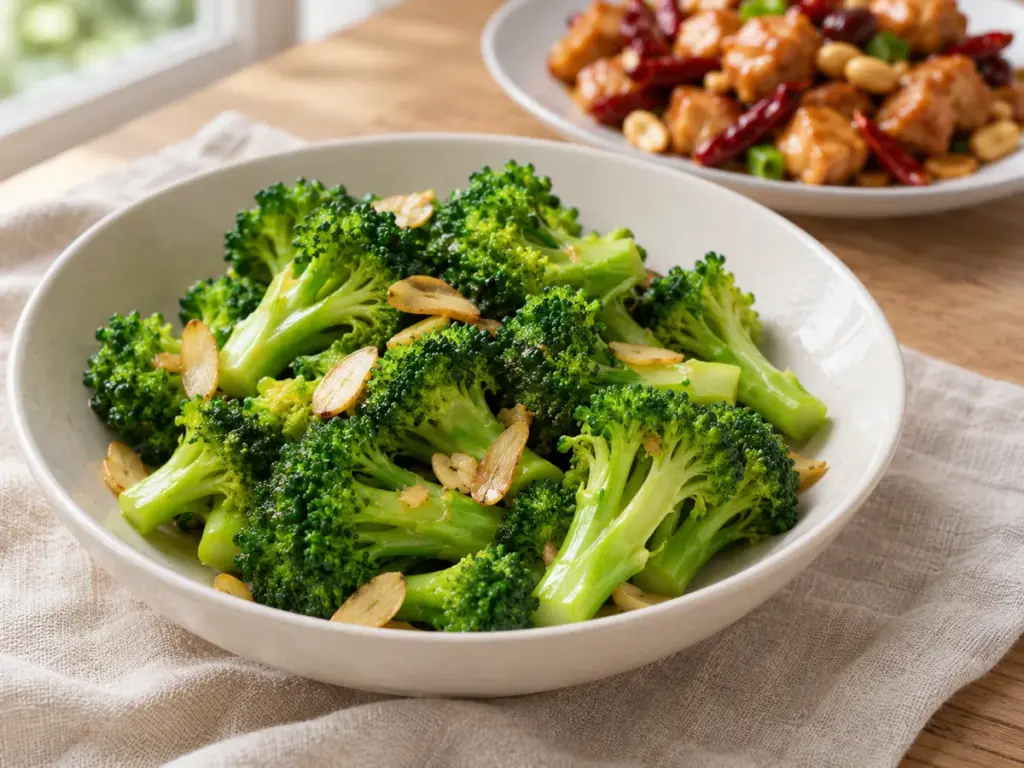
Regular broccoli is the easiest green to find, and it works in four steps:
- Cut evenly. Cut the florets to the same size so they cook together.
- Fry the garlic. Stir-fry minced garlic in a little oil until you smell it.
- Add the broccoli. Add the florets and stir until they turn bright green but still crunch.
- Stop early. Overcooked broccoli turns gray and soft, and it will not stand up to the chicken.
If you peel the thick stem and slice it into coins, you use the whole head.
Many broccoli recipes add chile flakes, and we'd leave them out here, since the chicken already puts enough heat on the plate.
8. Cold Chinese Zucchini Salad
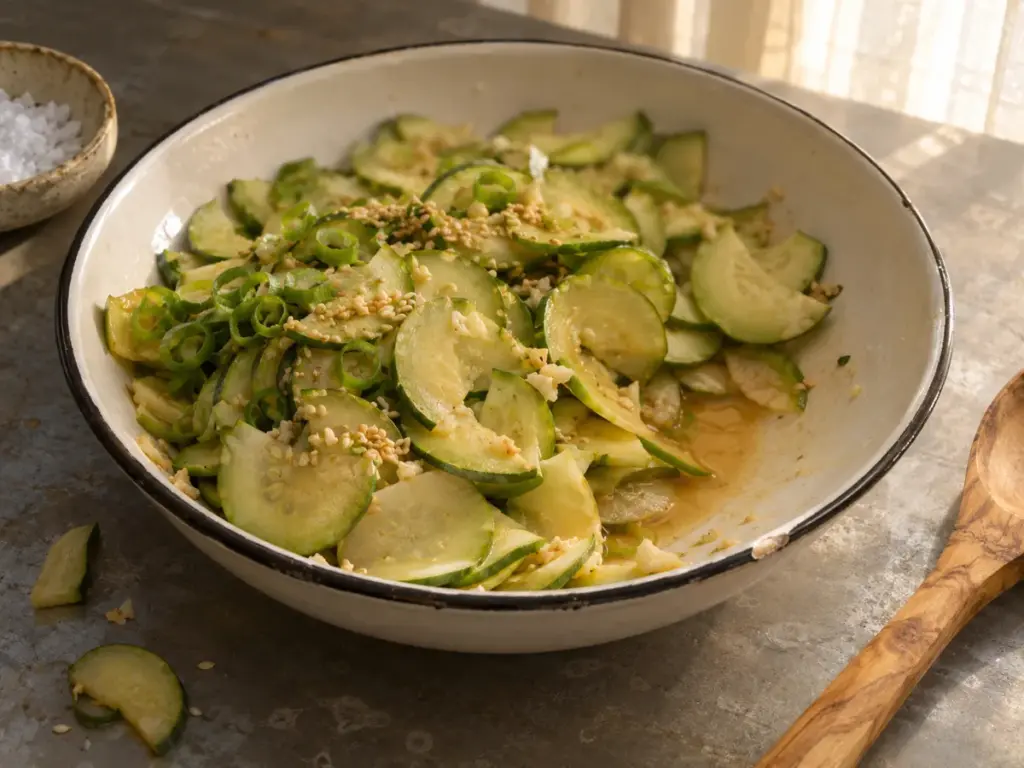
A cold, vinegary zucchini salad suits kung pao the way the cucumber does. It is the pick when you want a second cold dish with a softer bite than the cucumber's snap.
- Slice and drain. Slice 2 small zucchini into thin half-moons, salt them lightly and let them stand until they release water, then pour it off.
- Dress. Stir in 1 tablespoon of rice vinegar, 1 teaspoon of soy sauce, 1 teaspoon of sesame oil and 1 minced garlic clove.
- Top. Add sliced scallion and a pinch of sesame seeds, and leave out the dried chiles.
The Woks of Life salts its zucchini for 20 minutes so it does not wilt once dressed, and it mixes in the dressing right before serving, so we'd dress yours at the last minute too.
How Much Rice Should You Cook for Kung Pao Chicken?
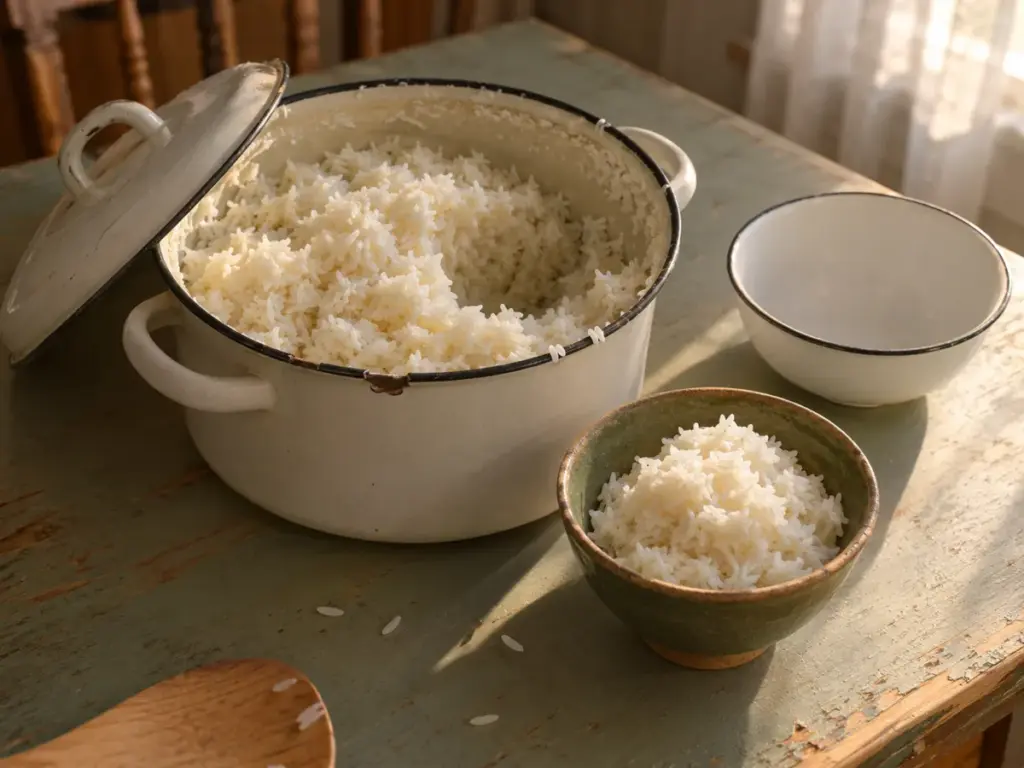
The Woks of Life suggests planning on about 1 cup of cooked rice per person, and says 1 cup of uncooked rice makes about 3 cups cooked. That works out to about ⅓ cup of dry rice per person.
You can cook less rice if you also serve noodles, since guests split their starch between the two.
Which Sides Should You Skip With Kung Pao Chicken?
Some popular pairings add to what the chicken already does instead of balancing it. If your plate looks like this list, you can swap one item for a plain starch or a cool vegetable.
- Spring rolls and crispy sesame tofu add more fried crunch next to the peanuts.
- Orange chicken or sweet and sour dishes put two sweet sauces on one plate, which we'd avoid.
- Mapo tofu is a second hot dish, so you get no relief from the first.
Which Sides Should You Pick for Your Dinner?
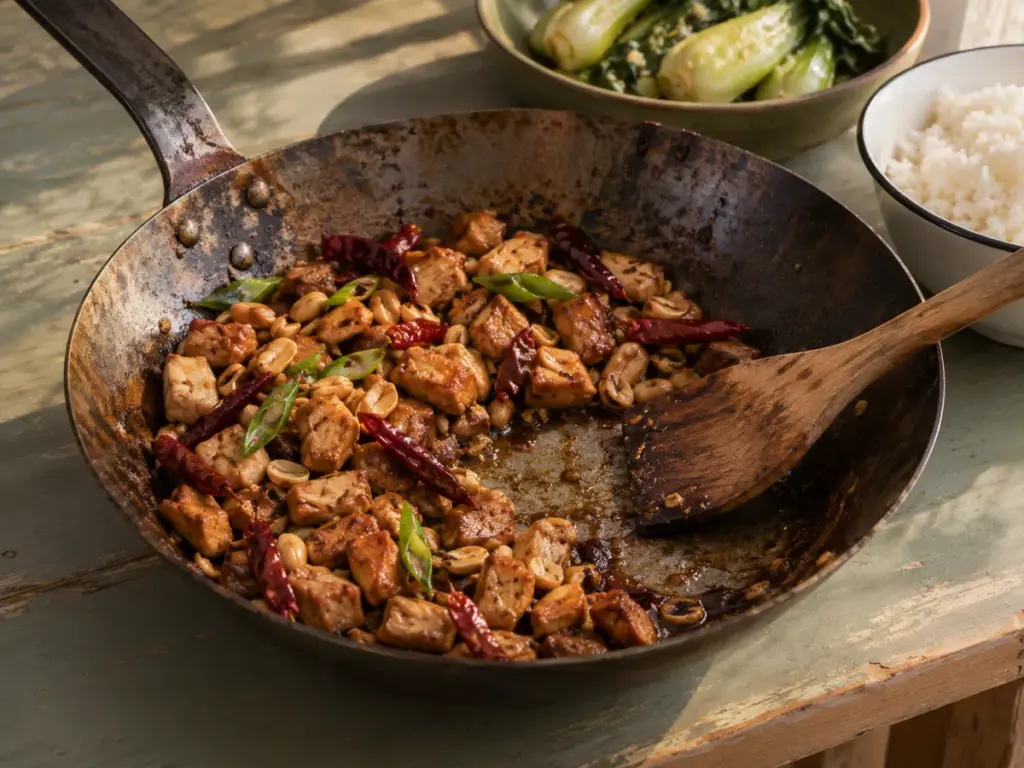
Kung pao is the rich dish, so we'd build most dinners around rice, one cold dish and one green, and you can add soup or noodles as the table grows.
| Your Situation | Serve |
|---|---|
| Quick weeknight for two | Steamed rice and garlic bok choy |
| Sweet takeout-style kung pao | Rice, cucumber salad and gai lan |
| Very hot, Sichuan-style kung pao | Rice, egg drop soup and cucumber salad |
| Feeding a crowd | Rice and Shanghai noodles, plus two vegetables |
The same sides work if you make kung pao beef, which is also served hot with rice or noodles.
What If Someone at the Table Has a Peanut Allergy?
Peanuts are in the chicken, and FARE advises people with a peanut allergy to avoid peanuts and peanut products. Cashews are not an automatic swap, because peanuts and tree nuts often touch each other during manufacturing and serving, and FARE tells families to ask an allergist whether tree nuts are safe too.
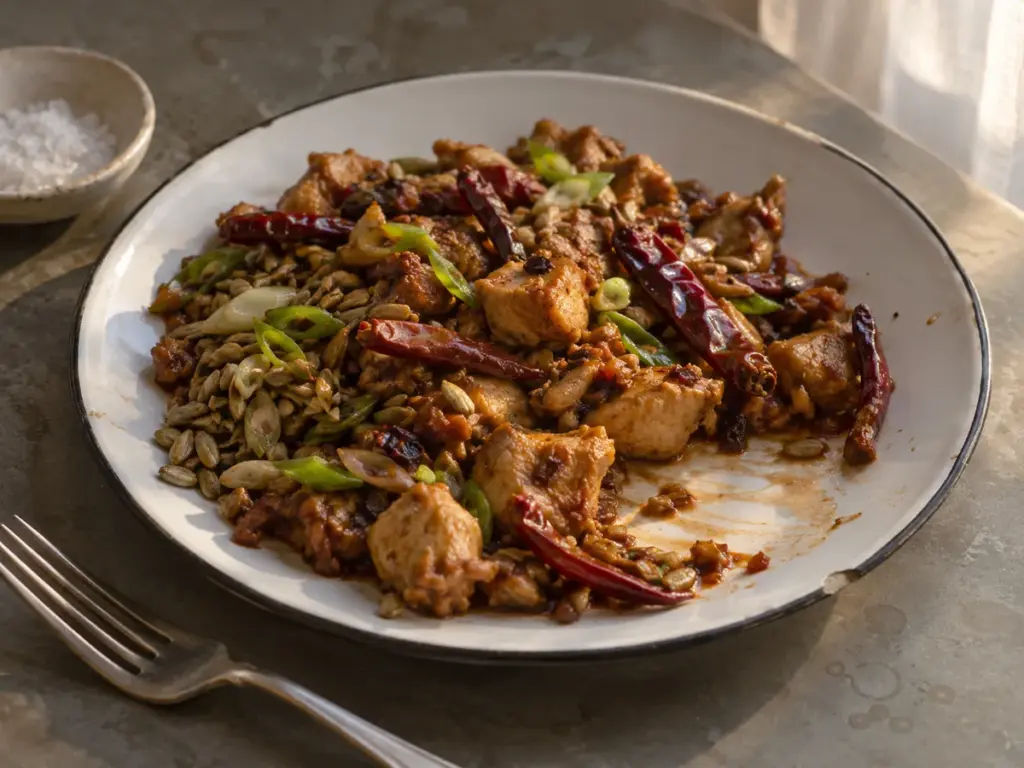
Toasted sunflower or pumpkin seeds give crunch without being a peanut or a tree nut, though you still need to read the bag for a "may contain" warning.
Peanut oil needs its own check: FARE says everyone with a peanut allergy should avoid cold-pressed or expeller-pressed peanut oil and should ask a doctor about highly refined peanut oil.
If you cook in another neutral oil, that question goes away. Sesame oil is only a seasoning here, and peanut oil and sesame oil are two different products.
Sources
- Kung Pao chicken (Wikipedia): ingredients and variations.
- Chinese dining (Wikipedia): shared dishes and soup.
- How to Make a Chinese Meal (The Woks of Life): rice per person.
- Safety of Leftover Rice (NC State Extension): Bacillus cereus spores, rice cooled quickly, heat-resistant toxin.
- How to Make Jasmine Rice (Success Rice): water, cook and rest times.
- Shanghai fried noodles, Gai lan and Bok choy (Wikipedia).
- Peanut allergy (FARE).
- Smashed Cucumber Salad (No Recipes): salt and rest about 10 minutes, serve right after dressing.
- Chinese Zucchini Salad (The Woks of Life): 20-minute salting, dressed right before serving.
- Stir-Fried Asian Greens (Sunset): stems 2 to 3 minutes, leaves 1 to 2 minutes.

Food writer at GustoMeadow. Writes ingredient substitutes, food comparisons, taste guides and storage guides for home cooks.
Storage and food-safety numbers follow USDA, FDA and university extension guidance.