
Short answer: Litchi and lychee are the same fruit, Litchi chinensis, written two ways. Merriam-Webster lists litchi as a variant spelling of lychee, so a recipe, a can or a produce sign with either word means the same thing. Buy red, plump, unbroken fruit, peel it just before you eat it, and keep it in the fridge for up to 7 days.
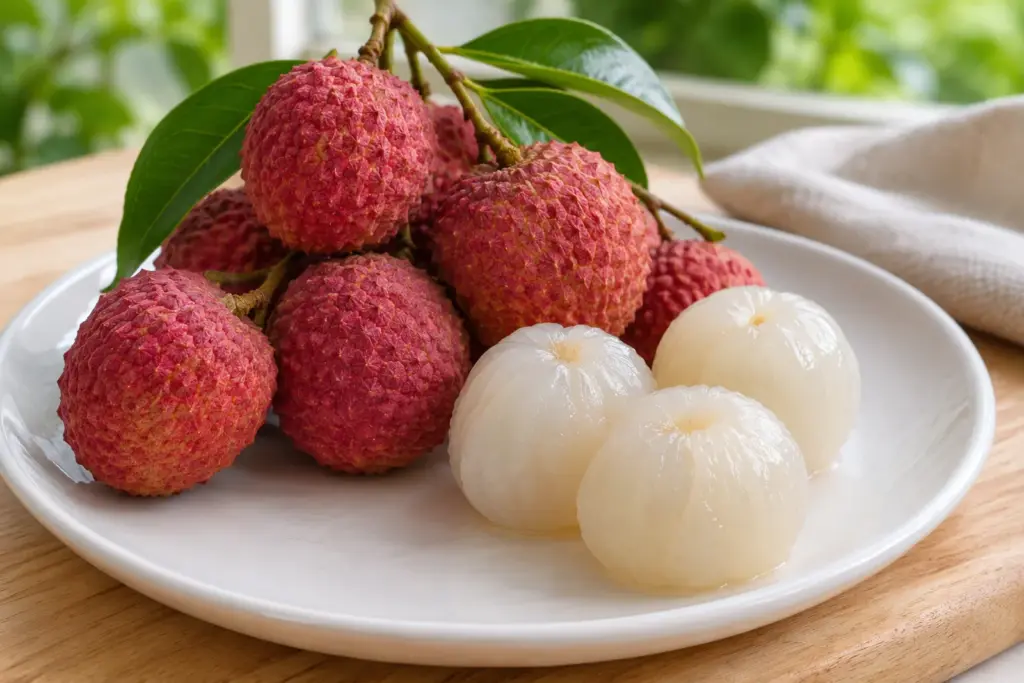
Most head-to-head food matchups end with a winner, but this pair has none. The two words come from two Chinese pronunciations of one name, and any difference you notice between "litchi" and "lychee" fruit comes from the variety, the ripeness and how long ago it was picked.
1. Are Litchi and Lychee the Same Fruit?
Yes. Britannica describes lychee as one evergreen tree in the soapberry family (Sapindaceae), native to Southeast Asia, and lists litchi among its alternate spellings. The English word comes from the Chinese name 荔枝, which Merriam-Webster traces to Mandarin lìzhī and dates in English to 1588. Wiktionary gives the Cantonese reading as lai6 zi1, and "lychee" is the spelling that sounds closest to it.
| Spelling | What it is | Where you see it |
|---|---|---|
| Lychee | The Cantonese-based spelling, listed first in most dictionaries | Produce signs, drink menus, canned fruit labels |
| Litchi | A variant spelling of the same word | Recipes, older cookbooks, some importers |
| Lichee, leechee, lichi | Older and less common spellings | Vintage recipes, some packaging |
| Litchi chinensis | The botanical name, used for the single species | Plant nurseries, agriculture reports |
Since all of these are spellings of one species, you can search or shop under any of them. If two shops sell fruit that looks different, you are probably looking at different varieties such as Mauritius, Brewster, Sweetheart, Hak Ip or Emperor, which University of Florida extension lists as named lychee cultivars, or at fruit picked at different stages.
2. What Does It Taste Like, and How Do You Peel It?
Ripe lychee tastes sweet and floral, close to a grape with a hint of rose, and the flesh is white, translucent and very juicy. Lychee flavor shifts toward sour when the fruit is underripe, which is one more reason to check the color before you buy.
You can peel a lychee with your hands in about ten seconds:
- Press your thumbnail into the shell near the stem. The skin is thin and leathery, so it splits at the first dent.
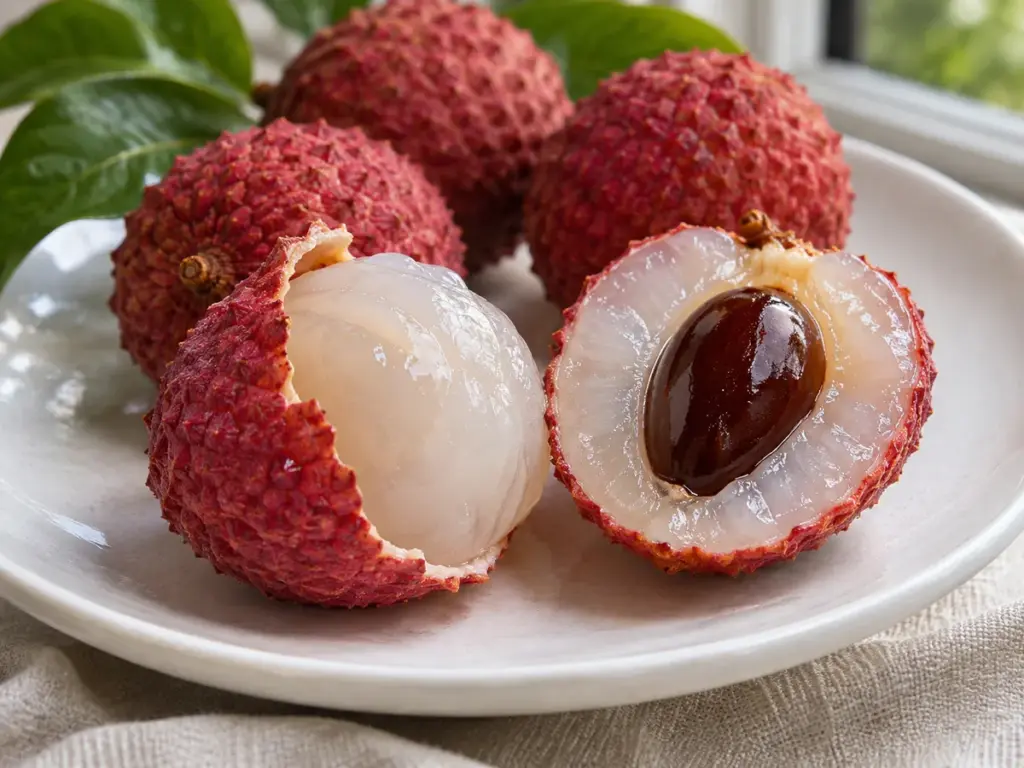
- Peel the shell back in pieces. It comes off like a loose jacket and leaves the flesh intact.
- Bite the flesh off the seed, or slit it and lift the seed out. The seed is large, glossy and dark brown, and it sits in the middle of every fruit.
- Throw the seed away. It is not for eating, and the safety section below explains why.
3. How Do You Pick Good Lychees?
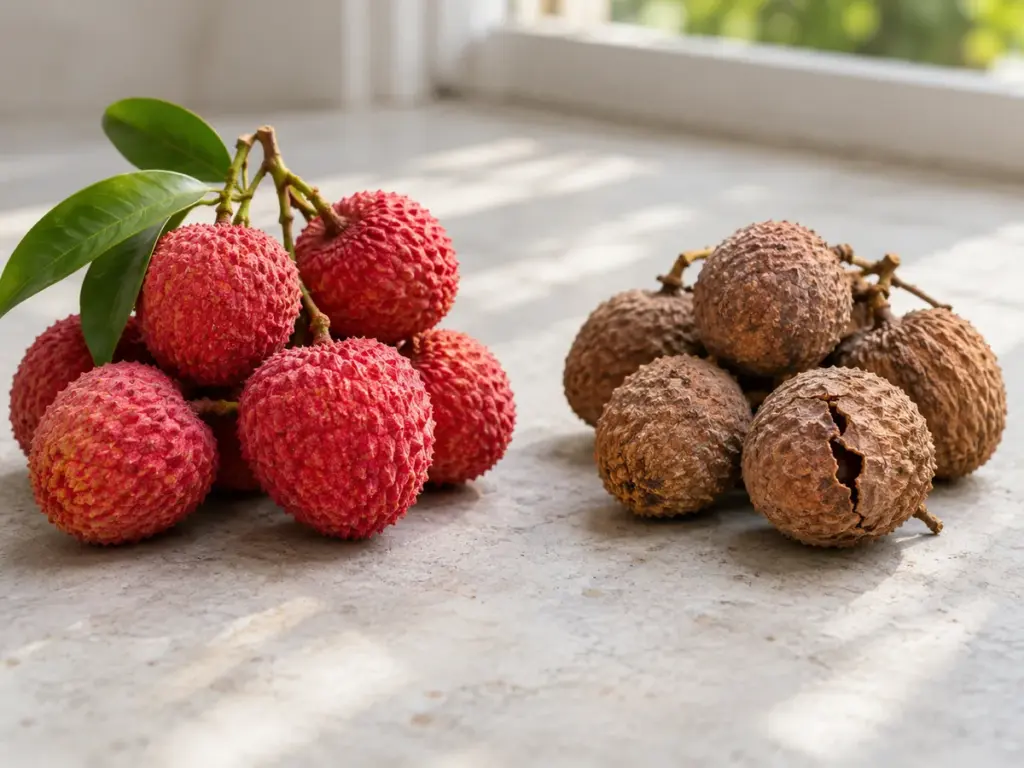
Lychees do not get sweeter after harvest. UC Davis postharvest researchers say the fruit should be picked fully ripe because it does not continue to ripen, and they use red skin color from anthocyanins as a main sign of maturity. That means the fruit you buy is as sweet as it will ever get, so you should judge it in the store.
- Bright pink-red shell with a little green at the stem
- Plump fruit that feels heavy for its size
- Unbroken skin, with no cracks or wet spots
- A sweet, perfumed smell
- Dull brown or dried-out shells, which show the fruit is old
- Cracked or leaking fruit, because a crack lets in the microbes that cause rot
- A sour, fermented or alcohol smell
- Shells that feel soft, sticky or damp
The shell browns faster than the flesh spoils. University of Hawaii extension calls rapid shell browning the main disorder of harvested lychee, so a slightly dark shell alone does not mean you have to throw the fruit out. Smell it, open one and look at the flesh. If the flesh is slimy or smells sour, discard the whole batch.
4. How Long Do Fresh Lychees Last?
USDA's FoodKeeper groups lychee with cherries and gooseberries and gives up to 7 days in the refrigerator and up to 12 months in the freezer. UC Davis recommends holding the fruit at about 41°F (5°C), because colder storage can cause chilling injury that browns the shell. Your fridge should sit at 40°F or below, so use the lychees early in that 7-day window.
| Form | Where | How long | How to do it |
|---|---|---|---|
| Fresh, in the shell | Refrigerator | Up to 7 days | Keep them dry in a loosely closed bag, and wash only before eating |
| Fresh, peeled and pitted | Freezer | Up to 12 months | Freeze on a tray first, then bag them so they do not clump |
The 7-day and 12-month figures come from FoodKeeper's entry for lychee, and the peeled and pitted freezer method is our practical suggestion, not a FoodKeeper rule. Frozen lychee will not stay crisp once it thaws, so plan to use it in smoothies, sorbet and drinks.
5. Fresh, Canned or Dried: Which One Should You Use?
All three forms are the same fruit, and your recipe decides which one wins:
| Form | Texture | Best for | Watch for |
|---|---|---|---|
| Fresh | Juicy, slightly crisp, floral | Eating by hand, fruit salad, cocktails | Short season and a short shelf life |
| Canned in syrup | Soft, very sweet | Desserts, jellies, bubble tea, drinks | Added sugar from the syrup, so check the label |
| Dried | Chewy, concentrated sweetness, brown shell | Snacking, tea, simmered desserts | Sugar is concentrated, so a small handful goes a long way |
If a recipe calls for fresh lychee and you only have a can, drain the fruit and use the same number of pieces. You can cut a little of the sugar in the recipe to make up for the syrup that clings to the fruit. Canned lychee is the soft, sweet fruit that ends up in bubble tea and jellies. Dried lychee is not the same as freeze-dried fruit, which is light and crisp, so do not swap them cup for cup.
6. How Do Lychee, Longan and Rambutan Differ?
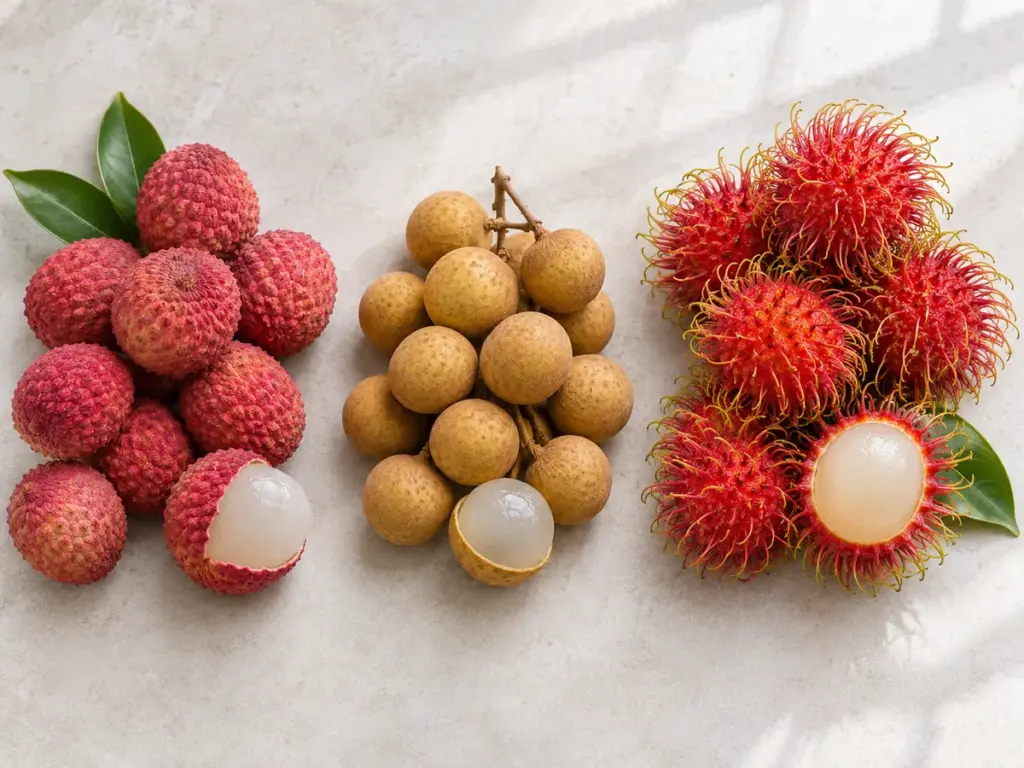
The fruits that really are different from lychee are its relatives. FoodPrint's guide places lychee, longan and rambutan in the same soapberry family, and all three have a single large seed and white, fragrant flesh. You can still tell them apart at a glance.
| Fruit | Skin | Flavor |
|---|---|---|
| Lychee | Bumpy and pink-red | The sweetest and most fragrant of the three |
| Longan | Smooth and tan-brown, the smallest of the three | Tarter and muskier than lychee |
| Rambutan | Deeper red, covered in long, soft spines | Sweet and floral, but less sweet than lychee |
If a recipe asks for longan, which tastes tarter and muskier, you can use lychee fruit for fruit in a drink or a fruit salad and expect a sweeter, more perfumed result. The same swap works with rambutan, whose sweet, floral flesh sits close to lychee, so you may notice only the spiny shell.
7. What Is in a Lychee? Nutrition Per 100 Grams
USDA lists one raw entry for the fruit, "Litchis, raw", and it covers both spellings. Per 100 grams of flesh, USDA FoodData Central gives these values:
| Nutrient | Per 100 g, raw |
|---|---|
| Energy | 66 kcal |
| Carbohydrate | 16.5 g, of which 15.2 g is sugar |
| Fiber | 1.3 g |
| Vitamin C | 71.5 mg, about 79% of the 90 mg Daily Value |
| Potassium | 171 mg |
| Protein and fat | 0.83 g and 0.44 g |
Nearly all of the calories come from sugar, and lychee has little fiber to slow it down. About 125 grams of lychee covers a full day's vitamin C, and a big bowl adds a lot of sugar, so a handful or two is a sensible portion. We would not compare "litchi" and "lychee" on nutrition at all, since the numbers describe one fruit.
8. Is Lychee Safe to Eat?
Lychee is a normal fruit for most people, and there is one narrow risk you should know about. During the litchi harvest in Muzaffarpur, Bihar (India), outbreaks of a brain illness struck young children, most of them between 1 and 5 years old. CDC's report on the 2013 and 2014 outbreaks found low blood sugar in many of the children: the median glucose on admission in 2014 was 48 mg/dL.
A 2017 case-control study in The Lancet Global Health linked the illness to eating litchi and found it more likely in children who had skipped the evening meal. The authors tied it to two compounds, hypoglycin A and MCPG, which the fruit carries at higher levels when it is unripe. A review of the outbreaks proposes that undernutrition, a long fast and litchi together block the body from making glucose from fat.
9. Does the Spelling Ever Matter?
Almost never, and the only cases where it can help you are about finding things:
- In a recipe: read "litchi" as lychee and use the amount it asks for, because there is one fruit behind both words.
- At the store: look for both spellings on cans and in the produce section, since a brand that writes "litchi" on its label is selling the same fruit as the one that writes "lychee".
- On a menu or in a search box: try the other spelling when the first one finds nothing, because shops and websites rarely use both.
- In a drink or a dessert name: expect "lychee martini" and "litchi martini" to be the same drink.
Sources
- USDA FoodData Central, Litchis, raw (FDC 169086)
- USDA FoodKeeper, berries (cherries, gooseberries, lychee)
- UC Davis Postharvest Technology Center, lychee maturity and quality
- University of Hawaii CTAHR, lychee postharvest guidelines
- University of Florida IFAS, Lychee Growing in the Florida Home Landscape
- Britannica, lychee
- FoodPrint, Lychees, Rambutans and Longans
- CDC MMWR, Outbreaks of Unexplained Neurologic Illness, Muzaffarpur, India, 2013-2014
- The Lancet Global Health, Association of acute toxic encephalopathy with litchi consumption, Muzaffarpur, 2014
- PubMed, Acute encephalopathy in children in Muzaffarpur, India: a review of aetiopathogenesis