
They may sound like something out of a Dr.
Seuss book, but loquats are a real fruit you can find at your local grocery store.
If you've ever wondered what this unusual-looking fruit tastes like, wonder no more.
With their bright yellow color and oblong shape, loquats are often compared to apricots or plums.
And while the taste of loquat is similar to these fruits, it's also unique in its own right.
Also, these fruits are not only prized for their flavor but also for their nutritional value.
So, make some space in your fruit bowl for this delicious and healthy treat this summer as we take you on a journey to discover what does loquat taste like, what it is exactly, and how to use them.
What is Loquat?
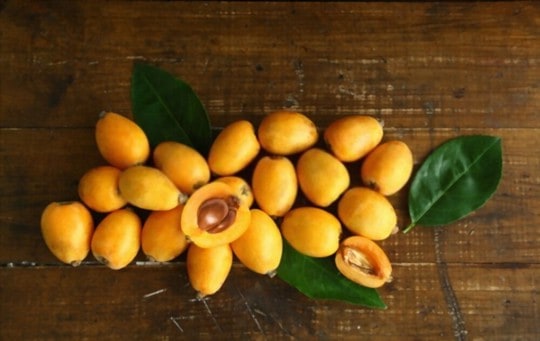
Native to China, loquats are a type of evergreen shrub that produces small, oval-shaped fruits of the same name.
The skin of a loquat is smooth and thin, with a color that ranges from yellow to orange to red.
And inside the fleshy fruit, you'll find anywhere from two to five seeds.
Loquats are often used in Asian cuisine and can be found in a variety of dishes, from sweet to savory.
The fruits can be eaten whole, with the skin and seeds intact.
Or, the fruit's flesh can be scooped out and used as you would any other type of fruit.
There are around 800 varieties of loquats, out of which the Japanese loquat, also known as the Nispero, is the most popular.
This variety is often used in jams, pies, and other sweet desserts - see lemon dessert pairings and options for flavors that complement fruit-based sweets.
What does Loquat Taste Like?

Loquats follow a taste profile that's quite similar to citrusy fruits.
But, the fruit also contains notes of tangy undertone with a sweet tropical-ish flavor.
One can say its taste is a mixture of other fruits like pineapple, apricot, and apple - similar notes appear in acai berry taste guide.
The texture can range from tender and crispy to juicy once fully ripened.
This ripened juice contains subtle hints of peach-like texture.
Unlike its juice, the flesh carries a floral aroma, which gradually develops with the maturity of the fruit.
As mentioned earlier, loquats have at least two to five large seeds called ovules located in the middle.
In contrast to the sweet and delicious flesh, these seeds are bitter, hard, and quite unpleasant to eat.
Also, the seeds are pretty deadly to consume as they contain cyanogenic glycosides, which can release cyanide.
So, it's best to keep your hands (or mouth) off them.
Now, if you think the only valuable part of loquat is the fruit, think again.
Loquat leaves make an excellent pair for brewing tea.
Once these heavenly leaves are infused in water, it creates a flavor that resembles an earthy and sweet tone.
But, there's more to this fruit than its taste.
Loquat also contains numerous nutritional values.
From high fiber content to calcium and potassium, this fruit is packed with healthy nutrients.
What's more? The fruit can keep your teeth clean and healthy, thanks to its abrasive quality.
It also is an excellent substitute for natural sugar.
Also, it is loaded with antioxidant properties.
How to Cook and Use Loquat?
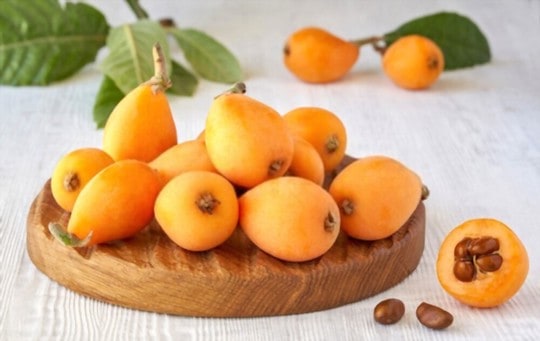
Now that you know what loquats taste like, all there's left to do is learn how to cook with them.
Loquats can be used in all sorts of sweet and savory dishes, so get creative and experiment.
However, they're best enjoyed fresh, so try to use them as soon as possible after picking or buying.
To prep loquats for cooking, start by washing them thoroughly.
Cut off the stem and blossom end, then slice the fruit in half.
If the seeds are large, you may want to remove them before cooking.
Then, you can dice the loquats and add them to salads, use them as a topping for yogurt or ice cream, bake them into pies or muffins, or simmer them down into a jam or compote.
Loquats are also lovely cooked with pork or chicken - pair with veggie sides under 12 minutes for fast, complementary vegetables.
Just add a few slices of fruit to your pan when cooking these proteins for a subtle sweetness.
Besides, if you're lucky enough to ever come across a loquat tree, just pluck a few, rub off the dirt, and eat them as is.
These fruits are so versatile and delicious, there's really no wrong way to enjoy them.
Final Thought
Undeniably, loquats pack a great deal of taste.
They may be rare, but they are certainly worth looking for.
So, if loquat sounds like a fruit you'd enjoy, we suggest trying it.
They're perfect for pies, jams, or simply cutting a ripe one and snacking on it.
But, if you're new to consuming the fruit, feel free to look up some of the recipes we mentioned earlier.
Rest assured, you'll have a delicious meal packed with healthy nutrients by the end.
Frequently Asked Questions
If you've ever wondered what this unusual-looking fruit tastes like, wonder no more. And while the taste of loquat is similar to these fruits, it's also unique in its own right.
Also, these fruits are not only prized for their flavor but also for their nutritional value.
Several foods share flavor notes with Loquat. Tasting similar items side by side is the easiest way to map out what you enjoy and find new favorites.
Can you adjust the intensity of the flavor?
Yes.
Pairing it with acidic, sweet, or fatty components shifts the perceived intensity.
A squeeze of citrus brightens mild flavors, while fats like butter or oil mellow sharper ones.
Avoid pairings that clash with its dominant flavor note. Competing intensities - very sweet with very sour, or heavy with delicate - tend to obscure rather than go with the taste.
Loquats share tropical profiles with other fruits; acai berry taste guide explores a similar flavor family. veggie sides under 12 minutes lists fast vegetable pairings that complement fruit-forward mains.