
Asiago is the closest substitute for Montasio when you match its age: fresh Asiago for young Montasio, aged Piave for mature Montasio.
- Swap Asiago, Piave, Fontina or Gouda 1:1 by weight.
- Choose Fontina when the cheese has to melt into polenta, a sauce or a bake.
- For aged Montasio you grate, use Parmigiano-Reggiano and start with about three-quarters of the amount.
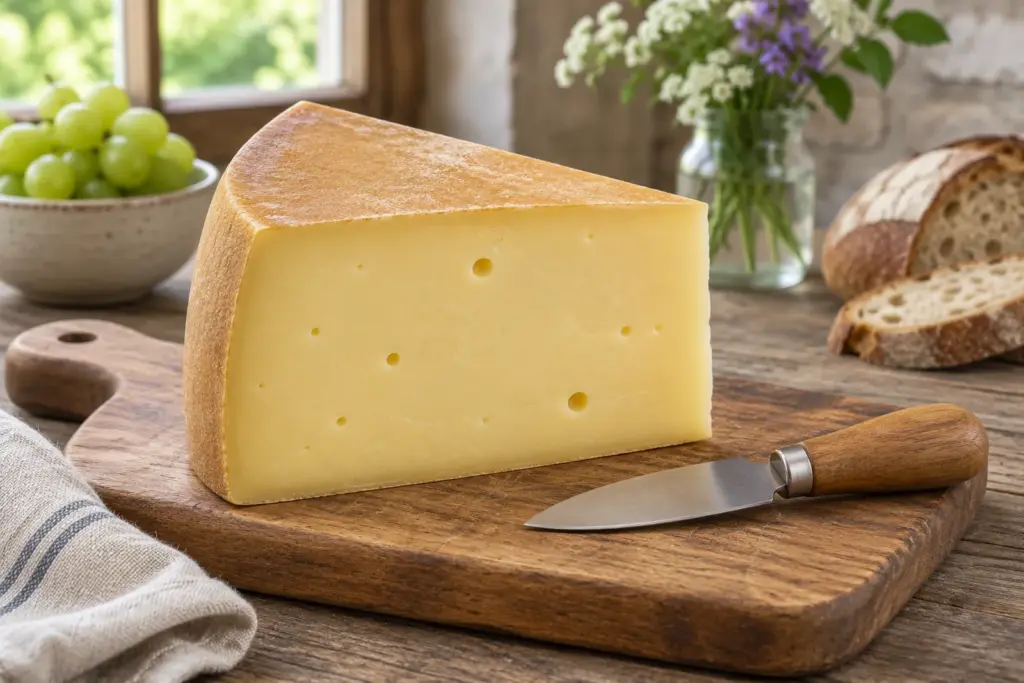
A recipe that names Montasio can mean three different cheeses, because the same wheel is sold young, half-aged and fully aged, and each age tastes and cooks differently. Pick your swap by age first, then by name.
What Does Montasio Do in a Recipe?
Montasio is a cooked, semi-hard cow's milk cheese with protected status (PDO in English, DOP in Italian). It is made only in Friuli-Venezia Giulia and eastern Veneto, and its consortium says the milk is raw or thermised, never pasteurised. The cheese ages in three stages, and the stage decides what it does in your pan.
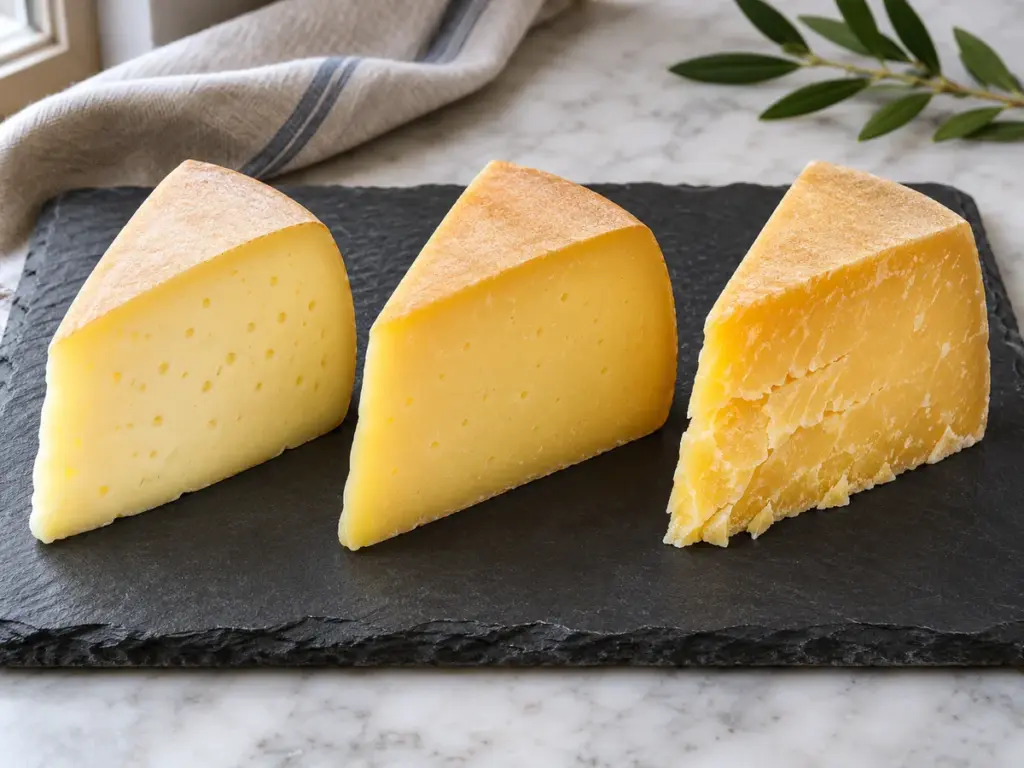
| Montasio age | Time | Flavor |
|---|---|---|
| Fresco (fresh) | 60 to 120 days | Soft and delicate, with milk, yogurt and cream notes |
| Mezzano | 5 to 10 months | Full-bodied, with melted butter, cheese rind and hay notes |
| Stagionato (aged) | Over 10 months | Fruity, with dried fruit and hay notes |
The times and flavors come from the Montasio consortium. The producer Agriform recommends fresco and mezzano on bread, in salads, with cooked vegetables and with polenta, and calls stagionato an excellent cheese for grating over soups, ravioli and tortellini. Longer aging makes the cheese harder, which is why you grate only the oldest stage and slice or melt the younger ones.
The dish most tied to this cheese is frico. Wikipedia describes a thin, crunchy version made from a layer of shredded cheese fried until slightly crispy, and a thicker, soft version served in slices, made with high-fat cheese, typically Montasio, usually with potatoes and onions and cooked in butter or oil.
5 Best Substitutes for Montasio Cheese
Each swap below is matched to the Montasio age it resembles most. Use 1:1 by weight as a starting point, because no source publishes a conversion for Montasio, unless the table says otherwise. Weigh grated cheese instead of measuring it by the cup.
| Substitute | Ratio | Best for |
|---|---|---|
| Asiago | 1:1 | Fresco and mezzano |
| Piave | 1:1 | Mezzano and aged |
| Fontina | 1:1 | Fresco and mezzano that melt |
| Gouda | 1:1 | Fresco and mezzano |
| Parmigiano-Reggiano | About ¾ | Aged, for grating |
1. Asiago
Asiago is a cow's milk cheese sold in the same stages. Its consortium lists Fresh from 20 days, Mezzano at 4 to 10 months and Vecchio at 10 to 15 months. Fresh Asiago tastes sweet and mildly acidic, like yogurt, butter and milk, which lines up with fresco Montasio.
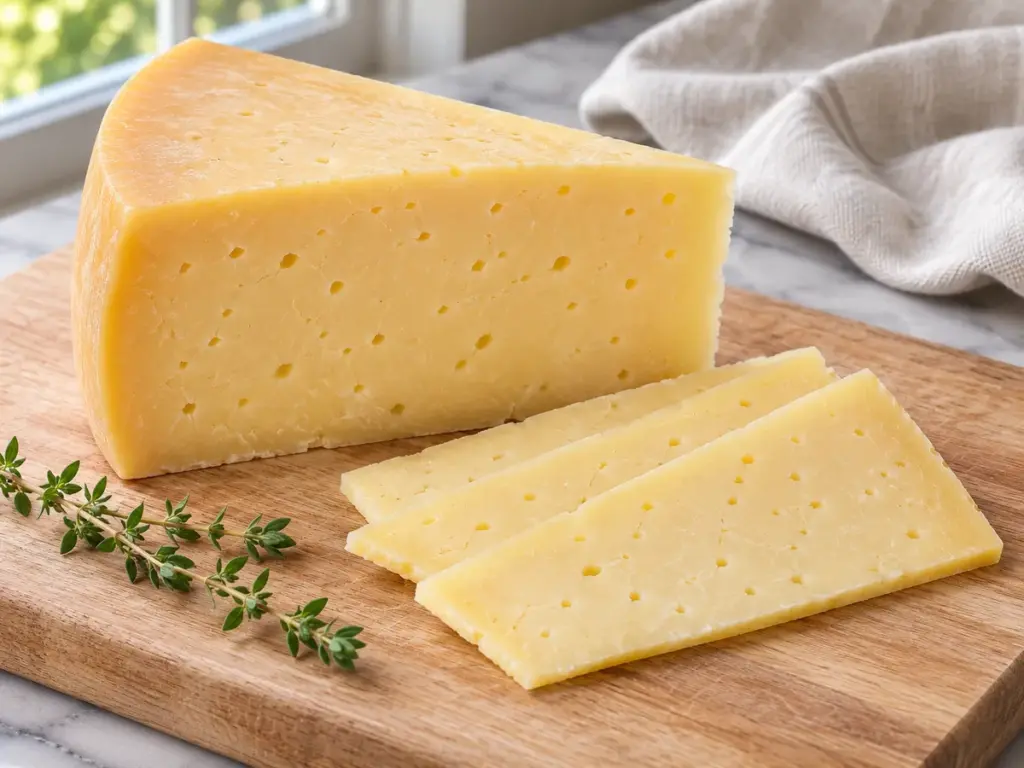
For a mezzano recipe, you can buy the medium-seasoned Asiago, mildly sweet with hints of hay, nuts and butter, close to mezzano Montasio's hay and melted-butter notes.
Asiago Vecchio is the weakest match for aged recipes. The consortium describes it as savory with hay and nut notes and occasionally spicy, Wikipedia gives it a bitter taste, and aged Montasio reads as fruity. It is often grated like Parmesan, but Piave Oro or Parmigiano-Reggiano sit closer to aged Montasio's fruity flavor.
2. Piave
Piave is a hard, cooked-curd cow's milk cheese from Belluno in Veneto, one of the two regions that make Montasio. It is dense with no holes and slightly sweet when young. Piave Mezzano (61 to 180 days) is younger than Montasio mezzano, so for a mezzano recipe you should buy Piave Vecchio, which is over 6 months old.
Fully aged Piave is hard enough to grate and tastes intense and full-bodied. You can swap it 1:1 for aged Montasio, and you should choose Piave Oro, the Vecchio Selezione Oro label (over 12 months), when the recipe grates the cheese over pasta or soup.
3. Fontina
Fontina from Italy's Aosta Valley ranges from semisoft to hard and tastes earthy, mushroomy and woody, with a nuttiness that grows as it ages. Young Fontina is soft enough for fondue and mature Fontina still melts well, so it covers the fresco and mezzano recipes you put into a bake, a sauce or a pot of polenta.
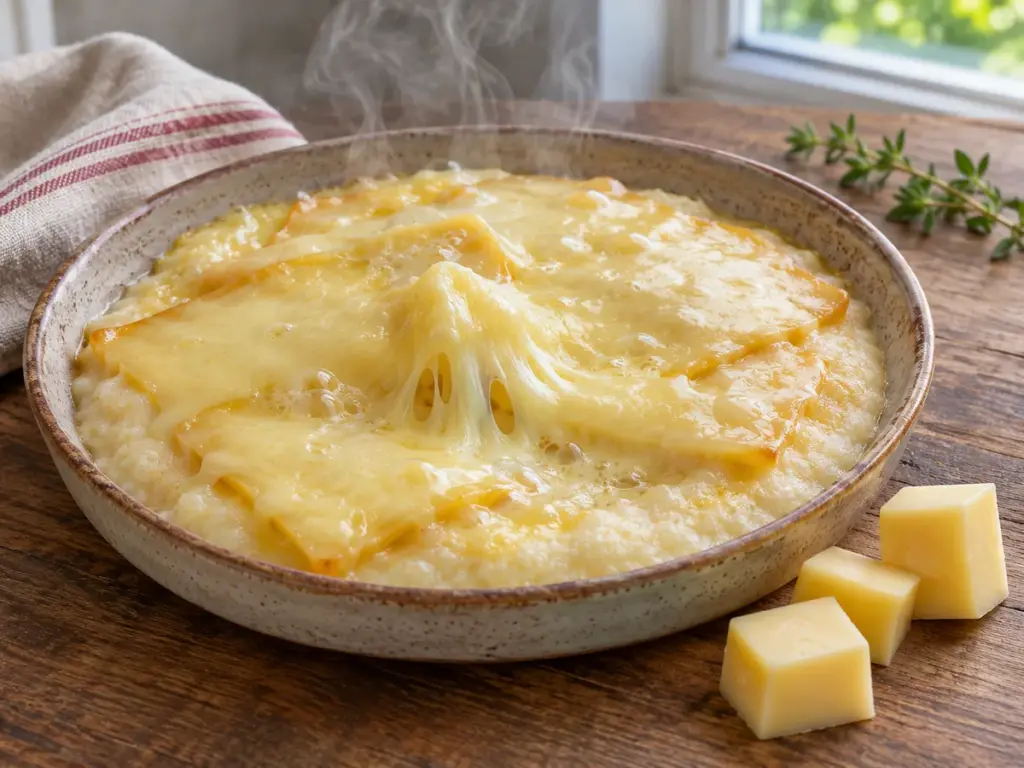
Stir cubes of Fontina into hot polenta, a dish Agriform pairs with fresco and mezzano Montasio, and add roasted mushrooms from the sides that suit polenta. Buy the Italian cheese, because Danish, Swedish and American fontina have a milder flavor, a softer texture and more holes, and you would lose Montasio's depth.
4. Gouda
How close Gouda gets depends on its age, and Gouda's flavor shifts a lot between grades. Dutch makers sell young Gouda at about 4 weeks and matured Gouda at 16 to 18 weeks, which sits at the top of fresco Montasio's 60 to 120 days.
Pick matured Gouda for a fresco recipe, because young Gouda is very mild while a matured farmhouse Gouda gives you a fruity tang and a sweet finish. For a mezzano recipe, look for extra-matured Gouda (7 to 9 months), and expect a sweeter, caramel-like cheese than Montasio.
5. Parmigiano-Reggiano
Parmigiano-Reggiano is an unpasteurized cow's milk cheese aged at least 12 months in Parma, Reggio Emilia, Modena and parts of Bologna and Mantua. Its texture is hard and granular and its flavor sharp and salty, which puts it beside aged Montasio on your grater and nowhere near fresco.
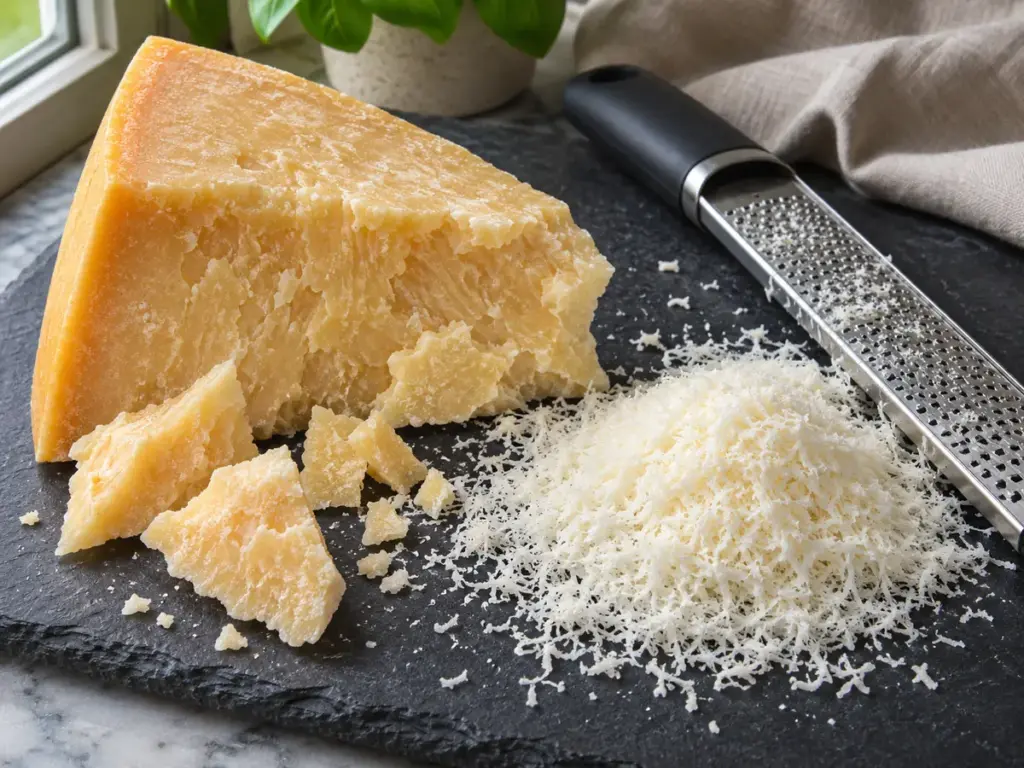
Start with three-quarters of the amount and taste before you add any salt. That ratio is a cautious starting point based on sodium, not a published conversion: the USDA lists hard parmesan at 1,175 mg of sodium per 100 g, against 819 mg for Gouda and 800 mg for Fontina, and it has no record for Montasio. You can check the rind for the name, because Parmesan and Parmigiano-Reggiano differ in aging rules and origin.
Which Substitute Should You Use for Your Dish?
Frico, the dish most often made with Montasio, calls for a different swap depending on the version you cook.
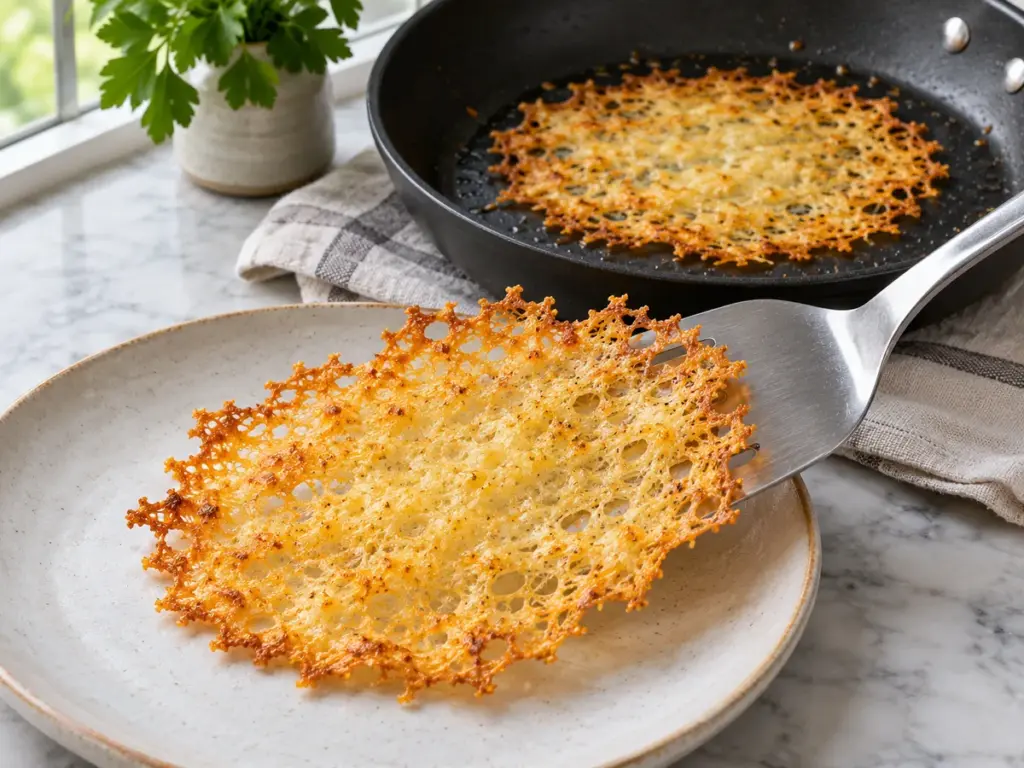
Crisp wafers are shredded cheese cooked alone. Eataly's recipe says fresh, semi-aged and aged Montasio all work, and cooks the cheese in a nonstick or cast-iron pan until crisp and golden. The discs are flexible while warm and crisp up as they cool. No source rates swaps for this version, so you should match the swap's age to the Montasio your recipe names.
Soft frico relies on high-fat cheese. USDA lists Fontina at 31 g of fat per 100 g and Gouda at 27 g, against 25 g for hard parmesan, so you can try Fontina first and Gouda second.
If your cheese counter stocks Latteria, you have one more option. It is a semi-hard cheese of medium ripeness from Friuli-Venezia Giulia, the region that makes Montasio, which puts it nearest to mezzano. No source gives a ratio, so weigh it 1:1 and taste as you go.
Which Cheeses Should You Skip?
Swiss cheese is a weaker swap. The USDA lists Swiss cheese at only 187 mg of sodium per 100 g, against 800 mg for Fontina, so a dish where you counted on the cheese for seasoning needs extra salt.
Skip smoked Gouda too. Its smoke covers the milk, hay and fruit notes that make Montasio worth buying, and your frico or polenta bowl turns into a smoky dish.
Sources
- Consorzio Montasio, Montasio cheese: ages, flavors, raw or thermised milk, production area, PDO status.
- Agriform, Montasio PDO: uses by age.
- Eataly, Crispy Friulian Frico Friabile: crisp frico with fresh, semi-aged or aged Montasio, pan and doneness cue.
- Asiago PDO consortium, Fresh, Medium Seasoned and Mature: taste and ageing.
- Asiago cheese, Piave, Fontina, Parmigiano-Reggiano, Gouda, Montasio and Frico on Wikipedia: ageing grades, texture, flavor and frico styles.
- Consorzio Piave DOP: milk from Belluno dairy farms.
- AGRIS, The family of "Latteria" cheese [Friuli-Venezia Giulia]: semi-hard cheese of medium ripeness from Friuli-Venezia Giulia.
- USDA FoodData Central: FDC 170848 (parmesan, hard), FDC 171241 (gouda), FDC 170843 (fontina), FDC 171251 (swiss). The SR Legacy data has no record for Montasio, Asiago or Piave.

Food writer at GustoMeadow. Writes ingredient substitutes, food comparisons, taste guides and storage guides for home cooks.
Storage and food-safety numbers follow USDA, FDA and university extension guidance.



