
The closest swap is a homemade blend of coarse salt, cracked pepper, garlic, coriander and dill seed, used 1:1 and tasted before you add more salt.
- In a hurry, press coarse salt, black pepper and garlic powder onto the steak.
- Check the sodium in every swap, because one tablespoon of different blends differs almost fourfold.
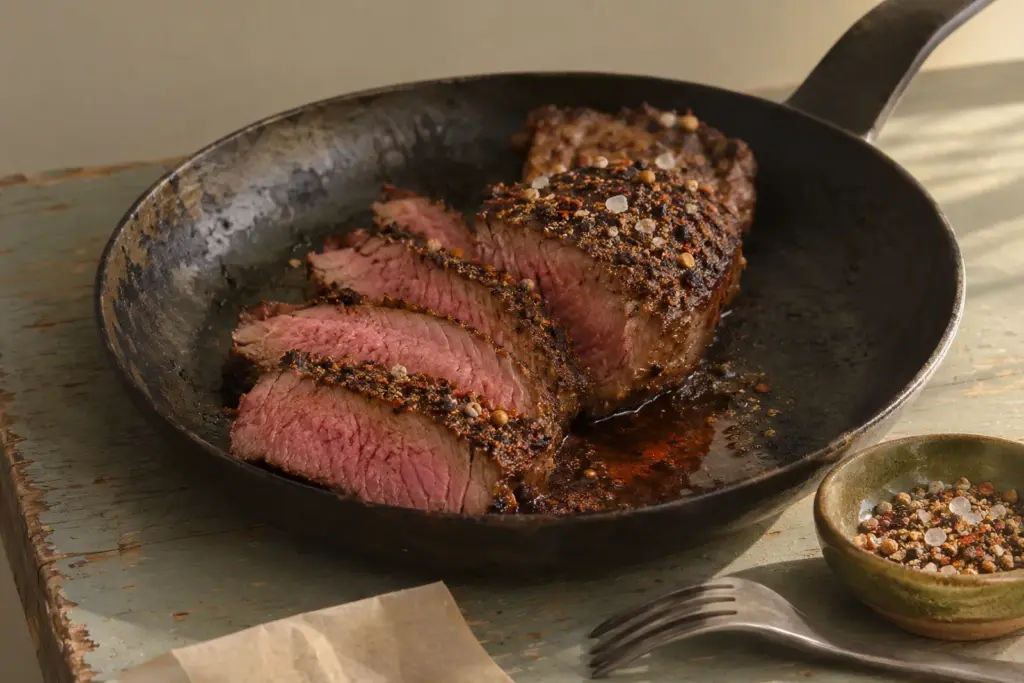
Montreal steak seasoning is mostly coarse salt, cracked pepper and garlic, which makes it one of the easier spice blends to replace. Salt is what changes your steak most: a tablespoon holds about 950 mg of sodium in one homemade blend and 2,160 mg in McCormick's (both calculated), so each blend needs a different hand with the salt.
What Is in Montreal Steak Seasoning?
McCormick lists Grill Mates Montreal Steak Seasoning as coarse salt, spices (including black pepper and red pepper), garlic, onion, sunflower oil, natural flavor and extractives of paprika. Wikipedia names a slightly different typical set (garlic, coriander, black pepper, cayenne pepper flakes, dill seed and salt) and notes that the recipe varies among restaurants and manufacturers.
In Daring Gourmet's homemade version, coriander gives a citrusy, slightly floral note and dill seed a herbal, slightly tangy one. Salt and cracked pepper make up the rest of the crust you see on the meat. A swap has to cover two things:
- Keep it coarse, because Daring Gourmet says the blend is meant to be coarse, not powdered.
- Match the salt: McCormick's label shows 180 mg of sodium in each ¼ teaspoon.
7 Best Substitutes for Montreal Steak Seasoning
1. Homemade Montreal Blend
Amanda's Cookin' makes 15 tablespoons from 2 tablespoons each of garlic powder, onion powder, coarse kosher salt, black peppercorns and paprika, plus 1 tablespoon each of chili powder, red pepper flakes, dried rosemary, mustard seed and coriander seed.
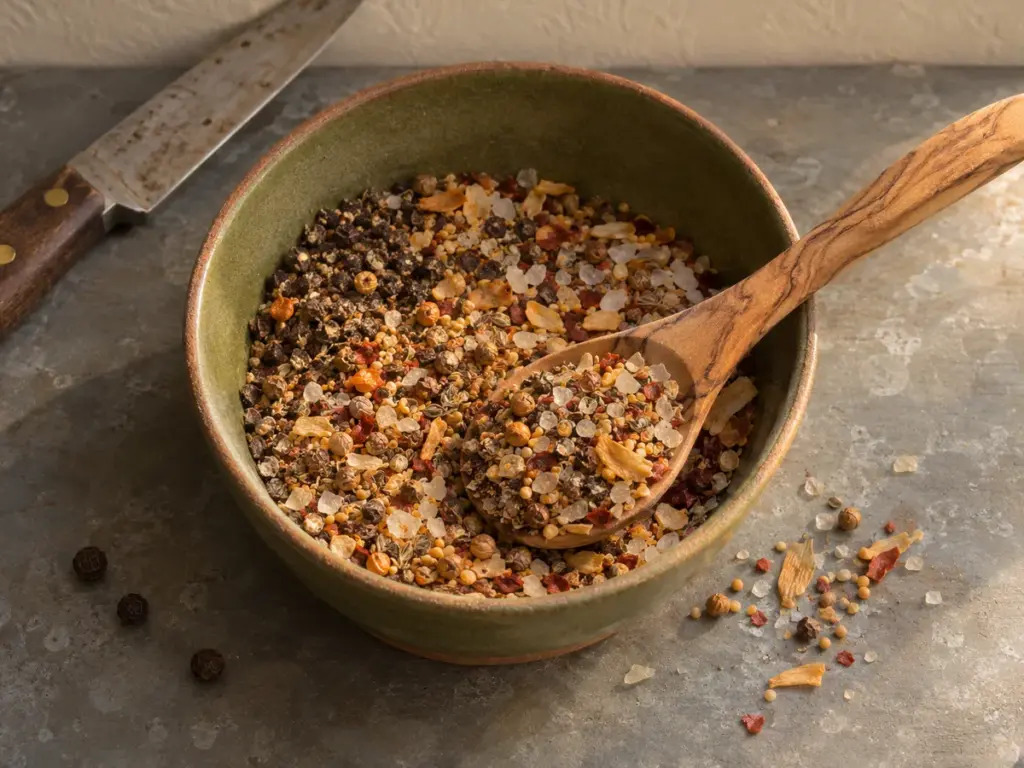
Grind whole peppercorns with a quick pulse or two so the blend stays coarse, then use it 1:1 for the store-bought blend. Two of the 15 tablespoons are salt, so each tablespoon holds about ⅖ teaspoon of salt (calculated), and the page lists 317 mg of sodium per teaspoon. Taste the cooked steak and add a pinch of salt if it needs one.
Amanda's Cookin' keeps it up to a year in a sealed jar, while Daring Gourmet advises using a blend of freshly ground seeds within a month for the best flavor.
2. Salt, Coarse Pepper and Garlic Powder
Three pantry items cover the crust: coarse salt, cracked black pepper and garlic powder. America's Test Kitchen salts a steak with ¾ teaspoon of kosher salt per 8-ounce piece and says to cut that by a third for Morton kosher salt, which packs more salt into each teaspoon than Diamond Crystal.
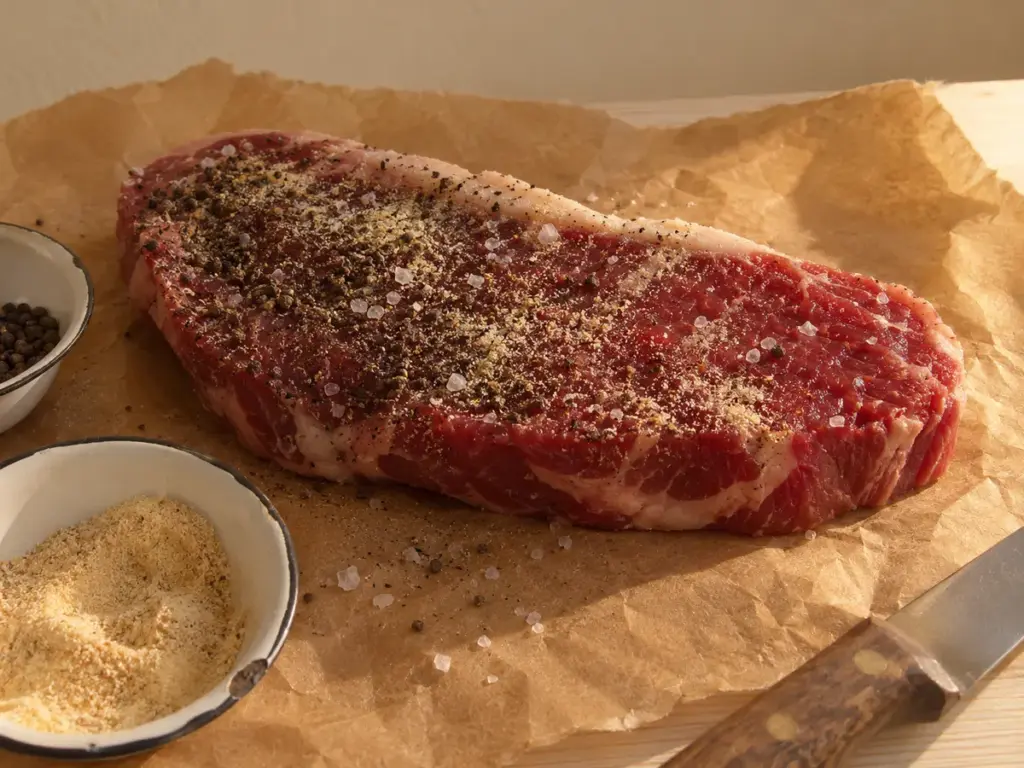
Add about ½ teaspoon each of pepper and garlic powder per steak (a starting point, not a published ratio) and press them onto a dry surface. If you only have table salt, use about ⅜ teaspoon per 8-ounce steak (calculated from America's Test Kitchen's 1 teaspoon table salt = 2 teaspoons Diamond Crystal). You lose the coriander and dill, so the flavor is plainer.
3. Store-Bought Steak Seasoning, Carne Asada or Chili Rub
An all-purpose steak seasoning, a carne asada blend or a chili rub from the shelf works once you read one number: the sodium per serving, set against McCormick's 180 mg per ¼ teaspoon. A lower number means you add salt yourself.
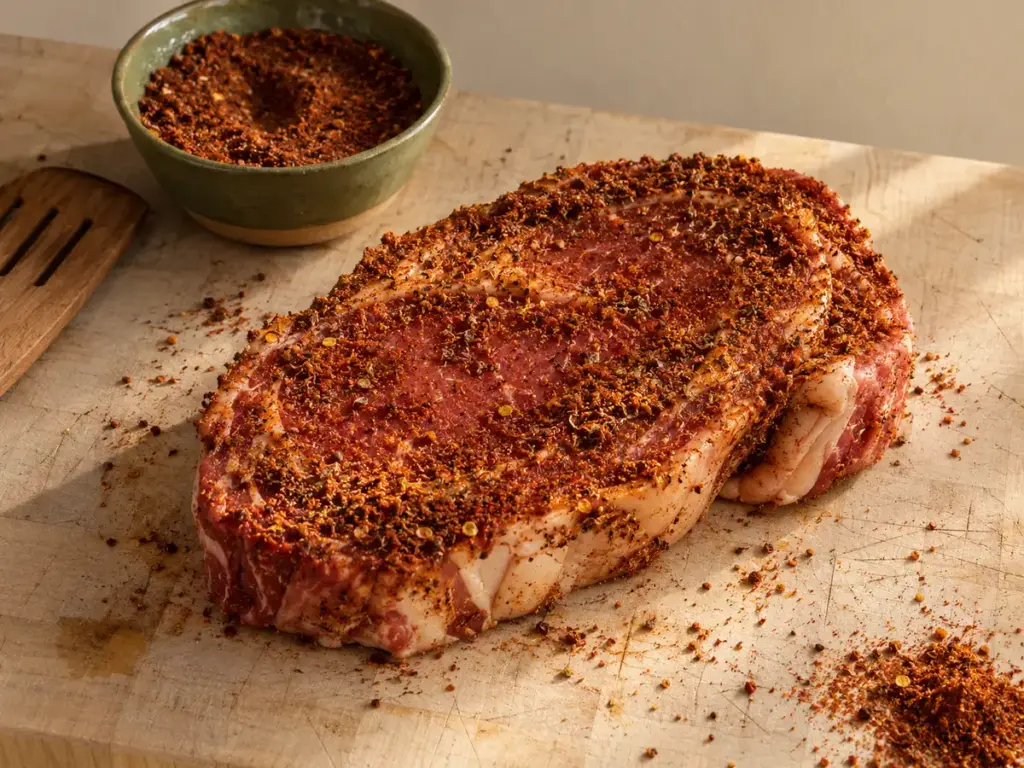
Use all-purpose steak seasoning 1:1. Carne asada and chili rubs are chili-forward and often carry crushed chili flakes, so start at half the Montreal amount and taste (a starting point, not a published ratio). Those flakes also leave a crunchy crust when the rub stays on the surface during cooking.
4. Lemon Pepper Seasoning
Wikipedia describes lemon zest and black pepper as lemon pepper's main ingredients, with salt, sugar, onion, garlic or citric acid added in many versions. It lists chicken, fish, potatoes and pasta among its uses, so it fits those dishes better than it fits beef.
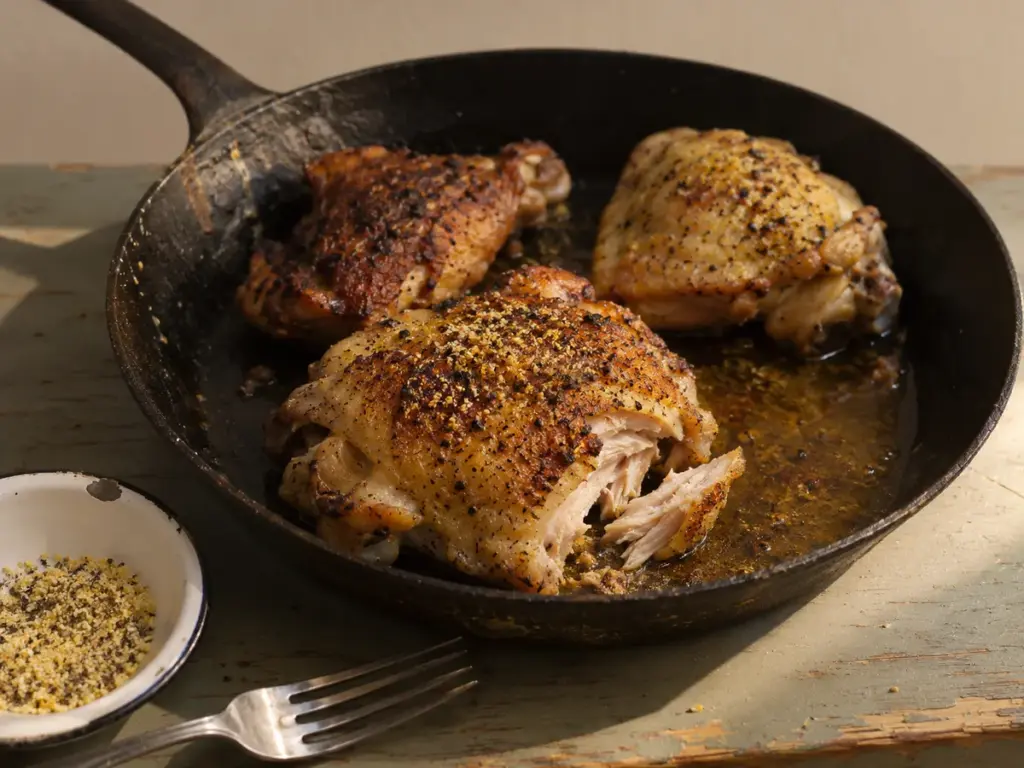
On chicken and fish, use it 1:1 after tasting a pinch (a starting point, not a published ratio), because the salt level changes from brand to brand. On steak, go lighter and salt the meat separately, since lemon pepper has no coriander or dill to give the Montreal flavor.
5. Cajun Seasoning or Old Bay
Both lean on red pepper. Old Bay combines celery salt, red pepper, black pepper and paprika, according to Wikipedia, while the salt in Cajun blends varies by brand, so read the sodium line before you pour.
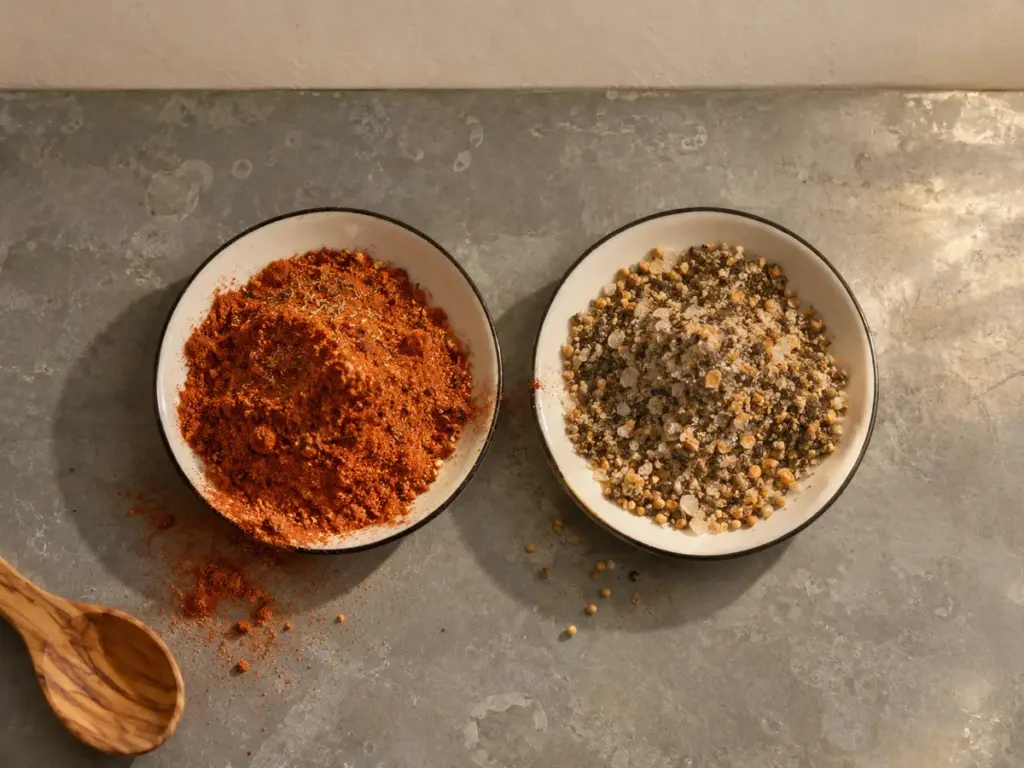
On steak, start at half the Montreal amount and hold back extra salt until you taste (a starting point, not a published ratio). Old Bay is mainly a crab and shrimp seasoning (Wikipedia also lists fries, eggs and chicken wings), and it differs from Cajun seasoning in its celery salt base.
6. Coffee Rub
A coffee rub shares black pepper and coriander with Montreal seasoning and adds coffee and brown sugar. One Food.com recipe seasons four 6 to 8 ounce steaks with 3 tablespoons finely ground coffee, 2 teaspoons each of brown sugar, sweet paprika and black pepper, 1 teaspoon each of ancho chile powder and ground coriander, and 1½ teaspoons of kosher salt.
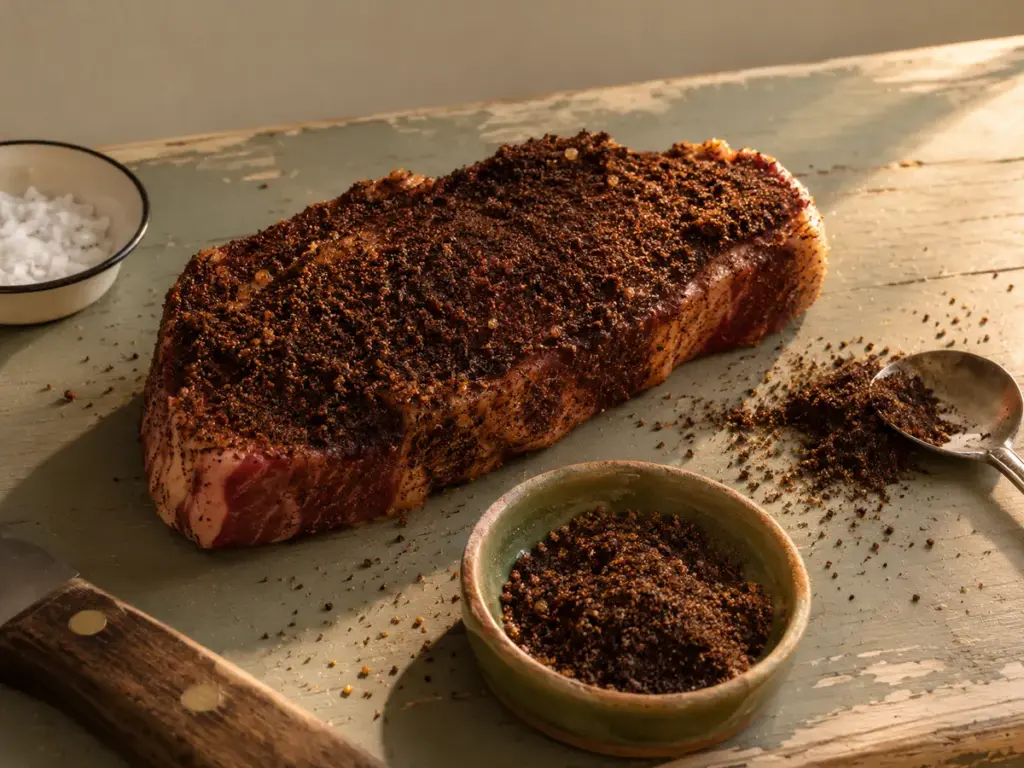
That is only 1½ teaspoons of salt for four steaks, about ⅜ teaspoon each (calculated), half of the ¾ teaspoon America's Test Kitchen uses for an 8-ounce steak. Brush the steaks with oil and coat them generously, as the recipe directs, then taste the first slice and add a pinch of salt only if it needs one.
7. Worcestershire Sauce and Coarse Black Pepper
Wikipedia says Worcestershire sauce often contains vinegar, salt and a sweetener such as molasses, and lists steaks and hamburgers among its uses. The thin liquid gives coarse black pepper something to cling to and supplies salt at the same time.
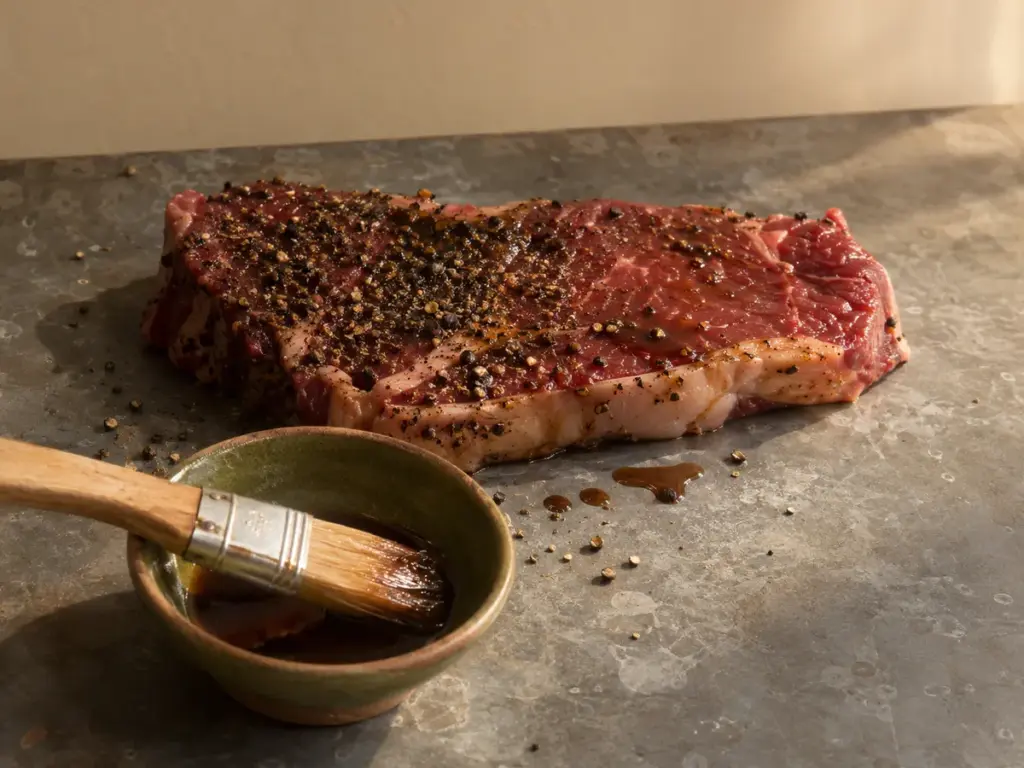
Brush about 1 teaspoon per steak (a starting point, not a published ratio) over a dry surface, press on the pepper and add salt only after tasting. Wikipedia lists anchovies among its ingredients and notes that anchovy-free versions exist, which matters for fish allergies; if your bottle is empty, a few pantry stand-ins cover the sauce.
How Much Should You Use Per Pound of Steak?
McCormick's directions call for about 1 tablespoon per pound of steak, burgers or pork. Daring Gourmet uses the same 1 tablespoon per pound in a marinade with ¼ cup of olive oil and 2 tablespoons of low-sodium soy sauce, and tells you to sprinkle the dry blend generously over both sides.
| Blend | Per teaspoon | Per tablespoon |
|---|---|---|
| McCormick Grill Mates | 720 mg sodium | 2,160 mg |
| Amanda's Cookin' | 317 mg | 951 mg |
| Daring Gourmet | 1,170 mg | 3,510 mg |
The tablespoon figures are calculated from each label or recipe card (McCormick lists 180 mg per ¼ teaspoon). A tablespoon of Daring Gourmet's blend carries nearly four times the sodium of Amanda's, so matching the volume does not match the salt. Taste a pinch before you season a whole pound, and add salt separately when your blend is the lower kind.
Where Else Does Montreal Seasoning Work?
McCormick's directions name steak, burgers and pork. Amanda's Cookin' adds chicken, ribs, kabobs and roasted vegetables such as potatoes, broccoli, carrots and green beans, and Daring Gourmet adds fries, eggs, popcorn and seafood.
Why Herb-Infused Olive Oil Does Not Work
Herb-infused olive oil adds no salt and no pepper crust, so it does not stand in for a seasoning blend. Fresh garlic or herbs steeped in oil are also a botulism risk at room temperature: Penn State Extension says oil creates an oxygen-free setting that encourages spores to grow, and advises keeping such oils cold and using them within 2 to 4 days unless they are acidified.
Frequently Asked Questions
Does Montreal Steak Seasoning Contain MSG?
McCormick's ingredient list, quoted above, does not name monosodium glutamate; it lists "natural flavor." Other brands print their own lists, so read the label on the bottle you buy. A homemade blend contains only the spices you put in.
Can You Make Montreal Seasoning Without Dill?
Yes. McCormick's list does not name dill, and Amanda's Cookin' leaves it out. Daring Gourmet says dill seed adds a herbal, slightly tangy note, so a blend without it tastes more of pepper and garlic. If you want that note back, dill seed substitutes list what to use.
Sources
- McCormick Grill Mates Montreal Steak Seasoning: ingredients, 180 mg sodium per ¼ teaspoon, directions
- Wikipedia, Montreal steak seasoning: typical ingredients
- Amanda's Cookin', Homemade Montreal Steak Seasoning: blend, sodium, uses, storage
- The Daring Gourmet, Montreal Steak Seasoning: blend, sodium, marinade ratio, spice notes
- America's Test Kitchen, How to Salt a Roast: salt per steak
- Food.com, Coffee-Rubbed Steaks: coffee rub amounts
- Wikipedia, Lemon pepper, Old Bay Seasoning and Worcestershire sauce: ingredients and uses
- Penn State Extension, How to Safely Make Infused Oils: garlic and herb oils

Food writer at GustoMeadow. Writes ingredient substitutes, food comparisons, taste guides and storage guides for home cooks.
Storage and food-safety numbers follow USDA, FDA and university extension guidance.



