
The closest Nutella substitute is a homemade hazelnut-cocoa spread, and any jar of chocolate hazelnut spread is a fair 1:1 start.
- Nocciolata lists the same milk and cocoa as Nutella and uses sunflower oil in place of palm oil.
- Only chocolate sunflower seed butter leaves out hazelnuts, a tree nut and major allergen, so it is the one you reach for with a hazelnut allergy.
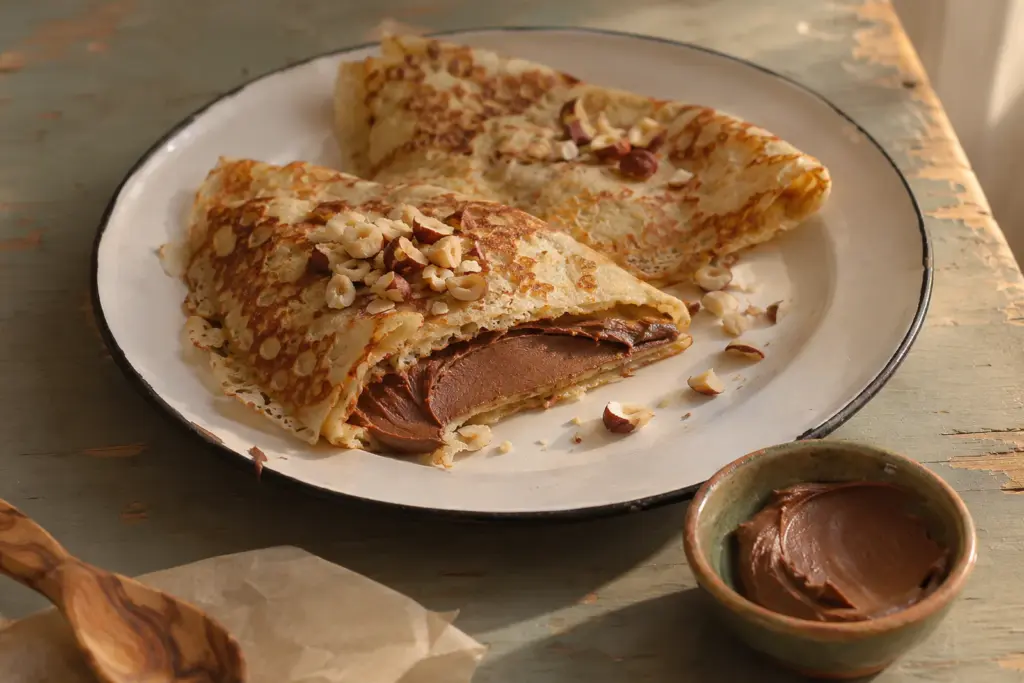
One scoop of Nutella brings sugar, fat, cocoa and hazelnut flavor to a recipe at once, so you choose an ingredient substitute by asking which of those your dish needs most. Of the five swaps here, one is a homemade batch, three are hazelnut jars and one is a nut-free jar.
What Is Nutella Made Of, and What Does It Do in a Recipe?
On the Nutella USA product page, the ingredients read sugar, palm oil, hazelnuts, skim milk, cocoa, lecithin as an emulsifier and vanillin, which is an artificial flavor. Each 2-tablespoon (37 g) serving comes to 200 calories.
Sugar and palm oil sit ahead of the hazelnuts on that list, so one scoop works as sweetener, soft fat and flavor together. If you choose a leaner or less sweet swap, whatever you spread, fill or bake will taste less sweet and less rich.
When you compare labels, palm oil and vanillin are the two Nutella ingredients the other jars handle differently. A homemade batch gives you the most control, because you decide how much sugar goes in.
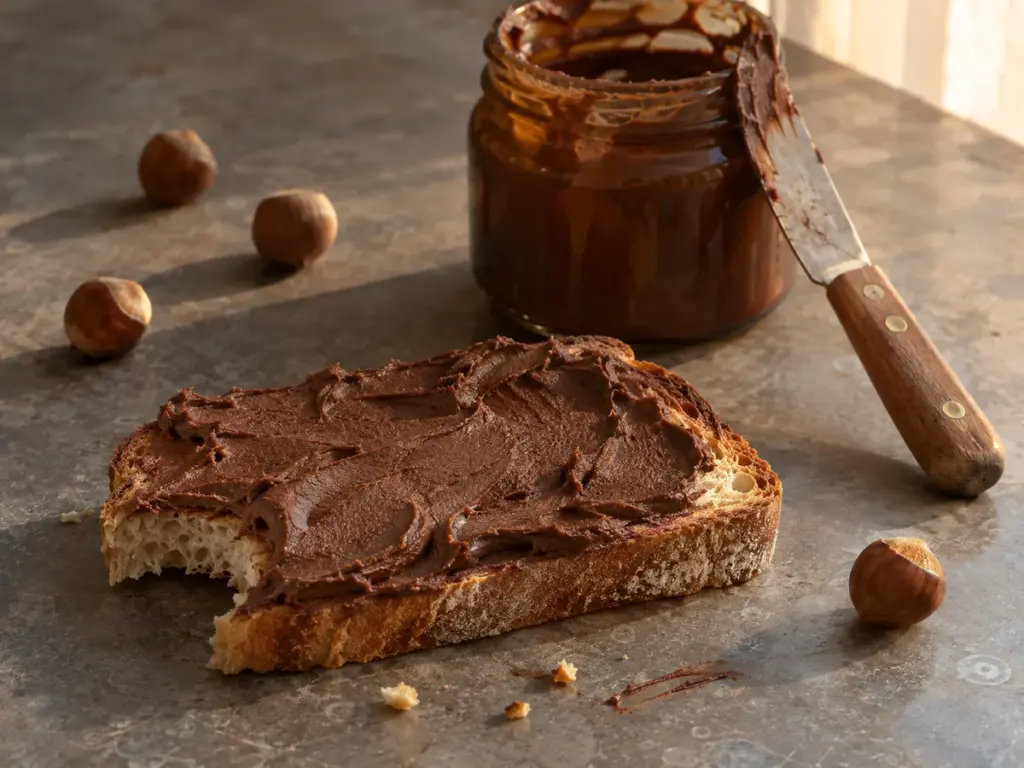
5 Best Substitutes for Nutella
| Substitute | Ratio | Best for | Sugars per serving |
|---|---|---|---|
| Homemade spread | 1:1 | Fillings, swirls | You set it |
| Nocciolata | 1:1 | Toast, dipping | About 19 g (37 g) |
| Justin's | 1:1 | Toast, cookie filling | 8 g (32 g) |
| Chosen Foods | 1:1 | No-bake fillings | 12 g (35 g) |
| Sunflower butter | 1:1 | Nut-free toast | 6 g (32 g) |
On Open Food Facts, Nutella's jar lists 21 g of sugars per 37 g serving, so every swap here is less sweet per spoonful.
For a less sugary jar, Justin's at 8 g and sunflower butter at 6 g are the lowest, while Nocciolata sits close to Nutella at about 19 g. Serving sizes run from 32 to 37 g, so those numbers compare close to spoon for spoon, and every jar here goes in at equal amounts.
1. Homemade Hazelnut Spread
RecipeTin Eats makes about 1½ cups from 250 g (8 oz) skinless hazelnuts, ¼ cup (30 g) Dutch-processed cocoa, ¾ cup (90 g) confectioners' sugar, 2 tablespoons oil and 1 teaspoon vanilla.
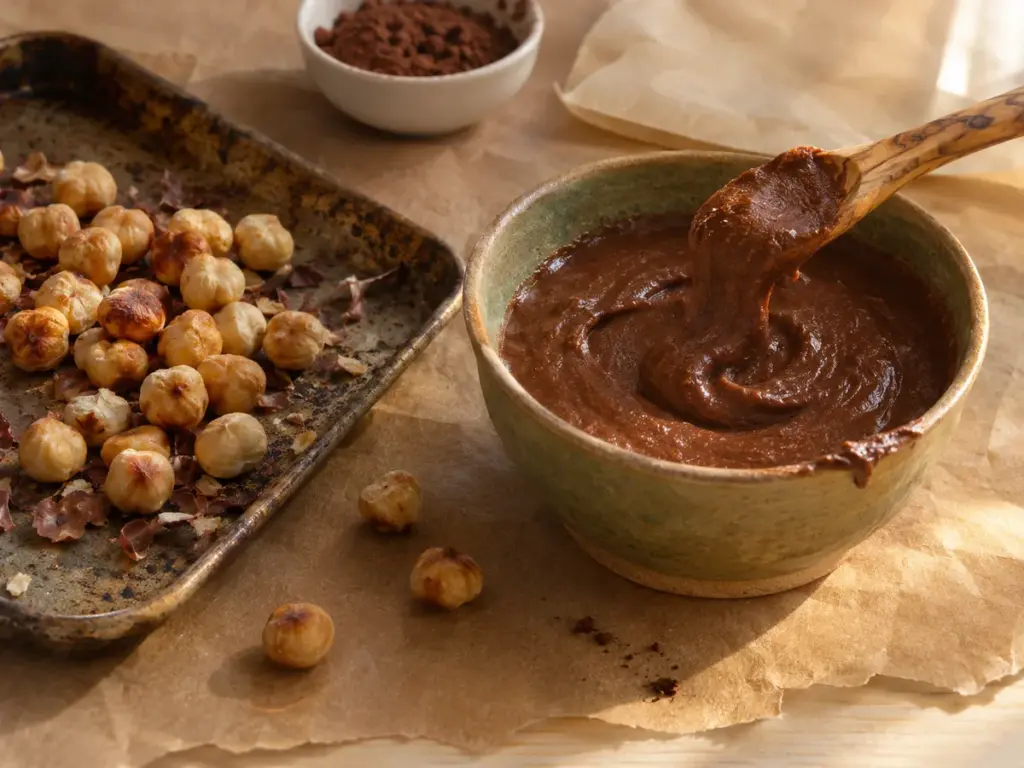
- Roast. Bake the nuts at 350°F for 8 minutes, until golden.
- Skin. The skins taste bitter, so rub off most of them.
- Blend. Run the nuts alone to a honey-like paste, then add the rest.
- Jar. Pour it into a jar while warm and let it cool until spreadable.
The recipe warns that the fridge makes the sugar crystallize and turns the spread grainy, so you store it at room temperature.
Natural cocoa also works, and the recipe says it changes the color and chocolate flavor slightly. If you are out of hazelnuts, the recipe says another nut changes the result, and swaps for hazelnut show what to expect.
2. Nocciolata
Rigoni di Asiago makes Nocciolata, a hazelnut-cocoa spread, and its European jar lists raw sugar, hazelnut paste (18.5%), sunflower oil, skim milk powder, cocoa powder (6.5%), cocoa butter, soy lecithin and vanilla extract on Open Food Facts.
That list uses sunflower oil for palm oil and keeps the milk and hazelnuts Nutella has, so you can use it the same way for toast or as a dip for fruit and cookies.
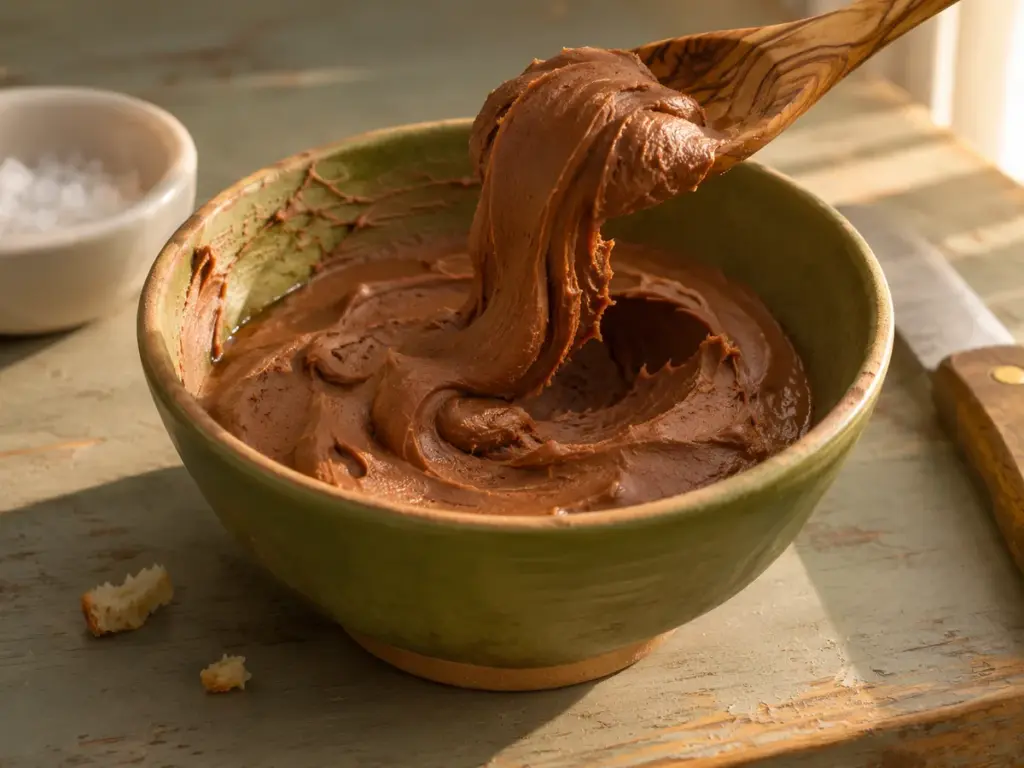
The same entry lists 51 g of sugars per 100 g, which works out to about 19 g in a 37 g serving. US jars can be made differently, so the label on the jar you pick up is the one to trust.
3. Justin's Chocolate Hazelnut and Almond Butter
Justin's sells this spread as a hazelnut and almond blend, and its Open Food Facts label lists dry roasted hazelnuts, dry roasted almonds, organic cane sugar, organic cocoa, organic cocoa butter, palm oil, vanilla powder and sea salt, with 8 g of sugars per 2 tablespoons (32 g).
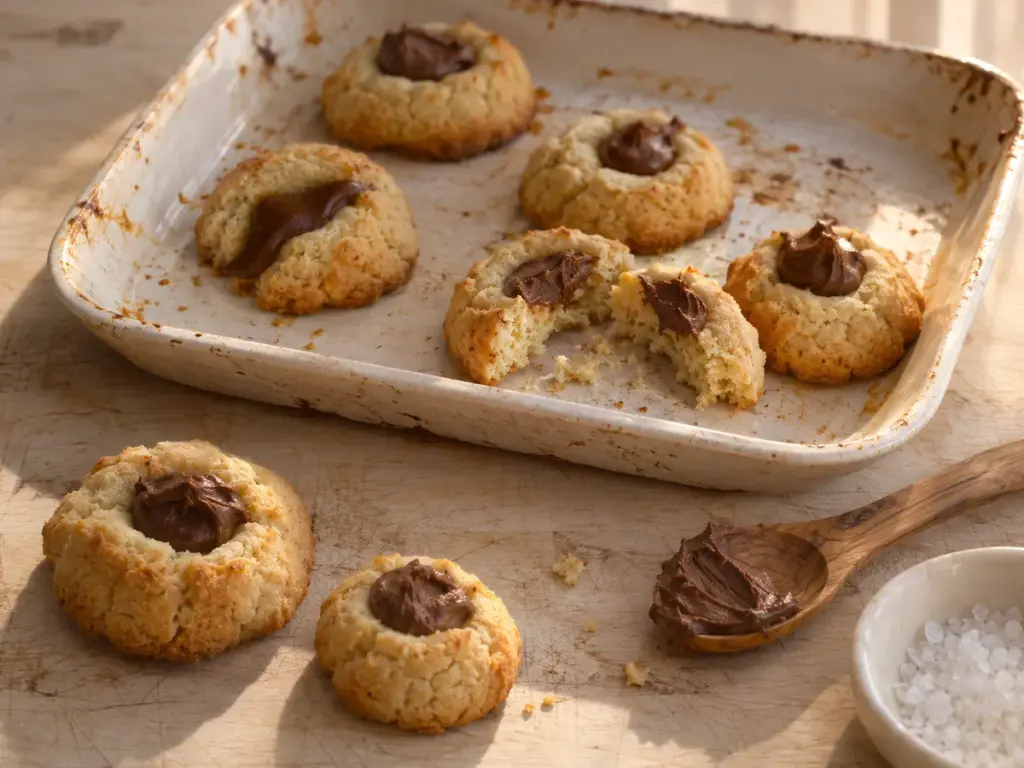
Because it has less than half of Nutella's sugar per spoonful, a cookie filling made with it tastes less sweet, and you can stir in a little confectioners' sugar if it tastes flat.
The jar still contains palm oil, and the almonds on its label add a second tree nut beside the hazelnuts.
4. Chosen Foods Chocolate Hazelnut Spread
On Open Food Facts, Chosen Foods' spread lists hazelnuts first, then organic powdered sugar, cocoa powder, avocado oil, oat milk powder, vanilla extract and sea salt, and it states "Contains: Hazelnuts".
Oat milk powder stands in for skim milk on this label, so no dairy ingredient appears on that list, and avocado oil takes the place of palm oil.
Each 35 g serving has 12 g of sugars against Nutella's 21 g in 37 g, so a no-bake filling made with it comes out less sweet.
5. Chocolate Sunflower Seed Butter
SunButter's chocolate spread lists roasted sunflower seeds, sugar, unsweetened chocolate, cocoa powder, salt and vanilla flavor, with 6 g of sugars per 32 g serving, on Open Food Facts.
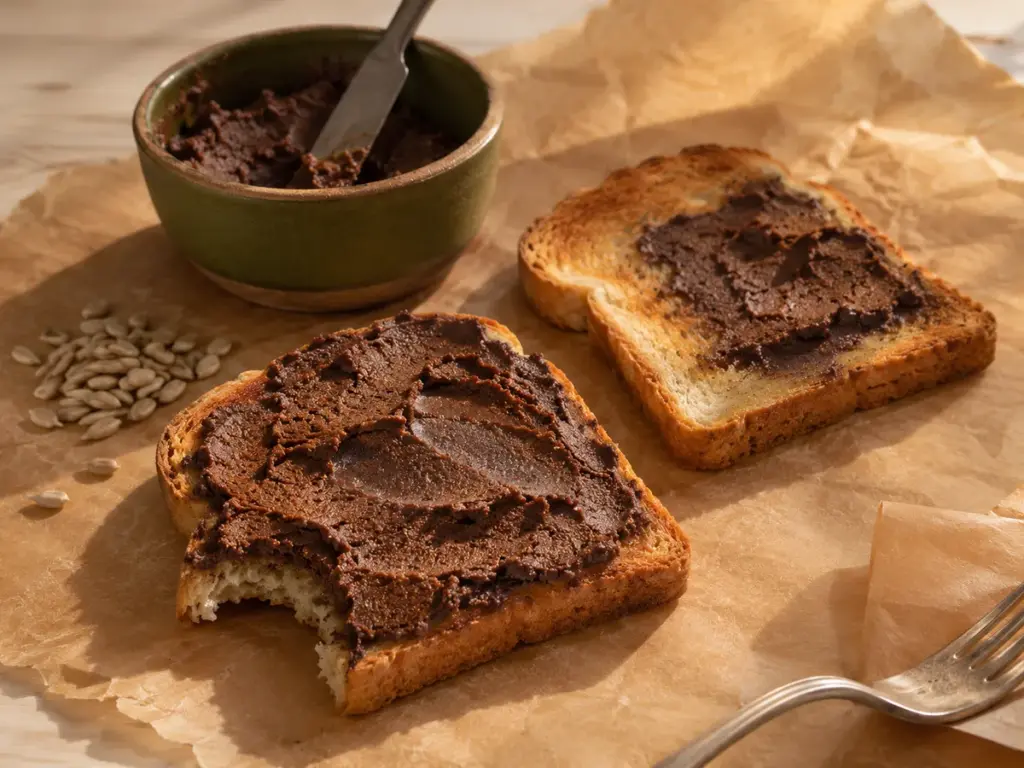
No hazelnut or other tree nut appears on that list, so this is the swap for a hazelnut allergy. Because it has no hazelnut in it, you also lose the hazelnut flavor, and it suits toast and sandwiches better than a recipe built around hazelnut.
Sunflower seed butter is also a nut-free swap for peanut butter, so one jar can cover both spreads in a house that avoids nuts.
How Do You Use a Hazelnut Spread Substitute in Frosting or a Sauce?
For a drizzle or hot sauce, you whisk 1 cup of spread into ½ cup of warm milk, following Keep Calm and Eat Ice Cream.
If the sauce will not pour, a dash more milk thins it. The author says other brands should work in theory, so you can start a swap at the same ratio.
Which Nutella Swaps Work for a Nut Allergy?
Hazelnut is a tree nut, and the FDA's list of major food allergens includes milk, tree nuts, peanuts, soybeans and sesame, among others. FARE's summary of the FDA tree nut list names filbert as another word for hazelnut.
- Hazelnuts: Nutella, the homemade spread, Nocciolata and Chosen Foods.
- Hazelnuts and almonds: Justin's.
- No tree nut listed: chocolate sunflower seed butter. Sunflower seeds are not among the FDA's nine major allergens.
If you want to make a nut-free spread, The Happy Pear blends 120 g (about ½ cup) smooth sunflower seed butter, 75 g maple syrup, 30 g cocoa powder and 2 tablespoons refined coconut oil with 1 teaspoon vanilla and ¼ teaspoon sea salt.
A spread that comes out too thick loosens with 1 to 2 teaspoons of warm water, and the recipe keeps it up to 1 week at room temperature or 3 weeks in the fridge.
How Much Is in a Serving of Chocolate Hazelnut Spread?
The USDA record for a generic chocolate-flavored hazelnut spread (FoodData Central, FDC 168000) gives values per 100 g, with a serving of 2 tablespoons (37 g), and the serving column below multiplies each per 100 g value by 0.37.
| Nutrient | Per 100 g | Per 37 g |
|---|---|---|
| Energy | 539 kcal | 199 kcal |
| Fat | 29.73 g | 11.0 g |
| Carbohydrate | 62.36 g | 23.1 g |
| Protein | 5.41 g | 2.0 g |
| Fiber | 5.4 g | 2.0 g |
The 199 kcal matches the 200 calories Nutella prints per serving, but the USDA record has no sugar line, so the 21 g of sugars mentioned earlier comes from the jar label.
A homemade batch changes with the sugar and oil you use, and a store jar changes with its brand, so the nutrition panel on your own jar is the number to trust when it matters.
Sources
- Nutella USA product page: ingredient list, serving size and calories.
- USDA FoodData Central, FDC 168000: nutrient values per 100 g.
- FDA, Food Allergies: the nine major allergens and reading labels.
- FARE, update on FDA allergen labeling guidance: the FDA tree nut list.
- RecipeTin Eats, Homemade Nutella: amounts, roasting, blending and storage.
- The Happy Pear, Nut-Free Chocolate Spread: amounts, texture fix and storage.
- Kitchen Treaty, Fluffy Nutella Buttercream: frosting amounts and the "any chocolate-hazelnut spread" note.
- Keep Calm and Eat Ice Cream, Nutella Sauce: milk-to-spread ratio.
- Open Food Facts label entries for Nutella, Nocciolata, Justin's, Chosen Foods and SunButter.

Food writer at GustoMeadow. Writes ingredient substitutes, food comparisons, taste guides and storage guides for home cooks.
Storage and food-safety numbers follow USDA, FDA and university extension guidance.



