
In the kitchen showdown, it's onion flakes vs minced onion.
Ever find yourself staring at these two in the grocery aisle, wondering which one to grab? We've been there.
Onion flakes boast convenience, lasting way longer in the pantry. Minced onion, however, brings that fresh crunch we can't resist.
Our cooking experiments have taught us a thing or two.
Spoiler: both have their moments to shine.
We'll break it down for you, no fluff, just the good stuff.
Ready to become an onion choosing pro?
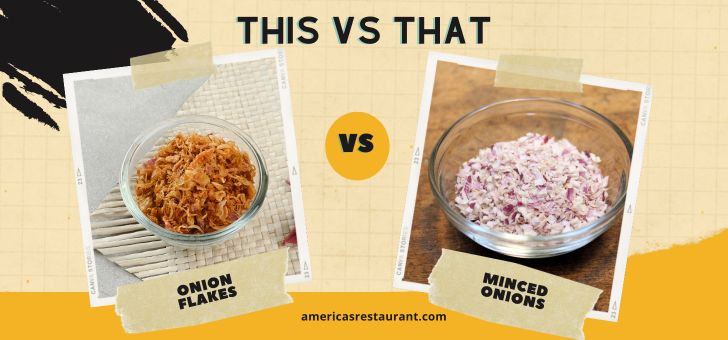
What are Onion Flakes?

Onion flakes are dehydrated onion pieces, commonly used for cooking.
They provide the same flavor and aroma as fresh onions but with a longer shelf life.
Onion flakes can be easily rehydrated when added to liquids or soaked in water before use.
When compared to minced onion, onion flakes have an advantage of being easier to store and use - see green garlic vs green onion comparison for a similar look at two allium options.
Minced onions tend to clump together making them difficult to spread evenly in food items or measure out accurately.
Also, as onion flakes are already dehydrated, they do not add excess moisture to the dish which can affect its texture.
Although both onion flakes and minced onion are interchangeable in most recipes, the quantity required may differ due to their varying forms.
For instance, 1 tablespoon of minced onion can be substituted with a teaspoon of onion flakes.
What is Minced Onion?

Minced onion refers to finely chopped onion that is used in cooking to impart flavor and aroma to the dish.
This variation of onion can be easily found in the kitchen and is commonly used in several recipes.
- Minced Onion is a Convenient Option: It saves considerable time and effort as opposed to manually chopping up onions.
- It Enhances Flavor: When added early on during cooking, it brings out umami taste in food by releasing compounds like allicin.
- Adds Texture: As minced onion is smaller, it adds texture without overpowering the dish's other ingredients.
This flexible ingredient can be easily incorporated into different recipes such as soups, sauces, stir-fries, burgers, sandwiches, and more - for substitution ideas in similar prep contexts see minced ginger substitutes and swaps.
Its usage may vary as per recipe requirements.
Understanding the variations between using minced onion vs other forms of onions can create distinct flavors in your dishes and enhance their taste remarkably.
Differences Between Onion Flakes and Minced Onion

Onion flakes and minced onion are commonly used in cooking, but what makes them different? Onion flakes are dehydrated pieces of onion that have been dried, while minced onion is fresh onion that has been finely chopped.
Both have their unique benefits; onion flakes can be stored for a longer time and are easier to measure, while minced onion has a stronger flavor - compare onion salt vs onion powder comparison to see how form changes usage.
Minced onion is more preferable as it adds a fresh crunch to dishes like salads.
It's essential to choose the right one depending on the dish being cooked.
Texture and Appearance
The visual and tactile sensation of onion flakes versus minced onion presents a distinctive contrast.
Onion flakes are flat and have peculiarly sharp edges, while minced onions resemble small irregular pieces with no definitive shape.
This results in significant differences in the appearance of dishes made with either ingredient.
Also, when onions are minced, they tend to lose their texture and look like a paste.
On the other hand, flakes maintain their original shape even when hydrated or cooked.
Also, onion flakes provide a more intense flavor, which is evenly distributed throughout the dish.
Meanwhile, minced onions might result in bits that remain undercooked or burnt during sautéing.
Incorporating onion flakes or minced onions depends on personal taste preference and recipe requirements.
The different appearances and textures they offer can transform the overall look of a dish while still delivering an authentic onion flavor experience for meals such as soups, stews or casseroles.
Preparation Process
You may wonder whether onion flakes or minced onion is a better option.
To prepare onion flakes, follow these 4 steps:
- Peel the onions and slice them thinly.
- Spread the slices out on a baking sheet and dry in an oven at low temperature until crisp.
- Crumble the dried slices into small pieces.
- Store in an airtight container in a cool, dry place.
To prepare minced onion, follow these 4 steps:
- Peel the onions and cut them into smaller pieces.
- Pulse the pieces in a food processor until finely chopped but not pureed.
- Use immediately or store in an airtight container in the refrigerator or freezer.
Onion flakes have a longer shelf life than minced onion due to being dehydrated, which can be beneficial if you don't use large amounts of onions frequently.
However, minced onion offers fresher flavor when used right away.
Also, some recipes may call for one over the other depending on texture or ingredient compatibility.
Keep these factors in mind when deciding which one to opt for in your next recipe.
Flavor Intensity and Distribution
The flavor of onion adds depth and richness to dishes.
When choosing between Onion Flakes and Minced Onion, it's important to consider the intensity and distribution of flavor they offer - for another take on concentrated versus subtle taste, see extract vs flavor comparison.
Both options have a strong onion taste, but Onion Flakes tend to have a more concentrated flavor than Minced Onion due to their smaller size.
Their texture also allows them to distribute evenly throughout the dish, improving its overall taste.
However, if you prefer a milder onion flavor, Minced Onion might be a better option for you.
Its larger size may not be as evenly distributed throughout the dish, but it delivers a more subtle taste that complements other flavors well.
Ultimately, your personal preference should guide your choice between these two options.
Shelf Life and Storage
Proper storage is key.
Here are some tips:
- Both onion flakes and minced onion should be kept in airtight containers, away from moisture and direct sunlight.
- They should be stored in cool temperatures, preferably below 75°F, to reduce oxidation.
- Onion flakes tend to have a longer shelf life than minced onions due to their low moisture content. Hence it is more convenient to store them for extended periods.
In summary, correct storage methods ensure that both onion flakes and minced onions retain their freshness for as long as possible.
It's best to follow the above guidelines for optimal results.
Similarities Between Onion Flakes and Minced Onion

Both Onion Flakes and Minced Onion hold some similarities despite being different variations of onions.
Both forms of onion are dried, dehydrated, and powdered to increase their shelf-life and make them more convenient to use.
They also offer the same strong and pungent flavor that onions are well-known for in cooking various recipes around the world - see purple onion vs red onion differences for how varieties compare when used fresh.
Also, both products can be used interchangeably in most cases, adding a similar taste profile to your dishes.
They can be used as a base for soups, stews, curries; added to meatballs, burgers, or meatloaf; mixed with dips like guacamole or hummus.
They are also extensively used as seasonings for marinades and salad dressings.
In addition to these similarities, minced onion comprises small pieces of fresh onions that have been chopped down into tiny bits while onion flakes are larger chunks of onions that have been dehydrated and crushed into its final form.
This slight difference in texture should also be considered when deciding which option to use when cooking your favorite dish.
Overall, both forms of onion give off the same flavor but differ slightly in texture.
Using Onion Flakes and Minced Onion in Cooking
Cooking with Onion Flakes and Minced Onion is a common practice in many households.
Whether you're a professional chef or a home cook, these ingredients can add a nice flavor to your dishes.
Here are four points to consider when using them in your cooking:
- Convenience: Onion flakes and minced onion are both convenient options for adding onion flavor to any dish. They are easily accessible in grocery stores, and the preparation time is minimal compared to fresh onions.
- Texture: Both options offer different textures that can improve the overall texture of the dish. Onion flakes are dried and provide a crispy texture, while minced onion has a softer texture that blends well with other ingredients.
- Flavor: The flavors of these two options may differ due to their preparation methods. Onion flakes have a milder taste compared to minced onion, which has a more pungent flavor.
- Shelf life: Onion flakes have a longer shelf life than minced onion, which makes them an excellent option for stocking up for future use.
It's essential to consider the recipe requirements when deciding whether to use onion flakes or minced onion.
The unique details regarding these options may influence the ultimate outcome of your dish.
Understanding how each ingredient works can help you choose what best suits your dish's needs without compromising its flavor.
Convenience: Onion flakes and minced onion are both convenient options for adding onion flavor to any dish - similar usage notes appear in crushed red pepper vs chili flakes usage differences.
Considerations for Choosing Between Onion Flakes and Minced Onion
Choosing between onion flakes and minced onions can be a daunting task, particularly when deciding which option is the best for your cooking needs.
While both provide an array of benefits, it's essential to consider a few factors before making a final decision.
- It's important to determine how you intend to use the onion in your recipe. If you want the onion's texture, flavor, and aroma to shine through in your dish, minced onions are the way to go. Onion flakes work best when looking to add subtle flavor or simply garnish food.
- Factor in convenience - as this might influence the choice you make. Minced onions are more beneficial if you have time constraints as they come already diced and ready to go; whereas onion flakes may need grinding or crushing before use.
Finally, storage is key for both options.
Onion flakes tend to last longer than minced onions because of the minimal moisture content in them.
Minced onions need proper storage because they tend to spoil fast due to their high water content.
In summary, select onion flakes if applying a subtle flavor or garnishing whilst using minced onions for occasions demanding strong flavors with texture and aroma.
However, take into consideration convenience and ease of storage when making your choice between these two options.
It's important to determine how you intend to use the onion in your recipe - for dry-seasoning alternatives, consult onion powder substitutes and swaps.
Best Uses for Onion Flakes vs Minced Onion
After comparing the characteristics of onion flakes and minced onion, it is evident that both have unique qualities that make them suitable for different dishes.
While onion flakes are ideal for dry preparations such as soups, stews, and casseroles because of their long shelf life and convenience, minced onions are perfect for quick cooking meals like stir-fries and salads due to their intense flavor.
Also, minced onions require less cooking time, which helps retain their nutritional value.
Ultimately, when deciding which option makes sense to use, understanding the intended application for each ingredient is essential in achieving culinary success.
Understanding which ingredient to use depends on the flavors one is trying to highlight or how they want the texture of the meal to turn out will contribute highly to achieving success with recipes and show your culinary creativity.
Frequently Asked Questions
When compared to minced onion, onion flakes have an advantage of being easier to store and use. They share some similarities but each has qualities that make it better suited for certain recipes.
Sometimes. Onion Flakes works where Minced Onion is called for in certain dishes, but not all.
Check whether the recipe relies on a specific quality before substituting.
Cold preparations like salads and dressings often favor the option with a sharper, more defined flavor. Heat can mellow both, so the distinction matters more in uncooked dishes.
Do professional cooks prefer one over the other?
Professional preference depends heavily on the dish and cuisine style.
Each has its context where it outperforms the other, so most experienced cooks keep both on hand.
If a recipe needs a direct swap for flavored salt, 5 BEST Substitutes for Onion Salt lists practical options. For alternatives to dried flakes themselves, 5 BEST Substitutes for Onion Flakes outlines suitable replacements.