
In the kitchen showdown between onion salt and onion powder, things get real. T4We're here to slice through the clutter.
First off, both pack a punch in flavor.
Onion salt, a blend of salt and onion powder, brings the zing. Onion powder, made from ground, dried onion, offers a pure, potent taste.
Ever sprinkled onion salt on your popcorn? Life-changing.
Or discovered too late that onion powder, not salt, was the secret ingredient in your grandma's famous soup?T0
Choosing isn't easy. Each has its place on our shelves and in our hearts.
This is the details on navigating this savory dilemma.
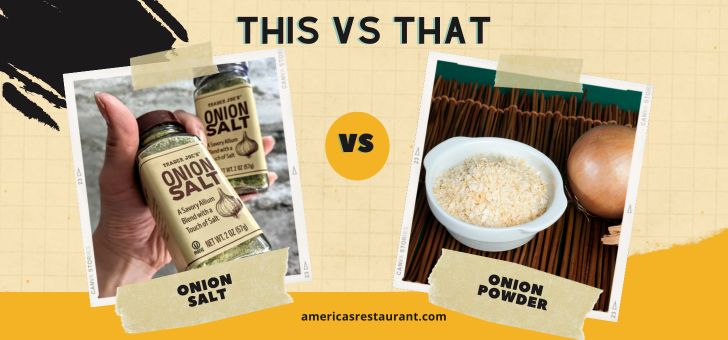
What is Onion Salt?

Onion salt can be described as a seasoned salt made by mixing onion powder with regular table salt, making it a versatile seasoning used in various applications.
It adds flavor to recipes quickly and efficiently without needing to chop up fresh onions.
Onion salt is well known for its ability to improve the taste of burgers, fries, soups, chili, stews, and salad dressings.
By adding onion salt in small amounts while cooking, one can improve the dish's flavor without overpowering it with too much onion taste.
In addition to its use as a convenient seasoning option for busy cooks looking to add some depth to their meals quickly, onion salt has an extended shelf life compared to freshly cut onions or even minced onion comparison guide bought in jars.
This makes it more cost-effective in the long run as it saves money by preventing waste and extending food supplies without losing any of its quality due to spoilage.
One thing to note is that since onion salt contains added sodium from the table salt, individuals on low-salt diets should use it sparingly or avoid it altogether.
What is Onion Powder?

Onion powder is a finely ground spice made from dehydrated onions.
It is a common ingredient in various dishes due to its ability to add flavor without the texture of chopped onions.
Onion powder is easy to store and has a long shelf life compared to fresh onions.
Its versatility makes it a popular choice for seasoning meats, soups, dips, dressings, and marinades.
Also, it can be an excellent option for those who don't like the presence of onion pieces in their food or those who lack sufficient time for chopping onions.
In terms of comparison between onion salt and onion powder, note that onion salt contains both onion powder and common table salt.
While both serve similar purposes in adding flavor, onion salt may not be ideal for everyone as it adds more sodium content to the dish.
Avoiding onion salt can also eliminate the presence of additives that some people may wish to avoid.
Ultimately, choosing between these two ingredients comes down to personal preference and dietary limitations/preferences.
For a related look at fresh versus milder allium options, green garlic vs green onion comparison explains when to choose each in recipes.
Differences Between Onion Salt and Onion Powder

Onion salt and onion powder are two commonly used seasonings in cooking.
While they both contain onion flavor, there are several distinct differences between the two.
Onion salt is a combination of salt and onion powder making it less concentrated than onion powder.
On the other hand, onion powder is dehydrated finely ground onions, providing a stronger and more potent flavor than onion salt.
The difference in concentration makes the two seasonings ideal for different purposes.
Onion salt works best as an all-purpose seasoning while onion powder is better suited for dishes where a strong onion flavor is desired, such as soups or sauces.
Also, due to its high sodium content, onion salt may not be suitable for individuals on a low-sodium diet.
In terms of storage and shelf life, both seasonings have a long shelf life when stored in an airtight container in a cool and dry place.
However, because of its higher sodium content, onion salt may become clumpy over time unless kept away from moisture.
For more on how onion varieties affect flavor intensity, purple onion vs red onion comparison breaks down their taste differences.
Ingredients Used
Various ingredients are used in cooking to enhance and add flavor to food.
Commonly used ingredients include spices, herbs, extracts and condiments.
Onion salt and onion powder are two such ingredients that are widely used in cooking for their distinct onion flavor.
Onion salt is a blend of salt and onion powder, making it a salty seasoning with the essence of onions.
Its composition can vary depending on the brand, but typically it contains about 60-80% salt and 20-40% onion powder.
In contrast, onion powder is pure dehydrated ground onions without any added salt.
This option provides a strong concentrated onion flavor which is suitable for recipes where adding more salt is not required.
Both options have their pros and cons depending on the recipe you intend to make.
However, using onion powder gives you more control over the amount of salt added to your dish while making sure an intense onion flavor.
Overall, when deciding whether to use onion salt versus onion powder; it boils down to preference and what kind of dish you aim to cook.
Understanding the difference between these two popular ingredients will help you make an informed decision based on your desired outcome.
Flavor and Aroma
The distinct flavor and aroma of both onion salt and onion powder make them a popular choice in the kitchen, and for understanding how concentrated flavors differ, see extract vs flavor comparison guide.
Onion salt offers a more intense flavor due to its combination with salt, while onion powder provides a milder taste.
However, using too much onion salt can make a dish overly salty, whereas onion powder can be used in larger quantities without affecting the overall dish's taste.
It is essential to choose the right option based on the recipe's requirements and personal preferences.
Texture and Granulation
Granule size and texture are important factors in determining the quality of onion-based seasonings.
While both onion salt and powder share a similar flavor, the former has smaller granules and a denser texture compared to the latter.
These differences affect how they dissolve, mix with other ingredients, and distribute their flavors in dishes.
The smaller granule size of onion salt allows for an even distribution of flavor throughout dishes, making it a great option for rubs or marinades where the seasoning needs to penetrate the meat's surface.
The denser texture also prevents caking and ensures prolonged shelf life.
Onion powder, on the other hand, is ideal for sauces or dry mixes as it dissolves faster and creates a smoother consistency.
Also, since onion salt contains added salt compared to onion powder, it may not be suitable for those on a low-sodium diet.
In contrast, onion powder is a great alternative that delivers the same flavor without added salt.
Overall, choosing between onion salt or powder depends on personal preference and intended use.
Careful consideration of granule size and texture can improve any dish's flavor while making sure efficient mixing and dissolution of seasoning.
Sodium Content
The sodium content of onion salt and onion powder varies depending on the brand and ingredients used.
Typically, onion salt contains more sodium than onion powder due to added table salt.
However, there are low-sodium alternatives available in the market as well.
It is important to check labels and choose a product with lower sodium content if you are watching your sodium intake.
Eating too much salt can lead to high blood pressure and other health problems.
Similarities Between Onion Salt and Onion Powder

The commonalities between the two onion-based condiments, onion salt and onion powder, lie in their basic ingredients.
Both products include dehydrated onions that are finely ground for ease of usage.
The difference comes in with the addition of salt in onion salt, which changes its taste and texture as compared to onion powder.
Onion salt and Onion powder have a large number of similarities, but their difference lies in the addition of salt.
While onion powder is a flexible ingredient that can be used as a seasoning or even as a marinade rub, onion salt adds an extra kick to dishes due to its salt content.
Both condiments can add significant flavorings when sprinkled over grilled meats or roasted vegetables.
Unique details regarding these onion-based spices are noteworthy as both possess distinct characteristics when paired with certain foods.
Onion powder's fine consistency makes it well-suited for use in barbeque rubs, sauces, dressings, soups, stews, etc.
Also, it is cholesterol-free and free of fat- making it a healthy option for cooking enthusiasts and health buffs alike- unlike its glutinous counterpart.
Meanwhile, Onion salt's rich blend of flavors is perfect whenever you want to add more dimension and richness to your dish effortlessly.
Because both products rely on dried onion, readers interested in salt characteristics might also find rock salt vs sea salt comparison useful for understanding texture and mineral differences.
Culinary Uses and Applications
The versatile and aromatic flavour of onions can be enjoyed in multiple dishes by using onion salt or onion powder.
These flavour enhancers are commonly used in savoury dishes such as soups, stews, marinades and seasoning blends.
Onion powder is preferred over onion salt when one needs to control sodium levels due to its salt-free nature.
However, onion salt can be a better option when looking for a quick flavour boost with added salt.
Both spices should be stored in cool, dry places away from heat and light to maintain their quality over time.
Considerations for Choosing Between Onion Salt and Onion Powder
When selecting between onion salt and onion powder, various factors need to be considered.
Both spices share a similar flavor but differ in their sodium content and texture; for more on how different salts behave in seasoning, see curing salt vs regular salt comparison.
Onion salt contains salt, making it ideal for seasoning dishes that require additional salt.
In contrast, the onion powder is sodium-free and works well on recipes where too much salt could affect the final taste.
Also, onion powder has a finer texture than onion salt, which makes it blend effortlessly with other spices in a dish.
Another aspect to consider when choosing between the two is the recipe's required measurements.
For instance, one teaspoon of onion salt is equal to approximately half a teaspoon of pure onion powder plus half a teaspoon of table salt.
Therefore, if you are following a recipe that uses specific quantities of either spice and you don't have both in stock interchangeably, adjust your measurements based on the spice variant available.
In summary, onion salt and powder can be used interchangeably in recipes with some adjustments; however, understanding their composition and intended use can lead to better results while cooking or baking.
Overall pick wisely based on what will work best for your dish in terms of flavors and nutritional needs.
Flavor Intensity
The Intensity of Flavors between Onion Powder and Onion Salt can vary vastly.
Onion Powder has a stronger concentration of onion flavor compared to onion salt, making it a more popular choice for recipes that require the full effect of onion flavors.
But, using Onion Salt provides an additional mild salty taste with a hint of onion flavor that is preferred by many culinary professionals.
The intensity of the flavors has to be considered before using them in the recipe as it varies significantly from one product to another.
The selection should always be made based on individual preferences and recipe requirements.
Salt Content
Salt content is an essential factor to consider when selecting between onion salt and onion powder, and comparisons like celery salt vs salt comparison illustrate how added flavors change seasoning impact.
While both have a distinctively strong onion flavor, they have varying amounts of salt.
Onion salt is typically made by mixing granulated onion with salt, making it relatively more salty than onion powder, which has no additional sodium.
Onion powder has less than 1% sodium, which makes it an excellent alternative for individuals watching their sodium intake or managing high blood pressure.
As such, using onion powder in your dishes can help flavor them without having to worry about the added sodium that comes with using onion salt.
It's also worth noting that if you're using onion powder in a recipe that requires salt, you'll need to add extra salt as the powder itself doesn't contain enough to meet your seasoning needs.
Storage and Shelf Life
The shelf life of Onion Salt and Onion Powder is dependent on their storage conditions.
Avoid exposing them to moisture, heat, or direct sunlight, as they can quickly lose flavor and potency.
Also, it's important to keep the jars tightly sealed to prevent air from getting inside.
Properly stored Onion Salt can last up to five years, while Onion Powder may last up to three years.
Make sure to check the expiration date before use, as expired products may not provide the desired flavor or aroma.
When to Use Onion Salt vs Onion Powder
Comparing Onion Salt and Onion Powder is important when deciding which one to use in your recipes.
Both have their unique flavors and textures.
Also, it's important to consider the amount of sodium content in Onion Salt so that you're aware of how it can affect your recipe.
But ultimately, the better option will depend on your personal preferences as well as the requirements of the recipe.
Frequently Asked Questions
By adding onion salt in small amounts while cooking, one can improve the dish's flavor without overpowering it with too much onion taste. They share some similarities but each has qualities that make it better suited for certain recipes.
Often, yes. The two share enough common ground that most palates won't notice a swap.
Onion Salt is usually milder while Onion Powder brings more intensity.
Nutritional differences exist but are often minor in typical serving sizes. Neither is universally healthier - it depends on what specific nutrients or dietary goals you are focused on.
Which stores better after opening?
Once opened, one keeps better in the refrigerator with proper sealing.
The other may oxidize or separate more quickly, so using it promptly or in smaller quantities works better.
achiote paste vs powder comparison examines two forms of the same spice for different uses. chili powder vs cayenne pepper comparison clarifies heat and flavor differences when swapping spices.