
In a US grocery store, crushed red pepper and red pepper flakes are the same product.
- It is dried red chiles, often with a cayenne base, crushed with their seeds.
- "Chili flakes" can mean that jar or one chile, such as gochugaru, Aleppo pepper, Urfa biber or chile de árbol.
- Single-chile flakes are milder, sweeter or fruitier, so read the label.
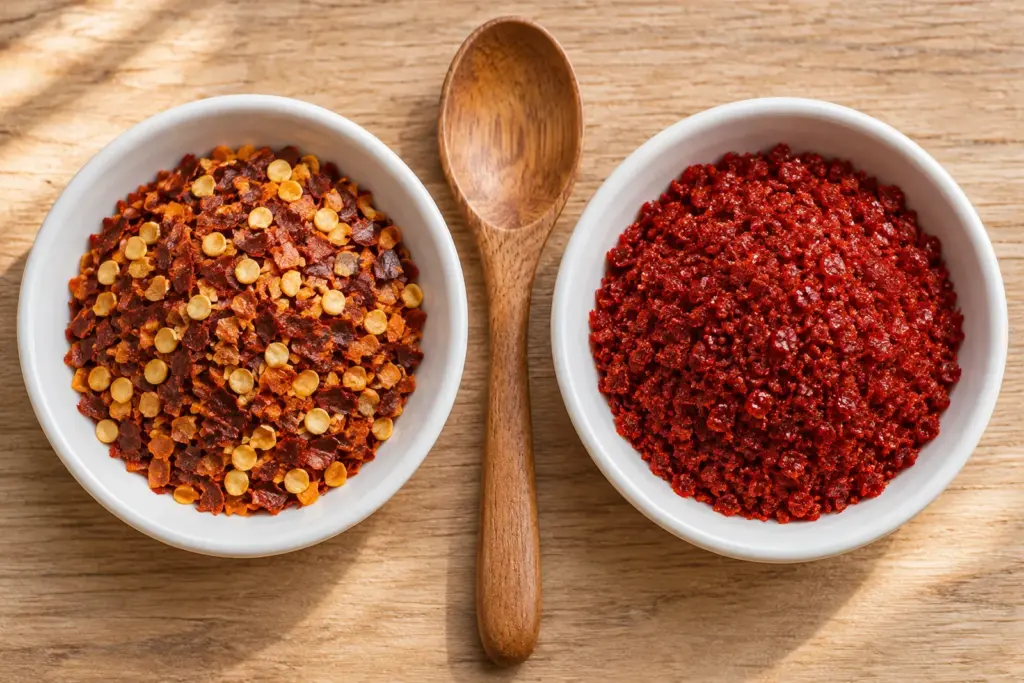
That makes this one of the odd ingredient matchups where the two names often point to the same jar. If a recipe says "chili flakes" or "crushed red pepper", you can usually reach for the shaker you already own, and you only need a different ingredient when the recipe names a specific chile.
1. What Is the Difference Between Crushed Red Pepper and Chili Flakes?
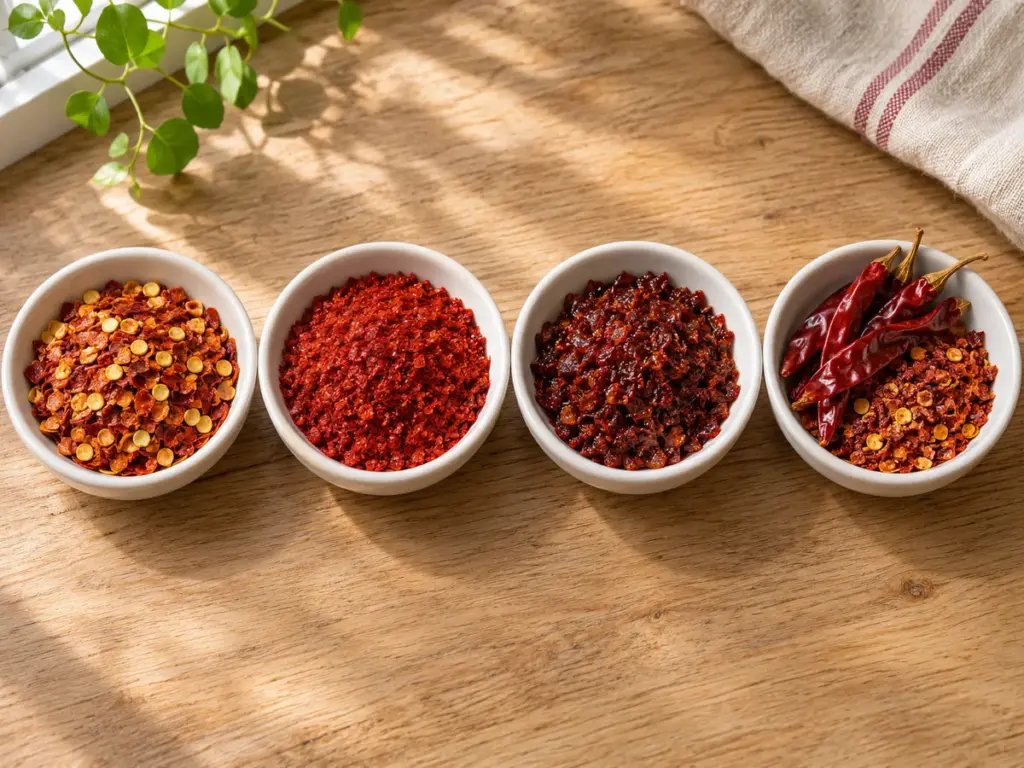
PepperScale calls crushed red pepper and red pepper flakes two terms for the same exact spice, made from several red chiles and most often a cayenne base. "Chili flakes" has no single meaning, so here are the common labels sorted by what is actually in the jar.
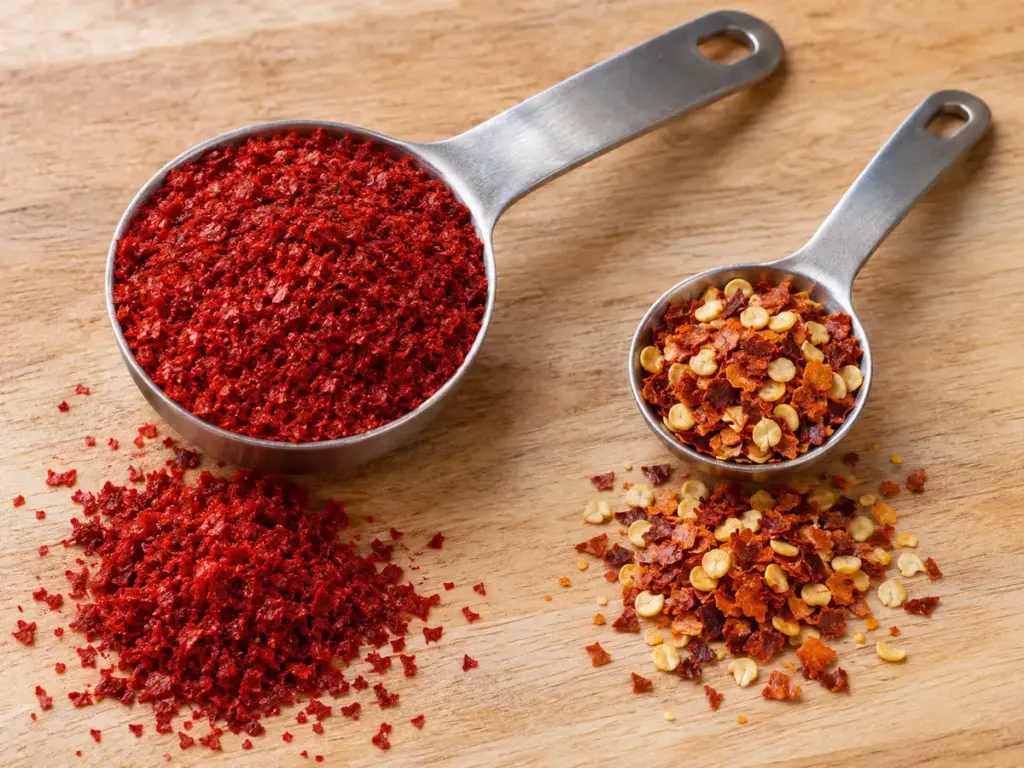
Crushed red pepper or red pepper flakes (grocery jar) is a blend of dried red chiles, most often with a cayenne base. Seeds are often included, and the cayenne base runs 30,000 to 50,000 Scoville, though brands blend differently. It is hot but fairly neutral, with dry orange-red flakes and pale seeds.
- It is made from Korean red chile and is typically seedless.
- Heat is 4,000 to 8,000, with a sweet, slightly smoky taste.
- It is an Aleppo-type chile from Syria and Turkey, with seeds typically removed.
- Heat is about 10,000, with a tart, fruity taste, a touch of salt and oily flakes.
- Urfa biber (isot) is a Turkish chile, dried and sweated, with seeds that vary. Published heat figures disagree widely. It tastes earthy and smoky, with notes of coffee and raisin, and the flakes are dark maroon and moist.
- Chile de árbol flakes come from the Mexican chile de árbol, with seeds that vary. Heat is 15,000 to 30,000, with a nutty, clean taste.
The table splits into two groups. You get plain, strong heat from the grocery jar, and every named chile below it gives you less heat in exchange for a flavor of its own.
2. Which One Is Hotter?
If you want the hottest flake, buy the grocery jar, because a cayenne base measures 30,000 to 50,000 Scoville units, while gochugaru stays near 4,000 to 8,000 and Aleppo near 10,000. A teaspoon of jar flakes can carry several times the heat of a teaspoon of gochugaru, so if you swap them one for one, you can easily ruin the dish.
Treat every Scoville figure as a range. New Mexico State University notes that genetics, weather, growing conditions and fruit age all change a chile's capsaicinoid content, and each brand of jar blend adds its own recipe on top of that, so two jars with the same name can taste different.
Seeds get blamed for the heat, but the capsaicinoids are made in glands on the placenta, the pale ribs the seeds are attached to. Seeds are not the source and only pick up some heat by touching those ribs, according to NMSU's chile cultivar circular.
Seeded flakes still run hotter in practice, because the makers crush the ribs into the jar along with the seeds, while Aleppo-style flakes are usually milder because the makers typically remove the seeds before crushing.
Four things move the heat you actually taste in a dish:
- Which chile it is. Cayenne-based jar flakes start far hotter than gochugaru, so read the ingredient list before you measure.
- How much rib is in the jar. Flakes full of ribs and seeds taste hotter than flakes that are mostly skin.
- When you add them. Capsaicin dissolves in fat, so flakes you stir into oil or sauce spread their heat through the whole dish, while flakes you sprinkle on top land as hot spots.
- How much you use. If you start with a quarter teaspoon per serving and taste after a minute, you can add more without overshooting.
3. Do Flavor and Texture Differ?
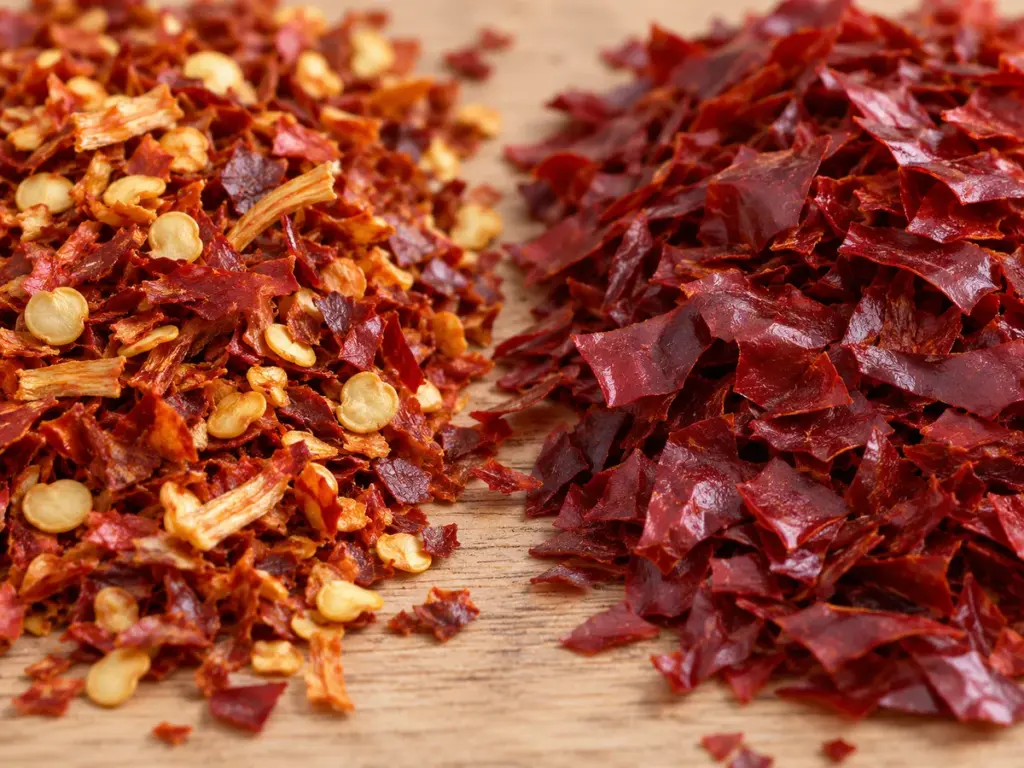
Yes, and this is where single-chile flakes earn their higher price. PepperScale describes cayenne-based crushed red pepper as relatively neutral, so the jar gives you heat and little else. That matches how cayenne tastes on its own, with sharp heat and only a faint earthy note behind it.
Gochugaru tastes sweet and slightly smoky, so it suits soups, stews and marinades where you want red color and body along with heat, and if yours runs out, paprika or chile pasilla can keep that balance.
- Dry, hard flakes that stay crisp on a pizza slice
- Heat first, little fruit or smoke behind it
- Seeds add crunch and a few bitter bites
- Looks orange-red and uneven
- Softer, often slightly oily, and they cling to food
- Fruit, smoke or sweetness around a gentler heat
- Mostly skin, so they dissolve into sauces and oil
- Deeper red to maroon, with more even color
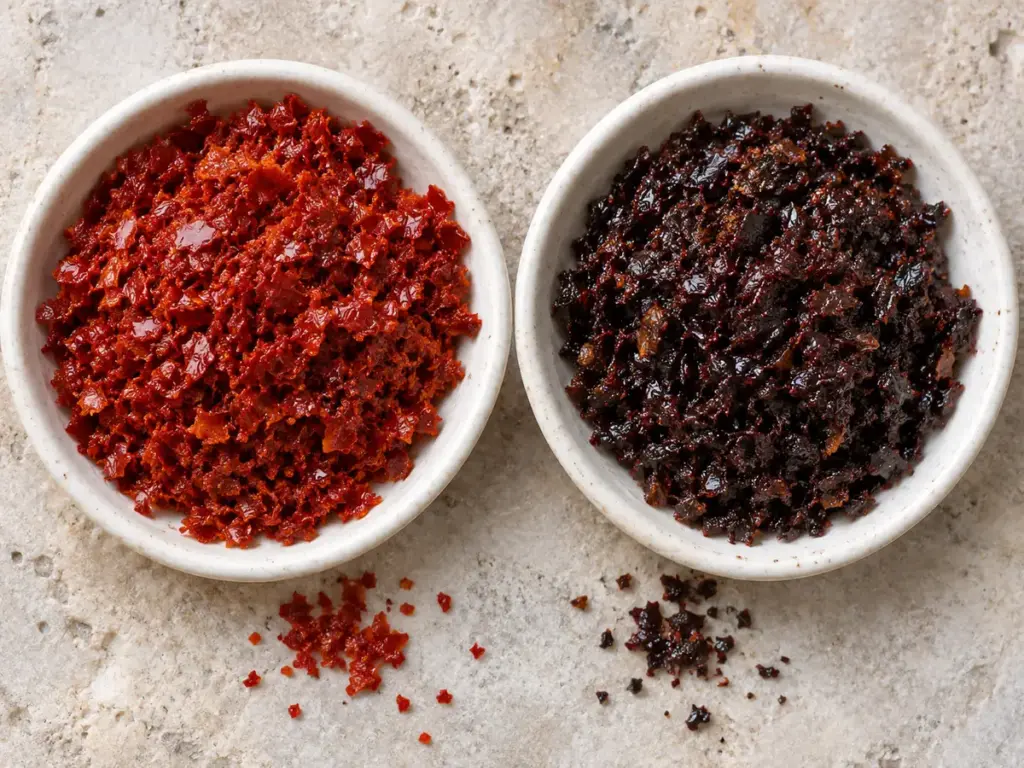
Urfa biber shows how far this can go. PepperScale describes it as moist and oily even when dry, with earthy, smoky notes of coffee, raisin and chocolate, which tastes nothing like a shaker of pizza-parlor flakes. Aleppo pepper sits between the two, because it gives you a tart, tomato-like brightness and a little salt left from drying.
4. Can You Use One Instead of the Other?
If the recipe says "chili flakes" and you have crushed red pepper, swap 1:1, because the recipe almost certainly meant the shaker. Swaps get risky only when the recipe names a chile, since the heat gap can be four times or more. We'd treat these amounts as starting points, not tested results, so add a pinch at a time:
| Recipe calls for | You have | Start with | What changes |
|---|---|---|---|
| Chili flakes or red pepper flakes | Crushed red pepper | 1:1 | Nothing, it is the same jar |
| Gochugaru | Grocery jar flakes | About one quarter of the amount | Much hotter, less sweet and less smoky, so add a pinch of sweet paprika for color |
- If a recipe calls for Aleppo pepper and you have grocery jar flakes, start with about one third to one half of the amount. The dish gets hotter and drier, with no fruity tartness.
- If a recipe calls for grocery jar flakes and you have gochugaru, use 1.5 to 2 times the amount. The dish turns milder, sweeter and redder.
The ratios follow the Scoville ranges above: a recipe built on 4,000 to 8,000 SHU gochugaru needs far less of a 30,000 to 50,000 SHU cayenne blend.
Chile de árbol flakes are the easiest to match, and if your store does not stock them, chile de árbol replacements bring a similar clean heat. If your shaker is empty and the recipe wants jar flakes, you can reach for red pepper flake alternatives such as cayenne, hot paprika or a fresh chile.
A recipe that says "ground red pepper" wants a powder, which spreads through a dish instead of sitting in it. If you grind your flakes fine in a mortar, they can fill in, and other ground red pepper swaps work too. If the recipe asks for powder heat instead, you should know that chili powder and cayenne are powders, so flakes will not blend in the same way.
5. Which Should You Buy or Use?
Choose by the job you need the flakes to do, and ignore the name on the jar:
| Use | Reach for | Why it wins |
|---|---|---|
| Pizza, pasta and arrabbiata | Grocery crushed red pepper | Dry flakes keep their bite, and the plain heat lets tomato and cheese carry the flavor |
| Kimchi, Korean soups and stews | Gochugaru | Sweet, mild heat and red color build the dish instead of overpowering it |
- Reach for chile de árbol flakes or the grocery jar.
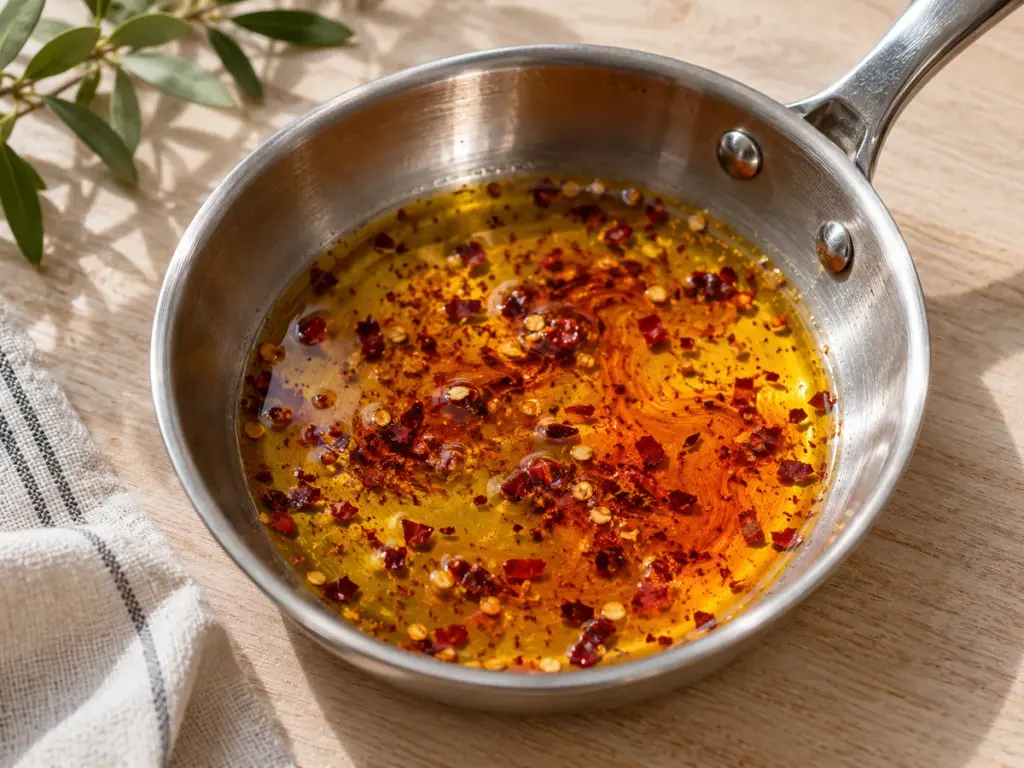
- They give clean heat that infuses into fat, so the flakes go into warm oil before the food.
- Reach for gochugaru or Aleppo pepper.
- You get red color and flavor with a fraction of the cayenne heat.
If your store does not carry Aleppo, you can use an equal amount of ancho or pasilla chili powder, and you can rebuild some of its fruity flavor with a little sweet paprika. If you are out of that too, sweet paprika stand-ins such as mild chili powder can fill the gap.
At the store, you can run four checks to learn what a jar really holds:
- Read the ingredient list. "Red pepper" or "cayenne" means the hot grocery blend, while "gochugaru," "Aleppo" or "chile de árbol" names a single chile.
- Look for seeds. Pale seeds mixed through the flakes point to the hotter, drier jar blend.
- Check the sheen. Oily, dark flakes are Aleppo or Urfa style and will taste fruitier; bone-dry orange flakes will not.
- Buy the smaller jar of the specialty one. Single-chile flakes tend to cost more per ounce than the grocery jar, and you use them for flavor rather than by the spoonful.
Sources
- PepperScale: Red Pepper Flakes vs. Crushed Red Pepper
- New Mexico State University: The Chile Cultivars of New Mexico State University, 1913 to 2022
- New Mexico State University: Measuring Chile Pepper Heat
- PepperScale: Cayenne Pepper, Gochugaru, Aleppo Pepper, Urfa Biber

Food writer at GustoMeadow. Writes ingredient substitutes, food comparisons, taste guides and storage guides for home cooks.
Storage and food-safety numbers follow USDA, FDA and university extension guidance.



