
Vegetable shortening is the first swap to try, and you stir in ½ teaspoon per ounce of melted chocolate in place of paraffin.
- Coconut oil works at 1 tablespoon per cup of chips.
- Almond bark and other vegetable-fat coatings need no paraffin.
- Paraffin wax has no chocolate use in FDA's petroleum wax rule (21 CFR 172.886).
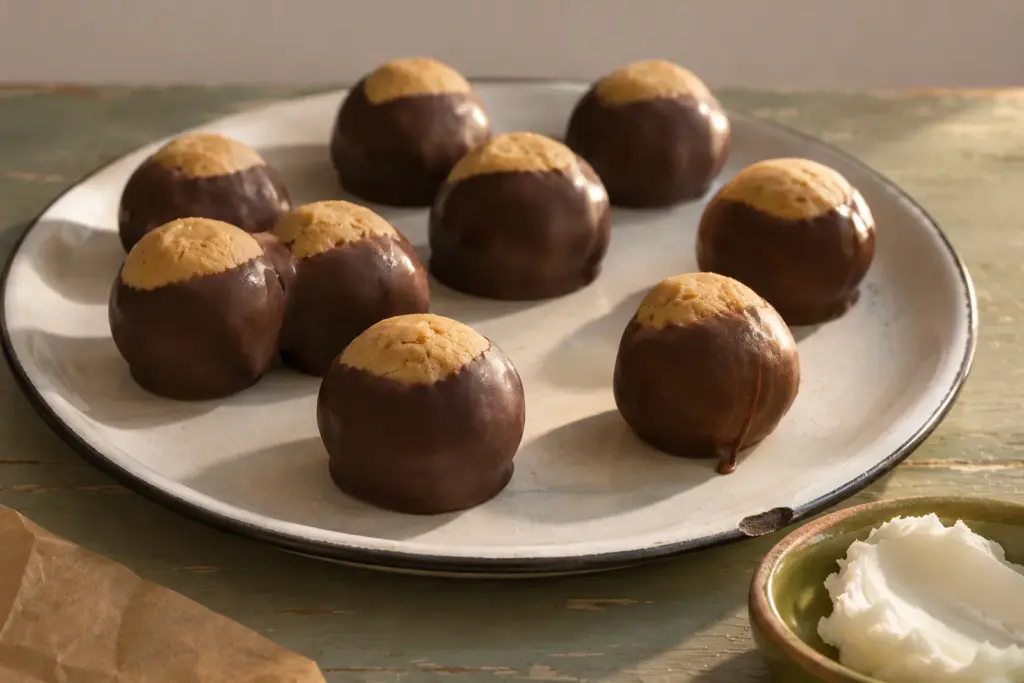
Buckeye-style candy recipes melt chips with a block of paraffin, and you can get a smooth dipping coat from fats made for eating instead, with one of five swaps for missing ingredients.
What Does Paraffin Wax Do in Dipping Chocolate?
Paraffin makes the chocolate easier to dip and gives it a glossy finish when it cools, according to one Christmas-Cookies buckeye recipe. Amounts vary widely, because that recipe melts 2 ounces of paraffin with 24 ounces of chips while a Just a Pinch recipe uses 3 to 4 ounces with 12 ounces.
Three of the swaps below thin the melted chocolate so it coats evenly. How shiny the candy looks depends on how the coating sets, which comes down to tempering.
5 Best Substitutes for Paraffin Wax in Chocolate
| Substitute | Amount | What changes |
|---|---|---|
| Vegetable shortening | ½ teaspoon per oz | Thins, softer shell |
| Coconut oil | 1 tablespoon per cup of chips | Thins, softer shell |
| Cocoa butter | 1% of the weight at a time | Thins, same flavor |
| Almond bark | Replaces chips | No tempering |
| Compound coating | Replaces chips | No tempering |
You stir the first three into melted chips, and the last two replace the chips and the paraffin together.
1. Vegetable Shortening
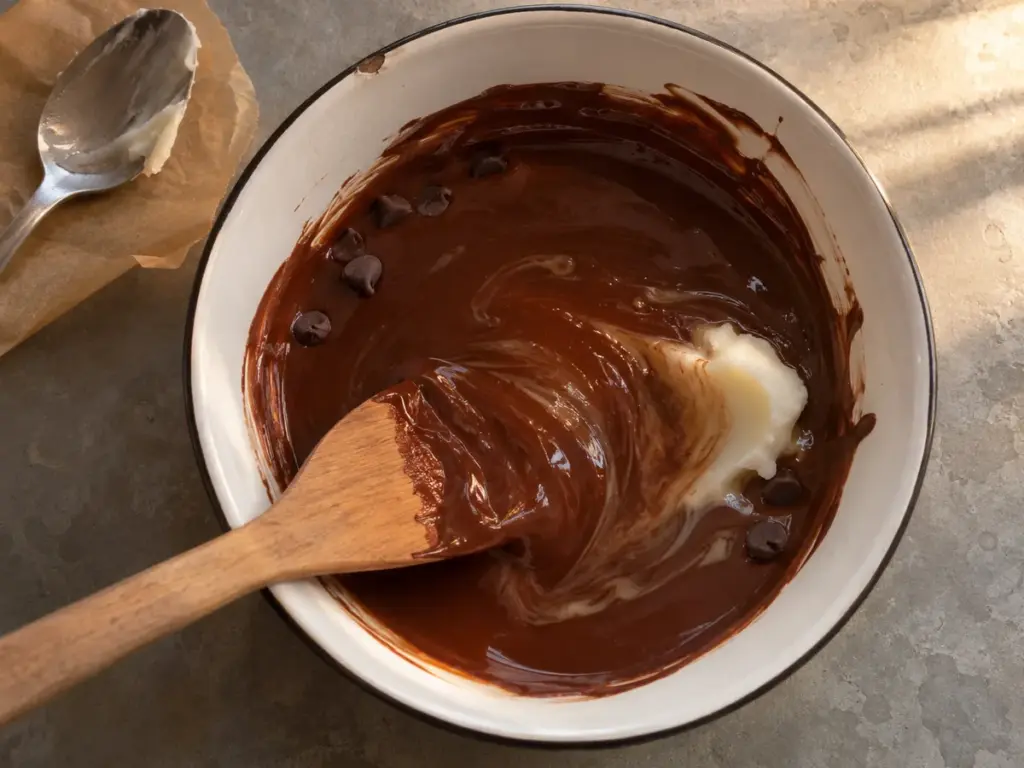
A Just a Pinch recipe tells you to use solid shortening from a tub at ½ teaspoon per ounce of chocolate instead of paraffin, which comes to 6 teaspoons, or 2 tablespoons, for a 12-ounce bag.
You stir it in a little at a time until the chocolate runs off a spoon in a thin, even coat.
Because the shortening only thins the melt, you should not expect the glossy finish that Christmas-Cookies credits to paraffin.
Guittard warns that blending other fats into chocolate gives a softer, quick-to-melt result that blooms more easily, so you keep dipped candy somewhere cool.
2. Coconut Oil
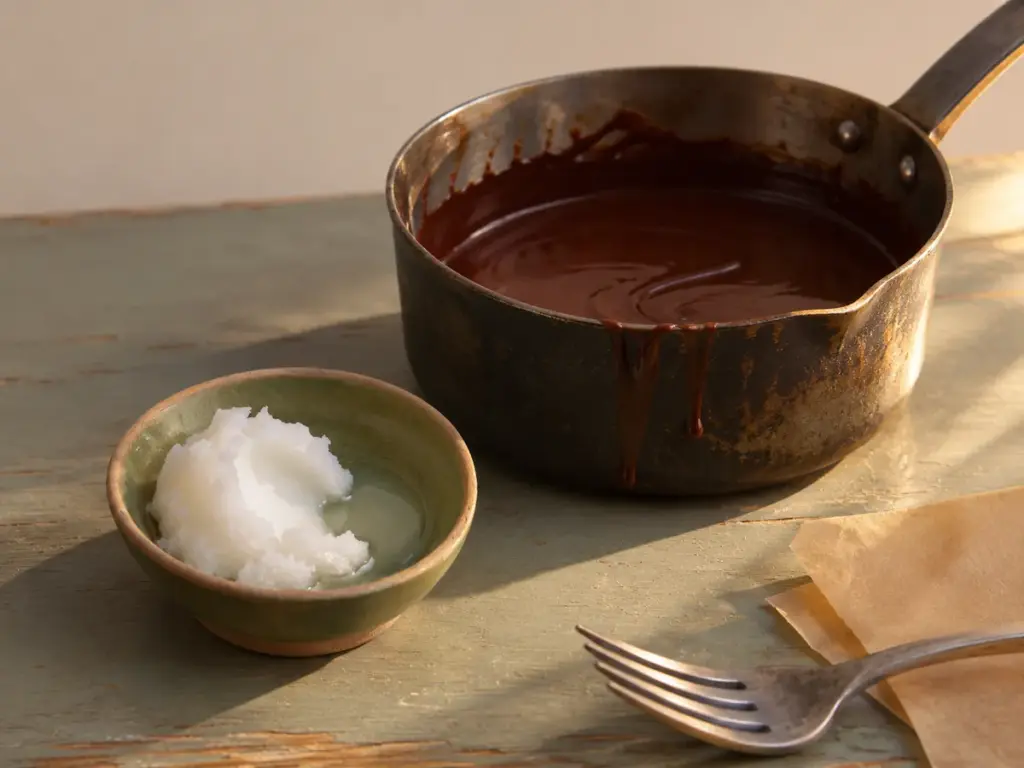
If you want to drop the paraffin and skip tempering, the Christmas-Cookies recipe suggests 1 tablespoon of solid coconut oil per cup of chocolate chips.
The oil goes in after the chips have melted, and you stir until no streaks remain.
Guittard says coconut and other lauric fats belong in chocolate very sparingly, because they make it softer and more prone to bloom.
Guittard gives no amount, so the Christmas-Cookies figure of 1 tablespoon per cup makes a sensible ceiling, and dipped candy belongs at the 60 to 70°F that Guittard recommends for chocolate.
3. Cocoa Butter
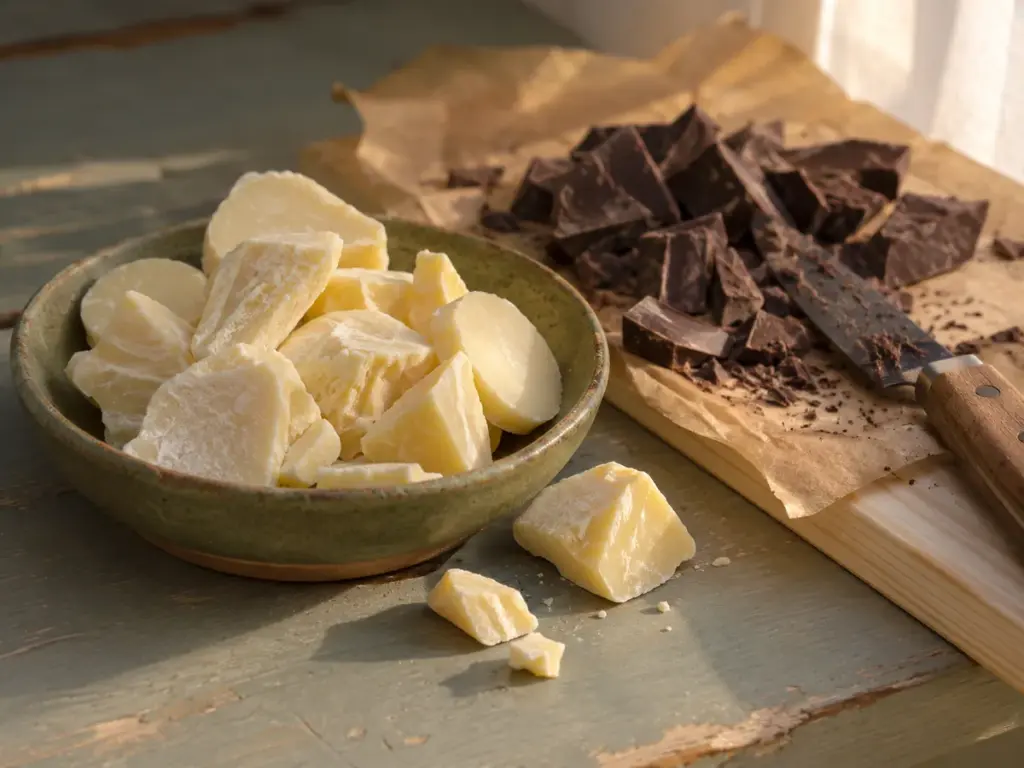
Because cocoa butter is the fat already inside chocolate, a little of it thins the melt without bringing in a new ingredient. Guittard advises adding it 1% of the chocolate's weight at a time and mixing well between additions until the flow suits you.
For a 12-ounce bag, 1% comes to about 3.4 grams. Chopped or grated cocoa butter melts more evenly, and each portion goes in only after the last one has disappeared.
If you have only cacao butter on the shelf, it can stand in with a small change in flavor.
4. Almond Bark
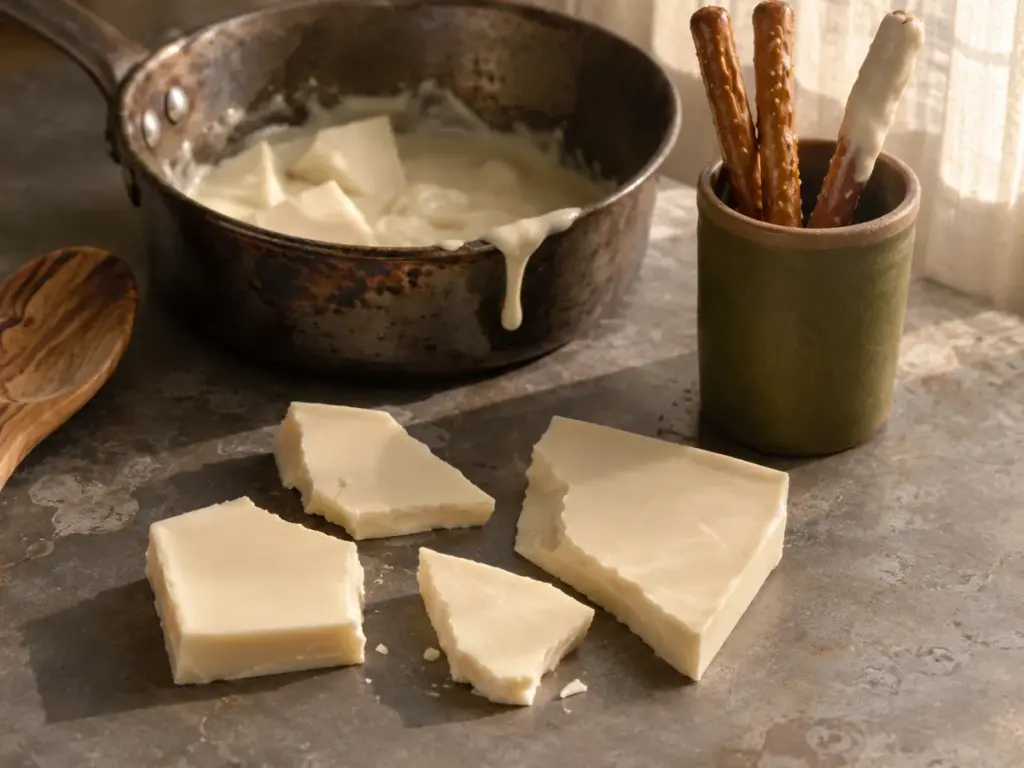
Almond bark takes the place of both the chips and the paraffin. Unlike white chocolate, it uses vegetable fat in place of cocoa butter, and Loran Oils notes that a vegetable-fat coating does not need tempering.
Its ivory color suits pretzels and white coatings, while brown candy calls for the chocolate-flavored coating in item 5.
You melt it in a bowl over water kept at about 120°F, with steam kept off the pieces.
Burned coating turns thick and lumpy, so the slow water bath is worth the wait.
5. Compound Coating and Candy Melts
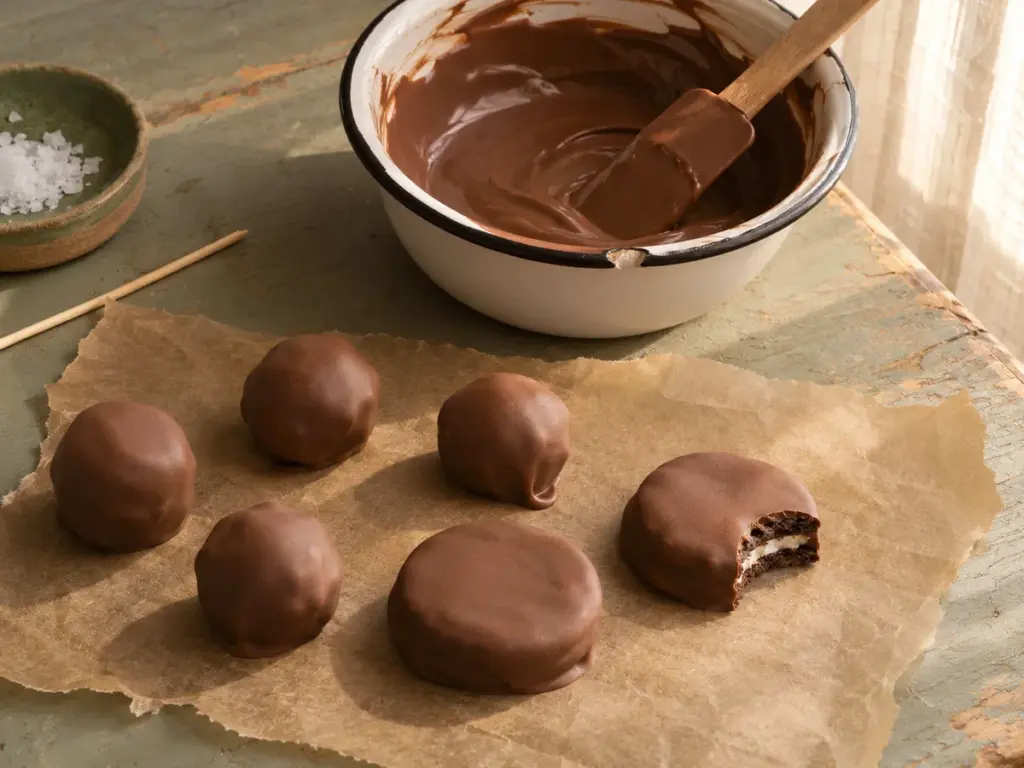
Chocolate-flavored compound coating and colored candy melts, sold as melting wafers, are confectionery coatings made with vegetable fat, so they need no tempering. That leaves you less to manage when you dip cookies, cake pops and peanut butter balls.
If the melted coating turns thick, you can stir in a small amount of vegetable shortening.
For a shiny shell, Loran Oils suggests shock chilling, which means you put the dipped candy in the refrigerator to set.
Can You Skip the Additive and Temper the Chocolate?
Yes, when bar chocolate is what you start with. With tempering, the cocoa butter sets in a stable form, so you get chocolate that hardens with a sheen and needs no added fat.
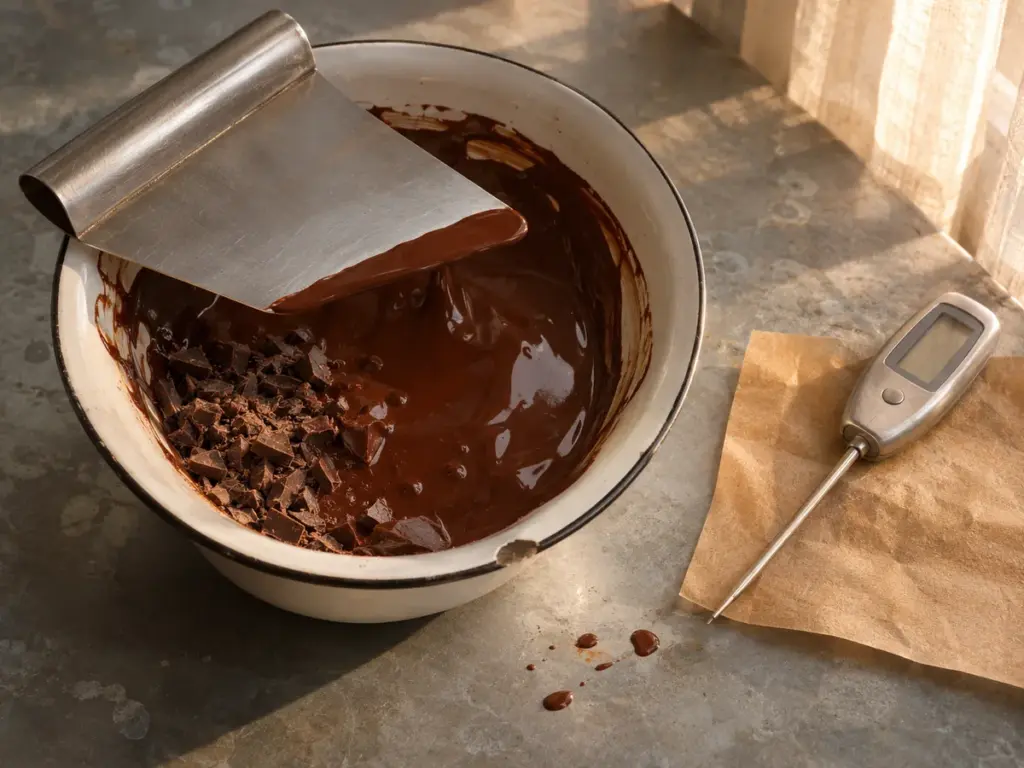
Guittard's seeding method for dark chocolate uses these steps:
- Melt to 120-122°F (milk and white: 115-117°F).
- Add chopped chocolate in 3 to 4 additions to seed the melt, stirring slowly.
- Work at 88-90°F (milk and white: 86-88°F).
- Test a scraper tip: it should start to set within 2 minutes with an even sheen.
Why Is Chocolate Dull, Streaky or Seized?
- King Arthur says untempered chocolate looks dull or streaky and keeps a fingerprint when you touch it.
- A white film that melts when you touch it is fat bloom, which Guittard traces to poor temper or warm storage.
- If the film is dusty and does not melt, you are seeing sugar bloom, from humidity or a cold-to-warm jump.
Guittard's fix for sugar bloom is to keep chilled candy wrapped until it reaches room temperature.
Which Swaps Should You Skip?
- FDA lists food-grade beeswax at a maximum of 0.005% in confections and frostings, a far smaller dose than the ounces of paraffin in the recipes above, so you have no amount to copy.
- Guittard says other oils make chocolate softer and quicker to melt, so you should add any liquid vegetable oil sparingly.
Sources
- FDA, 21 CFR 172.886, petroleum wax
- FDA, 21 CFR 184.1973, beeswax
- Guittard, chocolate handling and tempering
- Guittard, problem solving (bloom and storage)
- Guittard, adding other fats and oils
- King Arthur, how to temper chocolate
- King Arthur, mixing chocolate and water
- Loran Oils, working with confectionery coating
- Christmas-Cookies, Buckeyes
- Just a Pinch, Best Buckeyes

Food writer at GustoMeadow. Writes ingredient substitutes, food comparisons, taste guides and storage guides for home cooks.
Storage and food-safety numbers follow USDA, FDA and university extension guidance.



