
Canned black-eyed peas are the closest swap for pigeon peas, used 1:1 by drained volume.
- Canned red kidney beans are the usual swap in Jamaican rice and peas.
- Split red lentils stand in for toor dal in dal and cook in 5 to 7 minutes.
- Chickpeas and white beans both hold up in soups and stews.
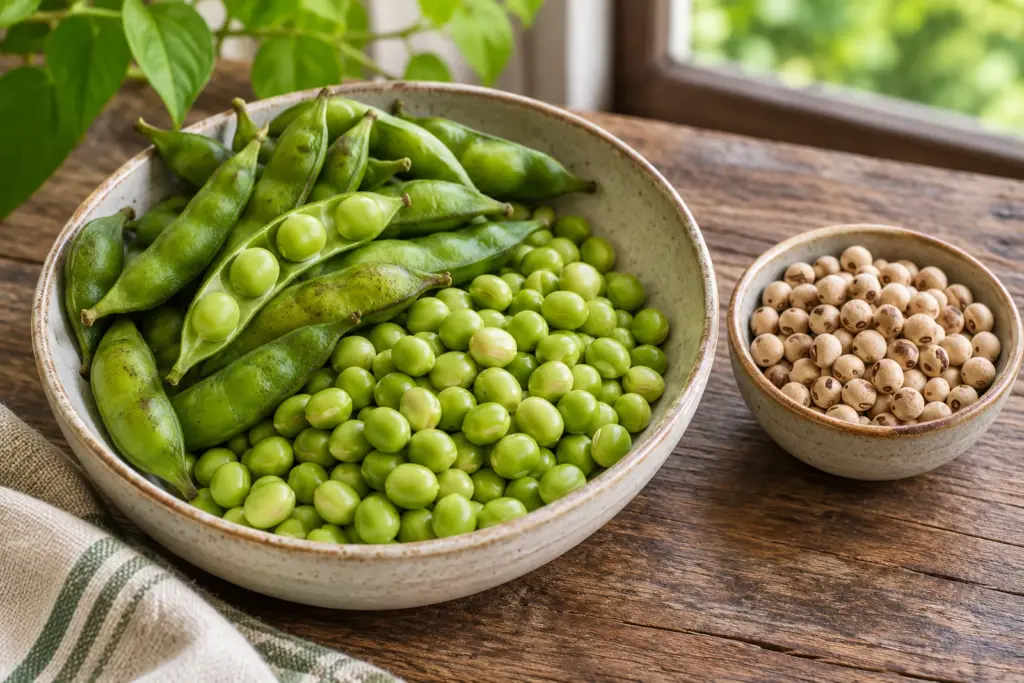
Pigeon peas turn up in three kinds of dishes, so the right swap depends on which one you are cooking: green gandules in Puerto Rican arroz con gandules, gungo peas in Jamaican rice and peas, and split toor dal in Indian dal. All the pantry swaps below are canned or dried beans or lentils.
Which Kind of Pigeon Peas Does Your Recipe Use?
One plant gives you three products that cook very differently. Green pigeon peas are the immature seeds, sold canned or frozen as gandules, while dried whole pigeon peas are the mature seeds.
Toor dal is that same mature seed split and skinned, so the form your recipe names tells you which swap in the table fits.
| Form of pigeon pea | Where you meet it | Best swap |
|---|---|---|
| Green gandules (canned or frozen) | Arroz con gandules, which cooks the peas in rice with sofrito | Black-eyed peas, chickpeas |
| Dried whole pigeon peas (gungo peas) | Jamaican rice and peas, soups and stews | Red kidney beans, white beans |
| Toor dal (split and skinned) | Dal served over rice | Split red lentils |
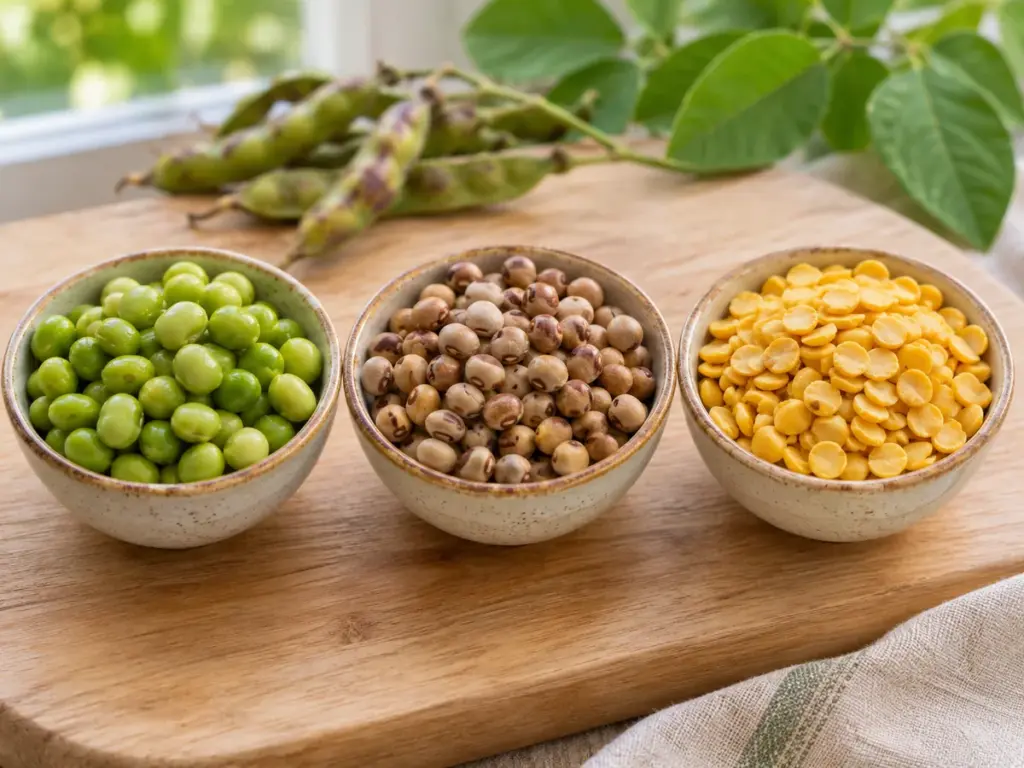
Dried whole pigeon peas are slow to cook, and a 2025 paper in Frontiers in Sustainable Food Systems names their cooking time of 170 to 210 minutes as the main barrier to wider use, far longer than other pulses. A canned swap saves you most of that time, because the beans are already cooked.
5 Best Substitutes for Pigeon Peas
| Swap | Ratio | Best for | What changes |
|---|---|---|---|
| Black-eyed peas | 1:1, canned, drained | Arroz con gandules | Dark eye on each pea |
| Chickpeas | 1:1, canned, drained | Soups, stews, rice | Larger beans |
| Red kidney beans | 1:1, canned, drained | Jamaican rice and peas | Red-brown tint |
| Red lentils | 1:1, dry for dry toor dal | Dal only | Done in 5 to 7 minutes |
| White beans | 1:1, canned, drained | Soups, stews | Pale, no tint |
You measure the canned beans drained and the red lentils dry, because the lentils stand in for dry toor dal.
1. Black-Eyed Peas
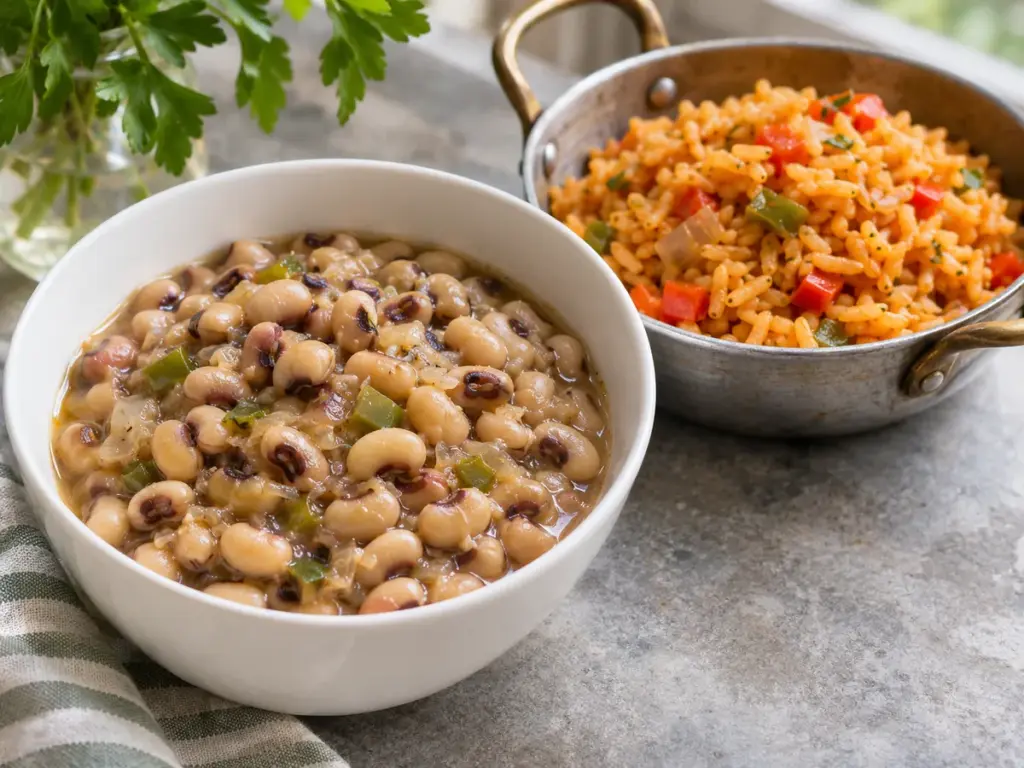
Black-eyed peas are the best match for arroz con gandules, which Wikipedia describes as rice made with pigeon peas and sofrito. A cup of drained peas replaces each cup of gandules, and you will see a dark eye on every pea.
You drain and rinse a can, then stir the peas in when your recipe adds the gandules, with the rice and liquid, right after the rice toasts in the sofrito base.
Dried black-eyed peas work too, and you do not need to soak them. Maine Extension simmers them for half an hour to 1 hour.
The Nebraska Dry Bean Commission says they are done when you can mash one between your fingers or with a fork, and at that point they are ready for the rice pot.
2. Chickpeas
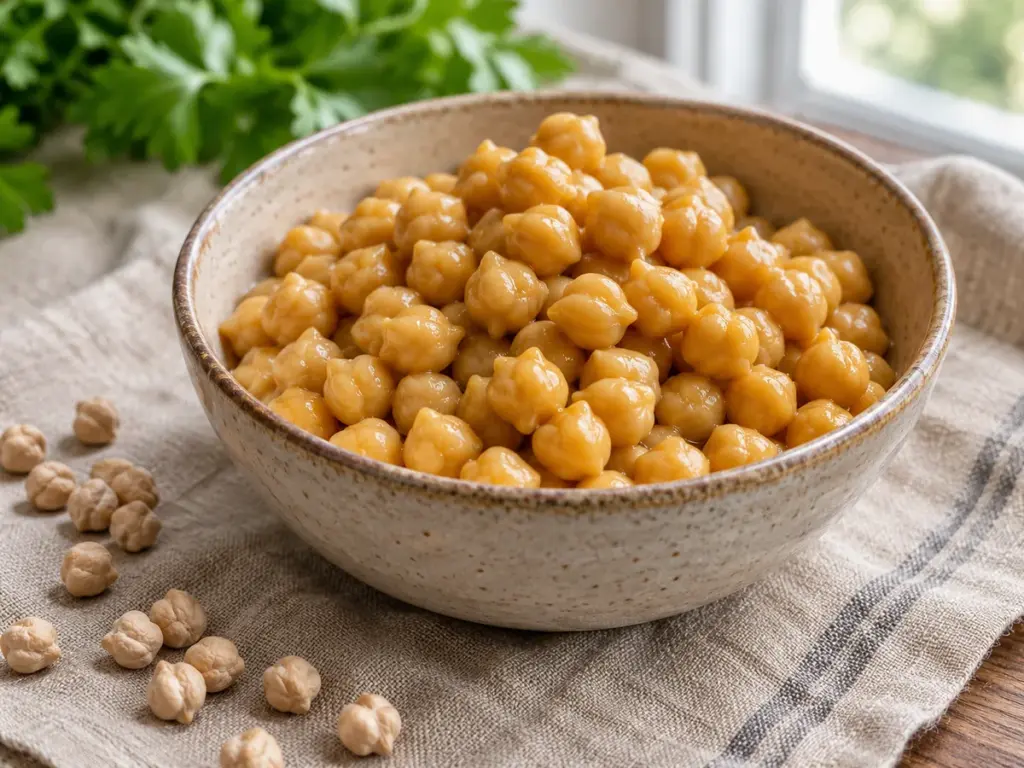
Chickpeas are the safe pick when you have no other bean in the pantry, and a cup of drained canned chickpeas replaces a cup of pigeon peas in soups, stews and rice pots.
A 15-ounce can holds 1½ cups of cooked beans, according to the Nebraska Dry Bean Commission, so a recipe that asks for 3 cups of pigeon peas takes two cans (calculated from that figure). Because chickpeas are bigger than pigeon peas, a few mashed against the side of the pot thicken the broth.
3. Red Kidney Beans
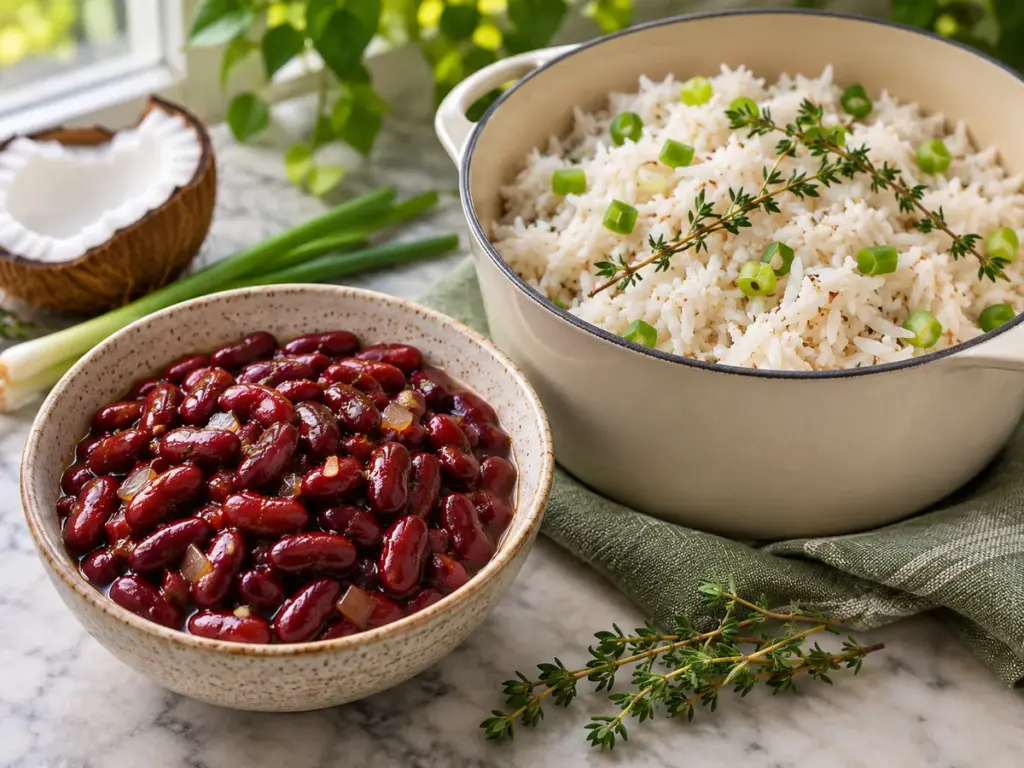
For Jamaican rice and peas, red kidney beans are the usual choice. Wikipedia says kidney beans and similar red cultivars are normally used for the dish, and that gungo peas (pigeon peas) are the alternative, traditionally cooked at Christmas.
You add canned red kidney beans with the coconut milk at 1:1 by drained volume, and the rice picks up a red-brown tint that pigeon peas would not give.
4. Red Lentils
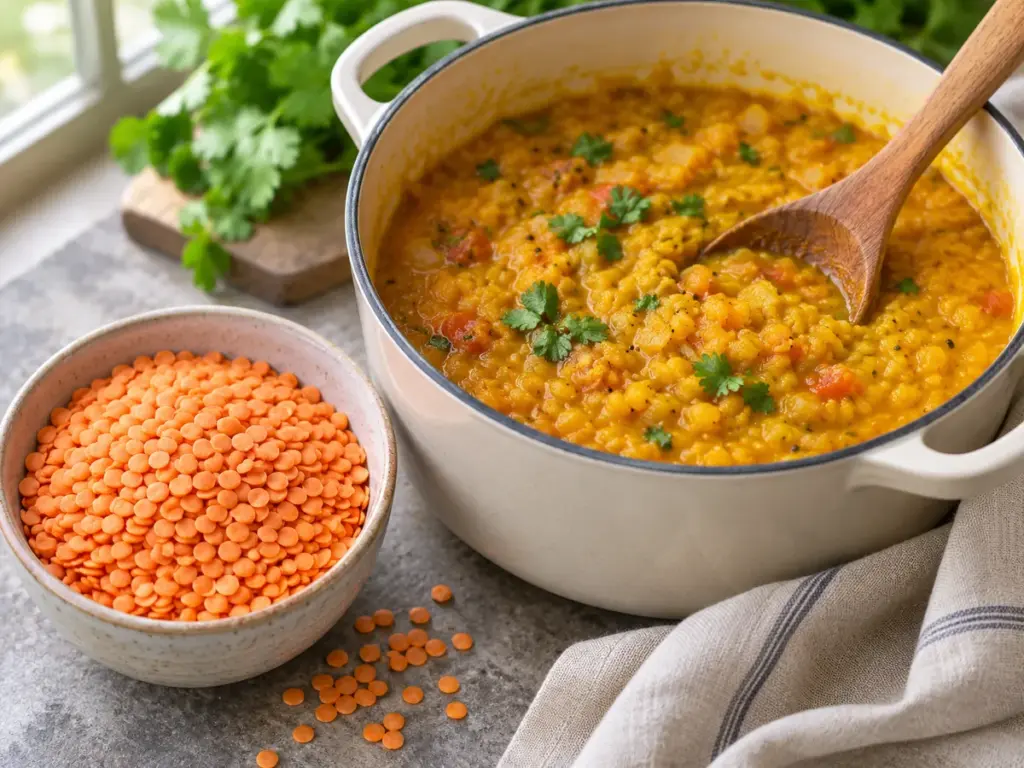
Red lentils stand in for toor dal in dal only, because the USA Dry Pea and Lentil Council says split red lentils blend easily into foods, and they would not stay whole in a rice pot.
You can start with 1 cup of dry split red lentils for each cup of dry toor dal, and they cook in about 5 to 7 minutes with no soaking.
That is much faster than the toor dal your recipe was timed for, since the same paper measured 26 to 54 minutes for dehulled pigeon peas. Your lentils will need checking well before the recipe's time is up.
The Council warns that early salt makes lentils tough, so you salt the dal after cooking and then serve it over rice or with flatbread and chutney.
5. White Beans
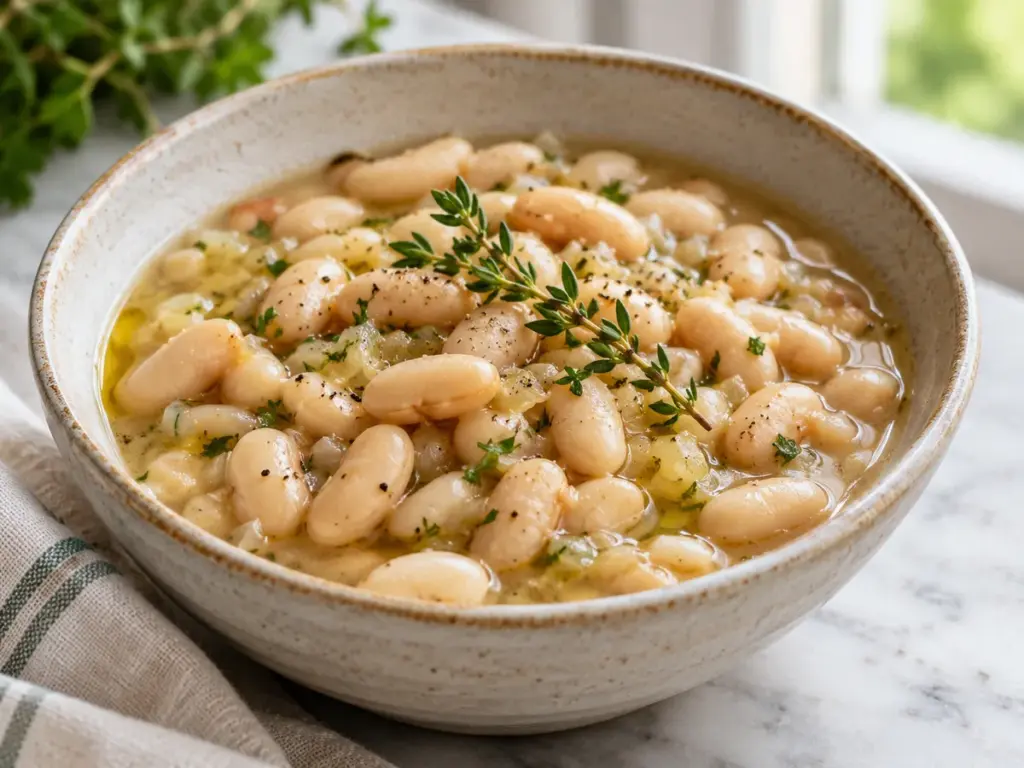
Cannellini, Great Northern and navy beans all work, and they suit soups and stews better than rice dishes. Their pale color leaves the broth untinted.
Canned, drained Great Northern beans go in at 1:1 near the end of the soup, since they are already cooked. You add cannellini the same way.
If you start from dried white beans, they need the same 5-hour soak and 30-minute boil as dried kidney beans.
Which Substitutes Should You Skip?
How Do the Swaps Compare in Nutrition?
Every swap has more protein per cup than dried pigeon peas, and black-eyed peas come closest. For fiber, all of them match or beat dried pigeon peas except black-eyed peas, which have 0.2 g less.
| Cooked, no salt (1 cup) | Protein | Fiber |
|---|---|---|
| Pigeon peas, dried | 11.4 g | 11.3 g |
| Pigeon peas, green | 9.1 g | 6.4 g |
| Black-eyed peas | 13.2 g | 11.1 g |
| Chickpeas | 14.5 g | 12.5 g |
| Red kidney beans | 15.3 g | 11.3 g |
| Lentils | 17.9 g | 15.6 g |
| White beans | 17.4 g | 11.3 g |
Each cup is calculated from USDA per-100 g values and the cup weight USDA lists. Canned beans differ a little, and USDA has no entry for cooked red lentils specifically, so the lentil row uses the general cooked-lentil entry.
Sources
- USDA FoodData Central, FDC 172437, 170430, 173759, 173757, 173740, 172421 and 175203 (cooked, boiled, without salt).
- FDA, Natural Toxins in Food (raw beans, 5-hour soak, 30-minute boil, canned beans).
- USA Dry Pea and Lentil Council, How to Cook Lentils (split red lentil time, salt, blending into food).
- Wikipedia, Pigeon pea (names, toor dal, arroz con gandules).
- Wikipedia, Rice and peas (kidney beans and gungo peas in Jamaican rice and peas).
- Machinjili, Kabambe and Mwangwela (2025), Frontiers in Sustainable Food Systems 9 (170 to 210 minutes named as the barrier in its introduction; dehulled samples measured at 26 to 54 minutes).
- University of Maine Extension, How to Store and Cook Dried Beans (black-eyed peas: no soaking, simmer time).
- Nebraska Dry Bean Commission, Cooking (15-ounce can = 1½ cups cooked, doneness test).

Food writer at GustoMeadow. Writes ingredient substitutes, food comparisons, taste guides and storage guides for home cooks.
Storage and food-safety numbers follow USDA, FDA and university extension guidance.



