
The easiest Red Leicester swap in a US store is medium orange Cheddar, used 1:1.
- Colby is the next easiest to find, and it is milder, softer and also orange.
- Double Gloucester is the closest cousin, but you will usually need a cheese shop to find it.
- Young Gouda and Monterey Jack melt well, but both are pale, so the dish will not turn orange.
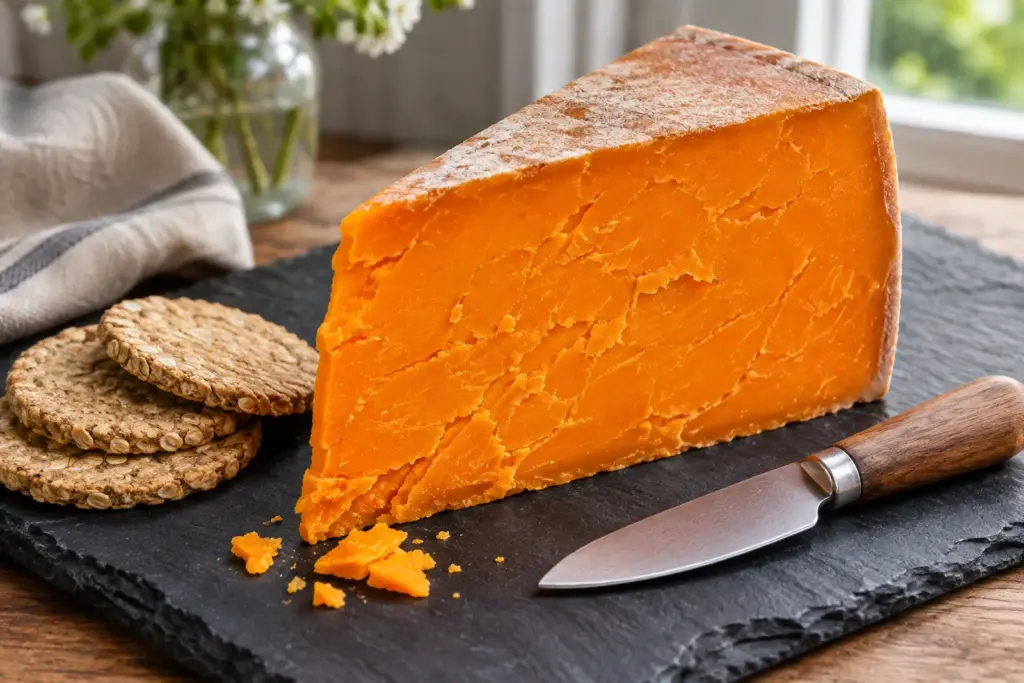
Red Leicester is an English cheese that most US supermarkets do not stock, so the best swaps for a missing ingredient here are cheeses already in your dairy case. Every swap below works 1:1 by weight or by cup. What changes from one to the next is the orange color, the firm and slightly flaky bite, and how soft the melt turns out.
What Does Red Leicester Do in a Recipe?
Red Leicester gets its deep orange color from annatto, a natural dye made from the seeds of the achiote tree. Older recipes used carrot or beet juice instead. Culture magazine describes the cheese as firm, smooth and relatively high in moisture, and Cook's Info calls it a crumblier, flakier relative of Cheddar that melts well.
Young Red Leicester tastes very mild, and it needs about six months to develop a tang, according to Cook's Info. A mild or medium Cheddar therefore fits a young wheel, and a sharper Cheddar fits an aged one.
Best Substitutes for Red Leicester
Pick by what your dish needs most. The first three rows keep an orange color, and the last two trade it for an easier melt.
| Substitute | Ratio | Best for | What changes |
|---|---|---|---|
| Medium orange Cheddar | 1:1 | Cheese on toast, sandwiches, sauces | Slightly sharper and less crumbly |
| Colby | 1:1 | Melting, mac and cheese | Milder, softer, more open texture |
| Double Gloucester | 1:1 | Cheese boards, any recipe that names Red Leicester | Closest match, harder to find |
- Young Gouda works 1:1 for melting over toast and vegetables. It is pale and buttery, with no orange color.
- Monterey Jack works 1:1 in sauces and toppings where color does not matter. It is pale and very mild.
Color and tang decide the choice more than texture does. If the dish has to look orange, stay with the first three rows.
1. Medium Orange Cheddar
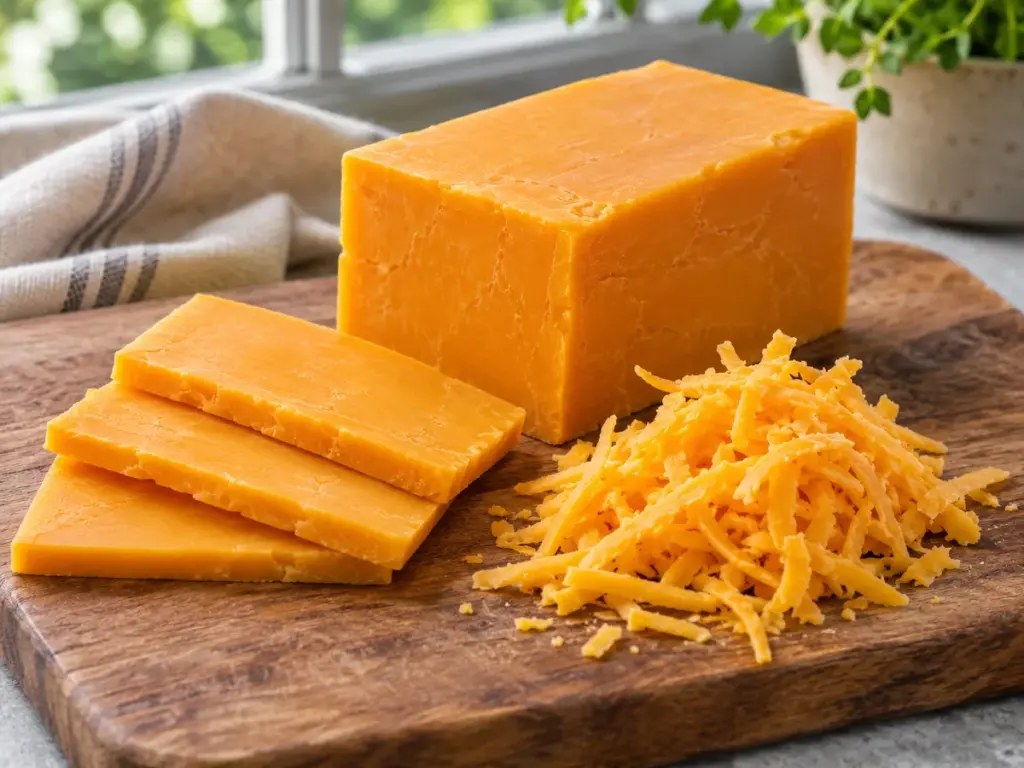
Cheddar is the swap you can buy at any grocery store, and most orange Cheddar gets its color from annatto, just like Red Leicester. It is firmer and less flaky, but it grates and melts well. The FDA caps Cheddar at 39 percent moisture, a little below Colby.
Match the age to your recipe: take mild or medium for a young Red Leicester and a sharp block for an aged one. If you are unsure which to buy, you can see how mild and medium Cheddar differ before you shop.
2. Colby
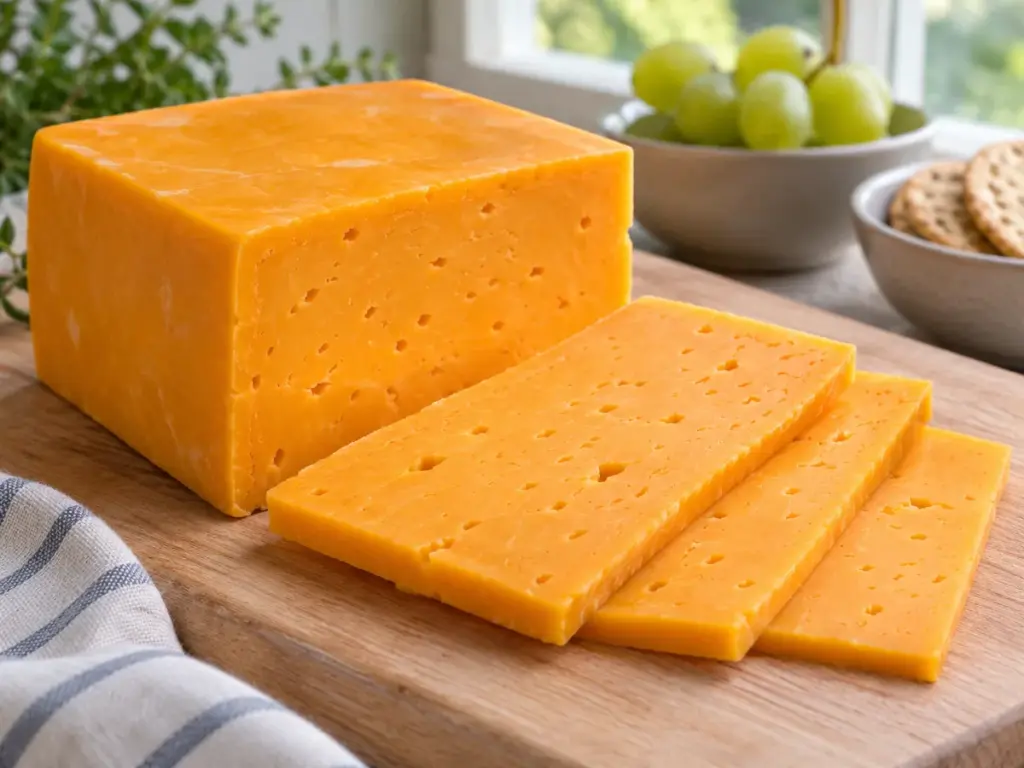
Colby is an American cheese from Wisconsin. Its makers rinse the curd with cool water, which leaves more moisture and a milder, sweeter taste than Cheddar, and Culture magazine says Colby melts beautifully. The FDA allows up to 40 percent moisture in Colby.
Use it when you want a gentle, creamy melt and your dish will not miss a sharper bite. Traditional Colby is colored with annatto, so it keeps the orange look, but a block labeled white will not.
3. Double Gloucester
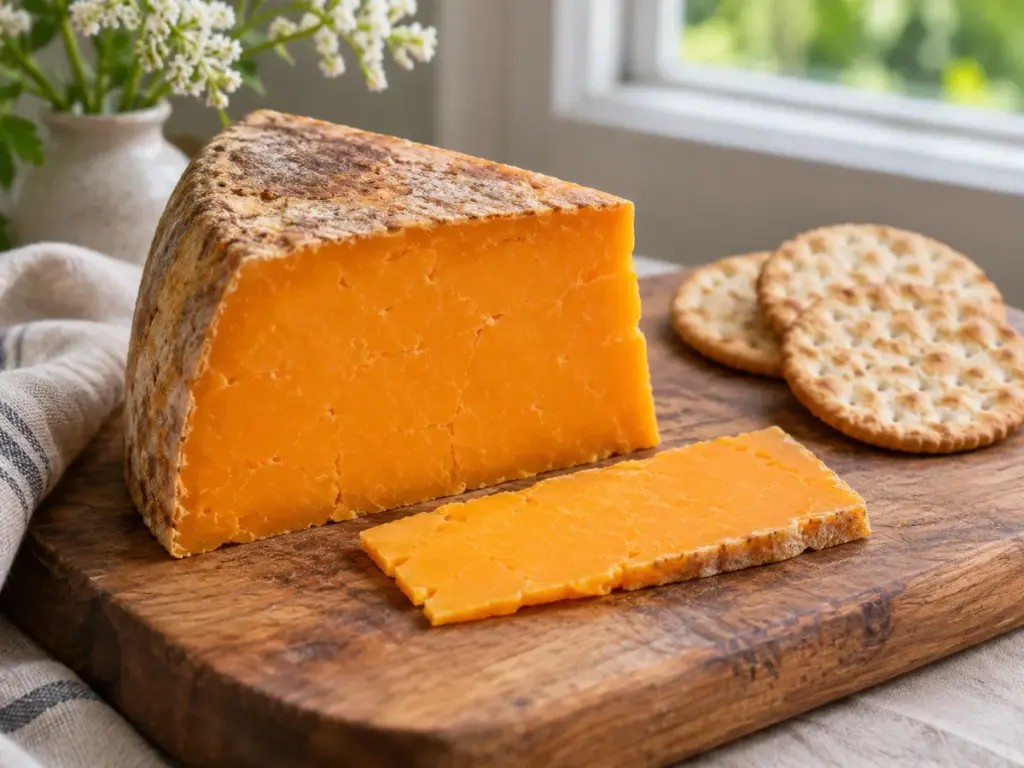
Double Gloucester is the closest cousin because it is also an English cow's milk cheese colored with annatto, a tradition Culture magazine dates to the 16th century. It calls Appleby's version firm yet moist, rich and slightly tangy, which sits very near how Red Leicester is described.
It is the swap for a cheese board or for a dish that names Red Leicester. Ask at a cheese shop or a specialty counter, because a regular supermarket may not carry it, and the shade runs from pale to deep orange between makers.
4. Young Gouda
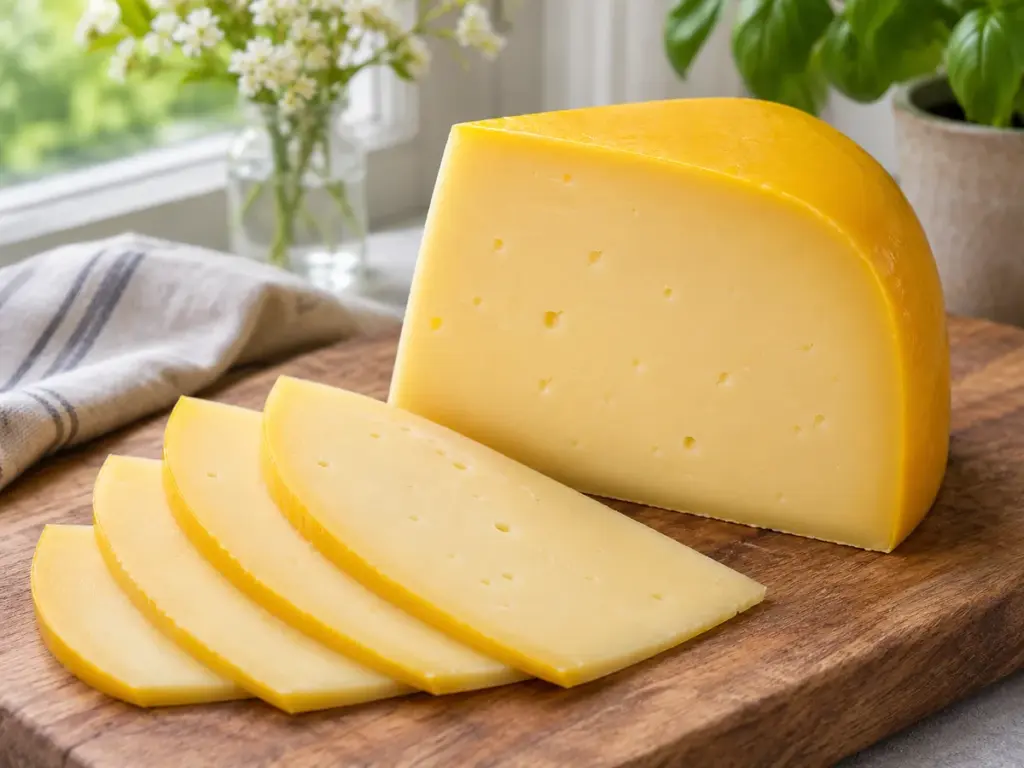
Gouda is Dutch, and the US Dairy Export Council says young versions are mild and buttery. Its higher milkfat means it flows when melted and resists browning, so it makes a smooth topping for toast or vegetables. The FDA allows up to 45 percent moisture in Gouda, the highest ceiling of the four cheeses it defines here.
Pick young Gouda over aged, which turns nutty and caramel-like and no longer resembles a mild Red Leicester. Expect a pale yellow result, because Gouda has no annatto to give an orange tint. To compare ages before you buy, read how Gouda tastes from young to aged.
5. Monterey Jack
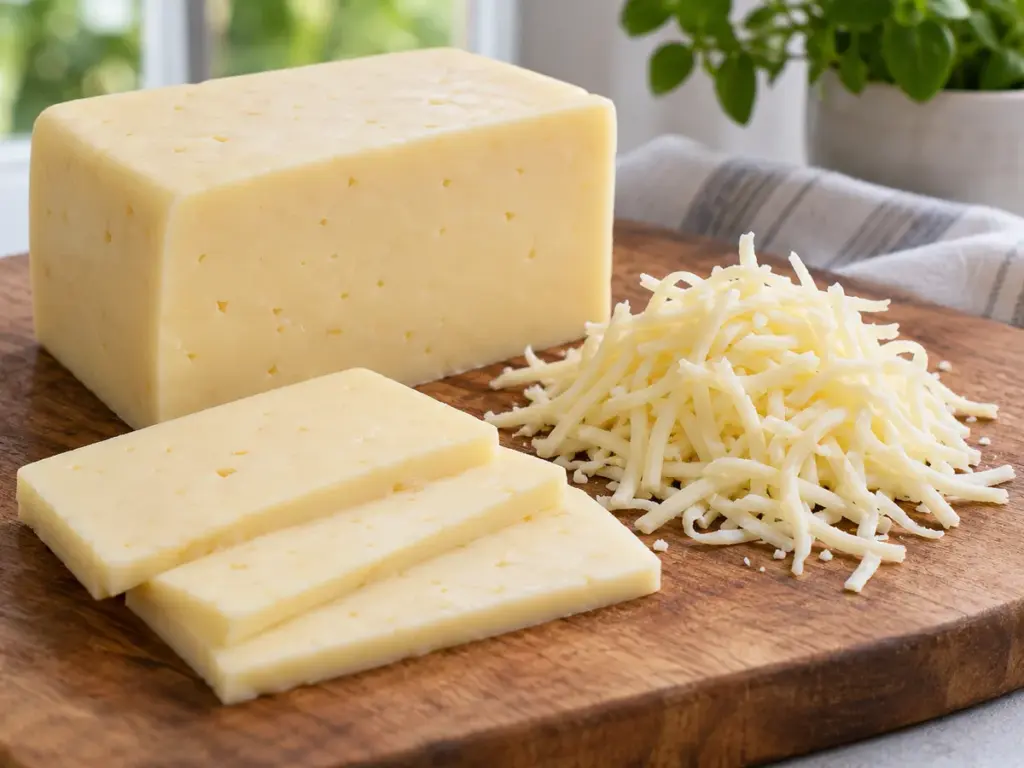
Monterey Jack is the mildest option here. The FDA standard allows up to 44 percent moisture and requires pasteurized milk, so it is a reliable melter in sauces and toppings. It brings almost no tang and no orange color.
If the store only has Colby Jack, a marbled mix of orange Colby and white Jack, you get a little of the color back. A Colby Jack versus Monterey Jack comparison helps you choose between them.
Which Substitute Should You Use for Your Dish?
- Cheese on toast: medium orange Cheddar, or Colby for a softer melt
- Cheese board: Double Gloucester if you can find it, otherwise a sharp orange Cheddar
- Orange cheese sauce: Colby or orange Cheddar
- Melting over vegetables or toast: young Gouda
- Quesadillas and white sauces: Monterey Jack
- Grating over a bake: Cheddar, Colby or Monterey Jack
Red Leicester melts well, so a British-style cheese toastie is the easiest dish to copy with orange Cheddar from your own fridge.
Which Swaps Work Less Well?
Skip Gruyere and Swiss for this job. Gruyere is a pale Swiss cheese with a nutty, slightly sweet flavor, so you lose both the orange color and the mild, flaky bite. Its nutty, earthy flavor sits far from the mild, clean taste of a young English cheese.
Leave out Pepper Jack as well. It is Monterey Jack with chile peppers added, and the heat will cover the mild, nutty taste you are trying to match.
Sources
- Culture magazine, Red Leicester (Sparkenhoe)
- Cook's Info, Red Leicester Cheese
- Wisconsin Cheese, White Cheddar vs Orange Cheddar
- FDA, 21 CFR Part 133 (cheese standards of identity)
- Culture magazine, Classic Colby
- Culture magazine, Double Gloucester (Appleby's)
- US Dairy Export Council, Gouda and Edam

Food writer at GustoMeadow. Writes ingredient substitutes, food comparisons, taste guides and storage guides for home cooks.
Storage and food-safety numbers follow USDA, FDA and university extension guidance.



