
Tahina and tahini are the same ingredient, a paste of ground sesame seeds, spelled two ways.
- The spellings come from one Arabic word, so the spelling says nothing about the seeds.
- Your dish changes with hulled or unhulled and raw or roasted seeds.
- Tahina sauce is the plain paste whisked with water, lemon juice, garlic and salt.
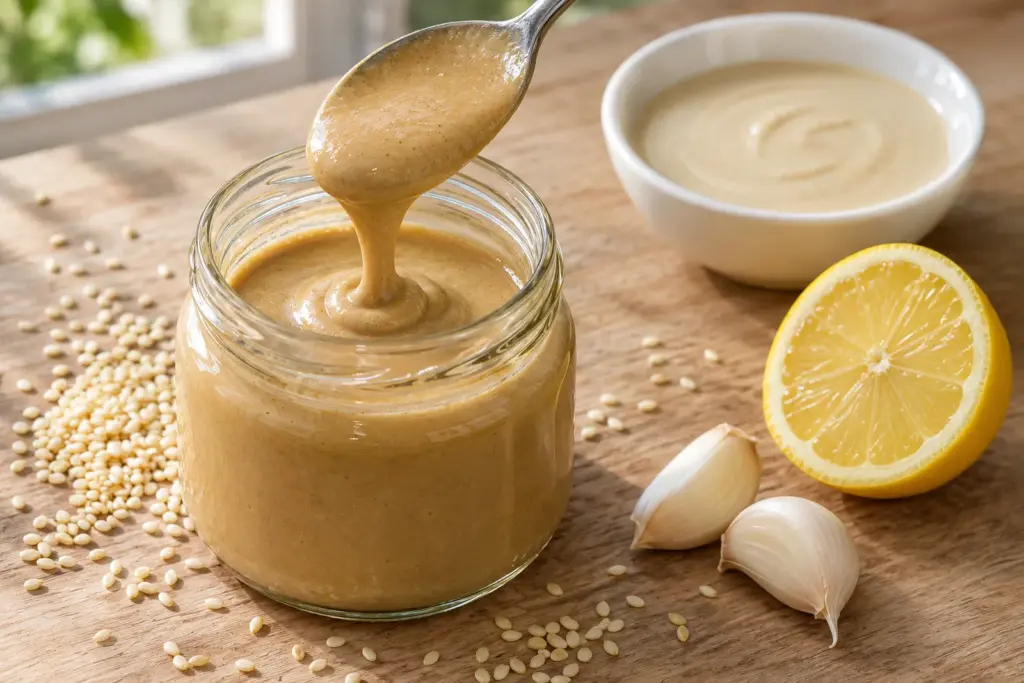
Plenty of look-alike food pairs turn out to be one ingredient with two names, and this is one of them. The confusion gets worse in Israeli and Levantine kitchens, where one word covers both the jar and the sauce you spoon over dinner, so the useful question is which of the two your recipe wants in the bowl.
1. Are Tahina and Tahini the Same Thing?
For the jar on your shelf, yes. Both words come from the Arabic ṭaḥīna, built on a root meaning "to grind," and Hebrew tehina (טחינה) comes from the same word. English picked up "tahini" in the 1930s, and you will also see tahin and tahine. Brand pages and recipes use tahini and tahina interchangeably for the same paste.
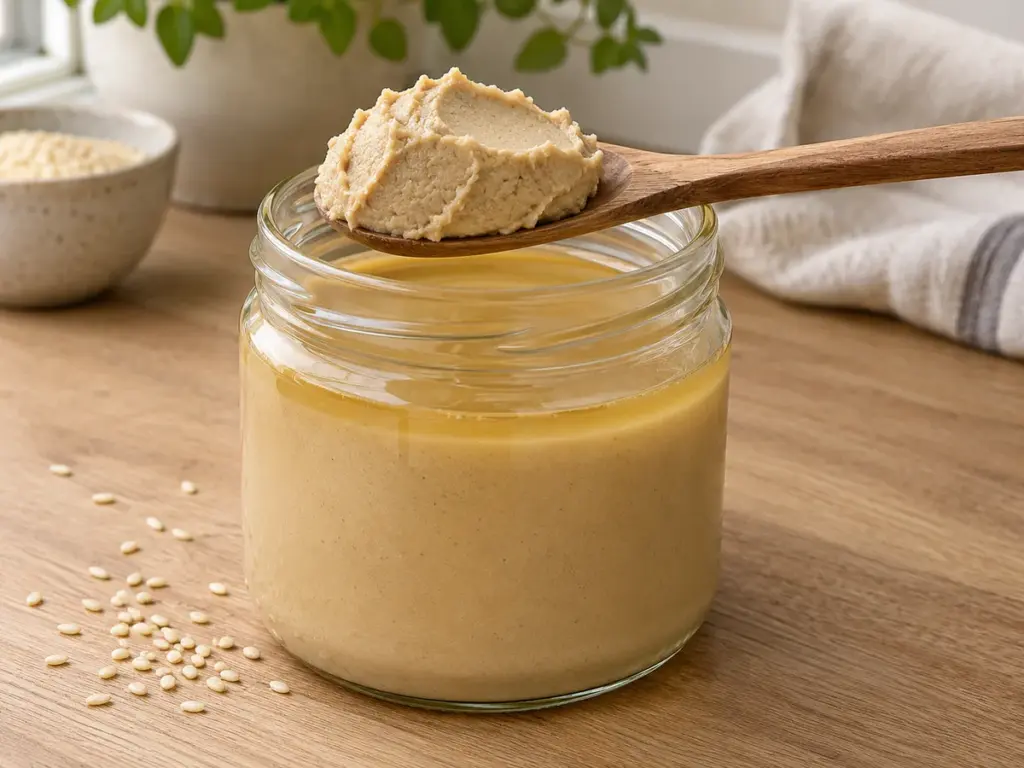
The words start to separate in how cooks use them. In Israeli and Levantine cooking, recipes and brands use the one word for two different things:
- The paste is ground sesame seeds and nothing else, sold in a jar. It is thick and oily, and the oil often floats on top.
- The sauce is that paste whisked with cold water, lemon juice, garlic and salt until it turns pale and pourable. Restaurants serve it with falafel, grilled meat and fish, and Israeli falafel shops also make a green version with parsley or cilantro.
2. What Is the Difference Between Tahina and Tahini?
The two spellings mean nothing different, but the plain paste and the sauce differ in almost every way you can taste or pour, so you need to know which one your recipe means.
| Trait | Plain paste (sold as tahini or tahina) | Tahina sauce (made from the paste) |
|---|---|---|
| What is in it | Ground sesame seeds, ideally with nothing added | The paste plus cold water, lemon juice, garlic and salt |
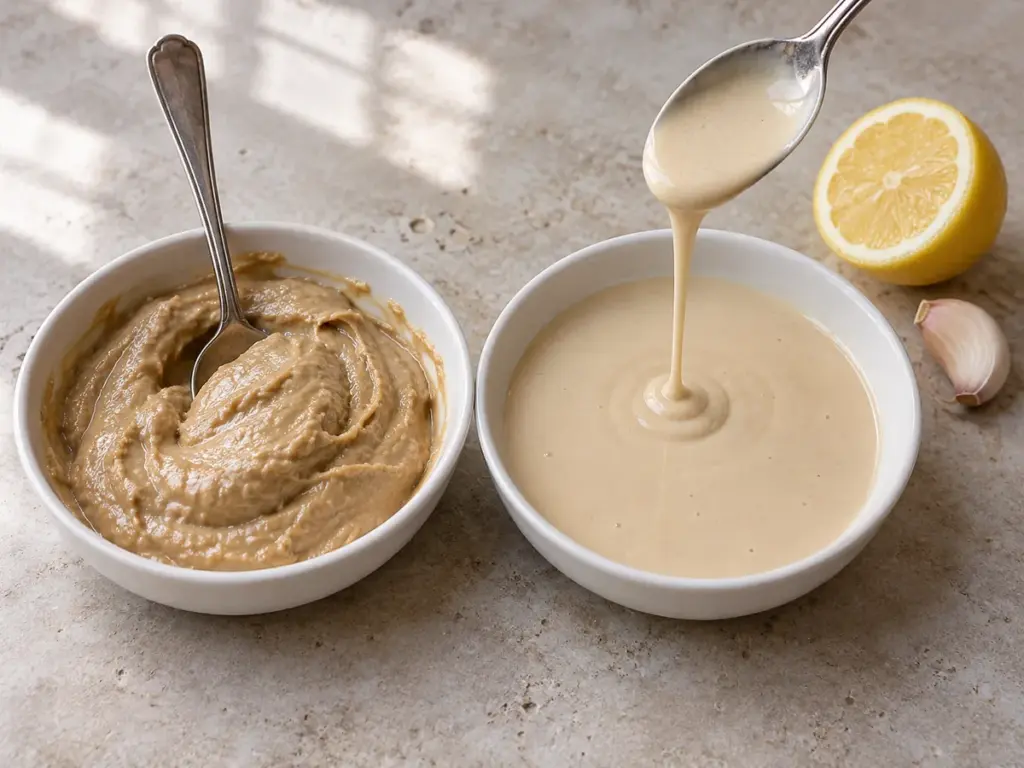
| Texture | Thick and oily, spoons out like natural peanut butter | Smooth, creamy and pourable |
- Its color runs from cream to dark brown, depending on the seeds and the roast.
- It tastes nutty, with some bitterness.
- It is paler, and whiter the colder the water.
- It tastes milder, and sharper with lemon and garlic.
- Plain paste goes into hummus, baba ghanoush, halva, cookies and dressings, and it keeps for months in a jar.
- Tahina sauce goes with falafel, grilled meat and fish, roasted vegetables, or as a dip for bread, and it keeps a few days in the fridge.
If you mix them up, a recipe that needs 1 cup of paste will turn out loose and sharp when you pour in sauce, and a sauce you make straight from the jar without water will be a heavy lump.
3. Is Tahini Raw and Tahina Roasted, or the Other Way Around?
Neither is true. Web pages claim it in both directions, with tahina as the raw one on some sites and the roasted one on others, and that disagreement alone shows the spelling is no guide.
Two choices at the seed stage change the paste, and you can read both on the label instead of guessing from the name. Seeds are soaked and crushed, the loosened bran sinks in salted water, and the floating kernels are skimmed off, toasted and ground.
Hulled or Unhulled Seeds
- The outer shell is removed before grinding
- Lighter color, creamier, a little sweet
- Best for hummus, dressings, sauces and sweets
- The shell stays in, so the paste is darker and rougher
- Stronger, more bitter flavor
- Best when you want a bold sesame taste, as in baking
Most jars on the shelf are hulled. If a jar looks dark and gritty and tastes bitter, you probably have the unhulled version, and a small spoonful in a sauce goes a long way. The same split shows in the seeds themselves, as in black versus white sesame seeds, where black seeds give a deep black paste.
Raw or Roasted Seeds
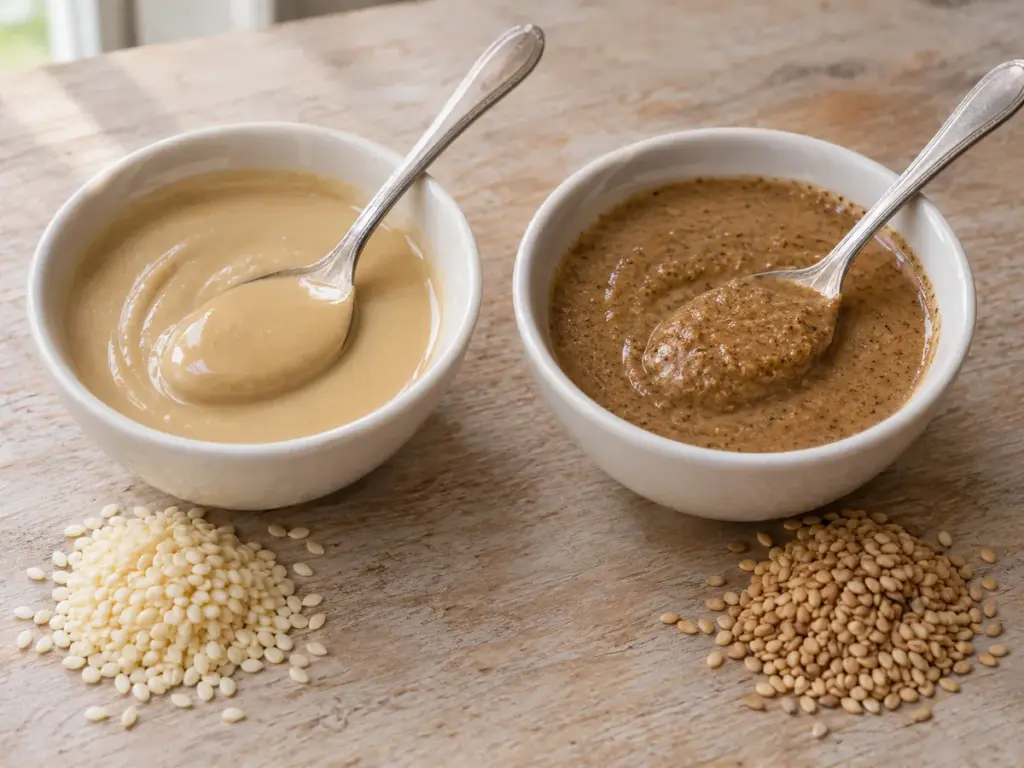
Raw means the seeds were never toasted, and this is separate from hulling, so you can find raw hulled and raw unhulled jars. When the seeds are roasted, the paste changes in a few ways you can taste:
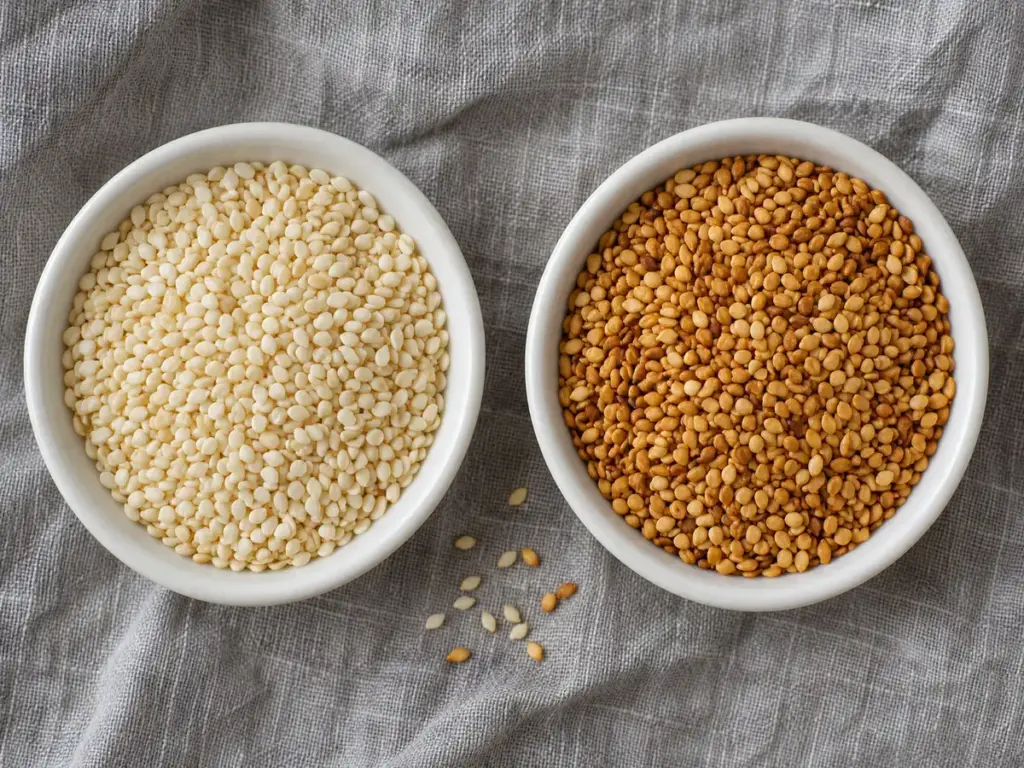
- Raw paste is lighter in color and milder, so it is the better pick for desserts, hummus and sauces.
- Roasted paste is darker with a more robust flavor, though some nutrients are lost to the heat. It suits dips, noodles and soups.
- If the jar does not say raw, it usually holds roasted seeds, because seeds are roasted more often than not. Roasted pastes are also sometimes sold as "sesame paste."
4. How Do You Make Tahina Sauce From Tahini?
Tahini maker Prince Tahina gives a ratio you can scale: 1 cup of tahini to ⅔ cup of cold water, the juice of 2 lemons and 4 crushed garlic cloves. If you want a smaller bowl, halve everything.
- Mix the liquids. Put the cold water, lemon juice and crushed garlic in a bowl.
- Add the paste slowly. Whisk in the tahini a spoonful at a time. It will tighten and look split at first, and it smooths out as you keep whisking.
- Season. Add salt, and white pepper if you like, then taste and add more lemon if it needs it.
- Set the thickness. For a pourable sauce, whisk in about ⅓ cup more water. For a thick dip, start with only ½ cup of water per cup of tahini.
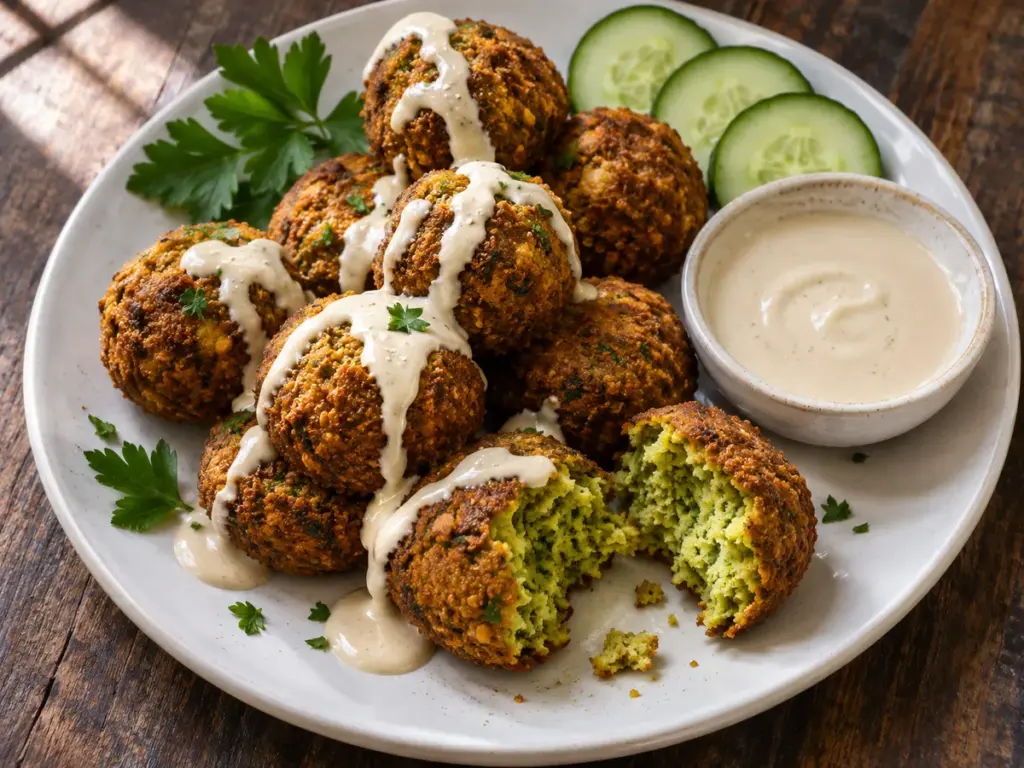
Colder water gives a whiter sauce, so some cooks swap part of the water for ice. Because the sauce now contains water, you should keep it in the fridge and use it within a few days, while the plain jar keeps far longer. Falafel is its usual partner, though you can switch to other sauces for falafel when you want a change. If your jar is empty, you can use substitutes for tahini sauce instead.
5. Can You Use Tahina Instead of Tahini?
It depends on which one you have and which one the recipe wants, because paste and sauce are not a straight swap:
- If the recipe wants paste and you only have sauce, cut the water, lemon, garlic and salt from the recipe, because the sauce already carries them, and expect a looser, sharper result. For hummus, halva or cookies, buy a jar instead.
- If the recipe wants sauce and you have the jar, make it with the steps above, because you need nothing else.
- When you swap one jar for another, any plain sesame paste usually goes in cup for cup in dressings and hummus, but the taste moves with it. If your paste is unhulled or roasted, it is darker and more bitter, so start with a little less.
- Chinese-style sesame paste is made from roasted seeds and tastes much deeper, so swapping in roasted sesame paste changes the flavor of your dish.
- A tub of hummus is chickpeas blended with tahini, lemon juice and salt, which makes it a separate food from tahini and a poor stand-in for your jar.
6. Which Should You Buy?
If you pick by what you will cook first, a light, raw or lightly roasted hulled jar covers the most ground. These cases show where a different one wins:
- For hummus, creamy dressings and desserts, we'd buy a light hulled paste, because its mild, slightly sweet flavor will not turn the dish bitter.
- For baking and bold sesame flavor, we'd buy a dark roasted, unhulled paste, which gives the deepest taste in your cookies and breads.
- For falafel, shawarma or fish night, buy a light hulled jar, then make the sauce fresh with the steps above so it tastes of lemon and garlic, not of the jar.
In the store, read the ingredient list. The best pastes are pure ground sesame seeds, and purer ones tend to taste less bitter. Some makers name Ethiopian Humera seeds, which Israeli cooks favor, but a seed name on a label is hard to verify, so judge the jar by its color and a taste from the spoon. When you taste it straight from the jar, tahini tastes of toasted sesame with a bitter edge.
7. How Long Do Tahini and Tahina Sauce Last?
| Form | Where to keep it | How long |
|---|---|---|
| Unopened jar | Pantry | About 1 year from purchase (USDA FoodKeeper) |
| Opened jar | Refrigerator | About 3 weeks (USDA FoodKeeper) |
| Tahina sauce with lemon and garlic | Refrigerator | A few days |
Makers disagree on the fridge for an opened jar. Some recommend it because the paste is so oily, and others advise against it because cold makes the paste thick and hard to stir. When the label gives a time or a storage rule, follow it, and use the FoodKeeper figure when it does not.
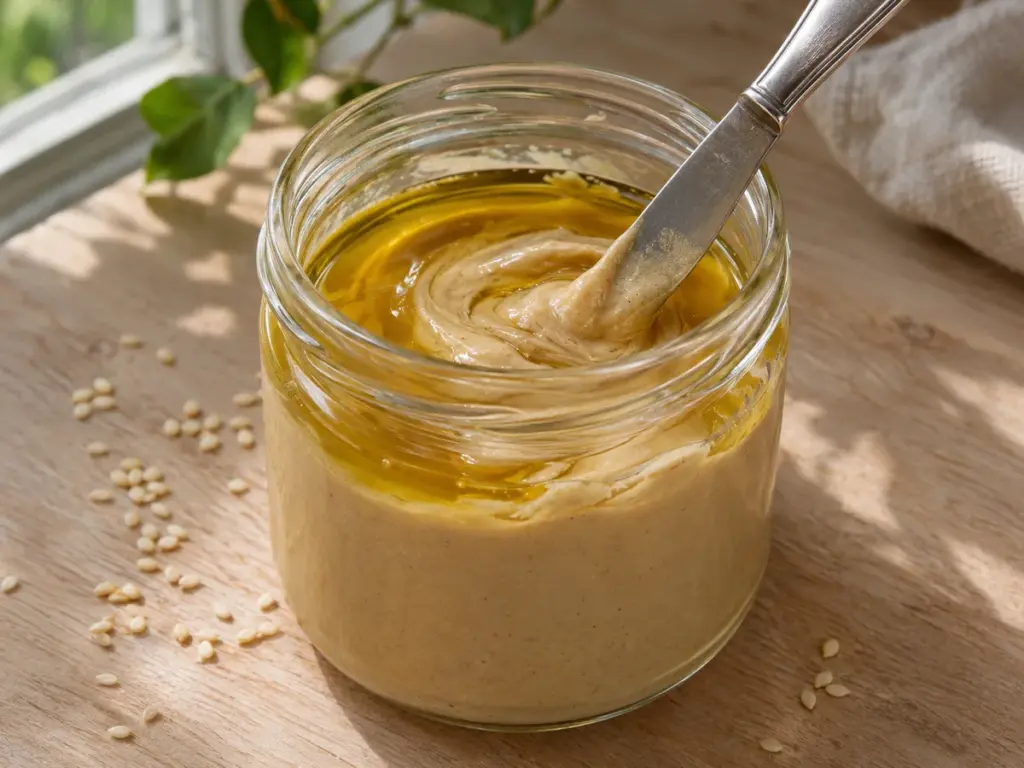
A layer of oil on top of the paste is normal, since sesame seeds are more than half fat by weight. Stir it back in until the jar is even before you measure. Throw the jar out if the paste smells sharp, bitter or like old cooking oil.
8. Is Tahina or Tahini Healthier?
They are the same paste, so the numbers match. USDA data lists tahini at about 592 calories, 53 g of fat, 17.4 g of protein and 4.7 g of fiber per 100 g.
If you eat a 2 tablespoon serving (about 30 g), you get roughly 180 calories, 16 g of fat and 5 g of protein. A spoonful of the sauce has less of all three because water and lemon thin it. If you want the version considered more nutritious, unhulled paste keeps the bran, though it tastes more bitter.
Sources
- Wikipedia, Tahini: word origin (Arabic, Hebrew), how the paste is made, hulled and raw versions, restaurant tahini sauce, per 100 g nutrition from USDA data.
- Tasting Table, Types of Tahini, Explained: hulled, unhulled, raw and roasted pastes and their uses.
- Prince Tahina, Basic Tahini: sauce ratio, cold water, thick and pourable versions.
- Ynetnews, Making tahini with tap water: ice water, lemon, why the paste tightens and splits, sauce with garlic kept in the fridge for a few days.
- The Splendid Table, A Brief History of Tahini: pure ground sesame, Humera seeds, green tahini in Israeli falafel shops.
- USDA FoodKeeper: tahini storage times.

Food writer at GustoMeadow. Writes ingredient substitutes, food comparisons, taste guides and storage guides for home cooks.
Storage and food-safety numbers follow USDA, FDA and university extension guidance.



