
A tom is a male turkey and a hen is a female, and the difference you can count on is size, so this food comparison comes down to how many people you feed.
- USDA calls the label an indication of size rather than tenderness.
- Plan on 1 to 1½ pounds of turkey per person.
- Cook either bird to 165°F in the thigh, wing and breast.
1. What Is the Difference Between a Tom and a Hen Turkey?
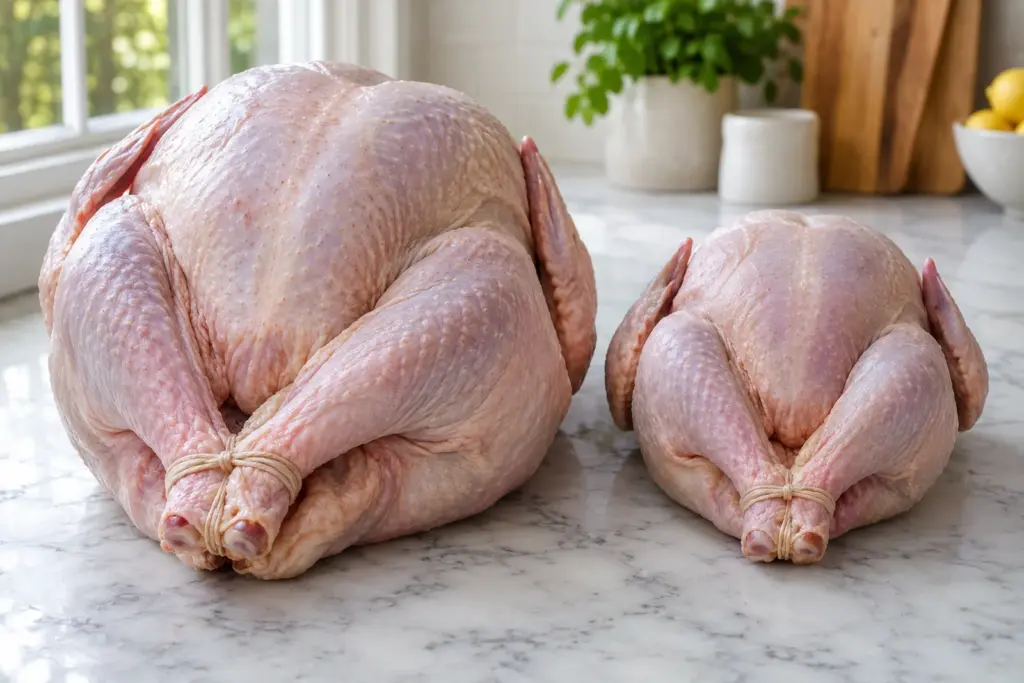
A tom is a male turkey and a hen is a female. Both belong to one species and cook the same way. USDA makes the "hen" or "tom" marking optional on the label, so a package can show only the weight.
| Trait | Tom (male) | Hen (female) |
|---|---|---|
| Whole-bird size | Heavier, the sex that reaches the biggest sizes | Under about 16 pounds raw (USDA Economic Research Service) |
| USDA label | "Tom" is optional and shows size | "Hen" is optional and shows size |
| Tenderness | Set by the age class, such as young turkey | Set by the age class, such as young turkey |
| Best fit | Bigger crowds and many leftovers | Smaller tables and smaller ovens |
USDA's class names for the meat itself, such as "young turkey" for a bird under 8 months old, describe age and apply to "either sex." A tom and a hen in the same age class therefore carry the same tenderness description.
2. How Can You Tell a Live Tom from a Hen?
You will not see these signs on a grocery-store bird, but they show what makes a tom a tom while the bird is alive. The figures below describe wild turkeys, and farm-raised toms grow heavier than wild ones.
- A wild adult weight of over 20 pounds.
- A chest beard, a larger snood and a leg spur.
- A gobble from the roost at dawn.
- A wild adult weight of 8 to 12 pounds.
- A smaller snood and, usually, no beard.
- Nearly the same height as a tom, about 4 feet.
You cannot rely on a beard to spot a tom, because nearly 10 percent of hens grow one, a stubbier and wispier tuft. A tom's beard is the longer one: a one-year-old male usually has a few inches, and older males can pass 10 inches.
3. How Big Is a Hen, and How Many People Does Each Bird Feed?
USDA's Economic Research Service counts a turkey as a hen when it weighs under about 16 pounds raw, and toms are the sex that grows past that. For servings, University of Wisconsin Extension says to allow 1 pound of turkey per person, and Rutgers Cooperative Extension allows 1 to 1½ pounds. Use the higher number when you want leftovers.
| Raw weight | Feeds at 1 lb each | Feeds at 1½ lb each | Fridge thaw time |
|---|---|---|---|
| 10 lb (hen size) | 10 people | 6 people | 1 to 3 days |
| 14 lb (large hen) | 14 people | 9 people | 3 to 4 days |
| 18 lb (tom size) | 18 people | 12 people | 4 to 5 days |
| 22 lb (large tom) | 22 people | 14 people | 5 to 6 days |
A 10 pound bird feeds about 6 to 10 people, and a 22 pound bird feeds about 14 to 22. The last column matters as much as the headcount: a frozen 22 pound tom needs 5 to 6 days in the refrigerator, so it goes in about a week before the meal.
The National Turkey Federation says a hen is processed at about 14 weeks and 15.5 pounds, and a tom at about 18 weeks and 38 pounds. Hens are typically sold as whole birds, while toms are often cut up into cutlets, tenderloins, sausage and deli meat.
University of Wisconsin Extension lists the same 80.5 percent dressing percentage, the share of live weight left after processing, for young hens and young toms. Their average live weights are 17 pounds for a hen and 41 pounds for a tom, so a tom gives you a bigger carcass, and both carry the same share of live weight home from the plant.
- Allow 24 hours for every 4 to 5 pounds.
- Keep it at 40°F or below.
- Allow 30 minutes per pound.
- Change the water every 30 minutes.
By the cold-water rule, a 10 pound hen needs about 5 hours and a 22 pound tom about 11 hours, and the turkey goes into the oven right after.
4. Should You Buy a Fresh or a Frozen Tom or Hen?
The sex of the bird has no say in this choice, and University of Nebraska-Lincoln Extension reports no difference in quality between a fresh and a frozen turkey. What differs is when you buy it and how you store it.
- Buy it 1 to 2 days before cooking.
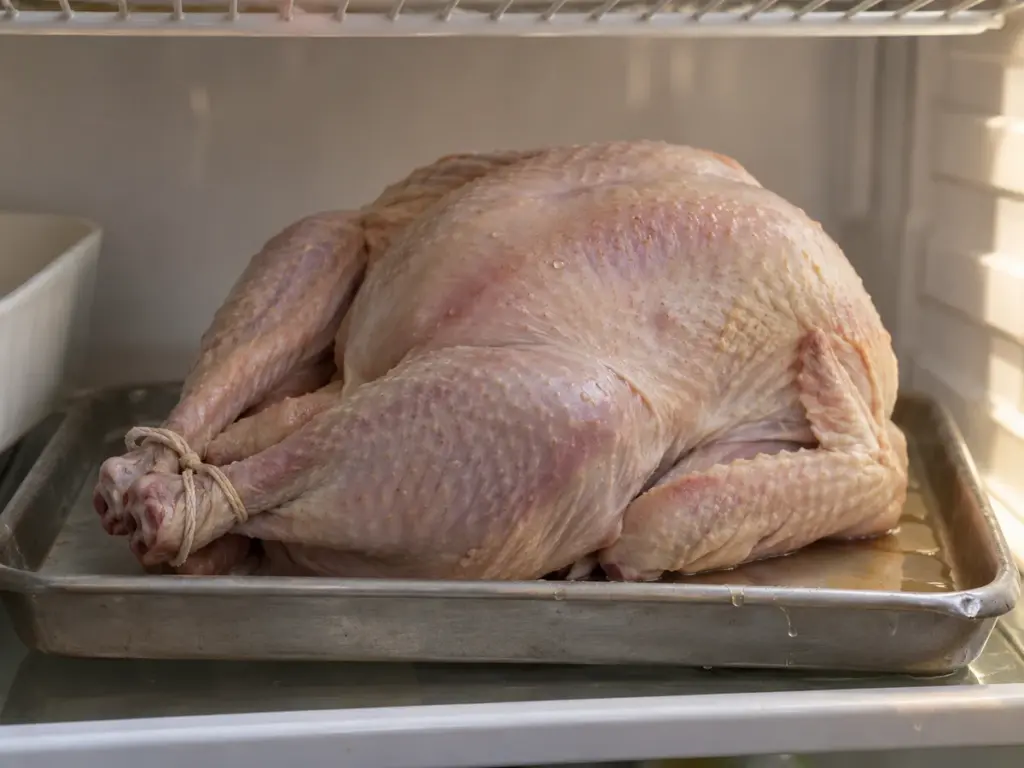
- Keep it on the bottom shelf, on a tray.
- It keeps indefinitely in the freezer.
- Best quality within 1 year.
A frozen bird costs you thaw days, and they grow with weight: 1 to 3 days for a 10 pound hen and 5 to 6 days for a 22 pound tom. Once a turkey is thawed in the refrigerator, it keeps 1 to 2 days before you cook it.
5. Does a Tom or a Hen Taste Better?
USDA's label guidance calls "hen" or "tom" an indication of size rather than tenderness. USDA gives no taste or tenderness difference by sex, so size and cut are better reasons to choose.
What does change the meat is the cut. USDA FoodData Central lists roasted turkey by cut, not by sex:
- Light meat (FDC 171491): 147 kcal, 30.13 g protein and 2.08 g fat per 100 g.
- Dark meat (FDC 171091): 173 kcal, 27.71 g protein and 6.04 g fat per 100 g.
A hen and a tom both give you the same choice between lean breast and richer thigh. Age is the factor USDA defines for tenderness, and each class applies to either sex:
- Fryer-roaster: under 12 weeks old, tender-meated.
- Young turkey: under 8 months old, tender-meated.
- Yearling turkey: under 15 months old, reasonably tender-meated.
- Mature or old turkey: over 15 months old, with coarse skin and toughened flesh.
When a package names an age class, young turkey or fryer-roaster is the tender-meated choice. A mature turkey is the one USDA describes as toughened.
After you buy, the cooking decides juiciness. A wet brine or an injected marinade adds seasoning and moisture to either bird, and brine or injected marinade comes down to your fridge space and time. If you pull the turkey at 165°F instead of pushing far past it, both sexes stay juicier.
6. Which Should You Buy, a Tom or a Hen?
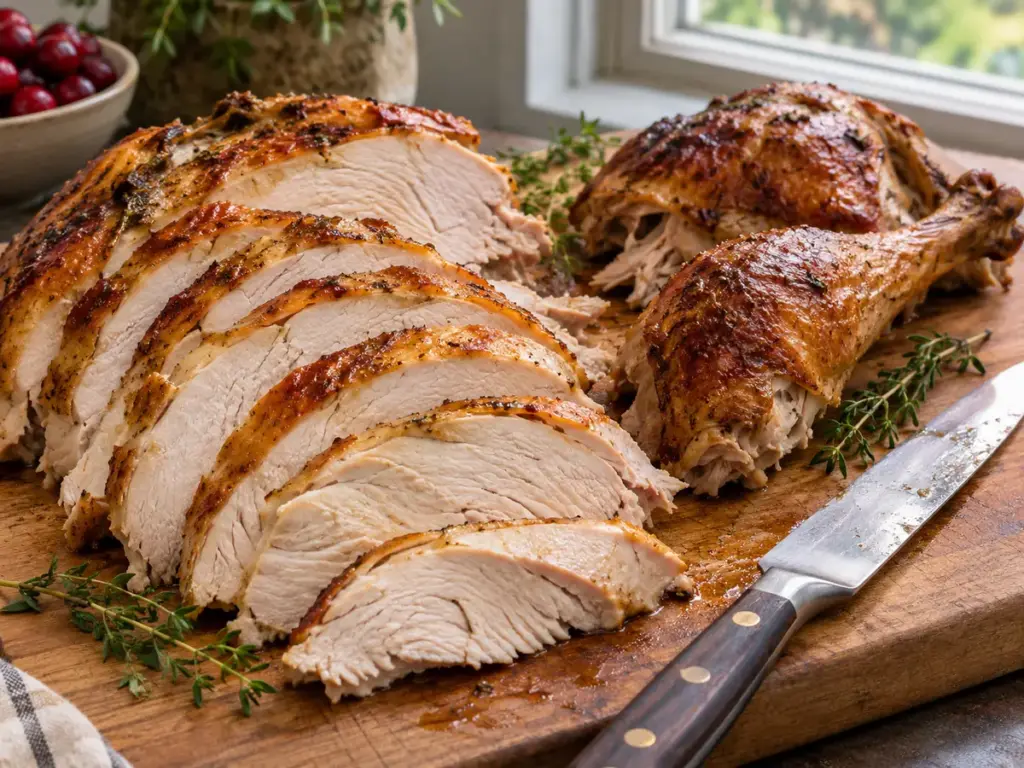
Pick the weight first and let the sex follow from it. Four steps get you from guest list to bird:
- Count the plates. Include everyone who will eat turkey.
- Multiply by 1 to 1½ pounds. Twelve guests need 12 to 18 pounds.
- Check the thaw days. A 12 to 16 pound bird needs 3 to 4 days.
- Buy that weight in either sex. Hens in USDA's data stop near 16 pounds raw.
Once you have the weight range, these two cards show which bird fits which kitchen.
- You feed 6 to 14 people.
- You have 1 to 4 days to thaw.
- Your oven is standard size.
- You feed 12 to 22 people.
- You want leftovers for sandwiches.
- You have fridge room for 5 to 6 days.
For three or four people, a turkey breast alone keeps you from cooking more meat than the table eats. If you only want parts, they are sold by the piece, so you choose by part and weight, and the useful comparison there is turkey and chicken wings.
7. How Do You Cook a Tom or a Hen Safely?
Both birds follow one rule: cook the turkey, and any stuffing inside it, to 165°F. A tom has more mass to heat, so the thermometer, not the clock, tells you when it is done. Check three spots, because breast and thigh do not heat at the same speed:
- Thigh. Push the probe into the innermost part.
- Wing. Check the innermost part of the wing.
- Breast. Check the thickest part.
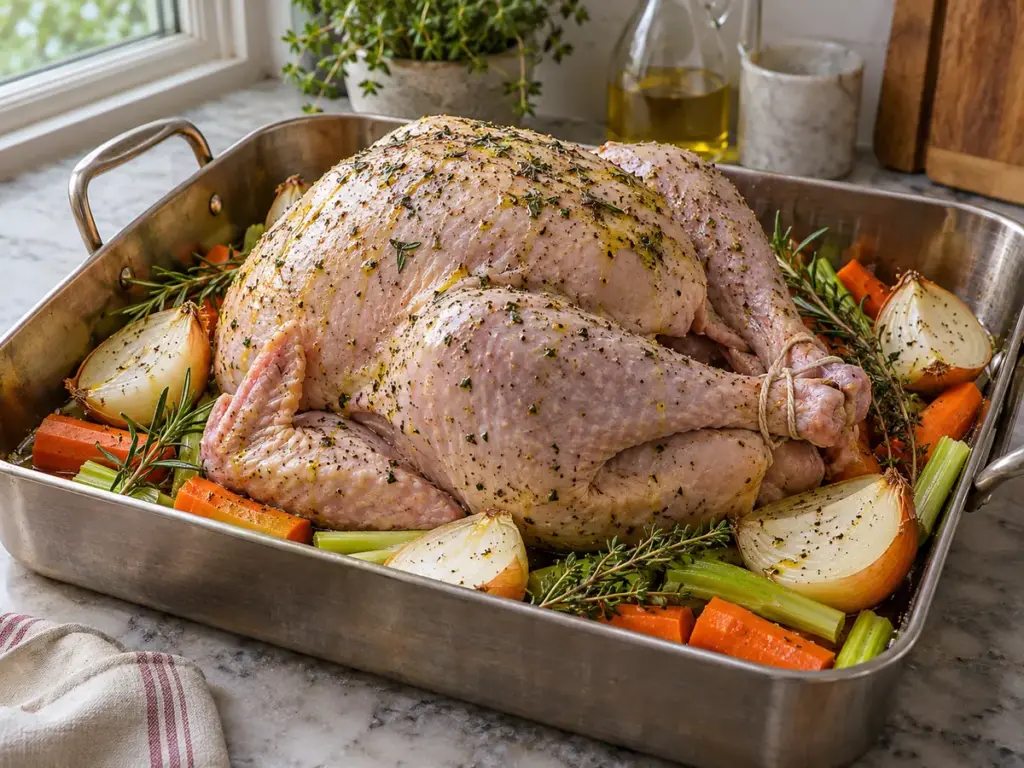
Set the oven to 325°F. The USDA timetable for a fresh or thawed, unstuffed whole turkey gives a range for each weight, and the size of the bird is the one thing that changes it:
| Raw weight | Unstuffed at 325°F |
|---|---|
| 8 to 12 lb | 2¾ to 3 hours |
| 12 to 14 lb | 3 to 3¾ hours |
| 14 to 18 lb | 3¾ to 4¼ hours |
| 18 to 20 lb | 4¼ to 4½ hours |
| 20 to 24 lb | 4½ to 5 hours |
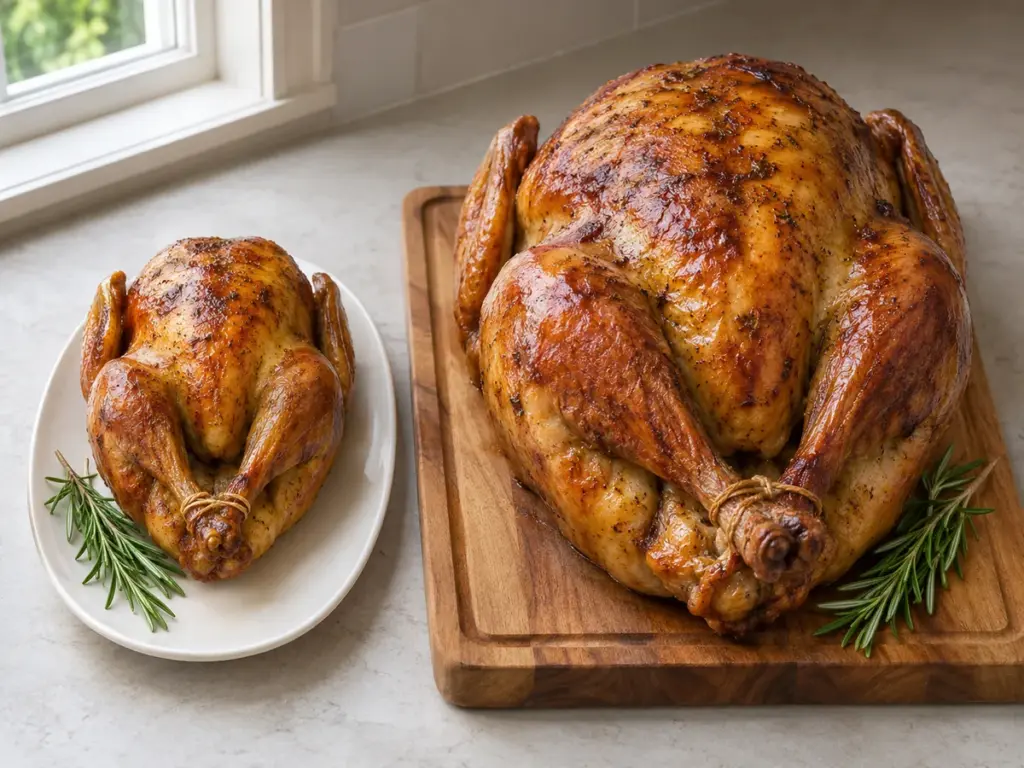
Use that table to see which bird is easier for your oven. A hen in the 8 to 12 pound row finishes in 3 hours or less, while a tom in the 20 to 24 pound row needs up to 5 hours of oven time and a pan that fits the oven.
Two hens can stand in for one tom. For 20 plates at 1 pound each, you could roast either of these:
- One 20 pound tom: 4¼ to 4½ hours in one pan.
- Two 10 pound hens: 2¾ to 3 hours each, in two pans.
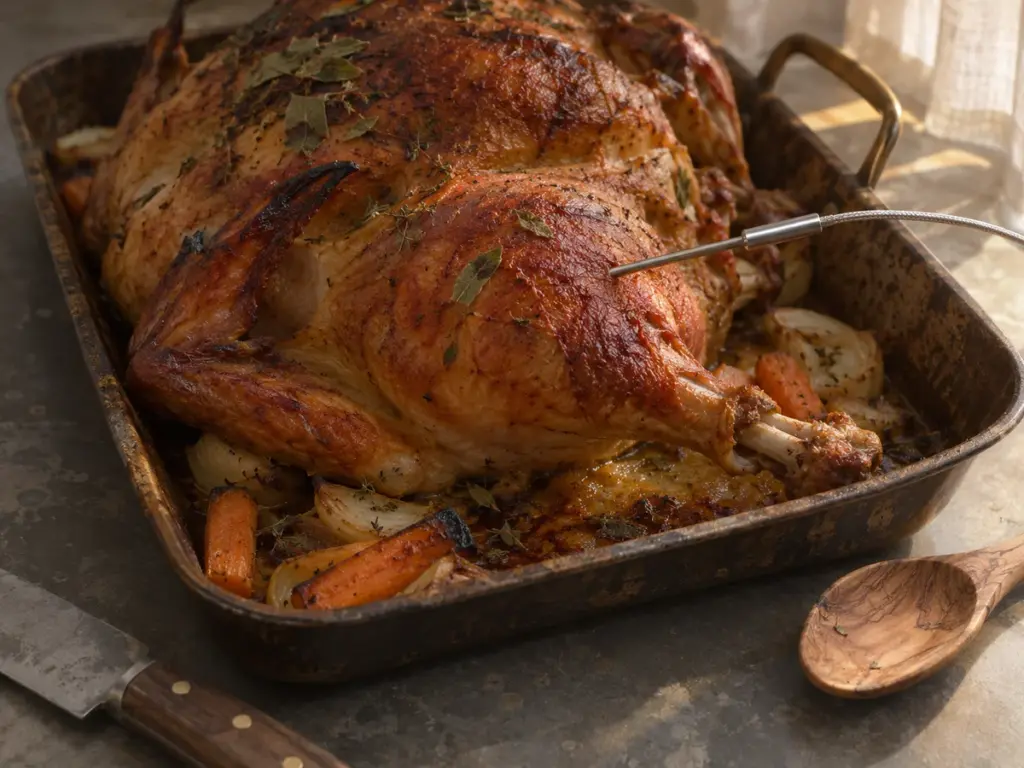
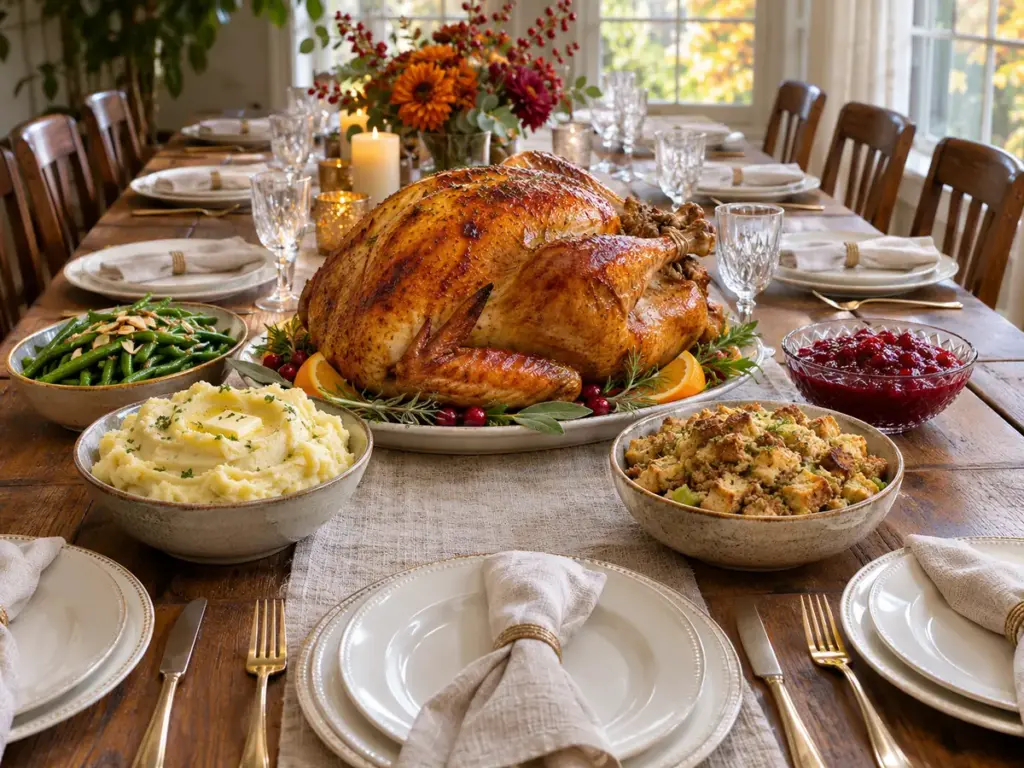
The choice of bird changes the size of the meal and not the menu, so the stuffing, mashed potatoes and cranberry sauce from roast turkey sides suit a tom or a hen.
8. How Long Do Turkey Parts Take to Roast?
Parts cook faster than a whole bird, and you can use the same USDA timetable for them. At 325°F and unstuffed, it gives these times:
- Whole breast, 4 to 6 lb: 1½ to 2¼ hours.
- Whole breast, 6 to 8 lb: 2¼ to 3¼ hours.
- Drumsticks, ¾ to 1 lb: 2 to 2¼ hours.
- Thighs, ¾ to 1 lb: 1¾ to 2 hours.
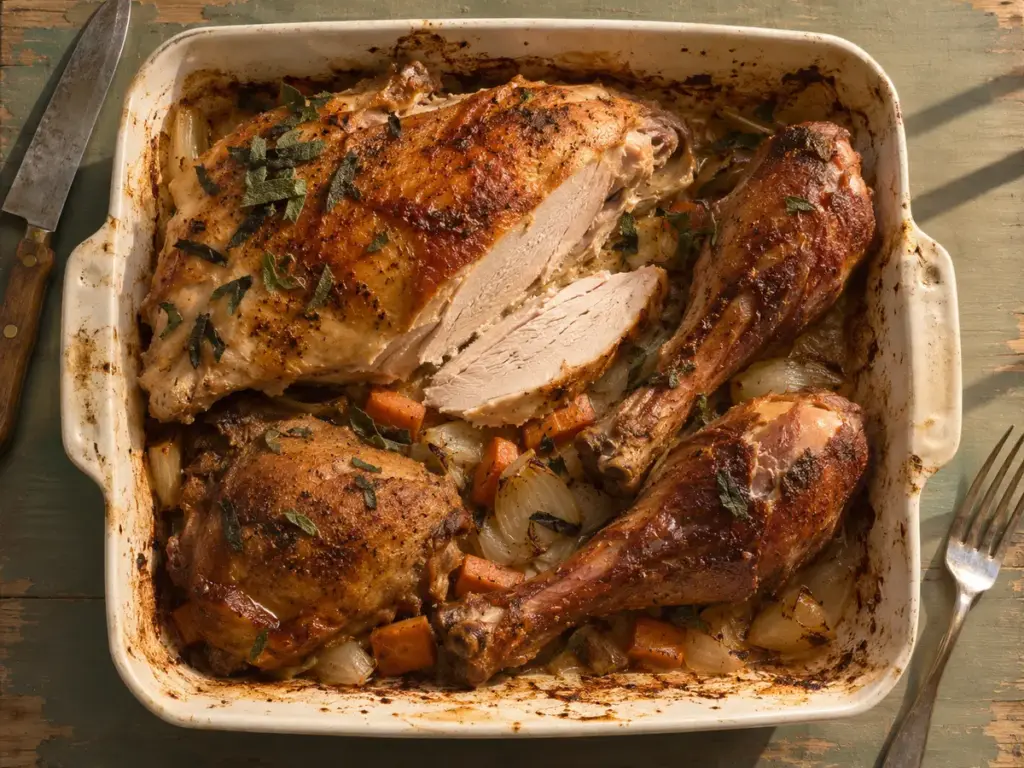
The 165°F target holds for turkey parts as well as the whole bird, so check each piece with a probe instead of watching the clock.
9. How Long Do Turkey Leftovers Keep?
A tom leaves you the most leftovers, so the storage rule matters most for the 18 to 22 pound birds. Rutgers Cooperative Extension gives three limits:
- Within 2 hours: debone the turkey, cut it into smaller pieces, and refrigerate or freeze all leftovers.
- 3 to 4 days: the refrigerator limit for turkey and stuffing.
- 1 to 2 days: the limit for gravy.
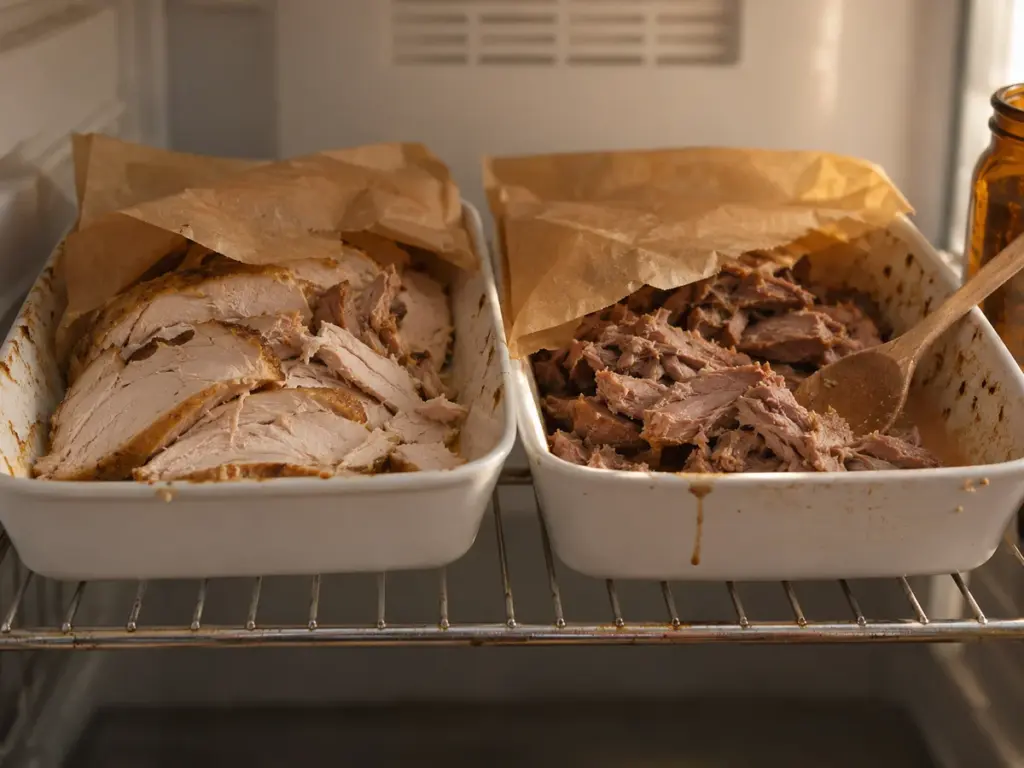
Sliced leftovers suit hot turkey sandwiches, and pulled pieces make turkey soup.
10. What Does Hen Mean for Chicken and Cornish Game Hens?
A search for "hen" alone can land on chicken, where USDA gives the word a different meaning:
- A chicken "hen" is an adult female over 10 months old with meat less tender than a roaster's, so it goes into a long simmer, as in soup made with a stewing hen.
- A Cornish game hen is a young chicken of either sex, under 5 weeks old and no more than 2 pounds ready to cook. The bird is a small chicken, so plan side dishes for Cornish game hens around one bird per plate.
Sources
- USDA FSIS, Meat and Poultry Labeling Terms (hen or tom designation is optional and shows size, not tenderness).
- 9 CFR 381.170, Poultry classes (fryer-roaster, young, yearling and mature turkey; Cornish game hen; chicken hen).
- USDA Economic Research Service, turkey hens by weight.
- USDA FSIS, Happy Thanksgiving (thawing times, 165°F and thermometer placement).
- University of Illinois Extension, unstuffed roast turkey (USDA roasting timetable at 325°F, 165°F placement, standing time).
- Rutgers Cooperative Extension, Turkey Talk (1 to 1½ pounds per person, 24 hours per 5 pounds, fresh and frozen storage, stuffing, leftovers).
- University of Wisconsin Extension, Turkey Talkin' (1 pound per person, thawing, thermometer placement).
- University of Wisconsin Extension, Bird Breakdown (hen and tom live weights and dressing percentage).
- National Turkey Federation, Raising America's Turkeys (hen and tom market weights and how each is sold).
- NC State Extension, Fresh or Frozen (buying and storing fresh and frozen turkey).
- Oklahoma Department of Wildlife Conservation, Eastern Wild Turkey (wild tom and hen size, beard, snood, spur, gobble).
- Audubon, Let's Talk Turkey Beards (beards on toms and hens).
- University of Nebraska-Lincoln Extension, Turkey 101 (fresh and frozen quality, cooking from frozen, reheating).
- University of Georgia Extension, Food Safety Tips for Preparing a Holiday Turkey (refrigerator thaw days by weight).
- USDA FoodData Central, FDC 171491 (turkey, all classes, light meat, roasted) and FDC 171091 (turkey, whole, dark meat, roasted).
Frequently Asked Questions
Can You Cook a Tom or a Hen Straight from Frozen?
Yes. University of Nebraska-Lincoln Extension says it is safe to cook a turkey from the frozen state, and the cooking time is at least 50 percent longer than for a fully thawed bird.
The Nebraska extension page gives the rule but no table, so the hours below simply apply that rule to the USDA thawed times: a 22 pound tom (4½ to 5 hours thawed) comes to about 6¾ to 7½ hours, and a 10 pound hen (2¾ to 3 hours) to about 4⅛ to 4½ hours. Treat them as a minimum and go by the thermometer. Remove the giblet package during cooking, and check the 165°F spots as usual.
How Do You Reheat Leftover Turkey?
Reheat turkey to an internal temperature of 165°F. Cover the food and rotate it so it heats evenly.

Food writer at GustoMeadow. Writes ingredient substitutes, food comparisons, taste guides and storage guides for home cooks.
Storage and food-safety numbers follow USDA, FDA and university extension guidance.



