Far from being interchangeable seasonings or condiments, these two ingredients might look similar but require very different preparation methods that result in unique flavors.
So get ready for some root vegetable knowledge:
What are Turnips?

Turnips, also known as Brassica rapa, are a nutritious root vegetable that have been widely cultivated for centuries.
These white-fleshed bulbs have a slightly sweet and tart taste that is often described as a cross between a potato and a radish.
Turnips are a member of the Brassica family, which also includes other popular vegetables such as broccoli, cauliflower, and kale.
They are a great source of vitamin C, fiber, and potassium, making them a healthy addition to any diet.
Turnips can be used in a variety of ways, including mashed, roasted, boiled, and even pickled.
Their versatility and subtle flavor make them a favorite of chefs and home cooks alike.
Whether you're looking for a simple side dish or a new ingredient to play with in the kitchen, turnips are a must-try vegetable.
What are Rutabagas?

If you are familiar with root vegetables, you may have heard of the rutabaga.
Also known as a Swede or Swedish turnip, this vegetable is a cross between a cabbage and a turnip.
It has a tough, outer layer that can be difficult to peel, but once you get past that, you will find a slightly sweet and earthy flavor.
Rutabagas are most commonly used in stews, soups, and roasted vegetable dishes.
They are also packed with nutrients, including Vitamin C, potassium, and fiber.
If you are looking to add some variety to your vegetable intake, consider trying out rutabagas in your next recipe.
Differences Between Turnips and Rutabagas

Turnips and rutabagas are root vegetables that are often confused with each other due to their similar appearance.
However, they differ in taste, texture, and nutritional value.
Similar in appearance, it is essential to recognize the nuances between turnips and rutabagas before using them in recipes - and comparing turnip vs collard greens comparison can reveal other leafy-versus-root differences.
Whether you opt for one over the other ultimately depends on personal preference and recipe requirement.
Appearance
Turnips and Rutabaga are root vegetables that belong to the same family.
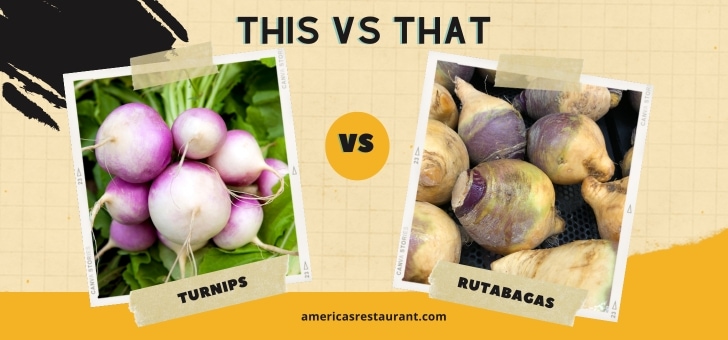
Their outer appearance is very similar, making it difficult to distinguish them at first glance.
However, upon closer inspection, we can observe that turnips have a slightly smaller bulb shape with a white interior, while rutabaga has a larger round shape with yellow flesh inside.
When comparing their size and weight, turnips are generally smaller and lighter than rutabaga.
Turnips have smooth skin with a white to purplish hue, whereas Rutabagas have a rougher texture with yellow to tan skin.
Also, their tops are also different; turnip greens are slightly lobed with small white hairs on the bottom surface while Rutabagas have bluish green leaves that grow more wooly in colder climates.
In summary, while some of their outward characteristics appear similar, there are subtle differences between the two vegetables that distinguishes them from each other.
Flavor And Taste
The sensory experience of consuming turnips and rutabagas is marked by subtle differences in flavors - see extract vs flavor comparison explained to understand how subtle notes are classified.
Their tastes vary according to the planting season, soil properties, cooking methods, and age of the vegetable at harvest time.
Both turnips and rutabagas have a mildly sweet taste when eaten raw, but their flavors intensify when cooked.
The former has a sharper and slightly peppery flavor with an earthy undertone, while the latter has a sweeter and milder profile with a buttery texture.
However, their unique tastes lend themselves well to complementing various cuisines.
Turnips add a tangy punch to salads or stews while rutabagas make velvety purees or hearty mashed potatoes.
Cooking methods such as roasting accentuate their distinct characteristics leading to rich dishes.
Both vegetables are versatile stars in the kitchen.
They present opportunities for culinary experiments yet remain nutritious options for any mealtime.
Nutritional Value
The comparative nutritional value between turnips and rutabaga is an interesting topic.
These root vegetables are rich in vitamins, minerals, and fiber.
Both veggies have different nutrient profiles, so their comparison can be beneficial for making informed dietary choices.
Turnips are high in vitamin C, potassium, and calcium while being low in calories.
They have antioxidant properties that protect against chronic diseases such as cancer, cardiovascular disease, and inflammation.
On the other hand, rutabagas are dense in carbohydrates and fiber content that help aid digestion and bowel movements.
They contain vitamin A, folate, and thiamin that help improve vision health, blood flow regulation, cellular production respectively.
One unique aspect is that both turnips and rutabaga belong to the cruciferous family of vegetables known for their significant benefits to human health.
This group of veggies contains compounds called glucosinolates that aids liver detoxification processes preventing cancer development.
For a savory, umami-packed reference that complements root-vegetable dishes, nutritional yeast taste guide explains how yeasty flavors work in cooking.
Culinary Uses
In terms of their role in cooking, turnips and rutabaga offer various options for culinary use.
Both have distinct tastes that play an essential part in creating a variety of dishes, from stews to casseroles to soups.
They are versatile vegetables that can be used as a base or the starring ingredient in any dish, making them important staples in a kitchen.
Turnips provide a sharp and slightly bitter flavor that pairs well with meaty ingredients like lamb and beef.
They can be boiled, mashed, roasted, or fried depending on the recipe, adding an earthy flavor to meals.
Rutabaga, on the other hand, has a sweeter taste than turnips and offers a nutty flavor that's similar to potatoes.
They can be diced or mashed for use in stews or soups or thinly sliced for roasting as fries.
When it comes down to it, choosing between the two depends on what you're looking for regarding taste and texture.
Turnips provide a light and tangy option that improves savory dishes while rutabagas offer a sweeter more substantial texture reminiscent of classic root vegetables like potatoes.
Whatever option you go with will assuredly add tempting depth to your meals and diversify your recipe collection accordingly.
Similarities Between Turnips and Rutabagas

Both turnips and rutabagas have similarities that make them comparable, much like a beets vs turnips comparison highlights distinctions between similar roots.
These root vegetables offer various health benefits and are a good source of fiber, vitamins, and minerals.
They belong to the Brassica family and have similar shapes, with both having beige skin with some purple coloration.
Also, both turnips and rutabagas have edible leaves.
The greens of rutabagas are toxic in high concentrations of nitrates, however, unlike turnip greens which are safe to consume.
Both vegetables have earthy flavors that can be used in a variety of dishes.
In terms of unique details, turnips tend to be smaller than rutabagas and have a sharper taste.
Rutabagas are usually sweeter than turnips but take longer to cook due to their size.
Also, they have more vitamin C than turnips.
Overall, both root vegetables may share some features, but each offers unique qualities that set them apart from one another.
Understanding their differences can aid in determining which vegetable works best for a particular recipe or taste preference.
How to Cook Turnips and Rutabagas?

Cooking Turnips and Rutabagas the Right Way.
To prepare an appetizing meal with turnips and rutabagas, you need to cook them in a way that best brings out their flavors.
Follow these six steps to achieve perfect cooking:
- Start by washing and peeling the vegetables.
- Cut them into small cubes and place in a saucepan.
- Add water to the pan, enough to cover the vegetables.
- Sprinkle salt and other seasonings of your preference into the pot.
- Bring the mixture to boil and let it simmer until tender. This should take about 25-30 minutes.
- Drain any excess water from the pot before serving hot with your favorite garnishing or dish.
Also, turnips' peppery taste pairs well with roasted meats like beef, lamb and chicken while rutabagas - or try turnip substitutes for similar pairings if needed.
With these tips in mind, you can confidently experiment with different dishes using turnips and rutabagas without sacrificing taste or health benefits.
Boiling
To cook turnips and rutabagas, boiling is the simplest method - for texture-focused alternatives, sous-vide vs boiling methods compares outcomes.
Boiling turnips and rutabagas is an easy way to make a sides dish, mash, or soup.
Here's a five-step guide for boiling turnips and rutabagas:
- Peel and chop the vegetables to your desired size.
- Place them in a pot with enough water to cover them completely.
- Add salt, pepper, or any other seasoning you prefer.
- Bring the water to a boil over high heat and reduce heat to medium-low.
- Simmer until the pieces become tender.
It is important not to overcook as they can become too soft and soggy when boiled for too long.
While boiled turnips have a slightly sweet flavor, boiled rutabagas' are slightly more bitter with a nutty sweet taste towards the end.
Boiling turnips and rutabagas offers an easy way of preparing these nutritious root vegetables while maintaining their health benefits.
Roasting
Roasting is a simple and delicious way to prepare vegetables, which brings out their natural sweetness - choosing cookware matters, see roasting pan vs broiler pan guide for tool differences.
Here are some tips on how to roast vegetables for maximum flavor.
- Choose the right vegetable: The best vegetables to roast are those that have a low water content such as turnips, rutabaga and potatoes. These types of roots will crisp up nicely in the oven and become tender when roasted.
- Cut your vegetables into evenly sized pieces: This will help all the pieces cook at the same time. Cut them into small chunks or sticks.
- Seasoning is key: Toss your sliced veggies with olive oil, salt, pepper and any other seasonings you like before roasting. Garlic powder and herbs like thyme or rosemary are great options.
- Crank up the heat: Preheat your oven to 425F (218C) degrees and bake for about 20-30 minutes or until golden brown on top and fork-tender inside.
When roasting root vegetables, they caramelize beautifully in the oven giving them a natural sweetness that pairs well with savory dishes.
With a little bit of planning and preparation, you can easily improve your meals by including roasted turnips or rutabagas as a side dish.
Give it a try today.
Mashing
There are many options available.
Pureed root vegetables can be used as an alternative to mashed potatoes, offering different nutritional benefits.
To create a smooth texture for dishes like purees and soups, the method of 'root vegetable puree' is highly recommended.
Nutritional and Flavor Differences: Turnips vs Rutabagas
Turnips and rutabagas are two root vegetables with many distinct features.
While both have a fair amount in common, it's clear that there are distinct differences too- from their shape to color to flavor.
As you learn more about the world of vegetables, don't forget to keep these two culinary counterparts in mind.
You just might find that if you try them both together in a recipe, they could add a delicious layer of flavor and texture you would never have expected.
Ultimately, both turnips and rutabagas offer so much potential for creative dishes; get experimenting and have fun exploring which pairings work best for you.
Frequently Asked Questions
If you've ever been confused by the difference between turnips and rutabagas, you're in luck. They share some similarities but each has qualities that make it better suited for certain recipes.
They can stand in for each other in a pinch. Turnips and Rutabagas overlap in some uses, but the flavor or texture will shift.
Adjust quantities to taste.
Shelf life differs based on processing and packaging. One often keeps longer unopened, while the other may need refrigeration or faster use after opening.
Which one is more forgiving in recipes?
One tends to perform more consistently across a range of cooking methods, making it the safer choice when experimenting.
The other delivers stronger results in specific applications.
Explore turnip flavor nuances with Exploring Turnip Flavors: What Does Turnip Taste Like? and compare leafy alternatives via turnip vs collard greens comparison for broader context.