Arctic char tastes mild, clean and a little sweet, between salmon and trout.
- It is less oily than salmon and richer than rainbow trout, with a finer, softer flake.
- Cook it to 145°F at the thickest part, and start checking early, because its thin fillets finish several minutes sooner than salmon.
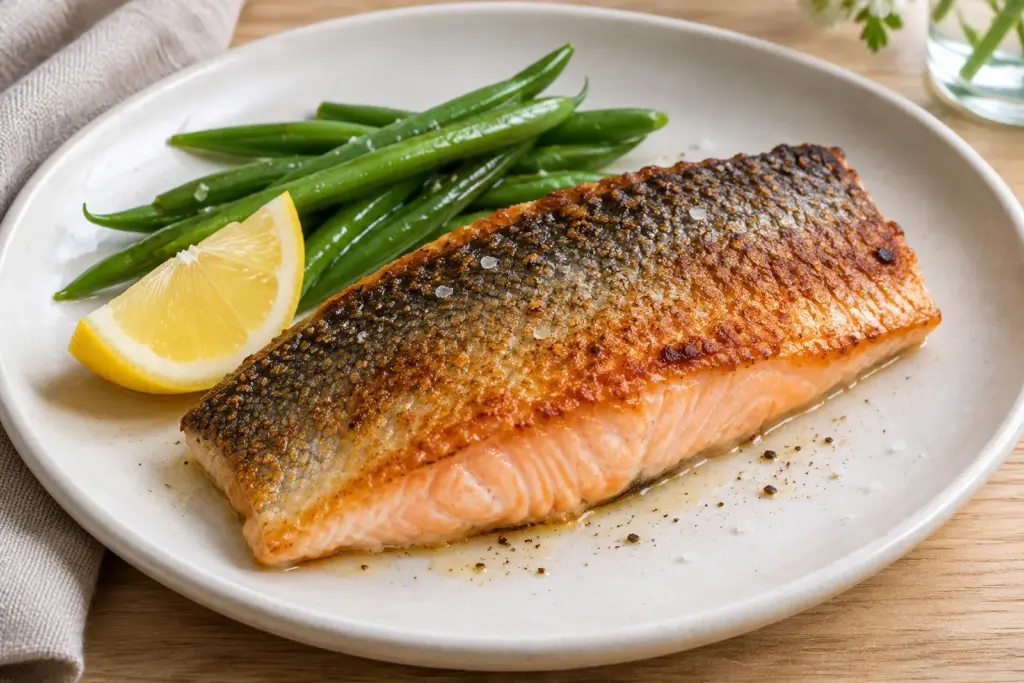
If you are working through what common foods taste like, arctic char is the fish that lands in the middle of the salmon and trout shelf. It is a cold-water fish in the salmon family, and almost all of it sold in US stores comes from land-based farms.
1. What Does Arctic Char Taste Like?
You taste a mild, clean fish with a light sweetness, and very little of the oily, strong flavor that puts some people off salmon. Canada's aquaculture industry describes the flavor as somewhat milder than Atlantic salmon, and fish sellers say it is richer and more substantial than rainbow trout. The flesh is moderately firm, yet the flake is fine and soft, so a forkful eats lighter than a chunk of salmon.
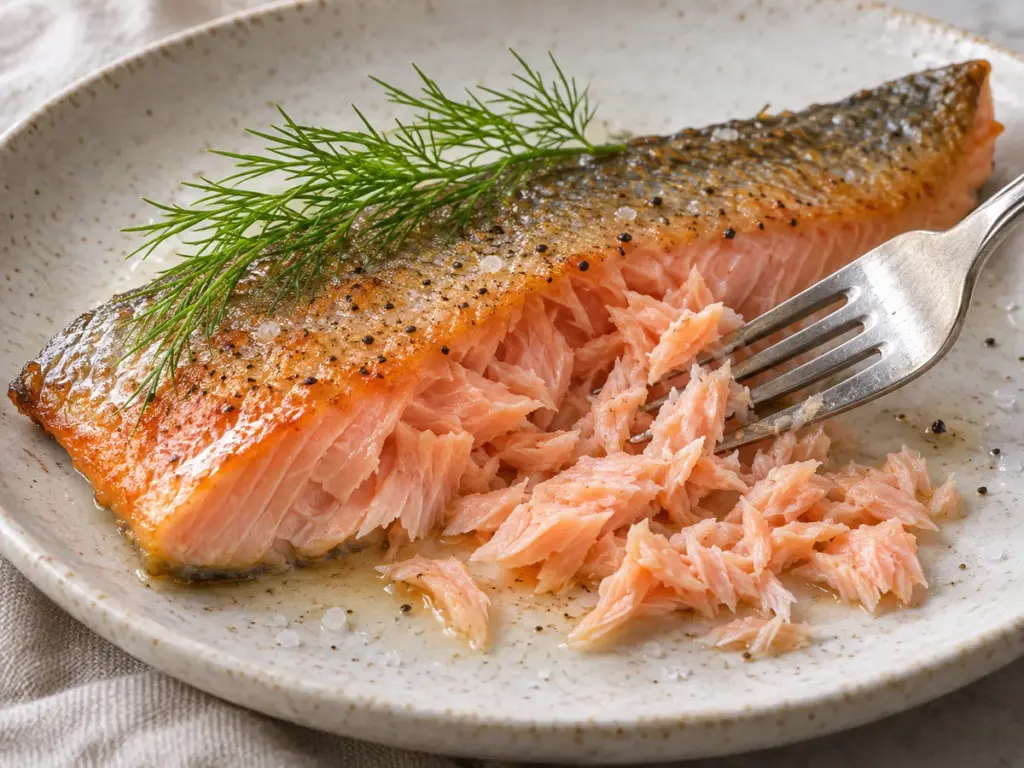
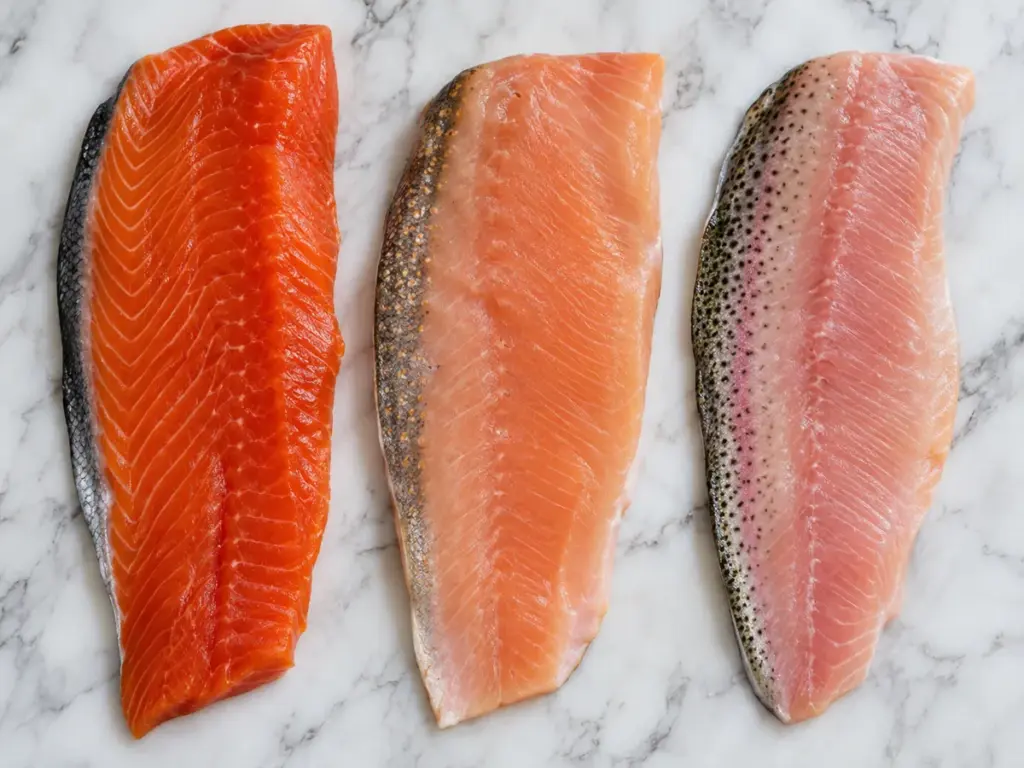
The reason is fat. Char carries more fat and color than a rainbow trout but less of both than a king salmon, which keeps it moist without the heavy, oily feel. Side by side with the other pink fish in the case, char sits in the middle on fat and flavor.
Next to Atlantic salmon, char has a cleaner, less oily flavor and a finer, softer flake. The skin is thinner and crisps faster, and the fillet finishes several minutes sooner.
- Char is richer and more substantial, with more fat and more color.
- It holds up to a pan sear or the grill without drying out as easily.
- Char has less fat and a lighter color.
- It is a good pick if king salmon feels too rich for the whole fillet.
Salmon gets stronger as its fat goes up. Red salmon tastes richer and chum has a more intense, fishy taste, which is why char often wins over people who say they dislike salmon. Rainbow trout, the common market trout, tastes gentle and a little nutty, and trout varieties differ enough that fattier ones such as lake trout can taste much heavier than char does.
2. What Is Arctic Char and Where Does It Come From?
Arctic char (Salvelinus alpinus) is a salmonid, so it is a cousin of both salmon and trout. Wild char live in the northern arctic waters of North America, Europe and northeastern Russia, but wild fish are in very limited supply. The char at a US counter is farmed, mostly in Iceland and Canada, in closed land-based tanks.
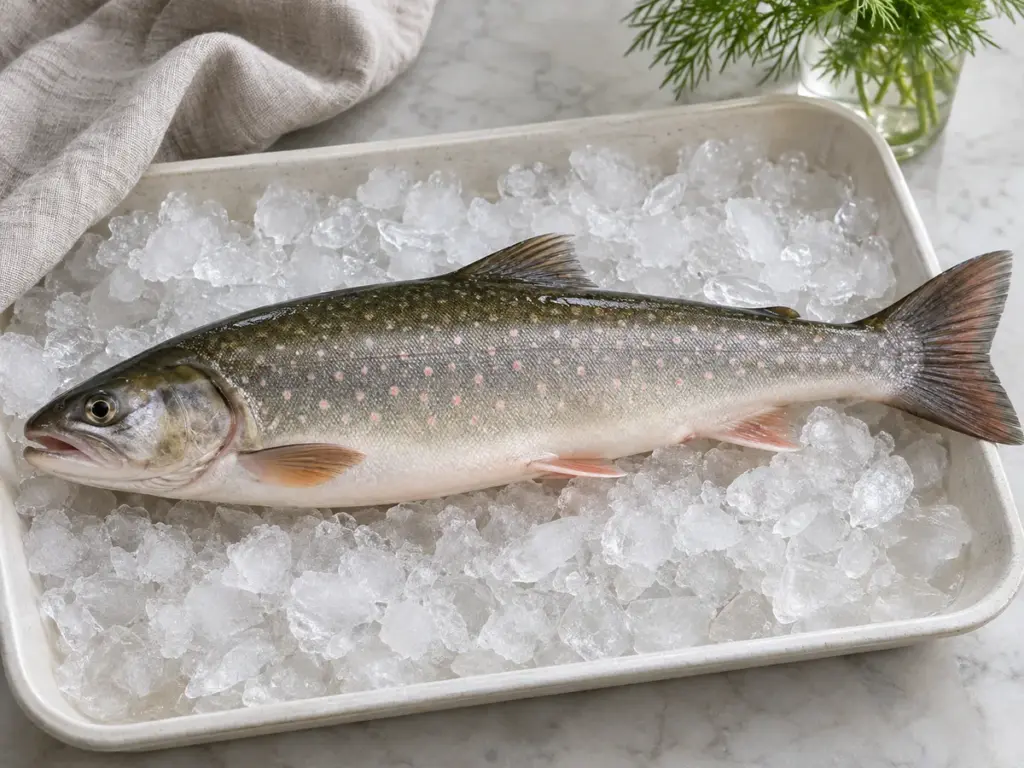
You can recognize a whole fish by its slim, trout-like body and the light spots along its sides. Fillets run from light pink to deep red, and the color range does not change what you do in the kitchen. A commercial char averages 2 to 8 pounds whole, so the fillets you buy are usually smaller and thinner than a salmon fillet.
- Where it is farmed: Canadian farms sit in the Yukon, Nova Scotia, New Brunswick, Quebec and Manitoba. Fish take almost a year to reach 100 grams, then reach market weight of 1 to 2.5 kg within the next 12 months.
- Why it is farmed in tanks: Wild char gather in small pockets of unfrozen water in winter and tolerate close quarters, so farmed char do well at high stocking density in land-based tanks.
- How it is rated: Seafood Watch gives farmed Icelandic char from land-based flow-through tanks a Best Choice rating, and its ratings are updated over time, so check the current listing before you buy.
Is Arctic Char Low in Mercury?
The FDA and EPA fish advice puts salmon and freshwater trout on its Best Choices list, which is the lowest-mercury group. The chart does not name arctic char, so the FDA gives no mercury category for it. If you are pregnant, breastfeeding or feeding a young child, buy the fish the chart names for your weekly servings and ask your doctor before you add char.
3. Can You Use Arctic Char Instead of Salmon or Trout?
Yes, and you can swap it in the same amount. A 1:1 swap for salmon works in most recipes, and the milder flavor gives fragrant herbs and spices more room. Char also stands in for trout when you want a little more richness.
- The seasoning, sauce and side dishes from the salmon or trout recipe
- The pan, oven or grill setup
- The 145°F target at the thickest part
- Start checking several minutes sooner, because char fillets are thinner than salmon's
- Go lighter on strong marinades, which cover a mild fish quickly
- Keep the skin on for a pan sear, since char skin is thin enough to crisp hard
If your store has no char, steelhead trout is the nearest look-alike. It has pink flesh and a flavor that is lighter and less fishy than salmon, so most char recipes work with it unchanged.
4. How Do You Cook Arctic Char?
Char takes nearly every method on the standard fish list, and each one plays to a different strength:
- Pan-sear: the thin skin crisps quickly, which makes this the best way to get contrast with the soft flesh.
- Bake or broil: a skin-on fillet on a sheet pan needs no turning, and the dry heat suits a fillet this thin.
- Grill: leave the skin on so the delicate fillet holds together over the grates.
- Poach or steam: gentle heat keeps the fine flake intact when you want the cleanest flavor.
- Smoke: char is a standard smoking fish, and a smoked fillet eats a bit like the smoked salmon you already know, with a milder base.
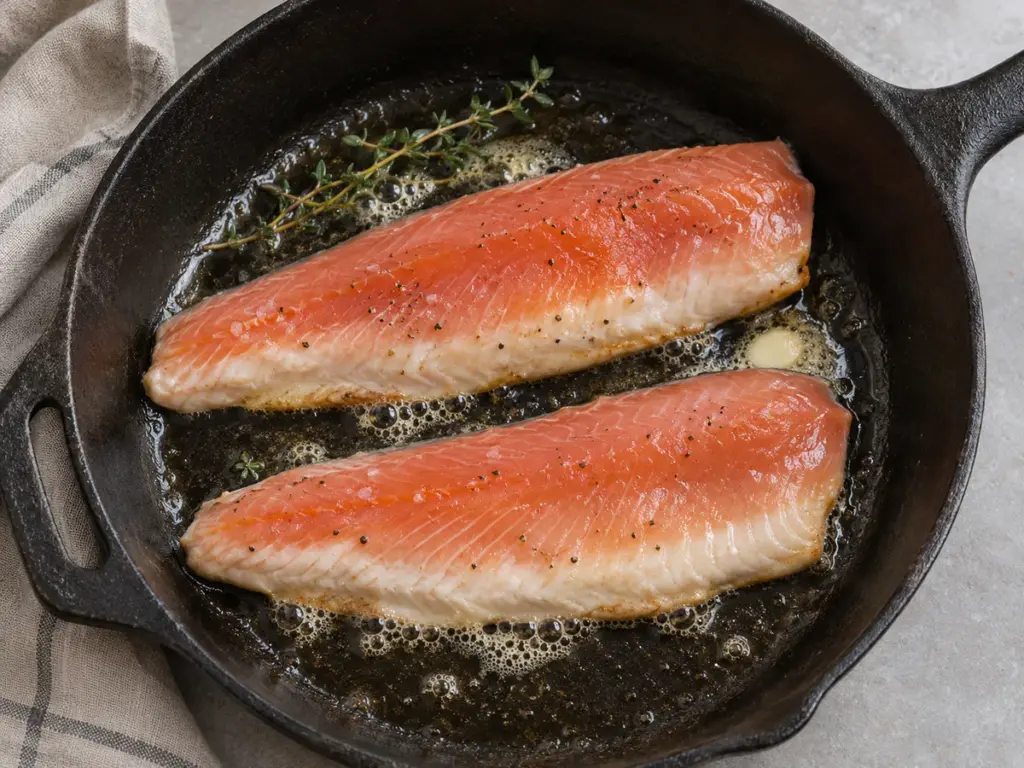
Published pan-roast recipes from NPR and Food Network point to the same pattern for a skin-on fillet, which is the one that suits char best:
- Dry the skin. Pat both sides with a paper towel, because wet skin steams and never crisps.
- Heat the pan. Use medium-high heat and a thin layer of oil, and wait until the oil shimmers.
- Sear skin-side down for about 3 to 4 minutes. Press the fillet flat for the first 10 seconds so it does not curl. The skin releases from the pan on its own once it is seared, so give it another 60 to 90 seconds if it resists.
- Flip for about 1 to 3 minutes. A thin tail finishes sooner than a thick center, and a thick fillet needs the longer end.
- Check 145°F. Put a food thermometer in the thickest part, where the flesh should look opaque and separate easily with a fork.
5. What Should You Serve With Arctic Char?
Because char is mild, you want sides that add crunch, acid or sweetness and keep the garlic and spice light enough to leave the fish in charge. These five suit it for different reasons:
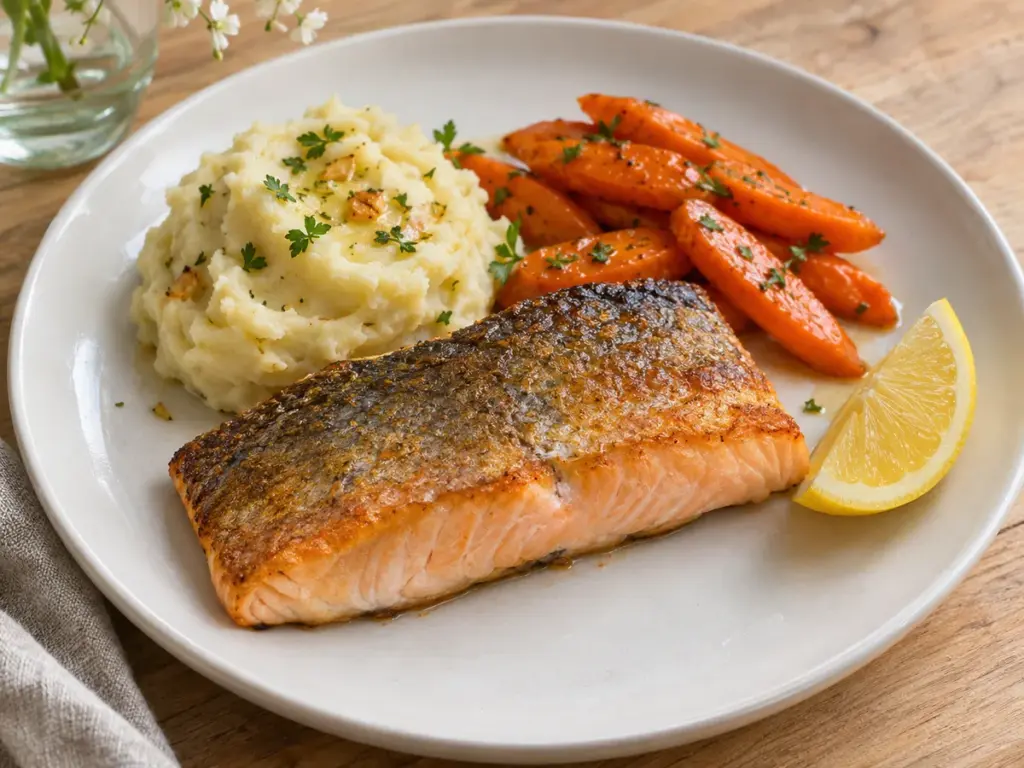
- Coleslaw: the acid and crunch contrast with the soft flake.
- Honey-glazed carrots: their sweetness echoes the light sweetness in the fish and adds color to the plate.
- Garlic mashed potatoes: a soft starch that soaks up the pan juices, as long as the garlic stays mild.
- Sauteed mixed vegetables: a quick side that cooks in the time you spend crisping the skin.
- Tomato salsa: a fresh acid that cuts through the richness of the fillet.
Anything that works under salmon works here when it stays light, so salmon-friendly vegetables such as roasted or sauteed greens and roots are a safe starting list. Sauces behave the same way, and you can borrow from the ideas for sauces for warm salmon as long as you use less of them. Char fillets are as thin as trout fillets, so the side dishes for trout fillets carry over too.
6. How Do You Buy Fresh Arctic Char?
Fresh char should smell fresh and mild, which also explains why good char does not taste fishy. The FDA says a fishy, sour or ammonia-like smell is a problem, so skip the fillet if you smell one. Use this checklist at the counter:
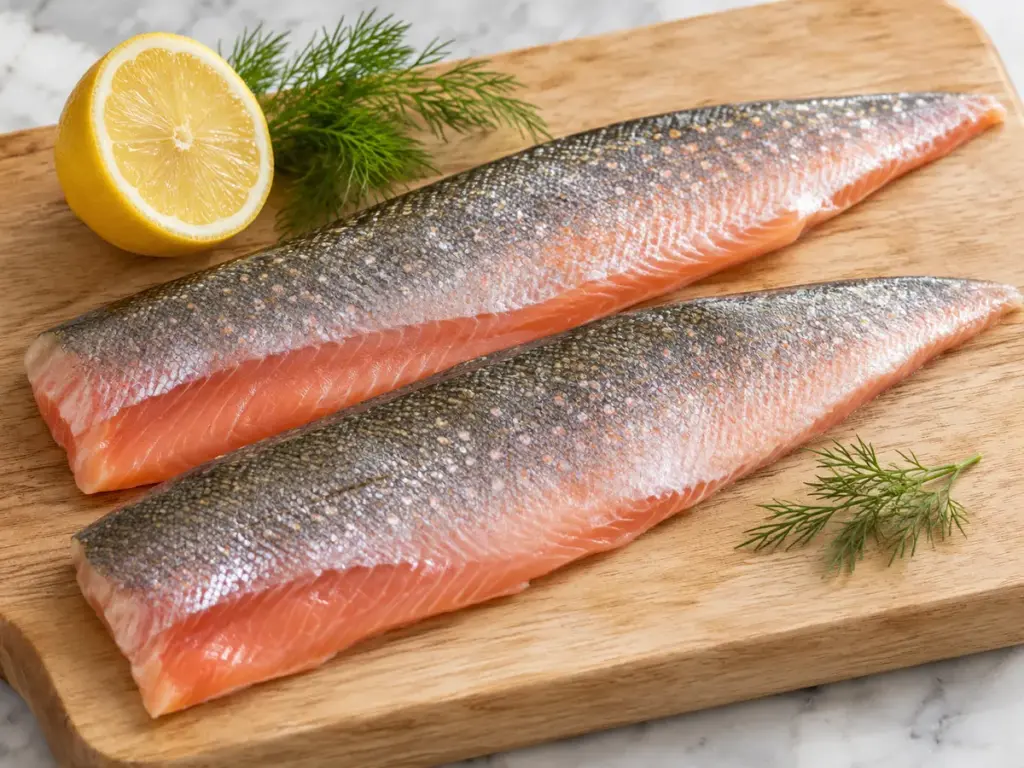
- Smell: mild and fresh, with no sour or ammonia note.
- Edges: no discoloration, darkening or drying around the fillet, though the FDA also warns that color alone does not prove freshness.
- Feel: firm flesh that springs back when you press it, according to FoodSafety.gov.
- Frozen fillets: an intact package with no frost or ice crystals and flesh that is hard, since frost can mean the fish thawed and refroze.
Sources
- Aquaculture Canada: Canadian Farmed Arctic Char (species, farming regions, growth, flavor versus Atlantic salmon)
- Chef's Resources: Arctic Char (flavor, texture, wild range, farmed supply, market size, cooking methods)
- Crowd Cow: Arctic Char (comparison with salmon and trout, skin, cooking time)
- Seafood Watch: Arctic Char Recommendations
- FDA and EPA: Advice About Eating Fish
- FDA: Selecting and Serving Fresh and Frozen Seafood Safely
- FoodSafety.gov: Safe Minimum Internal Temperatures
- FoodSafety.gov: Safe Selection and Handling of Fish and Shellfish
- NPR: Pan-Roasted Arctic Char with Lemon-Dill Butter and Food Network: Pan-Roasted Arctic Char (pan-sear timing pattern)

Food writer at GustoMeadow. Writes ingredient substitutes, food comparisons, taste guides and storage guides for home cooks.
Storage and food-safety numbers follow USDA, FDA and university extension guidance.