Ripe prickly pear fruit is a juicy cross between watermelon and berries, with a hint of bitterness.
- The University of California compares it to strawberry, watermelon, honeydew, fig, banana and citrus.
- The fruit (tuna) differs from the pads (nopales), which taste something like green beans.
- Every fruit has glochids, tiny skin-sticking spines, so wear gloves and remove them first.
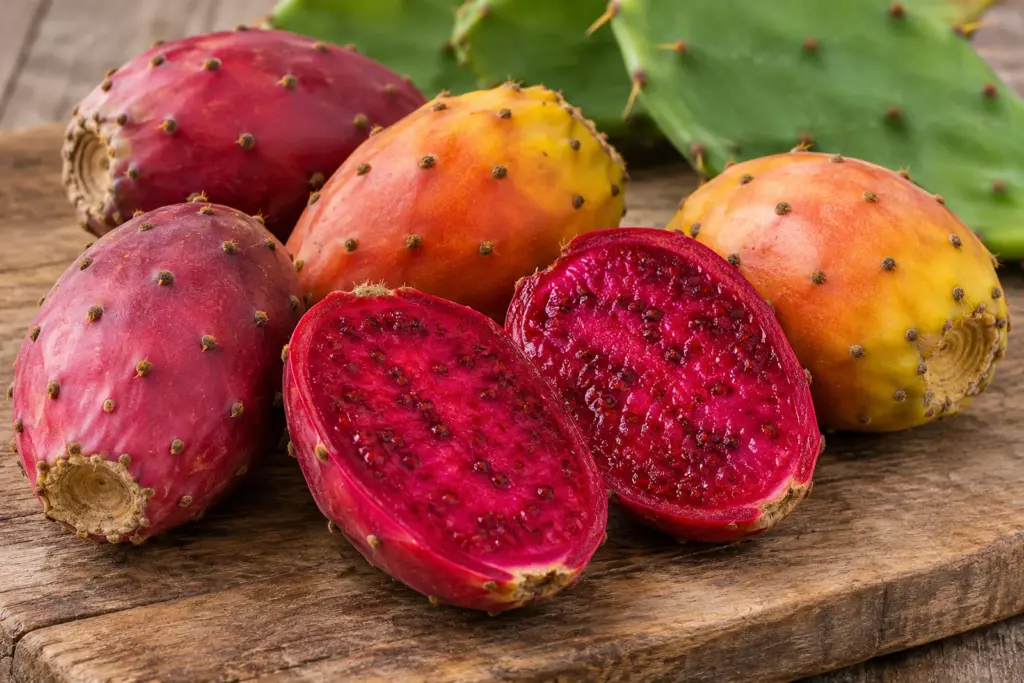
Prickly pear is the fruit of the Opuntia cactus, not a true pear, and it sits with the melons, berries and figs among the foods we describe by flavor. The sections below cover what the flesh tastes like, how the color of the fruit changes it, and the peeling routine that keeps the glochids out of your hands.
1. What Does Prickly Pear Taste Like?
CooksInfo describes the flesh as somewhere between raspberry and watermelon, with a hint of bitterness. The University of California's small farms program says the flavor varies by variety and lists strawberry, watermelon, honeydew, fig, banana and citrus as the notes people name.
The flesh is juicy and holds many tiny seeds, so you will see many cooks strain it for sauce, syrup and juice. The fruit runs from walnut-sized to about 3 inches long, and the skin and flesh come in white, green, yellow, orange, red and purple.
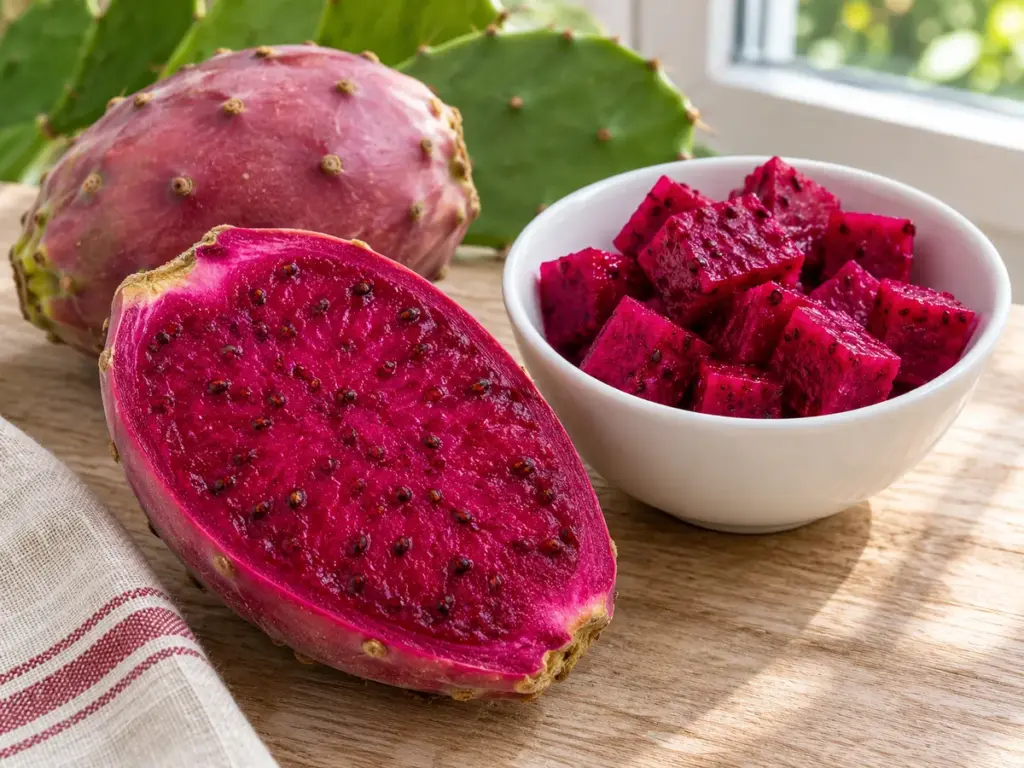
Each comparison fruit stands for one part of that range, so you can map the flavor with fruit you already know:
- Watermelon is the comparison both sources use, and its light, watery sweetness is the juicy end of the range.
- Strawberry stands for the berry side, with sweetness that carries a little tartness.
- Fresh figs cover the honeyed, seedy side, since a ripe fig is also soft, sweet and full of tiny seeds.
Because the name says pear, some shoppers expect the flavor of true pears, but the fruit grows on a cactus pad and its flavor leans toward the berry and melon descriptions above.
2. Is Prickly Pear the Same as Nopales?
No. Both come from the same cactus, but the fruit (tuna) and the pads (nopales) are two different foods that you cook and eat in different ways, according to the UC small farms network.
| Part | Other names | Flavor, as described | How it is used |
|---|---|---|---|
| Fruit | Tuna, cactus pear | Berry, watermelon, fig and citrus notes (UC) | Eaten fresh, or made into jam, syrup, juice and lemonade |
| Pads | Nopales (whole), nopalitos (diced), cladodes | “Something like green beans” (UC) | Added to omelets and salads, boiled, fried, pickled or cooked with meat |
A recipe that calls for nopales needs the pads, because the fruit is sweet and juicy while the pads are described as tart and grassy.
3. Does the Color of the Fruit Change the Taste?
Yes, a little. The University of Nevada, Reno Extension says red fruit has the most ascorbic acid, which gives it a citric taste, while yellow fruit holds more carotenoids and can taste more like a vegetable.
- Has the most ascorbic acid, which gives a citric taste (UNR).
- The sweetest varieties sold in the U.S. have dark reddish-orange or purple skin and deep red-purple flesh (UC).
- Holds more carotenoids than red fruit (UNR).
- Can taste more like a vegetable (UNR).
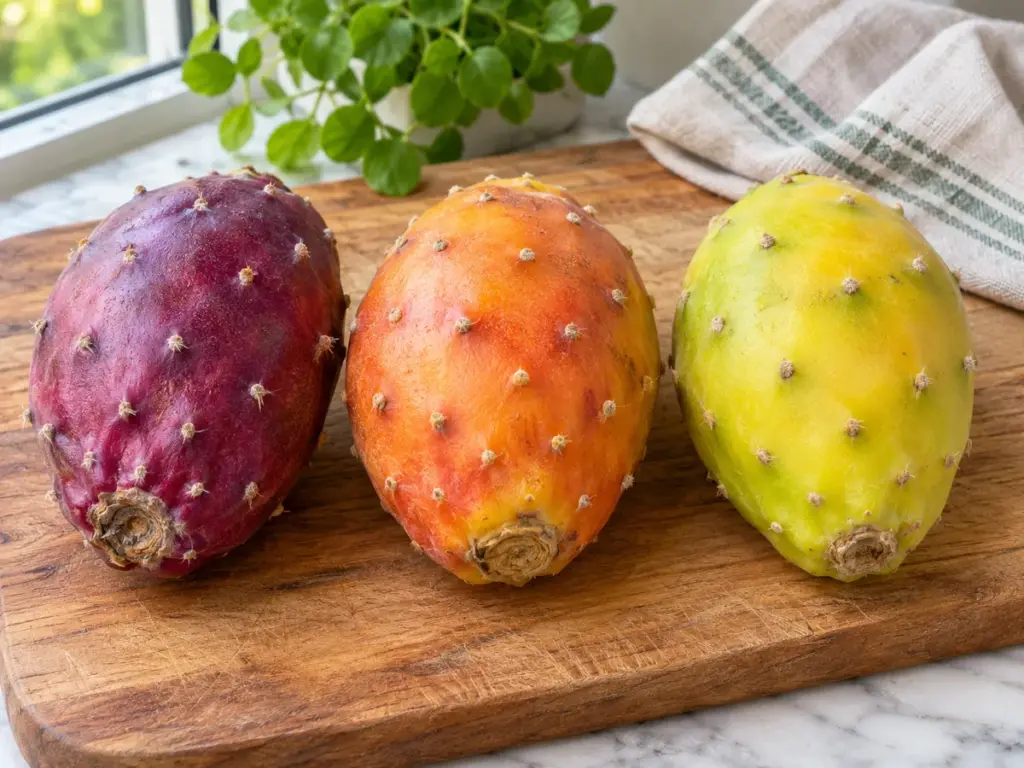
Ripeness changes the flavor more than color does. The fruit does not ripen after picking, so a fruit cut from the plant early stays low in sugar. UNR also says fruit picked in the morning has a more citrus taste, which matters if you pick your own.
4. How Do You Remove Glochids Before Eating Prickly Pear?
Every fruit carries glochids, the tiny barbed, hair-like spines that lodge in skin or other tender membranes. Spineless varieties still have them, so UNR says to dethorn every Opuntia fruit. CooksInfo notes that stores break off the spines before selling, so the full routine matters most for fruit you pick yourself.
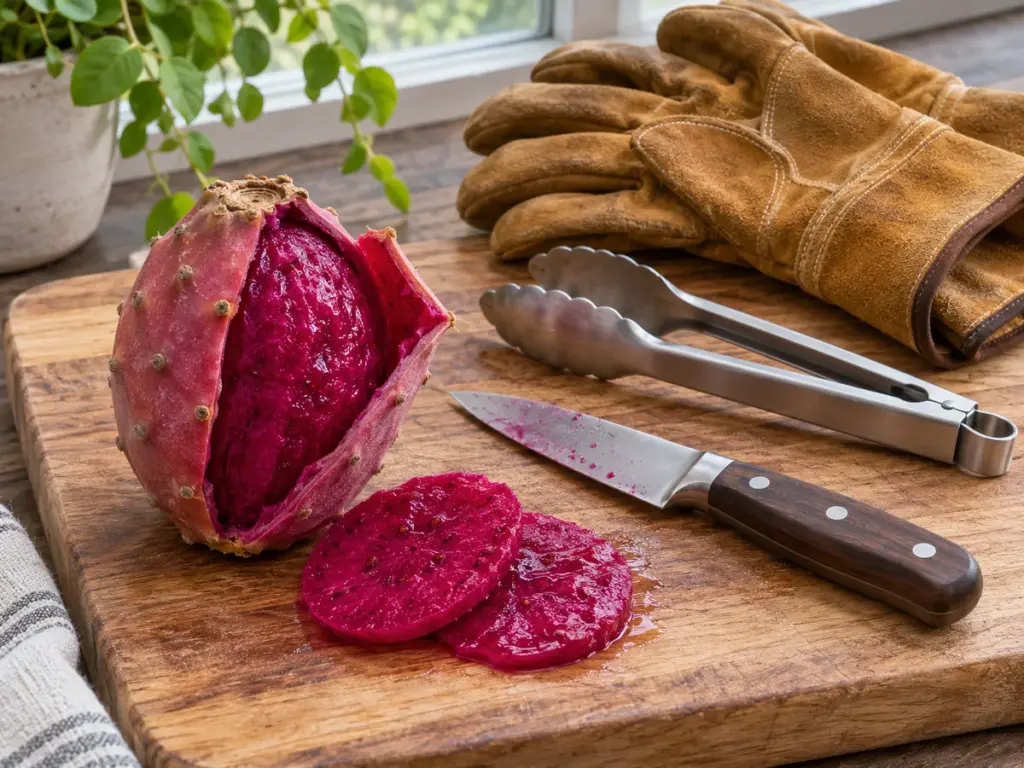
- Pick with tongs and thick gloves. Use leather or rubber gloves, twist the fruit off the pad, and drop it into a paper bag so glochids cannot work through.
- Keep the fruit dry. Do not rinse it in the sink until the thorns are gone, since the glochids stay stuck to the skin.
- Burn the glochids off. Hold the fruit with tongs over a gas burner, lighter, blowtorch or candle, and keep turning it until no new embers appear on the glochid beds.
- Cut off both ends. Take a thin slice from the top and the bottom so the fruit sits flat.
- Slit and peel. Cut one slit from top to bottom, then pull the skin away from the slit to reveal the flesh.
5. How Do You Eat and Cook With Prickly Pear?
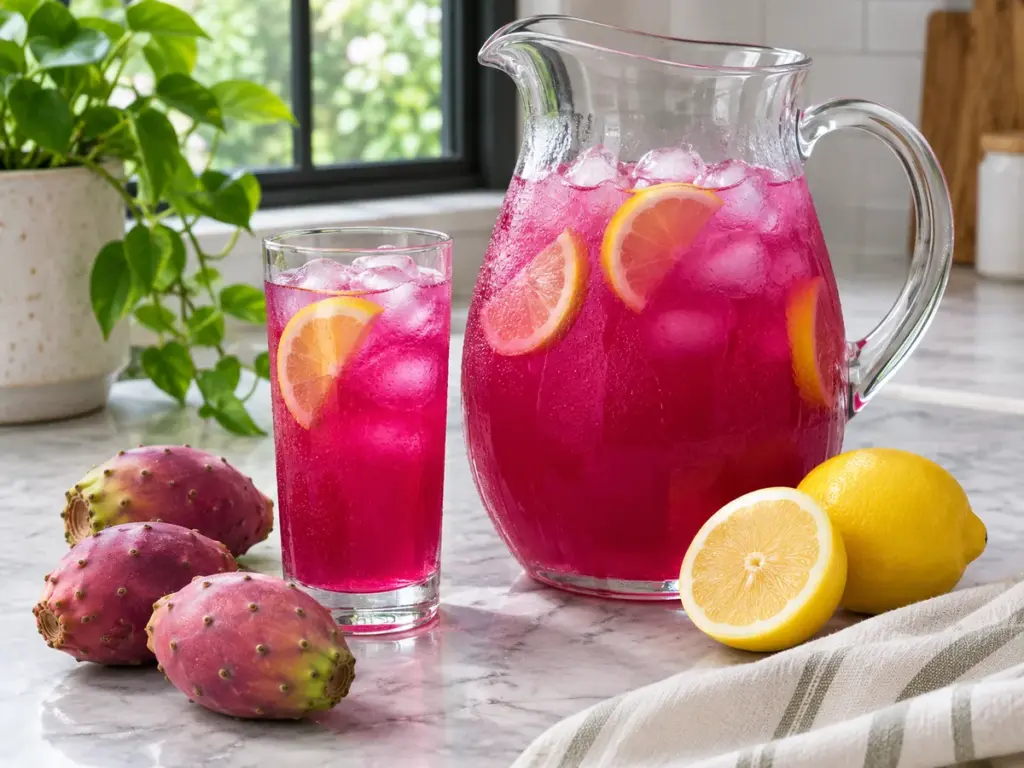
Once the fruit is peeled, you can eat it plain, slice it into fruit salad, or purée and strain it into a sauce, as CooksInfo suggests. UNR lists syrups, candies and jellies as traditional uses and gives these starting points:
- Lemonade: combine prickly pear juice and lemon juice with sugar and water. UNR gives no amounts, so you adjust to taste.
- Jelly: boil the juice with sugar and pectin, then seal it in sterilized jars.
- Juice without peeling: freeze the whole fruit overnight, thaw it in a colander lined with a pillowcase or old T-shirt over a bowl, and the juice drains out while glochids, skins, pulp and seeds stay behind.
- Later: freeze the juice or the fruit if you cannot use it right away.
Homemade jelly or jam made this way follows the usual rules, so once a jar is opened, how long jam lasts in the refrigerator applies to it too.
6. What Nutrients Does Prickly Pear Contain?
USDA FoodData Central lists raw prickly pears at these amounts per 100 grams, which is about 3.5 ounces of fruit. The entry covers the fruit only, so it does not describe the pads.
| Nutrient (raw fruit, per 100 g) | Amount |
|---|---|
| Water | 87.6 g |
| Energy | 41 kcal |
| Carbohydrate | 9.57 g |
| Fiber | 3.6 g |
| Protein | 0.73 g |
| Fat | 0.51 g |
| Vitamin C | 14 mg |
| Magnesium | 85 mg |
| Potassium | 220 mg |
| Calcium | 56 mg |
The fruit is about 88% water, which fits its juicy texture. The values come from a small number of samples in the USDA's older database (the vitamin C figure rests on one), so treat them as a rough guide.
Sources
- University of Nevada, Reno Extension: Eating Cactus, Prickly Pear for Food
- University of California Small Farms Network: Prickly Pear Cactus
- USDA FoodData Central: Prickly pears, raw (FDC ID 167750)
- CooksInfo: Prickly Pears

Food writer at GustoMeadow. Writes ingredient substitutes, food comparisons, taste guides and storage guides for home cooks.
Storage and food-safety numbers follow USDA, FDA and university extension guidance.