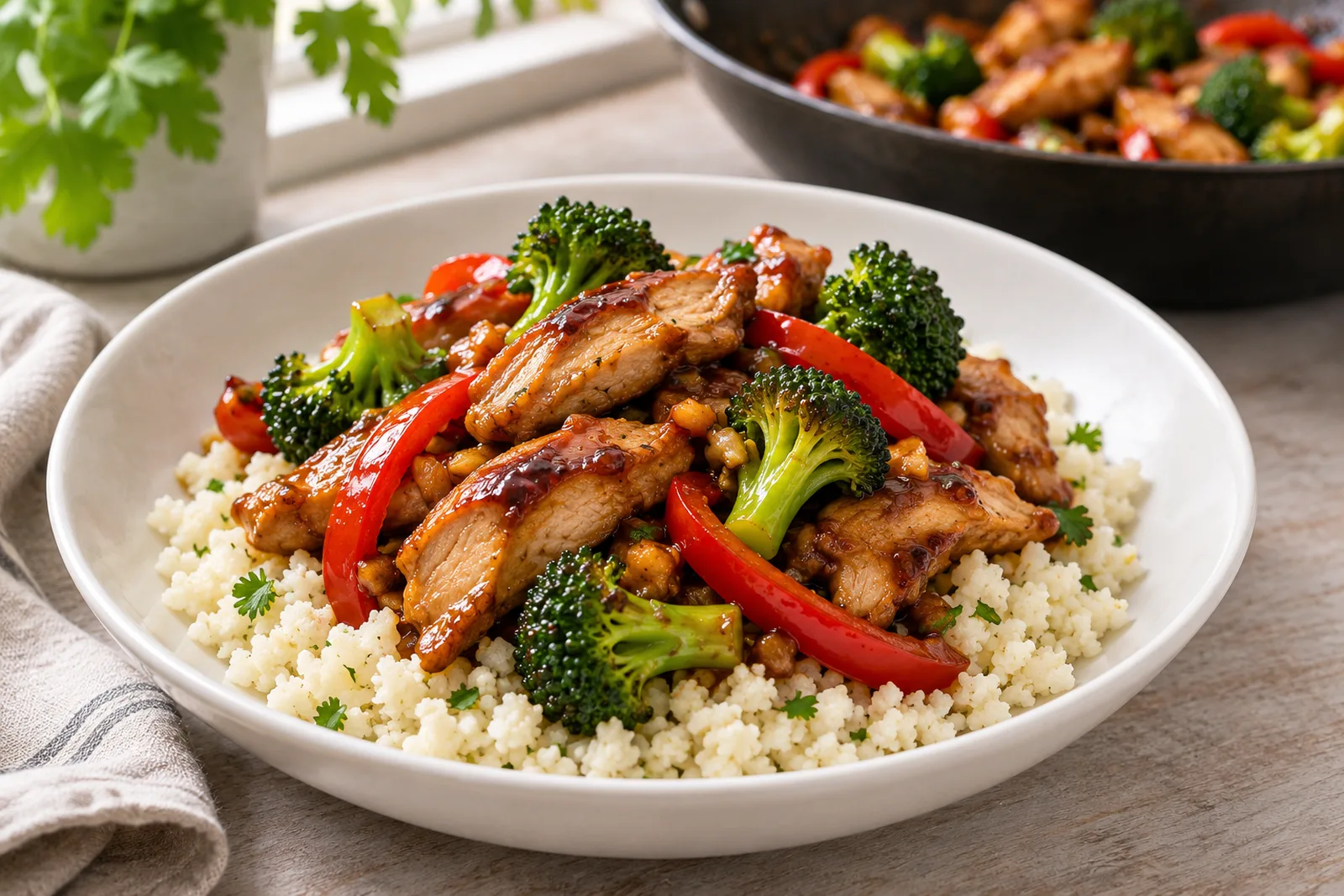
Slice pork tenderloin, boneless loin or shoulder thin across the grain, coat it in a little cornstarch, and sear it in a very hot wok in one layer so it stays juicy.
- The pork and cabbage and the green bean stir-fries take the least time in the linked recipes, 15 minutes each.
- USDA lists 145°F with a 3-minute rest for whole cuts of pork and 160°F for ground pork.
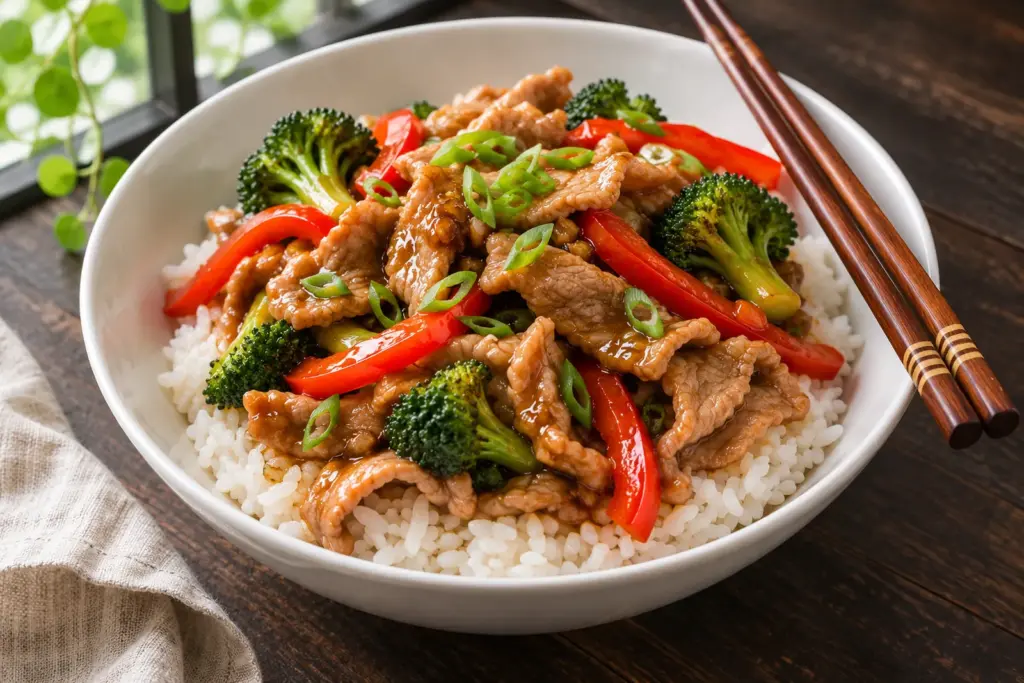
A pork stir-fry is one of the quickest weeknight dinner recipes, because thin slices cook in a couple of minutes and most of your work is slicing the pork and mixing the sauce. The 14 recipes below use five forms of pork, from tenderloin strips and boneless chops to ground pork and pork belly, and you can follow each link to the original recipe for exact amounts and steps.
Most of them are complete over plain rice. When you want a bigger meal, stir-fry side dishes such as a cold cucumber salad round out the table.
Which Pork Stir-Fry Should You Make?
Here are the pork cut, the main vegetable and the time each credited recipe gives, so you can match one to the night you have:
| Recipe | Pork | Main vegetable | Time in linked recipe |
|---|---|---|---|
| 1. Garlic ginger | Boneless chops, sliced | Snow peas, carrots | About 20 min |
| 2. Pork and long hot pepper | Shoulder or loin, sliced | Long hot green peppers | 20 min |
| 3. Pork and cabbage | Pork belly, sliced | Cabbage | 15 min |
| 4. Pork and broccoli | Butt or tenderloin, sliced | Broccoli | 25 min |
- 5. Black pepper uses sliced tenderloin with onion and bell pepper and takes 25 minutes in the linked recipe.
- 6. Pork and green bean uses ground pork with green beans and takes 15 minutes.
- 7. Hoisin and snow pea uses sliced tenderloin with snow peas and takes 25 minutes.
8. Thai basil (pad kra pao) uses ground pork with holy basil and chilies and takes 20 minutes. 9. Pork and pineapple uses sliced tenderloin with pineapple and takes 30 minutes. 10. Sichuan three-pepper uses sliced pork belly with long hot green peppers and takes 30 minutes.
- 11. Ginger noodles with bok choy uses bok choy, and the linked recipe has the pork and the time.
- 12. Char siu uses pork strips with green beans and snow peas and takes 20 minutes.
- 13. Szechuan eggplant uses Chinese eggplant, and the linked recipe has the pork and the time.
- 14. Lemongrass uses ground pork with vegetables and lemongrass and takes 30 minutes.
Here is where we'd start for a few common situations.
- On the table in 15 minutes: you can make the cabbage stir-fry (3) or the green bean stir-fry (6) in that time.
- Mild and kid-friendly: we'd pick hoisin with snow peas (7), pineapple (9) or char siu (12), because their sauces lean sweet.
- Heat lovers: you get the most heat from the Sichuan three-pepper pork belly (10), which uses 12 dried red chilies and Sichuan peppercorns in the linked recipe.
- Cheapest cut: you pay least for boneless chops in the garlic ginger stir-fry (1) or ground pork in recipes 6, 8 and 14.
Which Cut of Pork Is Best for Stir-Fry?
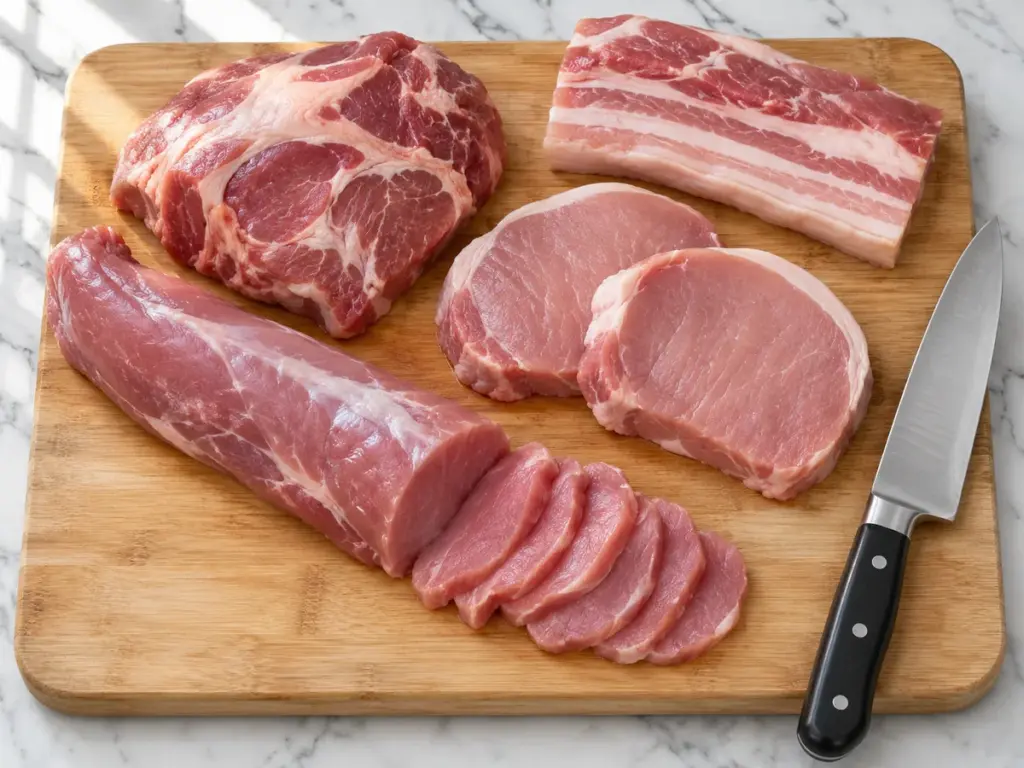
Any tender, quick-cooking cut works, and the choice comes down to how much fat you want in the bite. Here are the cuts the 14 recipes call for.
| Cut | Fat | How to cut it | Recipes |
|---|---|---|---|
| Tenderloin | Leanest | Thin strips, about ⅛ inch | 4, 5, 7, 9 |
| Boneless loin chop | Lean | Thin strips, up to ¼ inch | 1, 2 |
| Shoulder (pork butt) | Medium, marbled | Thin strips | 2, 4 |
| Pork belly | Very high | Slices about ½ inch thick | 3, 10 |
| Ground pork | Medium | No cutting, browned into crumbles | 6, 8, 14 |
- Tenderloin is the most tender cut and needs only a minute or two in the pan, so it is the safest choice if you tend to overcook. You can also roast the same cut whole or slice it into medallions for other tenderloin dishes.
- Loin chops are lean like tenderloin but a little firmer, so thin slices and a starch coating matter more when you cook them.
- Shoulder has more fat and marbling, which keeps thin slices moist even when you cook them a little long. You would usually braise it for low-and-slow shoulder dishes, but sliced thin it stir-fries well.
You can use either pork loin or pork butt in two of the recipes, since thin slices and a quick sear suit both ends of the lean-to-fatty range. If your store is out of tenderloin, you can use pork tenderloin stand-ins such as boneless loin chops cut thin can go in the same recipes.
How Do You Slice and Velvet Pork for Stir-Fry?
When you velvet pork, you coat the sliced meat in a thin cornstarch mixture before it hits the pan. The coating holds juices in and shields lean pork from drying out, which is why lean tenderloin and loin benefit most. You will see a version of it in several recipes below, and the broccoli stir-fry (4) spells it out.
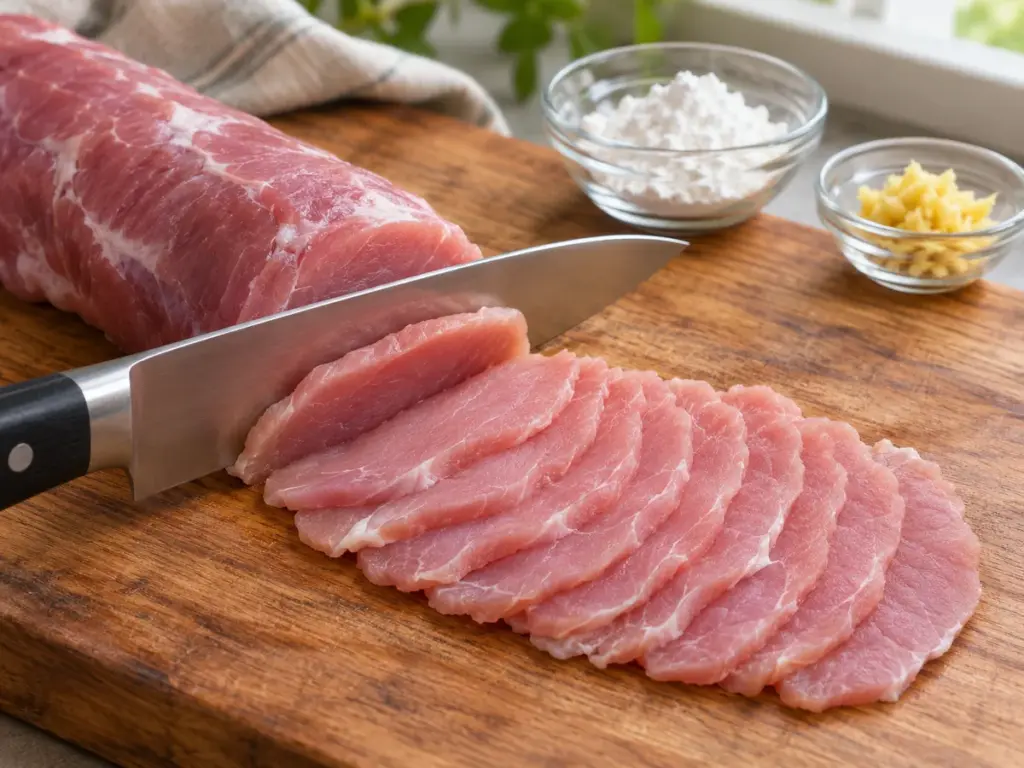
- Firm the pork. Put it in the freezer for about 30 minutes so the knife makes thin, even slices instead of dragging.
- Slice across the grain. Cut strips about ⅛ to ¼ inch thick. Grain direction matters less for pork than for beef, but if you cut across it, you shorten the fibers and each bite is easier to chew.
- Coat the strips. For 12 ounces of pork, The Woks of Life velveting method uses 1 tablespoon of water, 1½ teaspoons each of Shaoxing wine, oyster sauce and cornstarch, and 1 teaspoon of oil. Rest it 15 to 30 minutes.
- Sear and pull early. Cook the strips in a hot wok until opaque, about 80 percent done, then lift them out.
- Return at the end. Put the pork back in for the last moments with the sauce, so it finishes cooking without drying.
Shaoxing wine adds aroma, and if you do not have a bottle, dry sherry and other swaps fill in. You can add baking soda for tough cuts, though the Woks of Life author usually skips it for pork.
How Hot Should the Wok Be?
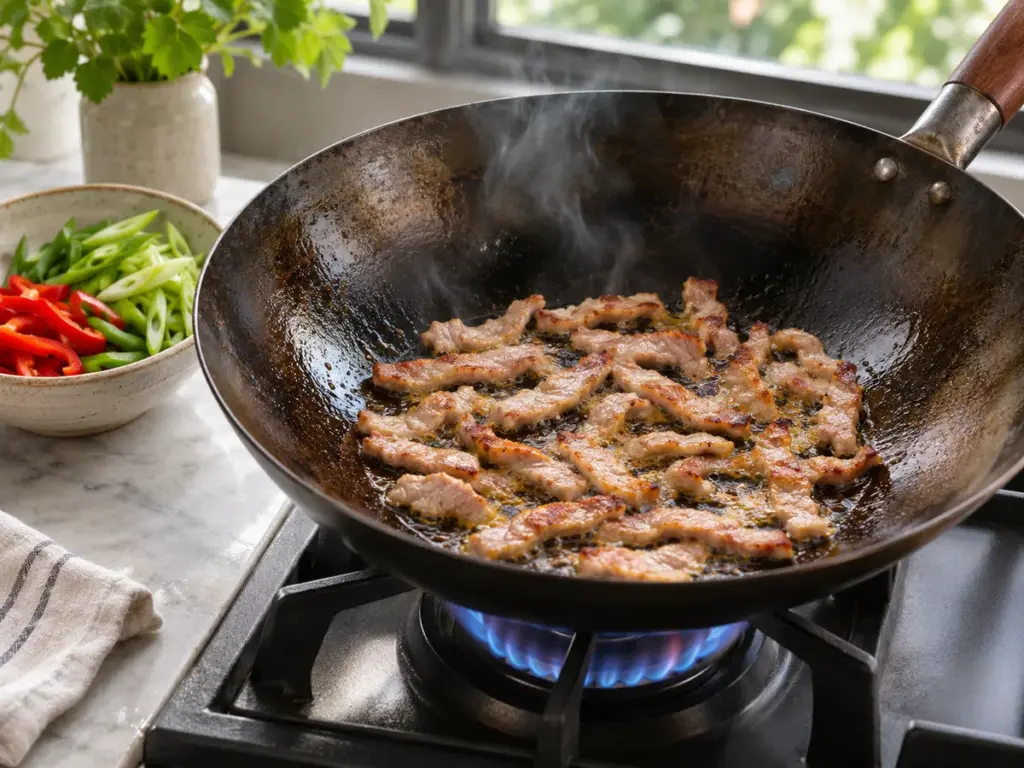
Heat the wok until it lightly smokes before the oil goes in, and cook the pork in a single layer. If you crowd the pan or start with it lukewarm, the meat steams in its own juices, so it turns grey and chewy instead of browning.
- Mix the sauce before you start
- Sear pork in one layer for about a minute, in batches
- Remove it slightly pale, then fry the vegetables
- Add sesame oil off the heat
- Add pork to a cold wok
- Stir constantly, which stops browning
- Add wet vegetables; drain cabbage
- Pour cornstarch into hot liquid
A flat-bottom wok sits flat on your electric or induction burner, while a round-bottom wok is steadier on a wok ring over gas. If you add vegetables by hardness, with carrots, broccoli and green beans first and leafy greens last, the best stir-fry vegetables stay crisp-tender.
You can use the same method with other proteins, and if you would rather cook seafood, quick shrimp stir-fry needs the same hot pan and a shorter cook time.
How Do You Know Pork Stir-Fry Is Done?
USDA gives 145°F with a 3-minute rest for pork steaks, chops and roasts, and 160°F for ground pork, which has no rest time. USDA has no separate rule for stir-fry strips, and you will find strips ⅛ inch thin too narrow for most thermometers.
You can probe thicker pieces, such as ½-inch belly slices in recipe 10, more easily. Use the thermometer there, because belly keeps its fat and does not dry out if you cook it a few degrees past 145°F.
1. Garlic Ginger Pork Stir-Fry
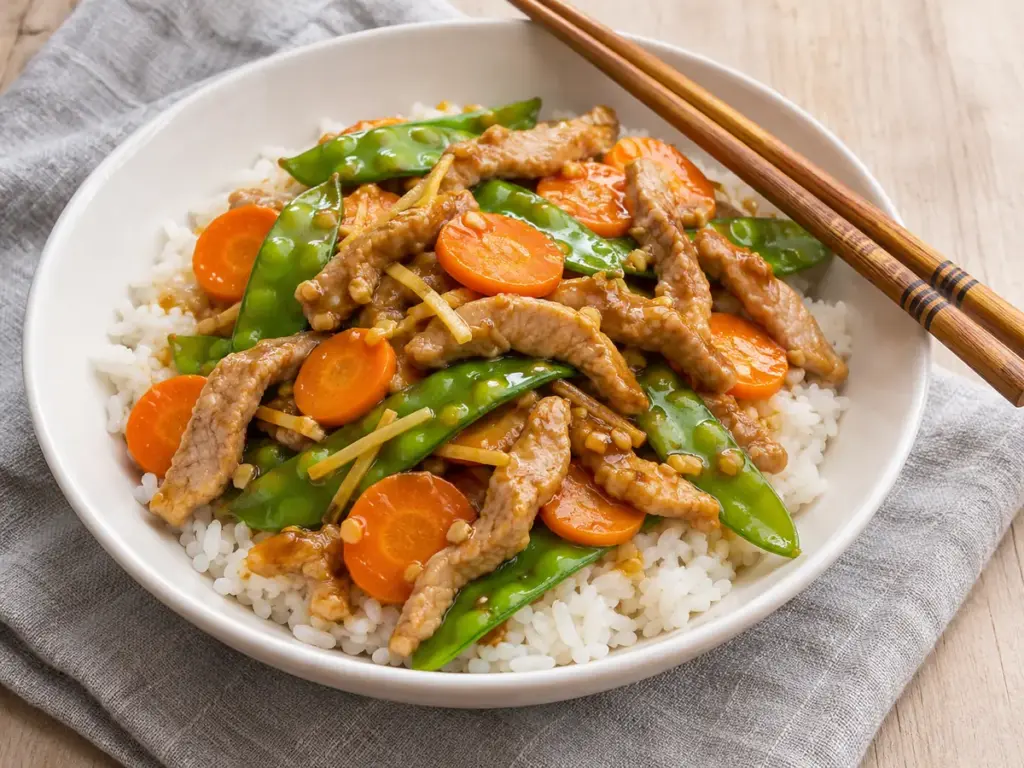
Full recipe: Garlic Ginger Pork Stir Fry from The Chunky Chef
This recipe is the template for the whole page, and you slice boneless pork chops into thin strips and cook them with fresh ginger, garlic, snow peas and carrots in a broth-and-cornstarch sauce. The linked recipe lists it at about 20 minutes, and it uses the cheapest cut on the page.
Stir the cornstarch into the cold broth before it reaches the wok. If the mix is smooth, it thickens in about a minute of simmering into a glaze that clings to the pork, while cornstarch you add to hot liquid clumps.
2. Pork and Long Hot Pepper Stir-Fry
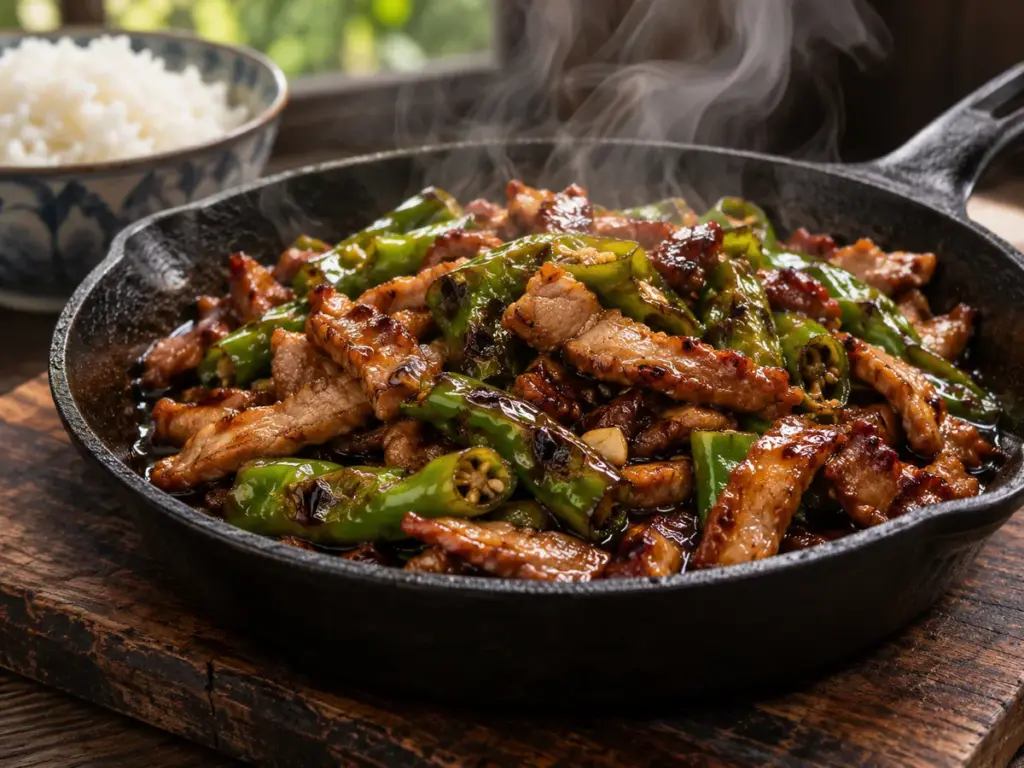
Full recipe: Pork and Pepper Stir-fry from The Woks of Life
- You marinate thin strips of pork shoulder or loin in cornstarch, oyster sauce and soy sauce.
- You stir-fry them with long hot green peppers until the peppers blister.
- It takes 20 minutes in the linked recipe, with 15 of those spent on prep.
If you sear the pork first and set it aside, it will not overcook while the peppers blister. If you want a milder version, use Anaheim or cubanelle peppers, and loin works as well as shoulder here, the same cut that makes a classic pork loin roast.
3. Pork and Cabbage Stir-Fry
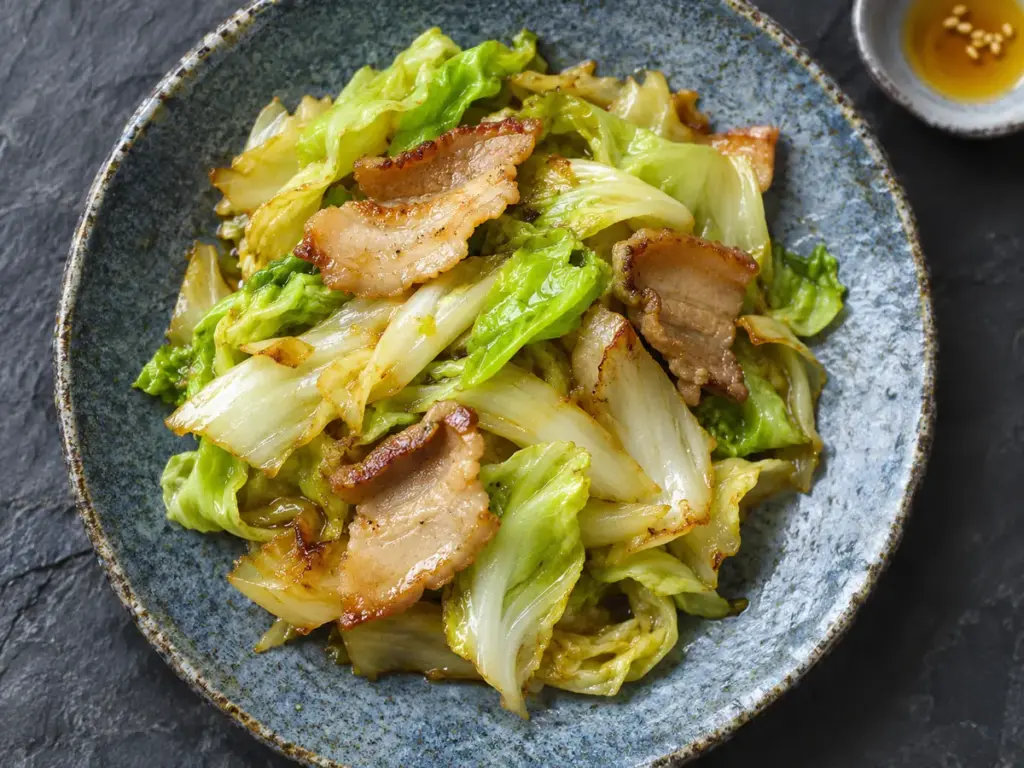
Full recipe: Pork and Cabbage Stir Fry (Chinese cabbage dry pot), China Sichuan Food
You need just 100 grams (about 3.5 ounces) of sliced pork belly for this budget dish, known in China as Chinese cabbage dry pot, along with five large cabbage leaves, light soy sauce, sugar, salt and sesame oil. You can have it ready in 15 minutes, and the belly gives off enough fat to coat the cabbage.
4. Pork and Broccoli Stir-Fry
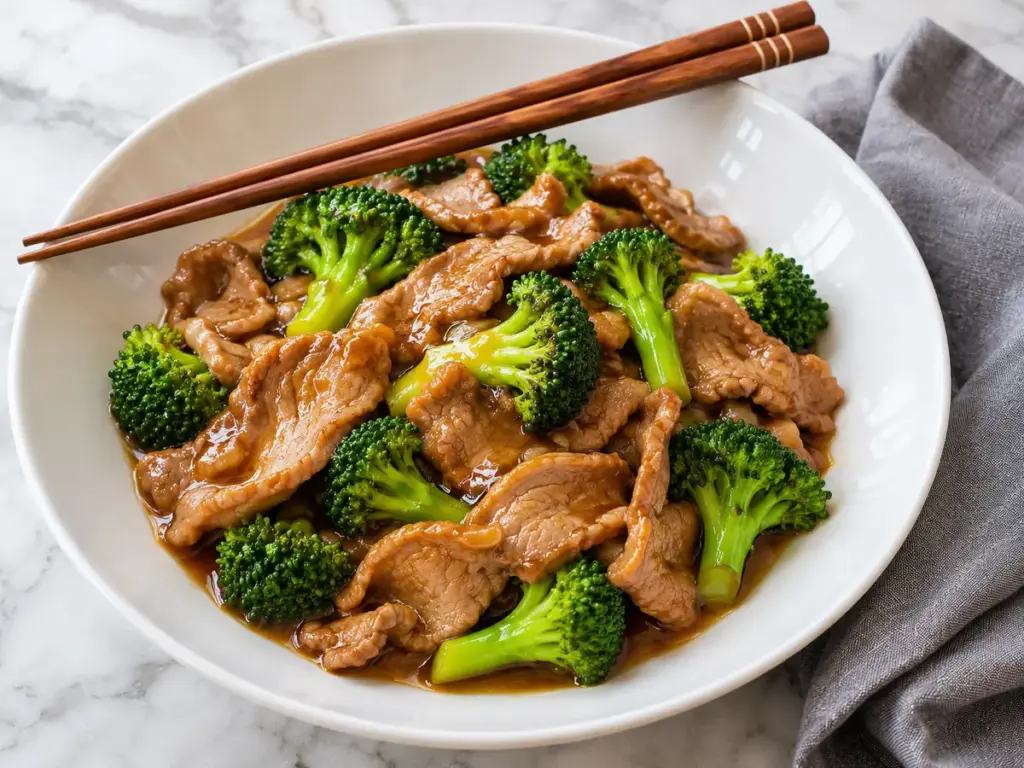
Full recipe: Pork and Broccoli Stir Fry from China Sichuan Food
- You slice about 200 grams (7 ounces) of pork butt or tenderloin thin.
- You velvet it with Shaoxing wine, light soy sauce, white pepper, water and 3 teaspoons of cornstarch, and rest it 15 minutes.
- The sauce is only oyster sauce and light soy sauce, and the whole dish takes 25 minutes.
Fry the coated pork briefly and take it out while it is still pale, since it finishes cooking when it returns to the sauce. If you are out of oyster sauce, stand-ins for oyster sauce cover the half tablespoon this dish uses.
5. Black Pepper Pork Stir-Fry
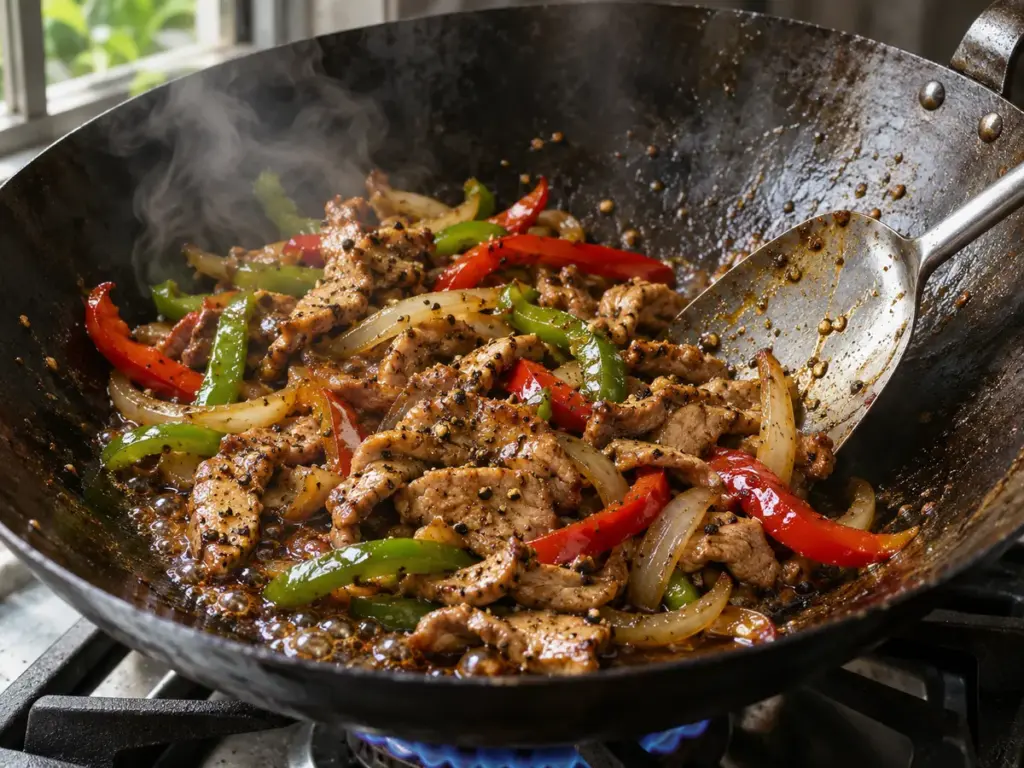
Full recipe: Pork and Pepper Stir Fry from Omnivore's Cookbook
You slice tenderloin across the grain into ⅛-inch pieces, marinate it 15 minutes in Shaoxing wine, salt and cornstarch, and cook it with onion and bell pepper. The sauce carries ½ teaspoon of ground black pepper with chicken stock, soy sauce, dark soy sauce and sugar, and the dish takes 25 minutes.
Sear the pork in one layer for about a minute without moving it, in two batches if the wok is small. You add a teaspoon of toasted sesame oil after the heat is off, which keeps its aroma from cooking away.
6. Pork and Green Bean Stir-Fry
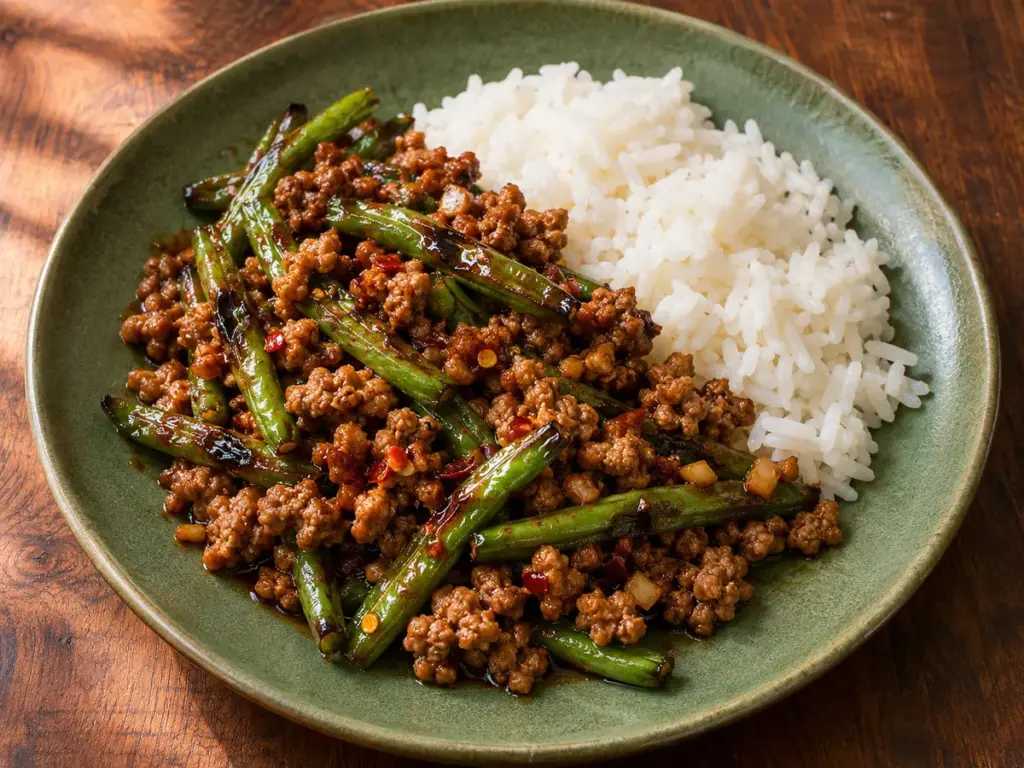
Full recipe: Stir Fried Green Beans with Pork from RecipeTin Eats
- You cook seven ounces (220 grams) of ground pork with green beans in a dark soy, Shaoxing wine, sugar and chili garlic sauce.
- The linked recipe calls it the defining step when you char the beans in a very hot cast-iron skillet for about 2½ minutes.
- The whole dish takes 15 minutes.
Spread the beans out and leave them alone so they blister instead of steaming. Ground pork must reach 160°F, so cook it until no pink remains. You can also use ground pork in many ground pork dinners beyond the wok.
7. Hoisin Pork and Snow Pea Stir-Fry
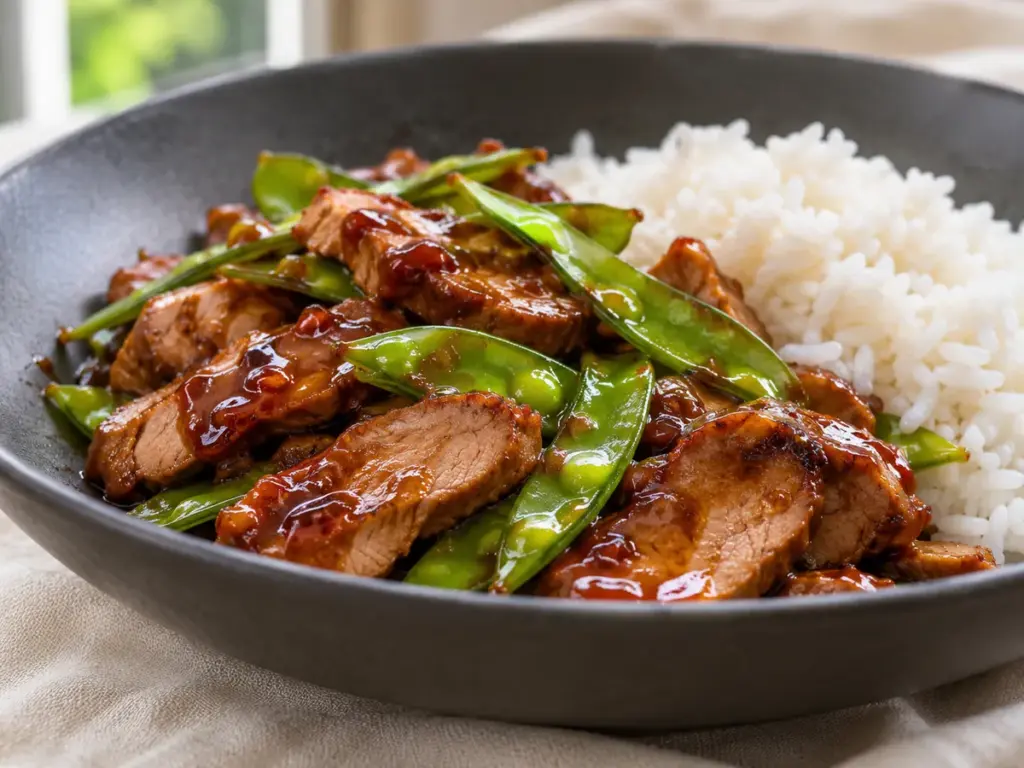
Full recipe: Hoisin Pork and Snow Pea Stir-Fry from Food.com (Cooking Light)
You glaze one pound of thinly sliced tenderloin in a sauce of ¼ cup hoisin, ¾ cup reduced-sodium chicken broth, 1 tablespoon each of honey and soy sauce, and 1 tablespoon of cornstarch, and you pair the pork with snow peas. It takes 25 minutes.
Hoisin tastes sweeter and thicker than soy sauce, which is why the recipe thins it with broth and uses only a tablespoon of soy. Taste before adding salt, since hoisin brings plenty already.
8. Thai Basil Pork Stir-Fry (Pad Kra Pao)
Full recipe: Thai Pork and Basil Stir-Fry (Pad Gaprow) from Marion's Kitchen
- You cook one pound (500 grams) of minced pork after the garlic and chilies.
- You season it with 4 tablespoons of oyster sauce, 1 tablespoon each of fish sauce and soy sauce, and 1 teaspoon of sugar.
- The basil goes in last and wilts in seconds, and you can eat in 20 minutes.
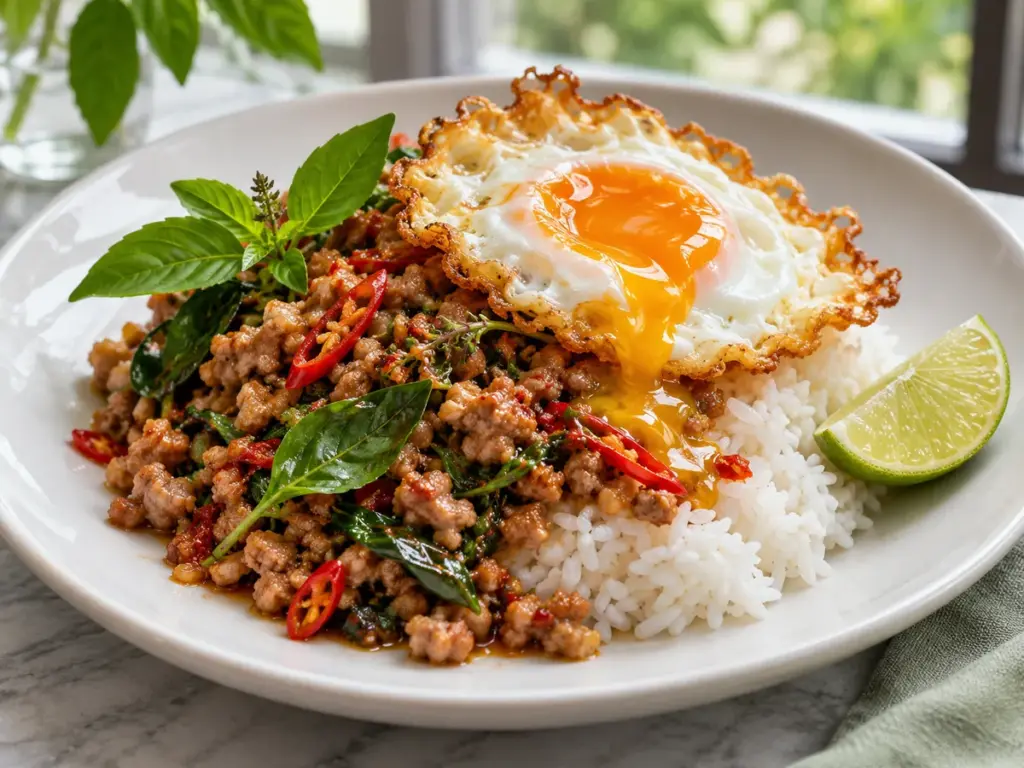
Holy basil is the traditional choice, and the recipe says Thai sweet basil or Italian basil also work. When you have none of those on hand, Thai basil swaps keep the dish close, and a fried egg with a runny yolk makes a sauce for your rice.
9. Pork and Pineapple Stir-Fry
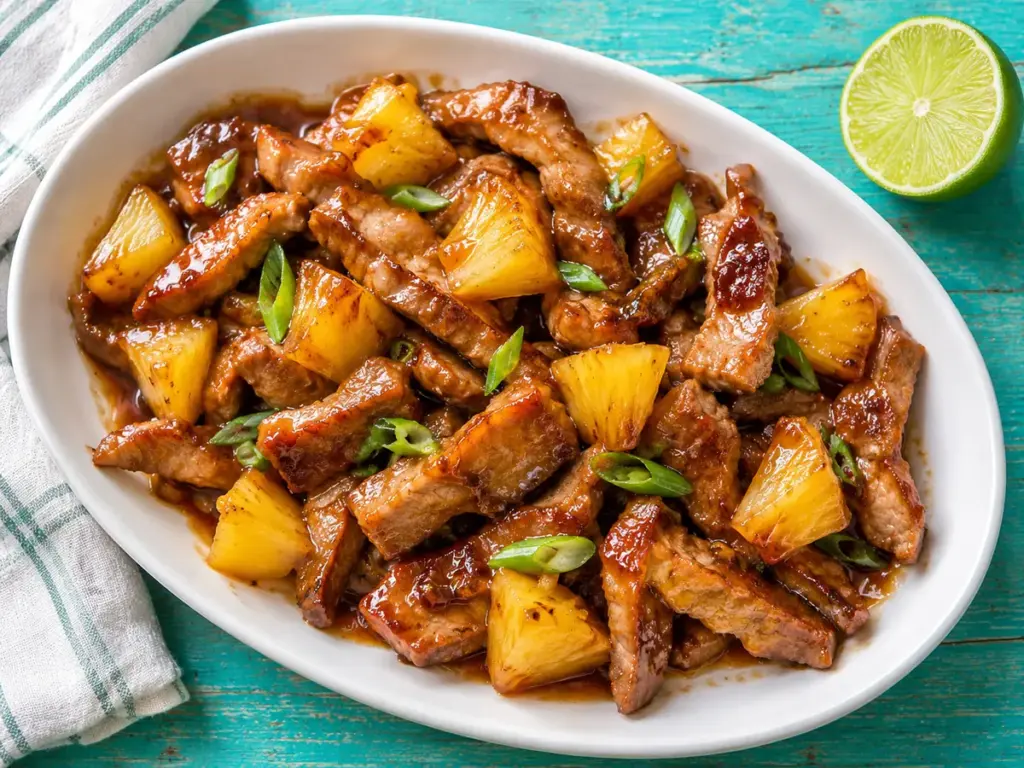
Full recipe: Pork and Pineapple Stir Fry from Don't Go Bacon My Heart
You cook one pound of tenderloin strips with diced canned pineapple, and the can's juice goes into the sauce with ⅓ cup hoisin, ¼ cup honey, 2 tablespoons soy sauce, 1 tablespoon rice vinegar and 1 tablespoon cornstarch. It takes about 30 minutes.
The recipe has you fry the pork in batches over medium-high heat and set it aside, so the strips stay juicy while the sauce thickens. A splash of vinegar balances the honey and fruit, and if you leave it out, the glaze tastes flat and sticky.
10. Sichuan Three-Pepper Pork Belly
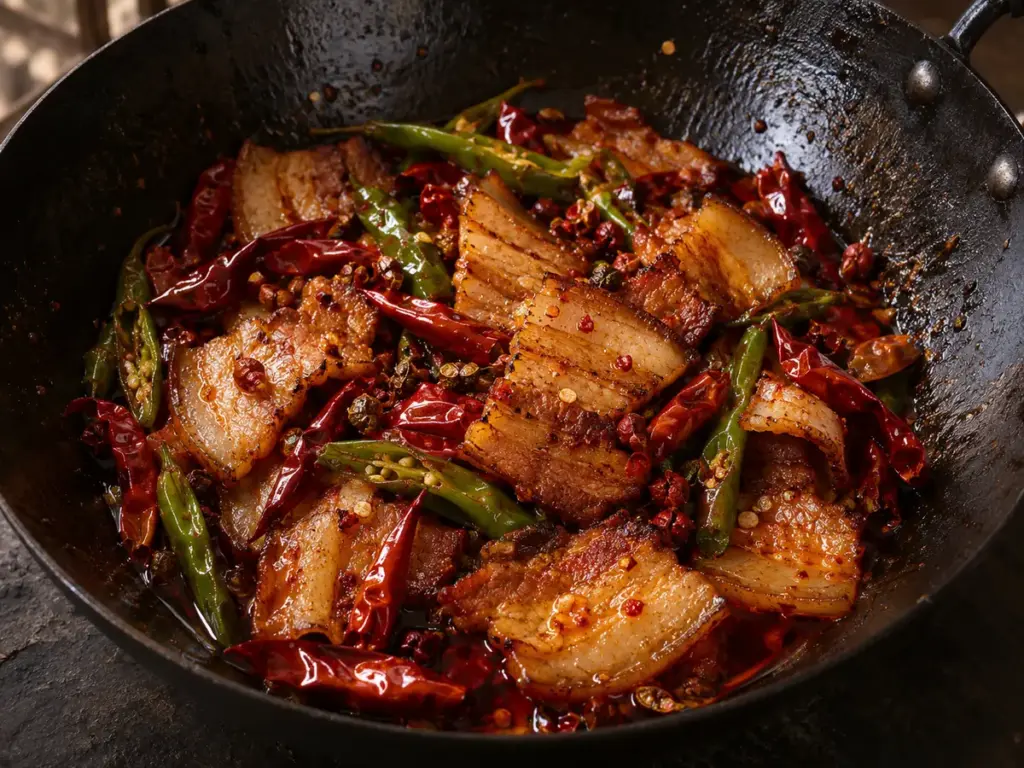
Full recipe: Sichuan Three Pepper Pork Belly Stir-fry from The Woks of Life
- You cook twelve ounces of belly, sliced about ½ inch thick.
- The heat comes from 12 dried red chilies, 1 teaspoon of Sichuan peppercorns and 4 long hot green peppers, plus chili oil and Shaoxing wine.
- The recipe has no soy sauce and takes 30 minutes.
Render the belly over medium heat for about 6 minutes until the edges crisp, the same effect that makes roasted pork belly crackle. Toast the dried chilies and peppercorns gently, because burned spices turn bitter, and use Szechuan peppercorn substitutes if your store does not stock them.
11. Spicy Ginger Pork Noodles with Bok Choy
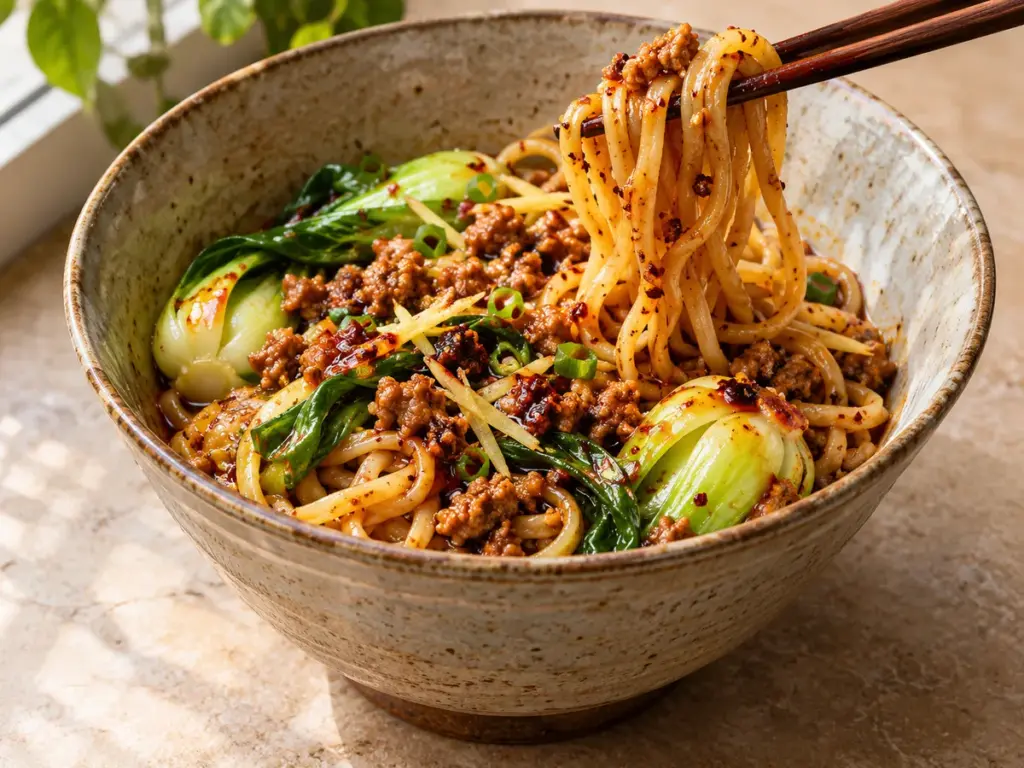
Full recipe: Spicy Ginger Pork Noodles with Bok Choy from NYT Cooking
NYT Cooking describes this as spicy, ginger-and-garlic pork noodles that play on dumplings but are easier at home. The recipe tops the noodles with black vinegar over sliced ginger, and says balsamic vinegar works if you have no black vinegar. NYT Cooking may ask you to log in to read the full recipe.
Add bok choy stems to the pan before the leaves, because the stems need longer to turn tender. If your store has no bok choy, you can use other greens that replace it, such as napa cabbage, in its place.
12. Char Siu Pork Stir-Fry
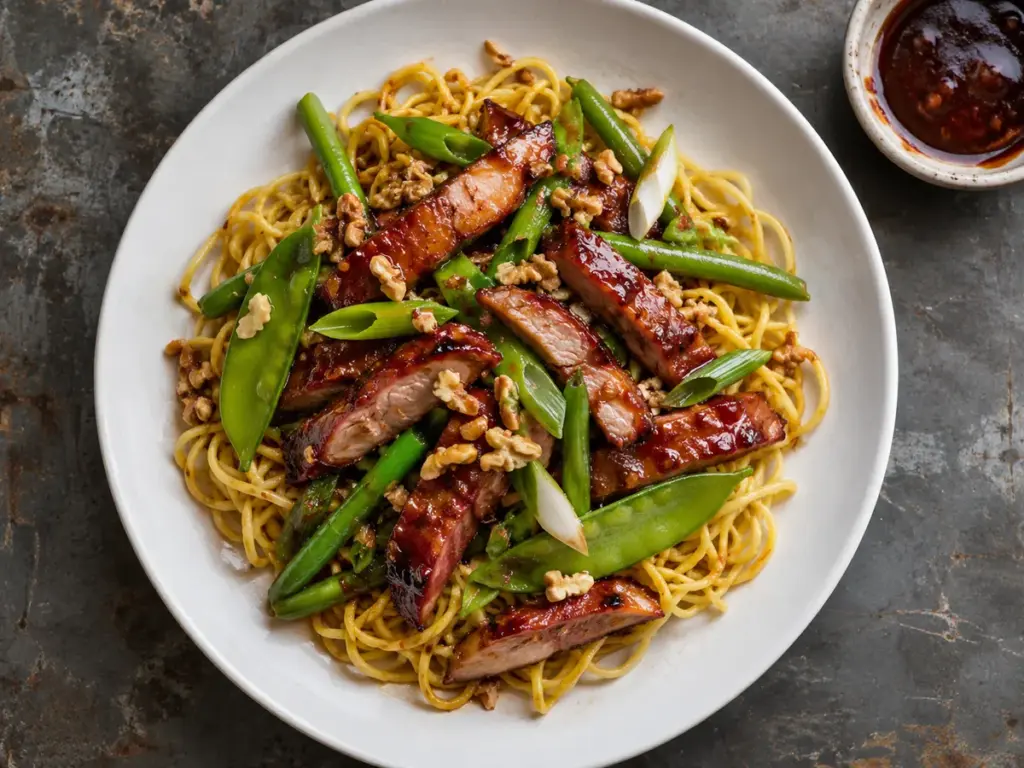
Full recipe: Char Siu Pork Stir-Fry from Food.com
- You cook about 600 grams (just over 1 pound 5 ounces) of pork stir-fry strips with scallions, green beans and snow peas.
- The sauce is ⅓ cup of char siu sauce thinned with 2 tablespoons of water, and you top the dish with walnuts.
- Serve it over egg noodles or rice, and expect 20 minutes.
Char siu sauce is sweet and thick, so it scorches quickly. Add it near the end, when the pork and vegetables are almost done, and the water keeps it loose enough to coat without burning.
13. Szechuan Pork and Eggplant Stir-Fry
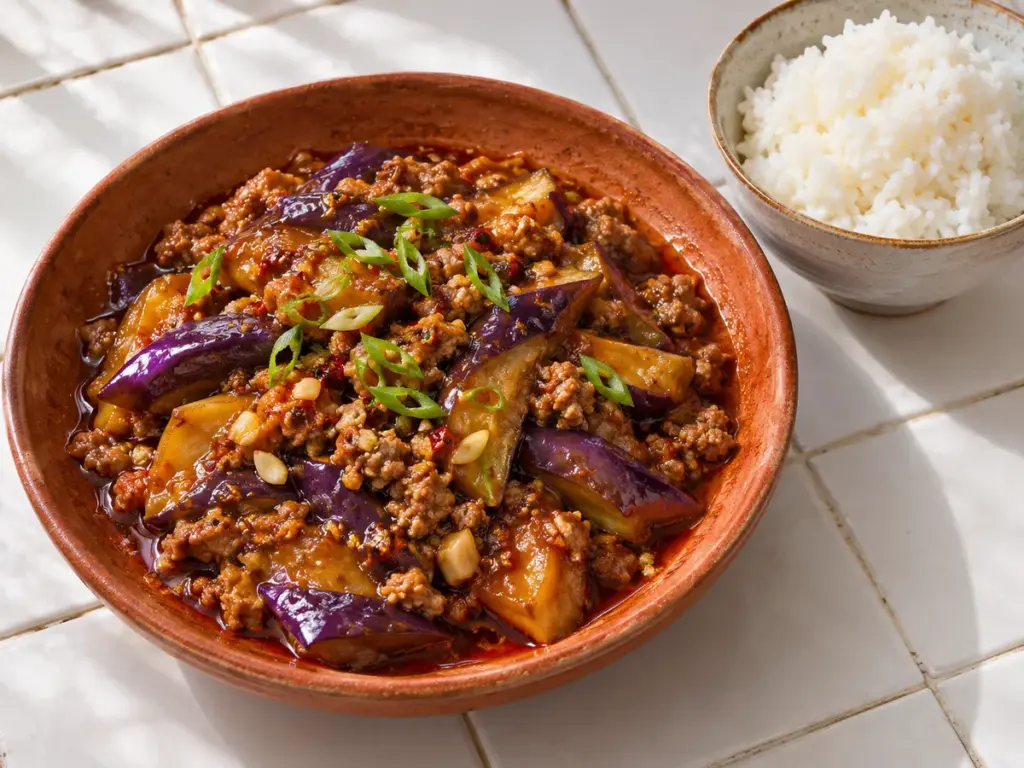
Full recipe: Szechuan Pork and Eggplant from Silk Road Recipes
This Szechuan-style pork and Chinese eggplant stir-fry is saucy and works over rice any night of the week, according to the recipe's own summary. Because the eggplant soaks up the sauce, you get something soft to contrast with the pork.
Thin-skinned Chinese eggplant has fewer seeds than the large globe type and softens in minutes, so cut the pieces the same size and they finish together. If you cannot find it, eggplant substitutes such as zucchini and mushrooms fill in.
14. Lemongrass Pork Stir-Fry
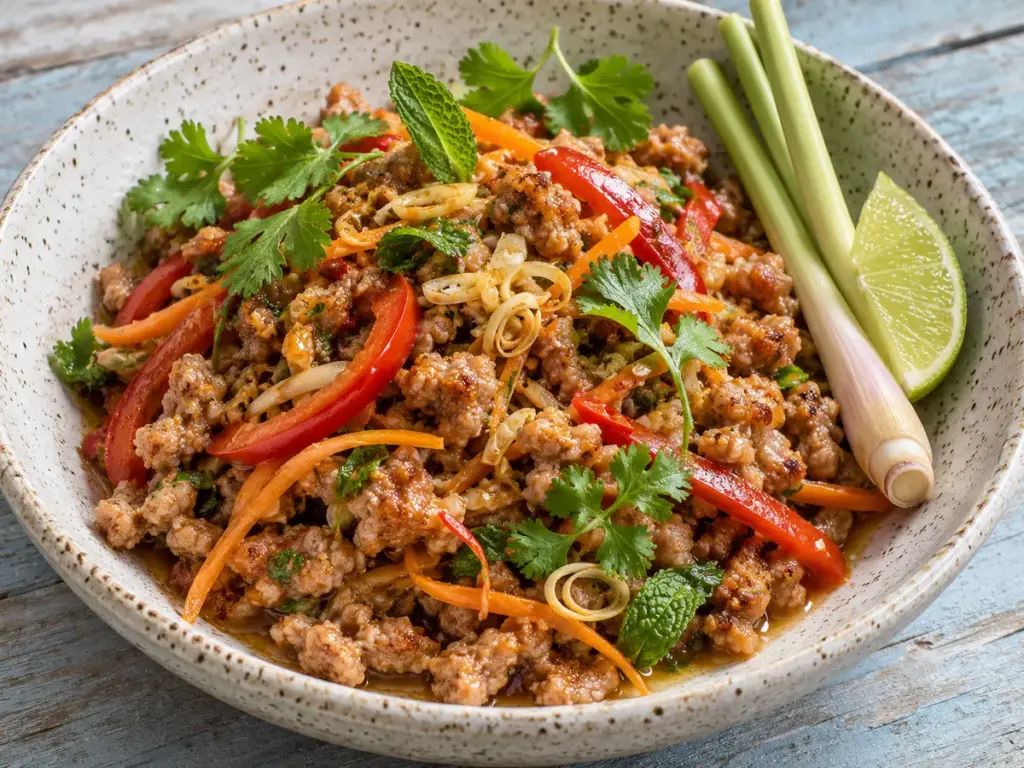
Full recipe: Lemongrass Pork Stir-fry from That Spicy Chick
- In this Vietnamese-inspired dish, you cook 500 grams of ground pork, drain it, and return it to the wok with vegetables.
- The sauce is 2 tablespoons fish sauce, light soy, sweet dark soy, rice vinegar and 4 teaspoons of brown sugar, thickened with a cornstarch slurry.
- Plan on 30 minutes.
Simmer for 2 to 3 minutes after the sauce goes in, until most of the liquid cooks off. Fresh lemongrass gives the best aroma, so use only the pale, tender lower part of the stalk, and if you lack a stalk, stand-ins for fresh lemongrass such as lemon zest cover for it.
How Long Do Pork Stir-Fry Leftovers Keep?
You should refrigerate cooked stir-fry within 2 hours, or within 1 hour when the room is above 90°F. Store the rice in its own container, because cooked rice also needs quick cooling.
| Item | Refrigerator | Freezer |
|---|---|---|
| Raw pork loin, chops, tenderloin or shoulder | 3 to 5 days | 4 to 12 months |
| Raw ground pork | 1 to 2 days | 3 to 4 months |
| Cooked leftovers with meat | 3 to 4 days | 2 to 3 months |
Reheat leftovers to 165°F and add a spoonful of water or broth to loosen a sauce that thickened in the fridge.
Sources
- USDA FSIS: Safe Minimum Internal Temperature Chart (pork 145°F with 3-minute rest, ground pork 160°F, leftovers 165°F)
- USDA FoodKeeper (foodsafety.gov): raw pork, ground pork and leftovers storage
- USDA FSIS: Danger Zone (40°F to 140°F), the 2-hour and 1-hour rule
- The Woks of Life: How to Velvet Pork, coating amounts and searing
- Omnivore's Cookbook: Pork and Pepper Stir Fry, slicing and searing

Andrew Gray is the founder of Gusto Meadow, a food site for home cooks. He writes ingredient substitutes, food comparisons, taste guides, storage guides and dinner ideas, with numbers drawn from sources such as USDA, FDA and university extension services.
At Gusto Meadow, Andrew focuses on fresh, seasonal ingredients and simple methods that anyone can follow. His goal is to make cooking feel fun, doable, and rewarding — whether you’re preparing a quick weeknight dinner or exploring something new.
Storage and food-safety numbers follow USDA, FDA and university extension guidance.