
Ever stood in the grocery aisle, hoisin sauce in one hand, soy sauce in the other, and thought, "What on earth is the difference?" We've been there.
These sauces are staples in our kitchens, yet, figuring out what sets them apart can be as tricky as learning to fold a dumpling properly. Hoisin, that thick, fragrant sauce, often stars in your favorite Chinese dishes.
Its sweet and salty flavors make it a knockout.
Soy sauce? It's the salt of the Earth.
Liquid gold. It adds depth and umami to any dish it graces.
We've spilled soy sauce on recipe books more times than we care to admit. And hoisin?
It's our secret weapon for impressing dinner guests. Join us as we deep-get into these sauces' mysteries.
What is Hoisin Sauce?

Hoisin sauce is a thick, dark sauce that is widely used in Chinese cuisine and has a complex and sweet flavor.
It is made from a blend of soybeans, sugar, vinegar, garlic, and chili peppers.
In addition to being thicker and sweeter than soy sauce, hoisin also often incorporates additional ingredients such as sesame seeds or oil, five-spice powder or other spices to customize the flavor further.
This flexible condiment commonly used in dipping sauces for spring rolls or Vietnamese banh mi sandwiches, stir fry dishes or as a marinade for roasted meats.
While hoisin sauce sometimes contains soy sauce as an ingredient; the two are very different condiments - for alternatives, see hoisin sauce substitutes list.
One important difference in their taste is that hoisin has sugar mixed into it while soy does not contain any sugar.
This makes Hoisin more versatile for cooking because it's considered sweeter than Soy Sauce.
What is Soy Sauce?

Soy Sauce: A condiment used as a seasoning, made from soybeans and wheat.
It has a naturally salty taste due to the fermentation process.
Dark soy sauce contains added caramel for color.
Light soy sauce is saltier and less viscous.
It can be used for marination, dipping sauces, or stir-fry dishes - see teriyaki vs soy sauce comparison for uses for how soy differs from teriyaki in those roles.
Differences Between Hoisin Sauce and Soy Sauce

Hoisin sauce and soy sauce may have similar origins, but they are two distinct condiments that differ in several ways.
While both are made from fermented soybeans, soy sauce has a thinner consistency and a salty taste.
On the other hand, hoisin sauce has a thicker viscosity and contains ingredients such as garlic, vinegar, sugar, and spices that impart a sweet and savory flavor.
Also, hoisin sauce is typically used as a dipping sauce or glaze for roasted meats and vegetables while soy sauce is commonly used as a seasoning for stir-fries, marinades, and dipping sauces - compare red vs green enchilada sauce comparison to see how different sauces suit different dishes.
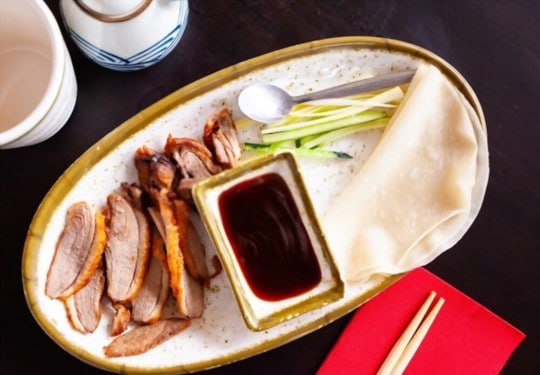
Hoisin sauce's distinctive sweetness also lends itself well to Chinese barbecue dishes such as Peking duck.
Soy sauce's saltiness and umami flavor enhances the overall taste of any dish it is added to.
Ingredients Used
The ingredients used for hoisin and soy sauce differ significantly.
Traditional hoisin includes fermented soybean paste, garlic, sugar, vinegar, and chili pepper flakes.
Meanwhile, soy sauce includes mostly soybeans and wheat (or other grains), which are fermented with a mold culture and mixed with brine.
However, modern variations may include additional ingredients like caramel or hydrolyzed vegetable protein for flavor enhancement.
Hoisin is sweeter and thicker in consistency than soy sauce.
It has a distinct umami taste with notes of sweetness from the sugar and saltiness from the fermented bean paste.
Soy sauce, on the other hand, has a more savory flavor with salty and slightly bitter undertones.
While both are commonly used as condiments or marinades for meat dishes in Asian cuisine, they have different purposes.
Hoisin is typically used in dipping sauces or as a glaze for roasted meats like duck or pork due to its sweet and thick consistency.
Soy sauce is often used as a seasoning sauce for stir-fries or added to soups for depth of flavor.
flavor and Taste
Distinguishing between the two commonly used sauces, Hoisin and Soy, depends on their unique flavor and taste - for a similar look at labeling and sensory differences see extract vs flavor comparison explained.
While soy sauce has a savory umami flavor, Hoisin is slightly sweeter and has an earthy tang from fermented soybeans.
The former is considered more versatile for marinating, dipping, or cooking various cuisines.
In contrast, Hoisin's boldness pairs exceptionally well with meat dishes, particularly poultry and beef.
Their distinct taste profiles make them essential in Asian cuisine.
Texture and Consistency
The unique textures and consistencies of hoisin and soy sauce are key aspects that differentiate them.
Hoisin sauce is thicker and more viscous, while soy sauce is thinner and more runny.
Also, hoisin sauce has a sticky and tacky quality to it that allows it to better cling to meats and vegetables when used as a marinade or condiment.
On the other hand, soy sauce has a smooth and watery consistency that makes it perfect for seasoning dishes or dipping sauces.
These distinct characteristics make both sauces suited to different culinary purposes.
Usage and Culinary Applications
In terms of their applicability in cooking, Hoisin and Soy Sauce differ in several ways.
While Soy Sauce is a versatile seasoning that works well with virtually any dish, Hoisin Sauce has a more prominent sweet and tangy flavor with a thicker consistency.
The latter isn't typically used as a condiment but instead is an ingredient to incorporate into specific dishes, such as marinades or stir-fry sauces.
Also, Hoisin's unique umami flavors are the result of several primary ingredients, including soybeans, garlic, chilies, vinegar, and sugar.
Similarities Between Hoisin Sauce and Soy Sauce
Hoisin sauce and soy sauce are both popular condiments in Asian cuisine.
They share similarities in their umami flavors and provide a rich depth of taste and aroma to dishes.
Both sauces contain fermented soybeans, which are one of the main sources of their savory taste - for another pair of similar condiments with subtle differences, see prepared vs horseradish sauce differences.
Also, they also contain sugar, vinegar, and spices that vary based on the region of origin.
In terms of appearance, hoisin sauce is thicker and darker than soy sauce due to the inclusion of molasses or honey and sometimes sesame seeds.
Soy sauce, on the other hand, has a thinner consistency and is more translucent in appearance.
Unique to hoisin sauce is its sweet and sour flavor with notes of garlic and chili pepper.
In contrast, soy sauce has a saltier taste with stronger umami flavors due to greater use of salt fermentation during its production process.
Despite their commonalities as condiments in Asian cuisine, hoisin sauce differs from soy sauce in both flavor and texture.
Therefore they serve different purposes in pairing with distinct dishes.
How Hoisin Sauce and Soy Sauce are Made?
To make Hoisin Sauce, fermented soybeans along with sugar, vinegar, garlic, and chili peppers are blended together.
In contrast, Soy Sauce is made by soaking soybeans in water and roasted wheat or barley flour for several days - for a comparison of another sauce versus a marinade, see teriyaki vs marinade comparison.
After that, the mixture undergoes a brewing process with salt and mold (Aspergillus oryzae) to ferment it further.
In the production of Hoisin sauce, it can take up to three months before it's ready for consumption.
The fermentation process creates a distinct aroma, flavor and dark brown color.
While Soy Sauce's brewing period lasts for six months or more.
It's important to mention that both sauces are gluten-free but have different purposes in cooking.
For instance, Hoisin sauce is widely used as a dipping sauce or glaze for meats while Soy sauce is primarily used for seasoning dishes like stir-fry vegetables or rice dishes.
Henceforth these sauces have their unique characteristics when it comes to taste, aroma and usage which makes them different from one another.
Popular Dishes and Cuisines that Use Hoisin Sauce and Soy Sauce
Hoisin sauce and soy sauce are commonly used condiments in many cuisines.
In various popular dishes across multiple cultures, hoisin sauce is used to add a sweet and salty flavor, while soy sauce adds a rich umami taste.
These sauces are mostly used in Chinese, Japanese, Vietnamese, and Korean cuisines.
For instance, Peking duck is served with hoisin sauce in Chinese cuisine.
Pad Thai noodles are paired with soy sauce in Thai cuisine - for another look at how similar ingredients are used differently, see tomato juice vs tomato sauce differences.
In Japanese sushi rolls, both hoisin and soy sauces can be used.
Bulgogi beef ribs from Korean cuisine also use soy sauce in marinades.
Vietnamese spring rolls often include hoisin sauce as a dipping condiment.
Chefs have started incorporating both sauces together to create new flavors such as hoisin-soy glaze for meat or vegetables.
Overall, the versatile flavors of hoisin and soy sauces make them an essential part of many iconic dishes worldwide.
Choosing Between Hoisin and Soy Sauce
The distinctions between Hoisin and Soy Sauce are evident.
Both sauces have unique characteristics that greatly influence their taste and texture, making them distinct from one another.
Hoisin has a slightly thicker consistency than soy sauce and is usually sweeter.
In contrast, soy sauce is saltier and thinner in consistency.
The choice between these two sauces ultimately depends on one's personal preference and the type of cuisine being prepared.
It is essential to select the right flavour for each specific dish to enhance its goodness.
Frequently Asked Questions
Ever stood in the grocery aisle, hoisin sauce in one hand, soy sauce in the other, and thought, "What on earth is the difference?" We've been there. They share some similarities but each has qualities that make it better suited for certain recipes.
Often, yes. The two share enough common ground that most palates won't notice a swap.
Hoisin Sauce is usually milder while Soy Sauce brings more intensity.
Nutritional differences exist but are often minor in typical serving sizes. Neither is universally healthier - it depends on what specific nutrients or dietary goals you are focused on.
Which stores better after opening?
Once opened, one keeps better in the refrigerator with proper sealing.
The other may oxidize or separate more quickly, so using it promptly or in smaller quantities works better.
Adobo and creamy sauces serve different meals. Adobo Sauce vs Adobo Seasoning: comparison of uses highlights functional differences. White Sauce vs Alfredo Sauce: texture and use comparison helps when choosing a cream-based option.