The easiest crowd pick is the sausage, egg and cheese bake, and every casserole here can be assembled the night before.
- Bake any egg casserole until the center reads 160°F on a food thermometer.
- Keep an assembled casserole in the refrigerator for no more than a day before it goes in the oven.
- Leftovers keep 3 to 4 days in the fridge and need reheating to 165°F.
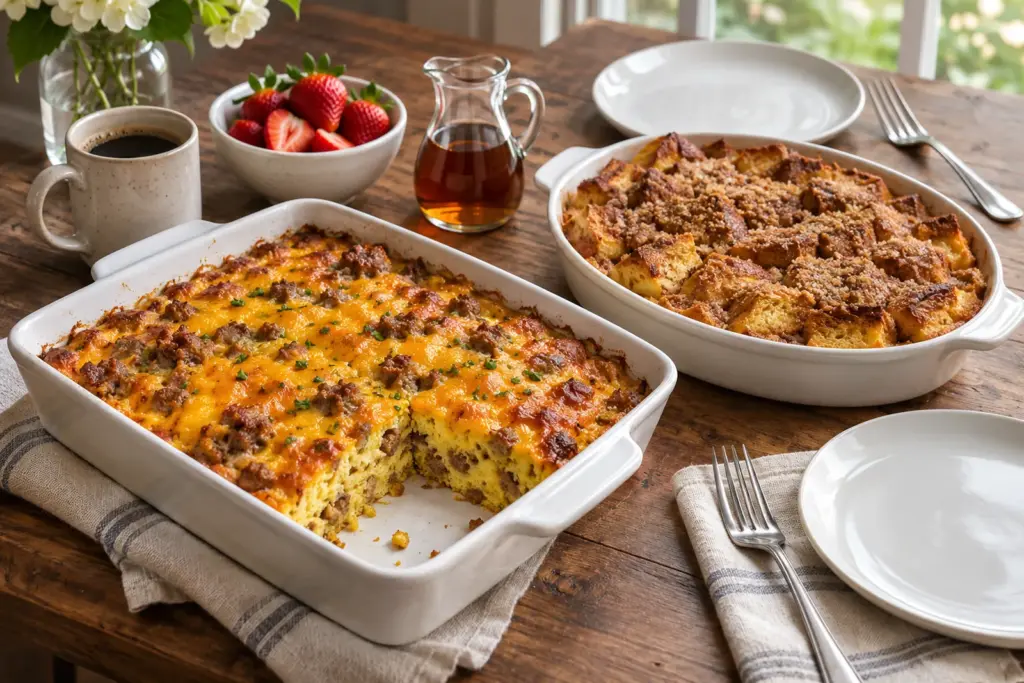
Casseroles work for guests because the work happens the night before. The savory ones sit on bread, potatoes or grits, and the sweet ones soak bread in custard, so you can match the pan to the people at the table. If you host a bigger group, bake two pans, one savory and one sweet, and pick the second savory pan from these easier casseroles for gatherings.
Which Breakfast Casserole Should You Make?
For a classic plate for a mixed crowd, make Sausage, Egg & Cheese Bake (#1) or Tater Tot Bake (#9). They bring cheddar, sausage and a crisp or bready layer that most guests already like.
For guests who avoid gluten, make Hash Brown (#2), Spinach & Feta (#10), Quiche Lorraine (#12), Grits (#13), Veggie Egg (#15), Skillet (#18) or Southwest (#19). They have no bread or flour in the base, though you should read the sausage, bacon and seasoning labels.
- For a sweet, dessert-like brunch, make French Toast Streusel (#3), Apple Cinnamon (#11), Cinnamon Roll (#16) or Blueberry Cream Cheese (#20). The bread soaks overnight, so the morning job is only baking.
- For something fancy that takes little effort, make Ham & Croissant (#6), Monte Cristo (#14) or Mushroom & Brie (#17). Croissants and brioche are rich on their own, so the pan needs few extras.
For spice and a big appetite, make Tex-Mex (#7), Southwest (#19) or Biscuits and Gravy (#5). Chorizo, beans, salsa or peppery gravy carry the flavor.
The table groups the 20 recipes by who is coming. Use the swap notes under each recipe to adjust for allergies and for whatever is already in your fridge.
1. Sausage, Egg & Cheese Breakfast Bake
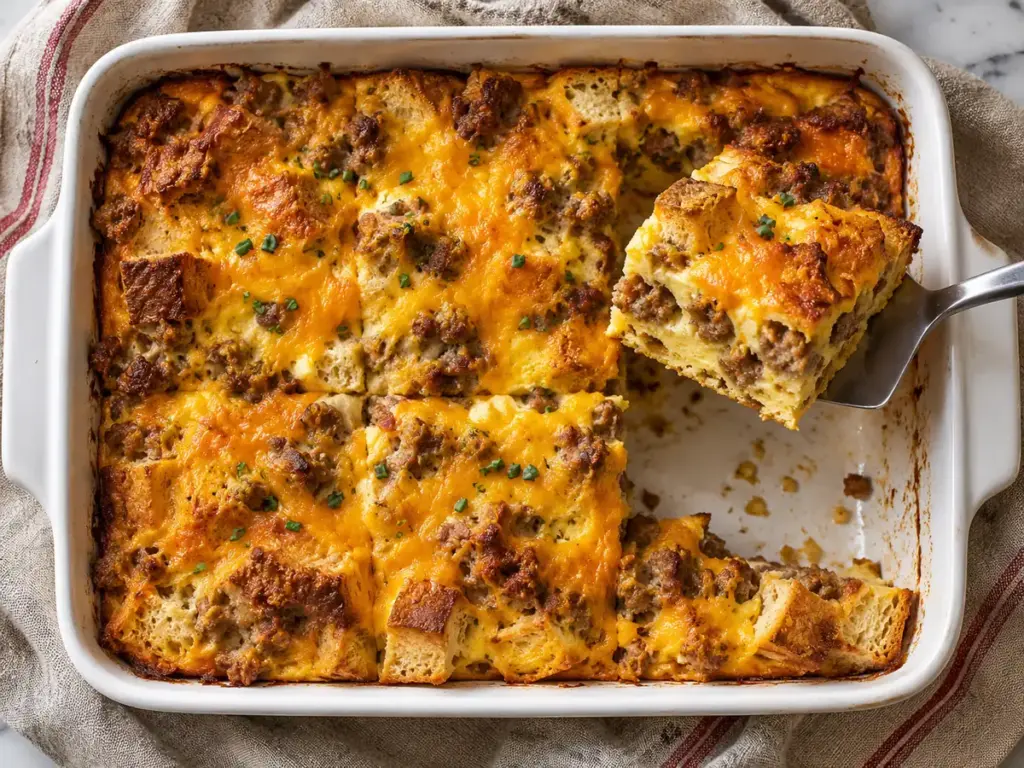
This is the bake to make when you cannot predict who is coming, because bread, sausage, eggs and cheddar taste like a full diner plate in one square. Brown the sausage and drain it first, since raw crumbles release grease and cook unevenly in the custard. If your bread cubes are a day old or lightly toasted, they soak up the eggs without turning to paste.
- Swap the bread: croissants or biscuit pieces make it richer and softer, and plain sandwich bread gives a firmer slice.
- Swap the meat: bacon or ham work in place of sausage. Cook bacon until crisp and cut ham small so it spreads through every square.
Cook the vegetables first: peppers, spinach and mushrooms release water in the oven, so sauté them until the pan is dry before they go into the dish.
2. Hash Brown Breakfast Casserole
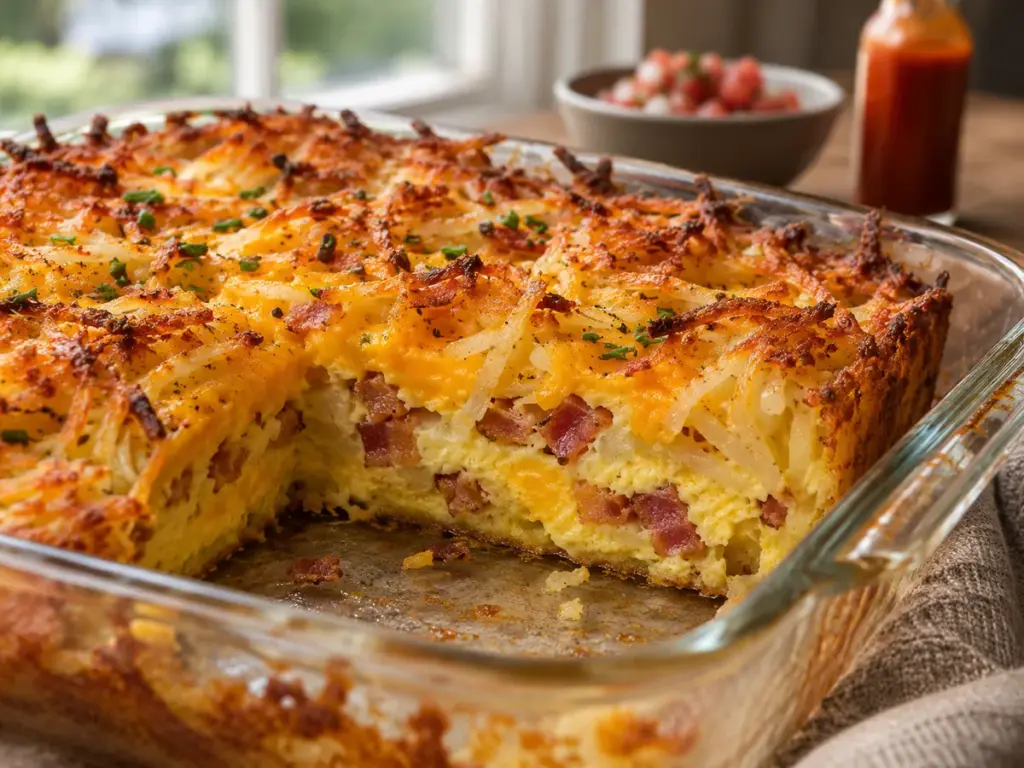
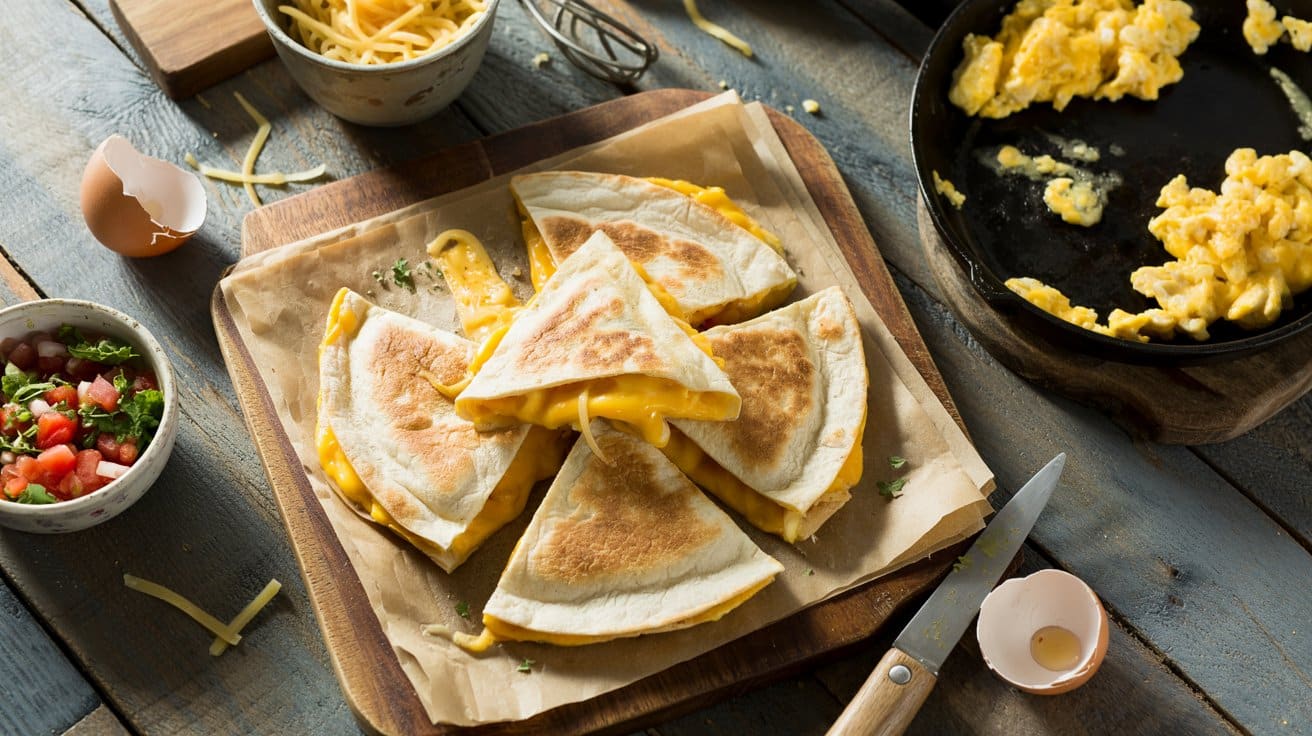
Shredded potatoes take the place of bread, so the top browns and crisps like a hash brown patty while the eggs underneath stay soft. Frozen hash browns carry a lot of water, so thaw them and squeeze them dry in a clean towel before you layer them, or the middle turns soggy. The same egg, potato and sausage mix also fits in a tortilla, which makes it a good filling to repeat in savory breakfast burritos.
Gluten check: the dish has no bread, but sausage, bacon and some frozen potato products can contain wheat, so read labels if a guest avoids gluten.
- Cubed instead of shredded: frozen cubed potatoes give chunkier bites than shreds, the same difference you see between hash browns and home fries.
- Cheese and filling: pepper jack or mozzarella changes the flavor, and roasted vegetables in place of meat make a lighter version.
3. French Toast Casserole with Cinnamon Streusel
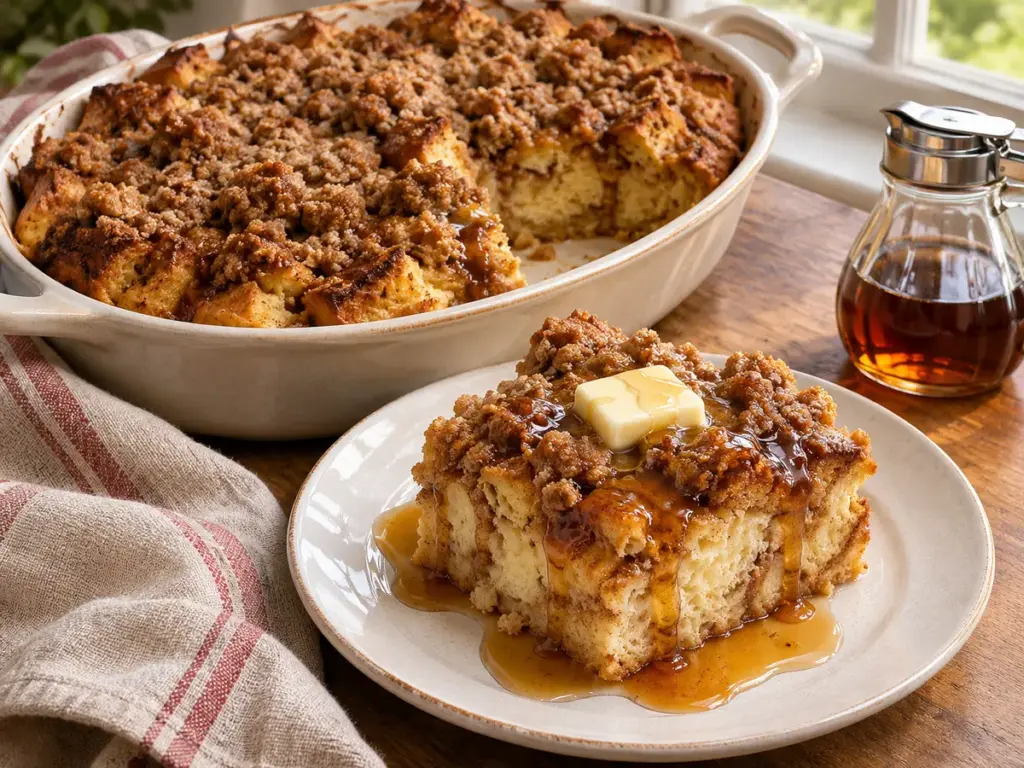
Cubed bread soaks in cinnamon-vanilla custard overnight, so your morning job is only baking. Brioche, challah or a sturdy day-old loaf hold their shape through a long soak, while thin sandwich bread falls apart. Keep the brown sugar streusel in a jar and sprinkle it on just before baking, because streusel that sits on wet custard overnight turns soft instead of crunchy.
- Toppings: warm maple syrup works, and whipped cream pushes it toward dessert, as in many French toast recipes built for brunch.
- Add-ins: blueberries or apple chunks mix in with the bread, and crushed pecans with honey can replace the streusel.
- Bread choice: brioche and cinnamon raisin bread make a sweeter, softer pan than challah, so cut back the sugar in the custard if you use them.
4. Veggie & Cheese Strata
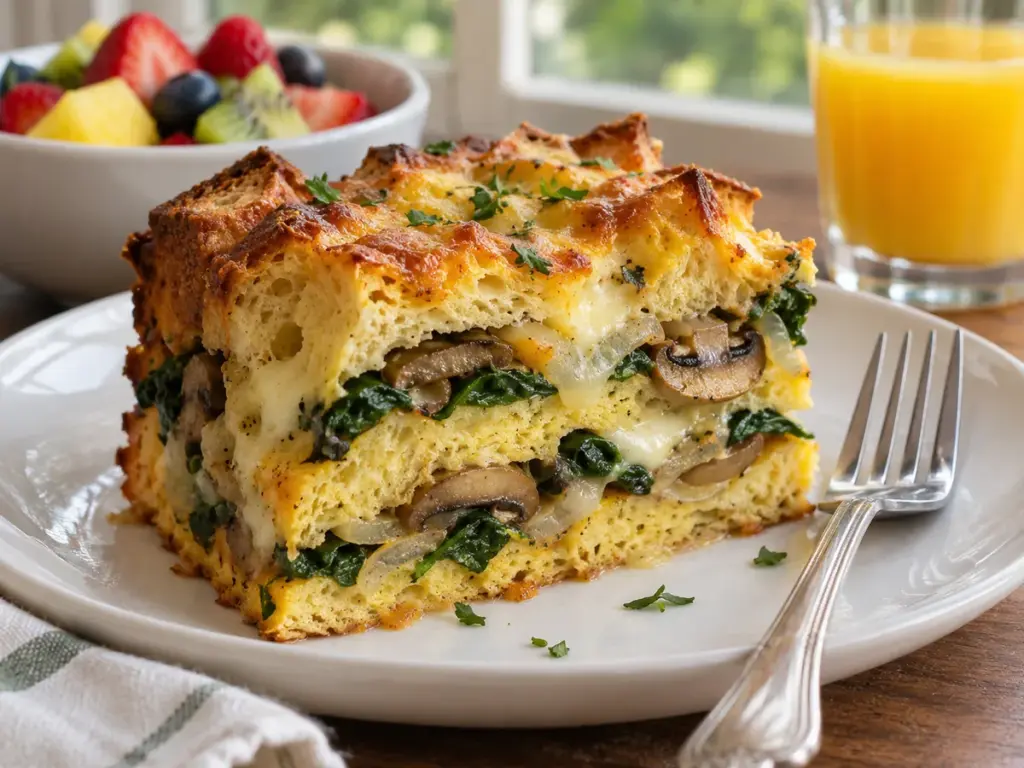
A strata is bread, vegetables, cheese and custard layered in one dish, so you can feed vegetarians without cooking a second meal. Cook mushrooms and onions until their liquid evaporates and squeeze thawed spinach dry, so the custard sets firm and cuts into clean squares. You get a bake that is light but still filling even without the sausage.
- Bread: sourdough or rye gives a tangier, chewier layer than white sandwich bread.
- Cheese and greens: feta or goat cheese adds tang, and kale or zucchini can stand in for spinach.
- Serve with: fruit salad or mimosas keep the table light.
5. Biscuits and Gravy Casserole
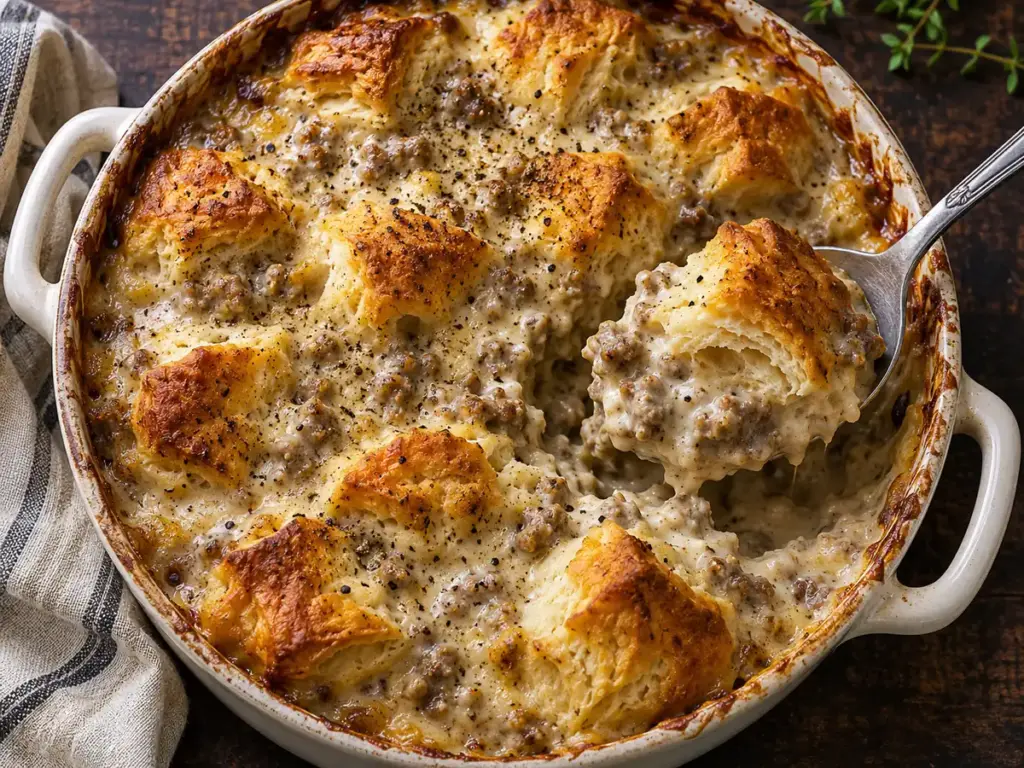
Biscuit pieces sit in sausage gravy and bake until the edges bubble, so you get the diner plate without standing over a skillet. Make the gravy a little thicker than you would for pouring, because the biscuits soak up liquid while they bake. Cut the biscuits into bite-size pieces so every serving has distinct biscuit bites.
- Sausage: turkey sausage or spicy Italian sausage changes the heat level, and you should brown and drain it either way.
- Biscuits: canned biscuits are fine, and homemade ones are worth it if you have the time.
- Eggs: soft scrambled eggs folded in make it heartier, and the dish should still reach 160°F in the center.
6. Ham, Cheese & Croissant Bake
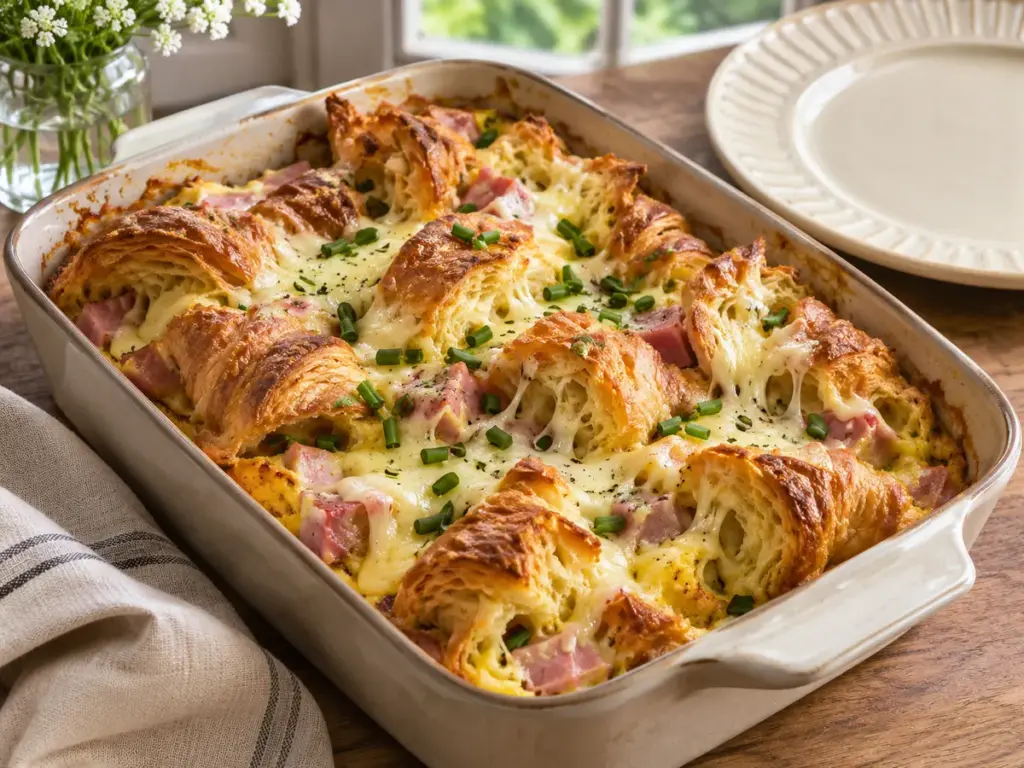
Torn croissants soak up the eggs, and the bake lands between quiche and bread pudding, soft in the middle with crisp, buttery edges. Buy the croissants a day early, because stale ones hold up in the custard while fresh ones collapse. Croissants already carry plenty of butter, so skip extra butter in the dish and let gruyère or Swiss supply the richness.
- Meat: cooked bacon or prosciutto replaces ham. Prosciutto is salty, so leave added salt out of the custard.
- Cheese: sharp cheddar or brie replace gruyère when you cannot find it.
- Greens: chopped spinach or chives add color without adding water.
7. Tex-Mex Breakfast Casserole
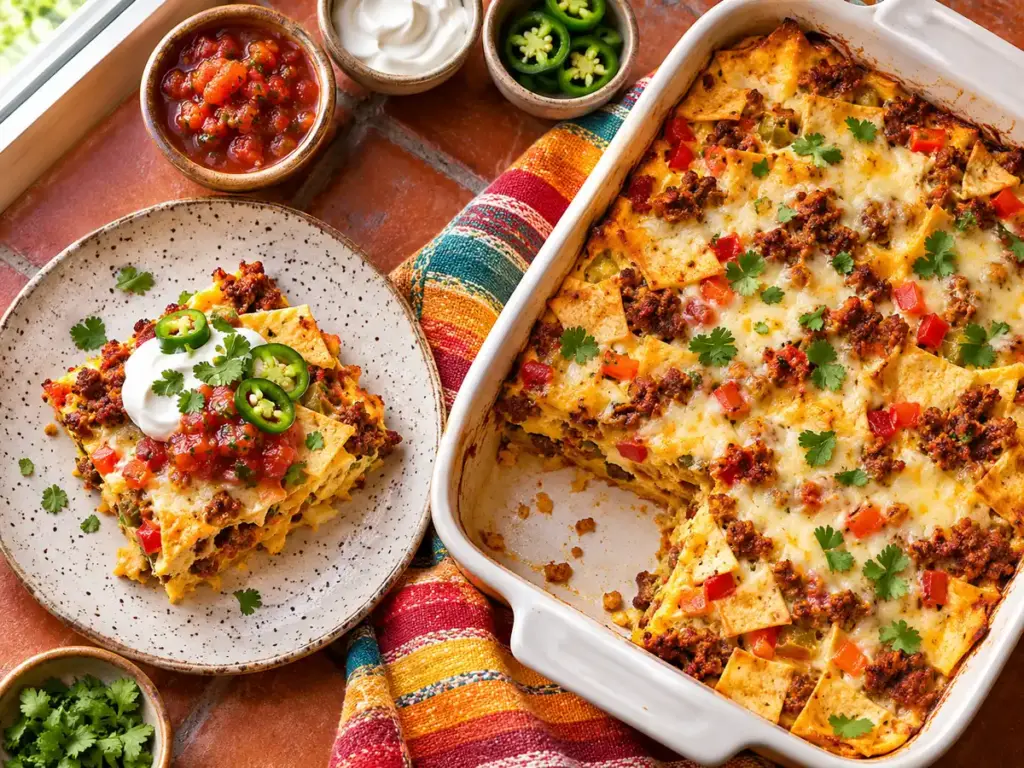
Seasoned ground beef or chorizo, peppers, onions and cheese bake with cubed bread or tortillas into a spicy, cheesy casserole that slices into neat squares. Cook and drain the chorizo or beef first, because chorizo renders a lot of orange fat that would leave the bottom greasy. Spoon salsa or sour cream over each portion.
- Base: corn tortillas or tortilla chips can replace the bread and give a corn flavor.
- Protein: ground turkey or veggie crumbles work, and black beans or corn add heft.
- Serving: it holds well for a long brunch, and it also works as a dinner.
8. Everything Bagel Breakfast Bake
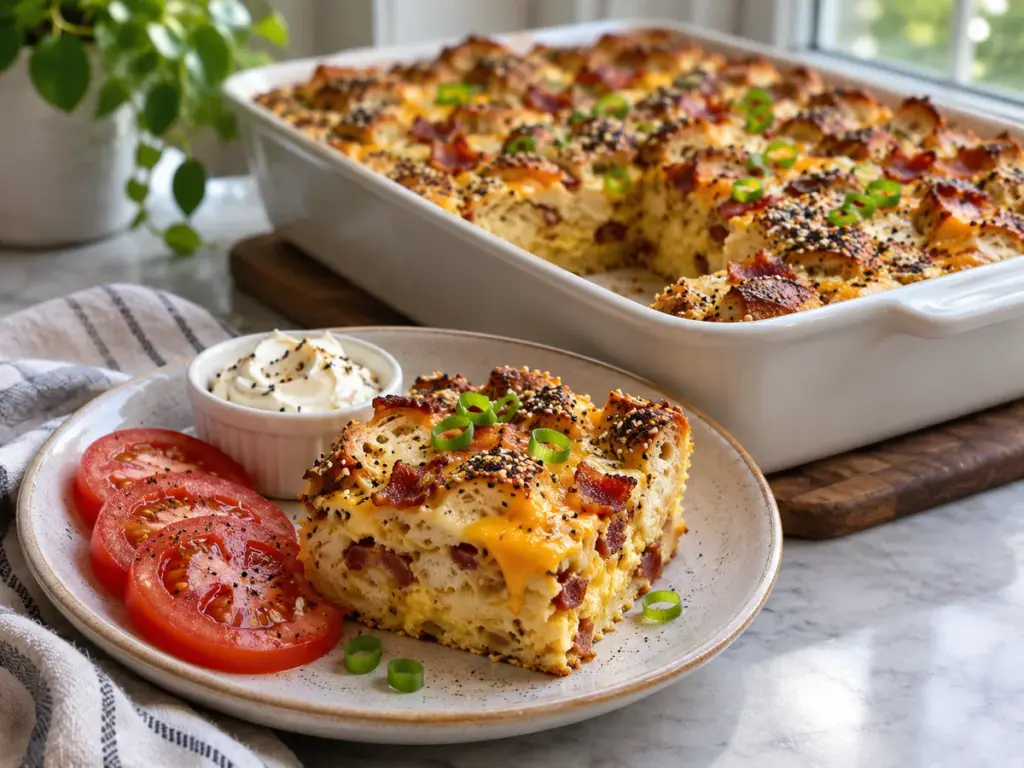
Cubed everything bagels bring sesame, poppy seed, garlic and onion into the custard, so the bake needs very little extra seasoning. Bagels are denser and chewier than sandwich bread, so give them a full overnight soak, or the centers stay tough. Bacon and green onions finish the dish.
- Milder version: plain or onion bagels make it less intense.
- Meat swap: sausage works in place of bacon, and smoked salmon with dill and capers is best folded in after baking so it stays silky.
- Serve with: sliced tomatoes or a smear of cream cheese on the side.
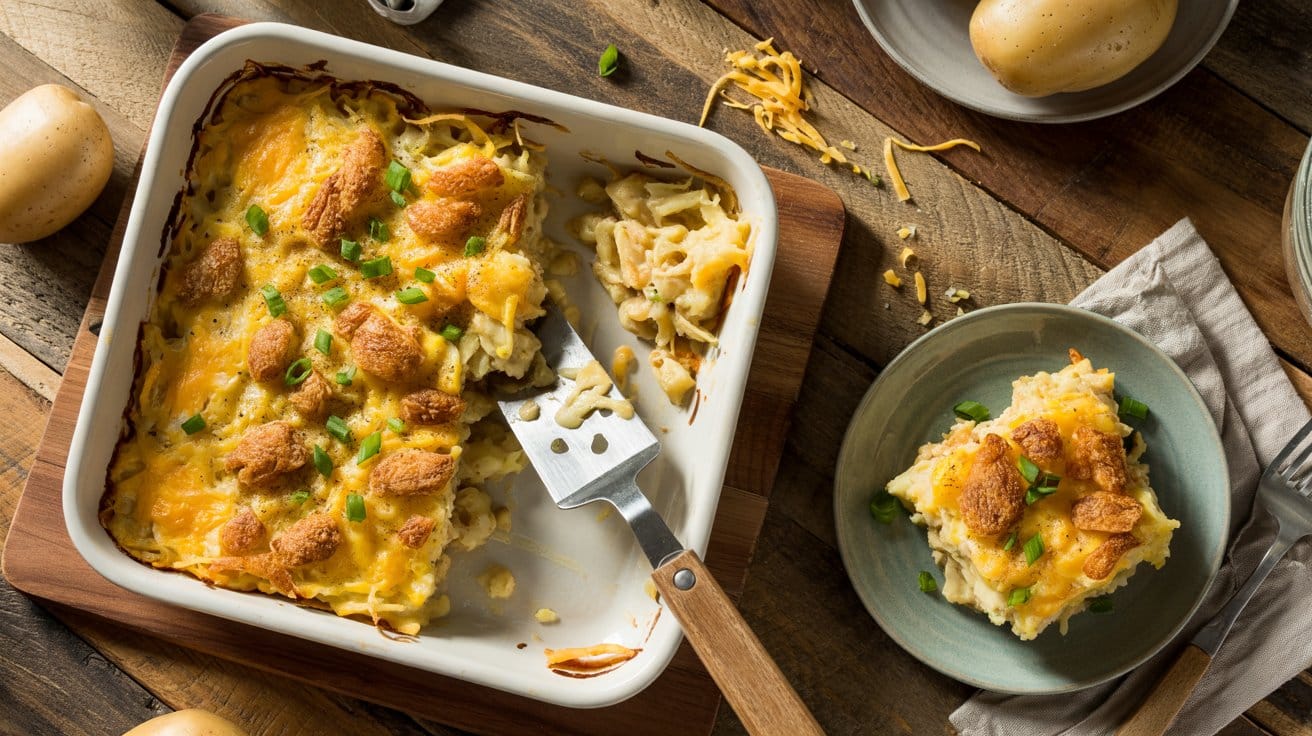
9. Tater Tot Breakfast Bake
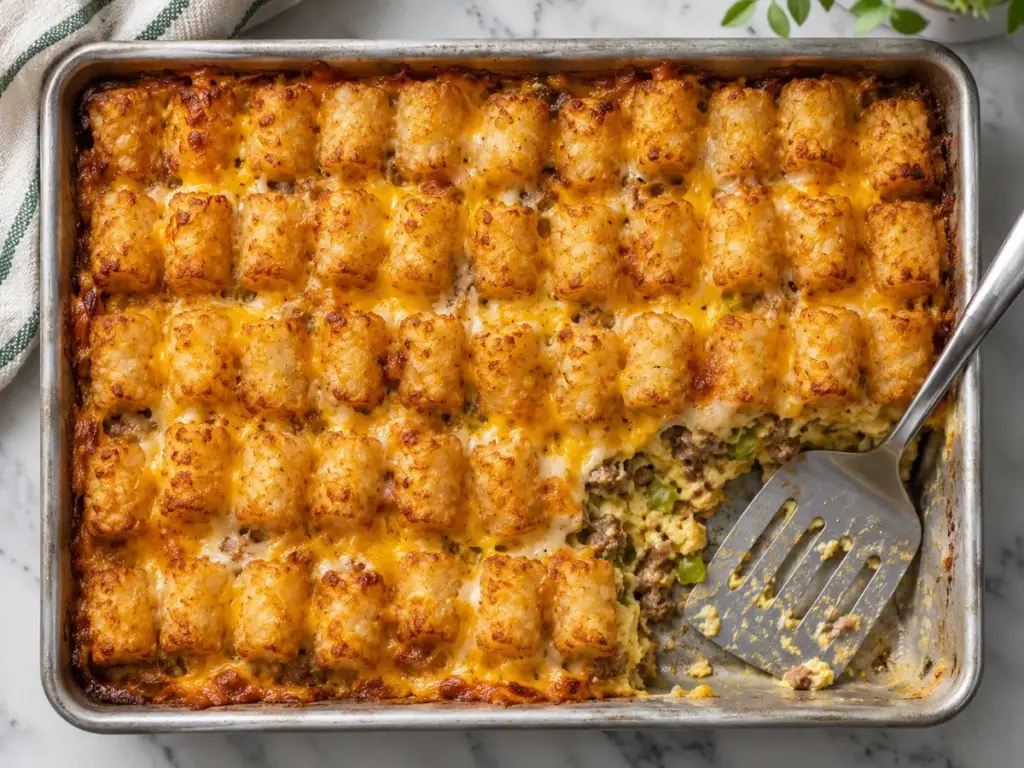
Tater tots form the top layer, so they brown into a crunchy lid over a base of eggs, sausage or bacon and cheese. Arrange the tots in tight rows, still frozen, since thawed tots mash into the egg instead of crisping. The tots soak up just enough of the custard to stay tender inside.
- Prep ahead: assemble the egg layer the night before and add the tots just before baking, so they keep their crunch.
- Swaps: veggie tots or sweet potato tots change the sweetness, and pulled pork or chorizo can replace sausage.
- Heat: jalapeños, hot sauce or pepper jack give a spicy version.
10. Spinach & Feta Egg Bake
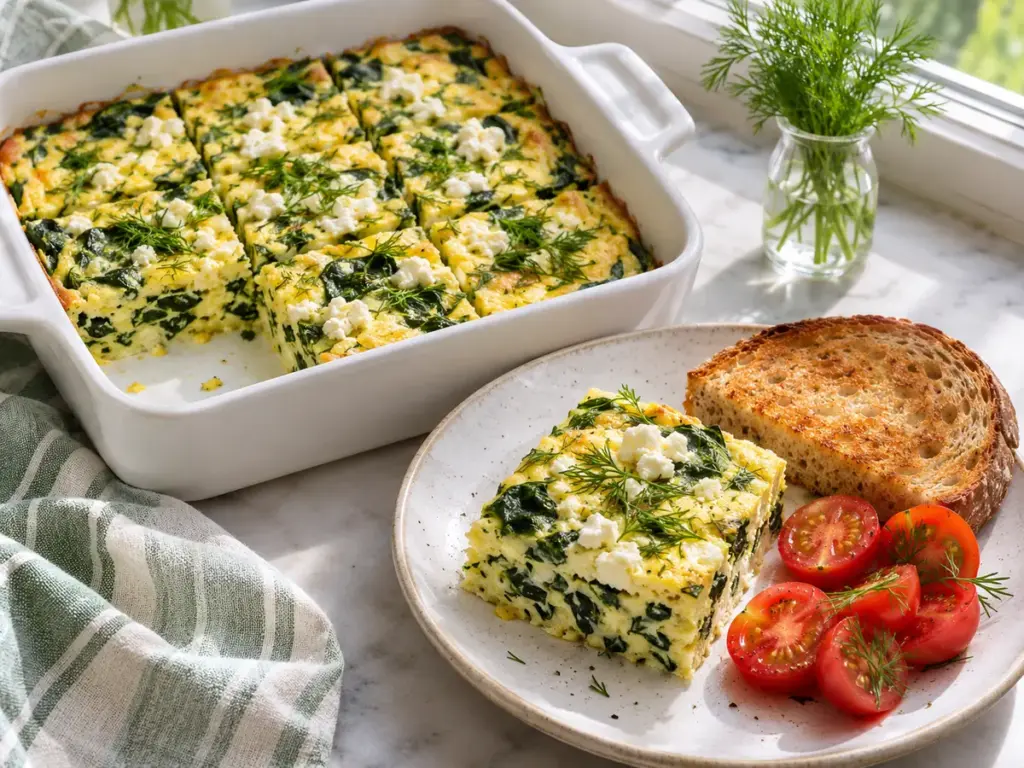
This crustless bake is eggs, spinach, feta and fresh herbs with no bread to soak, so it goes in the oven within minutes. Squeeze thawed spinach dry, or wilt fresh spinach and press out the water, or the bake leaves a watery puddle in the dish. A quiche needs a pastry shell, so a crustless dish like this one is an egg bake rather than a quiche.
- Gluten check: the recipe has no bread or flour, so it suits guests who avoid gluten once you check the labels on the feta and herb blends.
- Swaps: goat cheese or ricotta replace feta, kale or arugula replace spinach, and tomatoes or cooked mushrooms add body.
- Serve with: toast, fruit, or tucked into a pita.
11. Apple Cinnamon French Toast Bake
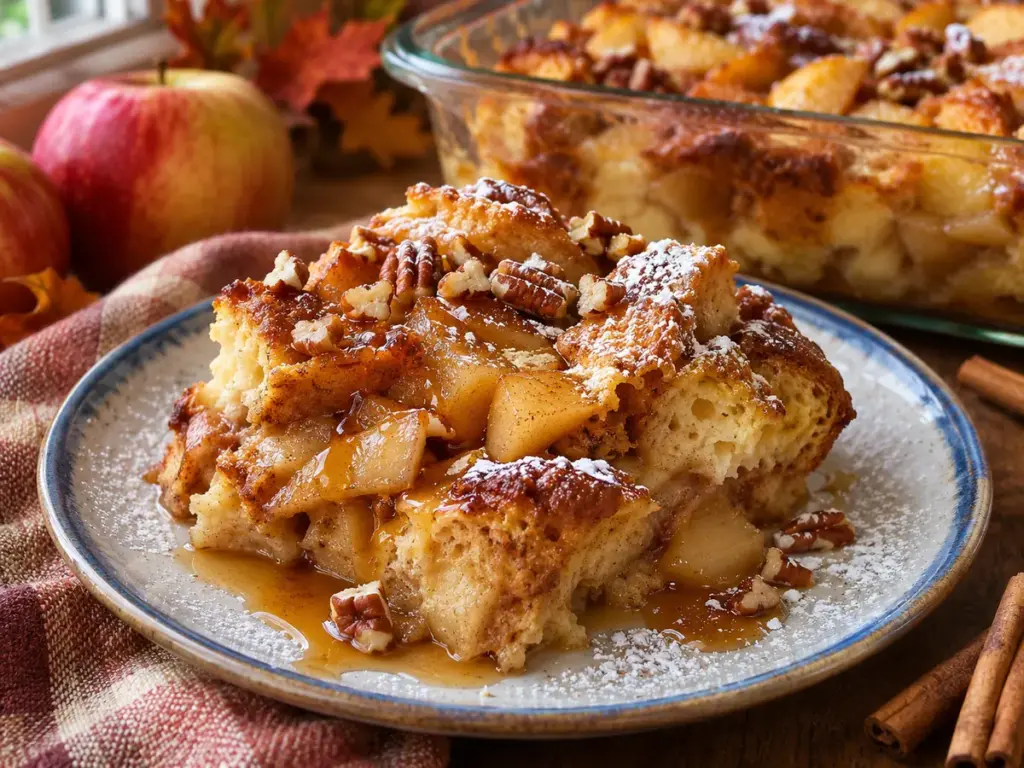
Diced apples go through the custard and bake into soft pieces with the texture of bread pudding and the flavor of apple pie. Use a firm baking apple, such as Granny Smith or Honeycrisp, because soft apples cook down to sauce. You can serve it at 9 a.m., and it looks festive for holiday guests.
- Fruit: pears or bananas replace apples.
- Crunch and spice: chopped pecans or walnuts add crunch, and cinnamon raisin bread adds more spice.
- Finish: maple syrup, or powdered sugar dusted on right before serving.
12. Crustless Quiche Lorraine

Quiche Lorraine is bacon, onion and Swiss in a custard, and dropping the crust gives you the same flavor with less work. Grease the dish well, since there is no pastry to help it release. Most quiche recipes with a pastry crust add a shell, and you can do the same by pouring this filling into a blind-baked crust.
- Swaps: pancetta or ham replace bacon, and gruyère or white cheddar replace Swiss.
- More veg: leeks or spinach add vegetables.
- Serve with: mixed greens or roasted potatoes.
13. Cheddar, Bacon & Chive Grits Casserole
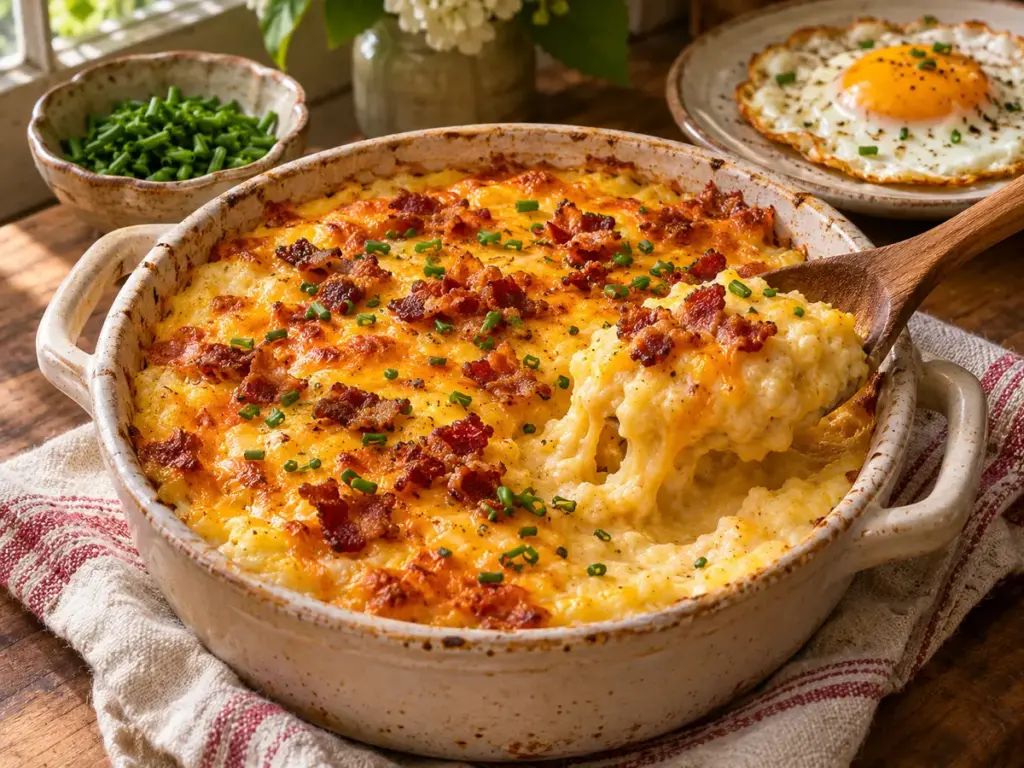
Grits bake into a creamy, sliceable casserole with sharp cheddar, crisp bacon and chives. Cook the grits on the stove until thick before they go in the dish, because the oven sets the dish but will not cook raw grits through. Grits themselves are mild and slightly corny, so the cheddar and bacon carry the flavor.
- Cheese: gouda or Monterey jack gives a different melt.
- Meat and heat: turkey bacon or sausage replace bacon, and sautéed peppers or hot sauce add a kick.
- Serve with: eggs on the side, or the casserole alone as the main dish.
14. Monte Cristo Breakfast Bake
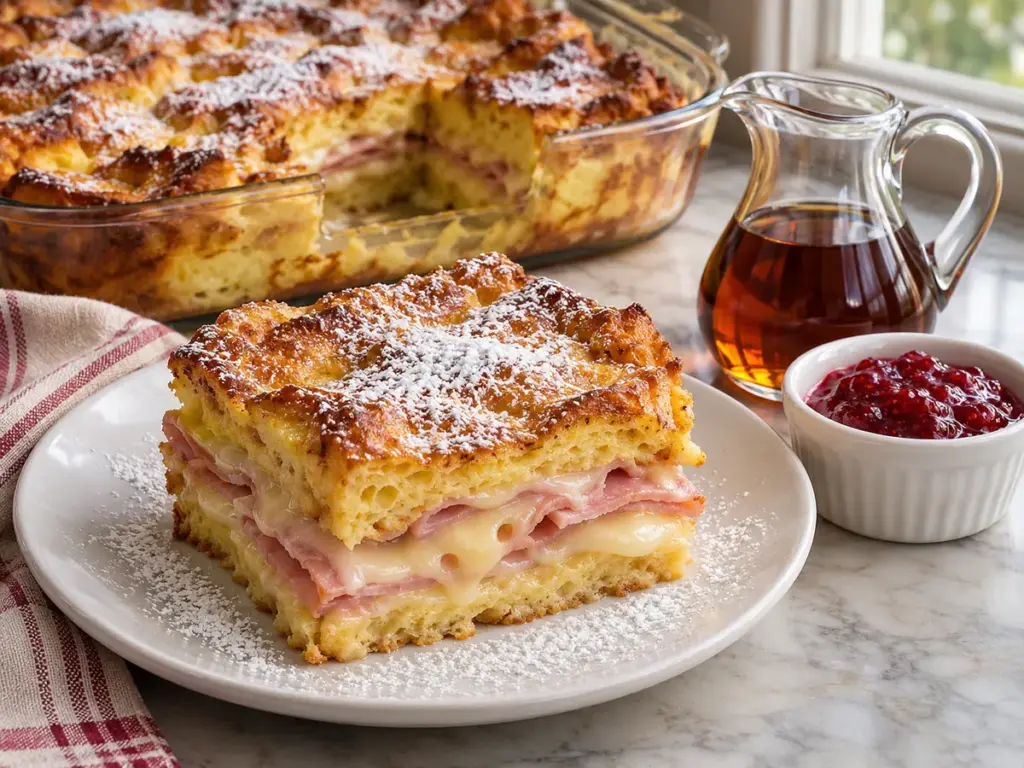
Ham, Swiss and egg custard layered over brioche and dusted with powdered sugar make the diner sandwich as a casserole. Serve it with jam or syrup, because the salty ham and Swiss need the sweet contrast. If you cannot find brioche, challah or Hawaiian rolls are the closest stand-ins for brioche.
- Cheese: cheddar or provolone replace Swiss.
- Flavor: a dash of Dijon or hot honey adds contrast.
- Finish: dust the powdered sugar on after baking so it does not melt away.
15. Loaded Veggie Egg Casserole
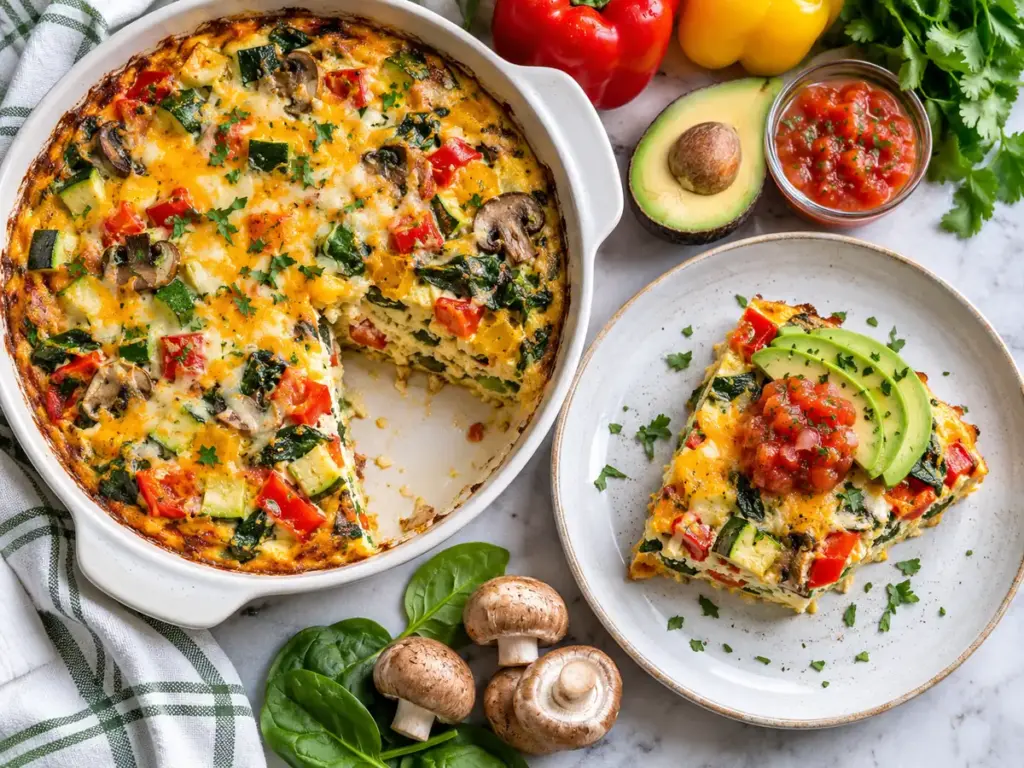
Zucchini, bell pepper, mushrooms and spinach fill an egg and cheese base, which makes a meatless casserole that eats like a full meal. Zucchini and mushrooms are mostly water, so cook them until their liquid is gone before they go into the dish, or the bottom turns watery.
- Fillers: cooked quinoa or hash browns bulk it up.
- Cheese and herbs: goat cheese or feta replace cheddar, and basil or dill add freshness.
- Top with: salsa or avocado slices.
16. Cinnamon Roll Casserole
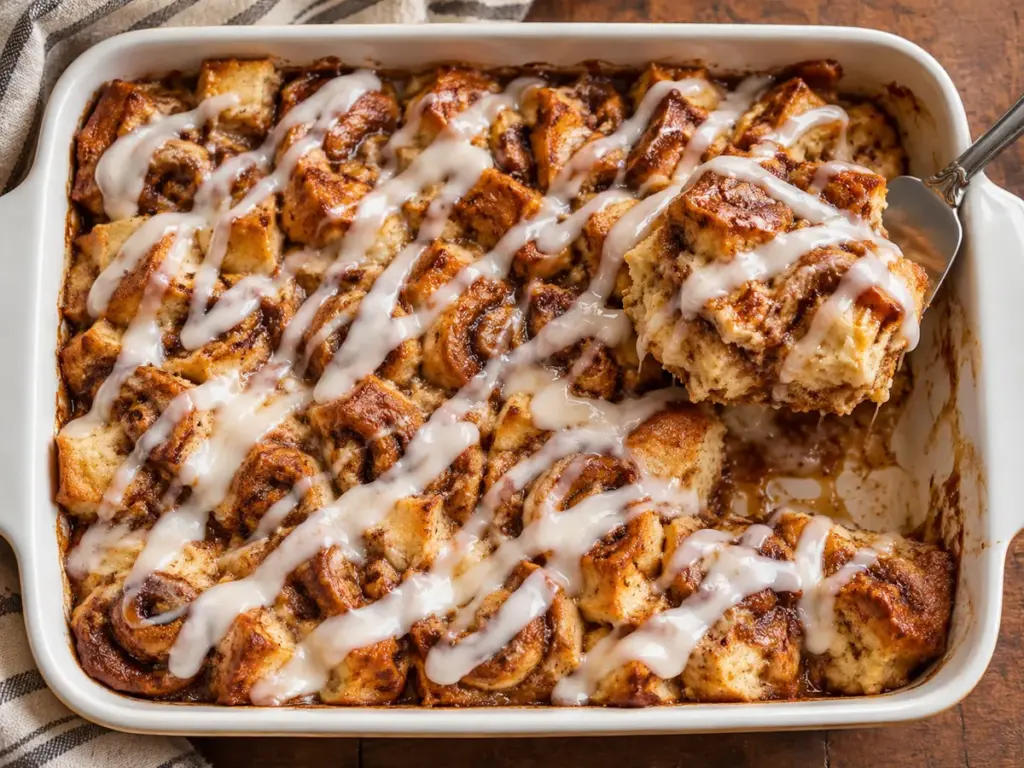
Store-bought cinnamon rolls are chopped, baked in an egg and milk mixture and finished with icing, which gives you cinnamon rolls without the rising time. Hold the icing back until the casserole comes out of the oven so it melts into the swirls and does not bake into a crust. You can serve it at birthdays, brunches and slow Saturdays.
- Base: croissants or brioche tossed in cinnamon sugar replace the rolls.
- Toppings: pecans or a cream cheese glaze add richness.
- Mix-ins: diced apples or raisins add texture.
17. Savory Croissant Egg Bake with Mushrooms and Brie
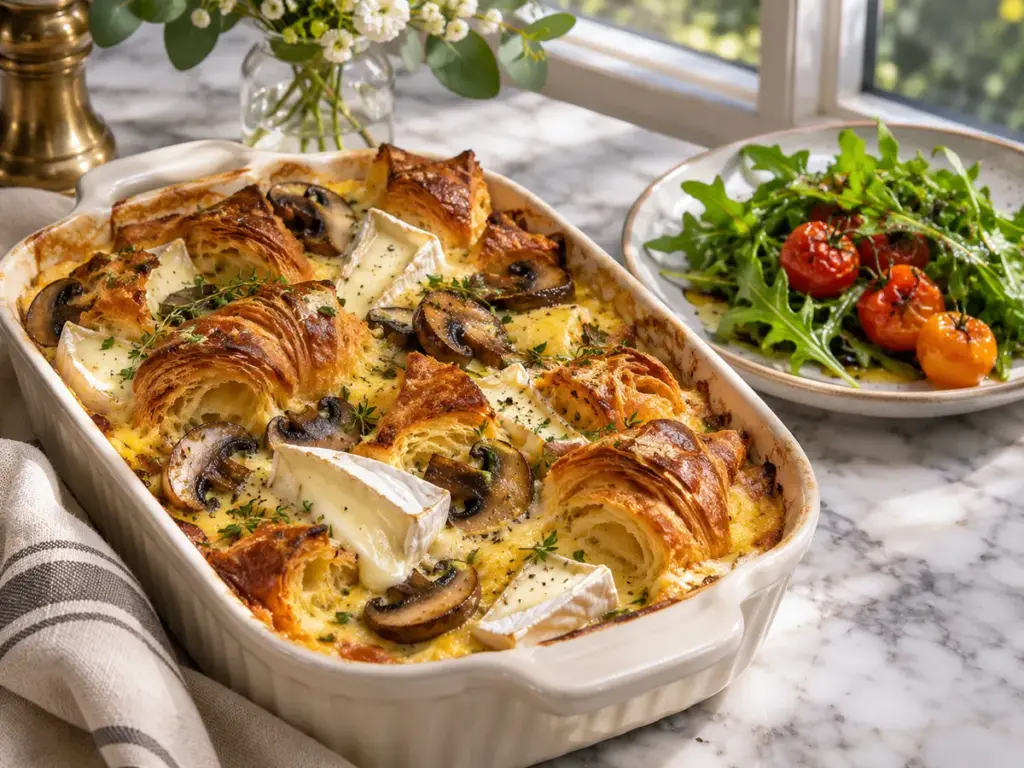
Croissants, mushrooms and brie make this the dressiest bake on the list without extra work. Brown the mushrooms before they go in, since browning gives them an earthy flavor and drives off water. The rind on brie is edible and melts in, so you can cube the cheese cold and leave the rind on.
- Cheese: fontina or camembert replace brie, and if you cannot find any of them, other stand-ins for brie melt in a similar way.
- Vegetable: spinach or caramelized onions replace mushrooms.
- Serve with: arugula or roasted tomatoes.
18. Bacon, Potato & Egg Skillet Casserole
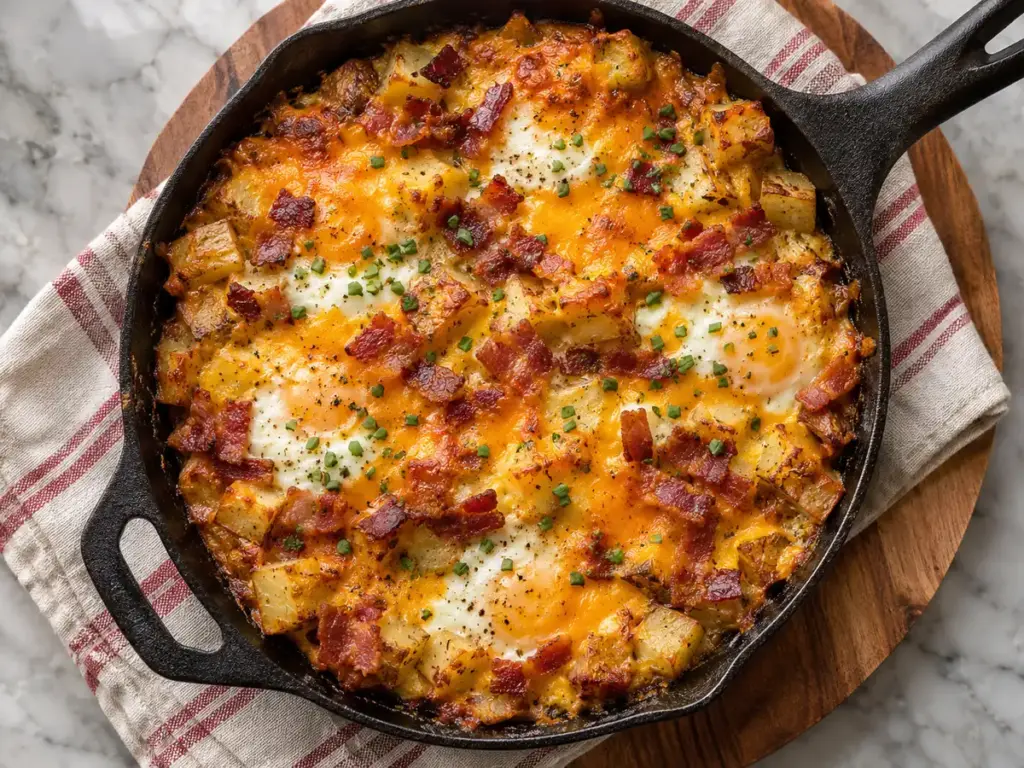
A skillet casserole puts crisp potatoes, bacon, eggs and cheddar in one oven-safe pan, so the pan goes from stove to oven to table. Crisp the potatoes in the skillet first so they keep their bite after baking. If you would rather skip the oven, stovetop breakfast skillets cook the same combination on the stove.
- Meat: ham or sausage replace bacon.
- Cheese: Monterey jack or pepper jack melt well.
- Greens: chopped spinach or green onions add color.
19. Southwest Egg Bake with Black Beans and Corn
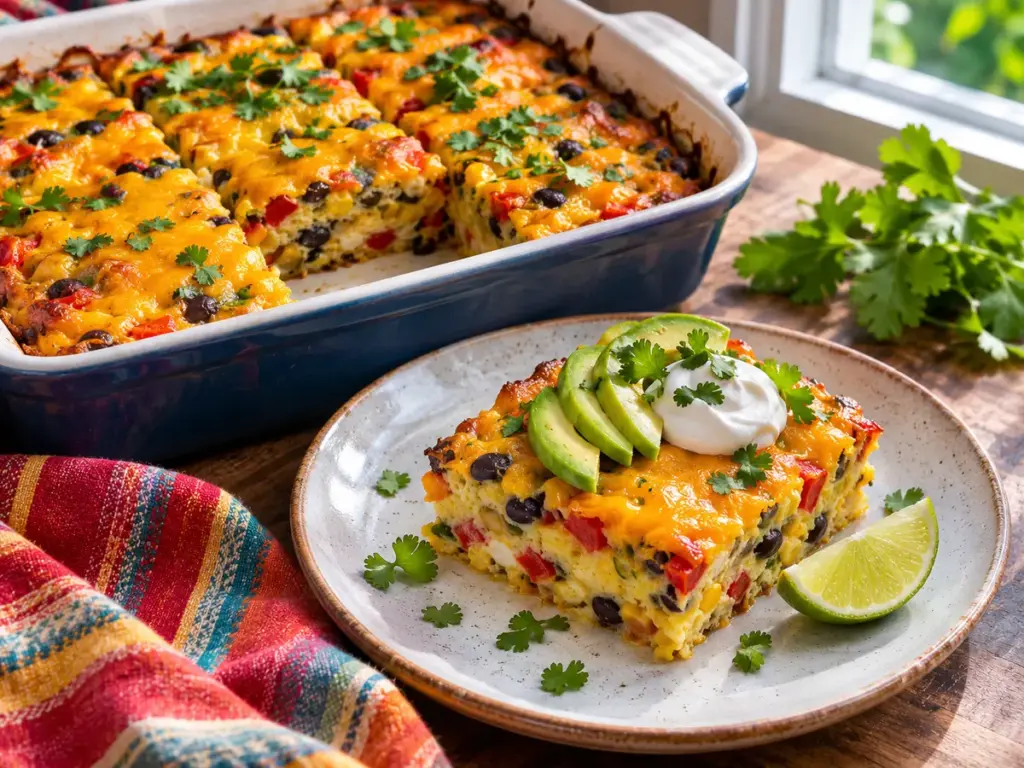
Eggs, black beans, corn, diced peppers, cheddar and taco seasoning bake into a breakfast burrito without the tortilla. Rinse and drain canned beans and corn well, because extra liquid thins the custard and leaves it loose.
- Swaps: pinto beans or crumbled sausage replace or add to the black beans.
- Cheese: pepper jack or cotija replace cheddar. Cotija is a drier, saltier crumble than feta, so sprinkle it over the top after baking.
- Heat and toppings: green chilies or jalapeños add heat, and salsa, avocado or sour cream finish each portion.
20. Blueberry Cream Cheese French Toast Casserole
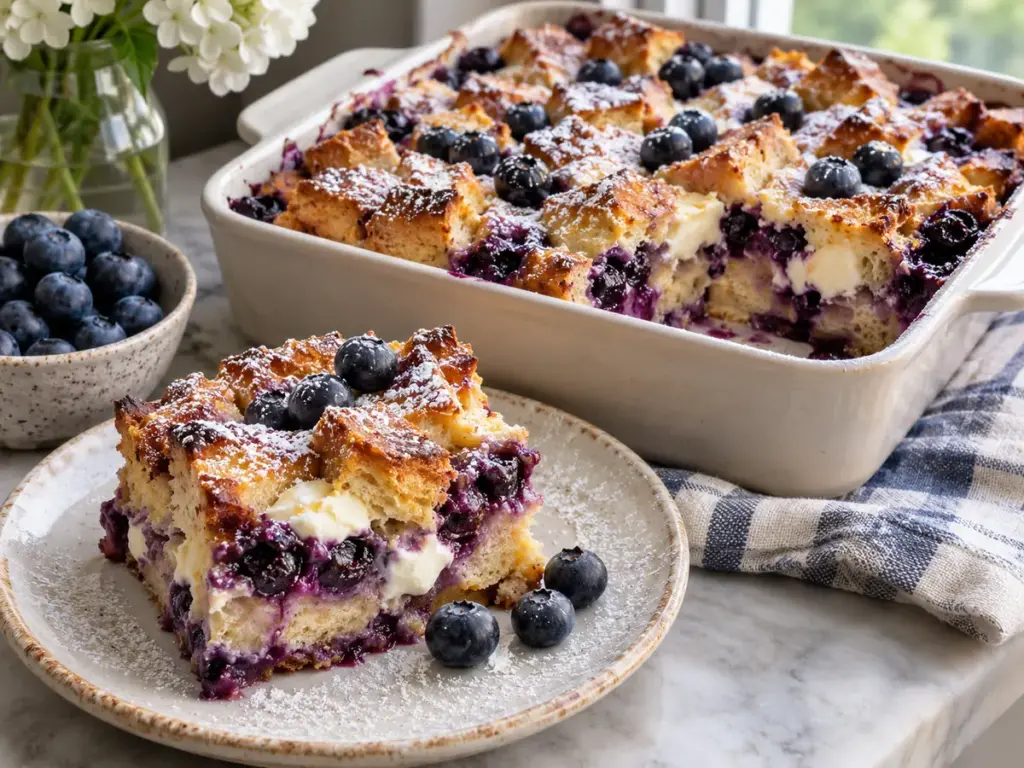
Bread cubes, vanilla custard, blueberries and pockets of cream cheese bake into a sweet and tangy casserole. Cut the cream cheese into cubes and tuck it between the bread pieces, so it melts into pockets instead of blending into the custard. Frozen blueberries can go in without thawing, which keeps them from bleeding purple through the bread.
- Fruit: raspberries or chopped strawberries replace blueberries.
- Swaps: ricotta or mascarpone replace cream cheese, and lemon zest or cinnamon adds brightness.
- Serve with: extra berries and a dusting of powdered sugar.
How Do You Make a Breakfast Casserole Ahead and Bake It Safely?
Plan to assemble the dish the night before and bake it the next morning. North Dakota State University Extension advises preparing make-ahead casseroles no more than one day before serving, so the night before is the longest you should hold it. These four steps cover most of the recipes above:
- Assemble and chill right away. Cover the dish as soon as the custard is poured, and put it in the refrigerator so the egg mixture stays cold all night.
- Hold back the crunch. Streusel (#3), tater tots (#9) and powdered sugar (#14) go on just before baking, so they stay crisp or dry.
- Bake until the center reads 160°F. Push a food thermometer into the middle of the dish. Golden edges do not prove the center is cooked.
- Rest it, then cut. A few minutes out of the oven lets the custard finish setting, so the squares hold their shape on the plate.
The numbers below come from the FDA, the USDA and its FoodKeeper data. This is the short list of safety limits that applies to every casserole on this list:
- Bake to 160°F in the center for casseroles and other egg dishes (FDA).
- Keep it out of the fridge no more than 2 hours, or 1 hour above 90°F (USDA FSIS).
- Store leftovers 3 to 4 days in the fridge (USDA FoodKeeper), cooled in shallow containers (FDA).
- Reheat each portion to 165°F before serving (FDA).
- Freeze cooked leftovers with egg 2 to 3 months for best quality (USDA FoodKeeper).
Thaw frozen portions in the refrigerator, not on the counter. If you also cook dinner casseroles, the same limits apply to baked casseroles that reheat well.
What Should You Serve with a Breakfast Casserole?
Rich bakes such as sausage bakes, biscuits and gravy, and cinnamon roll casserole call for something fresh and acidic on the side, so put out fruit salad, arugula, sliced tomatoes or salsa. Sweet French toast casseroles are heavy on sugar, so you will want a salty side such as bacon, sausage links or scrambled eggs. More ideas for plates and drinks are in sides for egg casserole.
Sources
FDA, What You Need to Know About Egg Safety: casseroles and egg dishes to 160°F, 2 hours and 1 hour above 90°F, leftovers 3 to 4 days, reheat to 165°F.
- USDA FoodKeeper: casseroles refrigerated 3 to 4 days, leftovers with egg frozen 2 to 3 months.
- USDA FSIS, Danger Zone (40°F to 140°F): 2 hours, or 1 hour above 90°F.
- North Dakota State University Extension, Prairie Fare: make-ahead perishable casseroles no more than one day ahead.

Andrew Gray is the founder of Gusto Meadow, a food site for home cooks. He writes ingredient substitutes, food comparisons, taste guides, storage guides and dinner ideas, with numbers drawn from sources such as USDA, FDA and university extension services.
At Gusto Meadow, Andrew focuses on fresh, seasonal ingredients and simple methods that anyone can follow. His goal is to make cooking feel fun, doable, and rewarding — whether you’re preparing a quick weeknight dinner or exploring something new.
Storage and food-safety numbers follow USDA, FDA and university extension guidance.