For a cold side that needs no cooking, make the Cucumber Tomato Salad (#2) or the Watermelon Feta Salad (#7), both ready in about 15 minutes.
- For a bowl that feeds a crowd, pick the Italian Pasta Salad (#8) or the Chickpea Salad (#5), which get better in the fridge.
- At a picnic, keep every bowl at 40°F or below and on ice.
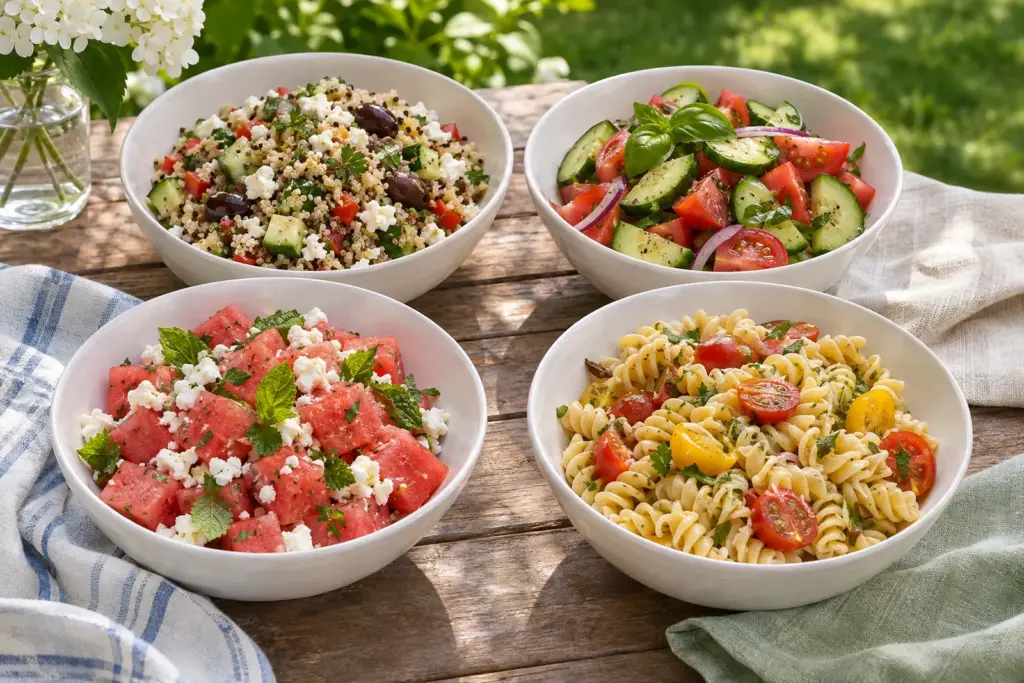
Cold cold side dishes let you keep the oven off on a hot day and still put something fresh next to grilled chicken or burgers. These 20 are salads, slaws, a dip and a fruit bowl. Most need no cooking, and the rest need only a pot of pasta, quinoa or lentils, or a short roast.
Each recipe lists its ingredients and steps, and one food safety section covers all of them, so you do not have to repeat the rules per dish.
Which Cold Side Dish Fits Your Meal?
| Your situation | Best picks | Why they fit |
|---|---|---|
| Grilled chicken, burgers or sausages | Asian Sesame Slaw (#9), Cole Slaw with a Twist (#6), Avocado and Corn Salad (#14) | Acid and crunch balance charred, fatty meat. |
| Vegetarian main on a hot night | Cold Lentil Salad (#11), Chickpea Salad (#5), Mediterranean Quinoa Salad (#1) | Lentils, chickpeas and quinoa add protein, so the bowl holds up as a light meal. |
- Pick Cucumber Tomato Salad (#2), Greek Chopped Salad (#3), Watermelon Feta Salad (#7) or Caprese Skewers (#13).
- Everything is chopped and tossed, with no stove.
- Pick Roasted Beet Salad (#10), Roasted Vegetable Platter (#18) or Cauliflower Salad (#19).
- Roast early, chill, and serve cold without heating the kitchen later.
If your cookout also needs a potato salad, potato salads without mayo are an easy match for this list.
How Do You Keep Cold Side Dishes Safe at a Picnic or Cookout?
Bacteria grow fastest between 40°F and 140°F, which the USDA calls the danger zone, so a cold side is safe only while it stays at 40°F or below. That includes cooked pasta, quinoa, lentils and chickpeas, cheese, the yogurt dip, and cut fruit, melon, tomatoes and leafy greens, which the FDA says to keep in the fridge once they are cut or peeled.
Four habits cover every recipe below:
- Pack with ice. Carry the salads in a cooler with ice or frozen gel packs, and open the lid as little as you can.
- Serve on ice. Set each bowl in a larger bowl of ice, or in a shallow pan sitting in a deep pan of ice. You can also fill small serving dishes and replace them from the cooler often.
- Watch the clock. Throw out any cold side that has sat out more than 2 hours, or more than 1 hour when it is above 90°F outside.
- Rinse produce first. Wash vegetables and fruit under running tap water before you pack them.
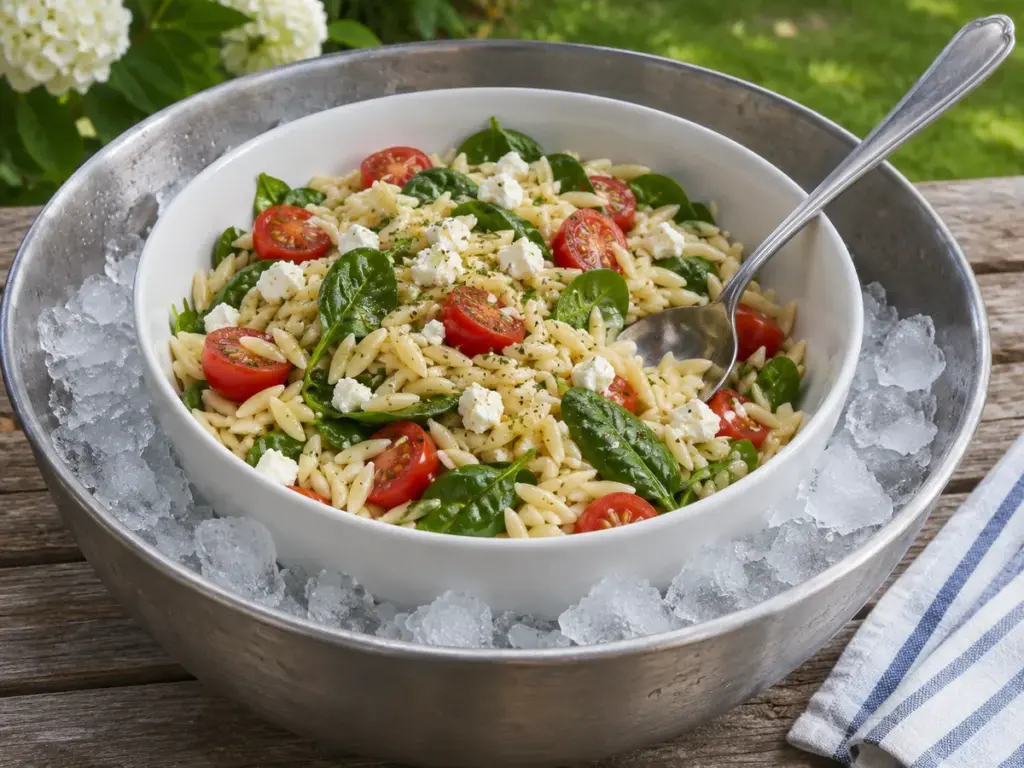
Leftovers go back in the fridge within the same 2-hour (or 1-hour) window. USDA FoodKeeper lists pasta salad and homemade coleslaw at 3 to 5 days in the refrigerator.
1. Mediterranean Quinoa Salad
If you rinse the quinoa, you wash off its bitter coating, and the lemon-garlic dressing then coats each grain so the salad tastes bright straight from the fridge. Cucumber and bell pepper add crunch, while feta and Kalamata olives add the salt.
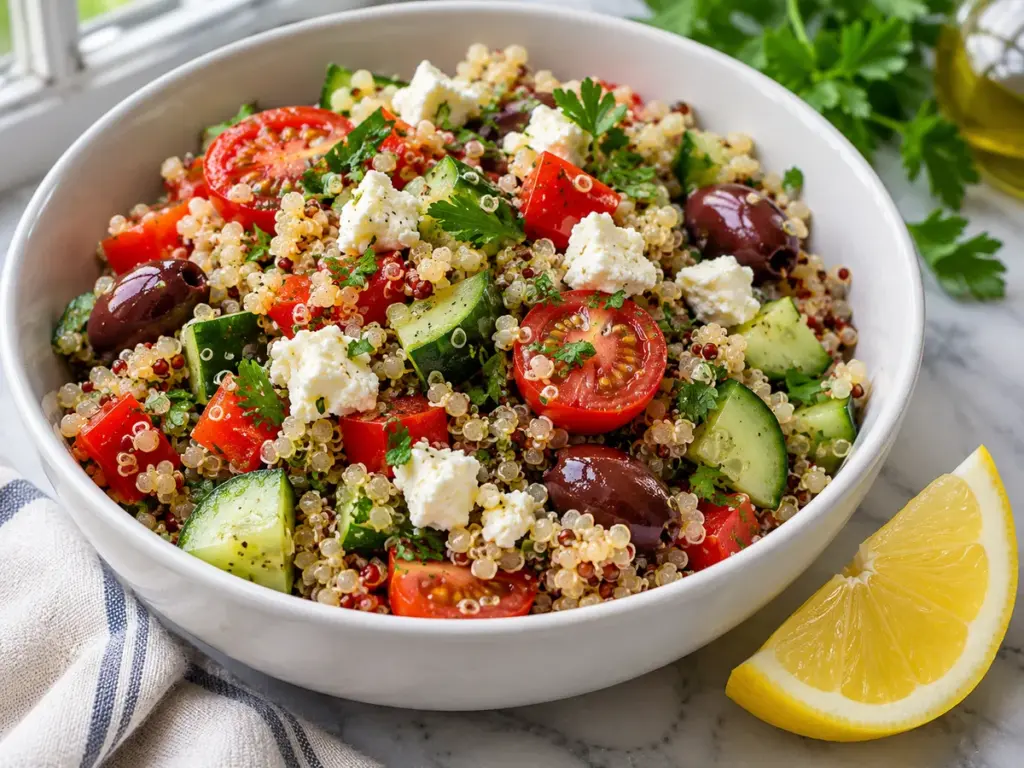
Bulgur or pearl couscous gives a similar chew if you have no quinoa, and a few more quinoa substitutes work too. Goat cheese replaces the feta, and red wine vinegar plus 1 teaspoon of olive oil replaces the lemon juice.
Ingredients
- 1 cup quinoa, rinsed
- 2 cups water
- 1 large cucumber, diced (peel if you like)
- 1 cup cherry tomatoes, halved
- 1 red bell pepper, diced
- ½ small red onion, finely chopped
- ½ cup Kalamata olives, pitted and halved
- ½ cup crumbled feta cheese
- ½ cup chopped fresh parsley
- ¼ cup olive oil
- ¼ cup lemon juice (about 2 lemons)
- 2 cloves garlic, minced
- ½ teaspoon salt, adjusted to taste
- ¼ teaspoon freshly ground black pepper
Instructions
- Combine the rinsed quinoa and 2 cups water in a small pot and bring to a boil. Cover, reduce the heat and simmer 12 minutes, until the water is absorbed.
- Take the pot off the heat and keep it covered for 5 minutes. Fluff the quinoa with a fork, spread it on a plate and let it cool to room temperature.
- Whisk the olive oil, lemon juice, garlic, salt and pepper in a small bowl.
- Toss the cooled quinoa with the cucumber, tomatoes, bell pepper, red onion, olives, parsley and feta. Pour the dressing over and toss to coat.
- Chill at least 20 minutes, then taste and adjust the seasoning before serving.
2. Cucumber Tomato Salad
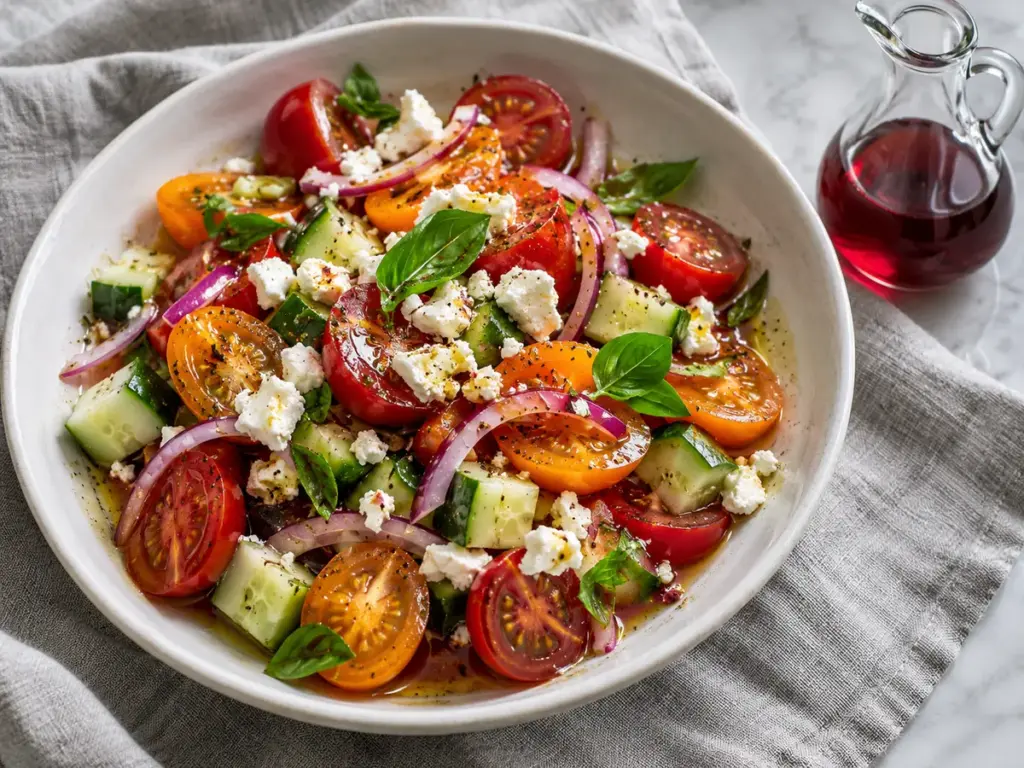
The tomatoes release juice that mixes with the oil and vinegar, so you get a built-in dressing, and the salad tastes better after a short rest in the fridge. If you buy English or Persian cucumbers, their thin skin and few seeds mean less water pools at the bottom of the bowl.
If you have cucumbers to use up, there are many more crisp cucumber salads to rotate through. Lemon juice replaces the red wine vinegar for a brighter tang, and goat cheese replaces the feta.
Ingredients
- 3 cups cherry tomatoes, halved
- 2 large cucumbers, diced
- ¼ cup thinly sliced red onion
- ¼ cup chopped fresh basil
- 3 tablespoons extra-virgin olive oil
- 2 tablespoons red wine vinegar
- ½ teaspoon kosher salt, adjusted to taste
- ¼ teaspoon freshly ground black pepper
- ½ cup crumbled feta cheese (optional)
Instructions
- Put the tomatoes, cucumbers and red onion in a large bowl.
- Whisk the olive oil, red wine vinegar, salt and pepper in a small bowl.
- Pour the dressing over the vegetables and toss gently to coat.
- Add the basil and feta and toss once more.
- Refrigerate 10 to 20 minutes, then taste and adjust the seasoning before serving.
3. Greek Chopped Salad
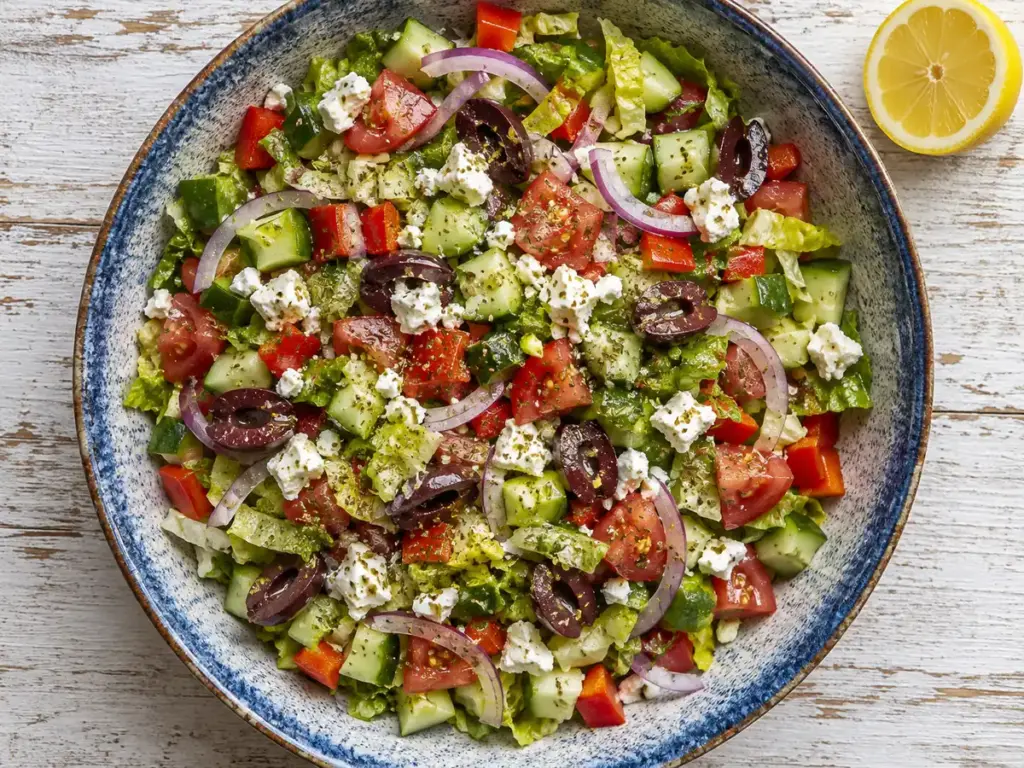
If you chop everything to a similar size, each forkful holds romaine, tomato, olive and feta together. Dress the salad right before you serve it, because romaine wilts once the vinegar touches it.
Ricotta salata replaces the feta for a firmer, saltier bite. If your kids find Kalamatas too briny, Castelvetrano olives are milder, and white wine vinegar or apple cider vinegar replaces the red wine vinegar.
Ingredients
- 6 cups chopped romaine lettuce (about 1 large head)
- 3 medium tomatoes, seeded and chopped
- 1 large cucumber, diced
- 1 medium red bell pepper, seeded and diced
- ½ small red onion, thinly sliced
- ½ cup Kalamata olives, pitted and halved
- ½ cup crumbled feta cheese
- ¼ cup chopped fresh parsley
- 3 tablespoons extra-virgin olive oil
- 2 tablespoons red wine vinegar
- 1 tablespoon freshly squeezed lemon juice
- 1 teaspoon dried oregano (or 1 tablespoon chopped fresh)
- 1 teaspoon kosher salt, adjusted to taste
- ½ teaspoon freshly ground black pepper
Instructions
- Rinse and dry the romaine, chop it into bite-size pieces and put it in a large bowl.
- Add the tomatoes, cucumber, bell pepper, red onion, olives and parsley.
- Whisk the olive oil, red wine vinegar, lemon juice, oregano, salt and pepper for about 15 seconds.
- Pour the dressing over the salad and toss gently until everything is coated.
- Sprinkle the feta on top and toss once more. Serve right away, or chill up to 15 minutes.
4. Orzo Pasta Salad with Spinach and Feta
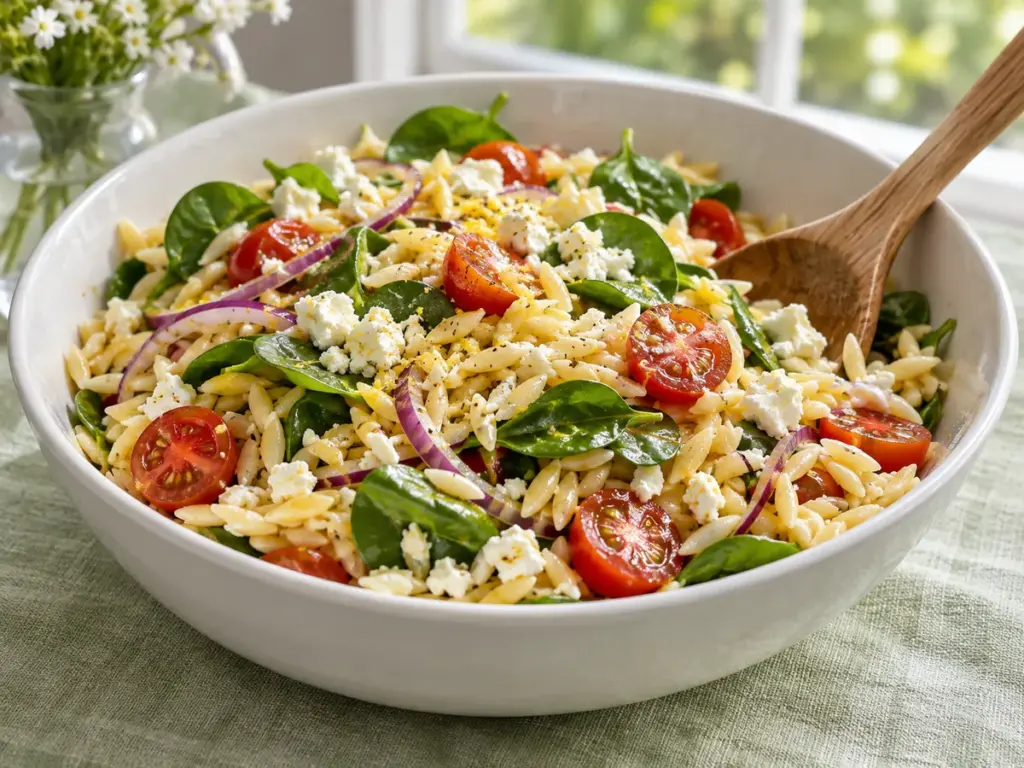
Orzo is small enough to soak up the lemon-garlic dressing while it is still warm, so you toss it before the spinach goes in. If you cool the orzo for 10 minutes first, the baby spinach does not wilt into the pasta.
Small shells or gluten-free rice-shaped orzo replace the orzo, and arugula gives a peppery edge in place of spinach. Baby kale holds up better as the salad sits. If you want a heartier bowl built on orzo, try a Greek orzo pasta salad.
Ingredients
- 1 ½ cups orzo, uncooked
- 3 tablespoons extra-virgin olive oil
- 2 tablespoons freshly squeezed lemon juice
- 1 clove garlic, minced
- 5 ounces baby spinach, loosely packed
- 1 cup cherry tomatoes, halved
- ½ small red onion, thinly sliced
- ¾ cup crumbled feta cheese
- 1 teaspoon salt, plus more to taste
- ½ teaspoon freshly ground black pepper
Instructions
- Cook the orzo in salted water until al dente, 8 to 10 minutes, then drain well. Do not rinse it, so the dressing sticks.
- Whisk the olive oil, lemon juice, garlic, salt and pepper in a large bowl.
- Toss the warm orzo with the dressing and spread it on a baking sheet. Let it cool about 10 minutes.
- Return the orzo to the bowl and add the spinach, tomatoes and red onion. Toss until the spinach wilts slightly.
- Fold in the feta, taste and adjust the seasoning, then chill 20 minutes or serve at room temperature.
5. Chickpea Salad
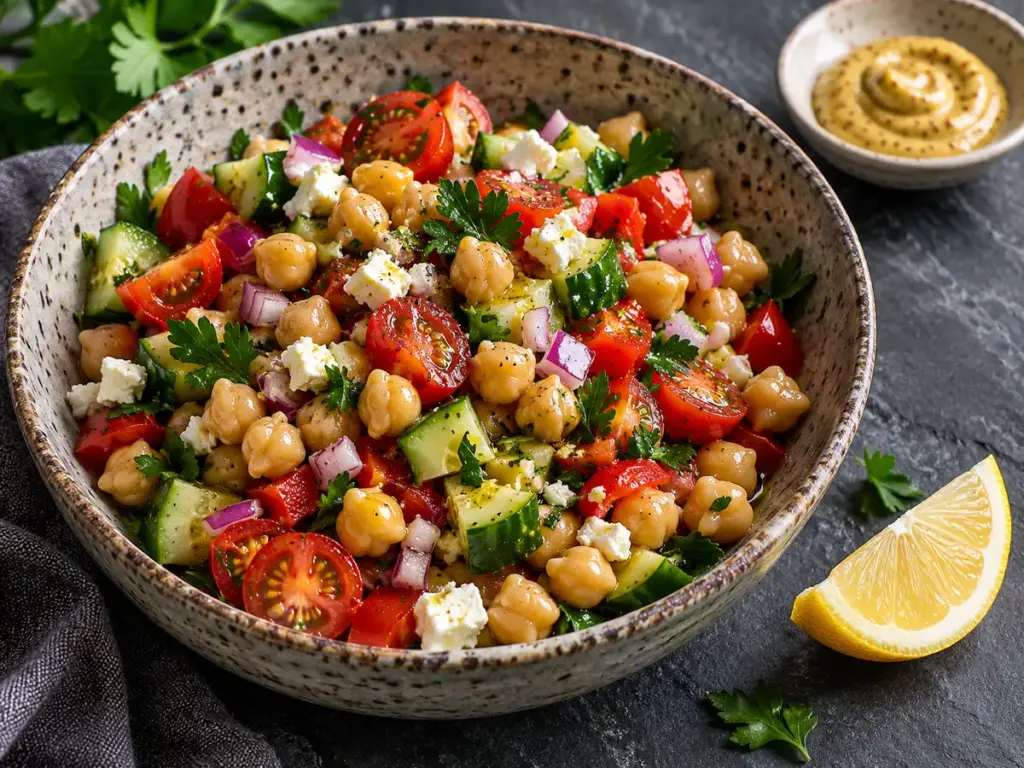
Canned chickpeas keep their shape when you toss them, so the salad stays chunky instead of turning mushy. A teaspoon of Dijon helps the lemon and olive oil hold together, so the dressing clings to the beans.
If you cook dried chickpeas yourself, use about 3 cups cooked (roughly 1 cup dried), which also soak up more dressing. Zucchini replaces the cucumber, cilantro replaces the parsley, and goat cheese replaces the feta. Chickpeas are just as good in a Mediterranean take on chickpea salad if you want a different mix.
Ingredients
- 2 cans (15 ounces each) chickpeas, drained and rinsed
- 1 large cucumber, diced
- 1 cup cherry tomatoes, halved
- 1 small red onion, thinly sliced
- 1 red bell pepper, diced
- ½ cup chopped parsley
- ⅓ cup crumbled feta cheese
- ¼ cup extra-virgin olive oil
- 3 tablespoons freshly squeezed lemon juice
- 1 teaspoon Dijon mustard
- 1 garlic clove, minced
- ½ teaspoon salt, adjusted to taste
- ¼ teaspoon freshly ground black pepper
Instructions
- Pat the rinsed chickpeas dry and put them in a large bowl.
- Add the cucumber, bell pepper, tomatoes and red onion.
- Whisk the olive oil, lemon juice, Dijon, garlic, salt and pepper until combined.
- Pour the dressing over the salad and toss gently to coat.
- Add the parsley and feta, toss once more and let the salad sit 10 minutes before serving.
6. Cole Slaw with a Twist
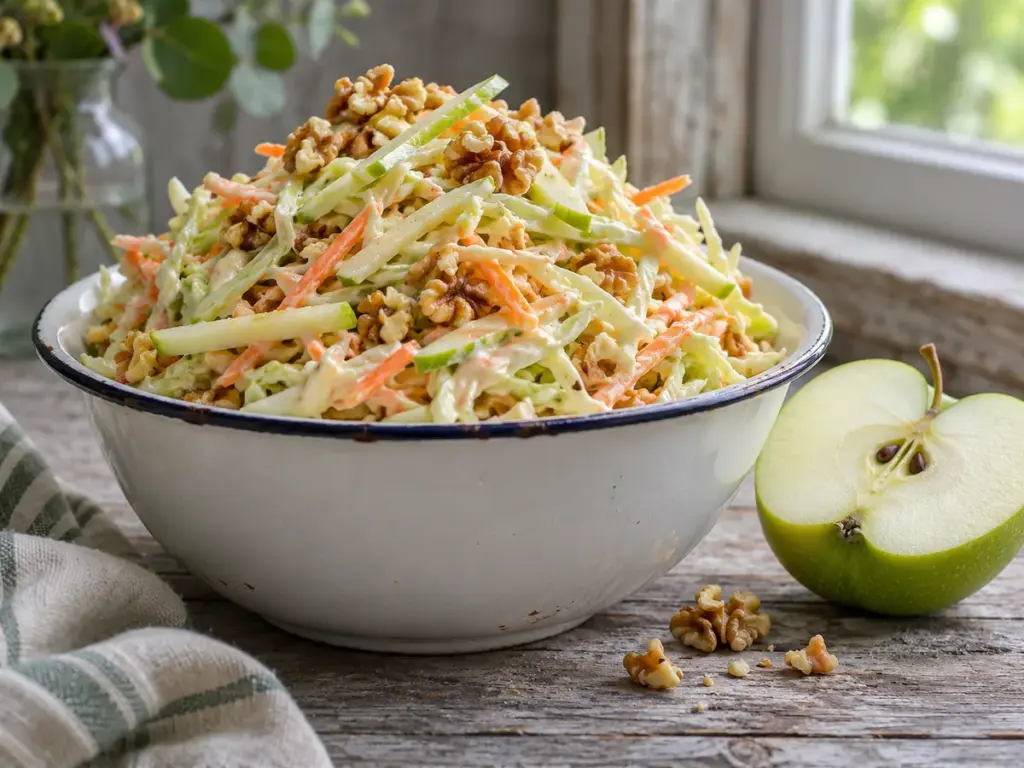
A Granny Smith apple adds sweet-tart crunch, and toasted walnuts add a warm, nutty bite, so the slaw tastes fuller than plain cabbage. You cut the mayonnaise with apple cider vinegar, Dijon and honey, which keeps the dressing tangy instead of heavy.
Because the dressing has mayonnaise, you should keep the bowl cold. Homemade coleslaw keeps 3 to 5 days in the refrigerator, according to USDA FoodKeeper. Red cabbage replaces some or all of the green, a pear or Fuji apple tastes milder, and Greek yogurt replaces the mayonnaise.
Ingredients
- 4 cups shredded green cabbage (about half a medium head)
- 1 cup shredded carrot (about 2 medium carrots)
- 1 large firm apple such as Granny Smith, cored and cut into matchsticks
- ⅓ cup chopped toasted walnuts
- ¼ cup mayonnaise
- 2 tablespoons apple cider vinegar
- 1 tablespoon Dijon mustard
- 1 tablespoon honey
- ¼ teaspoon salt, adjusted to taste
- ⅛ teaspoon freshly ground black pepper
Instructions
- Toast the walnuts in a dry skillet over medium heat for 3 to 4 minutes, stirring, until fragrant. Let them cool, then chop.
- Whisk the mayonnaise, apple cider vinegar, Dijon, honey, salt and pepper until smooth.
- Combine the cabbage, carrot, apple and walnuts in a large bowl.
- Pour the dressing over the slaw and toss until coated. Taste and adjust the seasoning.
- Chill at least 20 minutes so the flavors blend and the cabbage softens slightly.
7. Watermelon Feta Salad
Salty feta against sweet watermelon is the classic contrast, and the mint makes the whole bowl taste cooler than it is. Watermelon gives off juice once it meets salt, so you should toss the salad right before you serve it, and chill the cubes beforehand if you want it very cold.
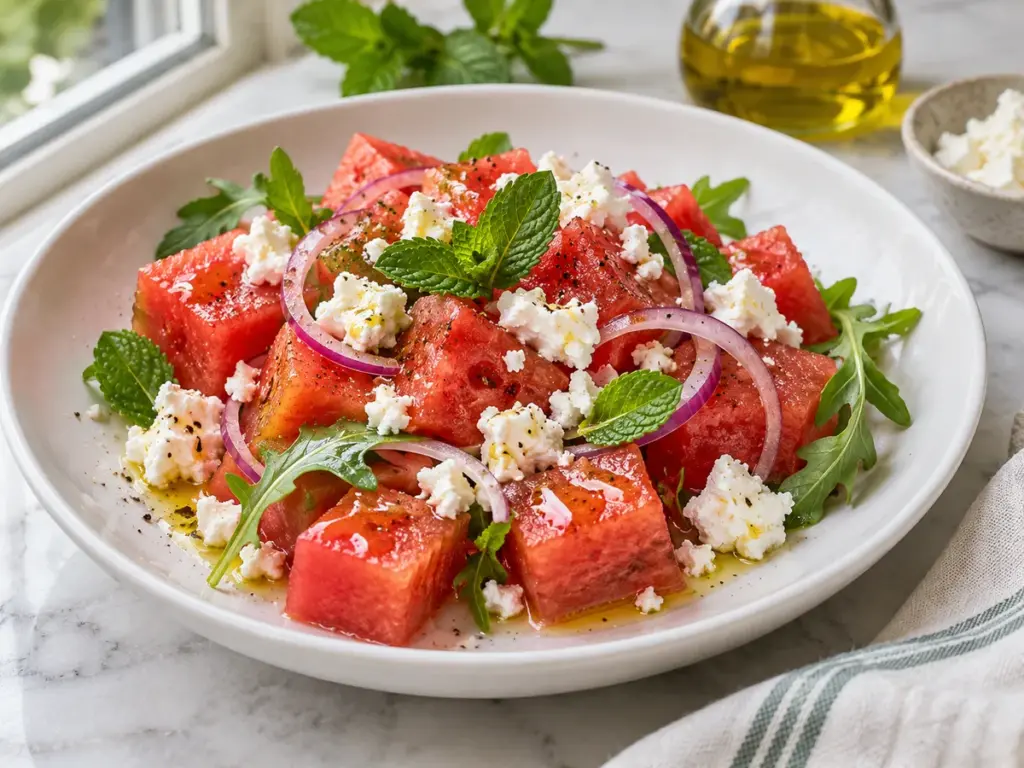
Goat cheese is creamier than feta, basil replaces the mint, and lemon juice replaces the lime. Thinly sliced scallions give a milder onion bite than red onion.
Ingredients
- 4 cups cubed seedless watermelon
- 4 ounces feta cheese, crumbled
- ¼ cup chopped fresh mint leaves
- ¼ small red onion, thinly sliced
- 2 tablespoons extra-virgin olive oil
- 1 tablespoon freshly squeezed lime juice
- ¼ teaspoon flaky sea salt, or to taste
- ⅛ teaspoon freshly ground black pepper
- 2 cups arugula, for serving (optional)
Instructions
- Cut the watermelon into bite-size cubes and put them in a large bowl. Slice the red onion and chop the mint.
- Whisk the olive oil, lime juice, salt and pepper in a small bowl.
- Add the feta, mint and red onion to the watermelon and drizzle with the dressing.
- Toss gently once or twice so the watermelon and feta do not break up.
- Taste and adjust the seasoning, then spoon over arugula or into bowls. Chill 5 to 10 minutes if you want it extra cold.
8. Italian Pasta Salad
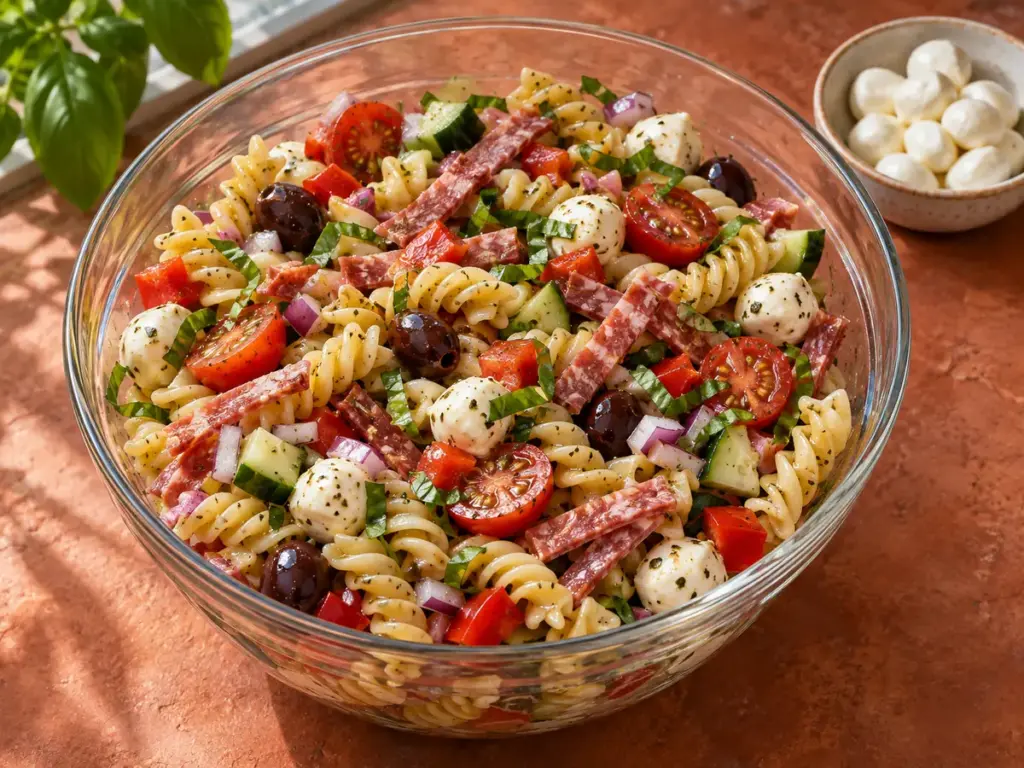
The rotini spirals trap the dressing, and the pasta keeps soaking it up as the bowl chills, so you get the best flavor after 30 minutes or more in the fridge. If the salad looks dry before you serve it, toss in a splash of dressing.
Salami and mozzarella pearls are both perishable, so keep this bowl on ice outdoors. Provolone or feta replaces the mozzarella, and diced rotisserie chicken or chickpeas replace the salami. Once this method is your default, other pasta salads are easy to rotate in.
Ingredients
- 12 ounces rotini pasta, uncooked
- 1 pint cherry tomatoes, halved
- 1 medium cucumber, diced
- 1 small red onion, thinly sliced
- 1 red bell pepper, seeded and diced
- 8 ounces Genoa salami, cut into strips
- 1 cup mozzarella pearls, drained
- ½ cup pitted Kalamata olives, halved
- ⅓ cup chopped fresh parsley or basil
- ¾ cup Italian dressing, store-bought or homemade
- Salt and freshly ground black pepper, to taste
Instructions
- Boil the rotini in salted water until al dente, 8 to 10 minutes. Drain and rinse under cold water until the pasta is cool.
- While the pasta cooks, put the tomatoes, cucumber, red onion, bell pepper, salami, mozzarella, olives and parsley in a large bowl.
- Add the cooled pasta and the Italian dressing and toss gently.
- Season with salt and pepper, then chill at least 30 minutes so the dressing soaks in. Toss again before serving.
9. Asian Sesame Slaw
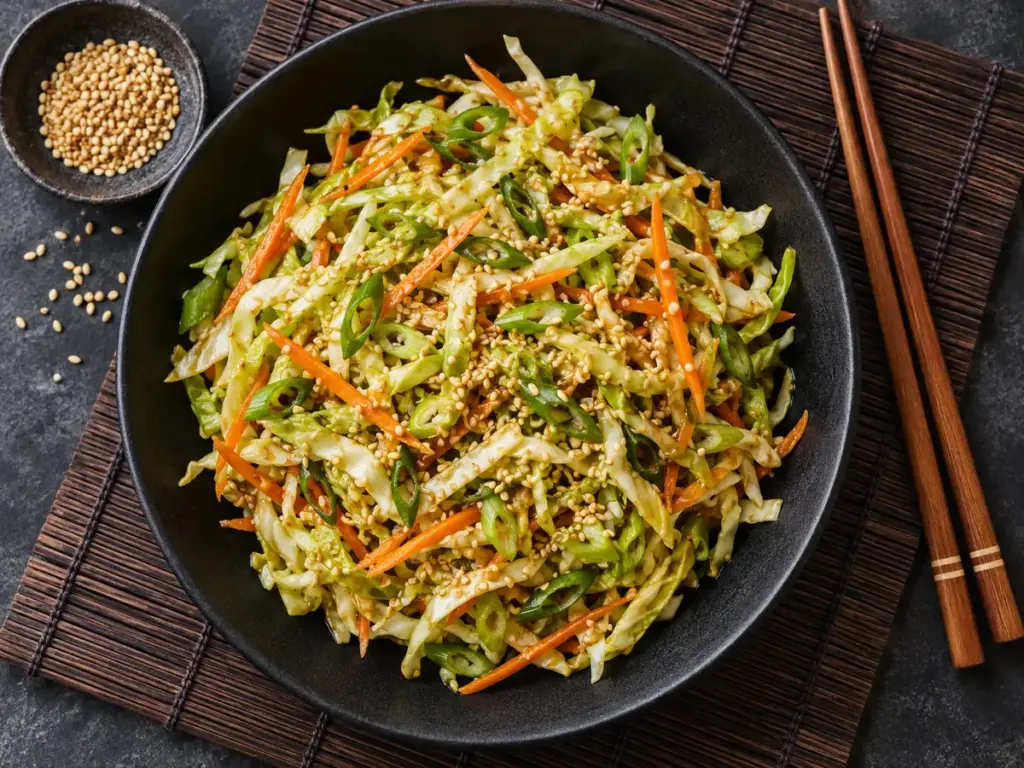
Toasted sesame oil carries most of the nutty flavor, so 2 tablespoons are enough, and the neutral oil keeps the dressing from tasting heavy. The cabbage softens in the dressing, so if you chill the slaw for 20 to 30 minutes, you get a tender-crisp texture, and it keeps softening after that.
Napa cabbage is milder and softer than green cabbage. Tamari replaces the soy sauce for a gluten-free slaw (check the label), and maple syrup replaces the honey for a vegan one.
Ingredients
- 4 cups thinly sliced green cabbage (about 1 small head)
- 2 cups julienned or grated carrots (about 2 medium)
- 3 green onions, thinly sliced
- 3 tablespoons rice vinegar
- 2 tablespoons soy sauce or tamari
- 2 tablespoons toasted sesame oil
- 2 tablespoons neutral oil such as canola
- 1 tablespoon honey or granulated sugar
- 2 teaspoons toasted sesame seeds, plus extra for serving
- ½ teaspoon kosher salt, adjusted to taste
- ¼ teaspoon freshly ground black pepper
Instructions
- Whisk the rice vinegar, soy sauce, sesame oil, neutral oil, honey, salt, pepper and sesame seeds for about 30 seconds.
- Shred the cabbage, grate or julienne the carrots and slice the green onions. Put them in a large bowl.
- Pour the dressing over the vegetables and toss until everything is coated.
- Chill the slaw 20 to 30 minutes.
- Taste and adjust the salt or honey, sprinkle with extra sesame seeds and serve chilled or at room temperature.
10. Roasted Beet Salad with Goat Cheese
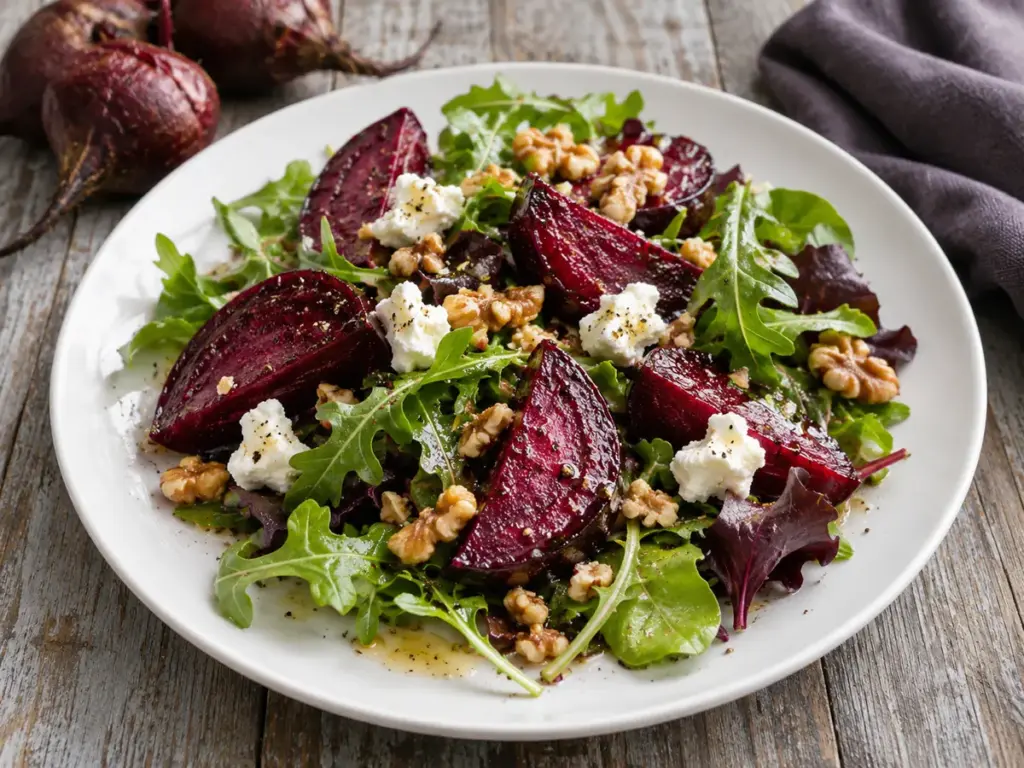
If you wrap the beets in foil, they steam as they roast, so the skins slip off and the flesh turns tender and sweet. Roast and chill the beets earlier in the day, then dress the greens just before you serve so the leaves stay crisp.
Feta replaces the goat cheese for a firmer, saltier bite, pecans or sliced almonds replace the walnuts, and balsamic vinegar replaces the red wine vinegar for a sweeter, deeper tang. Baby spinach or arugula can stand in for the mixed greens.
Ingredients
- 3 medium beets (about 1 pound), scrubbed and trimmed
- 2 tablespoons olive oil, divided
- ½ teaspoon salt, divided
- Freshly ground black pepper, to taste
- 5 ounces mixed salad greens or arugula
- 4 ounces goat cheese, crumbled
- ½ cup walnuts, chopped and toasted
- 2 tablespoons red wine vinegar
- 1 teaspoon Dijon mustard
- 1 teaspoon honey
- 1 small shallot, finely minced
Instructions
- Heat the oven to 400°F. Toss the beets with 1 tablespoon of the olive oil and ¼ teaspoon of the salt. Wrap each beet in foil and roast 45 to 60 minutes, until a fork slides in easily.
- Toast the walnuts in a dry skillet over medium heat for 3 to 4 minutes, stirring, until fragrant and lightly browned. Set them aside to cool.
- Whisk the red wine vinegar, Dijon, honey, shallot, the remaining 1 tablespoon olive oil, the remaining ¼ teaspoon salt and pepper to taste.
- When the beets are cool enough to handle, rub off the skins with your hands or a knife and cut the beets into wedges. Chill them if you are serving the salad cold.
- Toss the greens with the vinaigrette, arrange the beet wedges on top and scatter the goat cheese and walnuts over the salad.
11. Cold Lentil Salad
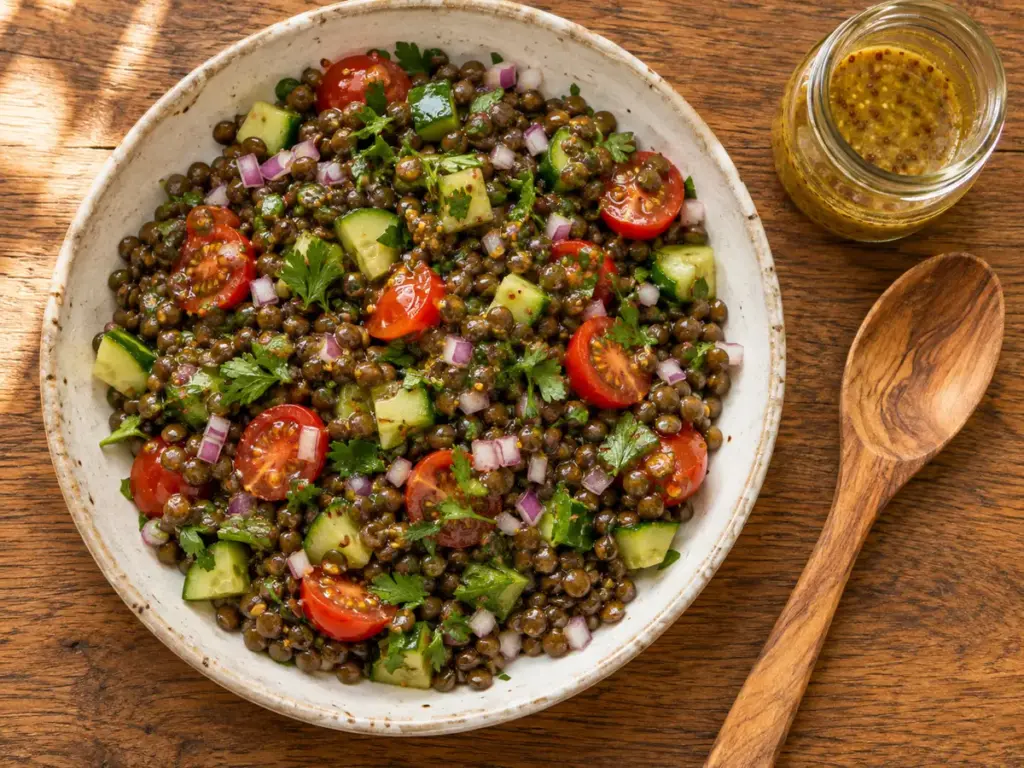
Green or French lentils hold their shape through 20 to 25 minutes of simmering, while red lentils fall apart, so you need the first kind here. The mustard vinaigrette clings to the lentils, and cucumber and cherry tomatoes add crunch and juice against the soft beans.
If you want to skip the simmering, use 2 cups of rinsed canned lentils. Lemon juice (2 tablespoons) replaces the red wine vinegar, cilantro or mint replaces the parsley, and 1 cup of diced celery replaces the cucumber when cucumbers are watery. When you want a change from the mustard vinaigrette, try other lentil salad dressings.
Ingredients
- 1 cup dry green lentils, rinsed and drained
- 3 cups water
- 1 pint cherry tomatoes, halved
- 1 medium cucumber, diced
- ½ small red onion, finely chopped
- ½ cup chopped fresh parsley
- 3 tablespoons extra-virgin olive oil
- 2 tablespoons red wine vinegar
- 1 teaspoon Dijon mustard
- 1 garlic clove, minced
- ½ teaspoon kosher salt, adjusted to taste
- ¼ teaspoon ground black pepper
Instructions
- Put the lentils and 3 cups water in a saucepan and bring to a simmer. Cook 20 to 25 minutes, until tender but not mushy, then drain and let cool slightly.
- Whisk the olive oil, red wine vinegar, Dijon, garlic, salt and pepper in a small bowl until emulsified.
- Chop the cucumber and parsley, halve the tomatoes and chop the onion.
- Toss the lentils with the vegetables and the dressing, then chill at least 30 minutes before serving.
12. Tabbouleh Salad
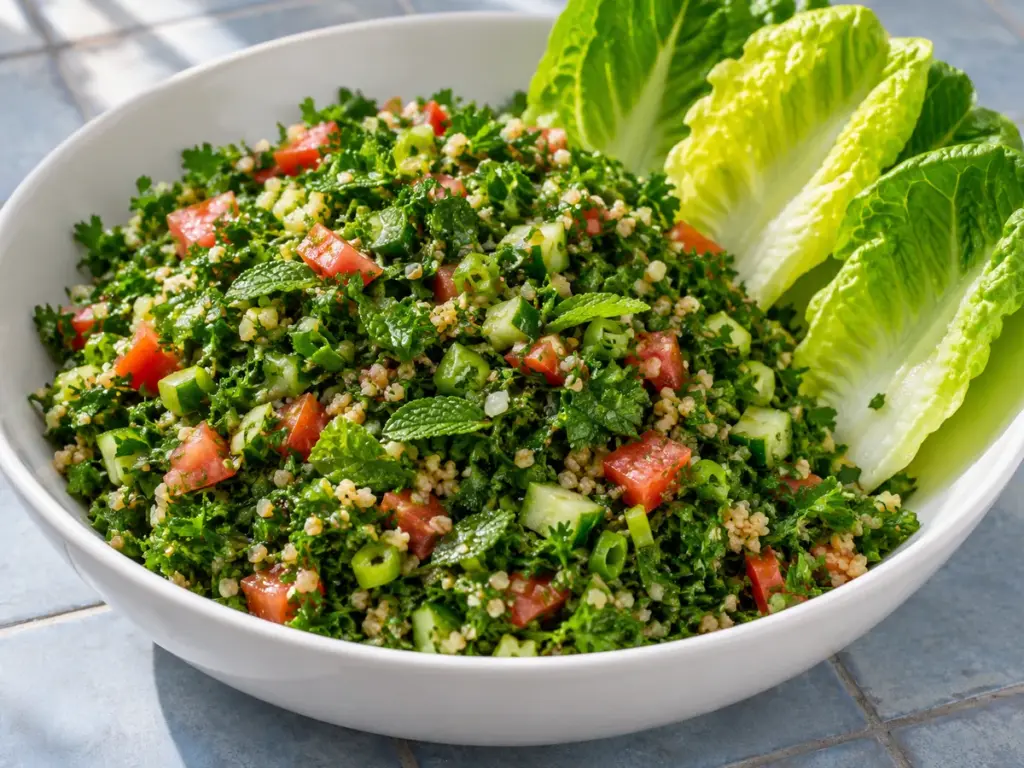
Traditional tabbouleh is mostly herbs with a little grain, and this version follows that, with 4 cups of parsley to 1 cup of bulgur. Fine bulgur needs only a soak in boiling water, no cooking. Dry the washed parsley well, or the water will thin your lemon dressing.
Bulgur is wheat, so cooled quinoa replaces it for a gluten-free bowl. Basil replaces the mint, and baby spinach can replace part of the parsley when you want more volume.
Ingredients
- 1 cup fine bulgur
- 1 cup boiling water
- 4 cups finely chopped flat-leaf parsley, stems mostly removed
- ½ cup finely chopped fresh mint leaves
- 2 medium tomatoes, seeded and diced
- 1 small cucumber, diced
- 4 green onions, thinly sliced
- ⅓ cup fresh lemon juice (about 2 lemons)
- ⅓ cup extra-virgin olive oil
- 1 teaspoon salt, or to taste
- ¼ teaspoon freshly ground black pepper
Instructions
- Put the bulgur in a bowl, pour the boiling water over it, cover and let it sit 15 minutes until tender. Drain off any extra water.
- Chop the parsley, mint, tomatoes, cucumber and green onions and put them in a large bowl.
- Fluff the bulgur with a fork and add it to the bowl.
- Whisk the lemon juice, olive oil, salt and pepper, pour it over the salad and toss gently.
- Let the salad rest 20 to 30 minutes, in the fridge if your kitchen is hot, then taste and adjust the seasoning.
13. Caprese Salad Skewers
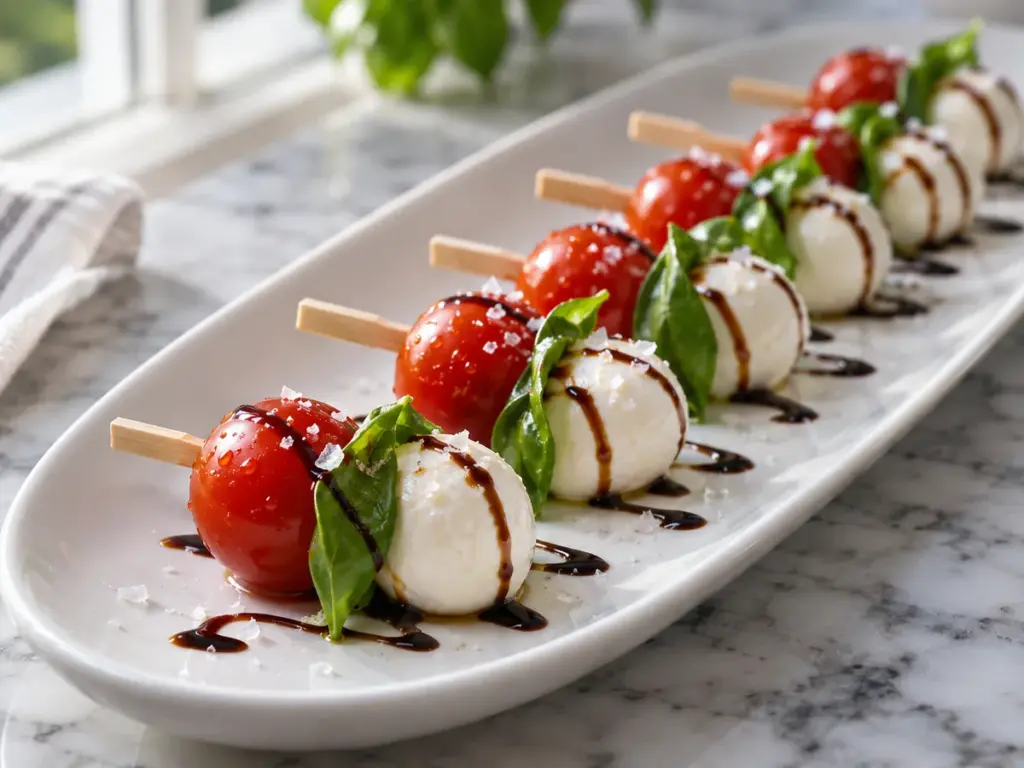
Ciliegine, the cherry-size fresh mozzarella balls, match one cherry tomato each, so the skewers stack evenly. If you pat the cheese dry first, the balsamic glaze clings instead of sliding off. The recipe triples easily for a crowd, and you can thread the skewers ahead and add the drizzle at the last minute.
Small feta cubes or firm vegan mozzarella replace the fresh mozzarella, and baby arugula or spinach replaces the basil. If you have no glaze, simmer aged balsamic vinegar until it turns syrupy. On a plate instead of a stick, the same three ingredients make a plated caprese salad.
Ingredients
- 24 cherry tomatoes, stemmed
- 24 fresh mozzarella balls (ciliegine), drained
- 24 fresh basil leaves, washed
- 24 small skewers or toothpicks
- 2 tablespoons extra-virgin olive oil
- 2 tablespoons balsamic glaze
- ¼ teaspoon flaky sea salt, or to taste
- ⅛ teaspoon freshly ground black pepper, or to taste
Instructions
- Pat the mozzarella balls dry with paper towels.
- Thread 1 cherry tomato, 1 basil leaf (folded if large) and 1 mozzarella ball onto each skewer.
- Arrange the skewers in a single layer on a platter.
- Drizzle the olive oil and balsamic glaze evenly over the skewers.
- Sprinkle with the sea salt and pepper and serve within 1 hour for the best texture.
14. Avocado and Corn Salad
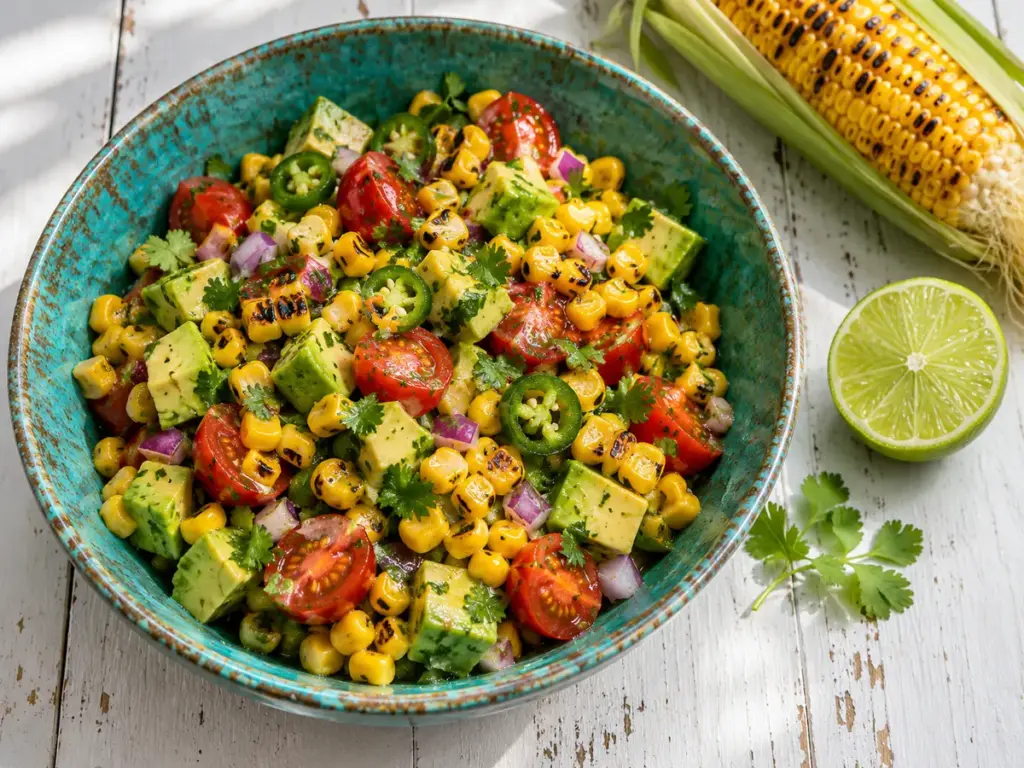
If you char the corn in a skillet, it picks up smoky sweetness, and the lime dressing slows the browning of the avocado. Fold the avocado in last, and eat the salad the same day, because avocado turns brown overnight.
Thawed frozen corn or drained canned corn work when fresh is out of season. Diced ripe mango replaces the avocado, parsley or basil replaces the cilantro, and lemon juice replaces the lime.
Ingredients
- 2 cups corn kernels (from 2 to 3 ears, or thawed frozen)
- 2 ripe avocados, diced
- 1 cup cherry tomatoes, halved
- ¼ cup finely chopped red onion
- ¼ cup chopped cilantro
- 1 jalapeño, seeded and minced (optional)
- 3 tablespoons lime juice (1 to 2 limes)
- 2 tablespoons extra-virgin olive oil
- ½ teaspoon kosher salt, adjusted to taste
- ¼ teaspoon freshly ground black pepper
Instructions
- Cut the kernels off fresh cobs. Cook them in a hot dry or lightly oiled skillet over medium-high heat for 5 to 7 minutes, stirring now and then, until browned in spots. Spread them on a plate and let them cool completely.
- Put the cooled corn, tomatoes, red onion, cilantro and jalapeño in a large bowl.
- Whisk the lime juice, olive oil, salt and pepper and taste for seasoning.
- Add the avocado, pour the dressing over and toss gently so you do not mash the avocado.
- Chill 10 to 15 minutes, or serve right away with extra cilantro or a lime wedge.
15. Pasta Salad with Pesto
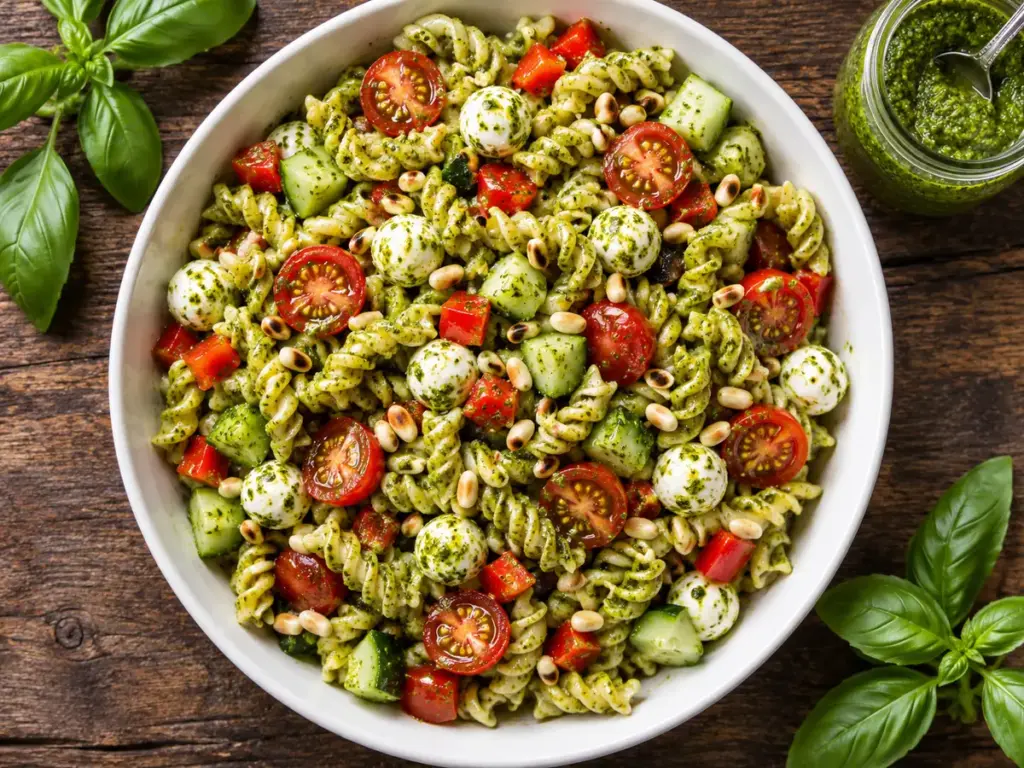
Pesto is thick, so you loosen it with a little olive oil, lemon juice and starchy pasta water until it coats every spiral. Rotini and fusilli hold the sauce in their grooves, and the toasted pine nuts add crunch against the soft pasta and mozzarella.
Penne works in place of rotini, and arugula or spinach-basil pesto gives a milder or peppery flavor. Crumbled feta is tangier and firmer than mozzarella, and walnuts or sliced almonds replace the pine nuts at a lower cost.
Ingredients
- 12 ounces dried rotini or fusilli
- ¾ cup basil pesto, store-bought or homemade
- 1 cup cherry tomatoes, halved
- 1 medium cucumber, diced
- 1 red bell pepper, diced
- ¼ cup thinly sliced red onion
- ½ cup mozzarella pearls, drained
- ¼ cup pine nuts, toasted
- 2 tablespoons extra-virgin olive oil
- 1 tablespoon freshly squeezed lemon juice
- ½ teaspoon kosher salt, plus more if needed
- ¼ teaspoon freshly ground black pepper
Instructions
- Cook the pasta in salted water until al dente, about 8 to 10 minutes. Reserve ¼ cup of the pasta water, then drain and rinse the pasta under cold water.
- Toast the pine nuts in a dry skillet over medium heat for 2 to 3 minutes, stirring, until golden. Watch them closely, because they burn fast.
- Whisk the pesto, olive oil and lemon juice in a large bowl, adding 1 to 2 tablespoons of the reserved pasta water if the dressing is too thick.
- Add the pasta, tomatoes, cucumber, bell pepper, red onion and mozzarella and toss gently to coat.
- Season with salt and pepper, then add more lemon or oil if it needs brightness. Chill at least 30 minutes, sprinkle with the pine nuts and toss once more before serving.
16. Fruit Salad with Mint
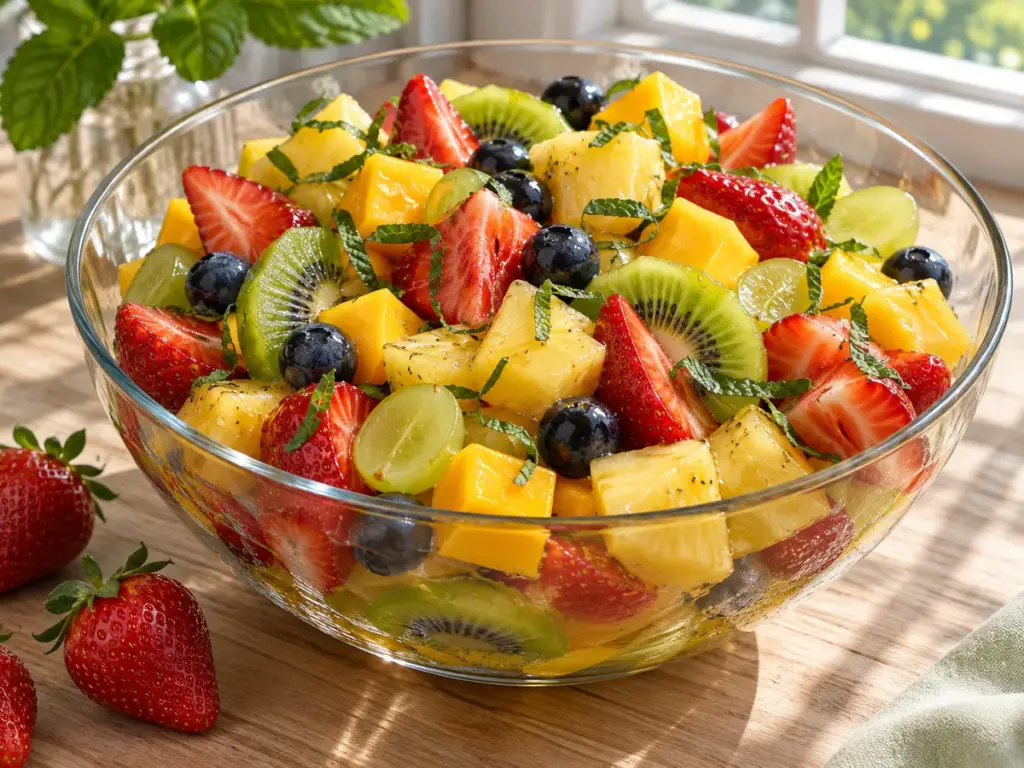
The lime juice and honey make a light syrup that keeps the fruit tasting bright, and the thinly sliced mint spreads through the bowl without taking over. If you cut every fruit to a similar size, each spoonful holds a few kinds.
Maple syrup replaces the honey for a vegan bowl, a peach replaces the mango, and drained canned pineapple works when fresh is out of reach. Lemon juice also works in place of lime.
Ingredients
- 3 cups strawberries, hulled and quartered
- 1 cup blueberries, rinsed
- 1 cup diced pineapple (fresh or drained canned)
- 1 mango, peeled and diced
- 2 kiwis, peeled and sliced
- 1 cup seedless grapes, halved if large
- 2 tablespoons honey or maple syrup
- 2 tablespoons fresh lime juice
- 2 tablespoons thinly sliced fresh mint leaves
Instructions
- Wash the fruit and cut the larger pieces to bite size.
- Whisk the honey and lime juice in a small bowl until smooth.
- Put the fruit in a large bowl and pour the dressing over it.
- Add the mint and toss gently so the berries do not bruise.
- Chill 15 to 30 minutes, toss gently once more and serve cold.
17. Zucchini Noodle Salad
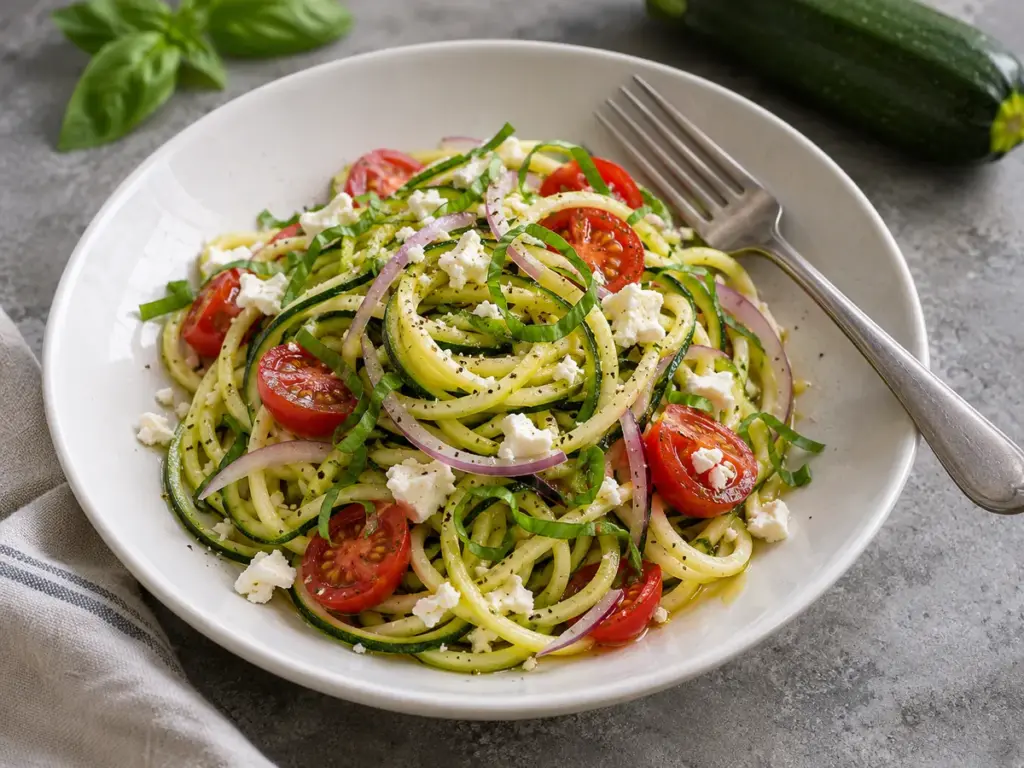
Zucchini is mostly water, so if you salt the noodles for 10 minutes, the salt draws out the liquid that would otherwise thin the dressing. Pat them dry afterward, and the noodles stay firm instead of limp.
Spiralized yellow summer squash makes a slightly sweeter noodle. Goat cheese replaces the feta for a softer, tangier finish, white wine vinegar or apple cider vinegar replaces the lemon juice, and maple syrup replaces the honey for a vegan salad.
Ingredients
- 3 medium zucchini, spiralized (about 6 cups noodles)
- 1 cup cherry tomatoes, halved
- ¼ cup thinly sliced red onion
- ½ cup crumbled feta cheese
- ¼ cup fresh basil, cut into ribbons
- 3 tablespoons extra-virgin olive oil
- 2 tablespoons freshly squeezed lemon juice
- 1 teaspoon Dijon mustard
- 1 teaspoon honey
- ½ teaspoon salt, plus extra if needed
- ¼ teaspoon freshly ground black pepper
Instructions
- Spiralize the zucchini and put the noodles in a colander. Sprinkle them with ½ teaspoon salt and let them sit 10 minutes to draw out the water.
- While the zucchini sits, whisk the olive oil, lemon juice, Dijon, honey and pepper in a small bowl.
- Pat the zucchini dry with paper towels.
- Combine the zucchini, tomatoes, red onion, feta and basil in a large bowl.
- Pour the dressing over the salad and toss gently. Taste, adjust the salt and pepper, and serve chilled or at room temperature.
18. Roasted Vegetable Platter
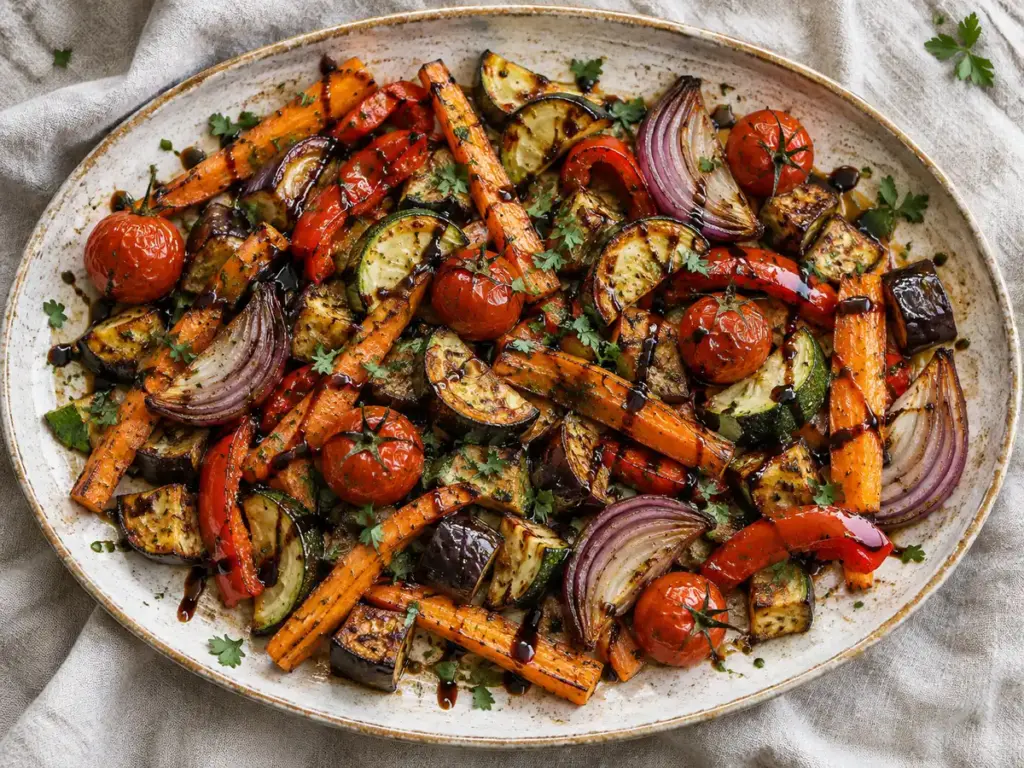
High heat browns the edges of the vegetables and turns their sugars sweet, and a quick balsamic reduction adds a glossy, tangy finish. Spread the pieces in a single layer with space between them, because crowded vegetables steam instead of browning. Roast in the morning, and the platter is ready to serve chilled or at room temperature.
Parsnips replace the carrots with a similar roasting time, and sliced portobello caps replace the eggplant. If you have no balsamic vinegar, red wine vinegar plus 1 tablespoon of honey gives a similar tang and sweetness.
Ingredients
- 1 pound carrots, peeled and cut into 2-inch sticks no thicker than ½ inch
- 2 red bell peppers, seeded and cut into 1-inch pieces
- 2 medium zucchini, halved lengthwise and sliced ½ inch thick
- 1 medium eggplant, cut into 1-inch cubes
- 1 large red onion, cut into wedges
- 12 ounces cherry tomatoes, left whole
- 3 tablespoons olive oil, divided
- 1 teaspoon kosher salt, or to taste
- ½ teaspoon freshly ground black pepper, or to taste
- 3 cloves garlic, minced
- 2 tablespoons balsamic vinegar
- 1 tablespoon honey or maple syrup
- 2 tablespoons chopped fresh parsley
Instructions
- Heat the oven to 425°F and line two baking sheets with parchment or foil.
- Toss the carrots, peppers, zucchini, eggplant and onion with 2 tablespoons of the olive oil, the salt and the pepper. Spread them in a single layer on the sheets, leaving space between pieces.
- Roast 15 minutes, turning the vegetables once. Toss the tomatoes and garlic with the remaining 1 tablespoon oil, add them to the sheets and roast 10 to 15 minutes more, until the edges are browned and the vegetables are tender.
- While the vegetables roast, simmer the balsamic vinegar and honey in a small saucepan over medium heat for 4 to 6 minutes, until syrupy. Take it off the heat and let it cool slightly, and it will thicken more.
- Arrange the vegetables on a platter, drizzle with the glaze, sprinkle with parsley and serve warm or chilled.
19. Cauliflower Salad
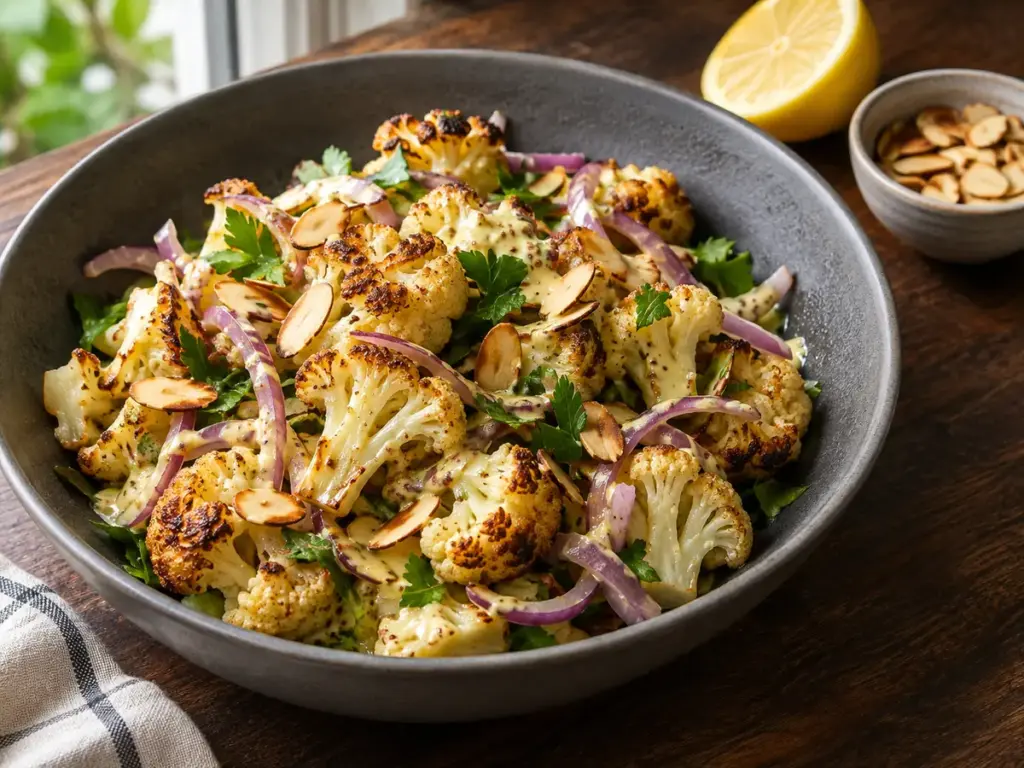
At 425°F the cauliflower edges caramelize while the centers stay tender, and the lemon-mustard dressing cuts through that richness. Toast the almonds while the cauliflower roasts, and toss the dressing in while the florets are still warm so they absorb it.
Roasted broccoli florets replace the cauliflower, walnuts or pecans replace the almonds for a richer crunch, and apple cider vinegar replaces the lemon juice. Maple syrup replaces the honey for a vegan version. Serve the salad at room temperature, or chill it for a colder side.
Ingredients
- 1 medium head cauliflower, cut into bite-size florets (1 ½ to 2 pounds)
- 3 tablespoons olive oil, divided (2 for roasting, 1 for the dressing)
- 1 teaspoon kosher salt, divided
- ½ teaspoon freshly ground black pepper, divided
- 2 tablespoons fresh lemon juice (about 1 lemon)
- 1 teaspoon Dijon mustard
- 1 teaspoon honey or maple syrup
- 1 clove garlic, minced
- ¼ medium red onion, thinly sliced
- ¼ cup chopped fresh parsley
- ½ cup sliced almonds, toasted
Instructions
- Heat the oven to 425°F.
- Toss the cauliflower with 2 tablespoons of the olive oil, ¾ teaspoon of the salt and ¼ teaspoon of the pepper.
- Spread the cauliflower on a baking sheet in one layer and roast 22 to 25 minutes, until golden at the edges and tender when pierced.
- While the cauliflower roasts, toast the almonds in a dry skillet over medium heat for 3 to 4 minutes, until lightly browned. Set them aside.
- Whisk the remaining 1 tablespoon olive oil, the lemon juice, Dijon, honey, garlic, the remaining ¼ teaspoon salt and the remaining ¼ teaspoon pepper.
- Combine the cauliflower, red onion, parsley and almonds in a bowl, pour the dressing over and toss. Serve at room temperature or chilled.
20. Herbed Yogurt Dip with Veggies
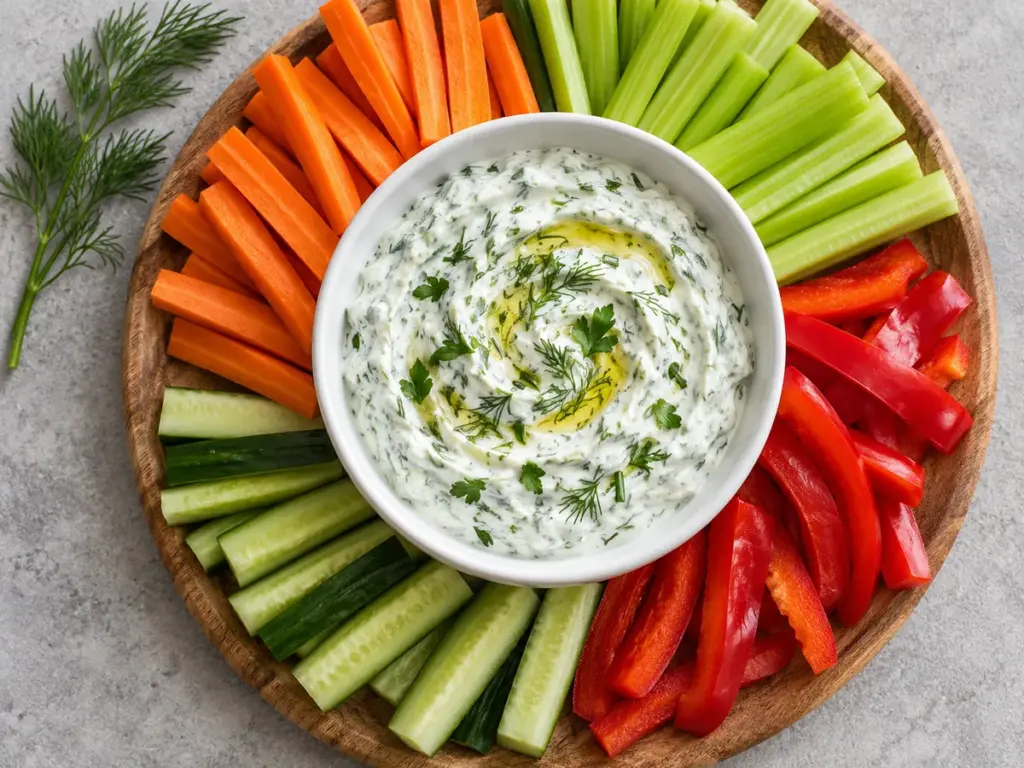
Greek yogurt is thick enough to cling to a carrot stick without running, and the dill, parsley and chives give it a layered herb flavor. Chill the dip at least 30 minutes so the garlic and herbs flavor the yogurt. Because it is dairy, set the bowl on ice outdoors, or refill a small bowl from the fridge.
Strained plain yogurt or full-fat labneh is as thick as Greek yogurt. If you have no fresh herbs, use 2 tablespoons of dried mixed herbs, since dried herbs are stronger and the usual rule is 1 teaspoon dried for each tablespoon of fresh, and add a little more lemon. Sugar snap peas or blanched asparagus replace the carrots.
Ingredients
- 2 cups plain Greek yogurt, full-fat or 2%
- 2 tablespoons fresh lemon juice (about half a lemon)
- 2 tablespoons extra-virgin olive oil, plus extra for drizzling
- 2 garlic cloves, minced
- 2 tablespoons finely chopped fresh dill
- 2 tablespoons finely chopped fresh parsley
- 2 tablespoons chopped fresh chives
- ½ teaspoon kosher salt, adjusted to taste
- ¼ teaspoon freshly ground black pepper
- 3 medium carrots, peeled and cut into sticks
- 3 celery stalks, trimmed and cut into sticks
- 1 large red bell pepper, seeded and cut into sticks
- 1 medium cucumber, cut into sticks
Instructions
- Stir the yogurt, lemon juice, olive oil and garlic in a medium bowl until smooth.
- Fold in the dill, parsley, chives, salt and pepper, then taste and adjust the seasoning.
- Cover and chill the dip at least 30 minutes.
- While the dip chills, cut the carrots, celery, bell pepper and cucumber into sticks.
- Move the dip to a serving bowl, drizzle with a little olive oil if you like and arrange the vegetable sticks around it.
Sources
- FDA: Handling Food Safely While Eating Outdoors (40°F, coolers, serving on ice, 2 hours or 1 hour above 90°F, rinsing produce)
- USDA FSIS: Keep Food Safe! Food Safety Basics (bowls of ice, small trays replaced often, 2-hour rule)
- USDA FSIS: "Danger Zone" (40°F - 140°F)
- FDA: Selecting and Serving Produce Safely (refrigerate cut or peeled produce)
- USDA FoodKeeper (pasta salad and homemade coleslaw, 3 to 5 days refrigerated)

Andrew Gray is the founder of Gusto Meadow, a food site for home cooks. He writes ingredient substitutes, food comparisons, taste guides, storage guides and dinner ideas, with numbers drawn from sources such as USDA, FDA and university extension services.
At Gusto Meadow, Andrew focuses on fresh, seasonal ingredients and simple methods that anyone can follow. His goal is to make cooking feel fun, doable, and rewarding — whether you’re preparing a quick weeknight dinner or exploring something new.
Storage and food-safety numbers follow USDA, FDA and university extension guidance.