
Dried beans, uncooked rice and granulated sugar all work as pie weights: line the chilled crust with parchment and fill it about two-thirds full.
- Sugar comes out lightly toasted and can go into other baking.
- Coins and chain need a foil or parchment liner under them.
- Two matching pie pans need no weights at all.
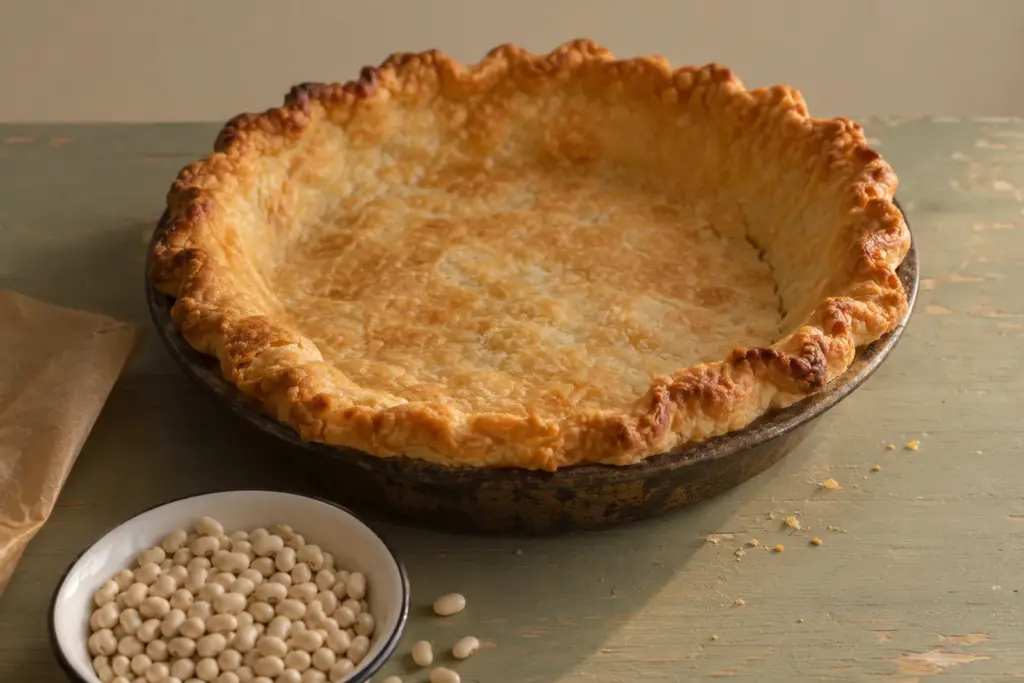
A crust baked empty needs something heavy inside it, and these six tool and ingredient swaps do that job when you don't own ceramic weights.
What Do Pie Weights Do When You Blind Bake?
If you bake a raw crust with nothing inside it, the bottom bubbles, puffs and craters and the sides slump. Weights pressed into a liner keep the bottom flat and the walls upright while the dough sets, which is the job America's Test Kitchen gives them.
King Arthur fills the lined crust about two-thirds full. For dried beans or rice, Foodal's amounts tell you how much to measure out before you start.
- 9-inch pie pan: about 1¾ pounds, roughly 4½ cups.
- 9-inch tart pan: about 1¼ pounds, roughly 3 cups.
6 Best Substitutes for Pie Weights
Put every swap below on a liner, because Foodal advises against letting the dough touch the weights directly.
| Substitute | Best for | Watch for |
|---|---|---|
| Dried beans | Any pie shell | Use small beans |
| Uncooked rice | Same as beans | Baking use only |
| Granulated sugar | Saving for later baking | Toasts as it bakes |
| Coins | A pinch | Foil underneath |
| Metal chain | Shallow tarts | Sides can slump |
| Second pie pan | No weights at all | Two matching pans |
Beans, rice and sugar fill a pie shell up to the walls. Coins and chain lie flat, so they mostly hold down the bottom, and the second pan replaces weights altogether.
1. Dried Beans
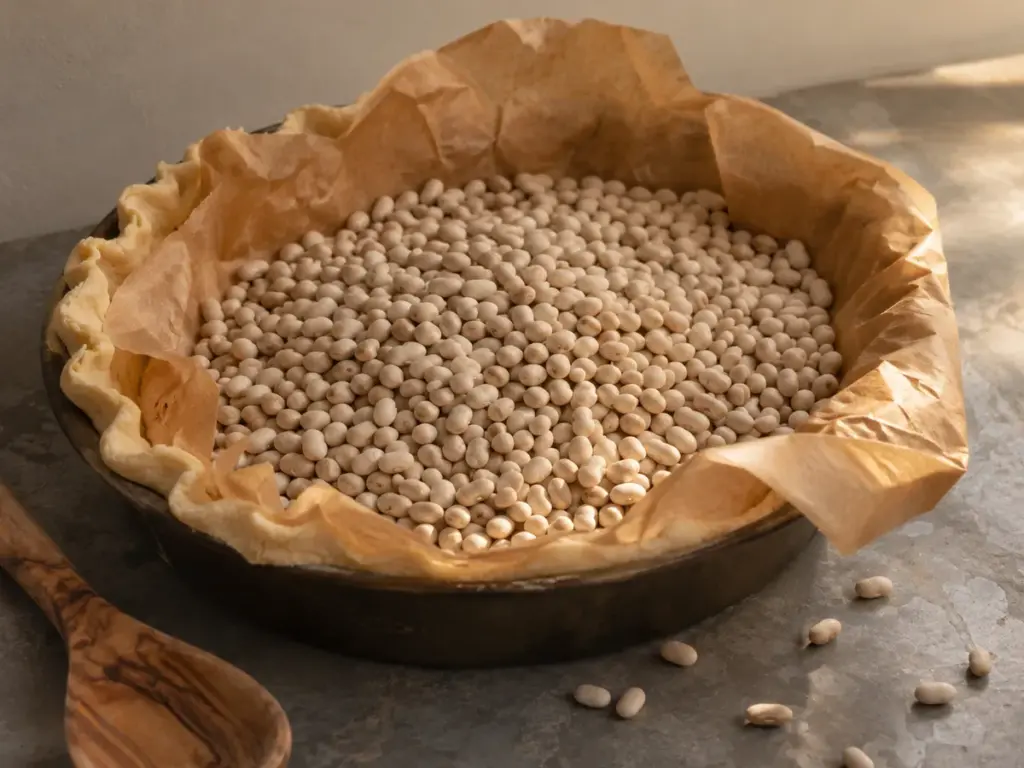
Small dried beans are the usual pantry stand-in. King Arthur uses dried navy beans, and America's Test Kitchen weighted its crusts with small red beans. Pour yours over the parchment and push a few against the walls so the sides get support too.
You can still cook the beans afterward. America's Test Kitchen baked one batch in three crusts, then cooked it beside never-baked beans and found the baked ones "creamy, intact, and entirely acceptable." They came out slightly firmer, so allow about 10 extra minutes of cooking.
2. Uncooked Rice
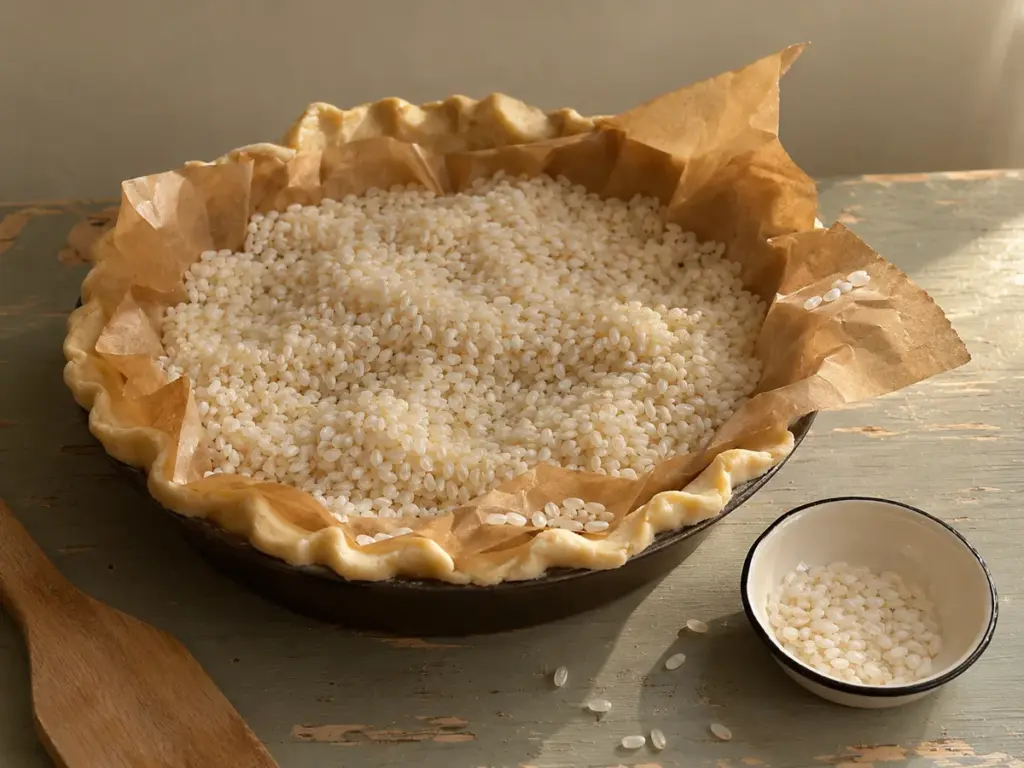
Uncooked rice packs into the crust the way beans do, and Foodal advises choosing smaller beans or rice for the job. King Arthur also lists other grain berries alongside it, and Foodal gives one amount for beans and rice, so measure rice the same way. Lift the parchment out by its overhang so loose grains stay in the pan.
Foodal says to keep rice you bake this way for baking only, so put it in a jar marked for pie weights where it can't end up in your dinner.
3. Granulated Sugar
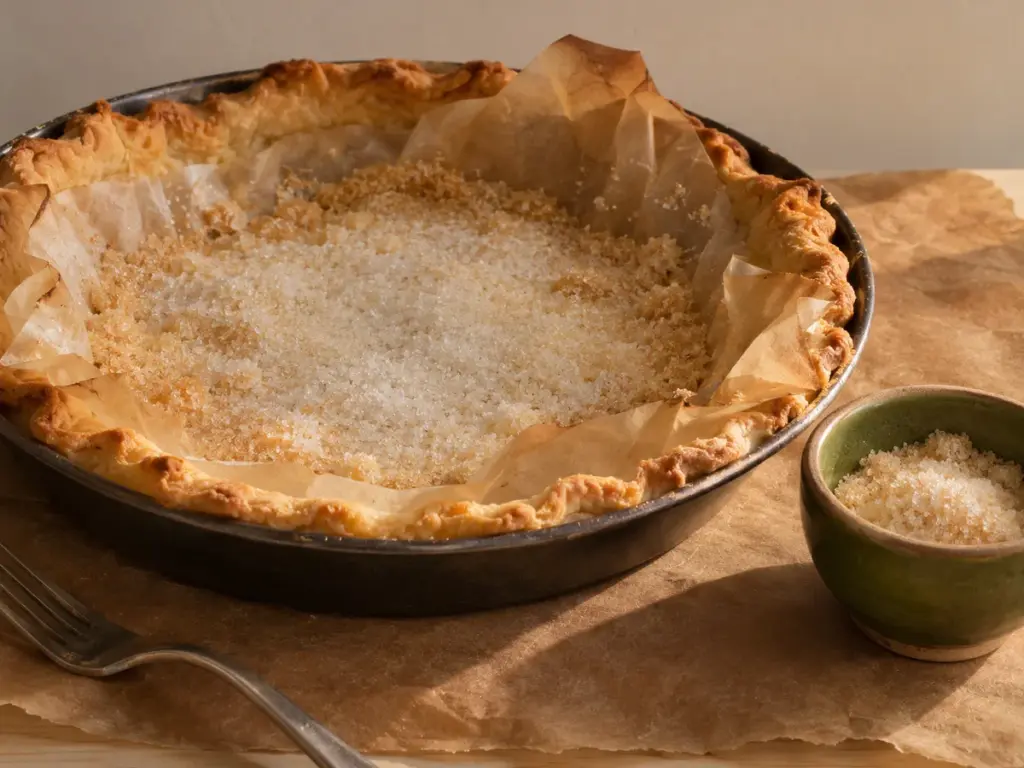
King Arthur lists plain granulated sugar with beans and rice as a weight. After the 20-minute bake at 375°F the sugar comes out lightly toasted, and you can save it for other baking, so nothing is wasted. In King Arthur's steps the weights come out after that first 20 minutes, even when the crust goes on to a full prebake.
Lift the liner out carefully, since hot sugar can burn you. America's Test Kitchen lets its hot weights cool in a bowl, and you can do the same with the sugar.
4. Coins
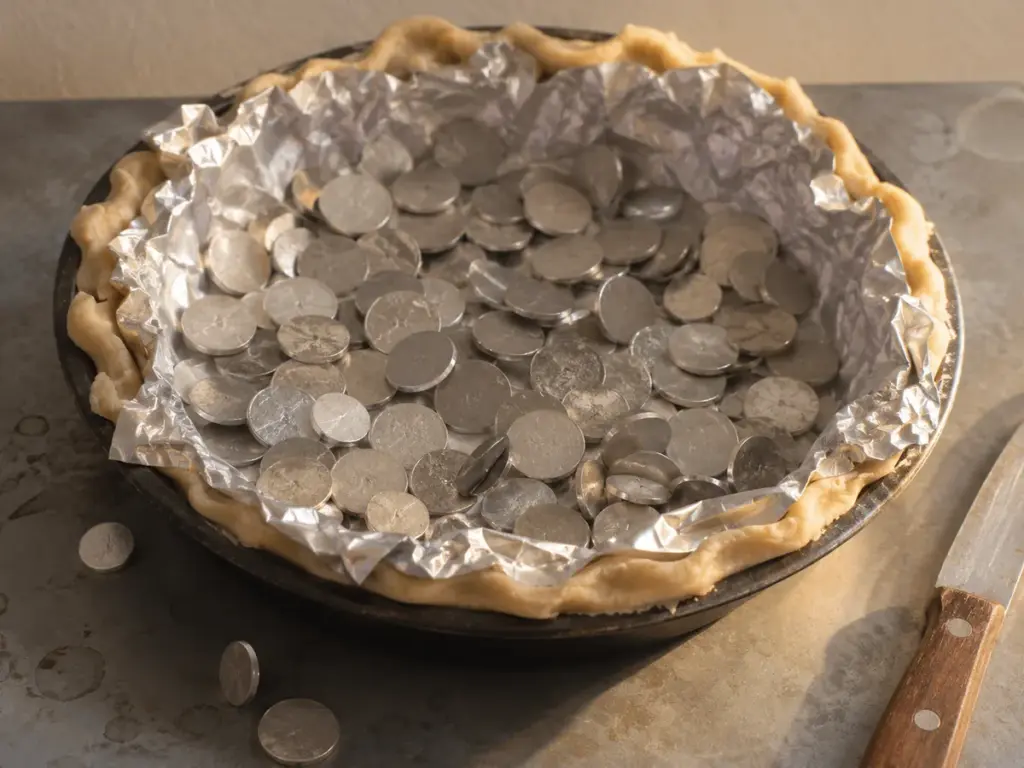
America's Test Kitchen counts pennies among the household weights that can work, though it prefers ceramic. Put foil under the coins, because Tasting Table says foil protects the crust from the weight of the coins and any possible metallic taste.
A quick wash first is a common precaution, though none of the sources here mention it. Coins lie flat and press mostly on the bottom, so add a few beans or rice along the walls if your sides need support.
5. Metal Chain
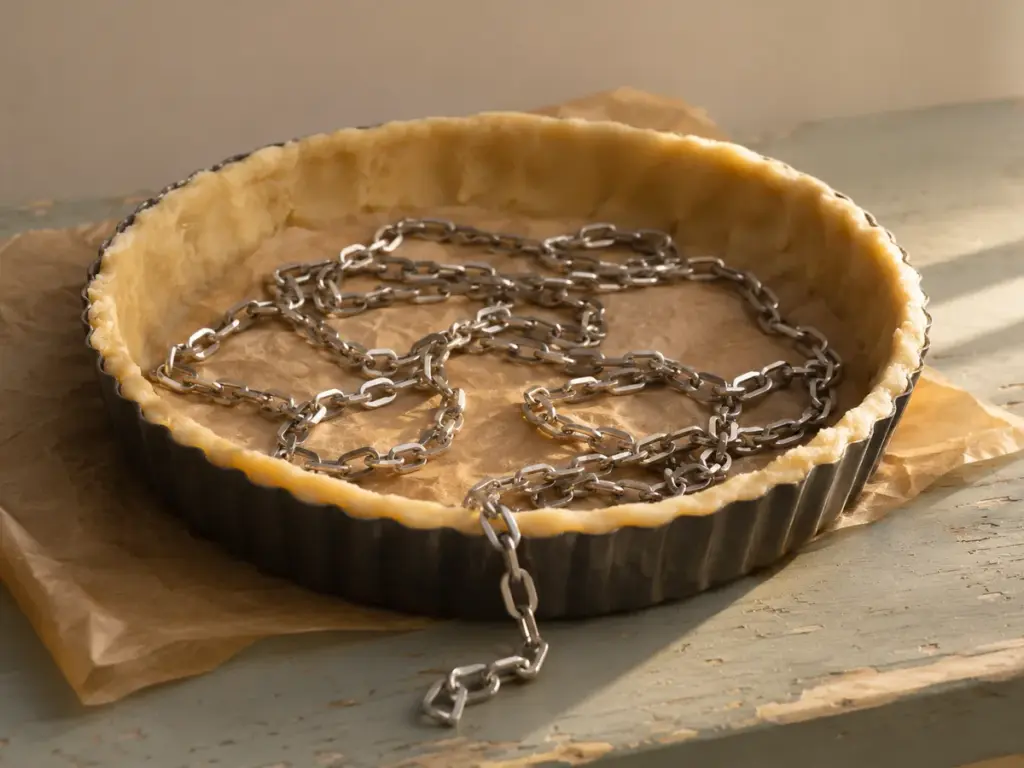
A chain is easy to lift out, but it adds almost no height. Foodal recommends a flat, single-layer chain mainly for tarts with shorter sides, and America's Test Kitchen's 6-foot stainless chain "wasn't long enough or heavy enough to perform well," so the crust slumped badly.
Use it in a shallow tart shell, since shallow tart pans have lower sides than pie pans, and reach for beans in a deep pie. If you want metal beads, buy ones sold as pie weights, which Foodal describes as heatproof and nontoxic.
6. A Second Pie Pan
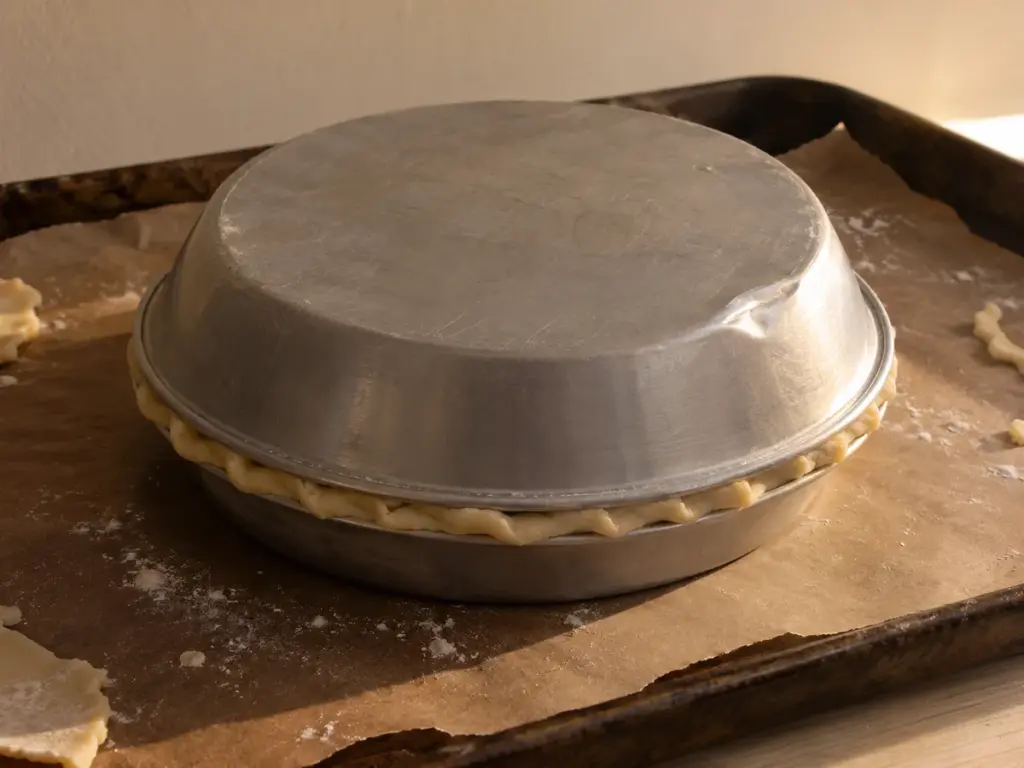
King Arthur's upside-down method needs two identical metal pie pans with flat rims and no weights at all. King Arthur says gravity pulls the crust toward the rim as it bakes, which is why the method suits a crust that slips.
- Crimp the crust to the rim with a fork.
- Line it and nest the second pan inside.
- Flip both pans onto a baking sheet and bake at 375°F for 20 minutes.
- Flip back and lift out the top pan and liner.
The method calls for metal pans, so a glass pan or cake pan standing in for a pie pan is not the match King Arthur describes.
Which Liner Goes Under the Weights?
America's Test Kitchen's first choice is parchment, because its more permeable structure lets your shell breathe and brown as it bakes.
- Parchment, the first choice
- Foil, the backup: it traps steam and browns in spots
- A paper coffee filter
- Wax paper, which should never be directly exposed to oven heat
If your parchment roll is empty, you can line the crust with one of these parchment paper swaps.
Foodal suggests crumpling the parchment first so it softens and molds to the pan. King Arthur bakes the shell on a baking stone or steel if you have one.
How Do You Blind Bake with Substitute Weights?
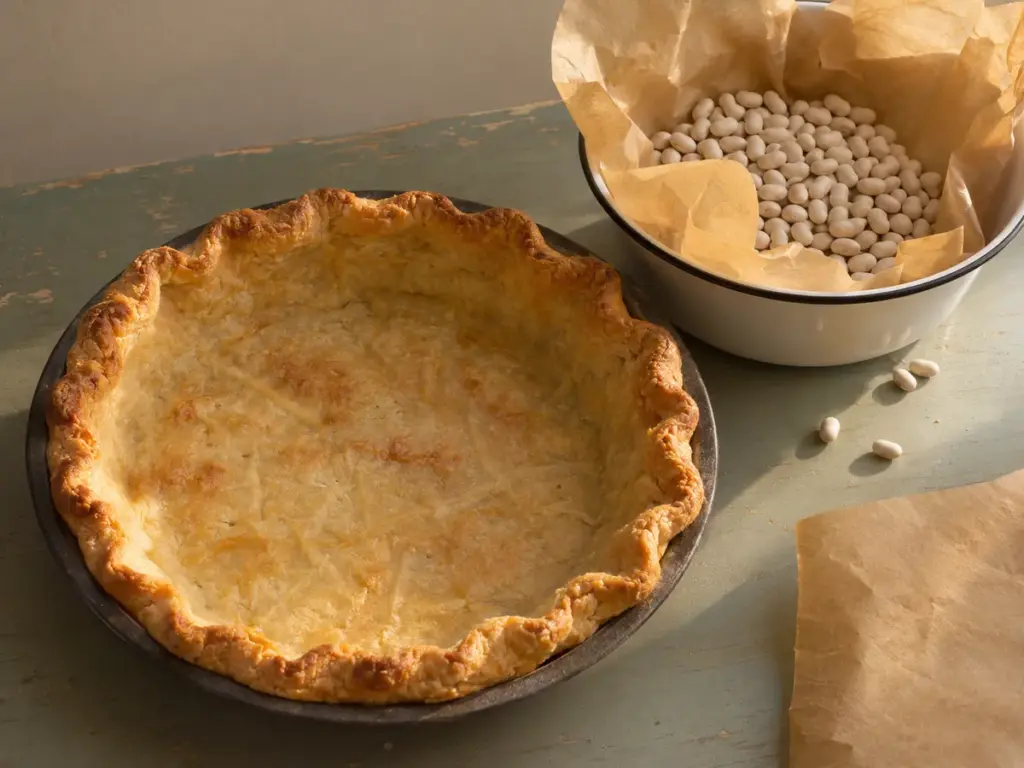
These steps follow King Arthur's partial and full prebake, with America's Test Kitchen's rack position. You chill the crust to firm the fat, whether that is butter or a shortening substitute.
- Chill the shaped crust for 30 minutes to relax the gluten and firm the fat.
- Line it with parchment, leaving an overhang you can grip because the weights come out hot.
- Fill it with beans, rice or sugar.
- Bake at 375°F on the lower-middle rack for about 20 minutes, until the dough no longer looks wet under the parchment.
- Lift out the hot liner and weights, and let them cool in a bowl.
- Finish a shell for a no-bake filling: prick the bottom with a fork, then bake 20 to 25 minutes more until golden.
A partial prebake that stops after step 5 suits a filling that bakes further, such as pumpkin pie. A full prebake suits banana or chocolate cream, according to King Arthur. Foodal calls pricking the crust after the weights come out a smart extra step, though not a requirement.
Why Is the Crust Still Slumping, Puffing or Pale?
| Problem | Fix |
|---|---|
| Sides slump or slip | Chill the crust first, or use two pans |
| Bottom bubbles | Prick it all over before the second bake |
| Rim burns on the second bake | Cover it with a pie shield |
America's Test Kitchen warns that skipping the chill risks a tough, misshapen crust. King Arthur suggests single-crust fruit pies with a crumb or streusel topping for a prebaked crust and advises against double-crust pies. A non-stick metal pie dish also browned crusts well in America's Test Kitchen's tests.
Are Ceramic Pie Weights Worth Buying?
America's Test Kitchen's winning set was Mrs. Anderson's ceramic weights, which it found heavy enough to keep the bottom from bubbling and the sides from slumping. The review notes that four cups are needed, so the set costs under $40, while beans, rice and sugar are what the same review calls economical choices. Its testers wanted weights that are easy to wrangle and to clean after use.
Sources
- King Arthur Baking: How (and why) to prebake pie crust
- America's Test Kitchen: 4 Tips for Blind Baking a Pie Shell
- America's Test Kitchen: The Key to Blind Baking, Use the Right Lining
- Cook's Illustrated: What to Do with Beans After Using Them as Pie Weights
- Cook's Illustrated: Pie Weights equipment review
- Foodal: How to Use Pie Weights for the Perfect Crust
- Tasting Table: What to Use If You Don't Have Pie Weights

Food writer at GustoMeadow. Writes ingredient substitutes, food comparisons, taste guides and storage guides for home cooks.
Storage and food-safety numbers follow USDA, FDA and university extension guidance.



