
A 1-inch wooden dowel wrapped in foil is the best stand-in for a cannoli form, and a clean metal utensil handle comes second.
- Bare wood and clean metal are the only materials that hold up in 350°F frying oil.
- When you bake the shells instead of frying them, heavy-duty foil rolled into tubes does the job.
- PVC, painted wood and plastic handles all stay out of the pot.
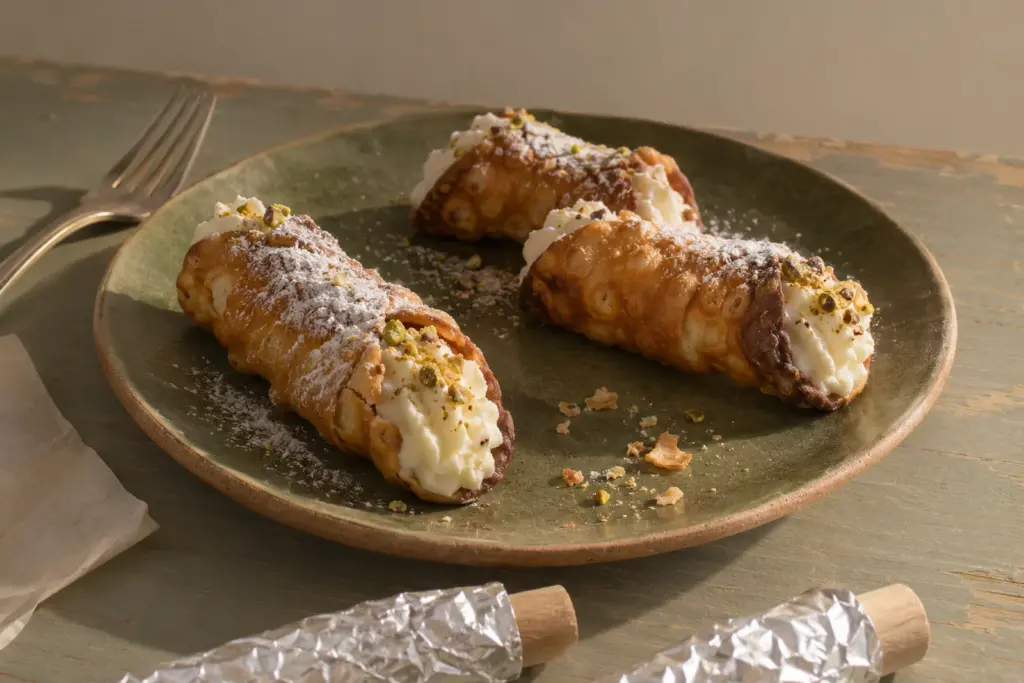
Like other tool and ingredient swaps, the right pick depends on the method, so you first decide whether you fry or bake the shells. Fried shells get stricter material rules because the form sits in hot oil for a minute or two.
What Does a Cannoli Form Do?
A cannoli form is a hollow tube, usually about an inch wide, that holds a round of dough in a tube shape while it fries and lets the finished shell slide off.
Recipes fry the shells at 350°F to 360°F, so any stand-in you pick has to stay solid and food-safe at that heat.
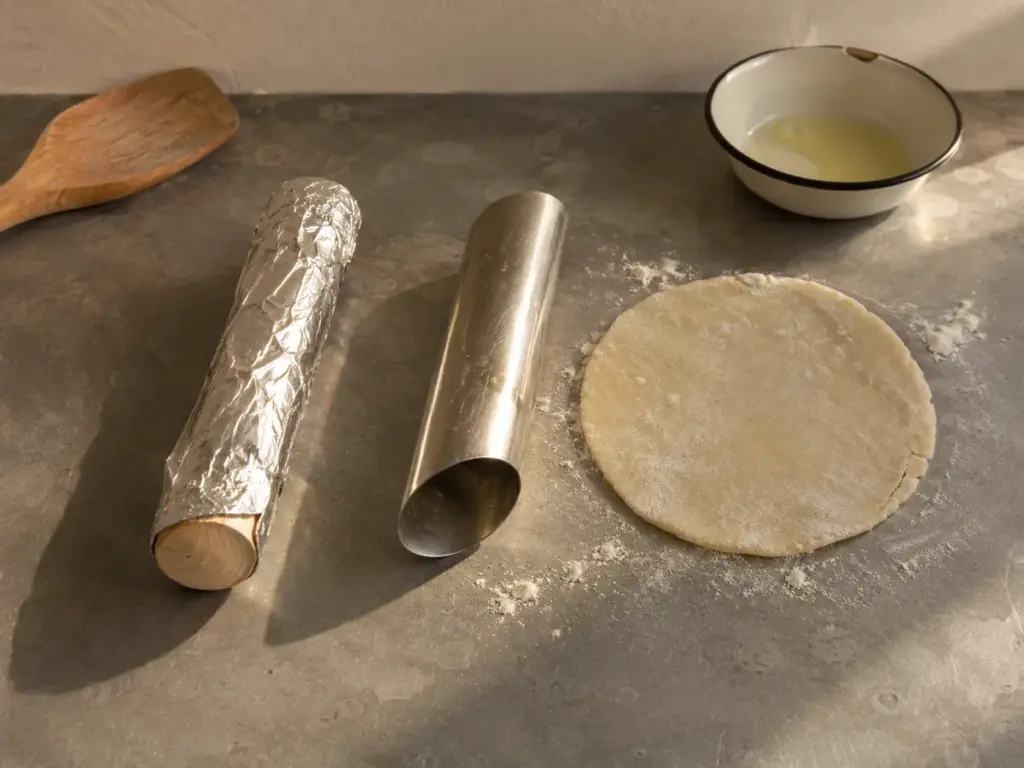
The width of the form matters along with the material, and both Crumby Kitchen and Baked Bree work with a form about 1 inch wide. If you roll the dough too thick, ThermoWorks reports that it can inflate like a pita, rip its seam and fly off the form.
5 Best Substitutes for Cannoli Forms
| Swap | Method | Check first |
|---|---|---|
| Foil-wrapped dowel | Fry | Bare wood, no paint |
| Metal utensil handle | Fry | No plastic grip |
| Foil tubes, pie dough | Bake | Sprayed, smooth foil |
| Foil tubes, phyllo | Bake | Buttered foil |
| No form, flat rounds | Fry or bake | Fill at serving |
The first two swaps keep the fried tube shell, while the last three give up the fry or the tube shape and keep the crisp pastry. Which group you choose from depends on whether you own a deep pot and a thermometer or only an oven.
1. Foil-Wrapped Wooden Dowel
A 1-inch bare wooden dowel is the form both of those recipes reach for, and Baked Bree adds that whatever you fry on has to withstand 350°F.
You can cut the dowel to 5 to 8 inches, since Dana Vento marks 5-inch pieces and Miss Vickie suggests 6 to 8. We'd sand the cut ends smooth and wash the whole dowel before its first batch.
A painted dot on a dowel end is not food safe, according to Dana Vento, who sands it off completely and wraps the dowel in foil with a light brush of unflavored coconut oil. Southern Fatty fried shells on plain dowel pieces and reports they worked fine, so the foil is an optional extra you can skip.
2. Clean Metal Utensil Handle
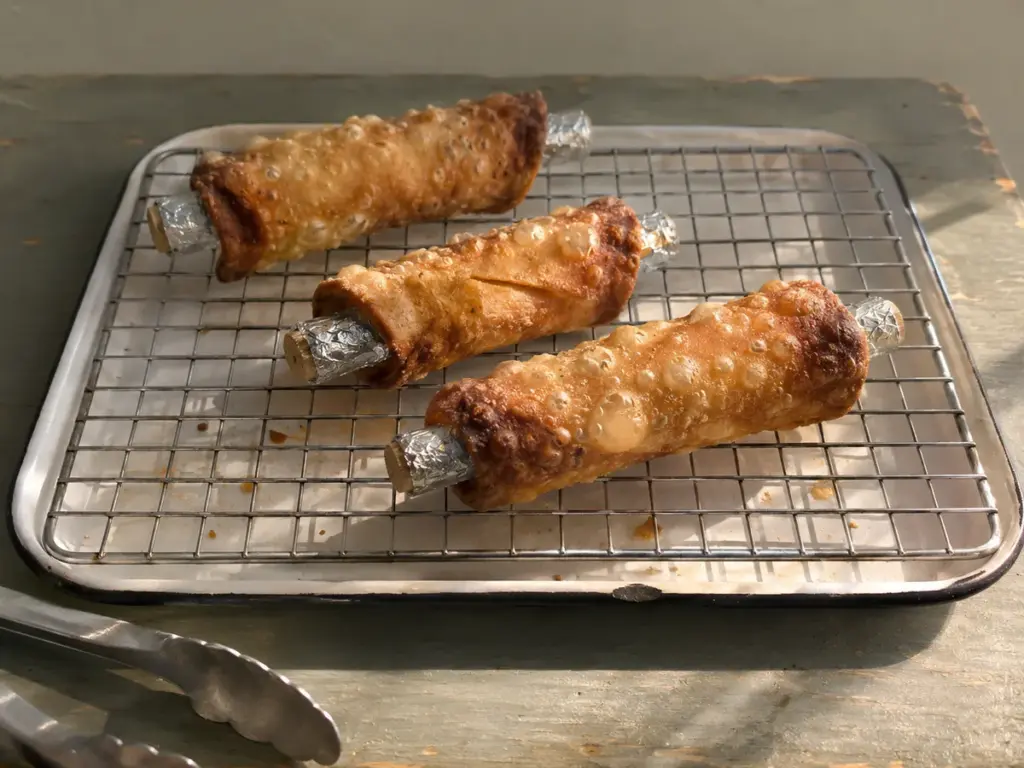
Coley Cooks says a clean, oiled metal utensil handle works in a pinch as long as it has no plastic anywhere on it. A plain steel ladle or spoon handle passes that test, but a handle with a plastic or rubber grip fails it.
Metal releases the shell well, and Southern Fatty switched to steel tubes because the shells slide off much easier.
A handle narrower than a 1-inch form gives you a narrower shell that holds less filling. If the handle is hollow, you'll want to pour out any oil that ran inside before it goes on the rack, the same warning ThermoWorks gives for real forms.
3. Foil Tubes for Baked Pie-Crust Shells
Pillsbury makes its own molds from 12-inch squares of heavy-duty foil, folded in half and rolled into tubes about ¾ inch wide, then sprays them generously so the dough does not stick.
The recipe cuts 4½-inch circles from refrigerated pie crust, wraps and pinches them closed, and bakes them at 425°F for 10 to 12 minutes.
The shells cool about 5 minutes before the foil slides out, and if you are out of spray, a thin brush of melted coconut oil does the same job.
Foil tubes belong in the oven only, since Southern Fatty fried on a rolled foil tube and got a pile of broken shells stuck in the ridges of the crumpled foil.
4. Buttered Phyllo on Foil Tubes
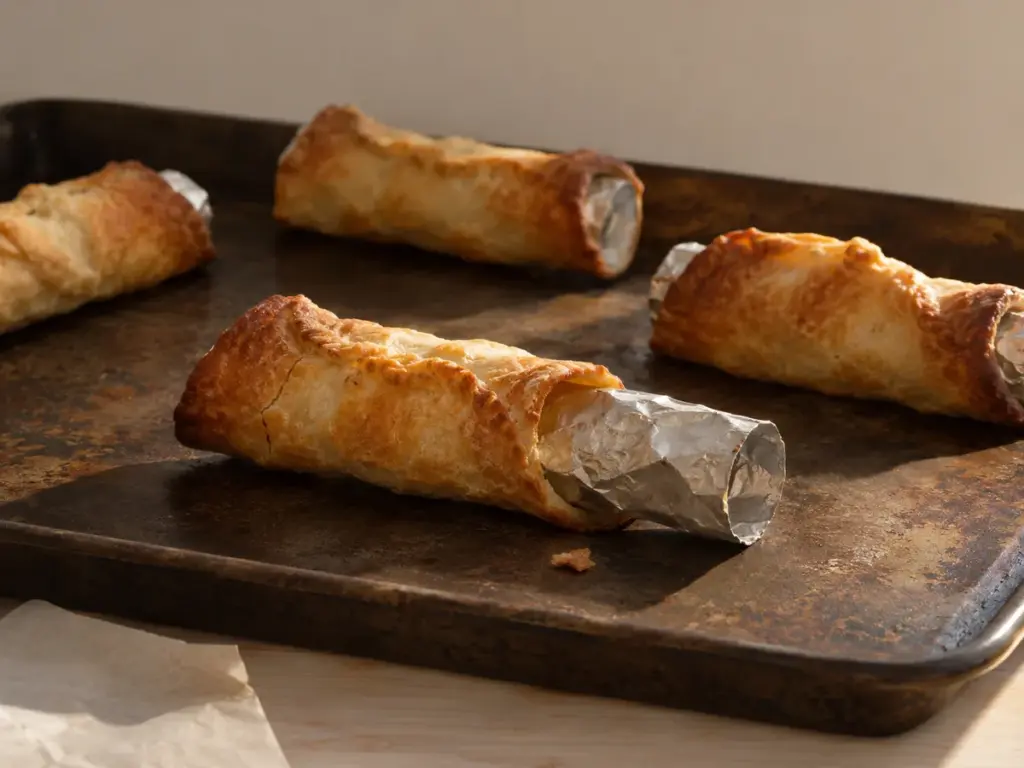
Cookist stacks several phyllo sheets with melted butter brushed on each one, then rolls them around a tightly wrapped foil tube that has a lightly buttered outside.
The shells bake on a parchment-lined tray at 360°F for 15 minutes, and if you have no parchment, a silicone baking mat works, since Silpat rates its mats at 428 to 500°F depending on the mat.
Cookist calls the finished shells crisp but not fragile. Warm phyllo still breaks easily, though, so you'll want to cool the shells before filling and fill close to serving so the layers stay crisp.
5. Flat Shells With No Form
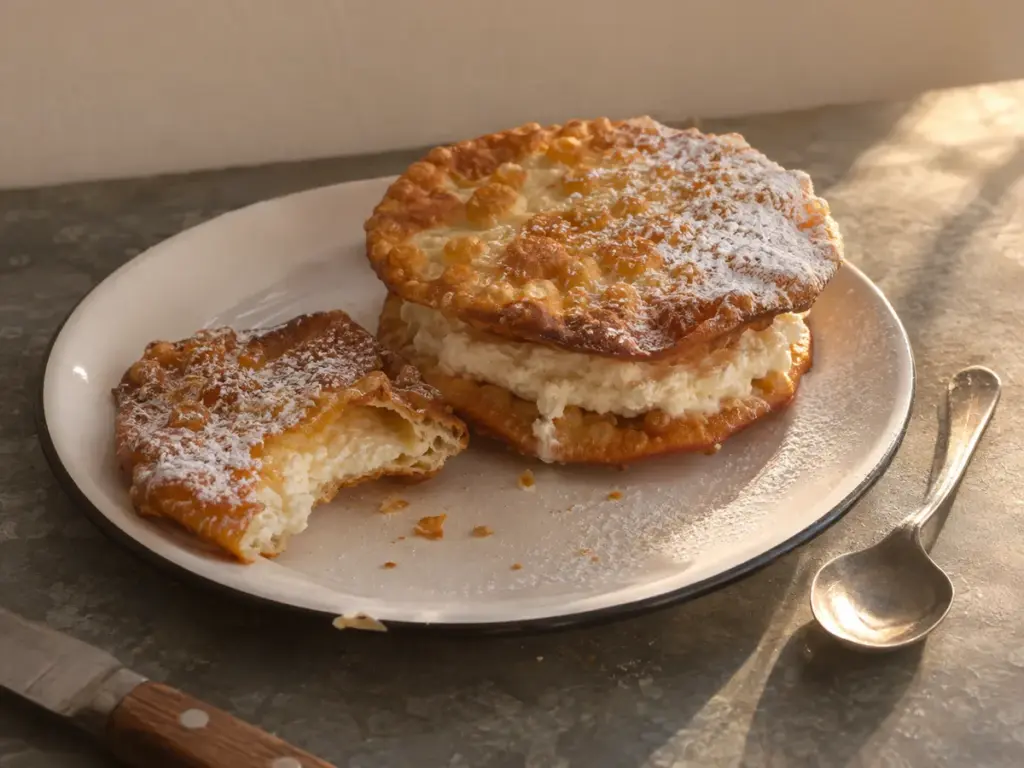
Miss Vickie's no-tube option fries the dough flat and layers the ricotta filling between two pieces, and the same page bakes flat dough at 430°F for 7 to 9 minutes.
Your flat rounds still keep the crisp, lightly sweet shell without a tube. Crumby Kitchen fills its shells no more than an hour ahead, and we'd assemble the sandwiches on the same timing.
Any pieces that break along the way still work as cannoli chips for dipping.
How to Fry Shells Around a Substitute Form
- Roll thin. Roll the dough to about 1/16 inch and cut 4½-inch rounds.
- Wrap and seal. Wrap a round on the form, brush only one edge with egg white and press the other edge over it, because brushing both edges can burst the seam.
- Heat the oil. Use a large, heavy-bottomed pot with about 3 inches of oil and bring it to 350°F, keeping it within a few degrees with a candy thermometer instead of a crumb. Lower each shell in slowly, because ThermoWorks warns about splashes and burns from the hot oil.
- Fry. Fry 1 to 2 minutes until golden and blistered, then lift out with tongs.
- Release. While warm, grip the form with tongs and slide the shell off with a kitchen towel.
According to ThermoWorks, oil that is too cool cooks the dough without puffing it, and oil that is too hot burns the shell. The crumb test does not show the real temperature, so you're better off reading a thermometer.
Which Forms Should You Skip?
You'll want to keep these common suggestions out of the pot.
- PVC pipe: its maximum operating temperature is 140°F according to Westlake Pipe, far below the 350°F oil.
- Curtain rods: they can carry chemicals or a metal coating, and Miss Vickie says to skip them if you are unsure.
- Dried cannelloni: cannelloni is a pasta made for baking, and Southern Fatty says it "supposedly" works but never tried it.
Frequently Asked Questions
Can You Make Cannoli Filling Without Ricotta?
Mascarpone works as a swap, since cannoli filling is sometimes made with it. Cream cheese and fromage blanc replace ricotta 1:1 in general cooking, but you'll want to taste the filling before you fill a whole batch.
Which Wine Goes in Cannoli Dough?
The dough in Not Quite Nigella's recipe takes dry white wine or Marsala plus vinegar, which weakens gluten so the pastry is less tough.
If you have no Marsala, Feeling Foodish says any dry white wine replaces it, and for the vinegar Not Quite Nigella allows white wine vinegar or apple cider vinegar. When you are out of both wines, sherry is the closest equal-amount swap.
Sources
- Recipe Girl, Cannoli: 350°F oil, metal tubes
- The Slow Roasted Italian, Cannoli Shells: 350 to 360°F, 1/16-inch dough, one-edge egg white seal, removing shells warm
- ThermoWorks, Cannoli Recipe and Frying Temps: oil range, thick dough inflating, oil in the form
- Coley Cooks, Cannoli Shells: metal handle with no plastic
- Baked Bree, Cannoli Shells: 1-inch dowel, 350°F heat tolerance
- Crumby Kitchen, Homemade Cannoli: foil-wrapped dowel, fill within an hour
- Dana Vento, DIY Cannoli Molds: painted dowel ends, foil and coconut oil
- Pillsbury, Cannoli: foil molds, pie crust, 425°F
- Cookist, Phyllo Dough Cannoli: phyllo on foil tubes, 360°F
- Southern Fatty, Holy Cannoli: foil tubes, dowels, steel tubes, cannelloni
- Miss Vickie, Cannoli Mold Substitutes: dowel length, curtain rod warning, flat shells
- Westlake Pipe, PVC Maximum Operating Temperature: 140°F
- Not Quite Nigella, Cannoli: wine, vinegar
- Feeling Foodish, Italian Cannoli Shells: Marsala replaced by dry white wine

Food writer at GustoMeadow. Writes ingredient substitutes, food comparisons, taste guides and storage guides for home cooks.
Storage and food-safety numbers follow USDA, FDA and university extension guidance.



