Pink Whitney is New Amsterdam's pink lemonade-flavored vodka, and reviewers call it sweet and semi-tangy.
- Listings give it 30% alcohol by volume (60 proof), versus 40% for standard 80-proof vodka.
- A 1.5 oz shot is about 0.75 of a US standard drink, and a 3 oz martini pour is 1.5.
- A bottle averages about $14 (Wine-Searcher data via Tasting Table).
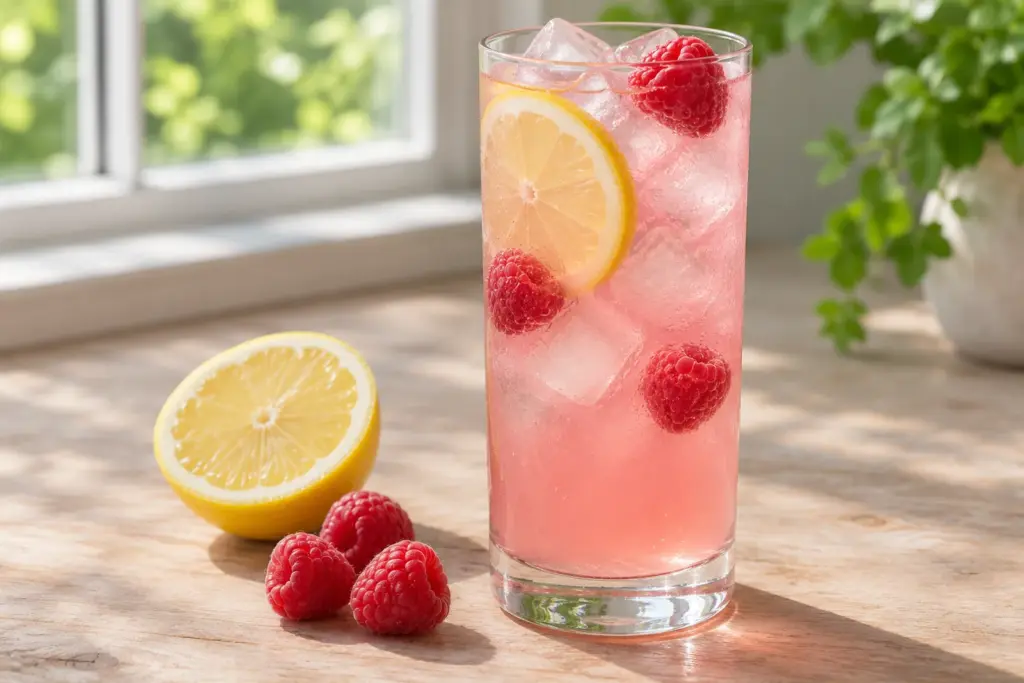
Like the other drinks people look up by flavor, Pink Whitney is easiest to picture by what it is built to resemble: pink lemonade with vodka in it. If you are deciding whether to buy a bottle, the numbers that matter are its strength, its price and how you plan to mix it.
1. What Is Pink Whitney?
Pink Whitney is a pink lemonade-flavored vodka sold under the New Amsterdam label, a brand of E. & J. Gallo Winery. The name comes from Ryan Whitney, a former NHL player who co-hosts the Barstool Sports podcast Spittin' Chiclets.
Whitney named vodka and pink lemonade as his favorite drink during a podcast ad read. New Amsterdam, the show's sponsor, turned that idea into a bottle that reached stores in 2019, according to Front Office Sports.
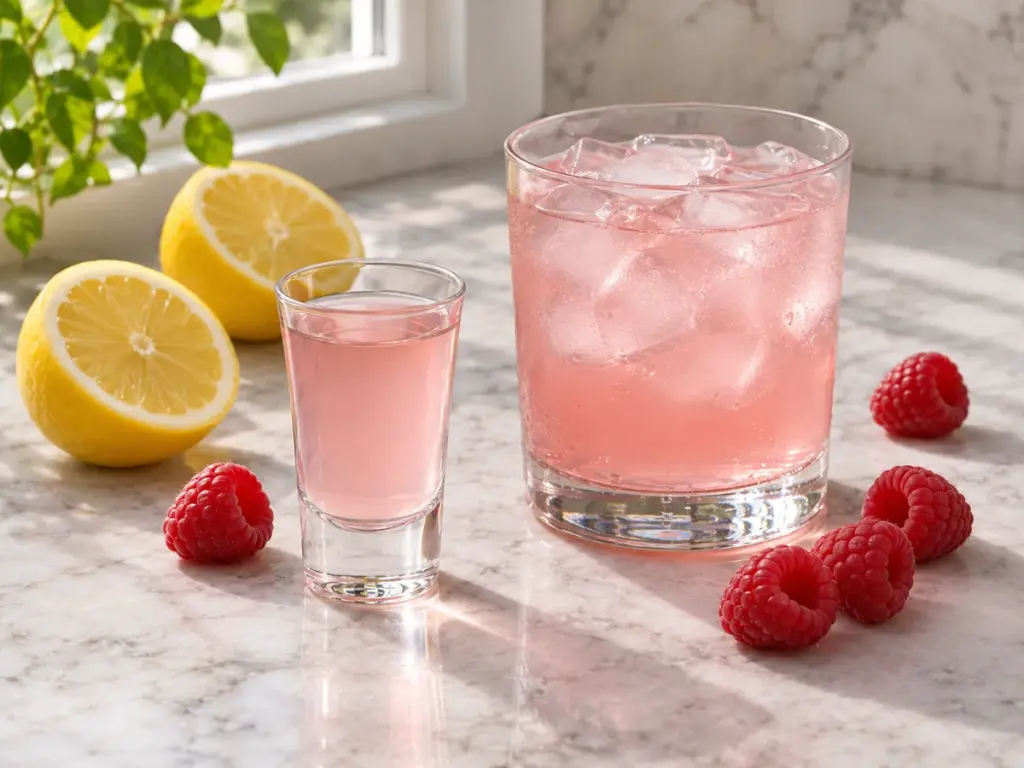
Retail listings put the bottle at 30% alcohol by volume, or 60 proof, and Tasting Table's bottle guide reports the same figure. The label on your own bottle is the final word on strength, so check it before you pour.
2. What Does Pink Whitney Taste Like?
Retailers describe it as vodka infused with pink lemonade flavor, and Tasting Table calls it a sweet and semi-tangy flavored vodka whose lemonade taste comes from cane sugar. If you already know how pink lemonade tastes, that is your closest reference point, with alcohol added behind it.
The tang in any lemonade flavor traces back to lemon, and lemon by itself tastes sour and slightly bitter. If a pour seems too sweet to you, a lemon wedge squeezed over the glass puts the sharpness back.
| Pink Whitney | Plain 80-proof vodka | |
|---|---|---|
| Alcohol by volume | 30% (60 proof) | 40% (80 proof) |
| Flavor | Pink lemonade, sweetened with cane sugar | Unflavored |
| Easiest way to serve | Chilled, or over ice with club soda | Chilled, or in a cocktail |
Standard vodkas such as unflavored vodka like Tito's are 80 proof, so Pink Whitney sits 10 percentage points lower in alcohol. It is still a full spirit, so you should count it like one.
3. How Strong Is Pink Whitney?
The National Institute on Alcohol Abuse and Alcoholism defines a US standard drink as 0.6 fl oz (14 grams) of pure alcohol, which is a 1.5 fl oz shot of 80-proof spirits. At 30% alcohol, the same 1.5 oz shot of Pink Whitney holds 0.45 fl oz of pure alcohol, or three-quarters of a standard drink.
| Pour | Pure alcohol | Standard drinks |
|---|---|---|
| 1.5 oz shot | 0.45 fl oz | 0.75 |
| 3 oz martini pour | 0.9 fl oz | 1.5 |
| 4.5 oz (three shots) | 1.35 fl oz | 2.25 |
If you want the pink lemonade look without the alcohol, use pink lemonade over ice with club soda, and try non-alcoholic vodka stand-ins in the spot where the vodka would go.
4. How Do You Serve Pink Whitney?
New Amsterdam suggests ice and club soda, or a chilled shot with no chaser, according to Tasting Table. You can start with either, then move on to a martini or a berry lemonade.
Over Ice With Club Soda
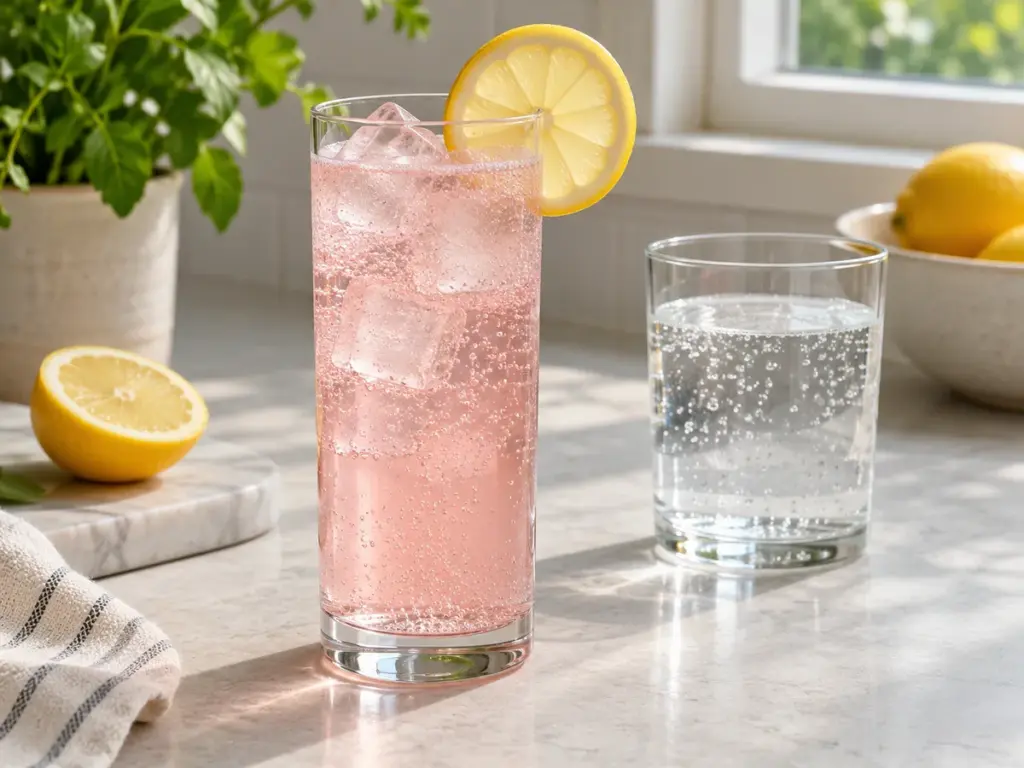
You fill a tall glass with ice, add 1.5 oz Pink Whitney, top with about 4 oz of club soda and finish with a lemon wheel. Club soda adds fizz and a faint mineral taste with no added sugar, so the drink stays close to the flavor of the vodka itself.
As a Chilled Shot
You chill the bottle and the glass first, then pour 1.5 oz and serve it with no mixer. Cold is the whole technique here, because you will notice the sweetness of a room-temperature pour far more than a chilled one.
As a Pink Whitney Martini
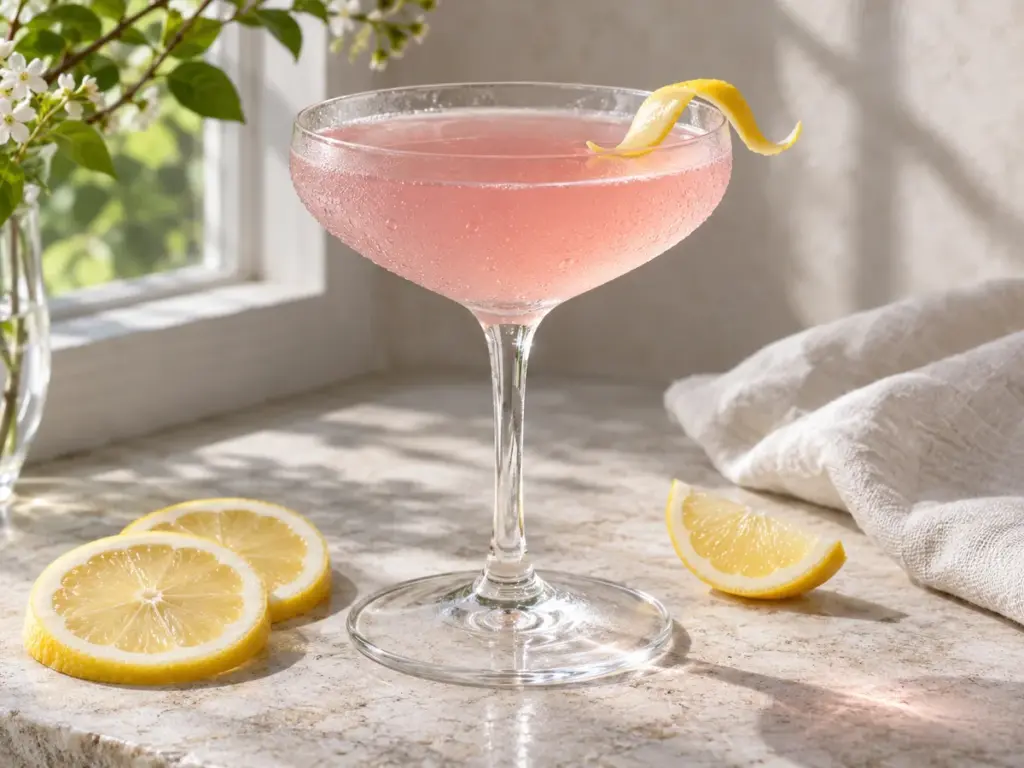
You chill the glass, fill a shaker with ice, and add 3 oz Pink Whitney. Shake or stir until the shaker feels cold, strain into the glass and garnish with a strip of lemon peel. That pour is 1.5 standard drinks, so pour 1.5 oz instead if you want one drink.
As a Strawberry Lemonade
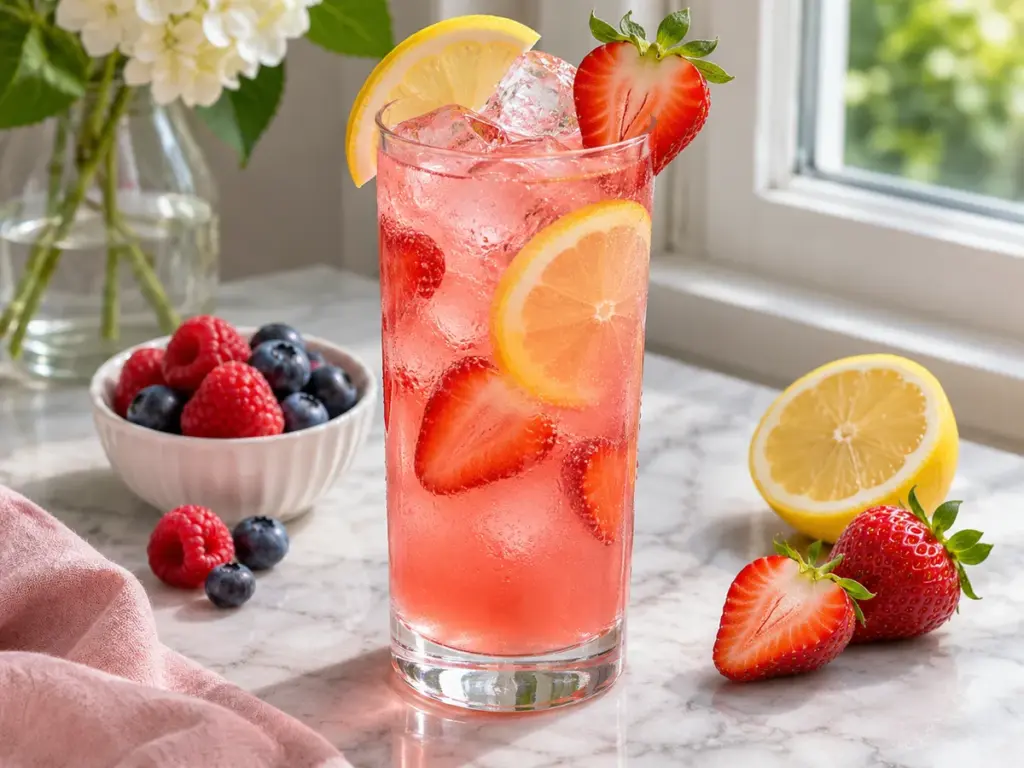
- Prep the fruit Hull and slice 3 to 4 strawberries and drop them in a tall glass with ice.
- Add the base Pour in 1.5 oz Pink Whitney, or 3 oz if you want the stronger original pour.
- Top it Add 1 oz of club soda and stir once.
- Garnish Finish with a whole strawberry or a lemon slice.
Berries vary a lot in sweetness, and ripe strawberries can run from tart to very sweet, so taste one before it goes in your glass. Raspberries, blueberries, blackberries and peaches all work as stand-ins for the strawberries.
5. Which Mixers Go With Pink Whitney?
Tasting Table lists lemon-lime sodas and lemonade as common mixers, and you can pick other drinks by whether they match or balance the lemonade flavor.
- Lemon-lime soda keeps the citrus theme, and Sprite's lemon-lime flavor adds its own sugar on top of a vodka that is already sweetened.
- Cranberry juice brings tartness and a deeper pink color, and cranberry juice’s tartness offsets some of the sweetness in your glass.
- Club soda adds fizz and nothing else, which suits you if the vodka is already sweet enough for your taste.
6. Is Pink Whitney Right for You?
- You like pink lemonade and want a vodka version
- You want a drink that needs only ice and club soda
- You prefer an 80-proof-or-lower bottle
- You want a dry, spirit-forward drink, like unflavored vodka
- You avoid added sugar, since the taste comes from cane sugar
- You do not drink, or you are driving later
Sources
- NIAAA, "What Is A Standard Drink?" (standard drink definition and the 1.5 fl oz, 80-proof example)
- Tasting Table, "Pink Whitney By New Amsterdam: The Ultimate Bottle Guide" (30% ABV, 60 proof, flavor description, average price, serving suggestions)
- Front Office Sports, Barstool and New Amsterdam vodka launch (origin on Spittin' Chiclets, 2019 release)
- Wikipedia, "Ryan Whitney (ice hockey)" (2019 collaboration, E. & J. Gallo Winery brand)
- Total Wine, New Amsterdam Pink Whitney listing (pink lemonade flavor description, 30% ABV)

Food writer at GustoMeadow. Writes ingredient substitutes, food comparisons, taste guides and storage guides for home cooks.
Storage and food-safety numbers follow USDA, FDA and university extension guidance.