
Use sambal oelek with brown sugar and fish sauce, which adds back the sweet and salty sides plain chili paste lacks.
- Start with 1 tablespoon sambal oelek, 1 teaspoon brown sugar and ½ teaspoon fish sauce per tablespoon.
- Sambal terasi is closest, but it has shrimp paste.
- Nam prik pao and sambal terasi both contain shrimp paste, so skip them with a shellfish allergy.
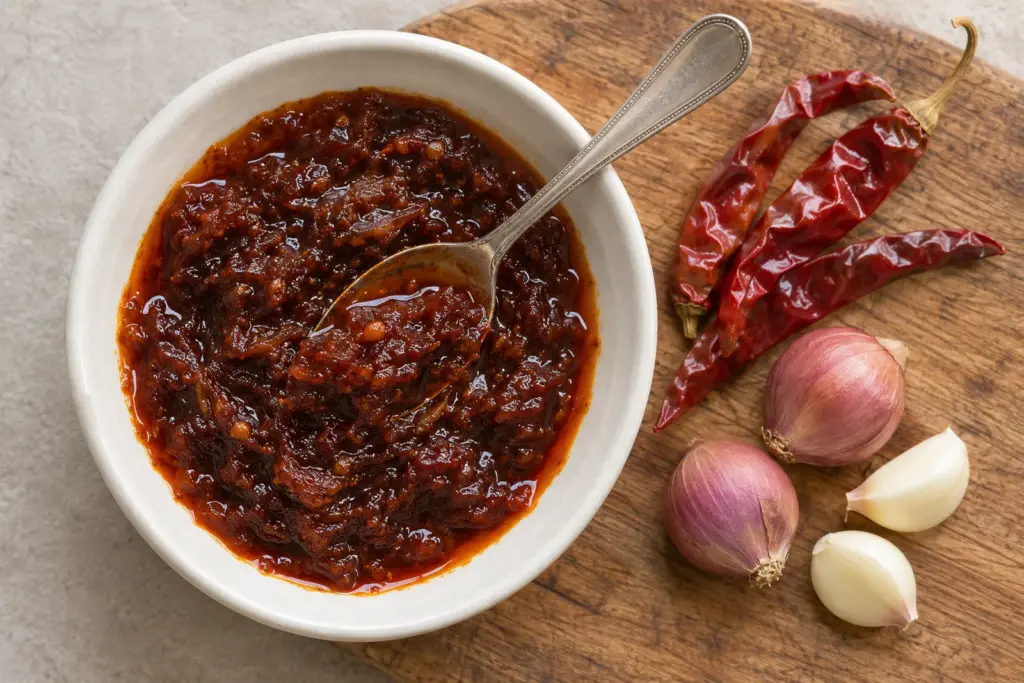
Nam prik pao is a Thai chili jam, so a good ingredient swap has to bring heat, sweetness and savory depth together. Most chili sauces in your fridge carry only the heat, which means each swap below needs one small fix before it can stand in for the jam.
What Does Nam Prik Pao Do in a Recipe?
Nam prik pao starts with charred dried chilies, shallots and garlic. A cook grinds them with shrimp paste, fish sauce, palm sugar and tamarind, then cooks the paste in oil until the oil begins to separate. The finished jam is sweet, savory, spicy and a little smoky, with a thick body and a film of red oil.
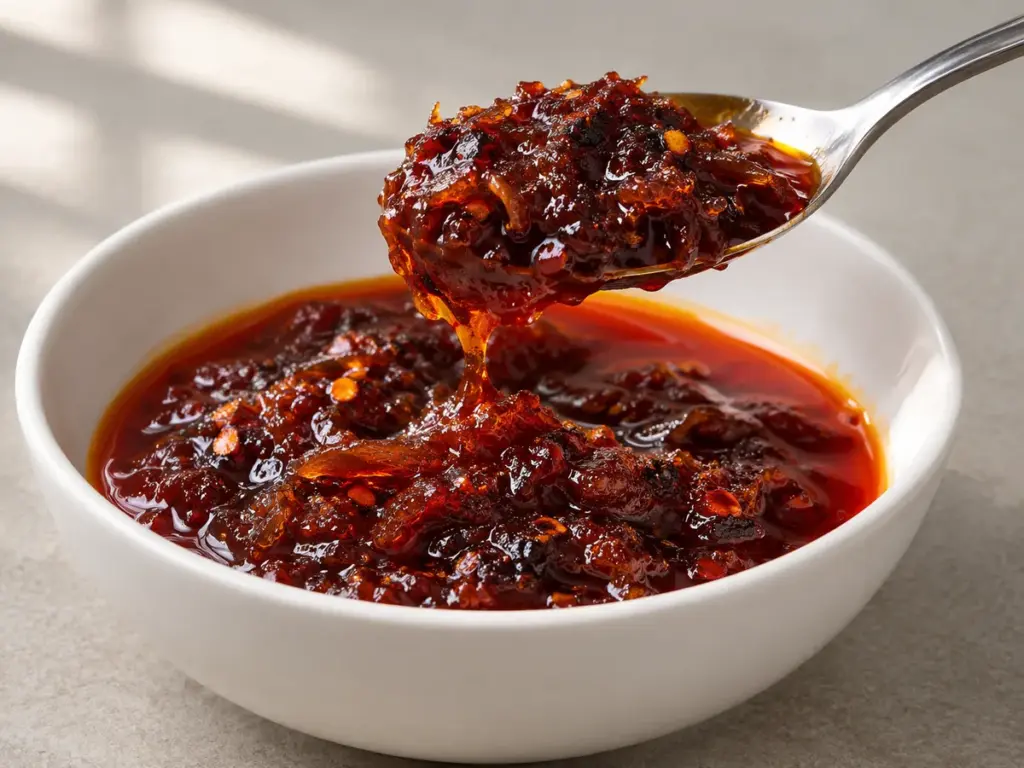
In a cooked dish it does four jobs at once, and the job your dish needs most decides which swap you pick:
- Heat from the dried chilies.
- Sweetness from palm sugar, which balances the fish sauce and the sour tamarind.
- Smoky, savory depth from the charred aromatics and the shrimp paste.
- Oily body that coats noodles and rice.
Thai cooks add it to most versions of tom yum soup, stir it into stir-fries, and serve it with fresh vegetables. A swap only has to match the one or two jobs your dish leans on.
6 Best Substitutes for Nam Prik Pao
The amounts below are per tablespoon of nam prik pao. They are starting points to taste from, not published ratios.
| Swap | Start With | Best For |
|---|---|---|
| Sambal oelek mix | 1 Tbsp, 1 teaspoon brown sugar, ½ teaspoon fish sauce | Stir-fries, soup |
| Sambal terasi | 1 Tbsp, taste first | Soup, dips |
| Gochujang | 1 Tbsp, drops of fish sauce, lime | Marinades, stir-fries |
| Chili garlic sauce | 1 Tbsp, ½ teaspoon sugar | Noodles, stir-fries |
| Chili crisp | 1 Tbsp, ½ teaspoon sugar | Fried rice, toppings |
| Sriracha | 1 Tbsp, ½ teaspoon oil, drops of fish sauce | Quick sauces |
The sambal oelek mix and sambal terasi come closest, while chili crisp and sriracha need the most adjusting. Each swap follows below with the fix that matters.
1. Sambal Oelek With Sugar and Fish Sauce
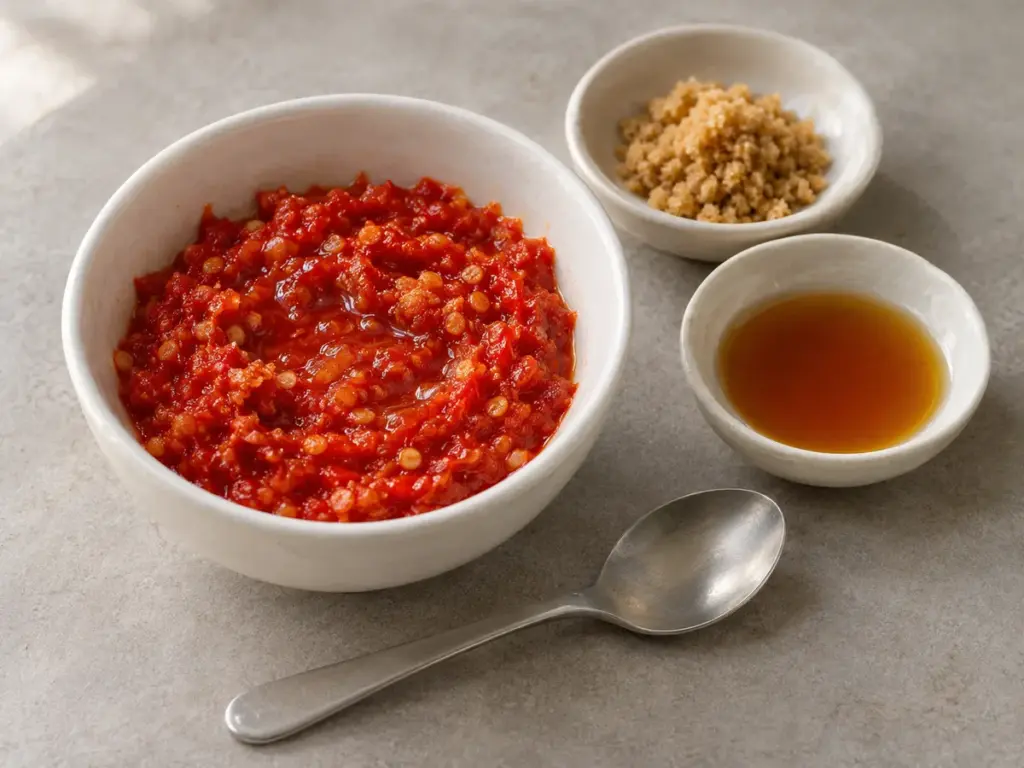
Sambal oelek is ground red chilies, salt and vinegar, so you get heat and a hint of tang but no sugar, smoke or fish. Stir in 1 teaspoon brown sugar and ½ teaspoon fish sauce for each tablespoon, and add ½ teaspoon neutral oil if the dish looks dry.
This mix fits stir-fries and tom yum, where it cooks along with everything else. Because it lacks the charred shallot and shrimp paste depth, taste it once it has cooked into the dish and add a pinch more sugar if you notice the vinegar. Some brands already contain garlic, so go lightly on any extra garlic you add.
If nobody at your table has a shellfish allergy, a little shrimp paste stirred in gets you closer still.
2. Sambal Terasi
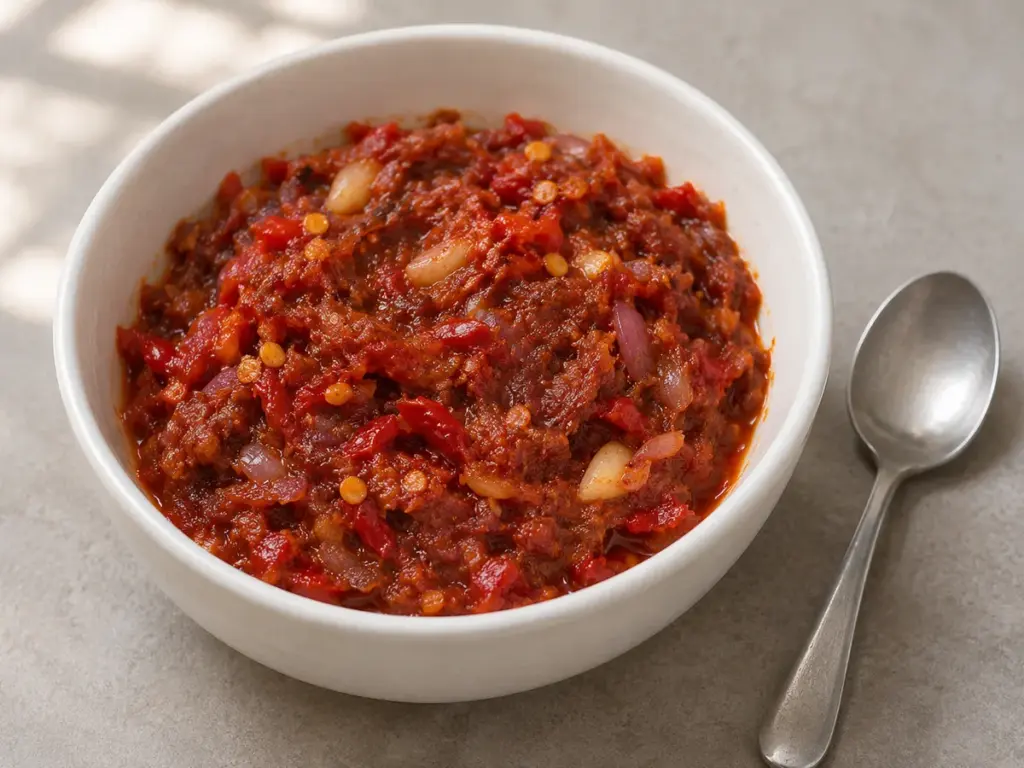
Sambal terasi is a chili sambal made with shrimp paste (terasi or belacan), garlic and shallot, and the cook fries or burns the shrimp paste first to release its aroma. Nam prik pao gets its savory backbone from the same ingredient, so this is the closest match in flavor.
Start with 1 tablespoon for each tablespoon of nam prik pao. Indonesian sambals range from mild to extremely hot, so taste your jar before you add the full amount.
Its sourness often comes from tomato rather than the tamarind or lime in the jam, so add ½ teaspoon of sugar if the dish needs sweetness. You will notice a coarser texture, because traditional sambals are pounded, and you may need to look in an Asian grocery, since Western supermarkets rarely stock it.
3. Gochujang
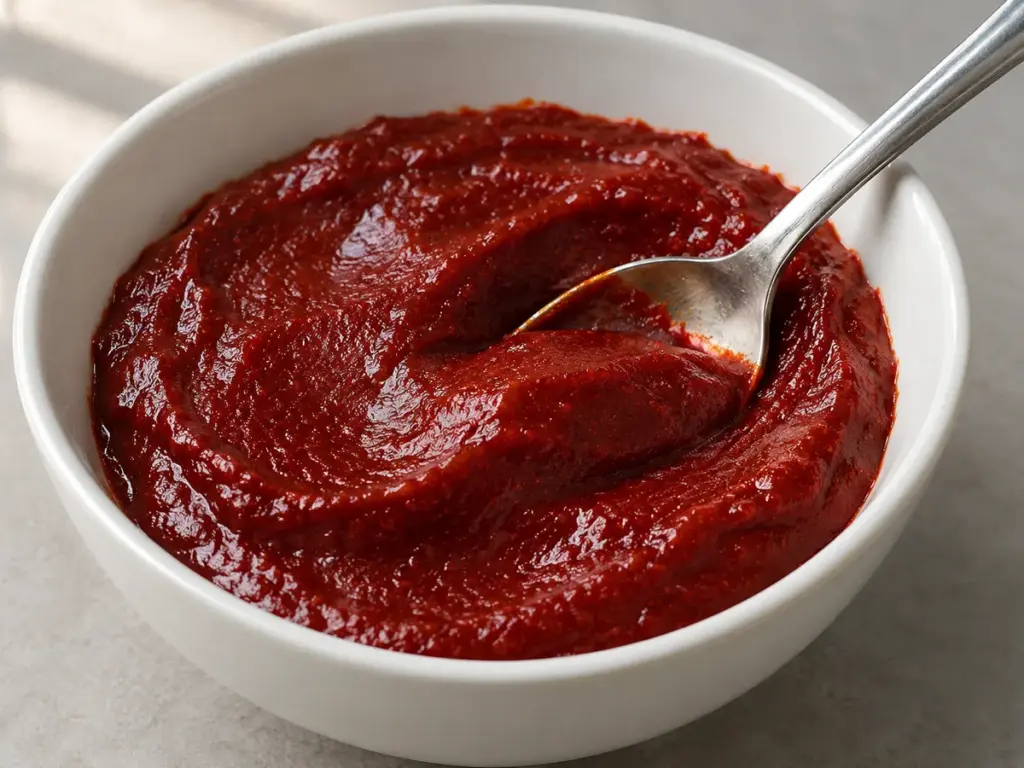
Gochujang is a Korean paste of chili powder, glutinous rice, fermented soybean powder, barley malt powder and salt. The rice starch turns sweet, so the paste is savory, sweet and spicy at once. It handles the sweetness job without sugar from you, while a raw chili garlic sauce would need it added.
Use 1 tablespoon per tablespoon, with a few drops of fish sauce and a squeeze of lime for the salty and sour edges. It is stickier than the jam, so expect a thicker sauce. It tastes of fermented soybeans instead of smoke and shrimp, so keep it for stir-fries, marinades and fried rice, and pick another swap for tom yum.
4. Chili Garlic Sauce
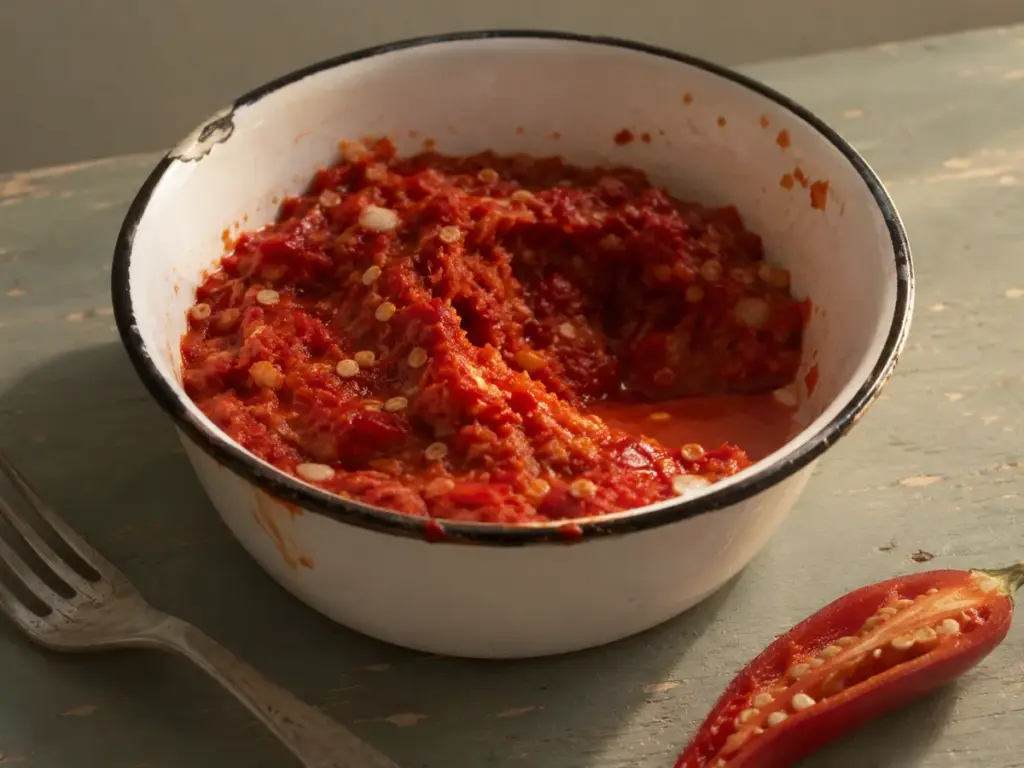
Chili garlic sauce is chopped red chilies and garlic, and the common supermarket jar adds vinegar and salt. Garlic is already part of nam prik pao, so this sauce gets the heat and garlic right but lacks the sweetness, smoke and shrimp.
Take 1 tablespoon and add ½ teaspoon sugar for each tablespoon of jam. Cook it in the pan until you no longer smell raw garlic, and finish with a few drops of fish sauce if your dish tastes flat. It suits noodles and stir-fries, where you want the looser sauce to coat everything.
5. Chili Crisp
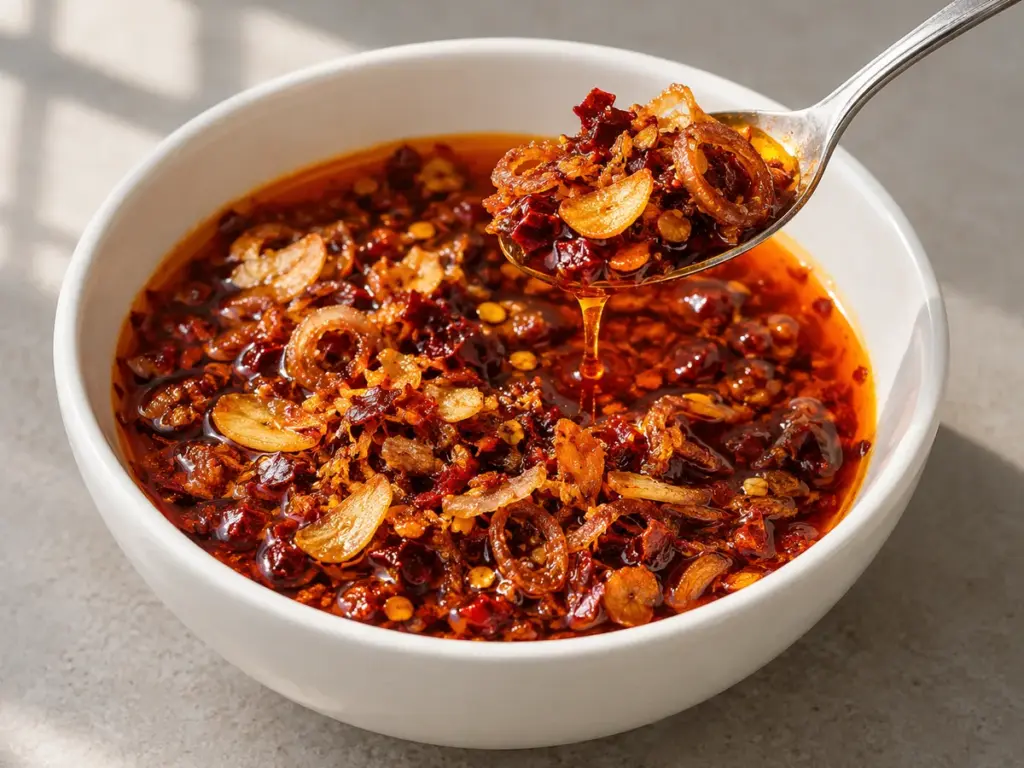
Chili crisp is a condiment of fried chili and aromatics such as garlic, onion and scallion in oil, with more crunchy bits than oil. Sichuan pepper is a common ingredient and gives some jars a numbing heat, so read the label if you do not want that.
Take 1 tablespoon with a little of its oil and add ½ teaspoon sugar for each tablespoon of nam prik pao. Chili crisp is normally added just before serving, so stir it in at the end to keep the bits crunchy. On fried rice and noodles you get a crunchy topping rather than a smooth jam, so choose it when your recipe only needs heat and oil.
6. Sriracha
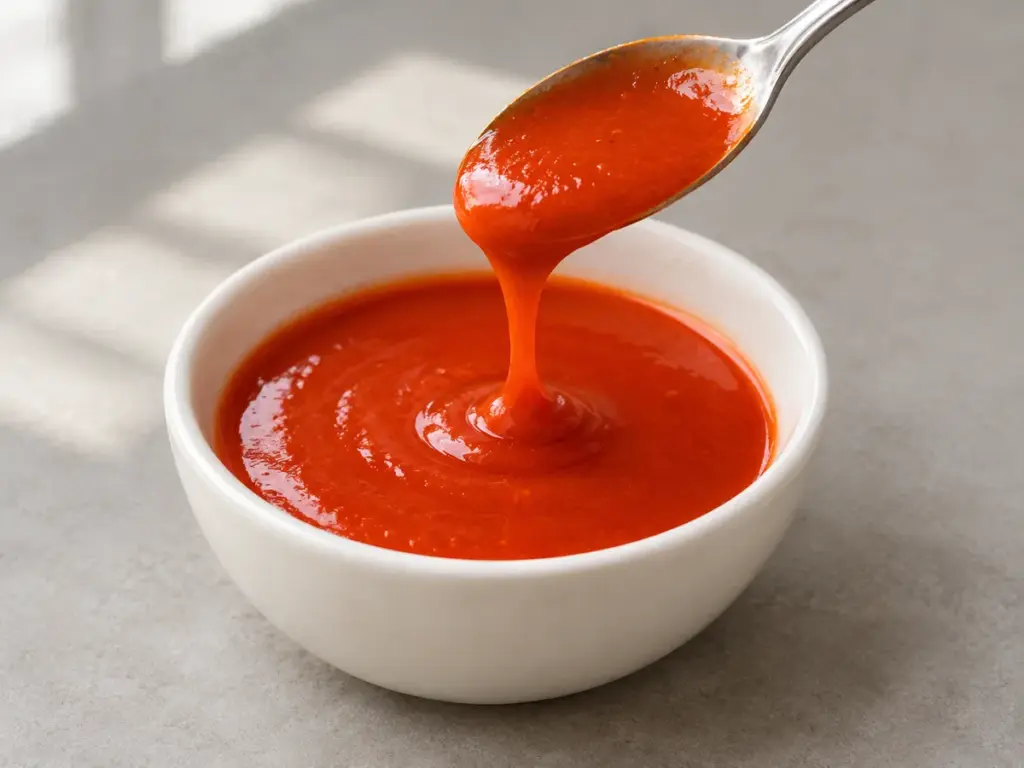
Sriracha is a paste of chili, vinegar, garlic, a sweetener and salt. Thai versions tend to be tangier and runnier than non-Thai ones. It is the easiest swap to find and gives heat, a little sweetness and garlic in one squeeze, but it is thin and sharp where nam prik pao is thick and oily.
Use 1 tablespoon sriracha, ½ teaspoon oil and a few drops of fish sauce for each tablespoon. Cook it in the pan until the sharp vinegar smell fades before you add other liquids. Since sriracha already has a sweetener, skip the extra sugar and keep it to quick sauces and dips, because in soup its vinegar tang stands out.
Does Nam Prik Pao Contain Shellfish, and What About the Swaps?
The other swaps are built on chilies, garlic, soybeans or vinegar, and US labeling rules require packaged foods to name crustacean shellfish, fish, wheat and soy, so you can check each jar. Each swap changes one more allergen or diet point:
- Fish sauce in the mixes adds fish. Leave it out for a fish-free or vegan version.
- Gochujang contains soybeans and, in traditional recipes, barley malt, so it is not gluten-free.
- Chili crisp, chili garlic sauce and sriracha vary by brand, so read each label.
Fish and shellfish are not closely related, and your allergist decides whether you need to avoid both. Nam prik pao is not vegan, because it contains fish sauce and shrimp paste, while plain sambal oelek is vegan. Sambal oelek with sugar and a little oil, and no fish sauce, is the plant-based route, though it has less savory depth.
Can You Make Nam Prik Pao at Home?
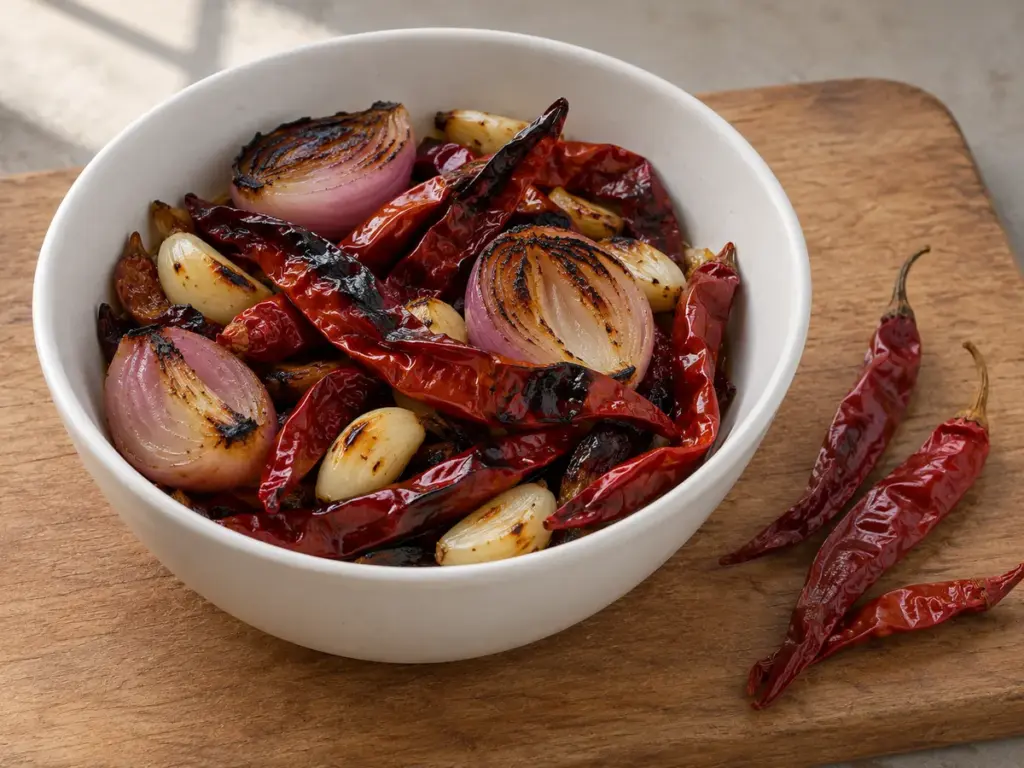
Yes, and the cooking itself is short. This version from Hungry in Thailand keeps up to 1 month in the fridge:
- Char the base. Grill 6 dried chilies plus ½ ounce of large dried chilies, 1 ounce of garlic and 2 ounces of sliced shallots until lightly charred and fragrant.
- Blend. Process them with ½ tablespoon shrimp paste, ½ tablespoon fish sauce, 1 tablespoon palm sugar, 1 tablespoon tamarind paste and ½ teaspoon salt until smooth.
- Cook in oil. Stir the paste in ½ cup of oil over low to medium heat for about 2 minutes, until the oil begins to separate from the paste.
- Cool and store. Cool it completely, then refrigerate it in a clean jar for up to 1 month.
America's Test Kitchen skips the shrimp paste. It fries shallots, garlic and 10 dried arbol chilies in oil, then simmers them with brown sugar, lime juice and fish sauce into about ¾ cup of jam that keeps up to 1 month in the fridge. That version has no shellfish, but the fish sauce keeps it from being fish-free or vegan.
That recipe uses brown sugar for palm sugar and lime juice for tamarind. If you would rather keep the tamarind, other tamarind swaps work too. Without shrimp paste the savory note is lighter, so add the fish sauce a few drops at a time, or try one of the shrimp paste replacements that contain no shellfish, though most are fish-based.
Sources
- Hungry in Thailand, Thai Chili Paste (Nam Prik Pao)
- America's Test Kitchen, Thai Chili Jam (Nam Prik Pao)
- Wikipedia, Nam phrik phao and Wikipedia, Tom yum
- PepperScale, What's a Good Nam Prik Pao Substitute?, PepperScale, Nam Prik Pao vs Sambal Oelek and PepperScale, Chili Garlic Sauce
- Wikipedia, Sambal and Food Republic, What Is Sambal Oelek
- Wikipedia, Gochujang
- Wikipedia, Chili crisp
- Wikipedia, Sriracha
- FARE, Shellfish allergy
- FDA, Food Allergies

Food writer at GustoMeadow. Writes ingredient substitutes, food comparisons, taste guides and storage guides for home cooks.
Storage and food-safety numbers follow USDA, FDA and university extension guidance.



