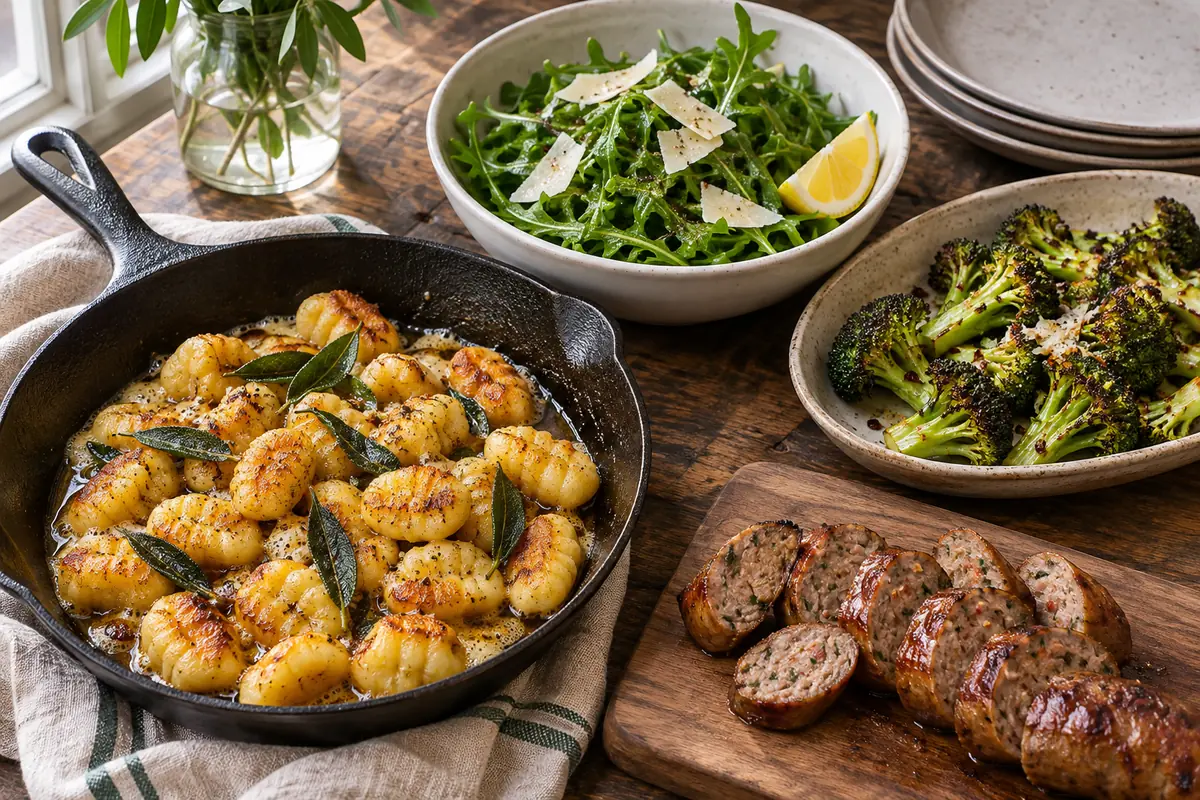
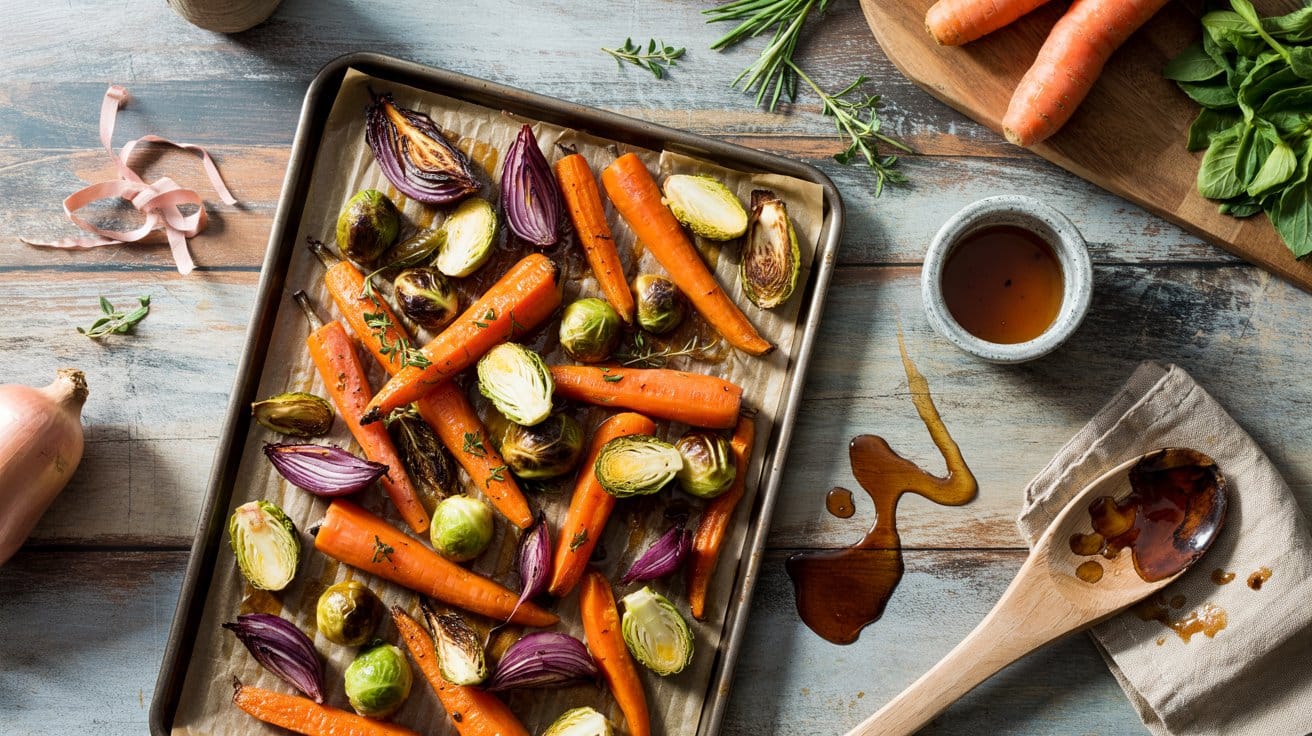
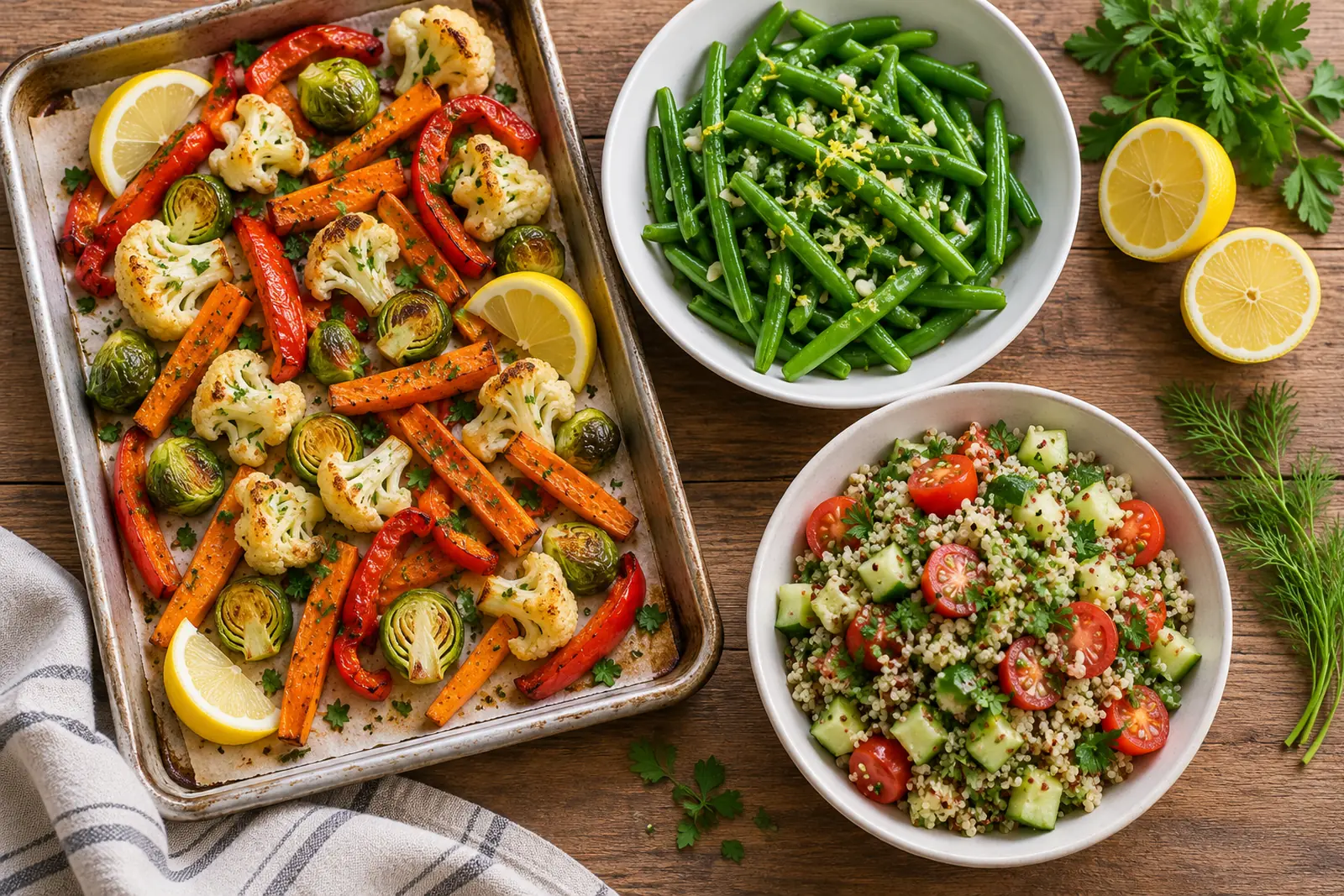
Cauliflower, potatoes, peas and spinach are the four vegetables we'd cook into butter chicken sauce first.
- Firm vegetables like potatoes and carrots go in before the chicken.
- You stir in peas and spinach in the last minute or two.
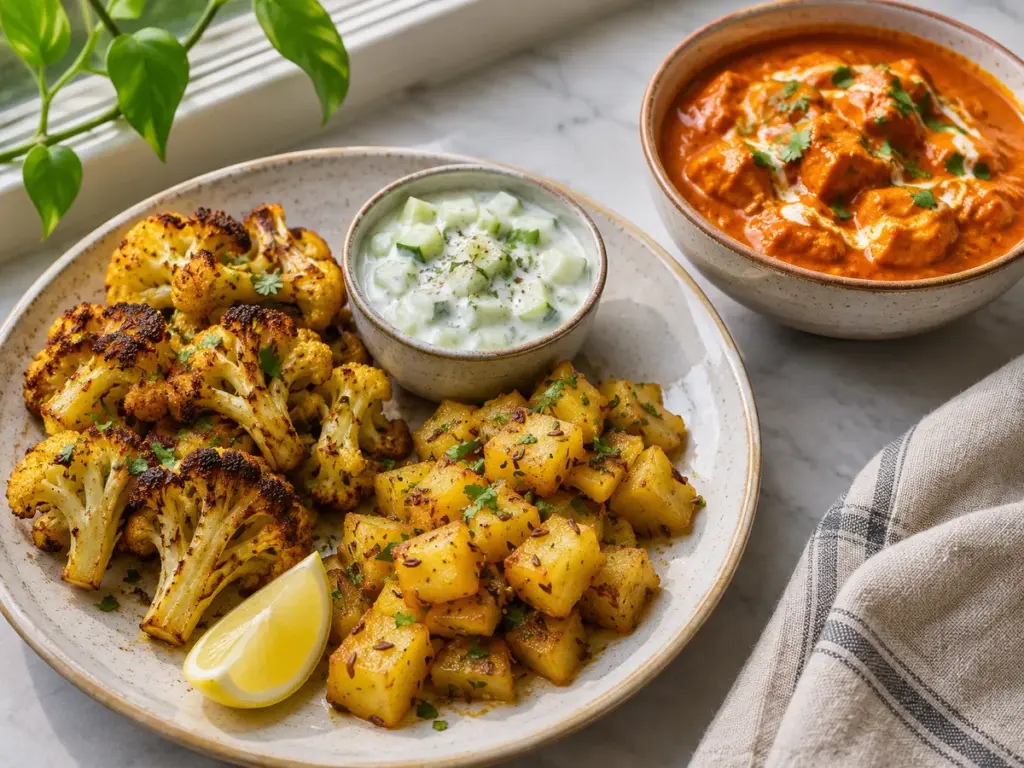
- On the side, roasted cumin cauliflower and aloo jeera suit the creamy gravy.
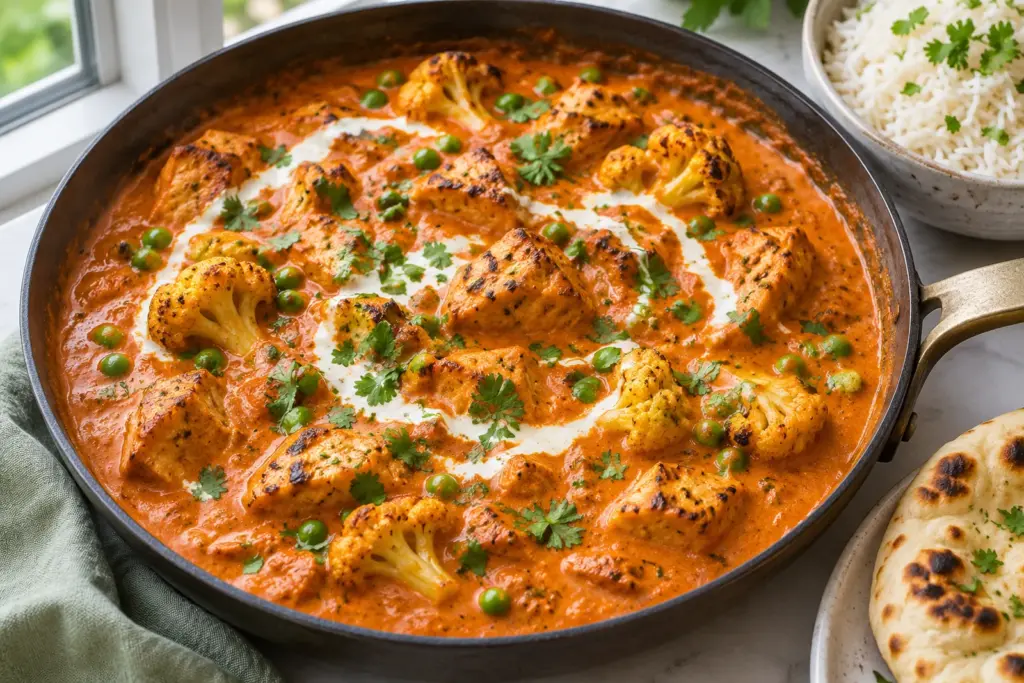
Butter chicken needs no vegetables, so this list covers two jobs: vegetables cooked inside the sauce and vegetables served next to it.
The cut size and the moment each one goes in decide whether you get tender pieces or a watery pot. For the side, something fresh or crisp balances the heavy sauce, the same idea behind side dishes for other rich mains.
Do You Put Vegetables in Butter Chicken?
Butter chicken, or murgh makhani, is chicken in a sauce of tomato, butter, garlic, ginger and spices. Online recipes usually add no vegetable beyond the tomatoes, onion and garlic.
Peas, carrots and cauliflower are home-cook additions to the traditional recipe, so the ones you add come down to the meal you want.
Butter chicken tastes mild, creamy and lightly sweet, with tomato for tang. Vegetables that fit it either soak up the sauce (cauliflower, potatoes, mushrooms) or add a fresh, slightly bitter note (spinach, fenugreek, peppers).
Where they go depends on whether you want a one-pot meal or a smooth sauce:
- It suits a one-pot meal.
- Cauliflower, potatoes, peas, spinach and peppers all work here.
- It suits a smooth sauce.
- Roasted cauliflower, cumin potatoes and raita are the picks.
- You cook them apart, then spoon sauce over.
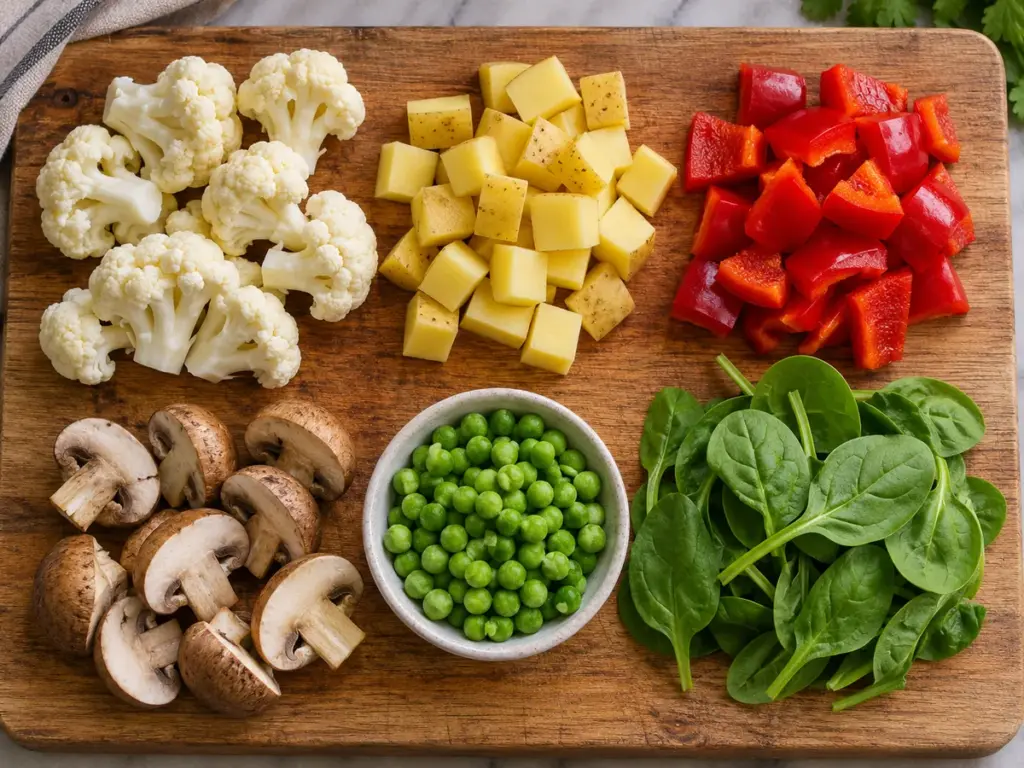
When Does Each Vegetable Go Into the Pot?
Each vegetable has its own cut size and its own moment to go in. The timing assumes a sauce at a gentle simmer and works whether the chicken cooks in the sauce or goes in already cooked.
| Vegetable | Cut | Goes in |
|---|---|---|
| Potatoes | Half-inch cubes | First, before the chicken |
| Carrots | Quarter-inch coins | With the potatoes |
| Cauliflower | 1.5-inch florets | After the potatoes, until fork-tender |
| Bell pepper | 1-inch chunks | Near the end |
| Mushrooms | Halved, browned first | Near the end |
| Peas | Whole | Last couple of minutes |
| Spinach | Baby leaves | Last minute or two |
12 Best Vegetables for Butter Chicken
1. Cauliflower
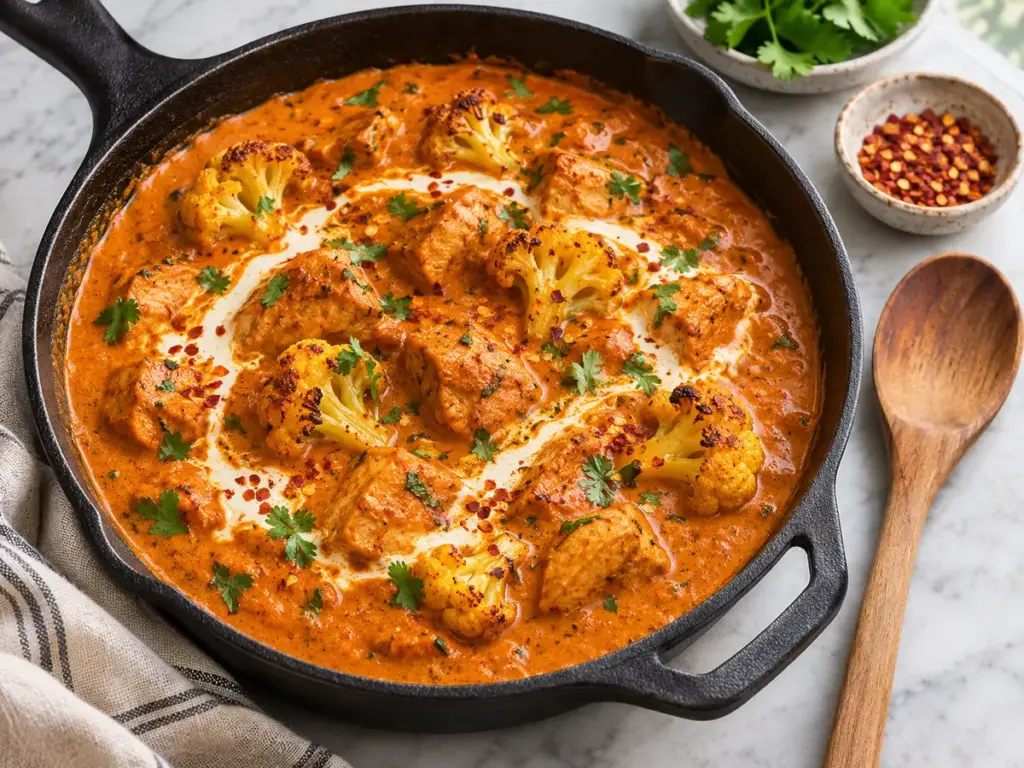
Cauliflower's mild, slightly nutty flavor does not fight the spices, and the florets soak up sauce.
You cut 1.5-inch florets, then either brown them in the chicken pan first for a nutty roasted edge or simmer them raw in the sauce until a fork slides in.
2. Potatoes
A waxy potato such as Yukon Gold or a red potato holds its shape in the pot, while a floury russet breaks apart and thickens the sauce into a paste.
You cut half-inch cubes and add them first, because they simmer longer than any other vegetable here, then you test one with a fork.
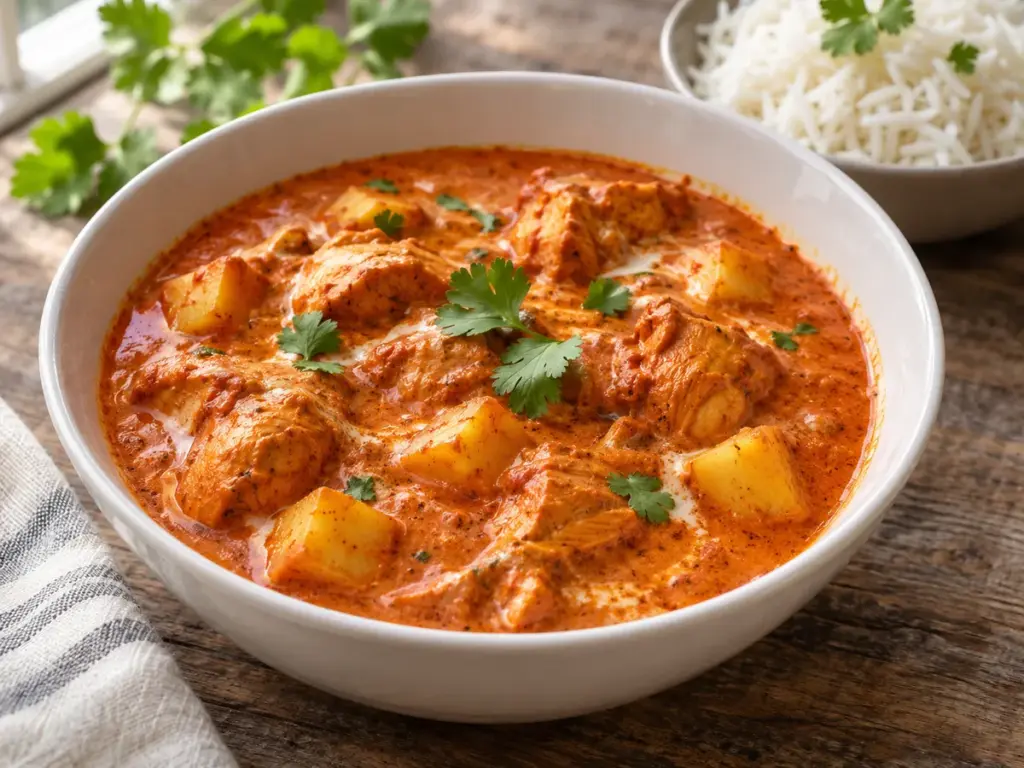
If the chicken is already cooked, you can boil the cubes in salted water until nearly tender and let them finish in the sauce. You get aloo jeera, a dry side, by frying the cubes with cumin seeds until golden.
3. Peas
Peas bring sweetness, and along with spinach they need the shortest time in the pot.
You stir them in after the sauce is finished and warm them for a couple of minutes, because longer cooking turns them gray and mushy. Frozen peas go soft fastest, so you add them last.
4. Spinach
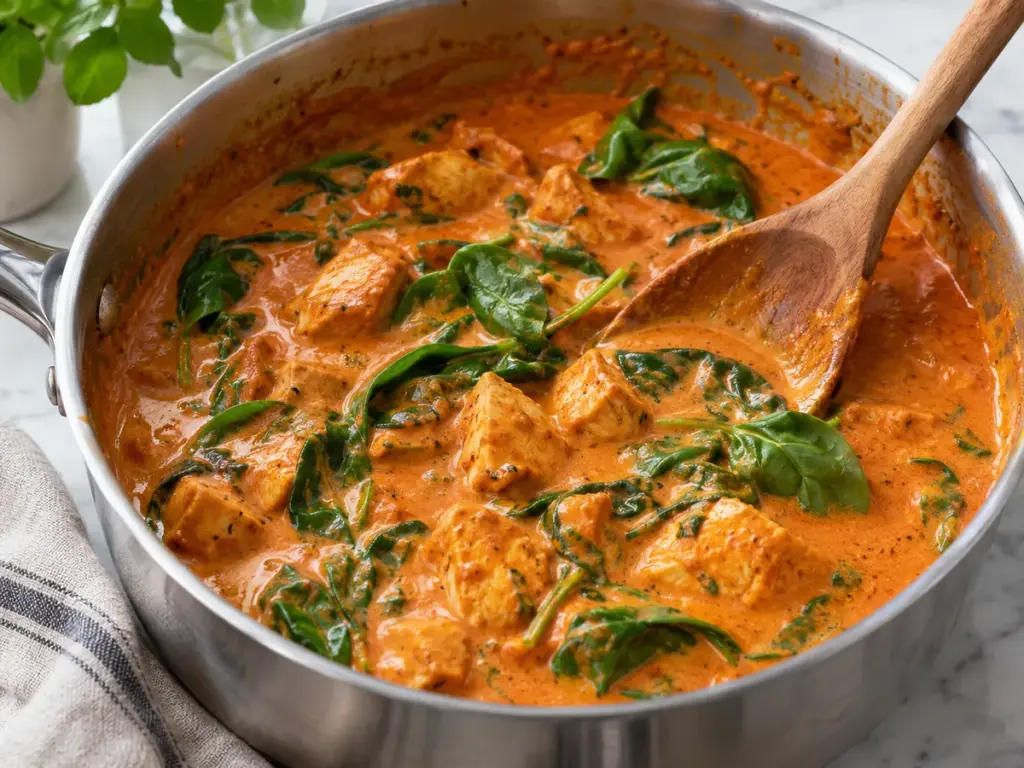
Spinach goes in at the very end. A few large handfuls of baby spinach wilt in a minute or two.
If you add it earlier, it turns the orange sauce a dull brown-green, so you take the pan off the heat as soon as the leaves collapse.
Wikipedia's spice list for the dish includes dried fenugreek leaves (kasuri methi), which you crush between your palms at the end for the faintly bitter, maple-like finish. If you cannot find them, chopped cilantro, parsley or celery leaves fill in.
5. Carrots
Carrots add sweetness and orange color, and the sauce is already lightly sweet, so you can cut back on any sugar in the recipe.
You slice them into quarter-inch coins so they soften beside the potatoes, and you have two routes:
- You can cook them with the onions and puree them into the sauce, which thickens it and hides the pieces.
- If you simmer coins in the pot and leave them whole, the vegetable stays visible.
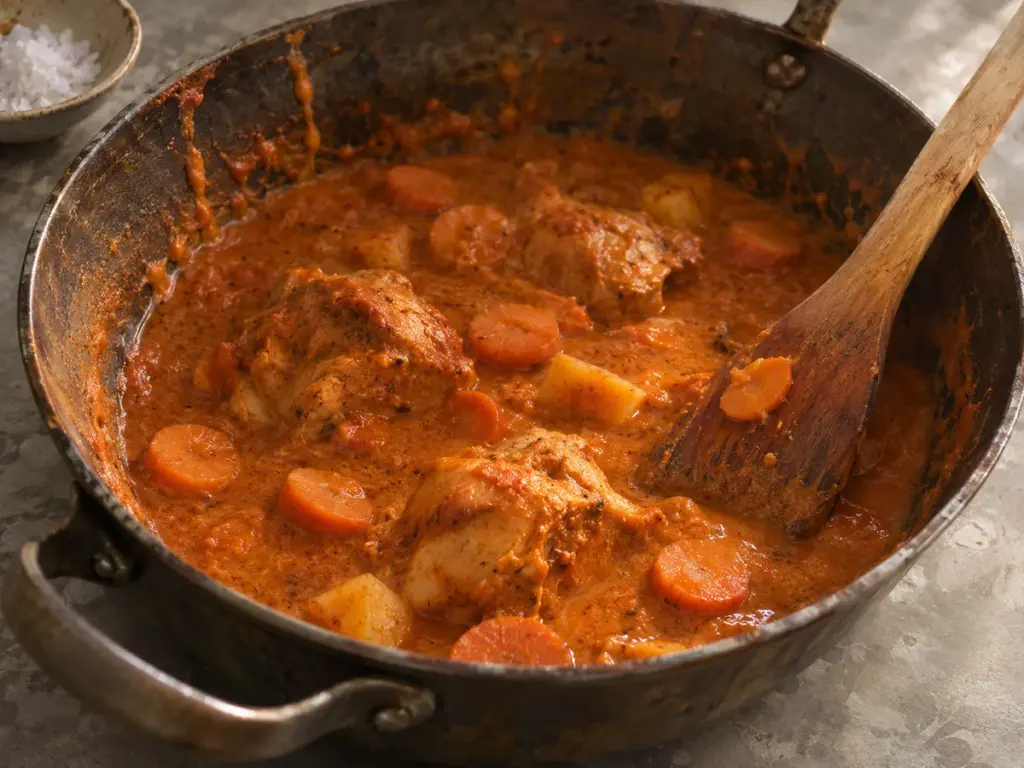
Carrots and peas together give you an orange-and-green mix. When the carrots share the pan with the onions, the onions still go in first so they turn translucent.
6. Bell Peppers
Bell peppers keep a little bite and a fresh, grassy note that cuts through the cream. You cut 1-inch chunks and add them near the end so they stay slightly firm.
Red peppers bring more sweetness, and green ones give a sharper, more bitter edge.
Peppers release water as they simmer, which thins the sauce and turns its color muddy. For a smoky edge, you can char the chunks in a hot dry pan first, then stir them in for the last few minutes.
7. Mushrooms
Mushrooms add a savory, meaty flavor, but raw ones release water and dilute the sauce, so you brown them in butter or ghee first and stir them in near the end just to warm through.
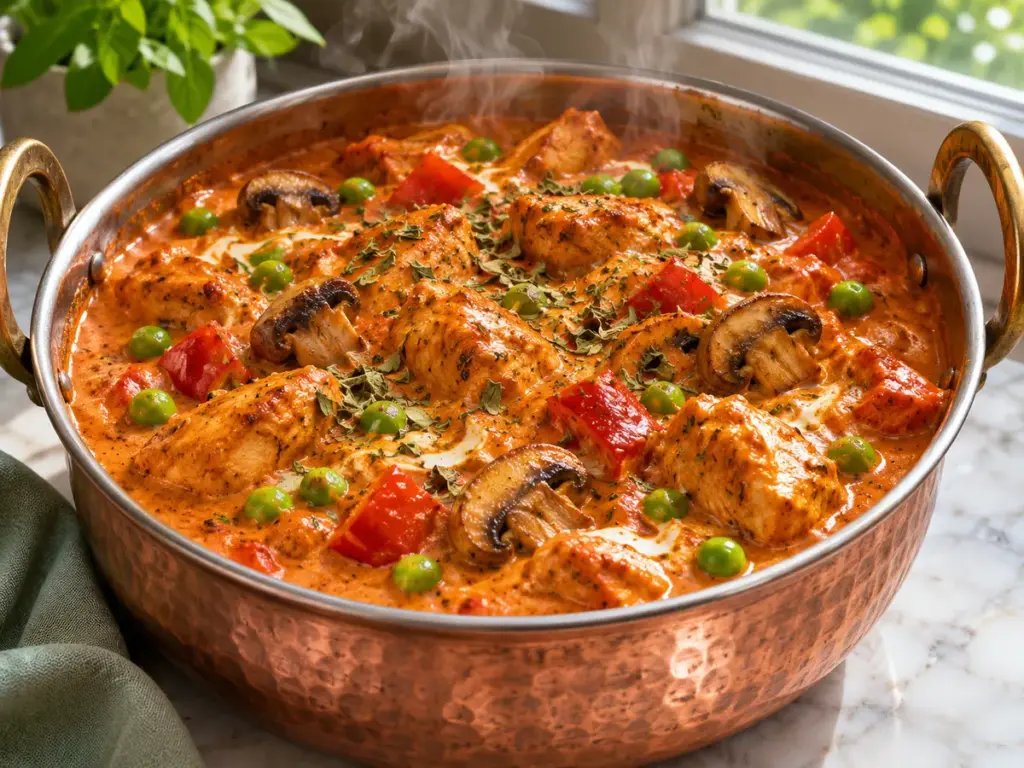
Halved button or baby bella mushrooms hold their shape well, and you should leave them in big pieces because they shrink as the water cooks out. Mushrooms finish as fast as spinach, so the two can go in together.
8. Onions and Garlic
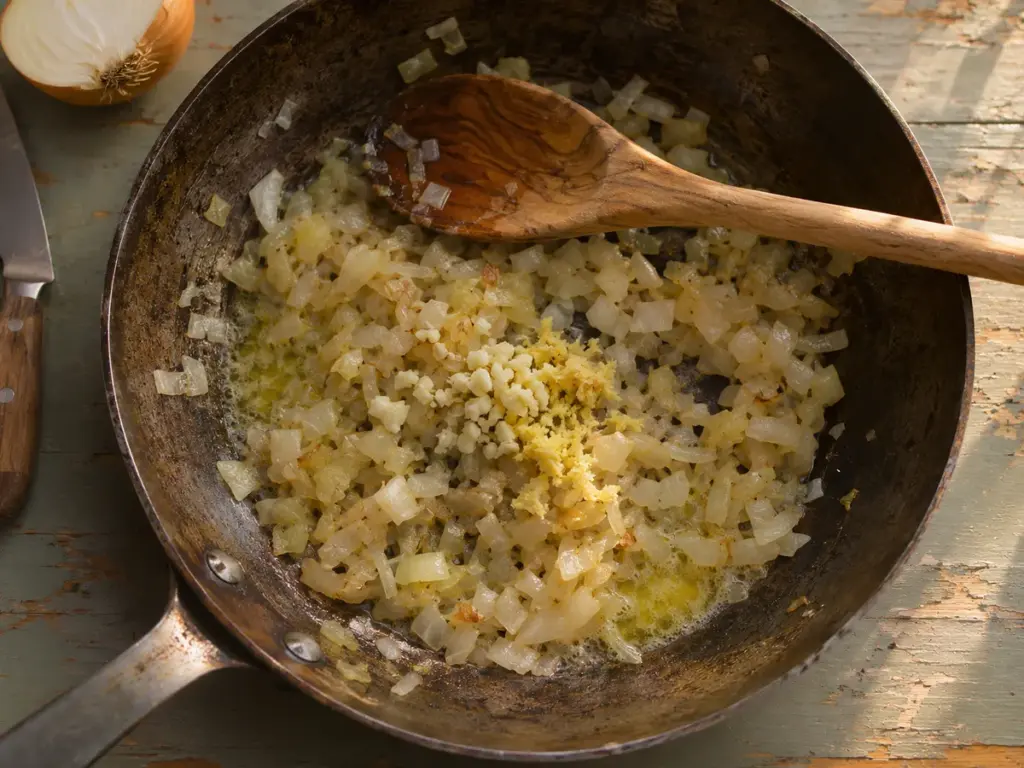
Onions and garlic go in first, ahead of every other vegetable here.
You cook the onion in butter or oil until translucent, add the garlic and ginger for about a minute, and only then add the tomatoes. A fine chop keeps the sauce smooth.
On the side, you can serve thin slices of raw red onion with lemon juice, a sharp crunch that cuts the cream in every bite.
9. Tomatoes
Tomatoes are the vegetable the sauce is built on, so the form you buy changes the result.
Tomato puree or crushed canned tomatoes give you a smooth, even sauce. Ripe fresh tomatoes work in summer, but fresh and canned tomatoes differ in sweetness and water, and the fresh ones need longer to cook down.
The sauce is ready when it coats the back of a spoon. If it tastes sharp, you finish with the butter and cream, since both round off the tomato acid.
10. Cucumber
Cucumber stays out of the pot and goes on the side, where its cold crunch cuts the butter.
Cucumber raita is grated cucumber stirred into plain yogurt with cumin, and it calms the heat if your sauce is spicy. You squeeze the grated cucumber dry first, because otherwise the raita turns watery.
Kachumber is diced cucumber, tomato and red onion with lemon juice and salt. You serve it cold and add the salt just before it hits the table, so the pieces stay crisp and do not weep.
11. Zucchini
Zucchini is mild and holds a lot of water, so you cut it into 1-inch cubes and sauté it first in a hot pan, in a single layer, before it meets the sauce. That cooks off moisture that would otherwise thin the gravy.
You add the browned cubes near the end so they do not turn to mush. Yellow summer squash behaves the same way, and either one works in the pot, or you can use both for color.
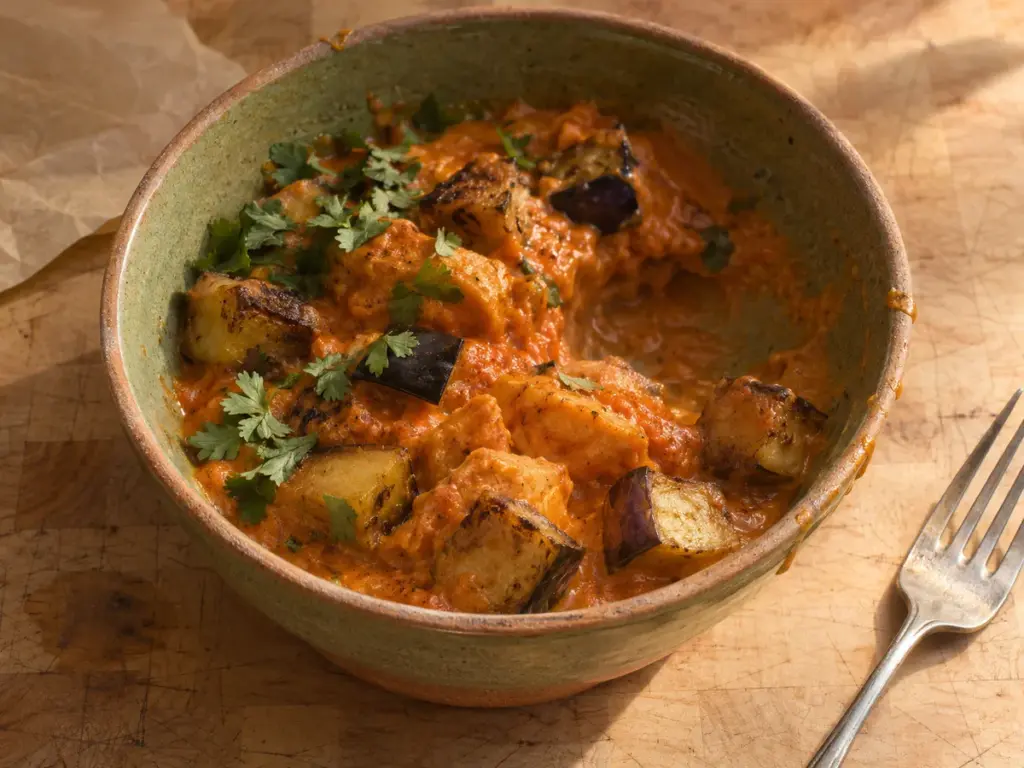
12. Eggplant
Eggplant soaks up sauce like a sponge, which suits a creamy gravy, and its mild, slightly bitter flavor mellows in the butter.
You brown or roast the cubes first so they keep their shape, then fold them into the sauce near the end.
Without that first browning the cubes soak up so much butter and sauce that the gravy tightens and the eggplant turns greasy. As a side, you can serve it smoky and mashed with garlic and cilantro instead.
How Do You Add Vegetables Without Thinning the Sauce?
Vegetables release water as they cook, and that water thins butter chicken sauce. You keep it thick by working in this order:
- Make the sauce first. Simmer the onion, tomato, spices and cream until it coats the back of a spoon.
- Add the firm vegetables. Potatoes and carrots go in first and simmer until nearly tender.
- Add the chicken and cauliflower. Simmer both until the chicken reaches 165°F in the thickest piece and the cauliflower is tender.
- Finish with soft vegetables. Stir in peppers, mushrooms, peas and spinach, then finish with the butter and fenugreek.
If the pot still looks thin at the end, you can simmer it uncovered for a few more minutes before the peas and spinach go in.
Frozen vegetables do better cooked separately and added dry. In a slow cooker, potatoes and carrots go in at the start and peas and spinach in the last few minutes.
How Do You Build a Balanced Mix of Vegetables?
When you mix vegetables, three differences decide whether the bowl feels varied:
- Color: red pepper and green peas stand out against the orange sauce, while carrots blend in.
- Texture: a soft vegetable like potato works with one that keeps bite, such as pepper or green beans.
- Flavor: sweet peas and carrots play against bitter spinach and tangy tomato.
Frozen peas and spinach work well, and canned vegetables do in a pinch if you read the label for added sugar or salt.
Can You Make Butter Chicken Vegetarian?
Yes, you can swap the chicken for cauliflower, potatoes, peas and mushrooms cooked in the same tomato and butter sauce.
Butter and cream keep it vegetarian but not vegan, so a vegan pot needs oil and a plant cream.
With no raw chicken in the pot, the 165°F check no longer applies, so you cook until the firmest vegetable is tender and the sauce coats a spoon.
Which Vegetable Goes on the Side If the Sauce Already Has One?
If you cook vegetables in the sauce and also serve a vegetable side, different ones keep the plate from repeating itself:
- You can roast cauliflower with cumin.
- Aloo jeera, fried cumin potatoes, works too.
- You can serve cucumber raita.
- A kachumber salad works too.
Which Vegetables Should You Skip in Butter Chicken?
We'd leave these out of the sauce, and if you have them on hand, they suit a different dish better:
- Beets: they bleed deep red-purple into the orange sauce and add an earthy sweetness that does not match tomato and cream.
- Brussels sprouts: they give off a strong sulfur smell when simmered for a long time, which overpowers the spices.
- Kale and turnips: kale stays tough in a short simmer and turnips add a sharp, peppery bite that clashes with the cream.
Cabbage does work if you shred it, cook it first and add it at the end.
Sweet potatoes and yams work too, but their naturally sweet flavor stacks on the sweetness of tomato and cream, so you cut back on any sugar.
Sources
- Eat Like No One: What vegetables go well in butter chicken (vegetable choices, onion and garlic, mushrooms, peas and spinach timing)
- Wikipedia: Butter chicken (names, tomato, garlic and ginger sauce, dried fenugreek leaves, coriander garnish, similarity to chicken tikka masala)
- USDA FoodData Central: Peas, green, cooked, boiled, drained, without salt (FDC 170420; cooked cauliflower is FDC 170397)
- FoodSafety.gov: Safe minimum internal temperature chart (165°F for poultry)
Frequently Asked Questions
Is Butter Chicken Curry the Same as Butter Chicken?
Yes, you will see butter chicken, murgh makhani and chicken makhani used for the same tomato and butter dish, and "curry" is only an English label for a sauced dish.
You may mix it up with chicken tikka masala, which is a similar tomato-based dish.
What Bread and Rice Go With Butter Chicken?
Naan, roti and basmati rice all go with butter chicken, and jeera rice is basmati cooked with cumin seeds. You can also choose from plenty of other sides that suit butter chicken.
Do Green Onions or Cilantro Go in Butter Chicken?
The sauce uses regular onion, while cilantro (coriander leaves) is the garnish Wikipedia lists. Chopped green onion tops are not traditional, but you can scatter a few on top for a fresh, mild bite.

Food writer at GustoMeadow. Writes ingredient substitutes, food comparisons, taste guides and storage guides for home cooks.
Storage and food-safety numbers follow USDA, FDA and university extension guidance.