
Vegetable shortening is the closest swap for lard in tamale masa, and you use the same amount.
- Butter and liquid oils work too, but they make a denser masa.
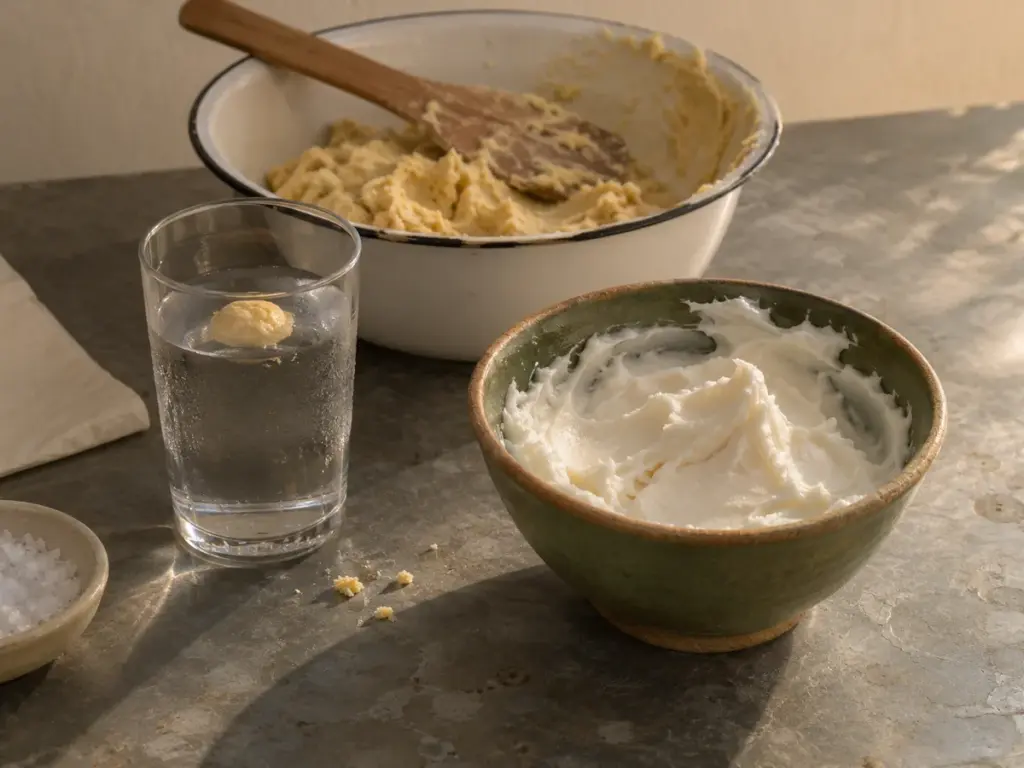
- Once you stir in enough broth, the masa looks like soft peanut butter.
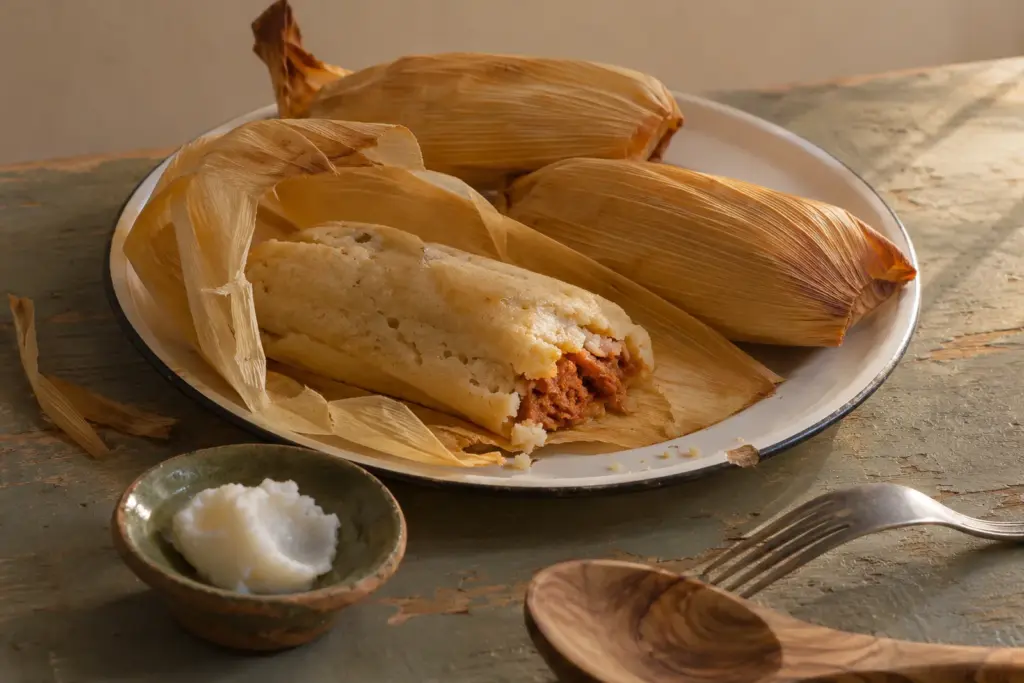
Lard is the traditional fat in tamale masa, and unlike most everyday cooking swaps, a swap here has to keep steamed dough tender and light. Each fat below changes how much air the masa holds, how it tastes and whether your tamales stay vegetarian.
What Does Lard Do in Tamale Masa?
Without enough fat, masa turns crumbly and mealy, because fat binds and tenderizes the dough. Lard also whips into air, and Fany Gerson writes that it makes tastier and fluffier tamales than other fats do.
Recipes differ on how much fat goes in: chef Rick Martinez says most traditional ones use fat at 10 to 25 percent of the masa's weight, and he notes that some regional tamales use oil, butter or very little added fat.
You can check beaten masa with the float test, and Gerson says a pea-size ball dropped into cold water rises when the masa is ready and sinks when it needs more beating.
Mama Maggie's Kitchen calls this a traditional test but not the only one, and what you are after is dough that is soft, light and easy to spread.
11 Best Lard Substitutes for Tamales
| Substitute | What changes |
|---|---|
| Shortening | Closest to lard |
| Butter | Buttery flavor, denser |
| Canola or vegetable oil | Neutral flavor, denser |
| Olive oil | Strong olive flavor |
| Avocado oil | Neutral flavor, denser |
| Coconut oil | Vegan, slight coconut taste |
| Bacon fat | Flavor close to lard, hard to find |
| Chicken fat | Flavor close to lard, hard to find |
| Duck fat | Solid fat, similar texture |
| Ghee | Buttery, no water |
| Beef tallow | Solid animal fat, same fat content |
With shortening you keep the lard amount, and with oils you go a little lower: Mama Latina Tips replaces 225 grams of fat (about 1¼ cups) with 1 cup of oil.
If you are short on lard, a blend with another fat works, as America's Test Kitchen's recipe does with 6 tablespoons each of lard and butter.
1. Vegetable Shortening
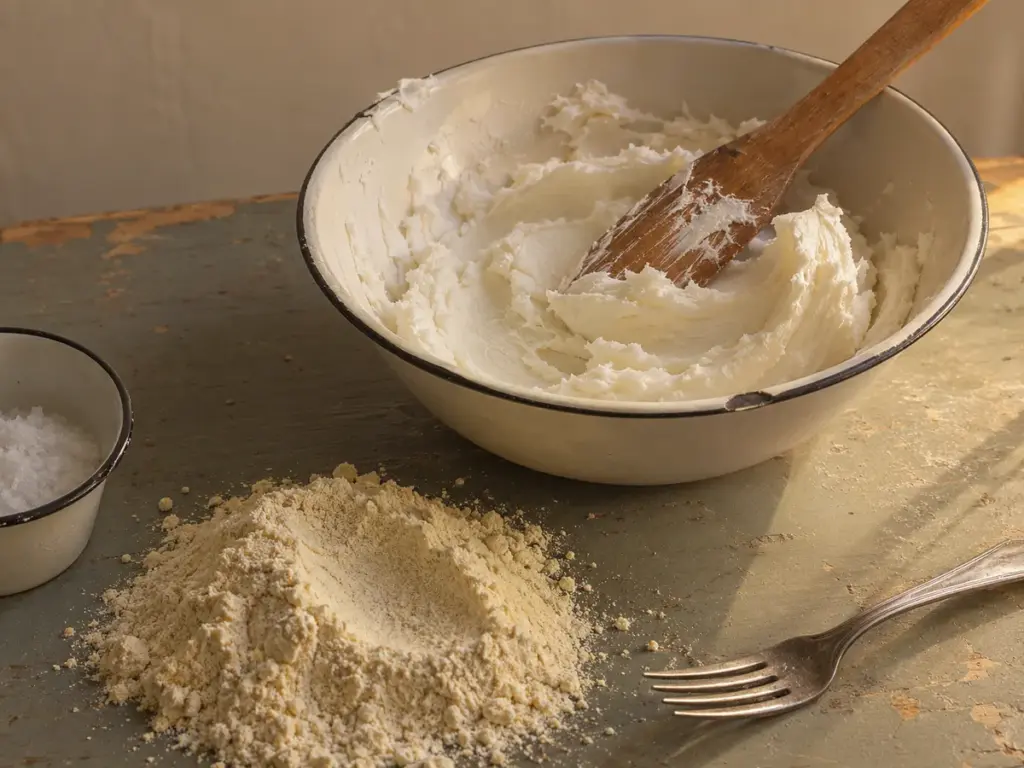
If you want the closest match to lard, shortening goes in at the same amount with nothing else in the recipe changed. Tasting Table notes it has the same white color and gel-like consistency as lard, so it blends into masa easily.
Its neutral flavor leaves the corn and the filling alone, which is the main difference between shortening and lard, since lard adds a savory taste. Mama Maggie's Kitchen beats the fat for about 2 minutes, until fluffy, before any masa goes in.
America's Test Kitchen's testers found shortening and oil tasted artificial and preferred lard plus butter. A masa made with shortening can float like lard masa, and if your test ball sinks, Mexican Made Meatless says you should whip it more.
2. Butter
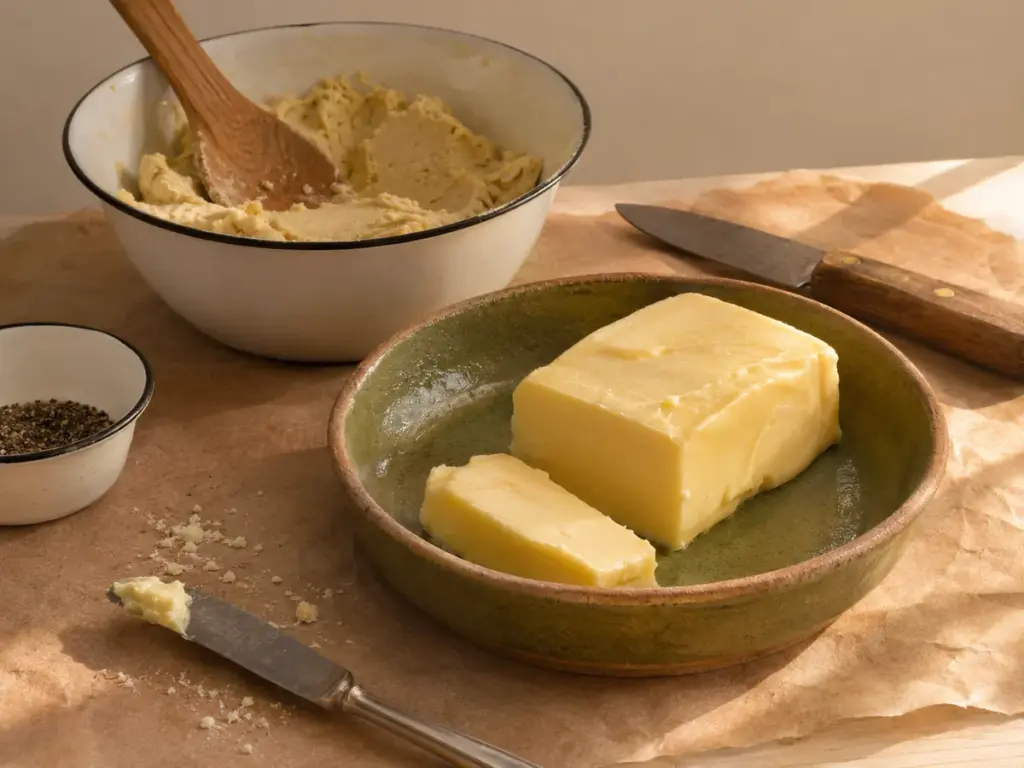
Butter works, but your tamales will taste like butter. America's Test Kitchen says it gives a distinctive buttery flavor, and its tamale recipe pairs 6 tablespoons of lard with 6 tablespoons of butter because the test kitchen preferred that combination.
Gerson adds that butter and liquid oils make a denser masa. Butter is about 81% fat (USDA FDC 173410) and most of the rest is water, so you soften it, beat it like shortening and add the broth a little at a time.
Mama Latina Tips suggests replacing only part of the fat with butter because it can taste strong, and butter also differs from lard in its water and milk solids. If you are making sweet tamales, Masienda points you to butter.
3. Canola or Vegetable Oil
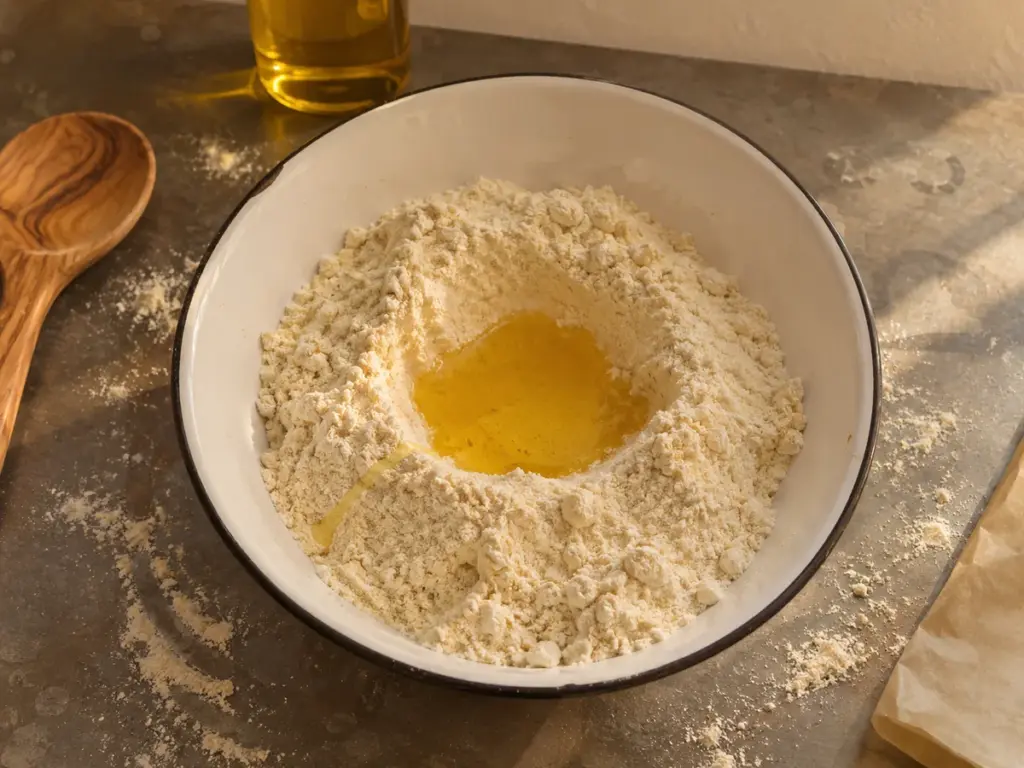
A neutral oil is the simplest choice when nobody at your table eats animal fat. Mexican Made Meatless builds its masa on ¾ cup of canola oil, 1 pound of masa harina and 3 to 5 cups of vegetable stock, with less stock in humid weather and more in dry.
Oil does not whip, so the masa is less airy and the float test is not a reliable check. The Mexican Made Meatless author says that once steamed, the tamales were indistinguishable from ones made with shortening.
Mama Latina Tips notes that you may need less broth with oil. Houston Methodist adds that the hardest part of dropping lard is spreading the masa on the husks, which takes you more time and patience.
4. Olive Oil
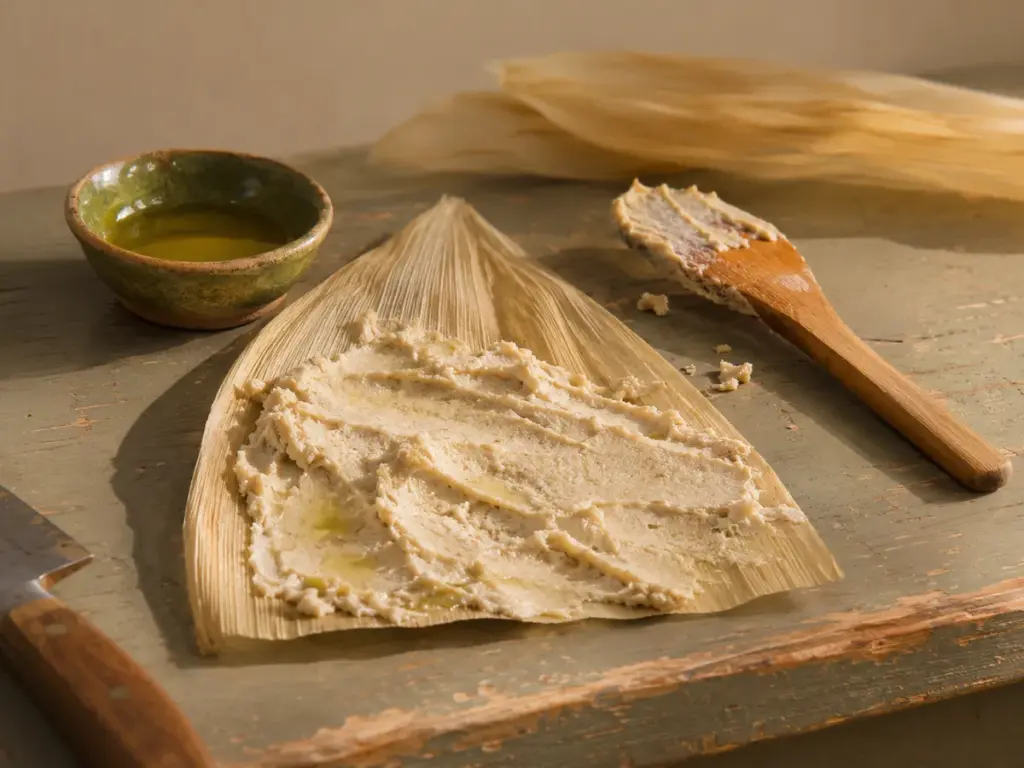
Olive oil makes a vegan masa with a flavor you will taste in the finished tamale. Mama Maggie's Kitchen uses ¾ cup of olive oil with 2½ cups of masa harina, ½ teaspoon of baking powder, 1 teaspoon of salt and 1½ cups of vegetable broth or water, and warns of a strong, very distinct olive oil flavor.
The University of Maryland Extension tamale recipe also uses ¾ cup of olive oil as its lard alternative, and Mexican Made Meatless names canola, corn, vegetable and avocado oil for the most neutral flavor.
If you try olive oil for a first batch, a milder olive oil keeps the flavor in check, or you can switch to canola or grapeseed oil, which the Mama Maggie's recipe names as alternatives.
5. Avocado Oil
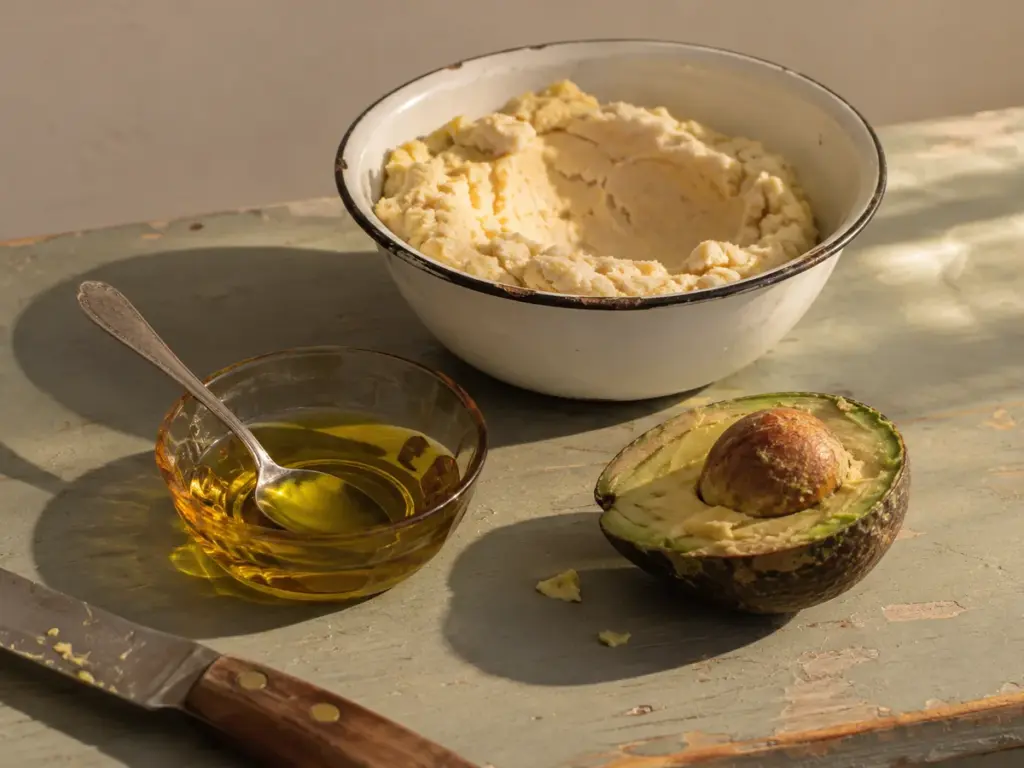
Avocado oil is one of the neutral oils Mexican Made Meatless names for oil-based masa, along with canola, corn and vegetable oil. Tasting Table also lists it among the lard swaps that work in tamales.
Avocado oil goes in like canola oil: Mexican Made Meatless builds oil masa on ¾ cup of oil per 1 pound of masa harina, so you start from an oil recipe's amount instead of the lard amount.
You add broth until the masa spreads easily on a soaked husk, and because masa never gets hotter than boiling water in the steamer, the oil's smoke point does not matter here.
6. Coconut Oil
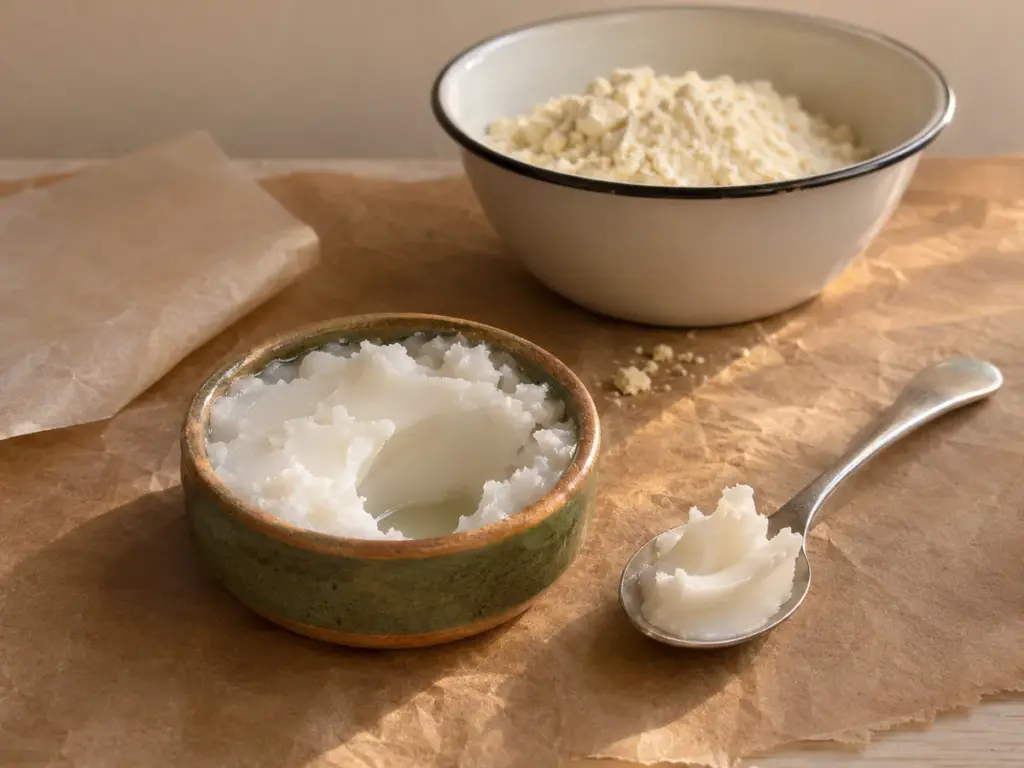
Coconut oil is a vegan fat that is firm in a cool kitchen. If you want no coconut flavor, Masienda's vegan version asks for refined coconut oil, and Mama Latina Tips says coconut oil can change the flavor slightly.
A Spokesman-Review recipe pours in ¾ to 1 cup of melted coconut oil and calls it a vegan alternative to lard-heavy masa. Mama Maggie's Kitchen advises melting it slightly or creaming it before you add the masa.
7. Bacon Fat
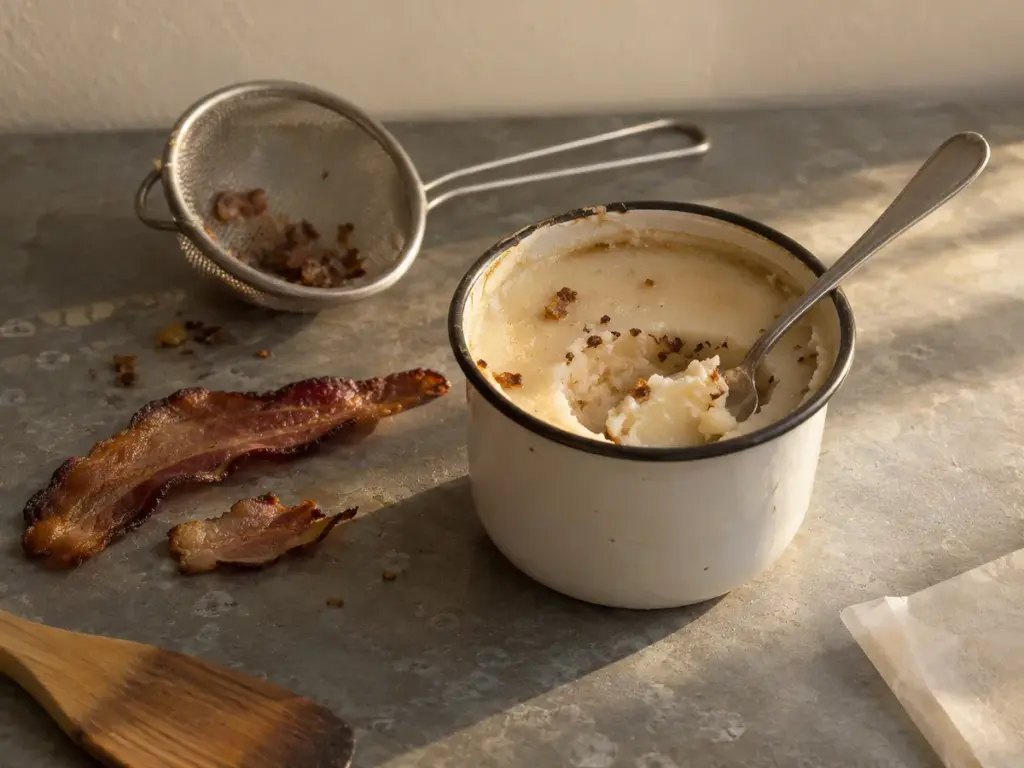
Bacon fat comes from pork, like lard, and Tasting Table says it gives a flavor closer to lard than shortening does but is harder to find on store shelves.
If you cook bacon, the drippings can be rendered clear, chilled until firm and beaten like shortening. USDA lists rendered bacon grease at 99.5 g of fat per 100 g (FDC 172345), close to the 100 g of lard (FDC 171401), so its fat content matches lard's (calculated from the two USDA numbers).
8. Chicken Fat
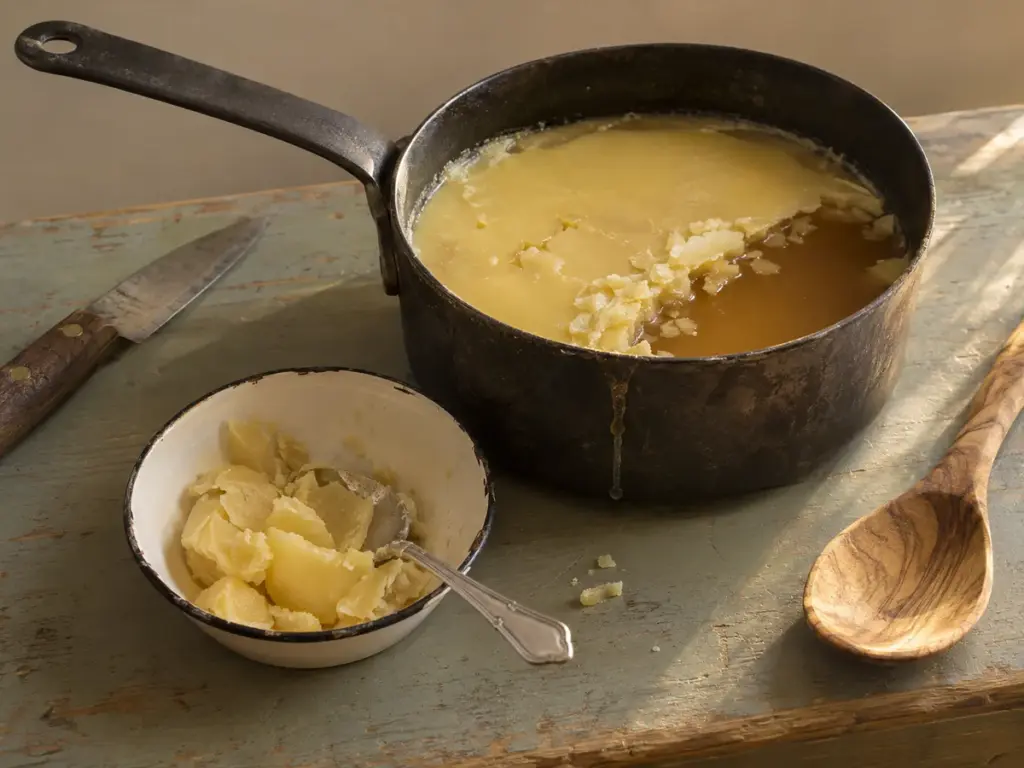
Chicken fat, or schmaltz, is the other animal fat Tasting Table says comes close to lard's flavor, though you will also have trouble finding it on a shelf.
Once chicken broth has chilled, you can lift the fat from the top, and Houston Methodist's recipe uses broth reserved from cooking the chicken for its masa, so the fat and the broth can come from one pot.
USDA lists chicken fat at 99.8 g of fat per 100 g (FDC 173564), so its fat content matches lard's (calculated from USDA's figures for chicken fat and lard).
9. Duck Fat
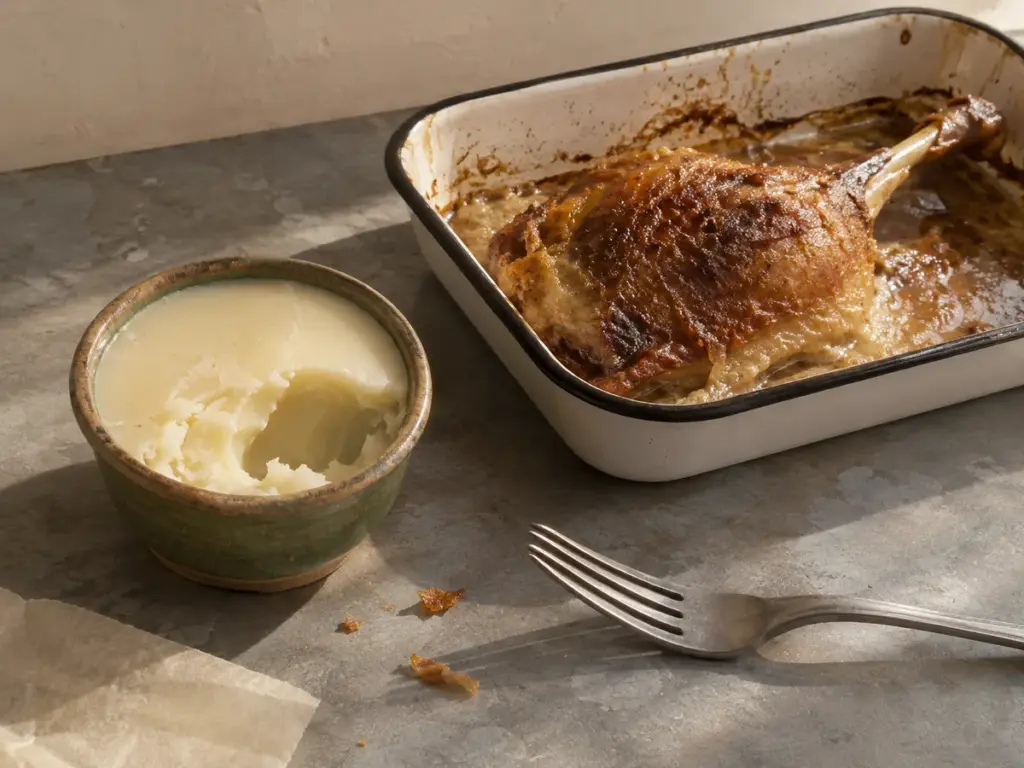
Gerson says solid fats such as shortening or duck fat instead of lard give masa a texture similar to lard. That makes duck fat a good use for the fat you have left from roasting duck legs.
Once duck fat is chilled solid, you beat it as you would lard, then add the masa and broth in turns as in the steps below. Duck fat is an animal fat, so tamales made with it are not vegetarian.
10. Ghee
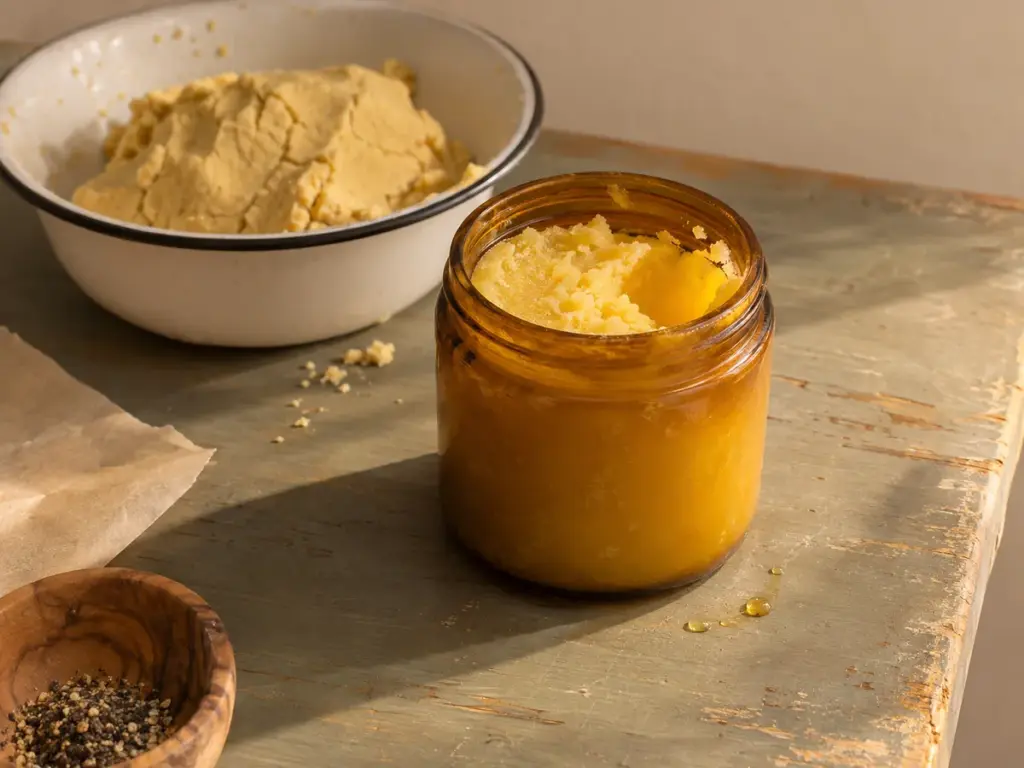
Ghee is clarified butter, so it brings butter flavor without butter's water. USDA lists ghee at about 100 g of fat per 100 g, against about 81 g for salted butter (FDC 171314 and 173410), which puts it closer to lard's fat content than butter is.
Since ghee has none of butter's water, we'd add the broth a little at a time and stop when the masa spreads like soft peanut butter. Ghee comes from milk, so it is not vegan, and ghee's flavor will show in your masa.
11. Beef Tallow
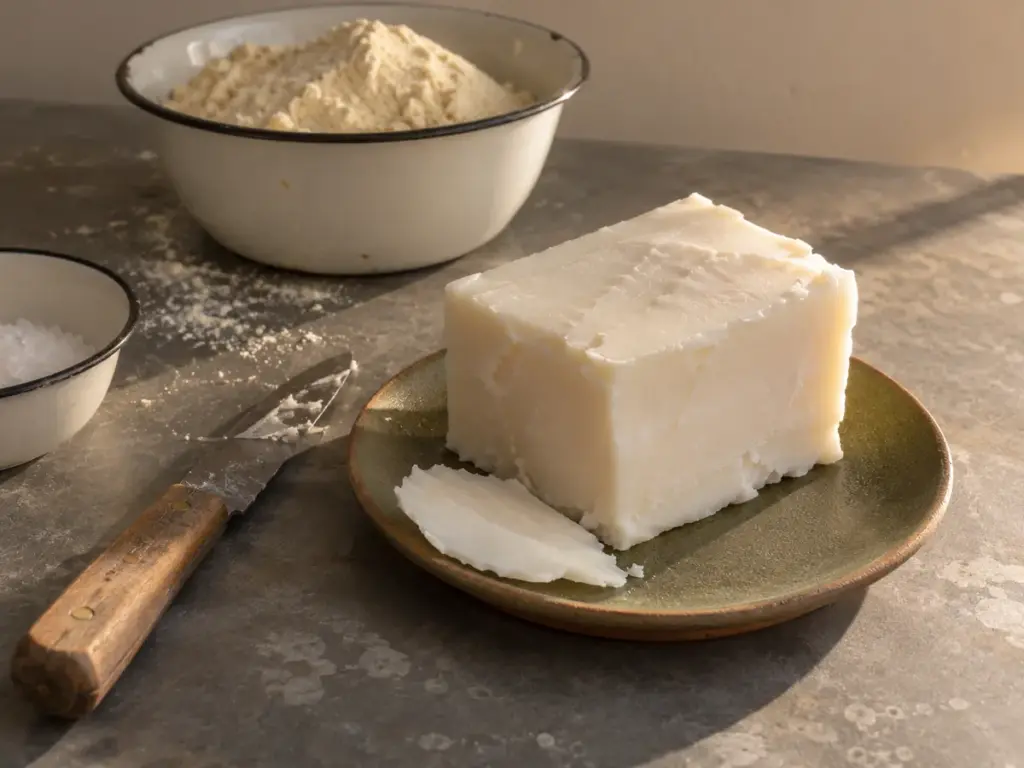
Masienda says in a reader answer that beef tallow can be used for tamales. USDA lists it at 100 g of fat per 100 g (FDC 171400), the same as lard, and tallow is rendered beef fat.
Once it is chilled solid, you beat it like lard until it is fluffy and add the broth in turns. Tallow is an animal fat, so tamales made with it are not vegetarian.
How Do You Adjust the Masa for a New Fat?
- Beat solid fat first. Mama Maggie's Kitchen beats lard about 2 minutes until fluffy.
- Add broth slowly. Masienda adds warm broth gradually and keeps 2 cups back to adjust the moisture.
- Judge by texture. Mama Latina Tips describes soft peanut butter: more liquid is looser, less is firmer.
If your tamales come out dense or dry, Martinez says the masa usually lacked enough fat, liquid or beating, and he warns that liquid fats and beating after the dough is smooth raise that risk.
If the masa is too stiff to spread, stir in a few more tablespoons of warm broth, as the Houston Methodist recipe does.
Published recipes steam tamales for 45 to 90 minutes, and one oil masa recipe takes 1½ to 2 hours, so a cue tells you more than the clock. Masienda says a tamal is done when the husk pulls away from the masa and the masa feels firm and no longer mushy.
Are Tamales Without Lard Vegetarian or Vegan?
Not every lard-free tamale is vegetarian, because lard is only one animal ingredient.
Mama Maggie's Kitchen lists chicken, pork, beef or vegetable broth for savory masa, so a plant-based batch needs vegetable broth or water, and there are other chicken broth swaps to choose from.
Masa preparada is dough sold with the fat already mixed in, so it can carry lard even when your own recipe leaves it out.
One store brand's plain prepared masa, H-E-B Mi Tienda, lists lard and salt. The ingredient list tells you which fat a brand used, and plain masa harina lets you add your own.
- Vegan fats include shortening (meat-free and dairy-free, per Tasting Table), oils, refined coconut oil and vegan butter.
- Butter and ghee come from milk, so they are vegetarian and not vegan.
Sources
- Tasting Table: Substitute Lard With Vegetable Shortening in Tamales
- Masienda: Tamales from Masa Harina
- In Mama Maggie's Kitchen: Masa for Tamales
- In Mama Maggie's Kitchen: Masa with Oil
- Mexican Made Meatless: Masa with Oil
- Rick Martinez: Your Tamal Questions
- America's Test Kitchen: Tamales
- Fany Gerson: Light, Fluffy Tamales
- Mama Latina Tips: Masa for Tamales
- Houston Methodist: Healthier Tamales
- The Spokesman-Review: Lard-Free Tamales
- University of Maryland Extension: Tamales
- H-E-B: Mi Tienda Prepared Masa
- USDA FoodData Central: FDC 173410, 171314, 171401, 171400, 172345, 173564

Food writer at GustoMeadow. Writes ingredient substitutes, food comparisons, taste guides and storage guides for home cooks.
Storage and food-safety numbers follow USDA, FDA and university extension guidance.



